![[Search a list of Patent Appplications for class 162]](../as.gif) CLASS 162, CLASS 162, | PAPER MAKING AND FIBER LIBERATION |
| Click here for a printable version of this file | |
SECTION I - CLASS DEFINITION
This class includes:
A. Processes for the liberation, recovery or purification of fibers as individual staple fibers or as a pulp of such fibers, including cellulosic fibers, from a fibrous containing material by use of a reagent which exerts some chemical or solvent action upon the fibrous material.
B. Reagent compositions employed in the processes "A" above, and processes of preparation of such compositions, not otherwise provided for;
C. Processes including the deposition of fibers from a liquid suspension thereof in order to form an interfelted product and processes of treatment of the deposited fibrous product prior to the final drying thereof;
D. Fibrous pulps and deposited fibrous webs or articles which are produced by processes "A" or "C" above, which are not otherwise provided for;
E. In addition to the products set forth in "D," this class also includes any nonstructural fiber or fiber containing product (e.g., particular fiber blend) manufactured by any other process (e.g., airlaid) where not elsewhere provided for. See Subclass References to the Current Class, below, and also see References to Other Classes, below, for classes that refer to this section.
F. Apparatus employed in carrying out processes "A" and "C" above, not otherwise provided for;
G. An endless Fourdrinier wire is provided for in this class.
SECTION II - LINES WITH OTHER CLASSES AND WITHIN THIS CLASS
A. FIBER PREPARATION OR TREATING PROCESSES
Within this class processes of fiber preparation are classified in subclass 1. This portion of the class is concerned with the treating of fiber and fibrous materials with chemicals for the purpose of making a pulp or suspension of individual staple fibers which may be deposited from a liquid suspension thereof, thus forming an interfelted fibrous product (paper) or the fibers may be employed for textile purposes.
This class provides for the chemical liberation of these fibers as well as the purification or refining, bleaching, etc., of the fibers with a reagent which exerts some chemical action.
LINE WITH CLASS 8 AND CLASS 19
This class is related to Class 8, Bleaching and Dyeing; Fluid Treatment and Chemical Modification of Textiles and Fibers, and Class 19, Textiles: Fiber Preparation, which also provide for fiber treating processes. Class 8 provides for processes of fluid treatment and chemical modification of textiles and fibers not elsewhere provided for. With respect to pulps and suspension of individual fibers the line with Class 8 is as follows:
Class 162 takes (1) processes involving liberating, purifying, bleaching or refining such fibers, (2) processes in which the fibers are modified by hydration, mercerizing or parchmentizing; Class 8 takes all processes of chemically modifying such fibers other than by hydration, mercerization or parchmentizing. Class 162 (in subclass 100 particularly subclass 162) also takes dyeing of such fibers.
Class 8 provides for purifying, bleaching, etc., of fabrics, strands, yarns, filaments, etc., as distinguished from fibrous pulps. Patents to processes in which both a fibrous pulp and a fabric, strand, yarn, etc., is claimed (or disclosed if claimed only generically) are classified in Class 8. Combinations of a step of purifying or liberating the fiber with a step of modifying it, per se, belonging in Class 8, are classified in Class 162.
Class 8, particularly in subclasses 137+ and 147+, provides for the cleaning and laundering of textile fabrics and fibers, that is, for the removal of materials not originally associated with a natural fiber and the removal of any material from synthetic fibers. The treatment may be effected with or without chemical action. Thus, manipulative processes of washing pulp or fibers in bulk form are classified in Class 8, subclass 156.
Class 19 provides for the mechanical treatment of fibers to put them in condition for use.
See References to Other Classes, below, for related fiber preparation or treating processes classes.
B. FIBER TREATING AGENTS
Chemical reagent compositions used for liberating fiber from a fiber containing material (e.g., wood) are included and are classified with the corresponding process. This class provides also for processes of making or regenerating such agents. Also see Subclass References to the Current Class and References to Other Classes, below.
C. FIBROUS PRODUCT MAKING AND TREATING
This class includes processes of forming an interfelted fibrous product by deposition from liquid suspension including the addition of other material to the fibrous suspension whether the deposition step is included or not. This class also includes processes for treating the deposited web or article prior to final drying thereof. The fibrous character of the product must be retained in the final product. Also see Subclass References to the Current Class and References to Other Classes, below.
D. COMBINATIONS WITH OTHER PAPER TREATING OPERATIONS
This class generally includes combinations of a fiber liberation or purification step with other fiber treating steps or of a deposition from a liquid suspension with other treatment of the interfelted product (in which the fibrous nature of the product is retained). Processes of fiber liberation or purification combined with processes of employing the liberated fibers for the manufacture of a product (other than by deposition from a fiber suspension) are, in general, classified in the class providing for the particular manufacturing operation involved. See References to Other Classes, below.
E. PRODUCTS
This provides for paper products resulting from processes classified herein. However, articles and materials having structure or other characteristics provided for in other classes are classified therein, even though made of paper, or disclosed or claimed as having been made by a process classifiable herein. Also see References to Other Classes, below.
F. APPARATUS
This class includes apparatus employed for carrying out processes classifiable herein not otherwise provided for. Also see Subclass References to the Current Class and References to Other Classes, below.
SECTION III - SUBCLASS REFERENCES TO THE CURRENT CLASS
SEE OR SEARCH THIS CLASS, SUBCLASS:
| 29+, | for processes of making or regenerating agents. |
| 70+, | for chemical reagent compositions used for liberating fiber from a fiber containing material (e.g., wood). |
| 100+, | for processes of forming an interfelted fibrous product by deposition from liquid suspension including the addition of other material to the fibrous suspension whether the deposition step is included or not. |
| 141, | through 181 for any nonstructural fiber or fiber containing product (e.g., particular fiber blend) manufactured by any other process (e.g., airlaid) where not elsewhere provided for. |
| 160, | and 161 for paper impregnated for purposes of preserving the paper. |
| 232+, | for apparatus employed for carrying out processes classifiable herein not otherwise provided for. |
SECTION IV - REFERENCES TO OTHER CLASSES
SEE OR SEARCH CLASS:
| 8, | Bleaching and Dyeing; Fluid Treatment and Chemical Modification of Textiles and Fibers, subclasses 400 through 696for dyed paper, produced by the action of a dye upon dry paper, subclasses 115.51+ for chemically modified fibers, per se. (See Lines With Other Classes and Within This Class, "Products", above.) |
| 19, | Textiles: Fiber Preparation, appropriate subclasses for air felting. (See Lines With Other Classes and Within This Class, "Fibrous Product Making and Treating", above.) |
| 19, | Textiles: Fiber Preparation, appropriate subclasses for air felting, per se, of fibers. (See Lines With Other Classes and Within This Class, "Apparatus," above.) |
| 28, | Textiles: Manufacturing, appropriate subclasses, appropriate subclass for textile products having significant textile characteristics or features not provided for in other textile classes. (See Lines With Other Classes and Within This Class, "Products", above.) |
| 29, | Metal Working, subclasses 90.1+ for burnishing waterlaid products. (See Lines With Other Classes and Within This Class, "Fibrous Product Making and Treating", above.) |
| 29, | Metal Working, subclasses 90.1+ for burnishing apparatus employed for treating fibrous layers or paper. (See Lines With Other Classes and Within This Class, "Apparatus," above.) |
| 34, | Drying and Gas or Vapor Contacted With Solids, appropriate subclasses, for processes of drying a wet web or article of deposited fibers. (See Lines With Other Classes and Within This Class, Fibrous Product Making and Treating, above.) |
| 34, | Drying and Gas or Vapor Contact With Solids, appropriate subclass for drying a freshly deposited fibrous layer. (See Lines With Other Classes and Within This Class, "Apparatus," above.) |
| 65, | Glass Manufacturing, subclasses 376+ for a process of making glass fibers or mineral wool. (see Lines With Other Classes and Within This Class, Fibrous Product Making and Treating, above.) |
| 65, | Glass Manufacturing, subclasses 376+ for glass fibers or mineral wool forming. (See Lines With Other Classes and Within This Class, "Apparatus," above.) |
| 100, | Presses, appropriate subclasses for presses, per se, even though employed for treating paper or fibrous webs or articles. (See Lines With Other Classes and Within This Class, "Apparatus," above.) |
| 100, | Presses, appropriate subclasses, for mere pressing to express moisture from a web or article deposited, and for pressing or calendering dry paper. (See Fibrous Product Making and Treating) |
| 106, | Compositions: Coating or Plastic, appropriate subclass for nonwaterlaid plastic and coating compositions comprising fibrous and inorganic materials, as well as fibrous material associated with an organic material, other than a synthetic resin. (See Lines With Other Classes and Within This Class, Products, above.) |
| 131, | Tobacco, subclass 365 for tobacco-containing paper, intended to be burned in smoking. (See Lines With Other Classes and Within This Class, Products, above.) |
| 138, | Pipes and Tubular Conduits, appropriate subclasses for tube structure. (See Lines With Other Classes and Within This Class, Products, above.) |
| 137, | Fluid Handling, subclass 4 for processes of regulating or maintaining the consistency of a fiber suspension by control of liquid flow. (See Fibrous Product Making and Treating, above.) |
| 137, | Fluid Handling, particularly subclasses 92 and 467.5 for apparatus employed in the regulation or maintenance of the consistency of a fibrous suspension which may be disclosed as useful in making paper. (See Lines With Other Classes and Within This Class, "Apparatus," above.) |
| 156, | Adhesive Bonding and Miscellaneous Chemical Manufacture, subclasses 62.2+ for deposition of particulate material by other than water laying to form a self sustaining web or batt, combined with a laminating step, and subclasses 369+ for apparatus for forming self-sustaining webs from particulate material. See the search note to Class 264 below, for processes of forming self sustaining webs from bulk deposited particles, per se. (See Lines With Other Classes and Within This Class, "Fibrous Product Making and Treating," above.) |
| 205, | Electrolysis: Processes, Compositions Used Therein, and Methods of Preparing the Compositions, subclasses 52 through 56, for impregnated paper used for electrolytic printing (see the Class 162 definition, Lines With Other Classes and Within This Class, Products section) and subclasses 689-694 for electrolytic treatment of organic fibrous material (see the Class 162 definition, Lines With Other Classes and Within This Class, Fiber Preparation or Treating Processes section). |
| 209, | Classifying, Separating, and Assorting Solids, appropriate subclasses, particularly subclasses 727+ , for separating solids from fibers by a solids separation procedure there provided for. (See Lines With Other Classes and Within This Class, Fiber Preparation Or Treating Processes, above.) |
| 209, | Classifying, Separating, and Assorting Solids, appropriate subclasses particularly subclasses 727+ for apparatus used in separating nonfibrous solids (e.g., sand) from fibers. (See Lines With Other Classes and Within This Class, "Apparatus," above.) |
| 210, | Liquid Purification or Separation, appropriate subclasses, for apparatus for separating liquid from a fibrous suspension. Such separators which are designed for the laying down of a felted fibrous product, as the Fourdrinier type machine, are classified in Class 162 even though there is a separation of the liquid, usually water, from a fibrous suspension. (See Lines With Other Classes and Within This Class, "Apparatus," above.) |
| 210, | Liquid Purification or Separation, appropriate subclasses for the separation of liquid from fibers other than those resulting in the formation of a felted fibrous product. (See Lines With Other Classes and Within This Class, Fiber Preparation or Treating Processes, above.) |
| 229, | Envelopes, Wrappers, and paper Board Boxes, for articles of that type. (See Lines With Other Classes and Within This Class, Products, above.) |
| 241, | Solid Material Comminution or Disintegration, appropriate subclasses for grinders, heaters, comminutors, etc., employed for treating fibrous material for reducing it to individual fibers. (See Lines With Other Classes and Within This Class, "Apparatus," above.) |
| 241, | Solid Material Comminution or Disintegration, particularly subclass 4 for the grinding, comminuting or heating of fibrous material, uncombined with any chemical treatment, in order to separate the material into smaller individual fibers. (See Lines With Other Classes and Within This Class, Fiber Preparation Or Treating Processes, above.) |
| 252, | Compositions, subclass 567 for a paper web or sheet impregnated with a defined liquid dielectric. (See Lines With Other Classes and Within This Class, Products, above.) |
| 252, | Compositions, subclasses 186.1+ and 188.1+ for bleaching agent compositions even though disclosed as being useful for bleaching pulp. (See Lines With Other Classes and Within This Class, Fiber Treating Agents, above.) |
| 264, | Plastic and Nonmetallic Article Shaping or Treating: Processes, appropriate subclasses, for processes within the class definition, for shaping or molding of plastic materials including that of a dried, preformed blank of paper pulp, with or without remoistening thereof. Class 264 also generally takes processes for forming articles by uniting of discrete bulk assembled particles, and also forming articles by depositing particles other than fibers from a slurry (e.g., mica, clay, etc.). (See Lines With Other Classes and Within This Class, Fibrous Product Making and Treating, above.) |
| 264, | Plastic and Nonmetallic Article Shaping or Treating: Processes, appropriate subclasses, for processes within the class definition, for molding or shaping plastic materials which may include the step of destroying the fibrous or felted nature of a deposited web or article. See subclass 80 for flame contact or heat decomposition of work, broadly, and subclasses 109+ for forming articles by uniting of discrete bulk assembled particles, not containing free metal particles, per se. (See Combinations With Other Paper Treating Operations, above.) |
| 383, | Flexible Bags, for bags. (See Lines With Other Classes and Within This Class, Products, above.) |
| 419, | Powder Metallurgy Processes, subclasses 61+ for processes for forming articles by uniting randomly associated metal particles without heating. (See Lines With Other Classes and Within This Class, Combinations With Other Paper Treating Operations, above.) |
| 422, | Chemical Apparatus and Process Disinfecting, Deodorizing, Preserving, or Sterilizing, subclasses 285 and 307+ for cookers and digesters other than those used for liberating or treating fibers. (See Lines With Other Classes and Within This Class, "Apparatus," above.) |
| 423, | Chemistry of Inorganic Compounds, appropriate subclasses, for process of preparing or reclaiming inorganic compounds by a chemical reaction. See especially subclasses 511+ for sulfur containing compounds; for the line between the classes see line note to Class 162 in definition of Class 423, Search Notes. (See Lines With Other Classes and Within This Class, Fiber Treating Agents, above.) |
| 424, | Drug, Bio-Affecting and Body Treating Compositions, subclasses 14+ and especially subclasses 16+ for a composition of that class including a structural feature which may included a coating or impregnation of a paper base. (See Lines With Other Classes and Within This Class, Products, above.) |
| 425, | Plastic Article or Earthenware Shaping or Treating: Apparatus, subclasses 80.1+ for means forming self-sustaining bodies of particulate material including an air felting type shaping means, and subclasses 84+ for a shaping surface and means for removal of liquid vehicle or component as a liquid. (See Lines With Other Classes and Within This Class, "Apparatus," above.) |
| 426, | Food or Edible Material: Processes, Compositions, and Products, appropriate subclasses for paper impregnated with a food treating agent. This class (162) provides for paper impregnated for purposes of preserving the paper. (See Subclass References to the Current Class, above.) |
| 427, | Coating Processes, appropriate subclasses for processes of coating paper not combined with a paper making step, or where the paper is not still wet from the paper forming operation. (See Lines With Other Classes and Within This Class, Products, above.) |
| 428, | Stock Material or Miscellaneous Articles, appropriate subclasses for a nonwaterlaid fiber or fiber containing product as set forth in "E" in the class definition of this Class 162 where said product processes either internal structure (e.g., crimped fiber, etc.) or external structure (e.g., nonplanar component, etc.). (See Class Definition, E, above.) |
| 430, | Radiation Imagery Chemistry: Process, Composition, or Product Thereof, subclasses 496+ for paper coated with a radiation sensitive composition. (See Lines With Other Classes and Within This Class, Products, above.) |
| 435, | Chemistry: Molecular Biology and Microbiology, subclasses 277 and 278 for fiber treating processes involving fermentation. (See Fiber Preparation or Treating Processes, above.) |
| 435, | Chemistry: Molecular Biology and Microbiology, subclass 277 for combination of fermentative and chemical digestion. (See Lines With Other Classes and Within This Class, Combinations With Other Paper Treating Operations, above.) |
| 520, | Synthetic Resins or Natural Rubbers, for nonwaterlaid synthetic resin or natural rubbers containing compositions. |
| 536, | Organic Compounds, subclasses 30+ and 56+ for cellulose liberation or purification followed by conversion of the cellulose to a cellulose derivative which is not followed by deposition of fibers from liquid suspension or other step provided for in Class 162. (See Lines With Other Classes and Within This Class, Combinations With Other Paper Treating Operations, above.) |
| 588, | Hazardous or Toxic Waste Destruction or Containment, subclass 254 for containment of asbestos and subclass 255 for containment with polymers. (See Lines With Other Classes and Within This Class, Fiber Preparation or Treating Processes, above.) |
SUBCLASSES
![[List of Patents for class 162 subclass 1]](../ps.gif) 1 1 | PROCESSES OF CHEMICAL LIBERATION, RECOVERY OR PURIFICATION OF NATURAL CELLULOSE OR FIBROUS MATERIAL: | ||||||||||||||||||||||||||||||||
This subclass is indented under the class definition. Processes for the liberation, recovery or purification of
cellulose or of fibers as individual fibers or fibrous pulp occurring
in a fibrous material by the use of a reagent which exerts some
solvent or chemical action upon the fibrous material and the reagent
compositions employed in such processes.
SEE OR SEARCH THIS CLASS, SUBCLASS:
SEE OR SEARCH CLASS:
| |||||||||||||||||||||||||||||||||
| 2 | Animal fibers: | ||||||||
| This subclass is indented under subclass 1. Processes which include the liberation, recovery and/or
purification of animal fibers.
SEE OR SEARCH THIS CLASS, SUBCLASS:
SEE OR SEARCH CLASS:
| |||||||||
| 3 | Mineral fibers: | ||||||||||
| This subclass is indented under subclass 1. Processes which include the purification, recovery and/or
liberation of mineral fibers.
SEE OR SEARCH THIS CLASS, SUBCLASS:
SEE OR SEARCH CLASS:
| |||||||||||
| 4 | Waste paper or textile waste: | ||||||||
This subclass is indented under subclass 1. Processes which include the treatment of paper or textile
waste such as old newspapers, waste rags, etc.
SEE OR SEARCH THIS CLASS, SUBCLASS:
SEE OR SEARCH CLASS:
| |||||||||
| 5 | With organic agent: | ||||
This subclass is indented under subclass 4. Processes in which an organic agent is employed.
SEE OR SEARCH THIS CLASS, SUBCLASS:
| |||||
| 6 | With chlorine, chlorine compounds, oxygen, ozone, or per-compounds: | ||||||
This subclass is indented under subclass 4. Processes in which elemental chlorine, a chlorine compound,
oxygen, ozone or a percompound is employed.
SEE OR SEARCH THIS CLASS, SUBCLASS:
| |||||||
| 7 | With sulfur or sulfur compound: | ||
| This subclass is indented under subclass 4. Processes in which elemental sulfur or a sulfur compound
is employed.
SEE OR SEARCH THIS CLASS, SUBCLASS:
| |||
| 8 | With alkali metal, alkaline earth metal, or ammonium compound: | ||
| This subclass is indented under subclass 4. Processes in which an alkali metal, an alkaline earth metal
or ammonium compound is employed.
SEE OR SEARCH THIS CLASS, SUBCLASS:
| |||
| 9 | With chemical or physical modification of liberated fiber: | ||||||||||||
This subclass is indented under subclass 1. Processes combined with a chemical or physical modification
of the liberated fiber.
SEE OR SEARCH THIS CLASS, SUBCLASS:
| |||||||||||||
| 10 | With non-fiber material added to product: | ||
| This subclass is indented under subclass 1. Processes combined with the addition or retention of a nonfibrous
ingredient to or in the feltable fibrous product.
SEE OR SEARCH THIS CLASS, SUBCLASS:
| |||
| 11 | Fiber supplied constituent: | ||||||
This subclass is indented under subclass 10. Processes in which the nonfibrous ingredient is derived
in whole or in part from the plant or portion thereof from which
the fiber is liberated.
| |||||||
| 12 | Added to web or article: | ||
| This subclass is indented under subclass 10. Processes in which the nonfiber material is added to self-sustaining
fibrous web or body which has been deposited or formed from a liquid
suspension of the fibers.
SEE OR SEARCH THIS CLASS, SUBCLASS:
| |||
| 13 | With formation of web or article: | ||||
This subclass is indented under subclass 1. Processes combined with the step of depositing or forming
a fibrous web or article from a liquid suspension of the liberated
or purified fibers.
SEE OR SEARCH THIS CLASS, SUBCLASS:
| |||||
| 14 | Including recovery of organic by-product: | ||||||||||
This subclass is indented under subclass 1. Processes combined with the recovery of an organic constituent
from the raw fibrous material or a reaction product derived from
such constituent, in addition to the liberated fiber.
SEE OR SEARCH THIS CLASS, SUBCLASS:
SEE OR SEARCH CLASS:
| |||||||||||
| 15 | From digester relief gases: | ||
This subclass is indented under subclass 14. Processes in which the organic material is recovered from
gases given off from a digester.
| |||
| 16 | From waste liquor: | ||
| This subclass is indented under subclass 14. Processes in which the organic material is recovered from
waste fiber treating agent or liquor following its separation from
the chemically treated fibers.
SEE OR SEARCH THIS CLASS, SUBCLASS:
| |||
| 17 | Continuous chemical treatment or continuous charging or discharging: | ||
This subclass is indented under subclass 1. Processes in which the fibrous material passes substantially
continuously into and out of the treating zone.
| |||
| 18 | With compression, squeezing or compacting of fibrous material during charging: |
| This subclass is indented under subclass 17. Processes in which the raw fibrous material is subjected to compression at the point of entrance to the treating zone so as to form a plug sealing off the zone from the exterior thereof. | |
| 19 | Plural diverse stage treatment: | ||
This subclass is indented under subclass 17. Processes in which the fibrous material is subjected to
a plurality of dissimilar chemical treatments.
| |||
| 20 | With decortication or mechanical preparation of textile fibers: | ||
| This subclass is indented under subclass 1. Processes combined with a step of (1) subjecting a nonwood
fibrous material to a mechanical attrition step to strip off the
husk or outer shell or to separate the fibrous material from nonfibrous
material, or (2) subjecting fibrous material to be used in textile
operations to a mechanical operation to modify or facilitate the preparation
of the fibers for textile use.
SEE OR SEARCH CLASS:
| |||
| 21 | Defibration by projection or explosion: | ||||||||
This subclass is indented under subclass 1. Processes combined with the separation of the fibers from
each other (1) by subjecting them to a sudden and drastic release
of pressure, or (2) by projecting the fiber clumps against a solid
surface.
SEE OR SEARCH THIS CLASS, SUBCLASS:
SEE OR SEARCH CLASS:
| |||||||||
| 22 | With chemical other than water or steam: |
| This subclass is indented under subclass 21. Processes in which the fibrous material is treated with a chemical agent other than water or steam usually to facilitate the liberation or purification of the fibrous material. | |
| 23 | Mechanical defibration in the presence of heated gas or gas under pressure: | ||||||
| This subclass is indented under subclass 1. Processes in which the fibrous material is subjected simultaneously
to a mechanical disintegrating or attrition step and a digestion
in the presence of a gas at an elevated temperature or pressure.
SEE OR SEARCH THIS CLASS, SUBCLASS:
SEE OR SEARCH CLASS:
| |||||||
| 24 | Chemical treatment after start or completion of mechanical defibration: | ||
| This subclass is indented under subclass 1. Processes combined with mechanical defibration step in which
chemical treatment is initiated after the start or the completion
of a mechanical defibration of the fibrous material.
SEE OR SEARCH CLASS:
| |||
| 25 | With additional chemical treatment before start of defibration: | ||||
This subclass is indented under subclass 24. Processes in which the fibrous material is also subjected
to a chemical treatment before the start of the defibering process.
SEE OR SEARCH THIS CLASS, SUBCLASS:
| |||||
| 26 | Simultaneous mechanical defibration and chemical treatment: | ||||||||||
| This subclass is indented under subclass 1. Processes in which the fibrous material is subjected to
concurrent attrition or defibration and chemical digestion or treatment.
SEE OR SEARCH THIS CLASS, SUBCLASS:
SEE OR SEARCH CLASS:
| |||||||||||
| 27 | Mechanical defibration of logs or blocks after chemical treatment: | ||||
This subclass is indented under subclass 1. Processes in which logs or billets of fibrous material are
subjected to chemical treatment which does not destroy its log or
billet form, which are then subjected to a mechanical grinding or
attrition to convert the logs or billets into a defibered form.
SEE OR SEARCH CLASS:
| |||||
| 28 | With plural or specified mechanical defibering step: | ||||||||||
This subclass is indented under subclass 1. Processes combined with (1) a plurality of separate and
distinct attrition or defibering steps, or (2) a specifically defined
attrition or defibering step.
SEE OR SEARCH THIS CLASS, SUBCLASS:
SEE OR SEARCH CLASS:
| |||||||||||
| 29 | With regeneration, reclamation, reuse, recycling or destruction of digestion fluid: | ||||||||||||||||||||
This subclass is indented under subclass 1. Processes involving (1) the regeneration, reclamation, reuse
or recycling (to a fiber treating zone), or (2) the destruction
of the digestion or treating fluid or chemicals after being used
at least once for treating a fibrous material.
SEE OR SEARCH THIS CLASS, SUBCLASS:
SEE OR SEARCH CLASS:
| |||||||||||||||||||||
| 30.1 | With destruction of organic ingredient in or smelting of liquor: | ||||||||||
This subclass is indented under subclass 29. Processes which include (a) the destruction of the organic
constituent of the waste liquor, or (b) treatment of the product
of such destruction to produce a chemical composition for further use
in a cellulose digestion process.
SEE OR SEARCH THIS CLASS, SUBCLASS:
SEE OR SEARCH CLASS:
| |||||||||||
| 30.11 | Treatment of kraft pulping chemicals: |
| This subclass is indented under subclass 30.1. Subject matter wherein the waste liquor being treated results from the kraft (i.e., sulfate) process for paper fiber liberation. | |
| 31 | Flames combustion: | ||||||
This subclass is indented under subclass 30. Processes in which organic constituent suspended in a liquid
is oxidized in situ, without removing all the liquid.
SEE OR SEARCH CLASS:
| |||||||
| 32 | Liquor from digestion using organic compound or including element other than Na, Ca, Mg, O, C, H or S: |
| This subclass is indented under subclass 30. Processes in which the original fiber liberation liquor contains an organic compound or an element other than sodium, calcium, magnesium, oxygen, carbon, hydrogen or sulfur. | |
| 33 | With mixing of liquors from different digestions: |
| This subclass is indented under subclass 30. Processes in which waste liquors from at least two different types of fiber digestion or treatment are mixed before or after destruction of the organic ingredient or smelting. | |
| 34 | Plural diverse digestion of same fibrous material: | ||
This subclass is indented under subclass 30. Processes in which a charge of fibrous material is subjected
to two successive dissimilar chemical treatments.
| |||
| 35 | Residue converted into liquor different from original liquor: | ||
This subclass is indented under subclass 30. Processes in which waste liquor is subjected to a destruction
of contained organic material or is smelted and subsequently the
residue is reconstituted into a cellulose liberation liquor which
is chemically different than that originally employed for treating
the fibrous material.
| |||
| 36 | Sulfur dioxide or sulfite containing spent liquor: | ||
| This subclass is indented under subclass 30. Processes in which the waste liquor from a cellulose digestion
with a sulfite or sulfur dioxide is subjected to smelting or the
destruction of a contained organic material.
SEE OR SEARCH THIS CLASS, SUBCLASS:
| |||
| 37 | Digestion fluid reused on different fibrous materials: | ||||
This subclass is indented under subclass 29. Processes in which liquor resulting from a chemical treatment
of one batch of fibrous material is subsequently used for the chemical treatment
of a different batch of fibrous material.
SEE OR SEARCH THIS CLASS, SUBCLASS:
| |||||
| 38 | With addition of chemicals prior to reuse: | ||||||
This subclass is indented under subclass 37. Processes which include the addition of chemicals other
than water or steam, to waste liquor, prior to reuse thereof.
SEE OR SEARCH THIS CLASS, SUBCLASS:
| |||||||
| 39 | In digester: |
| This subclass is indented under subclass 38. Processes in which the chemicals are added to the used digestion fluid in the digester in which the regenerated fluid is employed for digesting or treating the second batch of fibrous material. | |
| 40 | Without treatment or modification: |
| This subclass is indented under subclass 37. Processes in which digestion fluid resulting from treatment of one batch of fibrous material is employed without treatment or modification for treatment of a different batch of fibrous material. | |
| 41 | Recirculation (includes separation from fibers): | ||
| This subclass is indented under subclass 29. Processes in which the used fiber liberation or treating
agent is separated from the fibrous mass and returned and reused
on the same fibrous material.
SEE OR SEARCH THIS CLASS, SUBCLASS:
| |||
| 42 | With treatment of fluids during recirculation: | ||||
This subclass is indented under subclass 41. Processes in which some property of the digestion fluid
is altered during the circulation thereof.
SEE OR SEARCH THIS CLASS, SUBCLASS:
| |||||
| 43 | Removal and/or separation of portion of recirculating fluid: |
| This subclass is indented under subclass 42. Processes in which a portion of the fiber treating fluid is removed from the recirculating stream thereof. | |
| 44 | With recombing: | ||
This subclass is indented under subclass 43. Processes in which at least a part of the removed portion
of fiber treating fluid is combined with the remainder of the recirculating fiber
treating fluid before it is again brought into association with
the fibrous mass.
| |||
| 45 | With addition of chemicals to recirculating fluid: | ||||
This subclass is indented under subclass 42. Processes in which chemicals, other than water or steam,
are added to the fiber treating fluid being recirculated.
SEE OR SEARCH THIS CLASS, SUBCLASS:
| |||||
| 46 | Steam only: |
| This subclass is indented under subclass 41. Processes in which the fluid being circulated consists of steam. | |
| 47 | With heat recovery: | ||||||
| This subclass is indented under subclass 1. Processes combined with a separation or recovery of heat
from the chemical digestion or treatment.
SEE OR SEARCH THIS CLASS, SUBCLASS:
SEE OR SEARCH CLASS:
| |||||||
| 48 | With cleaning, preserving or conditioning of apparatus: | ||||||||||||
This subclass is indented under subclass 1. Processes which involve a treatment of the apparatus employed
to clean, preserve or condition it for use in the digestion operation.
SEE OR SEARCH THIS CLASS, SUBCLASS:
SEE OR SEARCH CLASS:
| |||||||||||||
| 49 | With testing, sampling or analyzing: | ||||||||||||
This subclass is indented under subclass 1. Processes combined with a step of sampling, or chemically
or physically determining some property or characteristic of the
fibers or treating fluid.
SEE OR SEARCH THIS CLASS, SUBCLASS:
SEE OR SEARCH CLASS:
| |||||||||||||
| 50 | Utilizing electrical or radiant energy: | ||||||
This subclass is indented under subclass 1. Processes in which electrical or radiant energy is directly
applied to fibrous material.
SEE OR SEARCH THIS CLASS, SUBCLASS:
SEE OR SEARCH CLASS:
| |||||||
| 51 | Digestion odor control: | ||||||
| This subclass is indented under subclass 1. Processes which include a step of controlling odors given
off in connection with the fiber treating or digestion process.
SEE OR SEARCH CLASS:
| |||||||
| 52 | Charging and/or discharging fibrous material: | ||||||
This subclass is indented under subclass 1. Processes which include a step of charging a reaction vessel
with fibrous material or discharging it therefrom, or from another
vessel closely associated therewith, such as a blowpit.
SEE OR SEARCH THIS CLASS, SUBCLASS:
| |||||||
| 53 | Vacuum treatment: | ||
This subclass is indented under subclass 1. Processes which include a step of subjecting the fibrous
material and/or treating fluid to a subatmospheric pressure.
| |||
| 54 | Freezing: | ||||||||
| This subclass is indented under subclass 1. Processes which include a step of lowering the temperature
so as to freeze at least a portion of the liquid employed in the
fiber liberation or treatment.
SEE OR SEARCH THIS CLASS, SUBCLASS:
| |||||||||
| 55 | With classifying, separating or screening of pulp (solids from solids): | ||
| This subclass is indented under subclass 1. Processes combined with a step of separating solid components
of the fibrous material undergoing chemical treatment, from one
another, in grades or classes according to physical characteristics.
SEE OR SEARCH CLASS:
| |||
| 56 | With squeezing, compression, rubbing, kneading: | ||||
| This subclass is indented under subclass 1. Processes combined with a step of applying a mechanical
force to the fibrous material, of sufficient magnitude to remove
at least a portion of a liquid associated with such material from
the cells or surfaces thereof, or to knead or rub the fibrous material.
SEE OR SEARCH THIS CLASS, SUBCLASS:
| |||||
| 57 | With agitation or forced circulation: | ||||||
This subclass is indented under subclass 1. Processes which include imparting to the fibrous material
and/or fluid treating agent some positive motion during
the treating or digestion operation.
SEE OR SEARCH THIS CLASS, SUBCLASS:
| |||||||
| 58 | In rotating vessel: |
| This subclass is indented under subclass 57. Processes in which motion is imparted to the fibrous material and/or treating liquid by rotation of the treating vessel. | |
| 59 | Closed circuit circulation: |
| This subclass is indented under subclass 57. Processes in which the fibrous material and/or treating liquid is forced to travel in a closed path by circuit defining elements of the apparatus employed. | |
| 60 | With washing: | ||||
This subclass is indented under subclass 1. Processes combined with a step of passing a nonreactive
liquid through the fibrous material so as to remove undesired material
therefrom.
SEE OR SEARCH CLASS:
| |||||
| 61 | Regulatory: | ||||
This subclass is indented under subclass 1. Processes directed to controlling the conditions of the
digestion or fiber treatment, e.g., temperature, pressure, feed
of fibers or treating agent, etc.
SEE OR SEARCH THIS CLASS, SUBCLASS:
| |||||
| 62 | Concentration of chemicals: |
| This subclass is indented under subclass 61. Processes in which the operating condition controlled is the concentration of a fiber treating agent. | |
| 63 | Gas, vapor or mist contact: | ||||||||
This subclass is indented under subclass 1. Processes wherein the fibrous material is forcibly and directly
contacted with a gas, vapor or mist during digestion or chemical
treatment for some purpose other than drying.
SEE OR SEARCH THIS CLASS, SUBCLASS:
SEE OR SEARCH CLASS:
| |||||||||
| 64 | Sulfur dioxide: | ||||
| This subclass is indented under subclass 63. Processes in which the gas or vapor is sulfur dioxide.
SEE OR SEARCH THIS CLASS, SUBCLASS:
SEE OR SEARCH CLASS:
| |||||
| 65 | Oxygen, ozone or air: | ||||
| This subclass is indented under subclass 63. Processes in which the gas or vapor is oxygen, ozone or
air.
SEE OR SEARCH THIS CLASS, SUBCLASS:
SEE OR SEARCH CLASS:
| |||||
| 66 | Chlorine containing material: | ||||
| This subclass is indented under subclass 63. Processes in which the gas, vapor or mist contains chlorine,
free or combined.
SEE OR SEARCH THIS CLASS, SUBCLASS:
SEE OR SEARCH CLASS:
| |||||
| 67 | Chlorine dioxide: | ||
| This subclass is indented under subclass 66. Processes in which the gas or vapor is chlorine dioxide.
SEE OR SEARCH CLASS:
| |||
| 68 | Steam only: | ||
| This subclass is indented under subclass 63. Processes in which steam is the only gas or vapor coming
into direct contact with the fibrous material.
SEE OR SEARCH CLASS:
| |||
| 69 | Non-continuous liquid phase: | ||
This subclass is indented under subclass 1. Processes in which a mass of fibers is impregnated with
a chemical agent to such a limited extent that the agent does not
form a continuous liquid phase completely enveloping the fibrous
material.
| |||
| 70 | Treatment with particular chemical: | ||||||||||
This subclass is indented under subclass 1. Processes in which the fibrous material is treated with
a particular, identified treating agent or chemical.
SEE OR SEARCH THIS CLASS, SUBCLASS:
SEE OR SEARCH CLASS:
| |||||||||||
| 71 | Treatment of ground-wood or sawdust: |
| This subclass is indented under subclass 70. Processes in which the fibrous material being treated includes groundwood or sawdust. | |
| 72 | Organic: | ||
This subclass is indented under subclass 70. Processes in which an organic compound is used as the fiber
treating agent.
| |||
| 73 | With inorganic chlorine containing material: |
| This subclass is indented under subclass 72. Processes which involve the use of inorganic chlorine containing material in addition to an organic compound. | |
| 74 | Chlorine containing: |
| This subclass is indented under subclass 72. Processes in which a chlorine containing organic compound is used. | |
| 75 | Fat, fatty oil or higher fatty acid: | ||
This subclass is indented under subclass 72. Processes in which a fat, fatty oil or a higher fatty acid
is employed.
| |||
| 76 | Acids, salts or esters: |
| This subclass is indented under subclass 72. Processes in which an organic acid, salt or ester thereof is employed. | |
| 77 | Alcohols or phenols: |
| This subclass is indented under subclass 72. Processes in which an alcohol or phenol is employed. | |
| 78 | Per-compound (e.g., peroxide, perborate): | ||
This subclass is indented under subclass 70. Processes in which a so- called inorganic "per" compound
is employed.
| |||
| 79 | Heavy metal or aluminum containing: | ||
This subclass is indented under subclass 70. Processes in which a chemical containing aluminum or a metal
having a specific gravity greater than four is employed.
| |||
| 80 | Phosphorus, boron or silicon containing: |
| This subclass is indented under subclass 70. Processes in which a chemical containing phosphorus, boron or silicon is employed. | |
| 81 | Nitrogen oxide, acid, or salt thereof: |
| This subclass is indented under subclass 70. Processes in which a chemical containing an oxide of nitrogen an acid of a nitrogen oxide or salt thereof is employed. | |
| 82 | Sulfur containing: | ||
This subclass is indented under subclass 70. Processes in which a chemical containing sulfur is employed.
| |||
| 83 | Sulfur dioxide or sulfite: | ||
| This subclass is indented under subclass 82. Processes in which a chemical containing a sulfite or free
SO2 is employed.
SEE OR SEARCH THIS CLASS, SUBCLASS:
| |||
| 84 | Plural diverse stage treatment: | ||||
This subclass is indented under subclass 83. Processes in which the fibrous material is subjected to
a plurality of separate dissimilar chemical treatments, at least
one of which involves treatment with SO2 or
a sulfite.
SEE OR SEARCH THIS CLASS, SUBCLASS:
| |||||
| 85 | Chlorine containing material in at least one stage: | ||
This subclass is indented under subclass 84. Processes in which a chlorine containing material is employed
in at least one stage.
| |||
| 86 | Alkali metal, ammonium, alkaline earth metal or magnesium hydroxide or carbonate in at least one stage: | ||||
This subclass is indented under subclass 84. Processes in which a hydroxide or carbonate of an alkali
metal, ammonium, an alkaline earth metal or magnesium is employed
in at least one of the separate treatments.
| |||||
| 87 | Chlorine containing: | ||
This subclass is indented under subclass 70. Processes in which a chlorine containing material is employed.
| |||
| 88 | Plural diverse stage treatments: | ||
This subclass is indented under subclass 87. Processes in which the fibrous material is subjected to
a plurality of separate, dissimilar chemical treatments, at least
one of which involves treatment with a chlorine containing material.
| |||
| 89 | Alkali metal, ammonium, alkaline earth metal or magnesium hydroxide or carbonate in at least one stage: | ||||
This subclass is indented under subclass 88. Processes in which a hydroxide or carbonate of an alkali
metal, ammonium, an alkaline earth metal or magnesium is employed
in at least one of the separate treatments.
| |||||
| 90 | Alkali metal, ammonium, alkaline earth metal or magnesium hydroxide or carbonate: | ||||
This subclass is indented under subclass 70. Processes in which a hydroxide or carbonate of an alkali
metal, ammonium, an alkaline earth metal or magnesium is employed.
| |||||
| 91 | Particular raw cellulosic materials: | ||||
This subclass is indented under subclass 1. Processes directed to the digestion or chemical treatment
of a particular species or type of cellulosic fibrous material.
| |||||
| 92 | Fossilized (e.g., peat): |
| This subclass is indented under subclass 91. Processes directed to the digestion or chemical treatment of petrified vegetable material, such as peat or lignite. | |
| 93 | Bark: |
| This subclass is indented under subclass 91. Processes directed to the digestion or chemical treatment of the tissues of the woody stem which are outside the cambium layer of the plant, that is the bark. | |
| 94 | Bamboo: |
| This subclass is indented under subclass 91. Processes directed to the digestion or chemical treatment of bamboo. | |
| 95 | Cotton fibers or linters: | ||
| This subclass is indented under subclass 91. Processes directed to the digestion or chemical treatment
of raw staple cotton or the short fibers which adhere to cottonseed
after the ginning operation.
SEE OR SEARCH THIS CLASS, SUBCLASS:
| |||
| 96 | Sugar cane, bagasse or cornstalks: |
| This subclass is indented under subclass 91. Processes directed to the digestion or chemical treatment of sugar cane after the sugar has been extracted, such cane in crushed or other comminuted form, or is derived from cornstalk. | |
| 97 | Cereal grasses or straws: | ||
This subclass is indented under subclass 91. Processes directed to the digestion or chemical treatment
of a cereal grass or straw.
| |||
| 98 | Bast (e.g., flax, hemp, jute, ramie, sisal): | ||
This subclass is indented under subclass 91. Processes directed to the digestion or chemical treatment
of flax, hemp, jute or ramie.
| |||
| 99 | Non-wood: | ||
This subclass is indented under subclass 91. Processes directed to the digestion or chemical in which
the material treatment of fibrous material, other than a wood, not
provided for in any of the preceding subclasses (92-98).
| |||
| 100 | PROCESSES AND PRODUCTS: | ||||||||||||||||||||||||
This subclass is indented under the class definition. Processes, for depositing fibers from a liquid suspension
thereof to form an interfelted fibrous product (paper), combinations
of such fiber depositing steps with other treatments of the deposited
fibrous product, treatments of the deposited product prior to the
final drying thereof not otherwise provided for, paper treating
processes not otherwise provided for, and products of such processes
not otherwise provided for.
SEE OR SEARCH THIS CLASS, SUBCLASS:
SEE OR SEARCH CLASS:
| |||||||||||||||||||||||||
| 101 | Pore forming in situ (e.g., gas generation): | ||||||||||
This subclass is indented under subclass 100. Processes including a step of forming pores or other type
of open space in situ within a felted body during or subsequent
to the felting operation, and products of such processes.
SEE OR SEARCH THIS CLASS, SUBCLASS:
SEE OR SEARCH CLASS:
| |||||||||||
| 102 | Utilizing non-aqueous suspending medium: | ||
This subclass is indented under subclass 100. Processes in which the fibers are deposited from a liquid
other than water.
| |||
| 103 | Including solid non-waterlaid preform: | ||||||
| This subclass is indented under subclass 100. Processes in which a web or article deposited from a liquid
suspension of fibers (waterlaid) is united with a solid preformed
body not so deposited either during fiber deposition or prior to
final drying thereof, and products of such processes.
SEE OR SEARCH THIS CLASS, SUBCLASS:
| |||||||
| 104 | Between separately formed webs: |
| This subclass is indented under subclass 103. Processes in which the nonwaterlaid preform is positioned between and in contact with separately formed waterlaid webs, and the products thereof. | |
| 105 | Metallic: |
| This subclass is indented under subclass 103. Processes in which the nonwaterlaid preform is a metal, and products of such processes. | |
| 106 | Electrical conductor: | ||||
| This subclass is indented under subclass 105. Processes in which the metal is disclosed as being used
as a conductor of electricity, and the products thereof.
SEE OR SEARCH CLASS:
| |||||
| 107 | Glass: |
| This subclass is indented under subclass 103. Processes in which the nonwaterlaid preform contains glass, and the products thereof. | |
| 108 | Woven fabric or parallel strands: | ||
| This subclass is indented under subclass 103. Processes in which the nonwaterlaid preform is a woven fabric
or comprises a plurality of parallel strands or filaments; and the
products thereof.
SEE OR SEARCH CLASS:
| |||
| 109 | Non-uniform, irregular or configured web or sheet: | ||||
This subclass is indented under subclass 100. Processes for producing an essentially flat web or sheet
having some irregularity or variation from the plane configuration,
which variation is slight in proportion to the web"s length
and width so as not to destroy its essentially flat condition, and
the webs or sheets so produced.
SEE OR SEARCH THIS CLASS, SUBCLASS:
| |||||
| 110 | Watermarking: | ||
This subclass is indented under subclass 109. Processes including a step or redistributing the fibers
in the web or sheet or altering their configuration in a limited
area of the web or sheet so as to produce a mark or design in the
product which is visible when viewed by transmitted light, and the
products of such processes.
| |||
| 111 | Creping and/or crinkling: | ||||||
This subclass is indented under subclass 109. Processes in which the irregularity imparted to the web
or sheet is a crinkle, or wrinkle effect known as a "crepe",
usually substantially over the entire surface, and the products
of such processes.
SEE OR SEARCH CLASS:
| |||||||
| 112 | With coating and/or laminating: | ||||
This subclass is indented under subclass 111. Processes combined with the deposited fibrous material or
uniting the deposited layer to a second (1) coating layer and products
of such processes.
SEE OR SEARCH THIS CLASS, SUBCLASS:
| |||||
| 113 | With additional deformation: |
| This subclass is indented under subclass 111. Processes combined with a step of deforming the web or sheet in addition to the creping or crinkling, and the products thereof. | |
| 114 | By perforating: | ||||
This subclass is indented under subclass 109. Processes in which the configuration is imparted to the
web or sheet by formation of an opening which extends completely
through the thickness of the web or sheet, and the products thereof.
SEE OR SEARCH THIS CLASS, SUBCLASS:
| |||||
| 115 | By fluid pressure: | ||
| This subclass is indented under subclass 109. Processes in which the configuration is imparted to the
web or sheet by the direct action of a fluid under pressure thereon,
and the products thereof.
SEE OR SEARCH THIS CLASS, SUBCLASS:
| |||
| 116 | By configured forming mold: | ||
| This subclass is indented under subclass 109. Processes in which the configuration is imparted to the
web or sheet by deposition of the fibers upon a forming mold having
an irregular surface and the products thereof.
SEE OR SEARCH THIS CLASS, SUBCLASS:
| |||
| 117 | Subsequent treatment by irregular or configured die: | ||
| This subclass is indented under subclass 109. Processes in which an irregular configuration is imparted
to the web or sheet subsequent to its removal from the surface upon
which it was formed, and the products thereof.
SEE OR SEARCH CLASS:
| |||
| 118 | With winding or roll forming: | ||||||||||||
This subclass is indented under subclass 100. Processes including a step of winding or wrapping a wet
web upon itself, or upon a core to produce a multiply tubular article.
SEE OR SEARCH THIS CLASS, SUBCLASS:
SEE OR SEARCH CLASS:
| |||||||||||||
| 119 | With coating: |
| This subclass is indented under subclass 118. Processes which include the application of a coating to the undried web, either before, during or after winding. | |
| 120 | With cutting and/or removing material: |
| This subclass is indented under subclass 118. Processes which include a step of cutting the fibrous material or removing a portion thereof, following winding. | |
| 121 | With heat: |
| This subclass is indented under subclass 118. Processes combined with a step of heating the fibrous material. | |
| 122 | With pressure: |
| This subclass is indented under subclass 118. Processes combined with a step of applying mechanical pressure to the fibrous material. | |
| 123 | Multi-layer waterlaid webs or sheets: | ||||||||||||||||||
This subclass is indented under subclass 100. Processes in which a plurality of formed fibrous webs or
sheets are united prior to the final drying of at least one of the
webs or sheets and the products thereof.
SEE OR SEARCH THIS CLASS, SUBCLASS:
SEE OR SEARCH CLASS:
| |||||||||||||||||||
| 124 | With non-fiber added between layers: | ||||
This subclass is indented under subclass 123. Processes in which a nonfibrous material is added between
waterlaid webs or sheets, and the products thereof.
SEE OR SEARCH THIS CLASS, SUBCLASS:
| |||||
| 125 | Layers of different properties: | ||
This subclass is indented under subclass 123. Processes in which at least one layer or the fibers thereof
differ in some property from another layer or the fibers thereof,
and the products thereof.
| |||
| 126 | Color: | ||
| This subclass is indented under subclass 125. Processes in which at least two layers are of different
colors or have different color or other type of visual effects,
and the products thereof.
SEE OR SEARCH THIS CLASS, SUBCLASS:
| |||
| 127 | Organic additive: | ||||
This subclass is indented under subclass 125. Processes in which at least two layers are associated with
different amounts or types of a nonfibrous organic material, and
the products thereof.
SEE OR SEARCH THIS CLASS, SUBCLASS:
| |||||
| 128 | Inorganic additive: | ||
| This subclass is indented under subclass 125. Processes in which at least two layers are associated with
different amounts of nonfibrous inorganic material, and the products
thereof.
SEE OR SEARCH THIS CLASS, SUBCLASS:
| |||
| 129 | Fiber: | ||
This subclass is indented under subclass 125. Processes in which the fibers of at least two layers differ
in some property, and the corresponding products.
| |||
| 130 | Dimension: | ||
| This subclass is indented under subclass 129. Processes in which the fibers of one layer are of a different
dimension or range of dimensions from those in another layer, and
the corresponding products.
SEE OR SEARCH THIS CLASS, SUBCLASS:
| |||
| 131 | Orientation: |
| This subclass is indented under subclass 129. Processes in which the major axis of some fibers of one layer are at an angle to the major axis of some fibers in another layer, and the corresponding products. | |
| 132 | Separately formed webs subsequently united: | ||||||||
This subclass is indented under subclass 123. Processes in which a web or sheet is deposited on each of
a plurality of separate forming means and subsequently united after
substantial felting of each web or sheet has taken place.
SEE OR SEARCH THIS CLASS, SUBCLASS:
| |||||||||
| 133 | On common felt or carries (non-mold): | ||
| This subclass is indented under subclass 132. Processes in which the separately formed webs or sheets
are brought into association while at least one of them is supported
by a member, other than a forming mold, which moves bodily with
the work.
SEE OR SEARCH THIS CLASS, SUBCLASS:
| |||
| 134 | With printing and/or variegated coloring: | ||||
This subclass is indented under subclass 100. Processes including a treatment of the web or sheet which
provides it with a surface having one or more areas which are different
from other areas in coloring or appearance and the resulting products.
SEE OR SEARCH THIS CLASS, SUBCLASS:
| |||||
| 135 | With coating after drying: | ||||||||
This subclass is indented under subclass 100. Processes combined with a step of coating the deposited
product after it has been substantially freed of the water derived
from a paper making operation.
SEE OR SEARCH THIS CLASS, SUBCLASS:
SEE OR SEARCH CLASS:
| |||||||||
| 136 | With treatment subsequent to coating: | ||||
This subclass is indented under subclass 135. Processes which include some treatment of the coating after
application thereof to the formed paper product.
SEE OR SEARCH CLASS:
| |||||
| 137 | Plural layer coating: |
| This subclass is indented under subclass 135. Processes which include the application of a plurality of layers of dissimilar coating materials. | |
| 138 | Electrical or magnetic product characteristic: | ||||
| This subclass is indented under subclass 100. Processes for producing a product having specified electrical
or magnetic properties, and the resulting products.
SEE OR SEARCH CLASS:
| |||||
| 139 | Cigarette paper: | ||
| This subclass is indented under subclass 100. Processes for producing paper disclosed as being suitable
for use as the outer covering of a cigarette or cigar, and products
thereof.
SEE OR SEARCH CLASS:
| |||
| 140 | Safety, identification and fraud preventing paper: | ||||
This subclass is indented under subclass 100. Processes for making (1) a product of such specialized structure
as to enable one to identify the source or maker thereof or to detect attempts
to reproduce such structure by unauthorized persons or (2) a product
of such character that attempts to alter its appearance can be detected
by visual or other type of sensing means; and resulting products.
SEE OR SEARCH CLASS:
| |||||
| 141 | Plural fiber containing: | ||||||||||
This subclass is indented under subclass 100. Processes involving the deposition of fibers from a liquid
suspension containing a plurality of different types of fibers,
so as to form a single layer (web or article) in which the different fibers
are homogeneously distributed, and the resulting products.
SEE OR SEARCH THIS CLASS, SUBCLASS:
SEE OR SEARCH CLASS:
| |||||||||||
| 142 | Undigested cellulosic fiber: | ||||
| This subclass is indented under subclass 141. Processes and products in which one of the fibrous components
is undigested cellulosic fiber, such as groundwood or sawdust.
SEE OR SEARCH THIS CLASS, SUBCLASS:
| |||||
| 143 | Animal or proteinaceous: | ||
| This subclass is indented under subclass 141. Processes and products in which one of the fibrous components
is proteinaceous or are fibers of animal origin.
SEE OR SEARCH THIS CLASS, SUBCLASS:
| |||
| 144 | Leather: | ||
| This subclass is indented under subclass 143. Processes and products which include leather fibers.
SEE OR SEARCH THIS CLASS, SUBCLASS:
| |||
| 145 | Mineral: | ||||
This subclass is indented under subclass 141. Processes and products in which one of the fibrous components
is mineral in origin.
SEE OR SEARCH THIS CLASS, SUBCLASS:
| |||||
| 146 | Synthetic (including chemically modified cellulose): | ||||
This subclass is indented under subclass 141. Processes and products in which one of the fibrous components
comprise synthetically produced fibers.
SEE OR SEARCH THIS CLASS, SUBCLASS:
| |||||
| 147 | Waste paper or textile waste: | ||||||
This subclass is indented under subclass 141. Processes and products in which one of the fibrous components
comprises fabric, rags, or previously used rags.
SEE OR SEARCH THIS CLASS, SUBCLASS:
| |||||||
| 148 | Non-wood: | ||
This subclass is indented under subclass 141. Process and products in which one fibrous component comprises
fibers from a nonwood source.
| |||
| 149 | Fibers of different dimensions: | ||
| This subclass is indented under subclass 141. Processes and products in which the fibrous component differ
from each other in dimension.
SEE OR SEARCH THIS CLASS, SUBCLASS:
| |||
| 150 | Undigested cellulosic fiber: | ||||||
This subclass is indented under subclass 100. Processes and products which include undigested cellulose,
such as groundwood or sawdust.
SEE OR SEARCH THIS CLASS, SUBCLASS:
SEE OR SEARCH CLASS:
| |||||||
| 151 | Animal or proteinaceous fiber: | ||||||||
This subclass is indented under subclass 100. Processes and products which include proteinaceous fibers
or fibers of animal origin.
SEE OR SEARCH THIS CLASS, SUBCLASS:
SEE OR SEARCH CLASS:
| |||||||||
| 152 | Mineral fiber: | ||||||||||
This subclass is indented under subclass 100. Processes and products which contain mineral fibers.
SEE OR SEARCH THIS CLASS, SUBCLASS:
SEE OR SEARCH CLASS:
| |||||||||||
| 153 | Asbestos: | ||
| This subclass is indented under subclass 152. Processes and products which include asbestos fiber.
SEE OR SEARCH CLASS:
| |||
| 154 | With Portland cement: | ||
| This subclass is indented under subclass 153. Processes and products in which Portland cement is associated
with asbestos.
SEE OR SEARCH CLASS:
| |||
| 155 | With organic additive: | ||
| This subclass is indented under subclass 153. Processes and products which include an organic material
in addition to asbestos.
SEE OR SEARCH THIS CLASS, SUBCLASS:
| |||
| 156 | Glass: | ||
| This subclass is indented under subclass 152. Processes and products which include glass fibers.
SEE OR SEARCH CLASS:
| |||
| 157.1 | Synthetic fiber (including chemically modified cellulose): | ||||||||
This subclass is indented under subclass 100. Processes and products which include synthetically produced
fibers or chemically modified natural fibers.
SEE OR SEARCH THIS CLASS, SUBCLASS:
SEE OR SEARCH CLASS:
| |||||||||
| 157.2 | Synthetic resin: | ||
This subclass is indented under subclass 157.1. Processes and products in which the fibers consist of synthetic
resin, that is, complex organic compounds produced from ingredients
which are nonresinous in themselves and which compounds simulate
natural resins in that they are usually adapted for forming films
or fibers or for use as binders in plastic compositions.
| |||
| 157.3 | Polyamide, polyester or polyurethane: |
| This subclass is indented under subclass 157.2. Processes and products in which the fibers consist of synthetic resin containing recurring amides, ester or carbonic acid half amides, half ester, i.e., urethane groups in the main polymer chain. | |
| 157.4 | Polymerized unsaturated compound: |
| This subclass is indented under subclass 157.2. Processes and products in which the fibers consist of an addition polymer through carbon to carbon unsaturation, i.e., a double or triple bond linking two adjacent carbon atoms. | |
| 157.5 | Hydrocarbon or halohydrocarbon: |
| This subclass is indented under subclass 157.4. Processes and products in which the fibers are carbon to carbon unsaturated compounds containing only carbon and hydrogen or carbon, hydrogen and halogen. | |
| 157.6 | Cellulosic: |
| This subclass is indented under subclass 157.1. Processes and products in which the fibers consist of cellulosic material. | |
| 157.7 | Regenerated cellulose, viscose or rayon: |
| This subclass is indented under subclass 157.6. Processes and products in which the cellulosic fibers include regenerated cellulose, viscose or rayon. | |
| 158 | Non-fiber additive: | ||||||||||||
This subclass is indented under subclass 100. Processes and products in which a nonfibrous material, other
than the suspending water is added, either to the fibrous material
prior to deposition, or to the deposited fibrous product prior to
the final drying thereof, and the fibrous products so produced.
SEE OR SEARCH THIS CLASS, SUBCLASS:
SEE OR SEARCH CLASS:
| |||||||||||||
| 159 | Fire proofing agent: | ||||||||
This subclass is indented under subclass 158. Processes and products in which the additive renders the
final fibrous product fireproof.
SEE OR SEARCH CLASS:
| |||||||||
| 160 | Preservative or antioxidant: | ||||||
This subclass is indented under subclass 158. Processes and products which include a nonfiber additive
which acts as a preservative for the paper or is an agent for preventing
oxidation.
SEE OR SEARCH CLASS:
| |||||||
| 161 | Biocidal: | ||||||
| This subclass is indented under subclass 160. Processes and products in which the additive has the affect
of destroying living plants or animals, (e.g., a poison).
SEE OR SEARCH CLASS:
| |||||||
| 162 | Coloring agent: | ||||||||
This subclass is indented under subclass 158. Processes and products including the addition to the fibers
of (1) a dye, or (2) a pigment or chemical agent which produces
a color in the product other than white.
SEE OR SEARCH THIS CLASS, SUBCLASS:
SEE OR SEARCH CLASS:
| |||||||||
| 163 | Fiber supplied constituent: | ||||||
This subclass is indented under subclass 158. Processes and products in which the additive is derived
in whole or in part from the fibers being treated.
SEE OR SEARCH THIS CLASS, SUBCLASS:
| |||||||
| 164.1 | Synthetic resin: | ||
| This subclass is indented under subclass 158. Subject matter including a so-called synthetic resin, that
is, complex organic compounds resembling natural resins prepared
from nonresinous ingredients.
SEE OR SEARCH CLASS:
| |||
| 164.2 | Ion exchange resin or molecular sieve: |
| This subclass is indented under subclass 164.1. Subject matter wherein the synthetic resin is a cross-linked polymer carrying acid or basic groups which may be chemically reacted to substitute therefor anions or cations from other substances of opposite polarities, or substances such as some zeolites having channels within their structure large enough to admit small molecules such as water, but not large enough to admit larger molecules of the order of the size of benzene. | |
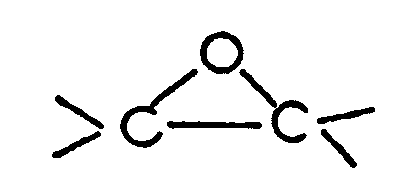
| 164.3 | Epoxy containing reactant: | ||
| This subclass is indented under subclass 164.1. Subject matter wherein the synthetic resin is made in part
from a reactant having the following group:
| |||
| 164.4 | Silicon containing: | ||
This subclass is indented under subclass 164.1. Subject matter wherein the synthetic resin molecules include
the element silicon.
| |||
| 164.5 | Sulfur containing: | ||
Subject matter under 164.1 wherein the synthetic resin molecules
include the element sulfur.
| |||
| 164.6 | Nitrogen containing: | ||
This subclass is indented under subclass 164.1. Subject matter wherein the synthetic resin molecules include
the element nitrogen.
| |||
| 164.7 | Ester type: | ||
This subclass is indented under subclass 164.1. Subject matter wherein the synthetic resin is the reaction
product of an alcohol or phenol and an organic acid.
| |||
| 165 | Phenol-aldehyde: | ||
| This subclass is indented under subclass 164. Processes and products including a phenol-aldehyde reaction
product resin.
SEE OR SEARCH CLASS:
| |||
| 166 | Amine- or amide-aldehyde: | ||
| This subclass is indented under subclass 164. Processes and products including an amine- or amide-aldehyde
reaction product resin.
SEE OR SEARCH CLASS:
| |||
| 167 | With additional organic reactant: |
| This subclass is indented under subclass 166. Processes and products in which the resin is prepared or is reacted with an organic material other than the amine or amide and aldehyde. | |
| 168.1 | Polymerized unsaturated compound: | ||
| This subclass is indented under subclass 164.1. Processes and products in which the resin has been prepared
by polymerization of an ethylenically unsaturated organic compound.
SEE OR SEARCH CLASS:
| |||
| 168.2 | Nitrogen containing compound: | ||||
| This subclass is indented under subclass 168.1. Processes in which the unsaturated compound contains at
least one atom of nitrogen.
SEE OR SEARCH THIS CLASS, SUBCLASS:
| |||||
| 168.3 | Acrylamide containing: | ||
This subclass is indented under subclass 168.2. Processes in which the nitrogen containing compound is an
amide of acrylic acid, or of an analogue of acrylic acid.
| |||
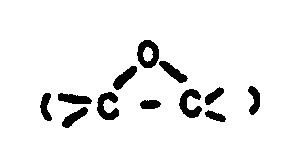
| 168.4 | Heterocyclic N or S or epoxy component: |
| This subclass is indented under subclass 168.3. Subject matter wherein one component of the polymer contains
a heterocylic nitrogen or sulfur containing group or an epoxy group
as below:
| |
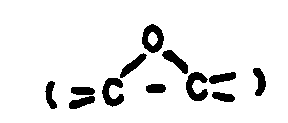
| 168.5 | Heterocyclic N or S epoxy component: |
| Subject matter under subclasss 168.2 wherein one component
of the polymer contains a heterocyclic nitrogen or sulfur containing
group or an epoxy group as below:
| |
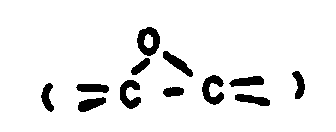
| 168.6 | Hetero S or epoxy component: |
| This subclass is indented under subclass 168.1. Subject matter wherein the unsaturated monomer contains
a heterocyclic sulfur containing group, or an epoxy group as below:
| |
| 168.7 | Ester type: |
| This subclass is indented under subclass 168.1. Subject matter wherein the unsaturated monomer is the reaction product of an alcohol, or a phenol with an acid. | |
| 169 | From polyene compound: |
| This subclass is indented under subclass 168.1. Processes and products in which the unsaturated compound (monomer) which is polymerized has more than one ethylene type bond, e.g., butadiene. | |
| 170 | Natural hydrocarbon gum (rubber): | ||
| This subclass is indented under subclass 158. Processes and products which include a natural hydrocarbon
gum (rubber).
SEE OR SEARCH CLASS:
| |||
| 171 | Bitumen: | ||
| This subclass is indented under subclass 158. Processes and products which include a bituminous material
such as asphalt, tar, tarry residues, etc.
SEE OR SEARCH CLASS:
| |||
| 172 | Wax: | ||||
This subclass is indented under subclass 158. Processes and products which include a wax.
SEE OR SEARCH CLASS:
| |||||
| 173 | Hydrocarbon: |
| This subclass is indented under subclass 158. Processes and products which include a hydrocarbon. | |
| 174 | Protein: | ||||||
This subclass is indented under subclass 158. Processes and products which include a nonfibrous proteinaceous
material.
SEE OR SEARCH THIS CLASS, SUBCLASS:
SEE OR SEARCH CLASS:
| |||||||
| 175 | Carbohydrate: |
| This subclass is indented under subclass 158. Processes and products in which the additive is a carbohydrate. | |
| 176 | Cellulose (non-fibrous): | ||||
This subclass is indented under subclass 175. Processes and products which include, as the additive, cellulose
in a nonfibrous form.
SEE OR SEARCH THIS CLASS, SUBCLASS:
| |||||
| 177 | Cellulose derivative (e.g., cellulose ester): | ||
| This subclass is indented under subclass 175. Processes and products which include a nonfibrous cellulose
derivative, such as a cellulose ether or ester.
SEE OR SEARCH THIS CLASS, SUBCLASS:
| |||
| 178 | Gum: |
| This subclass is indented under subclass 175. Processes and products which include a carbohydrate gum, e.g., gum tragacanth. | |
| 179 | Fat, fatty oil, or higher fatty acid: | ||||
This subclass is indented under subclass 158. Processes and products which include a fat, fatty oil, or
higher fatty acid.
SEE OR SEARCH CLASS:
| |||||
| 180 | Natural resin: | ||||
This subclass is indented under subclass 158. Processes and products which include a natural resin or
derivative thereof.
SEE OR SEARCH CLASS:
| |||||
| 181.1 | Inorganic: | ||||
This subclass is indented under subclass 158. Processes and products which include an inorganic nonfibrous
material, other than water.
SEE OR SEARCH THIS CLASS, SUBCLASS:
| |||||
| 181.2 | Metal salt other than silicate: |
| This subclass is indented under subclass 181.1. Subject matter comprising a metal salt other than a salt of silicic acid. | |
| 181.3 | Sulfate or sulfite: |
| This subclass is indented under subclass 181.2. Subject matter wherein the salt is a salt of H2SO4 or H2SO3. | |
| 181.4 | Metal oxide or hydroxide: |
| This subclass is indented under subclass 181.1. Subject matter comprising a binary compound of oxygen and a metallic element or a metallic element connected to an -OH group. | |
| 181.5 | Metal other than alkali metal, magnesium, or alkaline earth metal: |
| This subclass is indented under subclass 181.4. Subject matter wherein the metal is not a Group IA metal nor Mg, Ca, Sr, or Ba. | |
| 181.6 | Silicon containing additive other than clay: |
| This subclass is indented under subclass 181.1. Subject matter comprising a silicon containing substance other than those substances considered to be clays. | |
| 181.7 | Alkai metal silicate: |
| This subclass is indented under subclass 181.6. Subject matter wherein the silicon containing substance comprises lithium, sodium, potassium, rubidium or cesium silicate. | |
| 181.8 | Clay: | ||
This subclass is indented under subclass 181.1. Subject matter wherein the inorganic substance comprises
any substance considered to be a clay.
| |||
| 181.9 | Free metal or free carbon containing: |
| This subclass is indented under subclass 181.1. Subject matter comprising a metal or carbon in elemental form. | |
| 182 | With preparatory chemical treatment of fiber: | ||||||
This subclass is indented under subclass 158. Processes including a treatment of fibers prior to addition
of a nonfibrous medium to a fibrous slurry, which so conditions
the fibers that the medium will coat or impregnate them upon addition
to the slurry.
| |||||||
| 183 | Incorporation procedures: | ||
This subclass is indented under subclass 158. Processes which are drawn to a particular manipulative procedure
of adding a nonfibrous material to pulp or a wet web, sheet or article.
| |||
| 184 | Application to formed web: | ||||||
This subclass is indented under subclass 183. Processes in which the nonfibrous material is added to a
formed web or article after it has been deposited from the liquid
suspension.
SEE OR SEARCH THIS CLASS, SUBCLASS:
| |||||||
| 185 | Part added to furnish or pulp: |
| This subclass is indented under subclass 184. Processes in which a portion of the nonfiber material additive is added to the fibrous material before the material is deposited from the liquid suspension. | |
| 186 | On mold: | ||
This subclass is indented under subclass 184. Processes in which the nonfibrous material is added to the
deposited web or article while it is still on the forming mold.
| |||
| 187 | Hydration and/or gelatinization: | ||||||||
This subclass is indented under subclass 100. Processes and products in which the cellulosic fibers are
chemically or physicochemically united with water to produce a hydrated
or partially gelatinized fiber.
SEE OR SEARCH CLASS:
| |||||||||
| 188 | Non-uniform internal structure: | ||||
This subclass is indented under subclass 100. Processes and products characterized by a difference in
some property of the fibers between two portions of the interior
or between a portion of the interior and a portion of the surface.
| |||||
| 189 | Reclamation, salvage or reuse of materials: |
| This subclass is indented under subclass 100. Processes including a step of recovering for reuse some material used in the fiber deposition, or portions of the deposited product. | |
| 190 | White water: |
| This subclass is indented under subclass 189. Processes involving the recovery of the aqueous fiber suspending medium (white water) for reuse in a subsequent fiber deposition or other paper making step. | |
| 191 | Broke or trim: | ||
| This subclass is indented under subclass 189. Processes in which all or part of a body of uncured deposited
fibrous material is recovered for reuse in a paper making operation
usually the waste or trimmings from the formed web.
SEE OR SEARCH THIS CLASS, SUBCLASS:
| |||
| 192 | Utilizing electrical or wave energy: | ||||||
| This subclass is indented under subclass 100. Processes including the step of treating the material directly
with electrical, radiant or wave energy.
SEE OR SEARCH THIS CLASS, SUBCLASS:
SEE OR SEARCH CLASS:
| |||||||
| 193 | Lead strip forming and/or guiding: | ||||
| This subclass is indented under subclass 100. Processes including a step of facilitating the handling
of a web of fibrous material by forming a narrow tongue-like portion
on the leading end of the web or including the manipulation of such
narrow tongue like portion through the paper making or treating
device.
SEE OR SEARCH THIS CLASS, SUBCLASS:
| |||||
| 194 | With cutting and/or slitting: | ||
| This subclass is indented under subclass 100. Processes including a step of severing, cutting or slitting
the fibrous product.
SEE OR SEARCH THIS CLASS, SUBCLASS:
| |||
| 195 | Fluid deckle or shower: | ||
| This subclass is indented under subclass 194. Processes in which the severing operation occurs because
of the action of a thin fluid jet on the product.
SEE OR SEARCH THIS CLASS, SUBCLASS:
| |||
| 196 | With folding or twisting (e.g., roving): | ||||||
This subclass is indented under subclass 100. Processes in which the deposited web or article, is subjected
to a folding, twisting or rolling prior to the final drying thereof.
SEE OR SEARCH THIS CLASS, SUBCLASS:
| |||||||
| 197 | With stretching, tensioning, decurling, flexing or breaking: | ||||
| This subclass is indented under subclass 100. Processes including a step of distorting the product by
stretching, subjecting a product to tensile force, repeatedly bending
a product to physically modify the product without altering its
shape, or restoring a distorted normally planar sheet to its original
planar configuration by a mechanical shaping step.
SEE OR SEARCH THIS CLASS, SUBCLASS:
SEE OR SEARCH CLASS:
| |||||
| 198 | With measuring, inspecting and/or testing: | ||||||
| This subclass is indented under subclass 100. Processes combined with a step of subjecting the product
(1) to a quantitative determinative, (2) to a visual inspection,
or (3) to a testing procedure.
SEE OR SEARCH THIS CLASS, SUBCLASS:
SEE OR SEARCH CLASS:
| |||||||
| 199 | Conditioning, preparing or repairing of apparatus: | ||
| This subclass is indented under subclass 100. Processes including a step of preparing the apparatus for
the paper making operation or of placing it in better condition
to perform its function or of removing undesirable residue of the
paper making operation, from the apparatus, not otherwise provided
for.
SEE OR SEARCH CLASS:
| |||
| 200 | Wire stringing: |
| This subclass is indented under subclass 199. Processes including a step of removing or inserting an endless foraminous forming surface or wire from or into a paper making apparatus. | |
| 201 | Combined processes: | ||
This subclass is indented under subclass 100. Processes combined with a step of treating the fibrous material
either before or after deposition not otherwise provided for.
| |||
| 202 | Running or indefinite length work forming and/or treating processes (e.g., web): | ||||||
This subclass is indented under subclass 100. Processes peculiarly adapted to the production and/or
treatment of endless fibrous webs.
SEE OR SEARCH THIS CLASS, SUBCLASS:
| |||||||
| 203 | Forming single web between opposed forming surfaces: | ||||||
This subclass is indented under subclass 202. Processes in which a unitary fibrous web is produced by
continuously introducing slurry between separate face-to-face foraminous molds
whereby formation and interfelting of the fibers occurs at both
faces of the web.
SEE OR SEARCH THIS CLASS, SUBCLASS:
| |||||||
| 204 | Subsequent treatment of formed web: | ||||||||||||
This subclass is indented under subclass 202. Processes in which an interfelted fibrous web is subjected
to a treatment step after removal from the mold surface on which
it was formed either before or after final drying.
SEE OR SEARCH THIS CLASS, SUBCLASS:
| |||||||||||||
| 205 | Pressure: | ||||
| This subclass is indented under subclass 204. Processes in which the fibrous web is subjected to mechanical
pressure by solid surfaces.
SEE OR SEARCH THIS CLASS, SUBCLASS:
| |||||
| 206 | With heating and/or cooling: |
| This subclass is indented under subclass 205. Processes combined with a step of altering the temperature of the treated web. | |
| 207 | Heating, cooling, gas or vapor contact: | ||||||||
This subclass is indented under subclass 204. Processes in which the subsequent treatment is that of altering
the temperature of the formed web and/or directing a treating
gas or vapor into association with the web.
SEE OR SEARCH THIS CLASS, SUBCLASS:
SEE OR SEARCH CLASS:
| |||||||||
| 208 | Treatment of slurry on mold surface: | ||||||||
This subclass is indented under subclass 202. Processes in which the slurry on the foraminous mold surface
is subjected to a treatment in addition to the mere expression of
liquid from the slurry.
SEE OR SEARCH THIS CLASS, SUBCLASS:
| |||||||||
| 209 | Vibration or agitation: | ||
This subclass is indented under subclass 208. Processes in which the slurry is subjected to shaking, the
action of a reciprocating member, or some other agitating influence.
| |||
| 210 | Pressure member: | ||||
| This subclass is indented under subclass 208. Processes in which the slurry is subjected to pressure by
means of a solid member acting thereon.
SEE OR SEARCH THIS CLASS, SUBCLASS:
| |||||
| 211 | Inhibiting or restricting drainage through mold: | ||||||
This subclass is indented under subclass 202. Processes for forming an endless web by draining the suspending
medium through a foraminous mold and controlling the rate of drainage of
the medium.
SEE OR SEARCH THIS CLASS, SUBCLASS:
| |||||||
| 212 | Directing slurry into association with mold: | ||
| This subclass is indented under subclass 202. Processes including a step of bringing the pulp slurry into
direct contact with a foraminous molding surface.
SEE OR SEARCH THIS CLASS, SUBCLASS:
| |||
| 213 | Projecting or slinging stock: | ||||
This subclass is indented under subclass 212. Processes in which the pulp slurry is sprayed or directed
against the mold surface in a stream while completely unsupported
by confining means.
SEE OR SEARCH THIS CLASS, SUBCLASS:
| |||||
| 214 | Pressure forming: | ||||
This subclass is indented under subclass 212. Processes in which the slurry is applied to the mold surface
under pressure greater than the normal hydrostatic head of the slurry
on the mold surface.
SEE OR SEARCH THIS CLASS, SUBCLASS:
| |||||
| 215 | Counter or transverse of mold movement: | ||
| This subclass is indented under subclass 212. Processes in which the slurry is applied to a traveling
mold and is directed in a direction differing for the direction
of travel of the mold.
SEE OR SEARCH THIS CLASS, SUBCLASS:
| |||
| 216 | Mechanical treatment of slurry in head box or approach flow: | ||||||
This subclass is indented under subclass 212. Processes in which the slurry is subjected to a mechanical
treatment directly before application to the mold surface.
SEE OR SEARCH THIS CLASS, SUBCLASS:
| |||||||
| 217 | Suction through mold: | ||||||
| This subclass is indented under subclass 202. Processes in which is recited a step of applying reduced
pressure to the side of the foraminous mold to aid drawing the suspending
medium through the pores of the mold.
SEE OR SEARCH THIS CLASS, SUBCLASS:
| |||||||
| 218 | Article forming processes (pulp molding): | ||||||||||
This subclass is indented under subclass 100. Processes involving depositing fibers on a surface so as
to form a product of definite and limited dimensions and shape as
distinguished from a web of a definite length.
SEE OR SEARCH THIS CLASS, SUBCLASS:
| |||||||||||
| 219 | Plural stage deposition: | ||||||
This subclass is indented under subclass 218. Processes in which fibers are deposited from suspensions
thereof at a plurality of different times or locations.
SEE OR SEARCH THIS CLASS, SUBCLASS:
| |||||||
| 220 | Pressing with flexible diaphragm: | ||
| This subclass is indented under subclass 218. Processes in which a flexible diaphragm is brought into
contact with the deposited fibrous material at some stage of formation.
SEE OR SEARCH THIS CLASS, SUBCLASS:
| |||
| 221 | Treatment subsequent to removal from forming mold: |
| This subclass is indented under subclass 218. Processes including a treatment of a pulp molded article after removal from the forming means. | |
| 222 | Surface treatment: | ||
This subclass is indented under subclass 221. Processes including a step of altering the surface character
of at least a portion of the article.
| |||
| 223 | Reshaping (i.e., changing configuration): | ||||
| This subclass is indented under subclass 221. Processes including changing the shape or configuration
imparted to the article by the original forming means, after removal
therefrom.
SEE OR SEARCH THIS CLASS, SUBCLASS:
| |||||
| 224 | Heat and/or mechanical pressure: | ||||||
| This subclass is indented under subclass 221. Processes including the application of heat and/or
mechanical pressure to the article after removal from its original
forming means.
SEE OR SEARCH THIS CLASS, SUBCLASS:
SEE OR SEARCH CLASS:
| |||||||
| 225 | Boards or sheets: | ||
This subclass is indented under subclass 224. Processes resulting in a product which is rectangular in
a cross-section through its thickness.
| |||
| 226 | Applying heat to work on forming mold: |
| This subclass is indented under subclass 218. Processes which include a step of applying heat to fibrous material after waterlaying, but while it is still in contact with a forming surface. | |
| 227 | Applying mechanical pressure to work on forming mold: | ||
| This subclass is indented under subclass 218. Processes which include a step of applying mechanical pressure
to fibrous material, while it is still in contact with a forming
surface.
SEE OR SEARCH THIS CLASS, SUBCLASS:
| |||
| 228 | Accretion from bulk: | ||
| This subclass is indented under subclass 218. Processes in which a bulk supply of pulp suspension is brought
into association with a forming means, the fibrous material being deposited
on the surface thereof as by withdrawal of the suspending water,
followed by the separation of the excess pulp from the forming means
with the deposited fibrous material thereon.
SEE OR SEARCH THIS CLASS, SUBCLASS:
| |||
| 229 | Vibration of mold and/or slurry: | ||
| This subclass is indented under subclass 228. Processes including a step of vibrating the forming means,
or the pulp slurry while it is in contact with the forming surface.
SEE OR SEARCH THIS CLASS, SUBCLASS:
| |||
| 230 | Separation from mold or core: | ||
| This subclass is indented under subclass 218. Processes which include a step of separating the deposited
fibrous article from its forming surface.
SEE OR SEARCH THIS CLASS, SUBCLASS:
| |||
| 231 | Articles: | ||||||
This subclass is indented under subclass 100. Products which are deposited fibrous articles having some
significant structural shape or characteristic other than a web
or sheet.
SEE OR SEARCH THIS CLASS, SUBCLASS:
SEE OR SEARCH CLASS:
| |||||||
| 232 | APPARATUS: | ||
This subclass is indented under the class definition. Apparatus relating to structures or mechanisms for producing
and/or treating water or liquid laid fibrous products and
various combinations of such structures with other structures or
devices not elsewhere provided for and subcombinations, per se,
not elsewhere provided for.
| |||
| 233 | Digester: | ||||||||
This subclass is indented under subclass 232. Apparatus comprising means for bringing and/or
maintaining fiber containing stock material in intimate association
with a chemical treating fluid for the purpose of at least partially
liberating discrete fibers by destroying nonfibrous bonding material
in the stock.
SEE OR SEARCH CLASS:
| |||||||||
| 234 | With mechanical defibering means: | ||||||||||
This subclass is indented under subclass 233. Apparatus combined with means to physically disrupt the
bond material causing adherence of fibers one to the other.
SEE OR SEARCH THIS CLASS, SUBCLASS:
SEE OR SEARCH CLASS:
| |||||||||||
| 235 | Concurrent: | ||
This subclass is indented under subclass 234. Combinations in which the digester and defiberator operate
on the material simultaneously and under the same conditions of
temperature and pressure.
| |||
| 236 | Continuous: |
| This subclass is indented under subclass 235. Apparatus in which the stock material is fed to and discharged from a digester and defiberating apparatus at substantially the same rate, whereby a more or less steady flow of material is maintained. | |
| 237 | Continuous: | ||||
This subclass is indented under subclass 233. Devices provided with means to charge and discharge the
digester at substantially the same rate, whereby a more or less
steady flow of material is maintained through the treating device.
SEE OR SEARCH THIS CLASS, SUBCLASS:
| |||||
| 238 | Automatic control: | ||
| This subclass is indented under subclass 233. Apparatus having means sensing a condition in the material
undergoing treatment or in the treating fluid or chemical and in
response thereto causing a control operation.
SEE OR SEARCH THIS CLASS, SUBCLASS:
| |||
| 239 | With recovery means: | ||||||||||
This subclass is indented under subclass 233. Apparatus provided with means to salvage or make available
for reuse heat and/or products resulting from the digestion
process.
SEE OR SEARCH THIS CLASS, SUBCLASS:
| |||||||||||
| 240 | With incinerator or evaporator: |
| This subclass is indented under subclass 239. Apparatus having means to apply heat to the used chemicals to cause a change in the state or nature of the chemicals to render them fit for reuse. | |
| 241 | Plural: | ||||
This subclass is indented under subclass 233. Apparatus having two or more digesters in operational association.
| |||||
| 242 | Combined: |
| This subclass is indented under subclass 233. Apparatus having means combined with or in addition to digester structures which means either perfects the operation of the digester or performs some function other than digestion. | |
| 243 | With pulp agitating or circulating means: | ||||||||||||
This subclass is indented under subclass 233. Apparatus having means to maintain the stock material undergoing
digestion in a state of motion.
SEE OR SEARCH THIS CLASS, SUBCLASS:
| |||||||||||||
| 244 | Rotating digester: | ||||
This subclass is indented under subclass 243. Apparatus in which the agitation is caused by motion of
the digester structure about an axis of rotation.
SEE OR SEARCH THIS CLASS, SUBCLASS:
| |||||
| 245 | Removable basket or retaining means: |
| This subclass is indented under subclass 233. Apparatus having means separable from the digester for either (1) containing a charge of material undergoing treatment or (2) constraining a charge from movement within the digester. | |
| 246 | Charging and/or discharging means (including blow pits): | ||||||||||||||||
This subclass is indented under subclass 233. Apparatus in which the body of the digester structure is
provided with means to permit the introduction of the stock material
to be digested, or the delivery of the material after treatment
within the digester.
SEE OR SEARCH THIS CLASS, SUBCLASS:
SEE OR SEARCH CLASS:
| |||||||||||||||||
| 247 | Target, impact, explosion: | ||||
| This subclass is indented under subclass 246. Apparatus in which the stock material is treated by (1)
projecting it violently from the digester against a fixed abutment
or (2) the material is caused to disintegrate by suddenly releasing the
digestion pressures.
SEE OR SEARCH THIS CLASS, SUBCLASS:
SEE OR SEARCH CLASS:
| |||||
| 248 | Forced circulation or percolation of fluid only: | ||||||||
This subclass is indented under subclass 233. Apparatus having means to positively force the flow of digestion
chemicals through the material being treated.
SEE OR SEARCH THIS CLASS, SUBCLASS:
| |||||||||
| 249 | With heating: | ||
This subclass is indented under subclass 248. Apparatus having means to either maintain or cause a rise
in temperature in either stock undergoing treatment or the treating
chemical.
| |||
| 250 | Heating means: | ||
This subclass is indented under subclass 233. Apparatus provided with means to cause a rise in temperature
of either the stock material or the chemical treating fluid.
| |||
| 251 | Strainers: | ||
| This subclass is indented under subclass 233. Apparatus having a foraminous screen at an outlet of the
digester to retain stock material and permit the passage of fluid
therethrough.
SEE OR SEARCH CLASS:
| |||
| 252 | Automatic control: | ||
| This subclass is indented under subclass 232. Apparatus having means to sense a condition and in response
thereto cause a control operation of the apparatus.
SEE OR SEARCH THIS CLASS, SUBCLASS:
| |||
| 253 | Of plural operations: |
| This subclass is indented under subclass 252. Apparatus in which the control is of more than a single device. | |
| 254 | Of stock working device: | ||||
This subclass is indented under subclass 252. Apparatus in which the control is of a means preparing the
stock for the forming operation.
SEE OR SEARCH CLASS:
| |||||
| 255 | Of lead strip former and/or break sensing: | ||
| This subclass is indented under subclass 252. Apparatus in which the sensing means determines the continuity
of the fibrous web or in which the control means causes the actuation of
a device intercepting a rupture in the formed web and maintains
continuity thereof.
SEE OR SEARCH THIS CLASS, SUBCLASS:
| |||
| 256 | Of mold movement: |
| This subclass is indented under subclass 252. Apparatus in which the control means affects the rate of speed or direction of motion of a moving foraminous forming surface. | |
| 257 | Transverse movement of wire: | ||||||
This subclass is indented under subclass 256. Apparatus in which the controlled motion of the foraminous
forming surface is in a plane normal to the length of the surface.
SEE OR SEARCH THIS CLASS, SUBCLASS:
SEE OR SEARCH CLASS:
| |||||||
| 258 | Of stock consistency: | ||
| This subclass is indented under subclass 252. Apparatus in which the control device regulates the ratio
of liquid to fibers of the pulp.
SEE OR SEARCH CLASS:
| |||
| 259 | Of stock feed to forming device: | ||
This subclass is indented under subclass 252. Apparatus in which the device controlled directs the stock
onto the forming device.
| |||
| 260 | Of product cutting device: | ||
| This subclass is indented under subclass 252. Apparatus in which the device controlled severs at least
a portion of a shaped article.
SEE OR SEARCH THIS CLASS, SUBCLASS:
| |||
| 261 | With beating, refining, and/or disintegrating means: | ||
| This subclass is indented under subclass 232. Apparatus having means subjecting the stock material to
an attrition step.
SEE OR SEARCH CLASS:
| |||
| 262 | Electric controls or systems: | ||
| This subclass is indented under subclass 232. Apparatus having electrical means for causing or controlling
a paper making operation that consists of more than mere power or
motive means.
SEE OR SEARCH THIS CLASS, SUBCLASS:
| |||
| 263 | Measuring, testing, inspecting, indicating or illuminating: | ||||||||
| This subclass is indented under subclass 232. Apparatus having means (1) to detect some condition in the
operation of the machine, the detecting means operating a visual
and/or audible indication of the condition, (2) or to indicate
or test a physical or chemical condition of the material under treatment,
(3) or means permitting or peculiarly adapted to permit examination
of the machine or the material undergoing treatment.
SEE OR SEARCH THIS CLASS, SUBCLASS:
SEE OR SEARCH CLASS:
| |||||||||
| 264 | White water or broke recovery, recirculation or treatment: | ||||||||
| This subclass is indented under subclass 232. Apparatus including means (1) to enable reuse of the pulp
slurry fluid after drainage through the forming surface during the
web forming step, with or without means to subject the fines carrying
fluid to a reclaiming treatment, (2) or means to collect or make
available for reuse the freshly formed web at some point before
final drying.
SEE OR SEARCH THIS CLASS, SUBCLASS:
SEE OR SEARCH CLASS:
| |||||||||
| 265 | With coating or impregnating means (including printing): | ||||||||||||
| This subclass is indented under subclass 232. Apparatus combined with means applying a surface film and/or
absorbed layer of material other than a fibrous water-laid substance.
SEE OR SEARCH THIS CLASS, SUBCLASS:
SEE OR SEARCH CLASS:
| |||||||||||||
| 266 | Acting on product on mold: |
| This subclass is indented under subclass 265. Apparatus in which the coating material is applied to the product while still on the foraminous forming surface. | |
| 267 | Molding pulp and non-pulp insert or preform: | ||||
This subclass is indented under subclass 232. Apparatus in which the fibrous slurry product is formed
in contact with or about a shaped body or member, which member is
not waterlaid and becomes a part of the finished article or product.
SEE OR SEARCH THIS CLASS, SUBCLASS:
| |||||
| 268 | Running or indefinite length work: |
| This subclass is indented under subclass 267. Apparatus in which the molded pulp article is of very great length relative to its width or cross-section. | |
| 269 | With product stacking or piling means: | ||
| This subclass is indented under subclass 232. Apparatus combined with means arranging the molded pulp
articles in superposed relationship, or in adjacent face-to-face
juxtaposition.
SEE OR SEARCH CLASS:
| |||
| 270 | Flexing, bending, straightening or decurling means: | ||||||||
This subclass is indented under subclass 232. Apparatus for treating a dried article having means for
either (1) temporarily distorting the article within its elastic
limits, or (2) returning a deformed or distorted article to its
normal planar configuration.
SEE OR SEARCH THIS CLASS, SUBCLASS:
SEE OR SEARCH CLASS:
| |||||||||
| 271 | Sheet or web: |
| This subclass is indented under subclass 270. Apparatus in which the material undergoing treatment is in the nature of a sheet or web. | |
| 272 | Apparatus repair, cleaning or conditioning: | ||||||
This subclass is indented under subclass 232. Apparatus having means to prepare the apparatus for the
paper making operation or place it in better condition to perform
its function or to remove superfluous and undesirable residue of the
paper making operation from the structure.
SEE OR SEARCH THIS CLASS, SUBCLASS:
SEE OR SEARCH CLASS:
| |||||||
| 273 | Wire changing and/or tensioning: | ||
| This subclass is indented under subclass 272. Apparatus in which the apparatus is structurally modified
to permit removal and substitution of the foraminous forming surface
or in which means are provided to maintain the proper degree of
tension on an endless foraminous forming member.
SEE OR SEARCH CLASS:
| |||
| 274 | Of porous or foraminous member (e.g., felt or mold): | ||||||||
This subclass is indented under subclass 272. Apparatus in which the part of the apparatus undergoing
treatment is pervious and permits the passage of fluid therethrough.
SEE OR SEARCH CLASS:
| |||||||||
| 275 | Means applying fluid: | ||
| This subclass is indented under subclass 274. Apparatus in which the cleaning or conditioning medium is
a liquid.
SEE OR SEARCH CLASS:
| |||
| 276 | To cylinder: |
| This subclass is indented under subclass 275. Apparatus in which the member being treated rotates about an axis and is circular in transverse section, the center of the circular section coinciding with the axis of rotation. | |
| 277 | Reciprocating: |
| This subclass is indented under subclass 275. Apparatus in which the means supplying the liquid translates with respect to the member being cleaned or conditioned. | |
| 278 | With suction means: |
| This subclass is indented under subclass 277. Apparatus having in addition to the means supplying the liquid a source of reduced pressure acting on the surface to be treated. | |
| 279 | And suction means: |
| This subclass is indented under subclass 275. Apparatus having in addition to the means supplying the liquid a source of reduced pressure acting on the surface to be treated. | |
| 280 | Web creping or crinkling type: | ||||||
This subclass is indented under subclass 232. Apparatus specifically or peculiarly adapted to produce
an endless product that is bodily wrinkled in character.
SEE OR SEARCH THIS CLASS, SUBCLASS:
SEE OR SEARCH CLASS:
| |||||||
| 281 | Cylinder and doctor: |
| This subclass is indented under subclass 280. Apparatus in which a solid scraping means removes a web product from the circumference of a drum which scraping means causes crowding of the material on itself. | |
| 282 | Circumferentially grooved cylinder: | ||||
This subclass is indented under subclass 281. Apparatus in which the cylinder is provided with continuous
recesses extending around its outer surface in planes normal to
the axis of the cylinder.
SEE OR SEARCH THIS CLASS, SUBCLASS:
| |||||
| 283 | With product winding or reeling means: | ||||||
This subclass is indented under subclass 232. Apparatus combined with means to lay the product in turns
about a mandrel or core.
SEE OR SEARCH THIS CLASS, SUBCLASS:
SEE OR SEARCH CLASS:
| |||||||
| 284 | Tube winding type: |
| This subclass is indented under subclass 283. Apparatus specially adapted or peculiar to forming a hollow cylindrical body. | |
| 285 | With tube cutting or slitting means: | ||||
This subclass is indented under subclass 284. Apparatus provided with means for severing the formed tubular
body.
SEE OR SEARCH THIS CLASS, SUBCLASS:
| |||||
| 286 | With cutting, scoring, perforating or tearing: | ||||||||||
This subclass is indented under subclass 232. Apparatus combined with (1) means causing separation of
a unitary portion of a web or article into separate parts, (2) means
forming holes by piercing or perforating means or (3) means incising
or scratching the surface of a pulp body.
SEE OR SEARCH THIS CLASS, SUBCLASS:
SEE OR SEARCH CLASS:
| |||||||||||
| 287 | With folding, rolling or twisting means: | ||||||||||
This subclass is indented under subclass 232. Apparatus combined with means distorting a single workpiece
to bring separate areas of the workpiece into face-to-face relationship
or distorting the workpiece into a grossly altered configuration.
SEE OR SEARCH THIS CLASS, SUBCLASS:
SEE OR SEARCH CLASS:
| |||||||||||
| 288 | Molding and burnishing means: | ||||||||
| This subclass is indented under subclass 232. Apparatus having means to form a waterlaid felted product
combined with a solid work piece treating member acting on the work
piece after formation which solid member contacts the surface of
the work piece under pressure and has a motion relative to the surface
of the work piece to modify at least the surface characteristics
of the work piece.
SEE OR SEARCH THIS CLASS, SUBCLASS:
SEE OR SEARCH CLASS:
| |||||||||
| 289 | Running or indefinite length product forming and/or treating means: | ||||||
This subclass is indented under subclass 232. Apparatus specifically adapted or peculiar to the handling
of work of great length relative to its cross-section which work
is continually produced or treated.
SEE OR SEARCH THIS CLASS, SUBCLASS:
| |||||||
| 290 | Molding and heat exchange means: | ||||||||||||||||||||
This subclass is indented under subclass 289. Apparatus having foraminous forming means and including
in combination therewith means to alter the temperature of the formed
article.
SEE OR SEARCH THIS CLASS, SUBCLASS:
SEE OR SEARCH CLASS:
| |||||||||||||||||||||
| 291 | Moving impermeable member applying stock to mold: | ||
This subclass is indented under subclass 289. Apparatus in which the fibrous pulp material is brought
into contact with a foraminous forming surface by a solid nonporous
transfer member which separates a film of pulp from the bulk supply
and carries it into contact with the mold surface.
| |||
| 292 | Means flinging or projecting stock against mold: | ||
| This subclass is indented under subclass 289. Apparatus in which the stock material is sprayed or directed
in a stream against the foraminous molding surface while completely unsupported
or unconfined.
SEE OR SEARCH THIS CLASS, SUBCLASS:
| |||
| 293 | Product slides relative to molding surface (e.g., extrusion molding): | ||||||||||
This subclass is indented under subclass 289. Apparatus in which an endless molded product is formed on
a molding surface of a limited length.
SEE OR SEARCH CLASS:
| |||||||||||
| 294 | Mold intermittently moving relative to supply: |
| This subclass is indented under subclass 289. Apparatus in which the pulp supply container and the mold have a stop-and-go motion relative to one another whereby an endless article is formed in stepwise fashion. | |
| 295 | Concave molding surface in longitudinal or transverse section: | ||||
This subclass is indented under subclass 289. Apparatus in which the face of an endless foraminous forming
surface is curved either transversely or longitudinally of the direction of
motion, the low point of the curvature being on the stock carrying
face.
SEE OR SEARCH CLASS:
| |||||
| 296 | Irregular or configured molding surface (e.g., corrugated): | ||
| This subclass is indented under subclass 289. Apparatus in which the foraminous molding face presents
a grossly interrupted or broken surface or carries a design or pattern
on its face, whereby a nonplanar surfaced product is produced.
SEE OR SEARCH THIS CLASS, SUBCLASS:
| |||
| 297 | Pneumatic pressure or vacuum means acting directly on stock on mold surface: | ||||||||
This subclass is indented under subclass 289. Apparatus in which means are provided for either increasing
or decreasing the pressure of the atmosphere immediately contacting
the surface of the pulp on the mold.
SEE OR SEARCH THIS CLASS, SUBCLASS:
| |||||||||
| 298 | Plural separate streams of stock applied to mold: | ||||
This subclass is indented under subclass 289. Apparatus in which more than a single means directs the
pulp into the immediate contact with the forming surface.
| |||||
| 299 | Longitudinally spaced points of application: | ||||
This subclass is indented under subclass 298. Apparatus in which the foraminous molding surface is endless
and travels longitudinally of itself and the plural separate streams
of stock applied at spaced positions along the length of the foraminous
molding surface.
SEE OR SEARCH THIS CLASS, SUBCLASS:
| |||||
| 300 | Plural molds or plural spaced areas of application on a single mold: | ||||||
This subclass is indented under subclass 289. Apparatus having plural discrete foraminous molds and/or
discrete separated portions of a single mold against which stock
is applied.
SEE OR SEARCH THIS CLASS, SUBCLASS:
| |||||||
| 301 | Common vat or stock feed: | ||
| This subclass is indented under subclass 300. Apparatus in which a single source of supply directs the
pulp against the molding surfaces.
SEE OR SEARCH THIS CLASS, SUBCLASS:
| |||
| 302 | Tangent cylinder molds: |
| This subclass is indented under subclass 301. Apparatus in which the plural molds each comprise a cylinder and in which the outer circumferential surface is foraminous and forms the molding surface, the foraminous surfaces being in touching contact or closely spaced one with the other to unite the accreted webs. | |
| 303 | Molds converge to unit web: |
| This subclass is indented under subclass 300. Apparatus in which the forming surfaces of separate molds approach a single point in their travel to bring together the separate webs formed on each mold surface. | |
| 304 | Webs united on common carrier (e.g., felt): | ||
| This subclass is indented under subclass 300. Apparatus in which the separate webs produced on the molding
surface are applied to a moving additional surface in sequence so
that they may be joined together to form a laminated product.
SEE OR SEARCH THIS CLASS, SUBCLASS:
| |||
| 305 | Molds with subsequent separate pressing means: | ||||||
| This subclass is indented under subclass 289. Apparatus having means for compressing the work after removal
from the foraminous forming surface.
SEE OR SEARCH THIS CLASS, SUBCLASS:
SEE OR SEARCH CLASS:
| |||||||
| 306 | Means removing web product from molding surface: |
| This subclass is indented under subclass 289. Apparatus having means to displace the formed body from the surface on which it is felted or layed. | |
| 307 | Blow off acting through mold: |
| This subclass is indented under subclass 306. Apparatus in which the means displacing is a fluid blast directed through the foraminous molding surface. | |
| 308 | Means treating stock on molding surface: | ||||||||||
This subclass is indented under subclass 289. Apparatus having means positioned adjacent the foraminous
forming surface and acting directly on the pulp material before
it is removed therefrom.
SEE OR SEARCH THIS CLASS, SUBCLASS:
| |||||||||||
| 309 | Irregular treating member or acting non-uniformly across web product: | ||||
This subclass is indented under subclass 308. Apparatus in which the means acting on the pulp (1) has
a different affect on increments of the pulp in a direction transverse
of the produced article, (2) acts in random manner on the pulp,
or (3) is configured to impress a particular pattern on the pulp.
SEE OR SEARCH THIS CLASS, SUBCLASS:
| |||||
| 310 | Fluid jet or suction means (e.g., shower deckle): | ||||||||
This subclass is indented under subclass 309. Apparatus in which the means comprises a fluid stream directed
against the pulp layer, and/or a suction nozzle locally
affecting the pulp layer.
SEE OR SEARCH THIS CLASS, SUBCLASS:
| |||||||||
| 311 | Submerged in supply: | ||||
This subclass is indented under subclass 308. Apparatus in which the treating means is positioned at the
point where the stock stream initially contacts the foraminous forming
surface.
SEE OR SEARCH THIS CLASS, SUBCLASS:
| |||||
| 312 | Solid treating member: | ||||
| This subclass is indented under subclass 308. Apparatus in which the treating means is a solid member
as distinguished from a fluid current.
SEE OR SEARCH THIS CLASS, SUBCLASS:
| |||||
| 313 | Moving: | ||
| This subclass is indented under subclass 312. Apparatus in which the treating member is mounted for motion
relative to the layer of pulp on the forming surface.
SEE OR SEARCH THIS CLASS, SUBCLASS:
| |||
| 314 | Rotary: | ||
This subclass is indented under subclass 313. Apparatus in which the solid treating member has motion
about an axis of rotation.
| |||
| 315 | Means directing stock into contact with molding surface: | ||||
This subclass is indented under subclass 289. Apparatus having means for bringing a pulp slurry into association
with a foraminous mold whereby a fibrous body may be formed thereon.
| |||||
| 316 | On to under surface only of mold: |
| This subclass is indented under subclass 315. Apparatus in which the mold surface is generally flat and horizontally disposed and the stock slurry contacts only the lower surface of the mold. | |
| 317 | Confined stock stream on forming surface (e.g., pressure forming): | ||||
This subclass is indented under subclass 315. Apparatus in which the means directing the stock into contact
with the forming surface is a closed conduit completely embracing
the stock slurry and is in sealing contact with the foraminous forming
surface.
SEE OR SEARCH THIS CLASS, SUBCLASS:
| |||||
| 318 | Cylinder mold with endless forming belt about: | ||
This subclass is indented under subclass 315. Apparatus in which the foraminous molding surface comprises
a permeable rotary body circular in section transverse to the axis
of rotation having trained thereabout an endless foraminous flexible
forming member longer in length than the circumference of the cylinder and
at least a portion of which is spaced from the cylinder at a point
removed from the slurry supply point.
| |||
| 319 | Superposed or lateral stock pool: | ||
This subclass is indented under subclass 318. Apparatus in which the forming surface forms a restraining
wall for the stock container or supports the bulk supply of pulp
slurry from which the article is accreted.
| |||
| 320 | Superposed or lateral stock pool type: | ||
| This subclass is indented under subclass 315. Apparatus in which the forming surface forms a restraining
wall for the stock container or supports the bulk supply of pulp
slurry from which the article is accreted.
SEE OR SEARCH THIS CLASS, SUBCLASS:
| |||
| 321 | Cylinder mold: | ||||
| This subclass is indented under subclass 320. Apparatus in which the mold is cylindrical in nature and
the circumferential surface is foraminous.
SEE OR SEARCH THIS CLASS, SUBCLASS:
| |||||
| 322 | With diverse non-pulp material inlet: | ||
This subclass is indented under subclass 315. Apparatus having means for introducing material other than
pulp slurry into the device directing the stock against the forming
surface.
| |||
| 323 | Immersion vat type (e.g., cylinder machine vat): | ||||||
This subclass is indented under subclass 315. Apparatus having a complete container for the pulp slurry
and in which the forming member dips into the pulp supply and while
immersed therein accretes a layer of stock to form the article.
SEE OR SEARCH THIS CLASS, SUBCLASS:
| |||||||
| 324 | Stock flow direction reversing means: |
| This subclass is indented under subclass 323. Apparatus in which the pulp slurry container has means therein for diverting the stock flow in opposite directions at will or wherein the supply of slurry to the vat is such that the direction of flow may be reversed at will. | |
| 325 | Stock directed transversely of mold direction: | ||
| This subclass is indented under subclass 323. Apparatus in which the pulp slurry is brought into contact
with the foraminous forming surface and sweeps across the surface
in a direction at right angles to the direction of motion of the
surface.
SEE OR SEARCH THIS CLASS, SUBCLASS:
| |||
| 326 | Stock applied at plural points on mold periphery: |
| This subclass is indented under subclass 323. Apparatus in which the pulp slurry is caused to contact the mold surface at more than a single area on the mold. | |
| 327 | Baffles diverting or directing flow against cylinder mold: | ||
This subclass is indented under subclass 323. Apparatus in which the immersion vat is provided with separate
diverters in addition to the vat structure, per se, causing the
stock slurry to flow into direct and intimate contact with the mold
surface.
| |||
| 328 | Concentric with cylinder: | ||
This subclass is indented under subclass 327. Apparatus in which the baffle structure approximates the
external configuration of the immersed cylinder mold.
| |||
| 329 | Adjustable to or from cylinder: |
| This subclass is indented under subclass 328. Apparatus in which the baffle structure is adjustable or in which the position of the baffle may be altered at will to increase or decrease the space between the baffle and the cylinder mold. | |
| 330 | Fluid level control: |
| This subclass is indented under subclass 323. Apparatus provided with means to regulate the height of the pulp slurry contained within the immersion vat. | |
| 331 | Side seals: | ||
| This subclass is indented under subclass 323. Apparatus having gland structures preventing leakage of
the pulp slurry at the points of rotary support for the cylinder
mold.
SEE OR SEARCH CLASS:
| |||
| 332 | Mold hanging: |
| This subclass is indented under subclass 323. Apparatus relating to the mounting of the cylinder mold within the vat. | |
| 333 | Centerless: |
| This subclass is indented under subclass 332. Apparatus wherein the rotatable cylinder mold is supported at its periphery rather than at the axis of rotation. | |
| 334 | Mask, deckle or apron: | ||||||||
This subclass is indented under subclass 323. Apparatus provided with means to limit or control the area
of contact or shield the contact of the pulp slurry with the foraminous
molding surface.
SEE OR SEARCH THIS CLASS, SUBCLASS:
| |||||||||
| 335 | With drain or suction means, for white water: | ||||
| This subclass is indented under subclass 323. Apparatus provided with means to collect or guide the fluid
material passing through the foraminous forming surface, either
with or without suction means to impel the fluid material.
SEE OR SEARCH THIS CLASS, SUBCLASS:
| |||||
| 336 | Flow box, slice, and/or approach flow: | ||||||
This subclass is indented under subclass 315. Apparatus in which the directing means (1) spreads slurry
into a thin sheet for discharge onto the mold, (2) provides a hydrostatic
or pressure head to give the slurry the requisite speed of discharge
onto the mold, and/or (3) keeps the slurry sufficiently
agitated to prevent flocculation before discharge onto the mold.
| |||||||
| 337 | Recirculation skimming or excess stock take-off: | ||||
This subclass is indented under subclass 336. Apparatus provided with means (1) directing at least a portion
of the stock slurry that is surplus back to the forming area, (2)
means for removing from the forming area a layer of the pulp slurry,
or (3) means removing surplus slurry or waste from the forming area
before contact of the surplus material with the forming surface.
SEE OR SEARCH THIS CLASS, SUBCLASS:
| |||||
| 338 | Transversely crossing inlet into flow box: |
| This subclass is indented under subclass 336. Apparatus in which the means directing the slurry onto the molding surface has at least two inflow passages for the slurry, which passages enter on opposite sides of the directing means and the direction of flow of slurry through the means is toward each other. | |
| 339 | Closed to atmosphere: | ||
| This subclass is indented under subclass 336. Apparatus in which the container or head box for the stock
supply directing the stock onto the forming surface is sealed against
atmospheric pressure or contact of atmosphere with the slurry supply.
SEE OR SEARCH THIS CLASS, SUBCLASS:
| |||
| 340 | Air cushion at above atmospheric pressure: |
| This subclass is indented under subclass 339. Apparatus in which a gas under pressure higher than atmospheric pressure is maintained over the slurry supply within the head box usually to the velocity of the issuing slurry supply. | |
| 341 | Vibratile or moving member treating stock: | ||||
This subclass is indented under subclass 336. Apparatus having a solid body in contact with the pulp slurry
which body is mounted for motion, the motion of the body some way influencing
the characteristics of the stock.
SEE OR SEARCH THIS CLASS, SUBCLASS:
| |||||
| 342 | Immersed rotary member (e.g., rectifier roll): | ||
This subclass is indented under subclass 341. Apparatus in which the moving body is a rotating cylinder,
immersed at least in part in the slurry.
| |||
| 343 | With vanes or pulp stream dividing means: | ||||||
This subclass is indented under subclass 336. Apparatus (1) having means that are perforated or provide
separate passageways for the slurry.
| |||||||
| 344 | Slice: |
| This subclass is indented under subclass 336. Apparatus having means to doctor or limit the thickness of the stock stream at the point of issuance from the supply container onto the foraminous forming surface. | |
| 345 | Plural, longitudinally spaced: |
| This subclass is indented under subclass 344. Apparatus having more than a single stock thickness regulating means which means are separated one from the other and disposed in separated relationship in the direction of stock travel whereby the pulp slurry contacts the regulating means in sequence. | |
| 346 | Width adjustment: | ||
| This subclass is indented under subclass 344. Apparatus in which means are provided for regulating at
will the side-to-side span of the issuing slurry stream.
SEE OR SEARCH THIS CLASS, SUBCLASS:
| |||
| 347 | Flexible or pivoted: |
| This subclass is indented under subclass 344. Apparatus in which the spacing between the effective edge of the slice member and its opposed passage defining element is varied by either bodily distorting the adjacent portions of the slice member, or causing the slice member to swing about on an axis of pivot. | |
| 348 | Flexible endless band type mold (e.g., Fourdrinier): | ||||||||||||
| This subclass is indented under subclass 289. Apparatus in which the forming surface comprises a pervious
distortable looped web, traveling longitudinally of itself.
SEE OR SEARCH THIS CLASS, SUBCLASS:
SEE OR SEARCH CLASS:
| |||||||||||||
| 349 | Concurrently moving back up: | ||
| This subclass is indented under subclass 348. Apparatus in which the flexible endless band is supported
during at least a portion of its travel by a concomitantly traveling
foraminous or pervious flexible member.
SEE OR SEARCH THIS CLASS, SUBCLASS:
| |||
| 350 | Variable slope: |
| This subclass is indented under subclass 348. Apparatus provided with means to adjust or alter at will the general disposition of the foraminous forming surface relative to the horizontal. | |
| 351 | Means retarding or controlling drainage through mold: | ||||||||||
This subclass is indented under subclass 348. Apparatus provided with means for regulating the quantity
of fluid material passing through the foraminous forming surface.
SEE OR SEARCH THIS CLASS, SUBCLASS:
| |||||||||||
| 352 | Wire bottom scrappers or deflectors: |
| This subclass is indented under subclass 351. Apparatus in which a solid member bears against the bottom surface of the flexible endless band for doctoring fluid material passing through the band. | |
| 353 | Mask, deckle, or apron: | ||||||||
This subclass is indented under subclass 348. Apparatus provided with means to restrict or alter the area
of contact of the pulp slurry with the forming surface.
SEE OR SEARCH THIS CLASS, SUBCLASS:
| |||||||||
| 354 | Table structure: | ||||||
This subclass is indented under subclass 348. Apparatus having means relating to the support and mounting
of the flexible endless band.
SEE OR SEARCH THIS CLASS, SUBCLASS:
| |||||||
| 355 | Vibrating or shaking (e.g., shake frames): | ||||||
This subclass is indented under subclass 354. Apparatus provided with means imparting a shaking or reciprocating
motion to the flexible endless band which motion is transverse to
the general longitudinal motion of the band.
SEE OR SEARCH THIS CLASS, SUBCLASS:
| |||||||
| 356 | Perpendicular to plane of wire: |
| This subclass is indented under subclass 355. Apparatus in which the direction of motion is at right angles to the direction of extension of the molding surface. | |
| 357 | Cylinder molds, per se: | ||||
| This subclass is indented under subclass 289. Apparatus relating to the structure of a rotary foraminous
mold member which member is circular in a plane transverse to the
axis of rotation.
SEE OR SEARCH THIS CLASS, SUBCLASS:
SEE OR SEARCH CLASS:
| |||||
| 358.1 | Press and felt: | ||
This subclass is indented under subclass 289. Apparatus comprising a means for subjecting wet formed paper
web carried on a flexible permeable belt to solid pressure applying
surfaces (e.g., roll pair, etc.).
| |||
| 358.2 | With felt structure or felt composition: | ||||
| This subclass is indented under subclass 358.1. Apparatus wherein a porous felt lying between a roll and
the wet paper web for conveying and pressing the wet paper web has
significant felt structure (e.g., groove, shape, dimension, etc.) or
identified felt composition.
SEE OR SEARCH CLASS:
| |||||
| 358.3 | Extended nip press: | ||
This subclass is indented under subclass 358.1. Apparatus wherein the pressure applying surfaces include
conforming opposing press means (e.g., roll opposing overlapping
stationary shoe having an impermeable belt structure moving between
the shoe and wet paper web, etc.) which increases the area of the
nip sandwiching a continuously moving wet formed paper for dewatering
thereof.
| |||
| 358.4 | With impermeable belt structure or impermeable belt composition: | ||||||
This subclass is indented under subclass 358.3. Apparatus wherein an impermeable belt for conveying and
contacting the wet web riding over the opposing conforming press
means has significant belt structure (e.g., groove, shape, dimensions,
etc.) or identified belt composition.
SEE OR SEARCH CLASS:
| |||||||
| 358.5 | With heating means: |
| This subclass is indented under subclass 358.3. Apparatus having separate means at the location of the extended nip press for directly or indirectly heating the wet paper web during an extended nip pressing operation. | |
| 359.1 | With separate heated drying means: |
| This subclass is indented under subclass 358.1. Apparatus having, in addition to the solid pressure applying surfaces, a separate means for heating to dehydrate the wet-formed paper. | |
| 360.2 | Plural sequential presses: |
| This subclass is indented under subclass 358.1. Apparatus in which the pressure applying surfaces are in spaced serially arranged relationship providing plural pressing locations. | |
| 360.3 | Having three or more coacting rolls (e.g., compact press, etc.): |
| This subclass is indented under subclass 360.2. Apparatus having three or more coacting rolls wherein at least one of the rolls is simultaneously in contact with at least two other rolls to form plural press surfaces for simultaneously pressing a wet paper web moving therethrough. | |
| 361 | Solid means acting on formed web: | ||
| This subclass is indented under subclass 289. Apparatus in which a solid member directly contacts a formed
web of felted fibers and directly alters or modifies the structure
of the web in some way.
SEE OR SEARCH THIS CLASS, SUBCLASS:
| |||
| 362 | Marking or embossing: | ||||||||||
This subclass is indented under subclass 361. Apparatus in which the solid member is irregular in surface
configuration or imparts different characteristics to adjacent areas
of the web.
SEE OR SEARCH THIS CLASS, SUBCLASS:
SEE OR SEARCH CLASS:
| |||||||||||
| 363 | Suction devices: | ||||||||||||||
This subclass is indented under subclass 289. Apparatus provided with means operating on the web at a
reduced pressure relative to atmospheric pressure for the purpose
of dewatering the moist slurry web.
SEE OR SEARCH THIS CLASS, SUBCLASS:
SEE OR SEARCH CLASS:
| |||||||||||||||
| 364 | Systems: |
| This subclass is indented under subclass 363. Apparatus in which more than a single discrete suction device are associated in treating a single workpiece or in which the source of suction and the conduits external of the suction applying means is claimed. | |
| 365 | Reciprocating: | ||
| This subclass is indented under subclass 363. Apparatus in which the suction device has a to-and-fro motion.
SEE OR SEARCH THIS CLASS, SUBCLASS:
| |||
| 366 | Adjustable width: | ||
| This subclass is indented under subclass 363. Apparatus having means to alter at will the area of action
of the device in a direction transverse of the length of the work
piece.
SEE OR SEARCH THIS CLASS, SUBCLASS:
| |||
| 367 | Traveling suction face: |
| This subclass is indented under subclass 363. Apparatus in which the suction device has a permeable work contacting surface through which the suction is drawn, which surface is mounted for motion. | |
| 368 | Rotary pervious cylinder: | ||
| This subclass is indented under subclass 367. Apparatus in which the moving suction device is a cylinder
mounted for rotation about its axis and the permeable surface is
the circumferential surface of the cylinder.
SEE OR SEARCH THIS CLASS, SUBCLASS:
| |||
| 369 | With non-rotating internal suction box: |
| This subclass is indented under subclass 368. Apparatus in which the active suction area of the pervious cylinder consists of a restricted portion of the circumference of the cylinder, the restriction being caused by a confined suction producing chamber bearing against the inner walls of the rotary pervious cylinder. | |
| 370 | Plural suction areas: |
| This subclass is indented under subclass 369. Apparatus in which plural discrete chambers or a single partitioned chamber bears against the inner peripheral wall of the cylinder whereby more than a single suction area is applied to the inner wall. | |
| 371 | Box carried seals: |
| This subclass is indented under subclass 369. Apparatus in which the internal suction box is provided with glands or packing means where it bears against the inner surface of the rotary cylinder. | |
| 372 | Shell structure: | ||
| This subclass is indented under subclass 368. Apparatus in which the invention relates to the structure
or details of the rotary pervious cylinder, per se.
SEE OR SEARCH CLASS:
| |||
| 373 | Roller face (suction not through rollers): | ||||
This subclass is indented under subclass 363. Apparatus in which the contact surface of the suction device
comprises at least one solid impermeable cylindrical member mounted
for rotation about it symmetrical axis.
SEE OR SEARCH THIS CLASS, SUBCLASS:
| |||||
| 374 | Wear face structures and materials: |
| This subclass is indented under subclass 363. Apparatus in which the product bears against and slides relative to the suction device and some detail of the bearing surface is recited. | |
| 375 | With heat exchange means: | ||||||||||||||||
This subclass is indented under subclass 232. Apparatus having means to modify the temperature of the
work or any portion of the apparatus.
SEE OR SEARCH THIS CLASS, SUBCLASS:
SEE OR SEARCH CLASS:
| |||||||||||||||||
| 376 | Heated foraminous forming mold: |
| This subclass is indented under subclass 375. Apparatus having means to increase the temperature of a pervious felting mold for forming the work. | |
| 377 | Heated die: |
| This subclass is indented under subclass 375. Apparatus having a solid heated shaping member which contacts the work. | |
| 378 | Contacting work on forming mold: |
| This subclass is indented under subclass 377. Apparatus in which the heated shaping member is brought into heat exchange relationship with the felted article while it is still on the felting form. | |
| 379 | Plural successive heated dies: |
| This subclass is indented under subclass 378. Apparatus in which more than a single heated die is contacted serially with the work piece. | |
| 380 | Slurry supply conditioning or condition maintaining: | ||||||||||||||||
| This subclass is indented under subclass 232. Apparatus including means to prepare the stock material
for the forming step or to maintain or continue the proper condition
of the stock material.
SEE OR SEARCH THIS CLASS, SUBCLASS:
SEE OR SEARCH CLASS:
| |||||||||||||||||
| 381 | Combined: | ||||
This subclass is indented under subclass 232. Apparatus combined with means, per se, classifiable in another
class.
SEE OR SEARCH THIS CLASS, SUBCLASS:
| |||||
| 382 | Foraminous forming mold for discrete articles (pulp molding): | ||||||
This subclass is indented under subclass 232. Apparatus having a pervious die for accreting a fibrous
article from a suspension of fibers in a liquid by draining surplus
liquid through the pores of the die.
SEE OR SEARCH THIS CLASS, SUBCLASS:
| |||||||
| 383 | Differing areas of porosity or of suction on single mold surface (including masking): | ||||||
This subclass is indented under subclass 382. Apparatus in which the foraminous die has separate areas
adapted to pass therethrough different amounts of suspending fluid.
SEE OR SEARCH THIS CLASS, SUBCLASS:
| |||||||
| 384 | Centrifugal: | ||||||
| This subclass is indented under subclass 382. Apparatus in which the water or liquid carrying the fiber
is caused to be expressed through the foraminous forming mold at
least in part by the action of centrifugal force.
SEE OR SEARCH CLASS:
| |||||||
| 385 | With moving slurry supply container: | ||
| This subclass is indented under subclass 382. Apparatus in which the bulk supply of slurry is brought
into contact with the forming means by bodily moving the container
for the bulk supply into association with the foraminous forming
surface.
SEE OR SEARCH THIS CLASS, SUBCLASS:
| |||
| 386 | With handle or hand grip: |
| This subclass is indented under subclass 382. Apparatus having means to grasp the foraminous forming mold for manipulation directly by the operator during the forming step. | |
| 387 | Accretion from bulk (i.e., immersed mold): |
| This subclass is indented under subclass 382. Apparatus in which a foraminous forming surface is brought into contact with an excess of pulp slurry and that amount of fibers necessary to form the completed article are deposited on the mold by difference in pressure between the back surface of the foraminous mold and the supply of pulp, and the mold with the fiber layer thereon is then removed from the body of the pulp slurry. | |
| 388 | Means moving mold through, into or out of slurry: |
| This subclass is indented under subclass 387. Apparatus provided with means for bodily changing the position of the foraminous mold to bring it into and/or out of relationship with the bulk supply of pulp slurry. | |
| 389 | Relatively moving or separate mold and suction backup: |
| This subclass is indented under subclass 388. Apparatus provided with concurrently moving means applying suction to the nonmolding side of the foraminous forming surface which means are separable from the mold or have a different motion therefrom. | |
| 390 | Plural and/or compartmented slurry container: | ||
| This subclass is indented under subclass 388. Apparatus in which the means holding the pulp slurry is
partitioned to provide separate areas of slurry and/or
separate discrete pulp slurry holders are provided.
SEE OR SEARCH THIS CLASS, SUBCLASS:
| |||
| 391 | Rotary or swinging carrier: |
| This subclass is indented under subclass 388. Apparatus in which the means moving the mold is mounted for motion about an axis of rotation. | |
| 392 | With compressor: |
| This subclass is indented under subclass 391. Apparatus having in addition to molding means a separate means for applying pressure to the felted article on the forming die or after removal from the forming die. | |
| 393 | Reciprocating carrier: |
| This subclass is indented under subclass 388. Apparatus having means mounting the foraminous mold for to and fro motion relative to the pulp supply. | |
| 394 | With compressor: |
| This subclass is indented under subclass 393. Apparatus provided with means to apply pressure to the felted article either while still on the forming die or after removal therefrom. | |
| 395 | With compressor: | ||||
| This subclass is indented under subclass 388. Apparatus provided with means for applying pressure to the
felted article either while still on the forming die or after removal
from the forming die.
SEE OR SEARCH THIS CLASS, SUBCLASS:
| |||||
| 396 | Press felting (i.e., pressure member acting on pulp on mold): | ||||
This subclass is indented under subclass 382. Apparatus in which at least a portion of the liquid of the
slurry fiber supply is expressed through the foraminous mold by
a solid member moving toward the foraminous molding surface to increase
the pressure of the slurry against the mold surface.
| |||||
| 397 | Plural molds (cavities): |
| This subclass is indented under subclass 396. Apparatus having more than a single molding set whereby plural discrete articles are produced. | |
| 398 | Plate or sheet type (i.e., opposed flat platens): |
| This subclass is indented under subclass 397. Apparatus in which the opposed foraminous mold platen and opposed pressure surface are generally planar and quite extensive relative to the thickness of the article produced. | |
| 399 | Plate or sheet type: |
| This subclass is indented under subclass 396. Apparatus in which the opposed foraminous mold platen and opposed pressure surface are generally planar and quite extensive relative to the thickness of the article produced. | |
| 400 | With cores (e.g., molding of apertured plates): |
| This subclass is indented under subclass 399. Apparatus provided with means extending between the opposed molding surfaces whereby holes are formed in the article during the molding step. | |
| 401 | Flexible diaphragm: |
| This subclass is indented under subclass 396. Apparatus in which the pressure applying platen is an elastic member, which is distorted to apply pressure to the slurry on the mold. | |
| 402 | About foraminous core: |
| This subclass is indented under subclass 401. Apparatus in which the pressure applying means surrounds the pulp body and a foraminous core. | |
| 403 | Contracting matrix: |
| This subclass is indented under subclass 396. Apparatus in which the mold surface generates a cylindrical cavity and pressure is exerted on the pulp slurry by causing the mold to contract thus reducing the cavity in volume. | |
| 404 | About foraminous core: |
| This subclass is indented under subclass 403. Apparatus in which a hollow foraminous member is positioned within the mold and through which liquid is expressed during the pressure applying step. | |
| 405 | Expanding and/or contracting core: | ||||
This subclass is indented under subclass 396. Apparatus in which a core member is adapted to be changed
in dimension in normal operation.
SEE OR SEARCH CLASS:
| |||||
| 406 | About foraminous core: |
| This subclass is indented under subclass 396. Apparatus having a mold member which forms a hole or cavity in the pulp product which member is foraminous so that the suspending fluid may be drained therethrough. | |
| 407 | Mold charging means: | ||
| This subclass is indented under subclass 382. Apparatus having means for filling a mold cavity with the
liquid pulp slurry.
SEE OR SEARCH THIS CLASS, SUBCLASS:
| |||
| 408 | Pressure charging: | ||
| This subclass is indented under subclass 407. Apparatus in which the means for filling the mold form a
closed passageway interconnected with the hollow mold and further
means are provided for increasing the pressure of the slurry within
the mold.
SEE OR SEARCH CLASS:
| |||
| 409 | Plural discrete areas of mold: |
| This subclass is indented under subclass 407. Apparatus in which separate charges are applied to distinct areas within this mold. | |
| 410 | Article ejecting: | ||||||
This subclass is indented under subclass 382. Apparatus provided with means for bodily removing the formed
product from the forming mold.
SEE OR SEARCH CLASS:
| |||||||
| 411 | Dipping molds, per se: | ||||||
| This subclass is indented under subclass 382. Apparatus comprising a dipping mold.
SEE OR SEARCH CLASS:
| |||||||
| 415 | Compressor: | ||||||||||||||||
This subclass is indented under subclass 232. Apparatus having solid means for compacting a felted water-laid
fibrous article.
SEE OR SEARCH THIS CLASS, SUBCLASS:
SEE OR SEARCH CLASS:
| |||||||||||||||||
| 416 | Configured die (non-planar): |
| This subclass is indented under subclass 415. Apparatus in which the surface of the compressor contacting the work is contoured or is other than flat. | |
CROSS-REFERENCE ART COLLECTIONS
| 900 | PAPERMAKING PRESS FELTS: | ||||||||
Cross-reference art collection of porous felts, per se,
which are utilized to carry, press and dewater a wet paper web and
which felts are defined by structure or composition.
SEE OR SEARCH THIS CLASS, SUBCLASS:
SEE OR SEARCH CLASS:
| |||||||||
| 901 | IMPERMEABLE BELTS FOR EXTENDED NIP PRESS: | ||||||
| Cross-reference art collection of impermeable belts, per
se, defined by structure or composition and utilized as a wet paper
web contacting, pressing or carrying means that rides over the opposing
conforming press means (e.g., shoe or shoes, etc.) to form with
a cooperating roll the extended nip for pressing the wet paper web.
SEE OR SEARCH THIS CLASS, SUBCLASS:
SEE OR SEARCH CLASS:
| |||||||
| 902 | WOVEN FABRIC FOR PAPERMAKING DRIER SECTION: | ||||
| Cross-reference art collection of woven fabrics for supporting
or conveying wet paper web through the drying section of the papermaking system,
not to be confused with felts utilized in the pressing section or
members utilized in the paper forming section.
SEE OR SEARCH CLASS:
| |||||
| 903 | PAPER FORMING MEMBER (E.G., FOURDRINIER, SHEET FORMING MEMBER, ETC.): | ||||
| Cross-reference art collection of foraminous papermaking
members, per se, onto which a wet paper web is formed from a slurry
of fibrous pulp with or without other wet end paper additives.
SEE OR SEARCH THIS CLASS, SUBCLASS:
SEE OR SEARCH CLASS:
| |||||
| 904 | WITH SPECIFIED SEAM STRUCTURE OF PAPERMAKING BELT: | ||
| Cross-reference art collection wherein structural details
of the seam which joins two ends of papermaking fabric to produce
an endless belt are recited.
SEE OR SEARCH CLASS:
| |||