![[Search a list of Patent Appplications for class 530]](../as.gif) CLASS 530, CLASS 530, | CHEMISTRY: NATURAL RESINS OR DERIVATIVES; PEPTIDES OR PROTEINS; LIGNINS OR REACTION PRODUCTS THEREOF |
| Click here for a printable version of this file | |
SUBCLASSES
![[List of Patents for class 530 subclass 200]](../ps.gif) 200 200 | NATURAL RESINS OR DERIVATIVES (E.G., WOOD OR PINE TAR; CATIVO RESIN DERIVATIVES, ETC.): | ||||||||||||||||||||||||||||||||
This subclass is indented under Class 260, subclass
1. Natural resin derivatives which are not pure compounds,
and processes of treating natural resins or derivatives.
SEE OR SEARCH THIS CLASS, SUBCLASS:
SEE OR SEARCH CLASS:
| |||||||||||||||||||||||||||||||||
| 201 | Shellac containing starting material used in process, or product thereof (e.g., lac, sticklac, seedlac, flake shellac, bleached shellac, etc.): | ||
This subclass is indented under subclass 200. Processes wherein the starting material is shellac, or a
shellac-containing substance, or products of such processes.
| |||
| 202 | Cut wood starting material used in process, or product thereof (e.g., using pine stumps, chips, bark, etc., as starting material): | ||||||
This subclass is indented under subclass 200. Processes wherein the starting material is cut wood, or
products of such processes.
SEE OR SEARCH THIS CLASS, SUBCLASS:
| |||||||
| 203 | Plant sap or fossil starting material used in process, or product thereof (e.g., using copal, coal, amber, dammar, etc., as starting material): | ||
This subclass is indented under subclass 200. Processes wherein the starting material is plant sap or
a fossilized substance, or products of such processes.
| |||
| 204 | Pine oleoresin starting material used in process, or product thereof (e.g., using gum turpentine, pine gum, pine resin, etc., as starting material): | ||||||
This subclass is indented under subclass 203. Processing wherein the starting material is pine oleoresin,
or products of such processes.
| |||||||
| 205 | Recovery of tall oil or derivatives from papermaking waste, purification of tall oil, or separation of components of tall oil; or product thereof (e.g., separation of rosin, fatty acids, sterols, etc.; decolorizing, etc.): | ||||||||
This subclass is indented under subclass 200. Processes wherein: (1) tall oil or a derivative thereof
is recovered from papermaking waste; (2) one or more components
are separated from tall oil; (3) tall oil is purified; or products
of such processes.
| |||||||||
| 206 | Organic sulfur or nitrogen containing material used in the process, or product thereof: |
| This subclass is indented under subclass 205. Processes wherein there is utilized an organic material containing sulfur or nitrogen, or products of such processes. | |
| 207 | Esterification used in the process, or product thereof: |
| This subclass is indented under subclass 205. Processes which include an esterification step, or products of such processes. | |
| 208 | Inorganic material used in the process, or product thereof (e.g., using sulfuric acid, boric acid, etc.): |
| This subclass is indented under subclass 205. Process wherein there is utilized an inorganic material, or products of such processes. | |
| 209 | Phosphorus or heavy metal containing material, elemental hydrogen, sulfur dioxide, or carbon dioxide used in the process, or product thereof: |
| This subclass is indented under subclass 208. Processes wherein there is utilized a material containing phosphorus, heavy metal, elemental hydrogen, sulfur dioxide, or carbon dioxide; or products of such processes. | |
| 210 | Rosin or derivative used as starting material in process, or product thereof (e.g., using gum rosin, wood rosin, solid tall oil rosin, etc.): | ||||||||||||
This subclass is indented under subclass 200. Processes wherein rosin or a derivative thereof is used
as starting material, or products of such processes.
SEE OR SEARCH CLASS:
| |||||||||||||
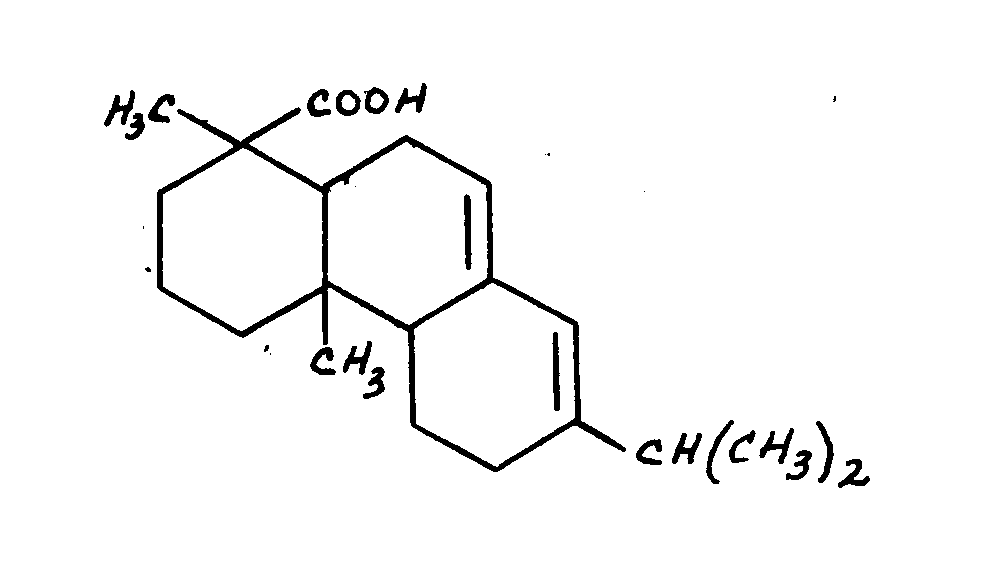
| 211 | Polymerization or product thereof (e.g., dimer rosin, etc.): | ||||||||
This subclass is indented under subclass 210. Processes wherein rosin or a derivative thereof is polymerized,
or products of such processes.
SEE OR SEARCH CLASS:
| |||||||||
| 212 | Chemical treatment or color modification of polymerized rosin or derivative, or product thereof (e.g., hydrogenation or esterification of polymerized rosin; removal of color bodies from polymerized rosin, etc.): |
| This subclass is indented under subclass 211. Processes wherein polymerized rosin or a derivative thereof undergoes further chemical treatment or color modification, or products of such processes. | |
| 213 | Boron or phosphorus containing material used in the process, or product thereof: |
| This subclass is indented under subclass 210. Processes wherein there is utilized a material containing boron or phosphorus, or products of such processes. | |
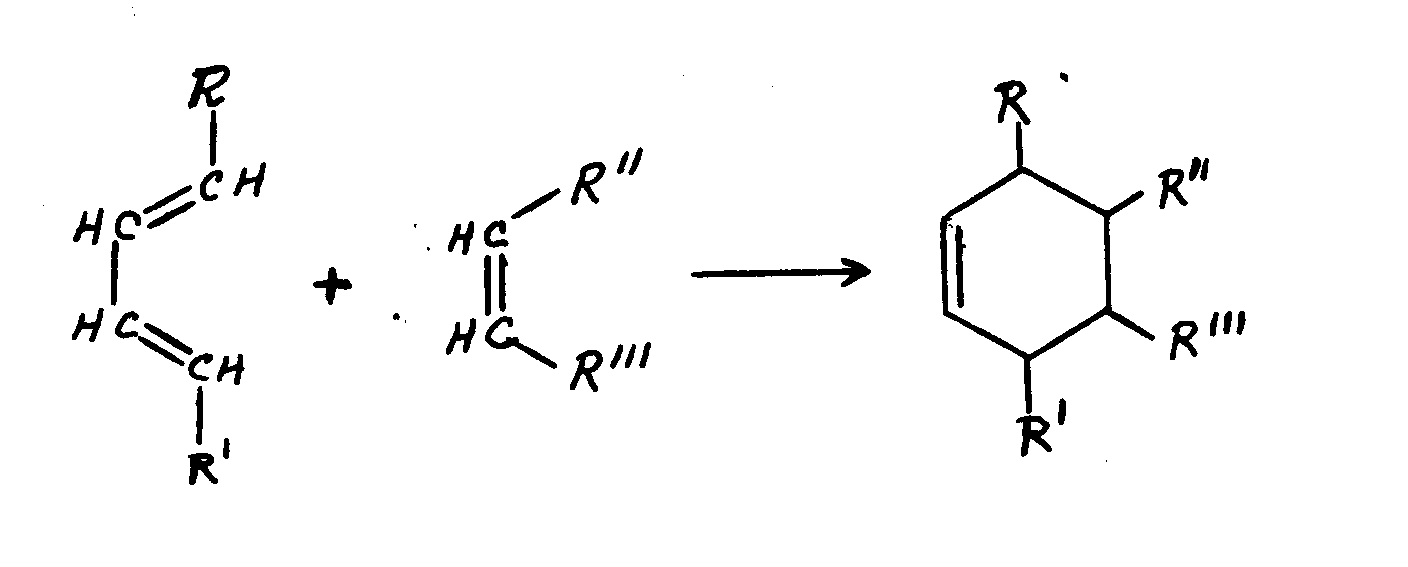
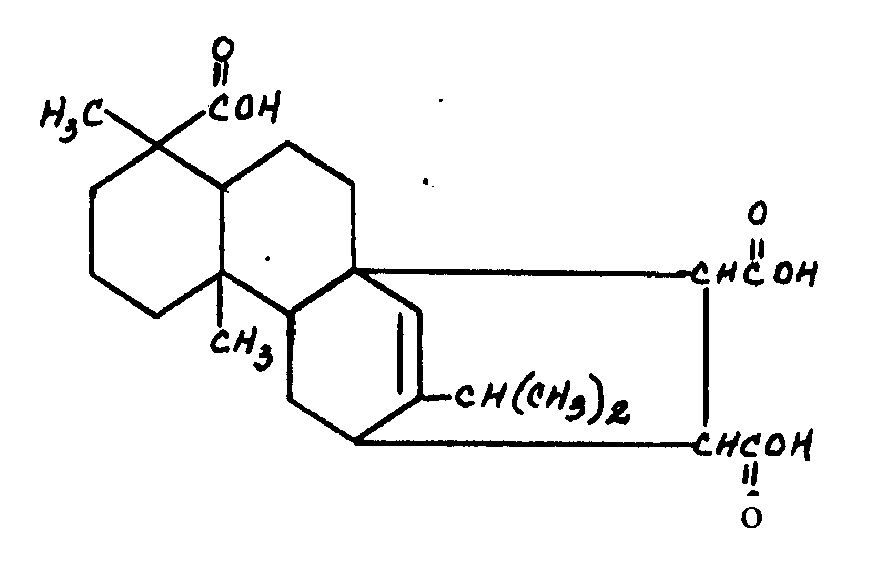
| 214 | Diels-Alder adducts (e.g., of maleic anhydride, fumaric acid, etc., with conjugated dienes, such as rosin acids, terpenes, etc.): | ||||
This subclass is indented under subclass 210. Products which include a six-membered ring formed by the
addition of an alkene or alkyne to the 1,4 - positions of a conjugated
diene.
| |||||
| 215 | Esterification of rosin or derivative via carboxyl group, or product thereof: | ||
This subclass is indented under subclass 210. Processes wherein the carboxyl group of rosin or of a derivative
thereof is esterified, or products of such processes.
| |||
| 216 | Chemical treatment or color modification of esterified rosin or derivative, or product thereof (e.g., partial saponification of rosin triglycerides; removal of color bodies from rosin esters, etc.): |
| This subclass is indented under subclass 215. Processes wherein esterified rosin or a derivative thereof undergoes further chemical treatment or color modification, or products of such processes. | |
| 217 | Oxygen containing ring or halogen containing material used in the esterification, or product thereof (e.g., using alkylene oxides, polysaccharides, alkyl halides, etc.): |
| This subclass is indented under subclass 215. Processes wherein the esterification utilizes an oxygen ring containing compound or a halogen containing material, or products of such processes. | |
| 218 | Polyhydroxy material used in the esterification, or product thereof (e.g., forming ester gum, etc.): |
| This subclass is indented under subclass 215. Processes wherein the esterification utilizes a polyhydroxy containing material, or products of such processes. | |
| 219 | Sulfur, selenium, or tellurium containing material used in the process, or product thereof (e.g., disproportionation of rosin, etc.): | ||
This subclass is indented under subclass 210. Processes wherein there is utilized a material containing
sulfur, selenium or tellurium, or products of such processes.
| |||
| 220 | The sulfur, selenium, or tellurium containing material is inorganic: |
| This subclass is indented under subclass 219. Processes wherein the material containing sulfur, selenium or tellurium is inorganic. | |
| 221 | Nitrogen containing material used in the process, or product thereof: |
| This subclass is indented under subclass 210. Processes wherein there is utilized a nitrogen containing material, or products of such processes. | |
| 222 | The nitrogen containing material is inorganic: |
| This subclass is indented under subclass 221. Processes wherein the material containing nitrogen is inorganic. | |
| 223 | Hydrogenation or product thereof (e.g., forming dihydro rosin acids; rosinyl alcohol or derivatives; etc.): |
| This subclass is indented under subclass 210. Processes wherein rosin or a derivative thereof is reacted with hydrogen, or products of such processes. | |
| 224 | Metal containing material used to form salts of rosin acids, or product thereof: | ||||||||
This subclass is indented under subclass 210. Processes wherein salts of rosin acids are formed using
a metal containing material, or products of such processes.
SEE OR SEARCH CLASS:
| |||||||||
| 225 | Alkali metal containing material (i.e., Li, Na, K, Rb or Cs): | ||||
| This subclass is indented under subclass 224. Processes wherein the metal is an alkali metal.
SEE OR SEARCH CLASS:
| |||||
| 226 | Heat treatment of rosin or derivative in the absence of nonrosin organic reactants, or product thereof (e.g., forming rosin oil; disproportionated, dehydrogenated, or isomerized rosin; etc.): | ||||
This subclass is indented under subclass 210. Processes wherein rosin or a derivative thereof is subjected
to heat treatment in the absence of any additional nonrosin organic
reactant, or products of such processes.
SEE OR SEARCH THIS CLASS, SUBCLASS:
| |||||
| 227 | Metal, halogen, or silicon containing material used in the process, or product thereof (e.g., using clay, zeolites, etc.): |
| This subclass is indented under subclass 226. Processes wherein a metal, halogen or silicon containing material is utilized, or products of such processes. | |
| 228 | Purification process or product thereof: |
| This subclass is indented under subclass 210. Processes for purification of rosin or its derivatives, or products of such processes. | |
| 229 | Immiscible solvents used in the process, or product thereof: |
| This subclass is indented under subclass 228. Processes which utilize immiscible solvents, or products of such processes. | |
| 230 | Tall oil or derivative used as starting material in process, or product thereof (e.g., metal salts of tall oil fatty acids; tall oil pitch, etc.) dehydrogenated, or isomerized rosin; etc.): | ||||||
This subclass is indented under subclass 200. Processes wherein the starting material used is tall oil
or a derivative thereof, or products of such processes.
| |||||||
| 231 | Nitrogen containing material used in the process, or product thereof: |
| This subclass is indented under subclass 230. Processes which utilize a nitrogen containing material, or products of such processes. | |
| 232 | Esterification of tall oil acids, or product thereof: |
| This subclass is indented under subclass 230. Processes wherein the acids present in tall oil are esterified, or products of such processes. | |
| 233 | Sulfur, boron, phosphorus, or iodine containing material used in the process, or product thereof: |
| This subclass is indented under subclass 230. Processes wherein a material containing sulfur, boron phosphorus, or iodine is utilized, or products of such processes. | |
| 300 | PEPTIDES OF 3 TO 100 AMINO ACID RESIDUES: | ||||||||||||||||||||||||||||||||||||||||||||||||||||||||||||||||||||||||||||||||||||||||||||||||||||||||||||||||||||||||||||||||||||||||||||||||||||||||||||||||||||||||||||||||||||||||||||||||||||||||||||||
This subclass is indented under Class 260, subclass
1. Compounds consisting of three or more amino acids joined
covalently by peptide bonds.
SEE OR SEARCH CLASS:
| |||||||||||||||||||||||||||||||||||||||||||||||||||||||||||||||||||||||||||||||||||||||||||||||||||||||||||||||||||||||||||||||||||||||||||||||||||||||||||||||||||||||||||||||||||||||||||||||||||||||||||||||
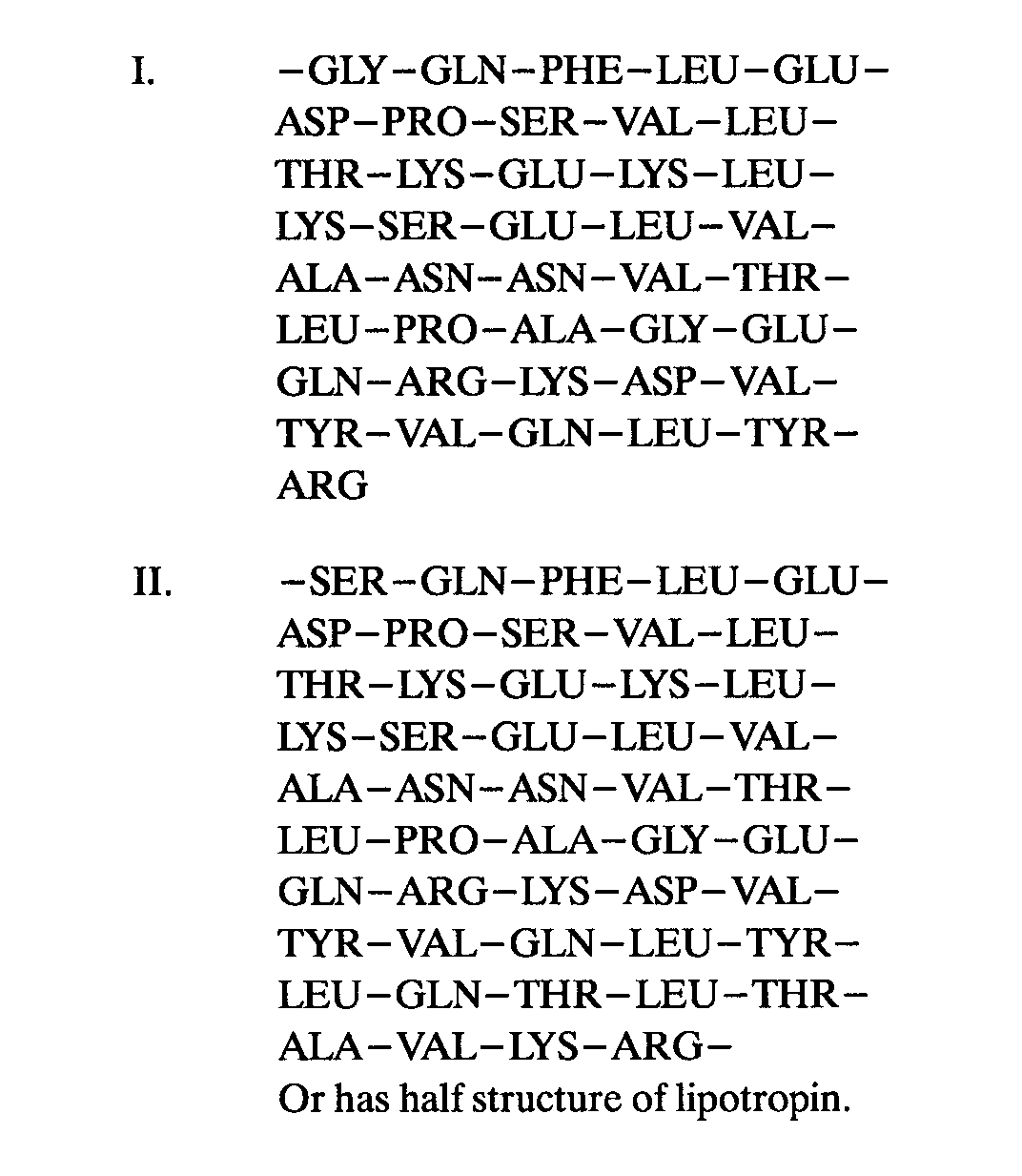
| 301 | Thymopoietin or Lipotropin; related peptides: | ||||||||||||||||
| This subclass is indented under subclass 300. Peptides containing at least half the amino acid residues
in sequence of the polypeptide with the structure of Thymopoietin.
SEE OR SEARCH CLASS:
| |||||||||||||||||
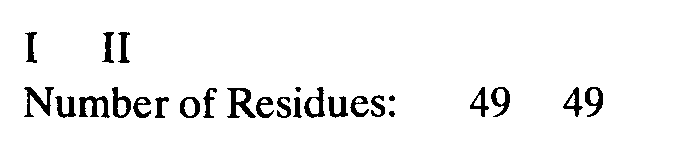
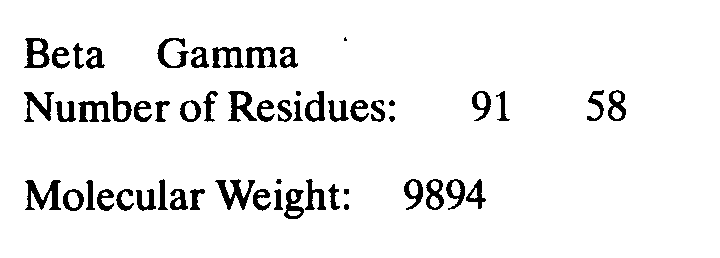
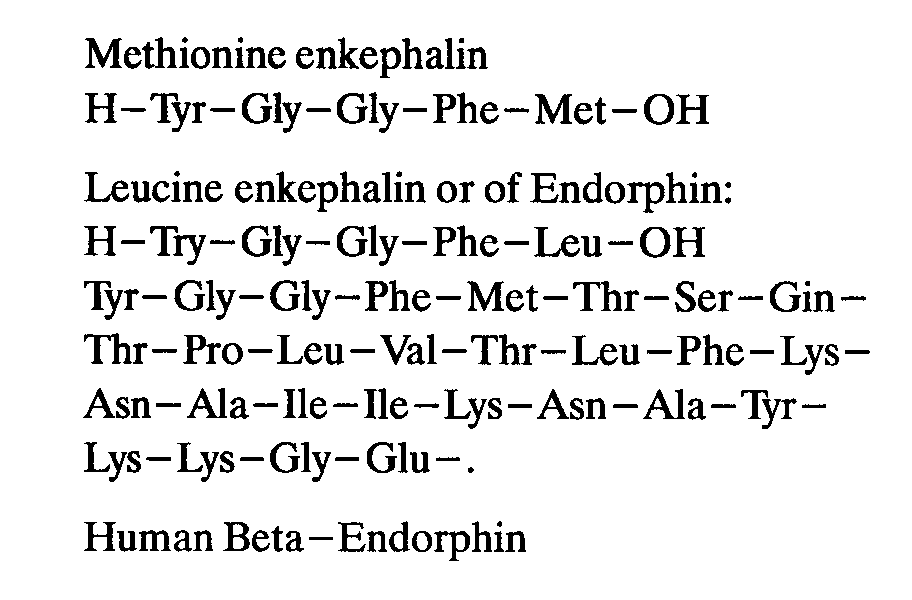
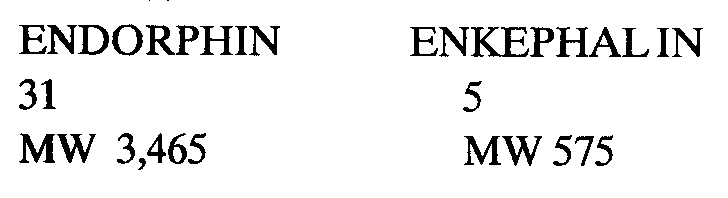
| 302 | Endorphins and Enkephalins; related peptides: | ||||||||||
| This subclass is indented under subclass 300. Peptides containing at least half the amino acid residues
in sequence of the polypeptide with the structure:
SEE OR SEARCH CLASS:
| |||||||||||
| 303 | Insulin; related peptides: | ||||||
This subclass is indented under subclass 300. Peptides containing at least half the amino acid residues
in sequence of the polypeptide with the structure of insulin.
| |||||||
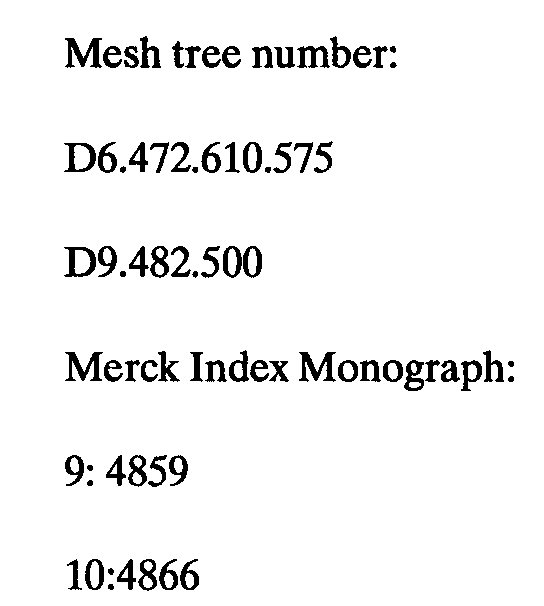
| 304 | Metal complexes, e.g., Zn-insulin, etc: | ||||||
This subclass is indented under subclass 303. Peptides in which the peptide is a complex of insulin and
a metal.
| |||||||
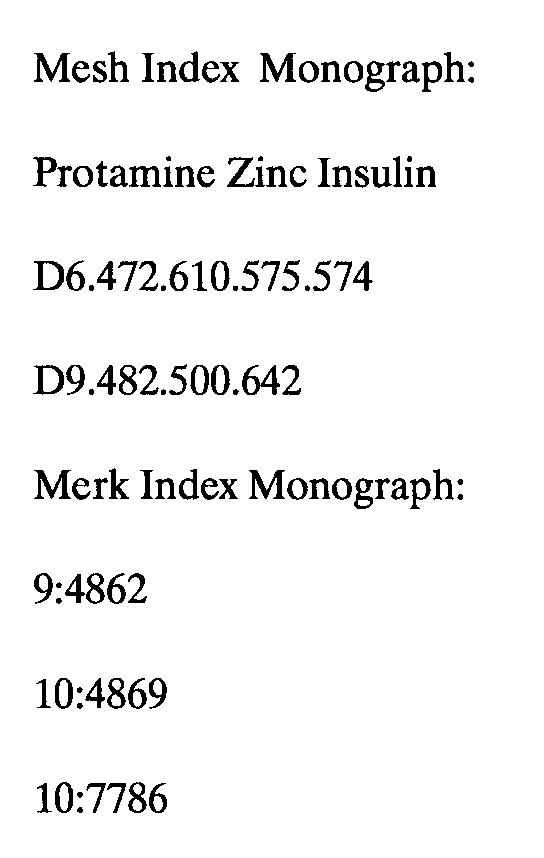
| 305 | Isolation or purification: | ||||
This subclass is indented under subclass 303. Subject matter, in which preexisting insulin is isolated
or separated.
| |||||
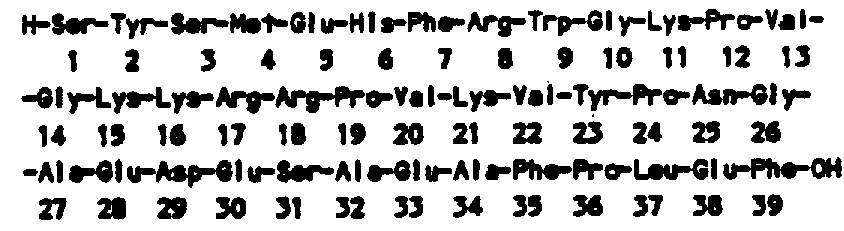
| 306 | Corticotropins (ATCH); related peptides: | ||||||||||
| This subclass is indented under subclass 303. Peptides containing at least half the amino acid residues
in sequence of the polypeptide with the structure:
SEE OR SEARCH CLASS:
| |||||||||||
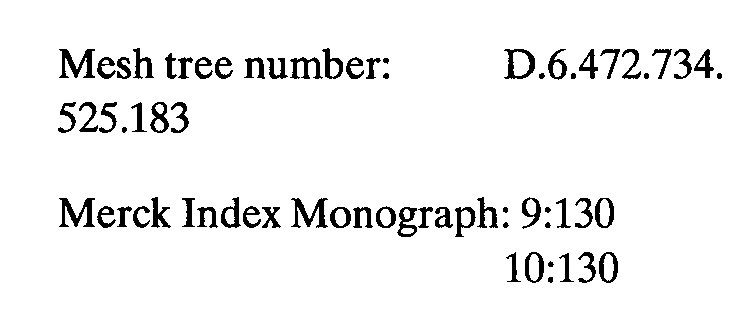
| 307 | Calcitonin; related peptides: | ||||||||||
| This subclass is indented under subclass 300. Peptides containing at least half the amino acid residues
in sequence of the polypeptide with the structure:
SEE OR SEARCH CLASS:
| |||||||||||
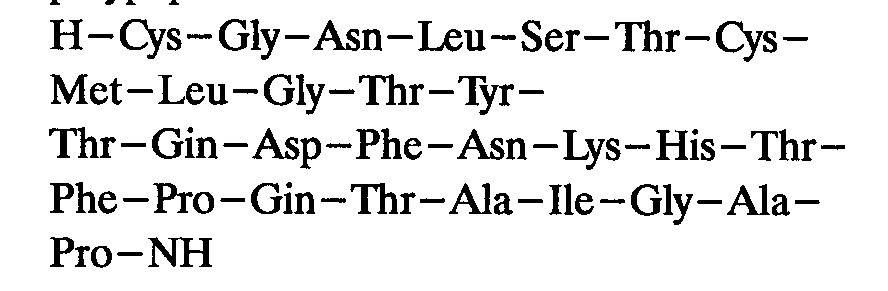
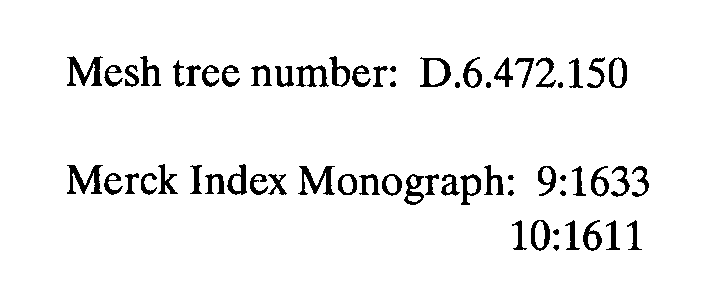
| 308 | Glucagon; related peptides: | ||||||||
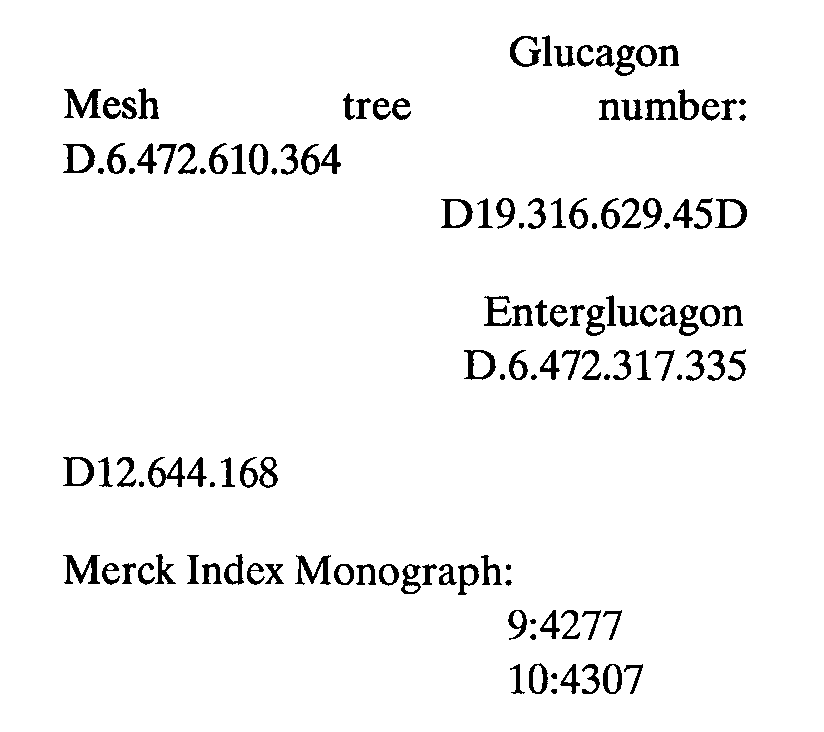
| This subclass is indented under subclass 300. Peptides containing at least half the amino acid residues
in sequence of the polypeptide with the structure.
| |||||||||
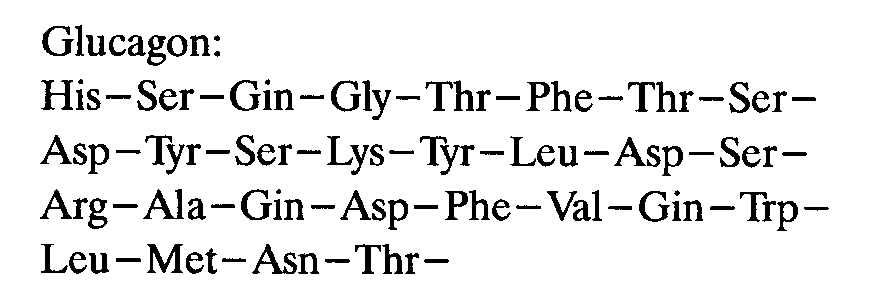
| 309 | Secretin or gastrin; related peptides: | ||||||||||
| This subclass is indented under subclass 300. Peptides containing at least half the amino acid residues
in sequence of the polypeptide with the structure:
| |||||||||||
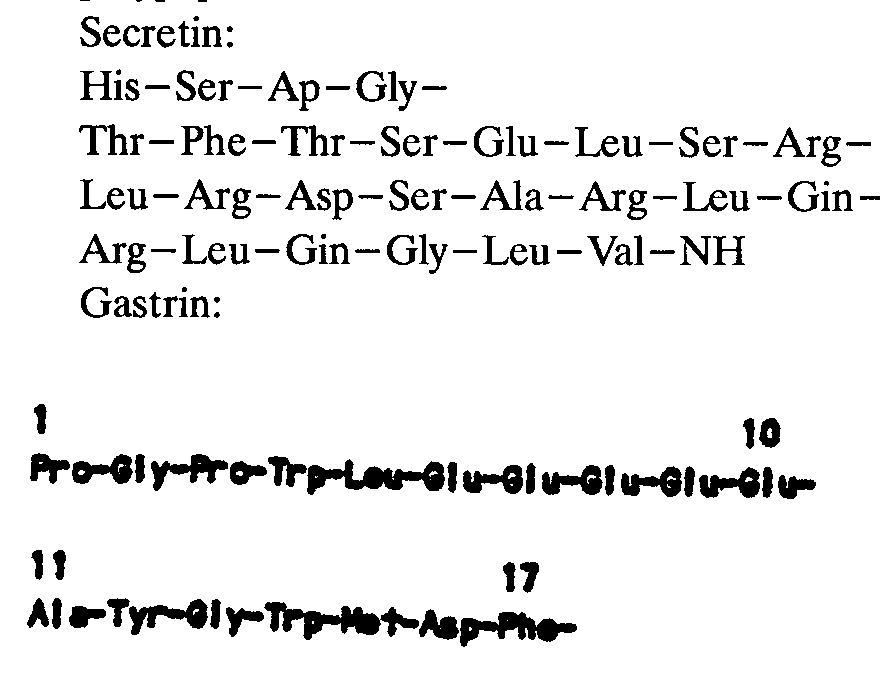
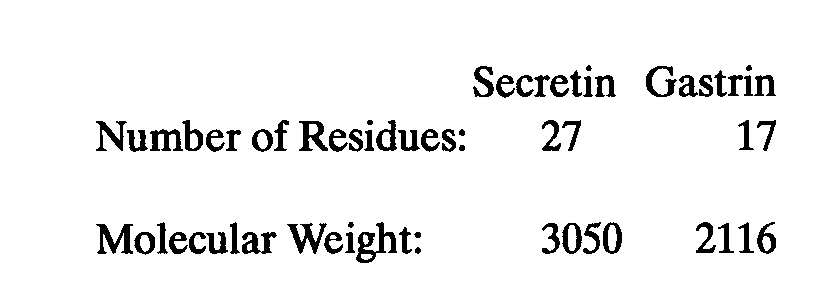
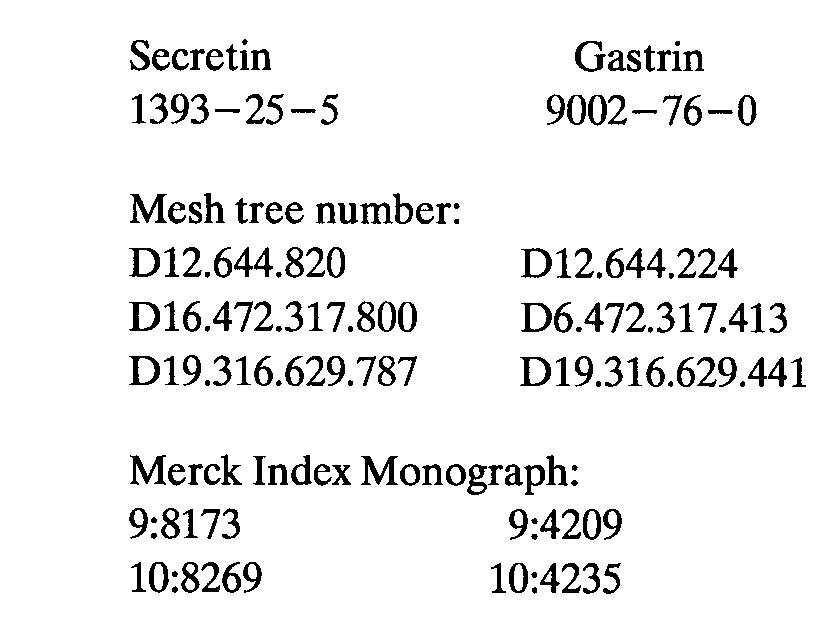
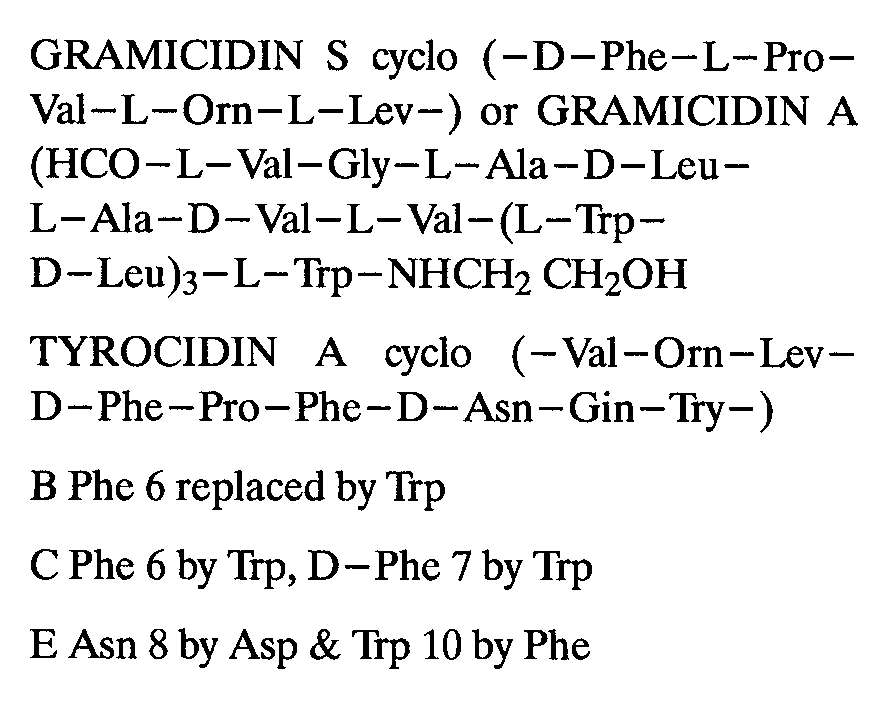
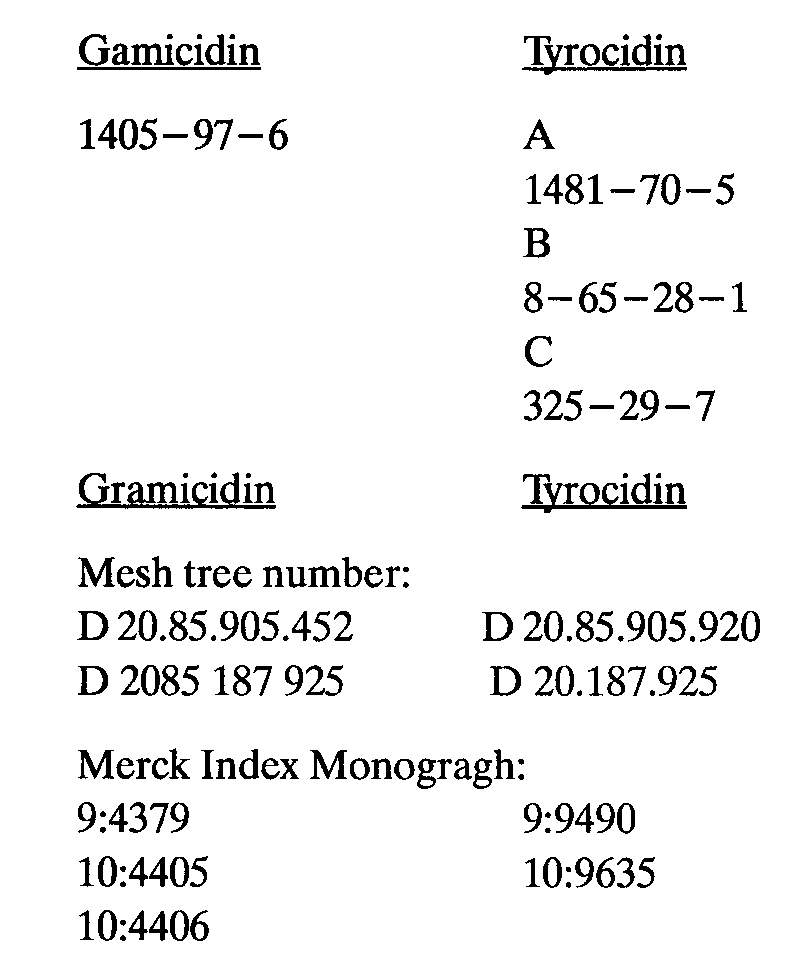
| 310 | Gramicidin or tyrocidin; related peptides: | ||||
| This subclass is indented under subclass 300. Peptides containing at least half the amino residues in
sequence of the polypeptide with the structure:
| |||||
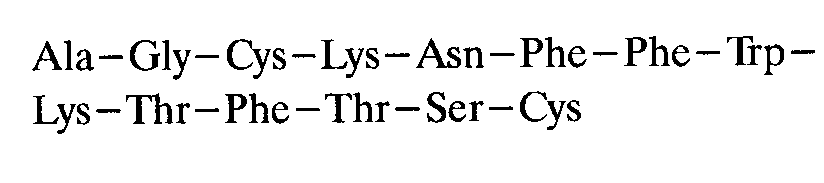
| 311 | Somatostatin (SRIF); related peptides: | ||||||||||
| This subclass is indented under subclass 300. Peptides containing at least half the amino acid residues
in sequence of the polypeptide with the structure:
SEE OR SEARCH CLASS:
| |||||||||||
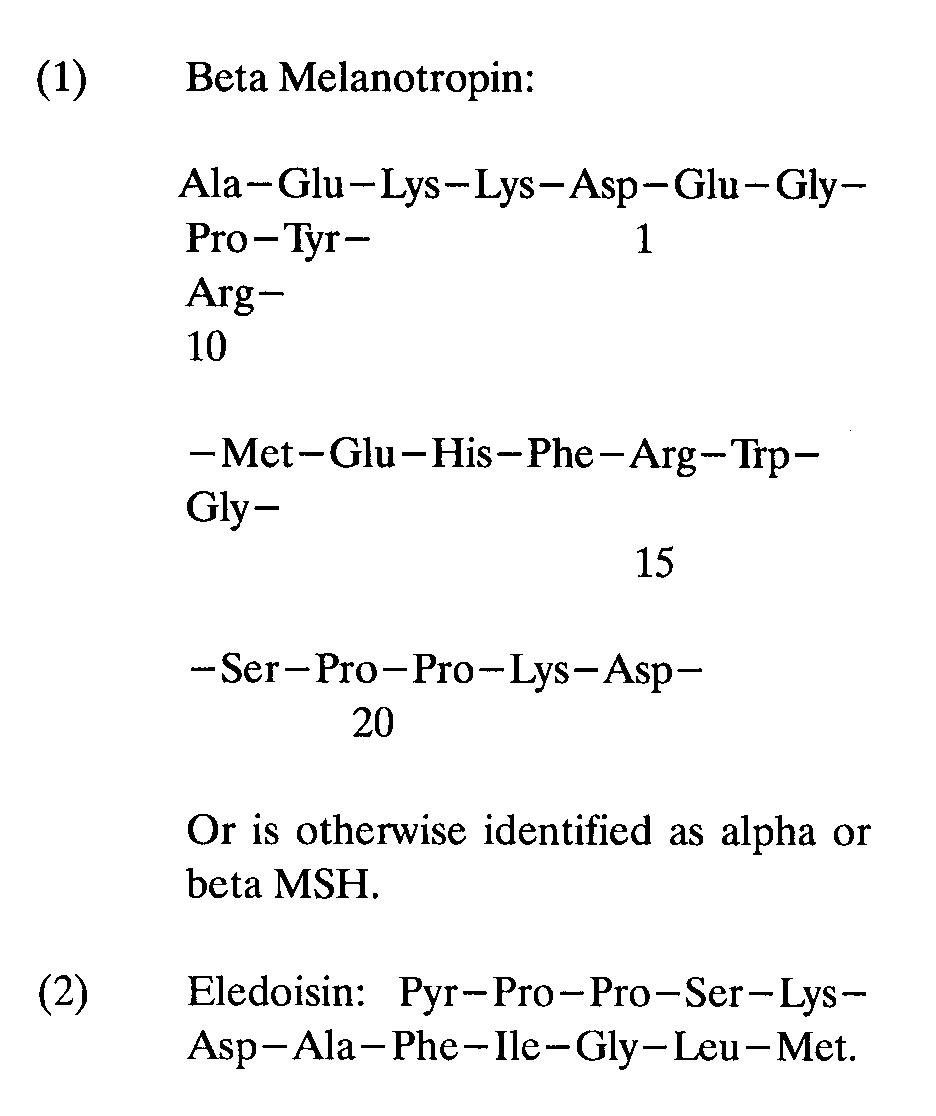
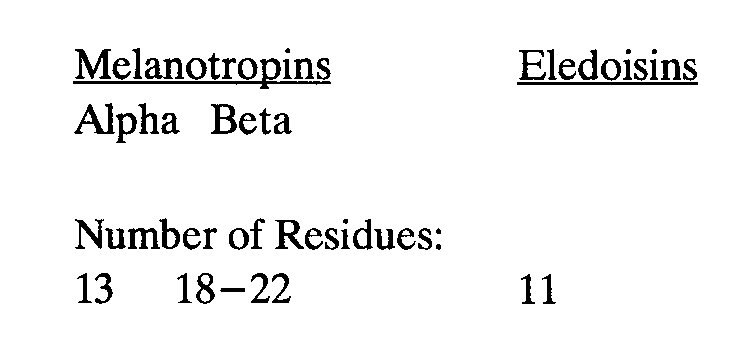
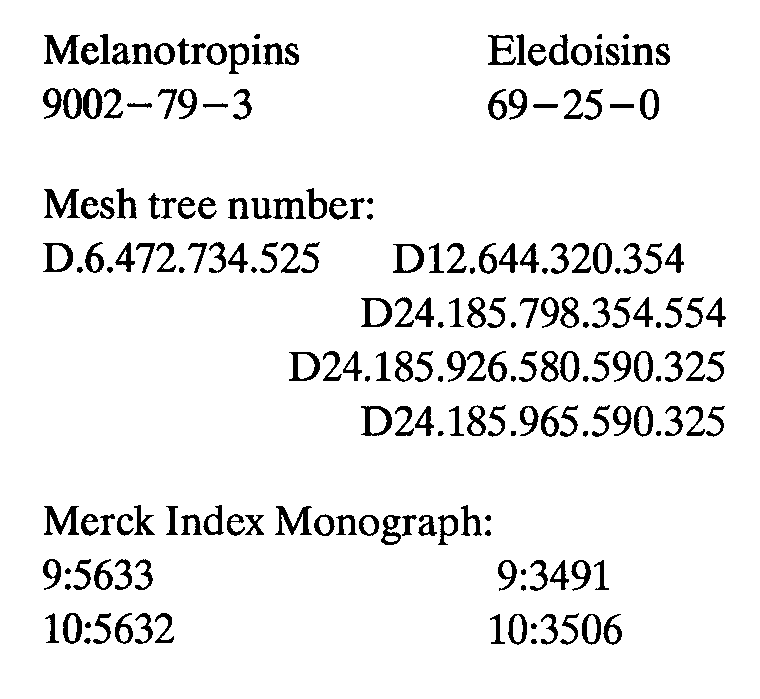
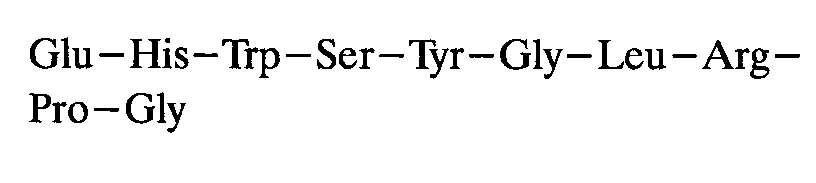
| 312 | Melanotropin (MSH) or eledoisin; related peptides: | ||||||||||
| Peptides under subclass 300 containing at least half the
amino acid residues in sequence of the polypeptide with the structure:
| |||||||||||
| 313 | Lutenizing hormone-releasing factor (LRF); related peptides: | ||||||||||
| This subclass is indented under subclass 300. Peptides containing at least half the amino acid residues
in sequence of the polypeptide with the structure:
SEE OR SEARCH CLASS:
| |||||||||||
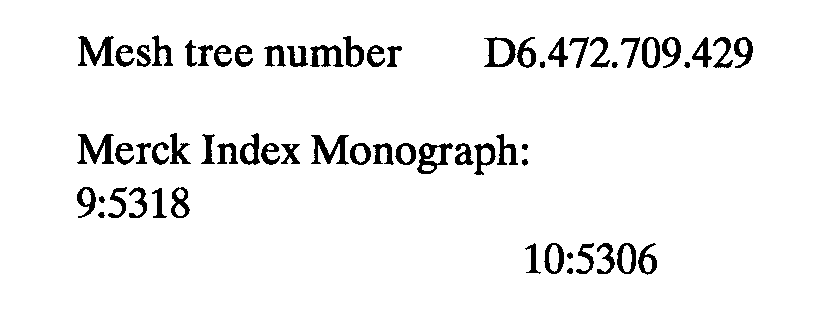
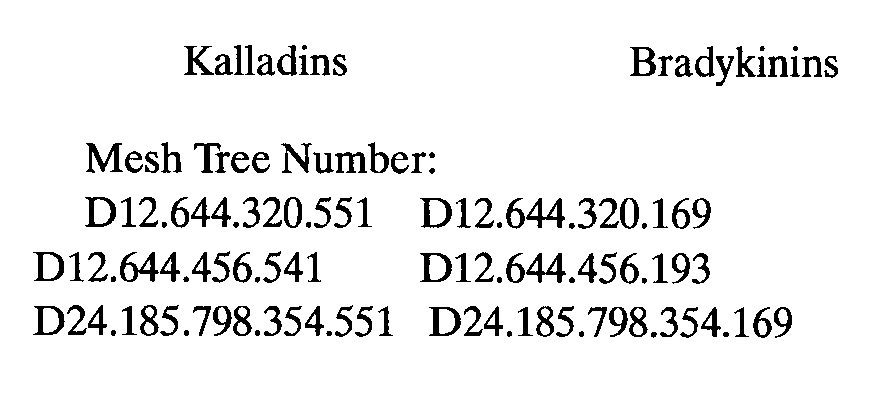
| 314 | Bradykinin; kallidin; related peptides: | ||||||||
| This subclass is indented under subclass 300. Peptides containing at least half the amino acid residues
in sequence of the polypeptide with the structure:
| |||||||||

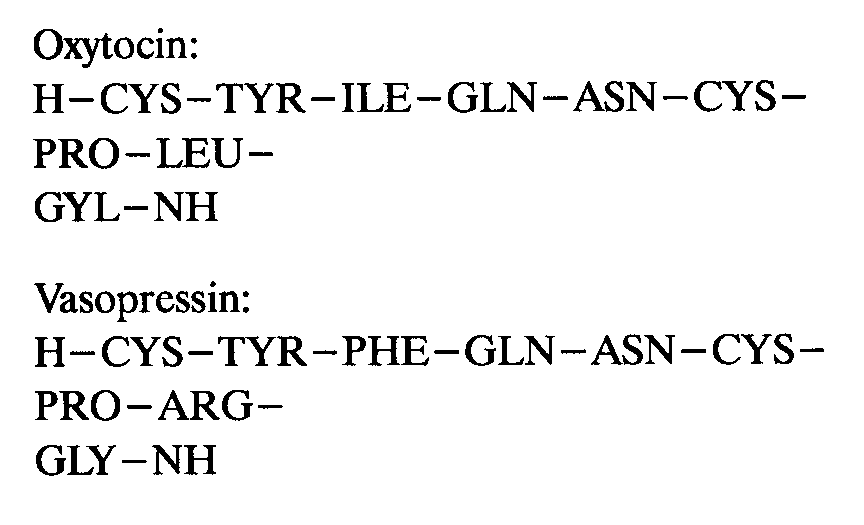
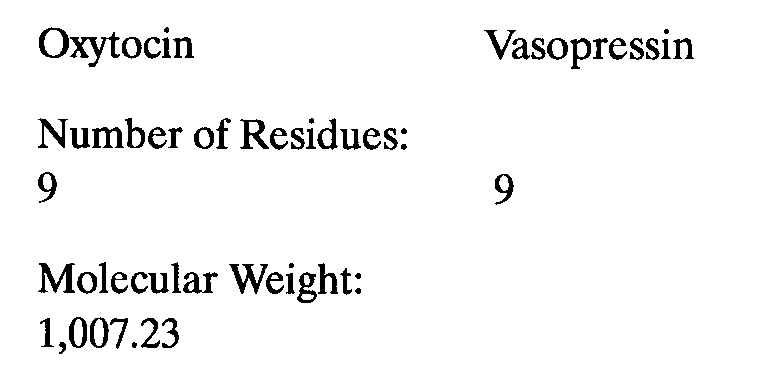
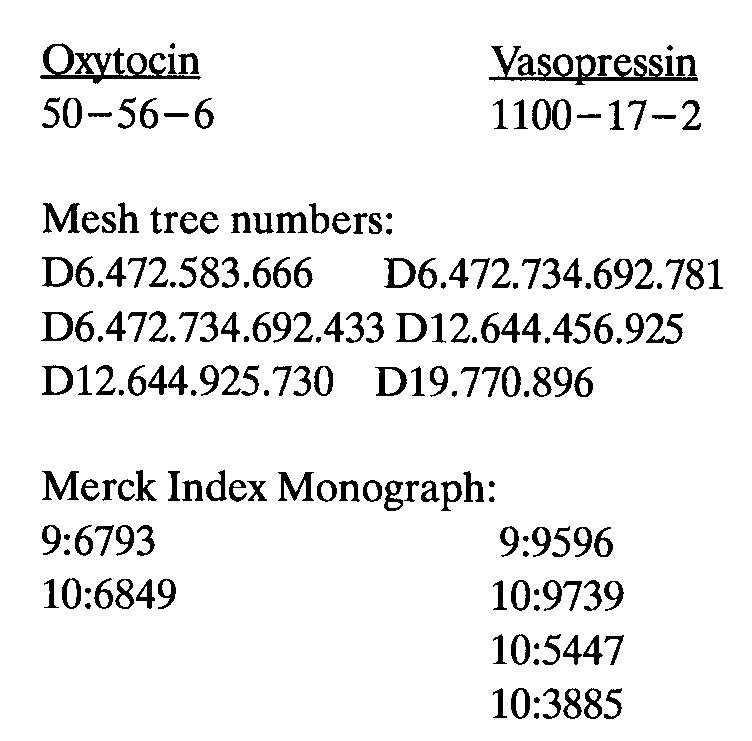
| 315 | Oxytocin; vasopressin; related peptides: | ||||||||||
| This subclass is indented under subclass 300. Peptides containing at least half the amino acid residues
in sequence of the polypeptide with the structure:
SEE OR SEARCH CLASS:
| |||||||||||
| 316 | Angiotensin; related peptides: | ||||||||||
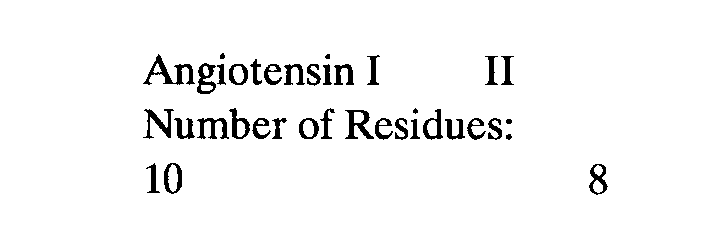
| This subclass is indented under subclass 300. Peptides containing at least half the amino acid residues
in sequence of the polypeptide with the structure:
Angiotensin I
Angiotensin II
SEE OR SEARCH CLASS:
| |||||||||||


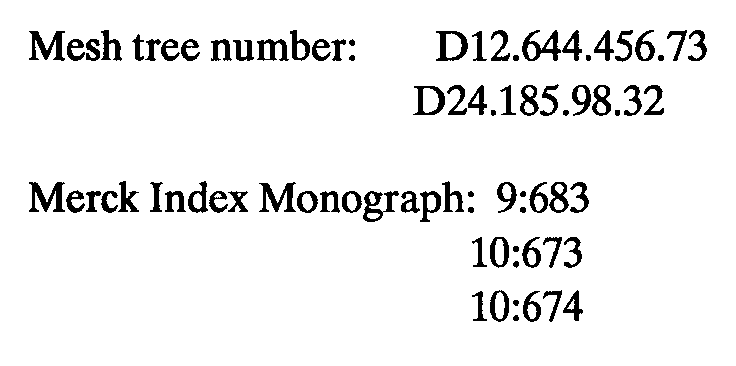
| 317 | Cyclic peptides: | ||||||||||
Peptides under subclass 300 containing at least one ring
fused only through peptide bonds.
SEE OR SEARCH CLASS:
| |||||||||||
| 318 | The cyclisation occurring through 4-amino radical of 2,4-diamino-butanoic acid: | ||
This subclass is indented under subclass 317. Peptides containing at least one diaminobutanoic acid residue
in the peptide cycle.
| |||
| 319 | Polymyxin; related peptides: | ||||||
This subclass is indented under subclass 318. Peptides containing at least half the amino acid residues
of the polypeptide produced by Bacillus polymyxa and possessing
antibiotic activity against Gram-negative bacteria.
| |||||||
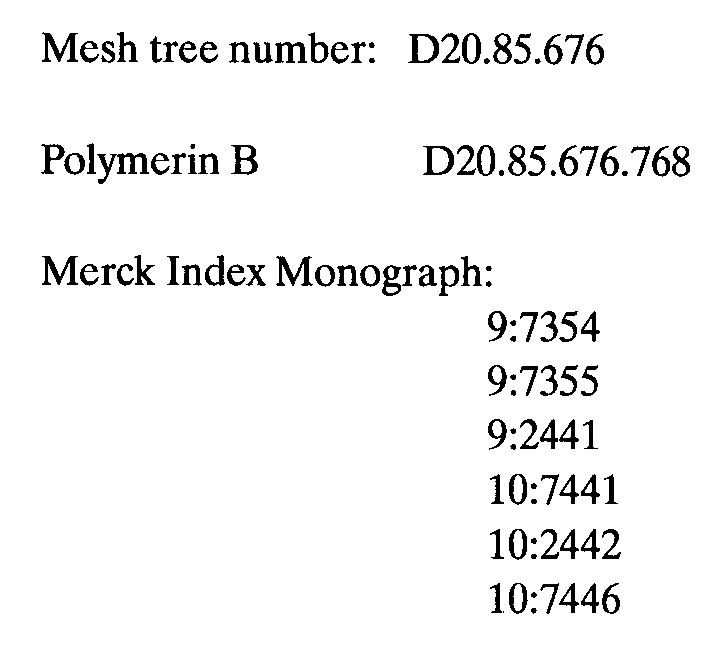
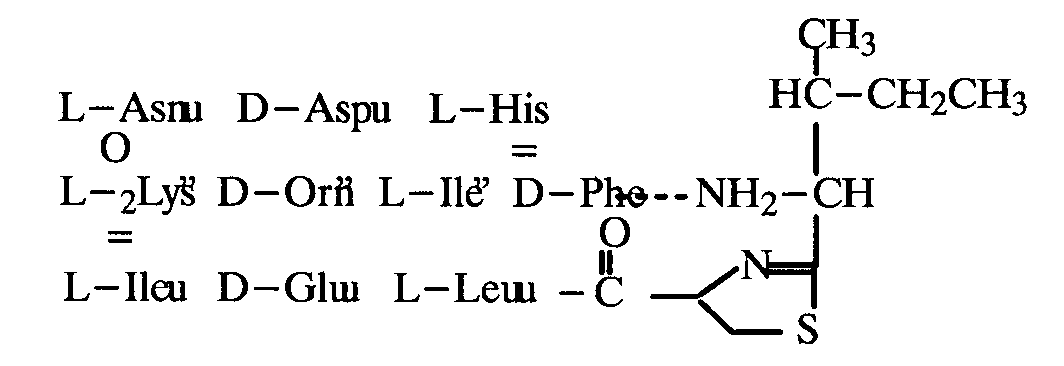
| 320 | Bacitracin; related peptides: | ||||||
This subclass is indented under subclass 317. Peptides containing at least half the amino acid sequence
of Bacitracin.
| |||||||
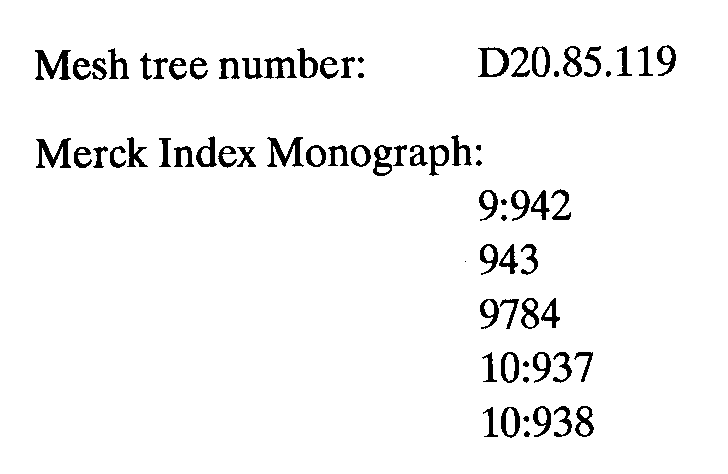
| 321 | Containing only normal peptide links in the ring, i.e., homodetic cyclic peptides: |
| This subclass is indented under subclass 317. Cyclic peptides containing at least one ring formed by peptide bonds through only the alpha amino group of an amino acid. | |
| 322 | Peptides containing saccharide radicals, e.g., bieomycins, etc.: | ||||
This subclass is indented under subclass 300. Peptides containing at least one saccharide radical.
| |||||
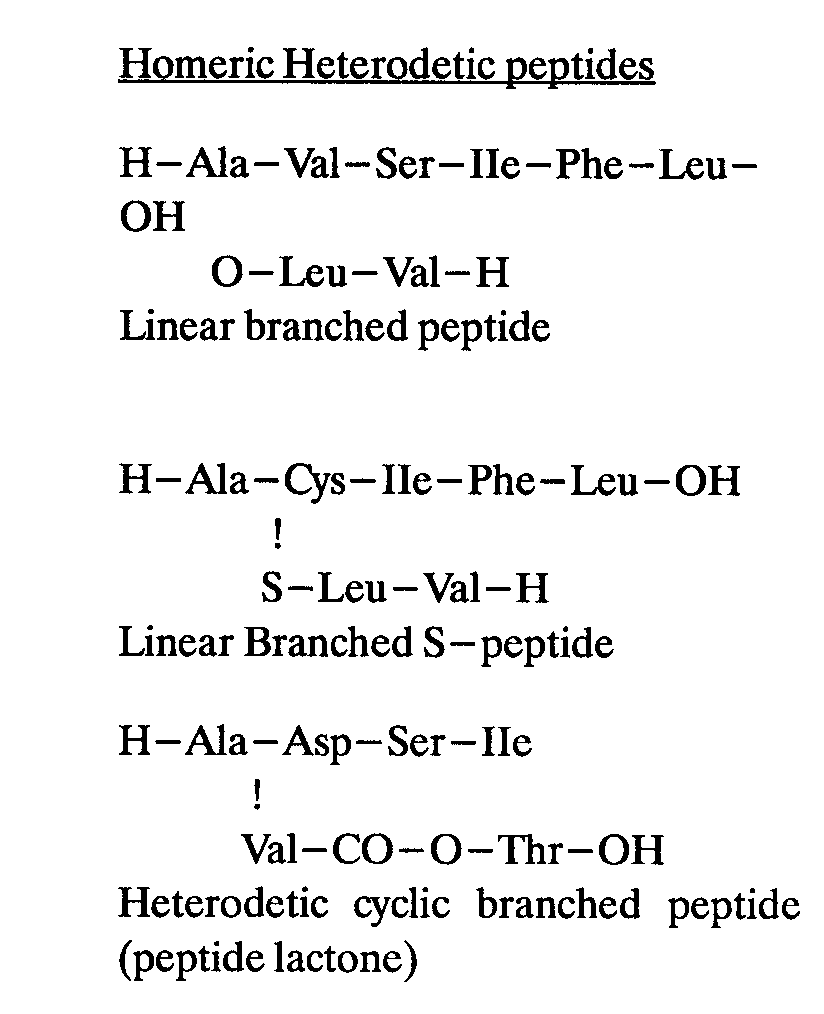
| 323 | Peptides with at least one nonpeptide bond other than a disulfide bond joining two or more sequences of amino acid residues, e.g., homomeric heterodectic peptide of other than cyclic disulfide, depsipeptides, etc.: | ||||||
This subclass is indented under subclass 300. Peptides in which a peptide chain contains an interchain
nonpeptide moiety.
SEE OR SEARCH CLASS:
| |||||||
| 324 | 25 or more amino acid residues in defined sequence: | ||||
This subclass is indented under subclass 300. Compounds comprising from 25 or more amino acid residues
of defined primary structure.
| |||||
| 325 | 24 amino acid residues in defined sequence: | ||||
This subclass is indented under subclass 300. Compounds comprising 24 amino acid residues of defined primary
structures.
| |||||
| 326 | 15 to 23 amino acid residues in defined sequence: | ||||
This subclass is indented under subclass 300. Compounds comprising from 15 to 23 amino acid residues of
defined primary structure.
| |||||
| 327 | 11 to 14 amino acid residues in defined sequence: | ||||
This subclass is indented under subclass 300. Compounds comprising from 11 to 14 amino acid residues of
defined primary structure.
| |||||
| 328 | 8 to 10 amino acid residues in defined sequence: | ||||
This subclass is indented under subclass 300. Compounds comprising from 8 to 10 amino acid residues of
defined primary structure.
| |||||
| 329 | 6 to 7 amino acid residues in defined sequence: | ||||
This subclass is indented under subclass 300. Compounds comprising from 6 to 7 amino acid residues of
defined primary structure.
| |||||
| 330 | 4 to 5 amino acid residues in defined sequence: | ||||
This subclass is indented under subclass 300. Compounds comprising from 4 or 5 amino acid residues of
defined primary structure.
| |||||
| 331 | Tripeptides, e.g., tripeptide thyroliberin (TRH) melanostatin (MIF), etc.: | ||||
This subclass is indented under subclass 300. Compounds comprising 3 amino acid residues of defined primary
structure.
| |||||
| 332 | Containing at least one abnormal peptide link, e.g., gamma peptide bonded, etc.: | ||||
This subclass is indented under subclass 330. Subject matter, in which the amino acid residues
are joined by a peptide bond formed by other than an alpha amino
acid.
SEE OR SEARCH THIS CLASS, SUBCLASS:
| |||||
| 333 | Synthesis of peptides: | ||||||
This subclass is indented under subclass 300. Processes which a polypeptide is synthesized (1) From
amino acids or protected amino acids or (2) by
joining polypeptides or protected polypeptides to amino acids or
protected amino acids or polypeptides or protected polypeptides.
SEE OR SEARCH CLASS:
| |||||||
| 334 | Polymer supported synthesis, e.g., solid phase synthesis, Merrifield synthesis, etc.: | ||||||
This subclass is indented under subclass 333. Processes in which synthesis includes the use of a soluble
or insoluble polymer or resin covalently attached to an amino acid
residue of the polypeptide chain being synthesized.
SEE OR SEARCH CLASS:
| |||||||
| 335 | Protecting or removing protective groups, e.g., carboxyl group protection, etc.: | ||||||||
This subclass is indented under subclass 333. Processes wherein a peptide group, whose purpose
is to protect a functional group in a peptide, is attached
to or removed from a peptide.
SEE OR SEARCH THIS CLASS, SUBCLASS:
| |||||||||
| 336 | Of side chain or sulfur containing group: | ||
This subclass is indented under subclass 335. Processes in which the addition or removal of the protective
groups is to or from a side or a sulfur containing group.
| |||
| 337 | Of amino group: | ||
This subclass is indented under subclass 335. Processes in which the addition or removal is of a protective
group that protects an amino group of the peptide.
| |||
| 338 | Solution phase synthesis: |
| This subclass is indented under subclass 333. Processes in which the synthesis takes place in solution. | |
| 339 | Segment condensation, e.g., Ugi condensation, etc.: | ||
This subclass is indented under subclass 338. Processes in which peptides of two or more amino acid residues
are joined with other peptide of two or more amino acid residues
to form a single large peptide.
| |||
| 340 | With phosphorus containing material: | ||
This subclass is indented under subclass 338. Processes in which phosphorus or a phosphorus containing
compound is present during synthesis.
| |||
| 341 | With use of carbonimide or imidazole: | ||
This subclass is indented under subclass 338. Processes in which an imidazole or a carbonimide is present
during synthesis.
| |||
| 342 | Mixed anhydride synthesis: |
| This subclass is indented under subclass 338. Processes in which the synthesis includes (1) forming a mixed anhydride by reacting an alpha-acylamino acid or an alpha-acylamino peptide with a lower alkyl chloroformate in the presence of a tertiary amino base, and then (2) reacting the resulting free amino group or a peptide derivative having a free amino group, to form a peptide. | |
| 343 | By hydrolysis: | ||
This subclass is indented under subclass 333. Processes in which the synthesis includes a step of hydrolysis.
| |||
| 344 | Separation or purification: | ||||||||||||||||||||||
This subclass is indented under subclass 300. Processes in which a pre-existing peptide is isolated
from a composition.
SEE OR SEARCH CLASS:
| |||||||||||||||||||||||
| 345 | Chemical aftertreatment, e.g., acylation, methylation, etc.: | ||
This subclass is indented under subclass 300. Processes in which a preexisting peptide is chemically modified.
| |||
| 350 | PROTEINS, I.E., MORE THAN 100 AMINO ACID RESIDUES: | ||||||||||||||||||||||||||||||||||||||||||||||||||||||||||||||||||||||||||||||||||||||||||||||||||||||||||||||||||||||||||||||||||||||||||||||||||||||||||||||||||||||||||||||||||||||||||||||||||||||||||||
This subclass is indented under the class definition. Subject matter in which a polypeptide is composed of more
than 100 amino acid residues or has a molecular weight of greater
than 10,000.
SEE OR SEARCH CLASS:
| |||||||||||||||||||||||||||||||||||||||||||||||||||||||||||||||||||||||||||||||||||||||||||||||||||||||||||||||||||||||||||||||||||||||||||||||||||||||||||||||||||||||||||||||||||||||||||||||||||||||||||||
| 351 | Lymphokines, e.g., interferons, interlukins, etc.: | ||||||||
This subclass is indented under subclass 350. Proteins which are soluable immune mediators produced by
the cells of immune system.
SEE OR SEARCH CLASS:
| |||||||||
| 352 | Phosphoproteins, e.g., phosvitin, vitellogenin, etc.: | ||||||||||
This subclass is indented under subclass 350. Proteins which are conjugated proteins containing phosphate
esterified with the hydroxyl group of serine or threonine residues.
SEE OR SEARCH THIS CLASS, SUBCLASS:
| |||||||||||
| 353 | Scleroproteins, e.g., fibroin, elastin, silk, etc.: | ||
This subclass is indented under subclass 350. Proteins having the structure of scleroproteins and compounds
derived from these by addition to or deletion of parts of the polypeptide
structure.
| |||
| 354 | Gelatin: | ||||||||||||||
This subclass is indented under subclass 353. Proteins having the structure of gelatin and compounds derived
from these by addition to or deletion of parts of the polypeptide
structure.
SEE OR SEARCH CLASS:
| |||||||||||||||
| 355 | Separation, purification or synthesis: | ||||||
This subclass is indented under subclass 354. Processes in which gelatin is (a) isolated
from a preexisting material or composition of (b) is chemically
synthesized.
SEE OR SEARCH CLASS:
| |||||||
| 356 | Collagen: | ||||||||||||||||||||||||||||||||||
This subclass is indented under subclass 353. Proteins having the structure of collagen and compounds
derived from these by addition to or deletion of parts of the polypeptide
structure.
SEE OR SEARCH CLASS:
| |||||||||||||||||||||||||||||||||||
| 357 | Keratin: | ||||||||||
This subclass is indented under subclass 350. Proteins having the structure of Keratin and compounds derived
from these by addition to or deletion of parts of the polypeptide
structure.
SEE OR SEARCH CLASS:
| |||||||||||
| 358 | Nucleoproteins, i.e., chromatin, chromosomal proteins, histones, protamines, salmine, etc.: | ||||||||
This subclass is indented under subclass 350. Proteins conjugated with nucleic acids.
| |||||||||
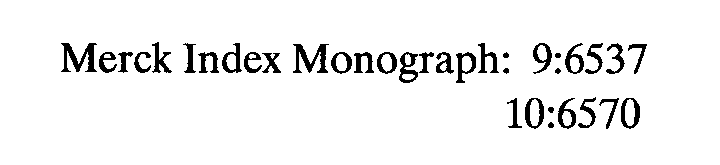
| 359 | Lipoproteins, e.g., egg yolk proteins, cylomicrons, etc.: | ||||||||
This subclass is indented under subclass 350. Proteins which are conjugated with a lipid.
| |||||||||
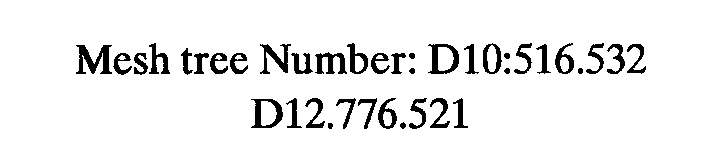
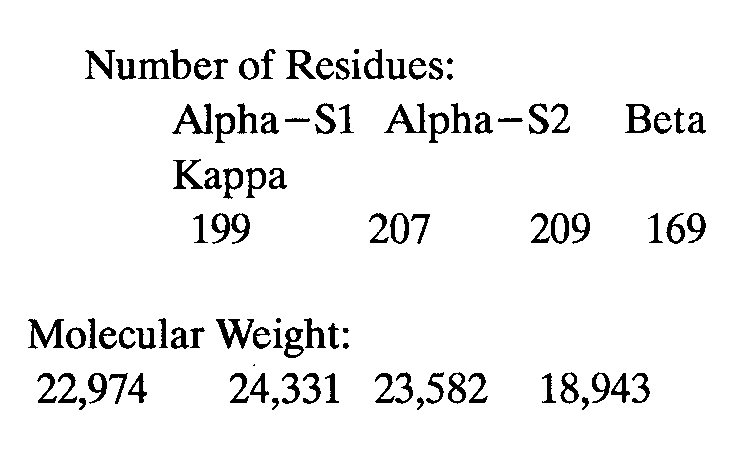
| 360 | Casein or caseinate: | ||||||||||||||||
This subclass is indented under subclass 350. Proteins having the structure of casein and compounds derived
from these by addition to or deletion of parts of the polypeptide
structure.
SEE OR SEARCH CLASS:
| |||||||||||||||||
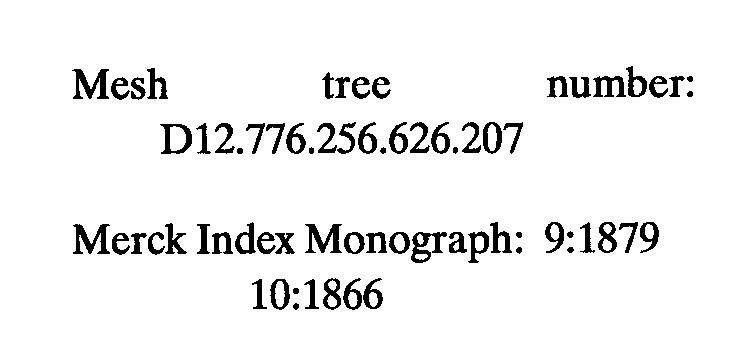
| 361 | Separation, purification or synthesis: | ||||||
This subclass is indented under subclass 360. Processes in which casein (1) is isolated
from a preexisting material or composition or (2) is chemically
synthesized.
SEE OR SEARCH CLASS:
| |||||||
| 362 | Albumin: | ||||||||||
This subclass is indented under subclass 350. Proteins having the structure of albumin and compounds derived
from these by addition to or deletion of parts of the polypeptide
structure.
SEE OR SEARCH CLASS:
| |||||||||||
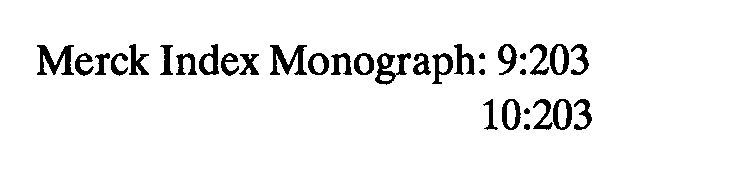
| 363 | Serum albumin, e.g., BSA, HSA etc.: | ||||||||||
This subclass is indented under subclass 362. Proteins having the structure of serum albumin and compounds
derived from these by addition to or deletion of parts of the polypeptide
structure.
SEE OR SEARCH CLASS:
| |||||||||||
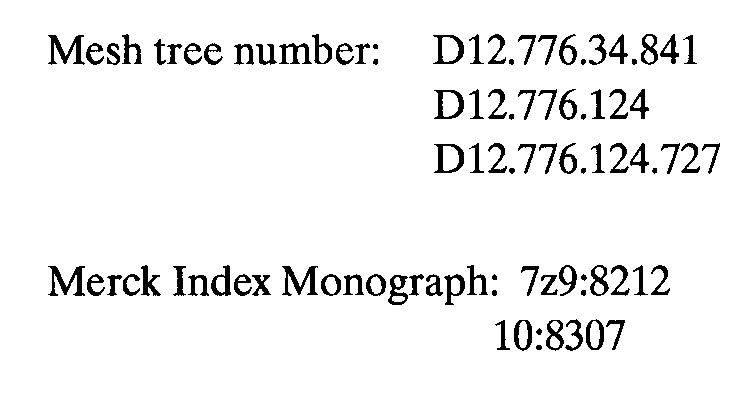
| 364 | Separation, purification or synthesis: | ||||||
This subclass is indented under subclass 363. Processes in which serum albumins (a) is
isolated from a preexisting material or composition or (b) is
chemically synthesized.
SEE OR SEARCH CLASS:
| |||||||
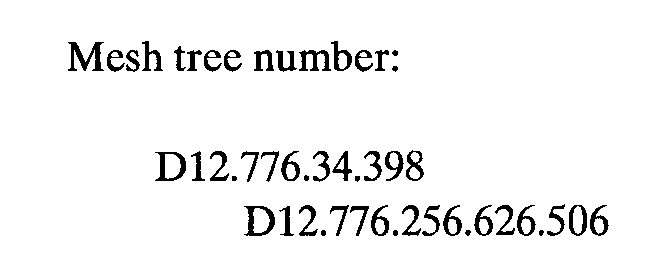
| 365 | Lactalbumin, e.g., milk source, etc.: | ||||||||||||
This subclass is indented under subclass 362. Proteins having the structure of lactalbumin and compounds
derived from these by addition to or deletion of parts of the polypeptide
structure.
SEE OR SEARCH CLASS:
| |||||||||||||
| 366 | Separation, purification or synthesis: | ||||||
This subclass is indented under subclass 365. Processes in which lactal albumin (a) is
isolated from a preexisting material or composition or (b) is
chemically synthesized.
SEE OR SEARCH CLASS:
| |||||||
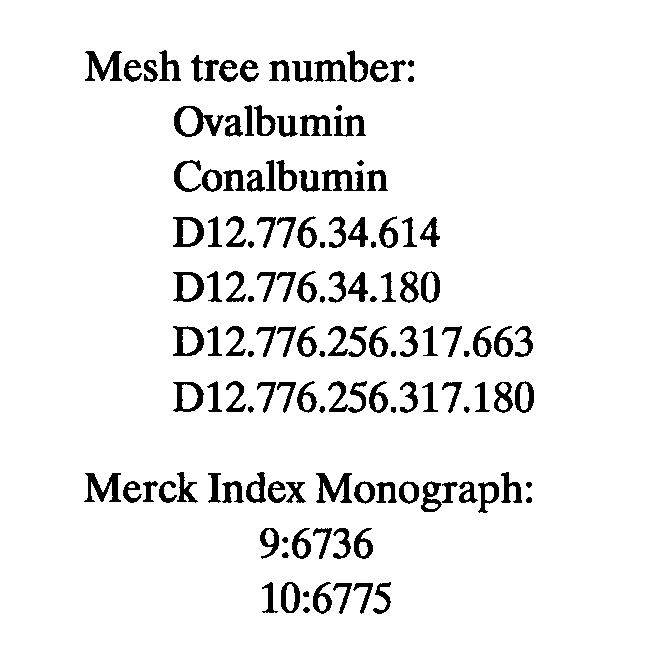
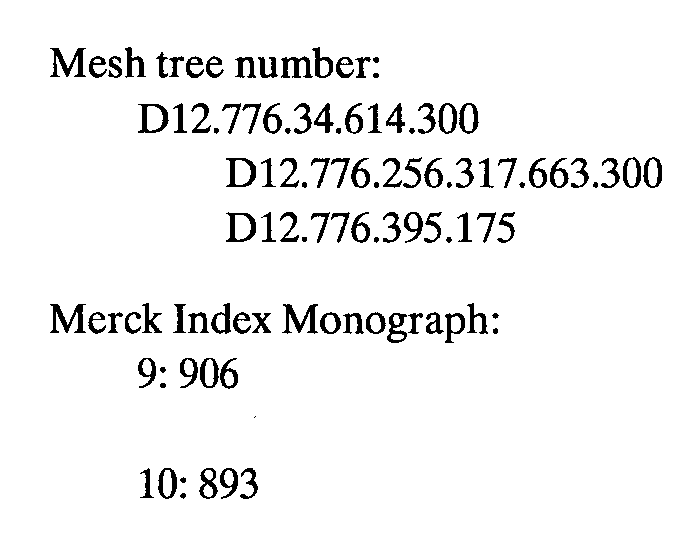
| 367 | Ovalalbumin, e.g., avidin, conalbumins, etc.: | ||||||||||||||||||
This subclass is indented under subclass 362. Proteins having the structure of ovalbumin and compounds
derived from these by addition to or deletion of parts of the polypeptiede
structure.
SEE OR SEARCH CLASS:
| |||||||||||||||||||
| 368 | Separation, purification or synthesis: | ||||||
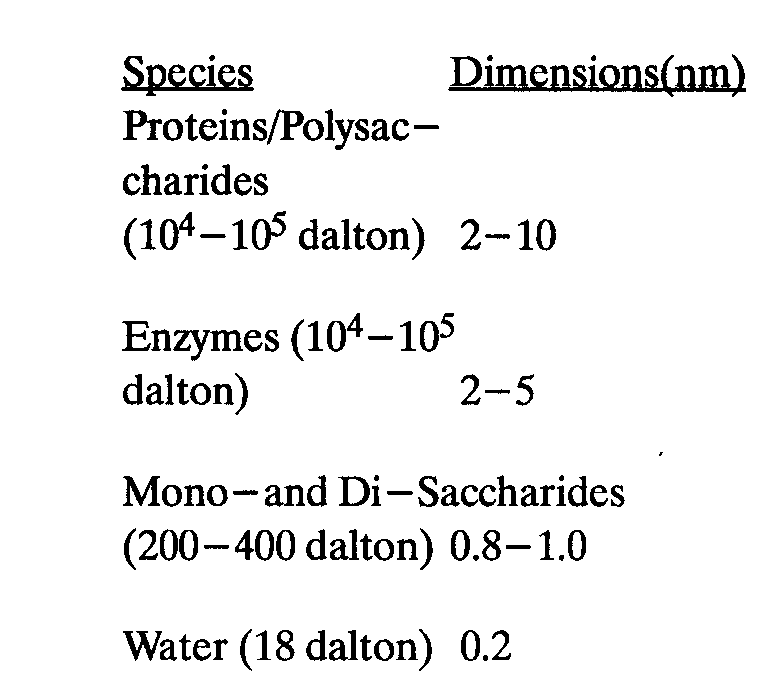
This subclass is indented under subclass 367. Processes in which ovalbumins (a) is
isolated from a preexisting material or composition or (b) is
chemically synthesized.
SEE OR SEARCH CLASS:
| |||||||
| 369 | Separation, purification or synthesis: | ||||
This subclass is indented under subclass 362. Processes in which albumin (a) is isolated
from a preexisting material or composition or (b) is chemically
synthesized.
SEE OR SEARCH CLASS:
| |||||
| 370 | Plant proteins, e.g., derived from legumes, algae or lichens, etc.: | ||||||||||||
This subclass is indented under subclass 350. Proteins derived from green or nongreen plants.
SEE OR SEARCH CLASS:
| |||||||||||||
| 371 | Derived from fungi, e.g., yeasts, mushroom, etc.: | ||||
| This subclass is indented under subclass 370. Plant proteins which are isolated or extracted from fungi
or from a fraction or isolate of fungi.
SEE OR SEARCH CLASS:
| |||||
| 372 | Derived from grain, e.g., prolamines, etc.: | ||||||||
This subclass is indented under subclass 370. Plant proteins which are isolated or extracted from grain
or from a fraction or isolate of grain.
SEE OR SEARCH CLASS:
| |||||||||
| 373 | Zein: | ||||||||
This subclass is indented under subclass 372. Proteins having the structure of zein and compounds derived
from these by addition to or deletion of parts of the polypeptide
structure.
SEE OR SEARCH CLASS:
| |||||||||
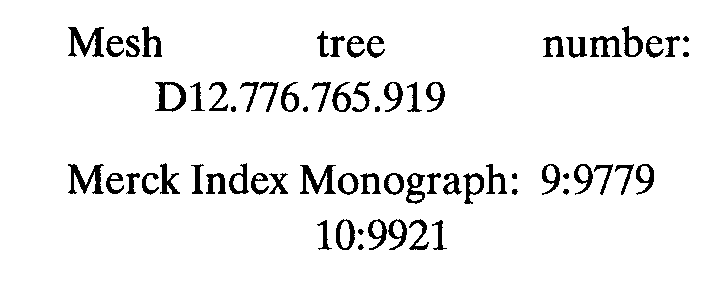
| 374 | Gluten or gliadin: | ||||||||
This subclass is indented under subclass 372. Proteins having the structure of Gluten or Gliadin and compounds
derived from these by addition or deletion of parts of the polypeptide structure.
SEE OR SEARCH CLASS:
| |||||||||
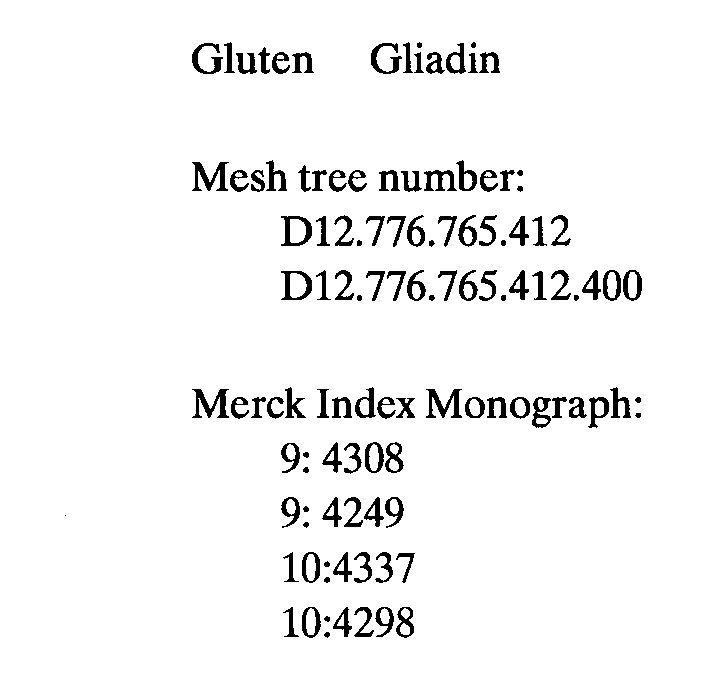
| 375 | Derived from wheat: | ||||
| This subclass is indented under subclass 372. Plant proteins which are isolated or extracted from wheat
or from a fraction or isolate of wheat.
SEE OR SEARCH CLASS:
| |||||
| 376 | Derived from corn: | ||
| This subclass is indented under subclass 372. Plant proteins which are isolated or extracted from corn
or from a fraction or isolate of corn.
SEE OR SEARCH CLASS:
| |||
| 377 | Derived from oil seed, e.g., cotton seed, rapeseed, sunflower, etc.: | ||||
This subclass is indented under subclass 370. Plant proteins which are isolated or extracted from oil
seed or from a fraction or isolate of oil seed.
SEE OR SEARCH CLASS:
| |||||
| 378 | Derived from soybean: | ||
| This subclass is indented under subclass 377. Plant proteins which are isolated or extracted from soybean
or from a fraction or isolate of soybean.
SEE OR SEARCH CLASS:
| |||
| 379 | Derived from leafy green plants, e.g., alfalfa pollen, etc.: | ||||||
This subclass is indented under subclass 370. Plant proteins which are isolated or extracted from leafy
green plants or from a fraction or isolate of leafy green plants.
SEE OR SEARCH CLASS:
| |||||||
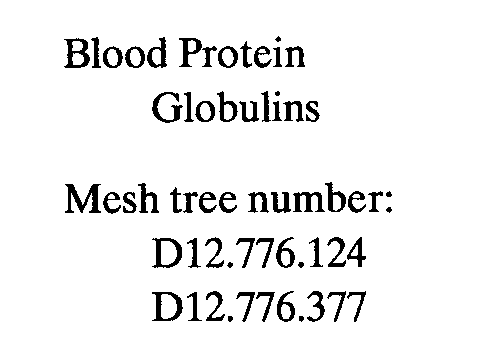
| 380 | Blood proteins or globulins, e.g., proteoglycans, platelet factor 4, thyroglobulin, thyroxine, etc.: | ||||||||||||||||||||||||||||||||||||||||||||||||||||||||||||||||||||||||||||||||||||
This subclass is indented under subclass 350. Proteins identified as Blood Proteins or Globulins and compounds
derived from these by addition to or deletion of parts of the polypeptide
structure.
SEE OR SEARCH CLASS:
| |||||||||||||||||||||||||||||||||||||||||||||||||||||||||||||||||||||||||||||||||||||
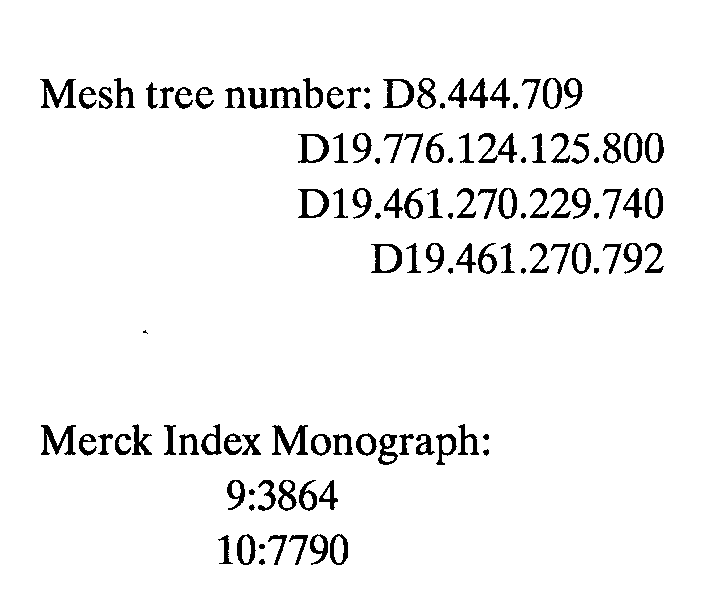
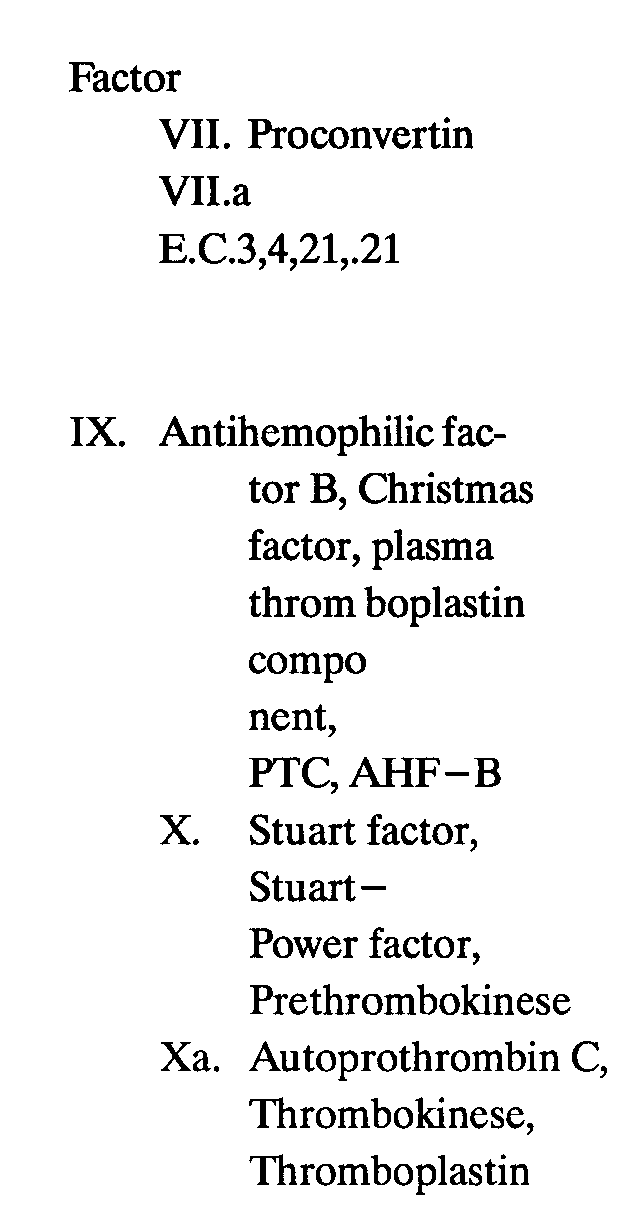
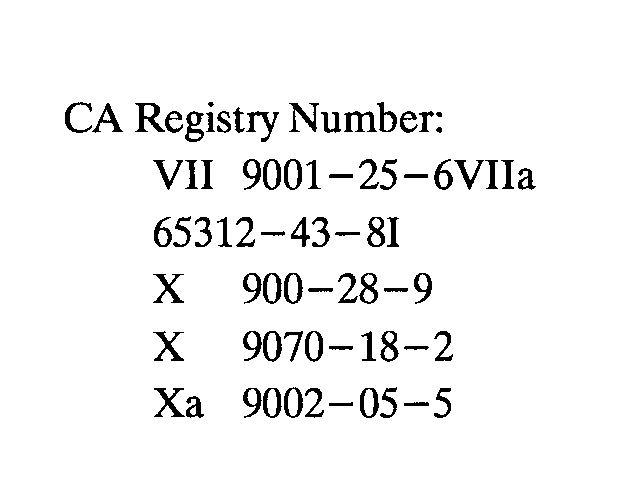
| 381 | Blood coagulation factors and fibrin, e.g., thromboplastin, etc.: | ||||||||||||||||||||||||||||||||||||||||||||||||||||||||||||
This subclass is indented under subclass 380. Proteins identified as Blood Coagulation Factors or fibrin
and compounds derived from these by addition to or deletion of parts
of polypeptide structure.
SEE OR SEARCH CLASS:
| |||||||||||||||||||||||||||||||||||||||||||||||||||||||||||||
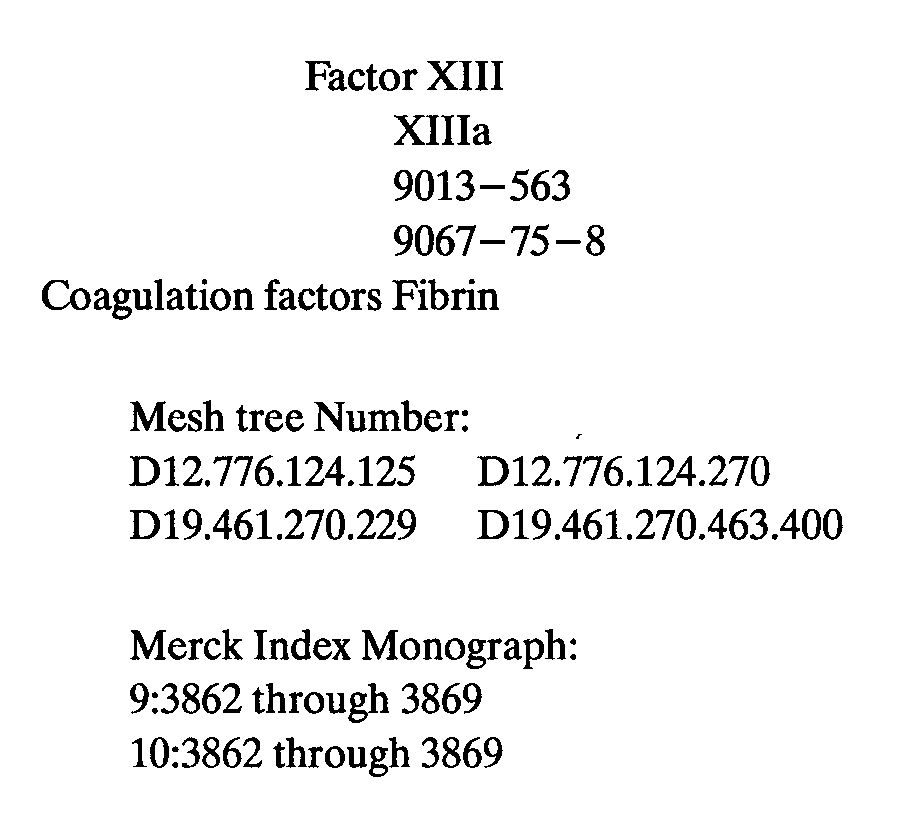
| 382 | Fibrin or fibrin intermediates, e.g., fibrinogen etc.: | ||||||||||
This subclass is indented under subclass 381. Proteins having the structure of fibrin and compounds derived
for these by addition to or deletion of parts of the polypeptide
structure.
SEE OR SEARCH CLASS:
| |||||||||||
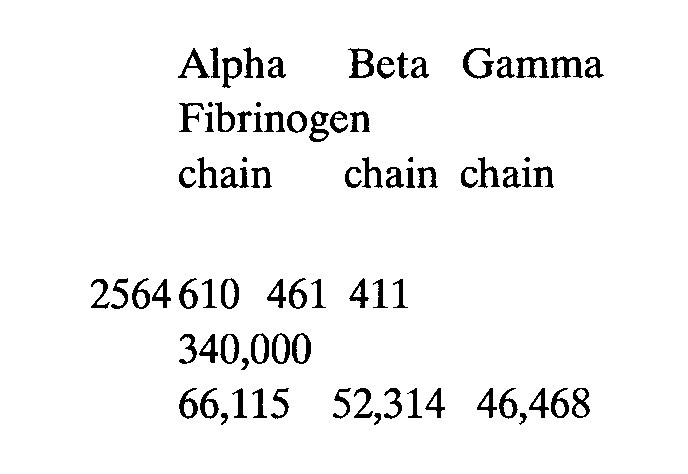
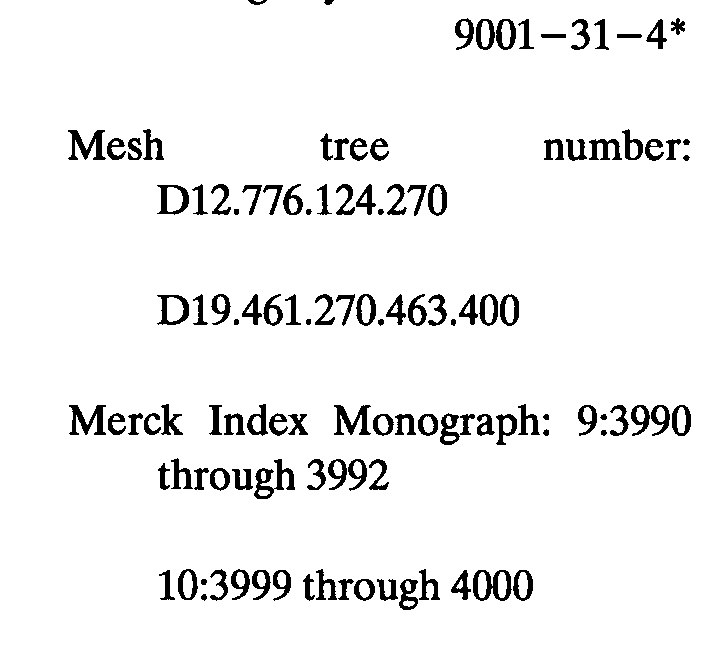
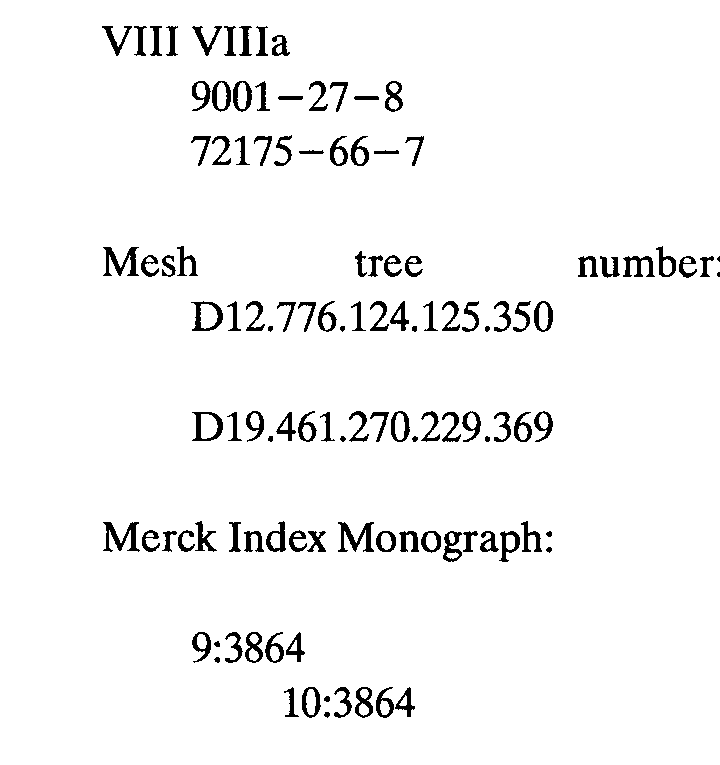
| 383 | Blood coagulation factor VIII, AHF: | ||||||||||||
This subclass is indented under subclass 381. Proteins having the structure of and compounds derived from
these by addition to or deletion of parts of the polypeptide structure.
SEE OR SEARCH CLASS:
| |||||||||||||
| 384 | Blood coagulation FACTOR II, or factor II + VII + IX +, i.e., prothrombin or prothrombin complex or factor: | ||||||||||||||
This subclass is indented under subclass 381. Proteins having the structure of factor II and or prothrombin
complex and compounds derived from these by addition to or deletion
of parts of the polypeptide structure.
SEE OR SEARCH CLASS:
| |||||||||||||||
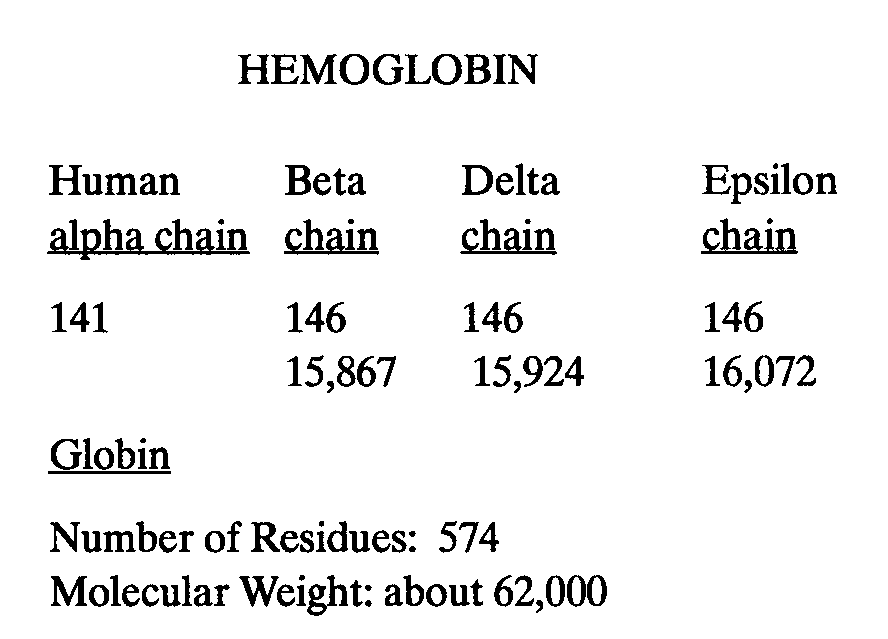
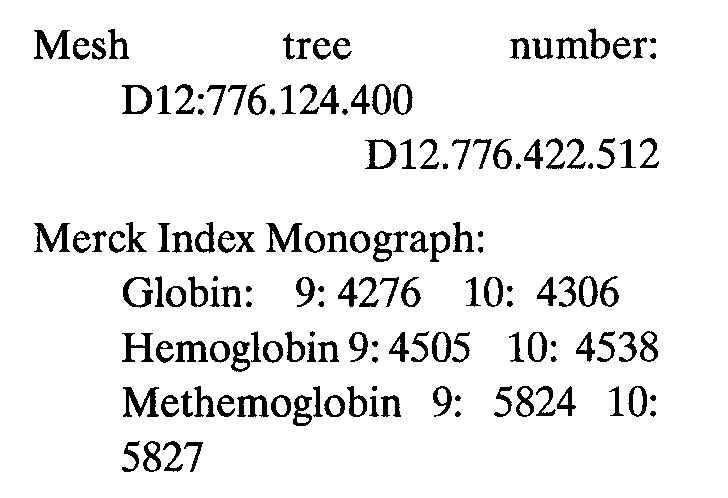
| 385 | Hemoglobins or globins: | ||||||||||||||
This subclass is indented under subclass 380. Proteins having the structure of hemoglobins or globins
and compounds derived from these by addition to or deletion of parts
of the polypeptide structure.
SEE OR SEARCH THIS CLASS, SUBCLASS:
SEE OR SEARCH CLASS:
| |||||||||||||||
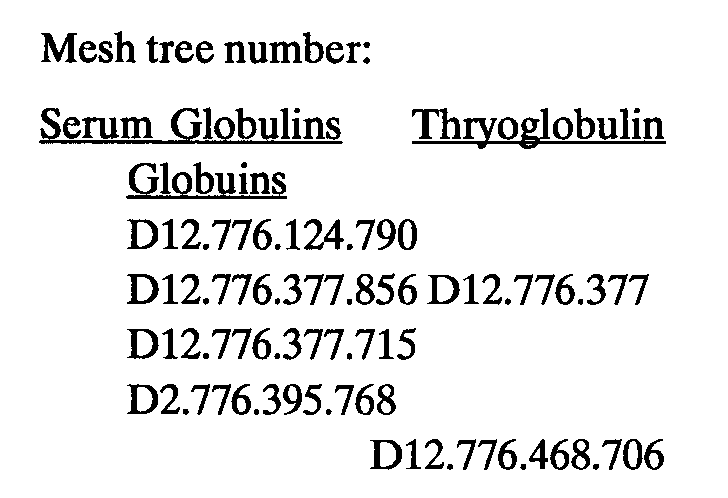
| 386 | Globulins: | ||||||||
This subclass is indented under subclass 380. Proteins identified as globulins and compounds derived from
these by addition to or deletion of parts of the polypeptide structure.
| |||||||||
| 387.1 | Immunoglobulin, antibody, or fragment thereof, other than immunoglobulin, antibody, or fragment thereof that is conjugated or adsorbed: | ||||||||||||||||||||||||||||||||||||||
This subclass is indented under subclass 386. Subject matter in which the protein has the structure of
an immunoglobulin, antibody, or fragment thereof
that is not conjugated or adsorbed to another substance.
SEE OR SEARCH THIS CLASS, SUBCLASS:
SEE OR SEARCH CLASS:
| |||||||||||||||||||||||||||||||||||||||
| 387.2 | Anti-idiotypic: | ||||||||
This subclass is indented under subclass 387.1. Subject matter involving an antibody or antibody fragment
that binds another antibody at one of its idiotopes.
| |||||||||
| 387.3 | Chimeric, mutated, or recombined hybrid (e.g., bifunctional, bispecific, rodent-human chimeric, single chain, rFv, immunoglobulin fusion protein, etc.): | ||||||
This subclass is indented under subclass 387.1. Subject matter involving an antibody or antibody fragment
altered with respect to its amino acid sequence; with respect
to its composition of heavy and light chains or immunoglobulin domains; or
with respect to its glycosylation, as compared with that
found in nature; or involving an antibody or antibody fragment
fused to a nonimmunoglobulin amino acid sequence.
| |||||||
| 387.5 | Binds oligosaccharide structure: | ||||||
This subclass is indented under subclass 387.1. Subject matter involving an antibody or antigen-binding
fragment thereof whose antigen-binding site(s) will
combine with an oligosaccharide structure that is either free, a
component of a glycoprotein, or a component of a glycolipid.
| |||||||
| 387.7 | Binds expression product of cancer-related gene or fragment thereof (e.g., oncogene, proto-oncogene, etc.): | ||
This subclass is indented under subclass 387.1. Subject matter involving an antibody or antigen-binding
fragment thereof whose antigen-binding site(s) will
combine with an expression product or fragment thereof of a cancer-related gene, such
as an oncogene or proto-oncogene.
| |||
| 387.9 | Binds specifically-identified amino acid sequence: | ||
This subclass is indented under subclass 387.1. Subject matter involving an antibody or antigen-binding
fragment thereof whose antigen-binding site(s) will
combine with a protein or peptide antigen or antigenic determinant
whose amino acid sequence is disclosed.
| |||
| 388.1 | Monoclonal: | ||||||||||
This subclass is indented under subclass 387.1. Subject matter involving an antibody or fragment thereof
produced by a clone of cells or cell line that is derived from a
single antibody-producing cell, wherein said antibody
is identical to all other antibodies produced by that clone of cells
or cell line.
SEE OR SEARCH THIS CLASS, SUBCLASS:
SEE OR SEARCH CLASS:
| |||||||||||
| 388.15 | Human: |
| This subclass is indented under subclass 388.1. Subject matter involving a monoclonal antibody or fragment thereof derived from a human source, or whose amino acid sequence is identical to that found in humans. | |
| 388.2 | Binds microorganism or normal or mutant component or product thereof (e.g., animal cell, cell-surface antigen, secretory product, etc.): | ||||||
This subclass is indented under subclass 388.1. Subject matter involving a monoclonal antibody or antigen-binding
fragment thereof whose antigen-binding site(s) will
combine with an integral or isolated part of a micro-organism, or
with a substance shed or secreted by a micro-organism,
or with a chemically-altered component of a microorganism, or
with a chemically-altered substance shed or secreted by
a micro-organism.
| |||||||
| 388.21 | Binds nucleic acid or derivative or component thereof (e.g., DNA, RNA, DNA-RNA hybrid, nucleotide, nucleoside, carcinogen-DNA adduct, etc.): | ||
This subclass is indented under subclass 388.2. Subject matter involving a monoclonal antibody or antigen-binding
fragment thereof whose antigen-binding site(s) will
combine with a nucleic acid; a component of a nucleic acid, such
as a nucleotide or nucleoside; or a modified nucleic acid, such
as carcinogen-DNA adduct resulting from exposure to a carcinogen.
| |||
| 388.22 | Binds receptor (e.g., transferrin receptor, Fc receptor, dihydropyridine receptor, IL-2 receptor, etc.): | ||||
This subclass is indented under subclass 388.2. Subject matter involving a monoclonal antibody or antigen-binding
fragment thereof whose antigen-binding site(s) will
combine with a free or micro-organism-associated receptor.
| |||||
| 388.23 | Binds lymphokine, cytokine, or other secreted growth regulatory factor, differentiation factor, or intercellular mediator specific for a hematopoietic cell (e.g., interleukin, interferon, erythropoietin, etc.): | ||||||||||
This subclass is indented under subclass 388.2. Subject matter involving a monoclonal antibody or antigen-binding
fragment thereof whose antigen-binding site(s) will
combine with a lymphokine, cytokine, or any other secreted
growth stimulatory factor, growth inhibitory factor, differentiation
factor, or intercellular mediator that targets any type(s) of
hematopoietic cells.
| |||||||||||
| 388.24 | Binds hormone or other secreted growth regulatory factor, differentiation factor, intercellular mediator, or neurotransmitter (e.g., insulin, human chorionic gonadotropin, intragonadal regulatory protein, Mullerian inhibiting substance, inhibin, epidermal growth factor, nerve growth factor, dopamine, norepinephrine, etc.): | ||||||
This subclass is indented under subclass 388.2. Subject matter involving a monoclonal antibody or antigen-binding
fragment thereof whose antigen-binding site(s) will
combine with a neurotransmitter, with a hormone, or with
any other secreted growth regulatory factor, differentiation
factor, or intercellular mediator that targets cells other
than hematopoietic cells.
| |||||||
| 388.25 | Binds plasma protein, serum protein, or fibrin (e.g., clotting factor, fibrinolytic factor, complement factor, immunoglobulin, apolipoprotein, etc.): | ||||||
This subclass is indented under subclass 388.2. Subject matter involving a monoclonal antibody or antigen-binding
fragment thereof whose antigen-binding site(s) will
combine with a plasma protein, serum protein, or
with fibrin.
| |||||||
| 388.26 | Binds enzyme: |
| This subclass is indented under subclass 388.2. Subject matter involving a monoclonal antibody or antigen-binding fragment thereof whose antigen-binding site(s) will combine with an enzyme. | |
| 388.3 | Binds virus or component or product thereof (e.g., virus-associated antigen, etc.): |
| This subclass is indented under subclass 388.2. Subject matter involving a monoclonal antibody or antigen-binding fragment thereof whose antigen-binding site(s) will combine with an integral or isolated part of a virus, or with a substance shed by a virus, such as a viral antigen. | |
| 388.35 | Binds retrovirus or component or product thereof (e.g., HIV, LAV, HTLV, etc.): | ||
This subclass is indented under subclass 388.3. Subject matter involving a monoclonal antibody or antigen-binding
fragment thereof whose antigen-binding site(s) will
combine with an integral or isolated part of a retrovirus, or
with a substance shed by a retrovirus, such as a viral
antigen.
| |||
| 388.4 | Binds bacterium or similar microorganism or component or product thereof (e.g., Streptococcus, Legionella, Mycoplasma, bacterium-associated antigen, exotoxin, etc.): | ||
This subclass is indented under subclass 388.2. Subject matter involving a monoclonal antibody or antigen-binding
fragment thereof whose antigen-binding site(s) will
combine with an integral or isolated part of a bacterium or similar
micro-organism, or with a substance shed or secreted
by a bacterium or similar micro-organism.
| |||
| 388.5 | Binds fungus or plant cell or component or product thereof (e.g., fungus-associated antigen, etc.): | ||
This subclass is indented under subclass 388.2. Subject matter involving a monoclonal antibody or antigen-binding
fragment thereof whose antigen-binding site(s) will
combine with an integral or isolated part of a fungus or plant cell, or
with a substance shed or secreted by a fungus or plant cell.
| |||
| 388.6 | Binds parasitic protozoan or metazoan cell or component or product thereof (e.g., Dirofilaria, Eimeria, Coccidia, Trichinella, parasite cell-surface antigen, etc.): | ||
This subclass is indented under subclass 388.2. Subject matter involving a monoclonal antibody or antigen-binding
fragment thereof whose antigen-binding site(s) will
combine with an integral or isolated part of a parasitic protozoan
or metazoan cell, or with a substance shed or secreted
by a parasitic protozoan or metazoan cell.
| |||
| 388.7 | Binds hematopoietic cell or component or product thereof (e.g., erythrocyte, granulocyte, macrophage, monocyte, platelet, myelogenous leukemia cell, bone marrow stem cell, granulocytic cell-surface antigen, hemoglobin, thrombospondin, glycophorin, etc.): | ||
This subclass is indented under subclass 388.2. Subject matter involving a monoclonal antibody or antigen-binding
fragment thereof whose antigen-binding site(s) will
combine with an integral or isolated part of a hematopoietic cell, or
with a substance shed or secreted by a hematopoietic cell.
| |||
| 388.73 | Binds lymphocytic or lymphocytic-like cell or component or product thereof (e.g., B cell, B-lineage bone marrow cell, null cell, natural killer cell, B-lymphoblastoid cell, B-lineage acute lymphoblastic leukemia cell, B-lymphocytic cell-surface antigen, etc.): | ||
This subclass is indented under subclass 388.7. Subject matter involving a monoclonal antibody or antigen-binding
fragment thereof whose antigen-binding site(s) will
combine with an integral or isolated part of a lymphocytic or lymphocytic-like
cell, or with a substance shed or secreted by a lymphocytic
cell or lymphocytic-like cell.
| |||
| 388.75 | Binds T-lymphocytic cell or component or product thereof (e.g., T cell, thymocyte, T-lineage bone marrow cell, T-lymphoblastoid cell, T-lineage acute lymphoblastic leukemia cell, T-lymphocytic cell-surface antigen, etc.): |
| This subclass is indented under subclass 388.73. Subject matter involving a monoclonal antibody or antigen-binding fragment thereof whose antigen-binding site(s) will combine with an integral or isolated part of a T-lymphocytic cell, or with a substance shed or secreted by a T-lymphocytic cell. | |
| 388.8 | Binds cancer cell or component or product thereof (e.g., cell-surface antigen, etc.): |
| This subclass is indented under subclass 388.2. Subject matter involving a monoclonal antibody or antigen-binding fragment thereof whose antigen-binding site(s) will combine with an integral or isolated part of a cancer cell, or with a substance shed or secreted by a cancer cell. | |
| 388.85 | Binds antigen characterized by name or molecular weight (e.g., CEA, NCA, CC glycoprotein, melanoma gp 150 antigen, etc.): |
| This subclass is indented under subclass 388.8. Subject matter involving a monoclonal antibody or antigen-binding fragment thereof whose antigen-binding site(s) will combine with an antigen that is an integral or isolated part of a cancer cell, or that is shed or secreted by a cancer cell, and that is disclosed by name or molecular weight. | |
| 388.9 | Binds drug, hapten, hapten-carrier complex, or specifically-identified chemical structure (e.g., theophylline, digoxin, etc.): | ||
This subclass is indented under subclass 388.1. Subject matter involving a monoclonal antibody or antigen-binding
fragment thereof whose antigen-binding site(s) will
combine with a drug, hapten, hapten-carrier
complex, or with a specifically-identified chemical
structure that is disclosed.
| |||
| 389.1 | Polyclonal antibody or immunoglobulin of identified binding specificity: | ||
This subclass is indented under subclass 387.1. Subject matter involving a polyclonal antibody or
immunoglobulin or antigen-binding fragment thereof whose
binding specificity is disclosed.
| |||
| 389.2 | Binds hormone, lymphokine, cytokine, or other secreted growth regulatory factor, differentiation factor, intercellular mediator, or neurotransmitter (e.g., insulin, human chorionic gonadotropin, glucagon, cardiodilatin, interleukin, interferon, norepinephrine, epinephrine, acetylcholine, etc.): | ||||||||||||
This subclass is indented under subclass 389.1. Subject matter involving a polyclonal antibody or immunoglobulin
or antigen-binding fragment thereof whose
antigen-binding site(s) will combine
with a hormone, lymphokine, cytokine, or
other secreted growth regulatory factor, differentiation
factor, intercellular mediator, or neurotransmitter.
| |||||||||||||
| 389.3 | Binds plasma protein, serum protein, or fibrin (e.g., clotting factor, fibrinolytic factor, complement factor, immunoglobulin, apolipoprotein, etc.): | ||||||
This subclass is indented under subclass 389.1. Subject matter involving a polyclonal antibody or immunoglobulin
or antigen-binding fragment thereof whose
antigen-binding site(s) will combine
with a plasma protein, serum protein, or with
fibrin.
| |||||||
| 389.4 | Binds virus or component or product thereof (e.g., virus-associated antigen, etc.): |
| This subclass is indented under subclass 389.1. Subject matter involving a polyclonal antibody or immunoglobulin or antigen-binding fragment thereof whose antigen-binding site(s) will combine with an integral or isolated part of a virus, or with a substance shed by a virus, such as a viral antigen. | |
| 389.5 | Binds bacterium or similar microorganism or component or product thereof (e.g., Pseudomonas, Chlamydia, Clostridium, bacterium-associated antigen, etc.): | ||
This subclass is indented under subclass 389.1. Subject matter involving a polyclonal antibody or
immunoglobulin or antigen-binding fragment thereof
whose antigen-binding site(s) will combine
with an integral or isolated part of a bacterium or similar micro-organism, or
with a substance shed or secreted by a bacterium or similar micro-organism.
| |||
| 389.6 | Binds hematopoietic cell or component or product thereof (e.g., erythrocyte, granulocyte, bone marrow cell, lymphocyte, leukemic cell, hematopoietic cell-surface antigen, hemoglobin, etc.): | ||
This subclass is indented under subclass 389.1. Subject matter involving a polyclonal antibody or immunoglobulin
or antigen-binding fragment thereof whose antigen-binding
site(s) will combine with an integral or isolated
part of a hematopoietic cell, or with a substance shed or
secreted by a hematopoietic cell.
| |||
| 389.7 | Binds cancer cell or component or product thereof (e.g., cell-surface antigen, etc.): |
| This subclass is indented under subclass 389.1. Subject matter involving a polyclonal antibody or immunoglobulin or antigen-binding fragment thereof whose antigen-binding site(s) will combine with an integral or isolated part of a cancer cell, or with a substance shed or secreted by a cancer cell. | |
| 389.8 | Binds drug, hapten, hapten-carrier complex, or specifically-identified chemical structure (e.g., theophylline, digoxin, etc.): | ||
This subclass is indented under subclass 389.1. Subject matter involving a polyclonal antibody or immunoglobulin
or antigen-binding fragment thereof whose antigen-binding
site(s) will combine with a drug, hapten, hapten-carrier complex, or
with a specifically-identified chemical structure that
is disclosed.
| |||
| 390.1 | Removing or inactivating virus or bacterium or component or product thereof (e.g., endotoxin, etc.): | ||
| This subclass is indented under subclass 387.1. Subject matter involving a process of removing or inactivating
a virus, a bacterium, or a component or product
thereof that contaminates an immunoglobulin preparation; or
an immunoglobulin preparation prepared thereby.
SEE OR SEARCH THIS CLASS, SUBCLASS:
| |||
| 390.5 | Removing, dissociating or preventing the formation of aggregated, denatured, fragmented, or polymerized immunoglobulin or antibody; or preventing or reducing complement fixation or binding; or reducing antigenicity; or removing, inactivating, or inhibiting contaminating plasma proteins (e.g., proteolytic enzymes, etc.): | ||||
This subclass is indented under subclass 387.1. Subject matter involving a process of removing, dissociating, or
preventing the formation of aggregated, denatured, fragmented, polymerized
immunoglobulins or antibodies; or a process of preventing
or reducing complement fixation or complement binding by an immunoglobulin
preparation; or a process of reducing the antigenicity
of an immunoglobulin preparation; or a process of removing, inactivating, or inhibiting
plasma proteins, such as proteolytic enzymes, that
contaminate an immunoglobulin preparation; or involving
an immunoglobulin preparation prepared thereby.
SEE OR SEARCH THIS CLASS, SUBCLASS:
| |||||
| 391.1 | Monoclonal or polyclonal antibody or immunoglobulin or fragment thereof that is conjugated or adsorbed (e.g., adsorbed to a solid support, etc.): | ||||
This subclass is indented under subclass 386. Subject matter involving a monoclonal or polyclonal antibody
or immunoglobulin or fragment thereof that is bound to another molecule via
a covalent bond or chemical group, or that is adsorbed
to another substance.
SEE OR SEARCH CLASS:
| |||||
| 391.3 | Conjugated to a detectable label or radioisotope or radionuclide or heavy metal-containing compound: | ||
| This subclass is indented under subclass 391.1. Subject matter involving a monoclonal or polyclonal antibody
or immunoglobulin or fragment thereof that is conjugated to a detectable label, radioisotope
or radionuclide, or heavy metal-containing compound.
SEE OR SEARCH CLASS:
| |||
| 391.5 | Conjugated via a specifically-identified linking group, chelating group, coordination complex, coupling agent, or conjugation agent: | ||
This subclass is indented under subclass 391.3. Subject matter involving a monoclonal or polyclonal antibody
or immunoglobulin or fragment thereof that is conjugated via a linking group, chelating
group, coordination complex, coupling agent, or
conjugation agent that is specifically identified in the claims
by name or chemical structure.
| |||
| 391.7 | Conjugated to a cytotoxic agent or drug or other biologically-active substance: | ||
| This subclass is indented under subclass 391.1. Subject matter involving a monoclonal or polyclonal antibody
or immunoglobulin or fragment thereof that is conjugated to a cytotoxic agent, drug, or
other biologically-active substance.
SEE OR SEARCH CLASS:
| |||
| 391.9 | Conjugated via a specifically-identified linking group, coupling agent, or conjugation agent: | ||||
This subclass is indented under subclass 391.7. Subject matter involving a monoclonal or polyclonal antibody
or immunoglobulin or fragment thereof that is conjugated via a linking group, coupling
agent, or conjugation agent that is specifically identified
in the claims by name or chemical structure.
SEE OR SEARCH THIS CLASS, SUBCLASS:
| |||||
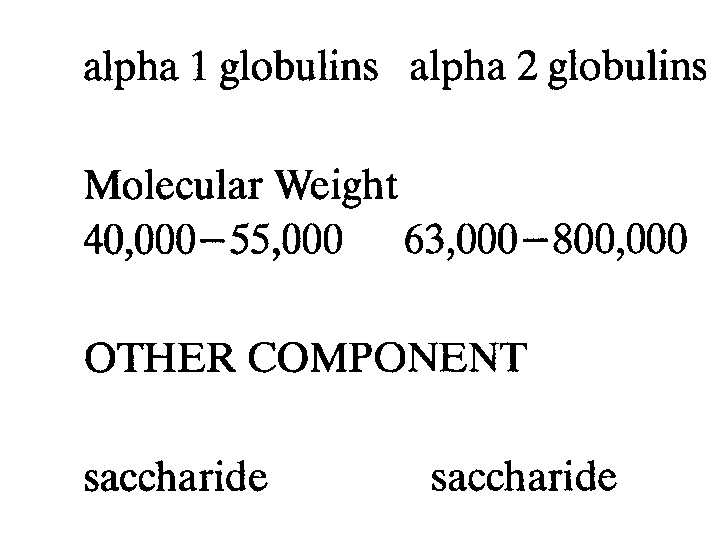
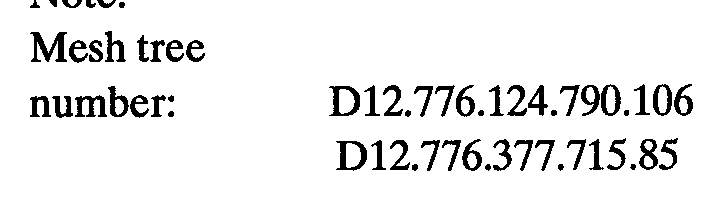
| 392 | Alpha globulins, e.g., ceruloplastin, haptoglobins, etc.: | ||||||||||||
This subclass is indented under subclass 386. Proteins identified as alpha globulins and compounds derived
from these by addition to or deletion of parts of the polypeptide
structure.
SEE OR SEARCH THIS CLASS, SUBCLASS:
| |||||||||||||
| 393 | Antithrombin III: | ||||||
This subclass is indented under subclass 392. Proteins having the structure of antithrombin III and compounds
derived from these by addition to or deletion of parts of the polypeptide structure.
| |||||||
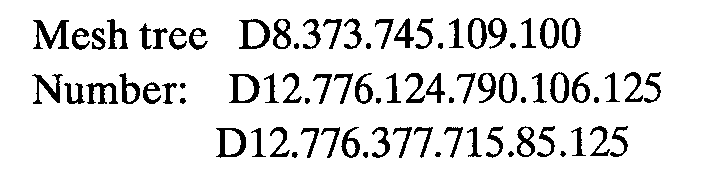
| 394 | Beta globulins, e.g., transferrin, etc.: | ||||||||
This subclass is indented under subclass 386. Proteins having the structure of a beta globulin and compounds
derived from these by addition to or deletion of parts of the polypeptide
structure.
SEE OR SEARCH THIS CLASS, SUBCLASS:
| |||||||||

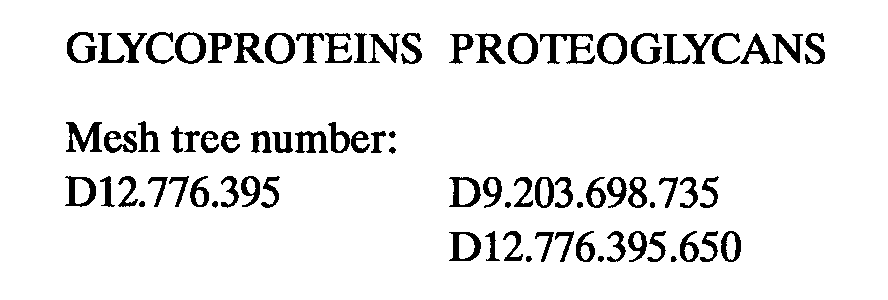
| 395 | Glycoproteins, e.g., mucins, proteoglycans, etc.: | ||||||
This subclass is indented under subclass 350. Proteins comprising a protein bonded to saccharide and compounds
derived from these by addition to or deletion of parts of the structure.
| |||||||
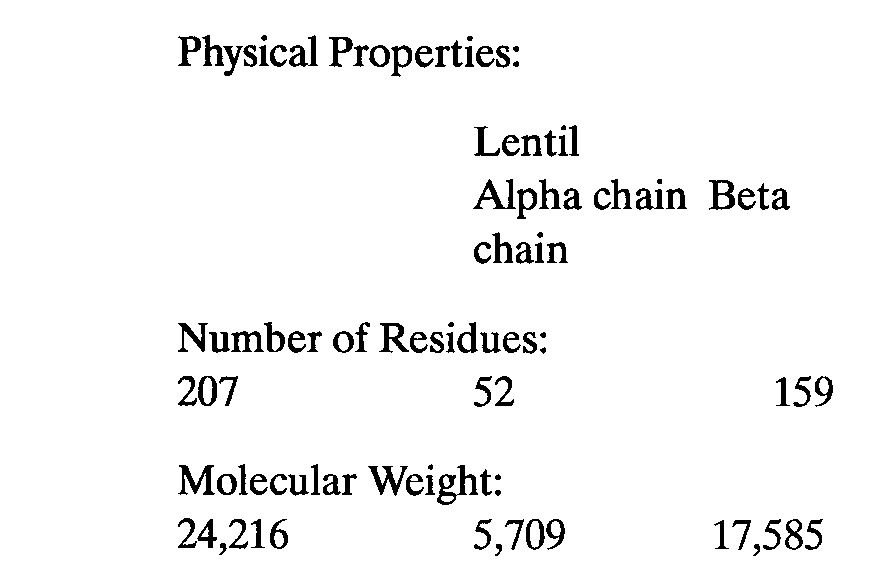
| 396 | Lectins, e.g., concanavalin, hemagglutinin, etc.: | ||||||||
This subclass is indented under subclass 395. Proteins having the structure of lectins and compounds derived
from these by addition to or deletion of parts of the polypeptide
structure.
| |||||||||
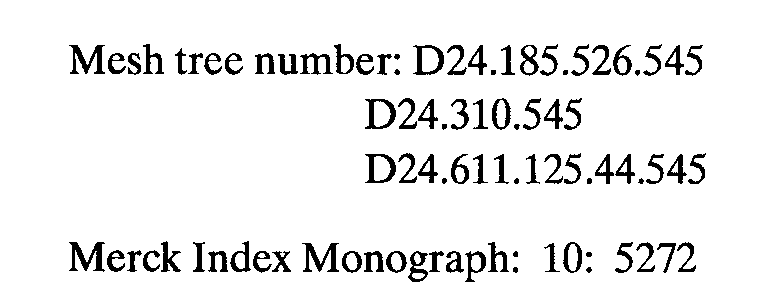
| 397 | Glycoprotein hormones: | ||
This subclass is indented under subclass 395. Proteins having the structure of or functioning as hormones
and derived from these by addition to or deletion of parts of the
polypeptide structure.
| |||
| 398 | Gonadatropins: | ||||||||
This subclass is indented under subclass 397. Proteins having the structure of gonadatropins and compounds
derived from these by addition to or deletion of parts of the polypeptide
structure.
SEE OR SEARCH CLASS:
| |||||||||
| 399 | Hormones, e.g., prolactin, thymosin, growth factors, etc.: | ||||
This subclass is indented under subclass 350. Proteins functioning as hormones and compounds derived from
these by addition to or deletion of parts of the polypeptide structure.
SEE OR SEARCH CLASS:
| |||||
| 400 | Metal containing, e.g., chromoproteins, ferritin, ferredoxins, etc.: | ||||||
This subclass is indented under subclass 350. Proteins containing a metal and compounds derived from these
by addition to or deletion of parts of the polypeptide structure.
SEE OR SEARCH CLASS:
| |||||||
| 401 | Cytochromes, e.g., chlorophyl, orgotein, etc.: | ||||||
This subclass is indented under subclass 400. Proteins having the structure of cytochrome and compounds
derived from these by addition to or deletion of parts of the polypeptide
structure.
| |||||||
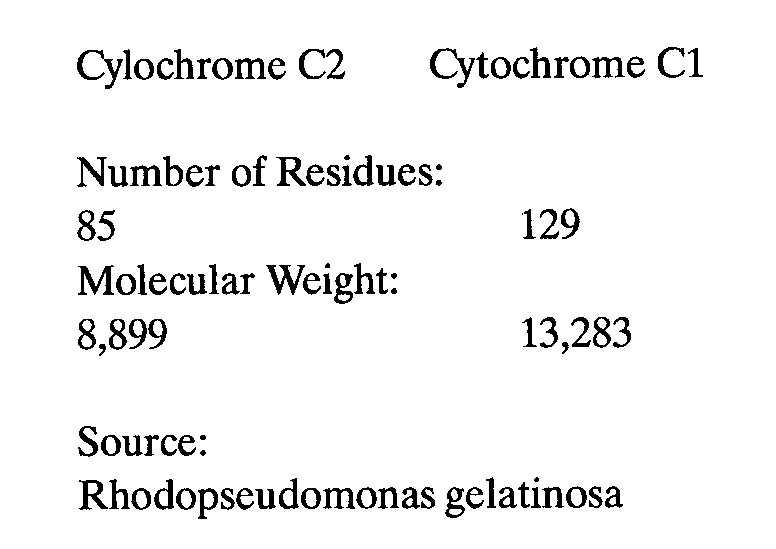
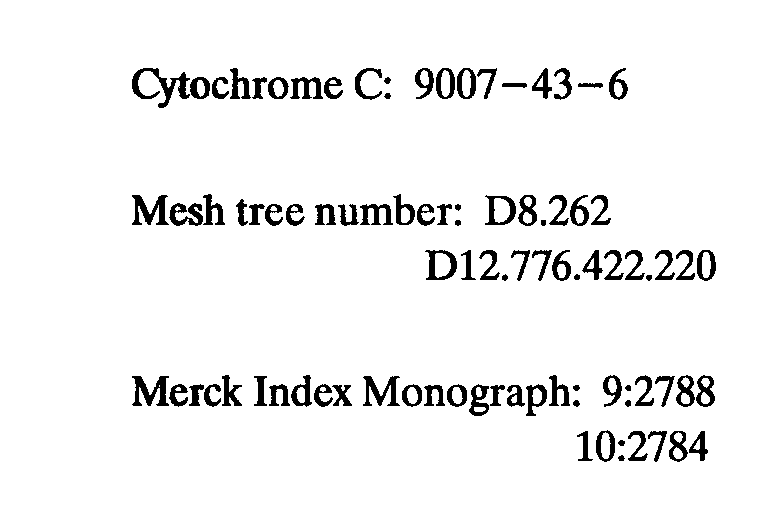
| 402 | Chemical modification or the reaction product thereof, e.g., covalent attachment or coupling, etc.: | ||||||||||||||
This subclass is indented under subclass 350. Subject matter including a step of chemically modifying
a protein or the product of such modification.
SEE OR SEARCH CLASS:
| |||||||||||||||
| 403 | Protein is identified as a nantigen, e.g., immunogenic carriers, etc.: | ||||||
This subclass is indented under subclass 402. Subject matter in which the protein is reacted with another
material and the protein is claimed or disclosed as an antigen.
SEE OR SEARCH CLASS:
| |||||||
| 404 | Sulfur containing reactant: |
| This subclass is indented under subclass 403. Subject matter in which the material reacting with the protein contains sulfur. | |
| 405 | Nitrogen containing reactant: |
| This subclass is indented under subclass 403. Subject matter in which the material reacting with the protein contains nitrogen. | |
| 406 | Oxygen containing reactant: |
| This subclass is indented under subclass 403. Subject matter in which the material reacting with the protein contains oxygen. | |
| 407 | Hydrolysis of protein: | ||
| This subclass is indented under subclass 402. Subject matter in which the protein is subject to autolysis
or chemical hydrolysis.
SEE OR SEARCH CLASS:
| |||
| 408 | Sulfur containing reactant: |
| This subclass is indented under subclass 402. Subject matter in which the material reacting with the protein contains sulfur. | |
| 409 | Nitrogen containing reactant: |
| This subclass is indented under subclass 402. Subject matter in which the material reacting with the protein contains nitrogen. | |
| 410 | Oxygen containing reactant: |
| This subclass is indented under subclass 402. Subject matter in which the material reacting with the protein contains oxygen. | |
| 411 | Oxygen containing is saccharide: |
| This subclass is indented under subclass 410. Subject matter in which the material reacting with the protein is or contains saccharide. | |
| 412 | Separation or purification: | ||||||
This subclass is indented under subclass 350. Processes in which a protein is separated from another material.
| |||||||
| 413 | Immunological separation or affinity chromatography: | ||||||||
This subclass is indented under subclass 412. Processes in which an antigen antibody or binding protein
reaction is used to effect separation of a component of a mixture.
SEE OR SEARCH THIS CLASS, SUBCLASS:
SEE OR SEARCH CLASS:
| |||||||||
| 414 | Ultra filtration or osmosis: | ||||||||
This subclass is indented under subclass 412. Processes in which separation is effected (a) by means of
a permeable membrane through which a solvent is forced under pressure
carrying low molecular weight compounds through the membrane or
(b) by means of a permeable membrane through which compounds are forced
by osmatic pressure.
SEE OR SEARCH CLASS:
| |||||||||
| 415 | Selective absorption, e.g., Ca phosphate sorbents, etc.: | ||
This subclass is indented under subclass 412. Processes in which separation of a protein from a liquid
mixture is effected by contact with a solid material which preferentially
attracts and holds one of the components of the liquid mixture.
| |||
| 416 | Ion exchange: | ||||
This subclass is indented under subclass 415. Process in which separation of a protein from a liquid is
effected by a solid insoluble material which captures from the liquid
a dissociated charged chemical moiety and releases to the liquid
a different charged moiety of the same polarity.
| |||||
| 417 | Chromatography or by septum selective as to material, e.g., gel filtration, molecular sieve dialysis, etc.: | ||||||
This subclass is indented under subclass 415. Processes in which a protein is separated from a liquid
mixture by a solid sorbent which competes in affinity with a moving
carrier liquid or solvent such that a separation is effected by
differing speeds of travel through the solid sorbent.
| |||||||
| 418 | Precipitation: | ||||
This subclass is indented under subclass 412. Processes in which a protein is separated from a liquid
by physical or chemical means to cause the protein or undesired
material to agglomerate, coagulate, coalesce or flocculate.
| |||||
| 419 | With added material: |
| This subclass is indented under subclass 418. Processes in which precipitation is brought about by adding a material thereto. | |
| 420 | Inorganic: |
| This subclass is indented under subclass 419. Processes in which the added material is inorganic. | |
| 421 | Polymeric, e.g., polyethylene glycol, etc.: |
| This subclass is indented under subclass 419. Process in which the added material is a natural or synthetic polymer. | |
| 422 | Solvent extraction: | ||
This subclass is indented under subclass 412. Process in which a protein is separated from a solid or
liquid mixture by preferential dissolution in an added solvent.
| |||
| 423 | Oxygenated material: |
| This subclass is indented under subclass 422. Processes in which the solvent contains oxygen. | |
| 424 | Alcohol: |
| This subclass is indented under subclass 423. Processes in which the oxgenated solvent is an alcohol. | |
| 425 | Carboxyl containing: |
| This subclass is indented under subclass 423. Processes in which the oxygenated material contains a carboxyl group. | |
| 426 | Hydrocarbon or halogenated hydrocarbon: |
| This subclass is indented under subclass 422. Processes in which the solvent is a hydrocarbon or a halogenated hydrocarbon. | |
| 427 | Physical treatment: | ||
This subclass is indented under subclass 412. Processes in which a protein is separated or purified by
a physical treatment.
| |||
| 500 | LIGNINS OR DERIVATIVES: | ||||||||||||||
This subclass is indented under Class 260, subclass
1. Lignins, i.e., the Major Noncarbohydrate Constituents of
Wood and Woody Plants, or Reaction Products Thereof.
SEE OR SEARCH CLASS:
| |||||||||||||||
| 501 | Aldehyde, ketone or ozone reacted with a lignin or lignin containing substance, or product thereof: | ||
This subclass is indented under subclass 500. Processes wherein a lignin or a lignin-containing substance
is reacted with an aldehyde, with a ketone, or with ozone, or the
reaction products thereof.
| |||
| 502 | Compound which includes phenolic hydroxy or oxygen containing hetero ring reacted with a lignin or lignin containing substance, or product thereof: |
| This subclass is indented under subclass 500. Processes wherein a lignin or a lignin-containing substance is reacted with a compound having hydroxy bonded directly to a benzene ring or with a compound having an oxygen-containing hereto ring, or the reaction products thereof. | |
| 503 | Hydrogenation of a lignin or lignin containing substance, or product thereof: |
| This subclass is indented under subclass 500. Processes wherein a lignin or a lignin-containing substance is reacted with hydrogen, or the reaction products thereof. | |
| 504 | Carboxylic acid anhydride, or a compound having halogen bonded directly to acyclic carbon by nonionic bonding, reacted with a lignin or lignin containing substance, or product thereof: |
| This subclass is indented under subclass 500. Processes wherein a lignin or a lignin-containing substance is reacted with a carboxylic acid anhydride or with a compound having halogen (i.e., fluorine, chlorine, bromine, or iodine) bonded directly or indirectly to an acyclic carbon by nonionic bonding, or the reaction products thereof. | |
| 505 | Compound containing nitrogen attached directly or indirectly to carbon by nonionic bonding reacted with a lignin or lignin containing substance, or product therof: |
| This subclass is indented under subclass 500. Processes wherein a lignin or a lignin-containing substance is reacted with a compound having nitrogen attached directly or indirectly to carbon by nonionic bonding, or the reaction products thereof. | |
| 506 | Heavy metal, aluminum, silicon or phosphorus containing: |
| This subclass is indented under subclass 500. Compounds which contain heavy metal (i.e., metals with a density greater than 4.0), aluminum, silicon, or phosphorus. | |
| 507 | Processes utilizing an organic solvent or a compound having alcoholic hydroxy bonded directly to an acyclic carbon, or product thereof: | ||||
This subclass is indented under subclass 500. Processes wherein there is utilized a compound having alcoholic
hydroxy bonded directly to an acyclic carbon or an organic solvent,
or the reaction products thereof.
| |||||
CROSS-REFERENCE ART COLLECTIONS
Cross-reference art collections 860-868 are related to subclasses 387.1 through 391.9
| 800 | ANTIHYPERTENSIVE PEPTIDES: |
| Cross-reference art collection containing patents in which the peptide is claimed or disclosed as lowering blood pressure. | |
| 801 | PEPTIDE SWEETNERS: |
| Cross-reference art collection containing patents in which the peptide is claimed or disclosed as possessing a sweet taste. | |
| 802 | CHROMOGENIC OR LUMINESCENT PEPTIDES: |
| Cross-reference art collection containing patents in which the peptide is claimed or disclosed as luminescent or chromogenic. | |
| 806 | ANTIGENIC PEPTIDES OR PROTEINS: | ||
Cross-reference art collection containing patents in which
the peptides or proteins are claimed or disclosed an antigens.
| |||
| 807 | HAPTEN CONJUGATED WITH A PEPTIDE OR PROTEIN: |
| Cross-reference art collection for peptides or proteins bonded to a compound that is identified as or functions as a hapten. | |
| 808 | MATERIALS OR PRODUCTS RELATED TO GENETIC ENGINEERING OR HYBRID OR FUSED CELL TECHNOLOGY, E.G., HYBRIDOMA, MONOCLONAL PRODUCTS, ETC.: |
| Cross-reference art collection containing patents in which the peptide or protein is the product of a process involving recombinant DNA technology or hybrid or fused cell technology. | |
| 809 | Fused cell products, e.g., hybridoma products, etc.: |
| This subclass is indented under subclass 808. Cross-reference art collection for peptide or protein products produced by a fused cell. | |
| 810 | CARRIER BOUND OR IMMOBILIZED PEPTIDE OR PROTEIN, PREPARATION THEREOF, E.G., USE OF BIOLOGICAL CELL FRAGMENTS AS CARRIER, ETC.: | ||||||||||||||||||||||||||||||||||||||||
This subclass is indented under the class definition. Cross-reference art collection which is an artificially
produced composition or complex or compound containing the property
of physical confinement or localization during a continuous chemical
process or the property of enhanced recoverability in a batch process
for repeated future use and processes for preparing the same.
SEE OR SEARCH CLASS:
| |||||||||||||||||||||||||||||||||||||||||
| 811 | Peptide or proteins immobilized on, or in, an inorganic carrier: |
| This subclass is indented under subclass 810. Cross-reference art collection wherein the carrier is an inorganic compound or metal or alloy. | |
| 812 | Peptides or proteins are immobilized on, or in, an organic carrier: |
| This subclass is indented under subclass 810. Cross-reference art collection wherein the support material is an organic compound. | |
| 813 | Carrier is a saccharide: | ||
This subclass is indented under subclass 812. Cross-reference art collection wherein the support material
is a saccharide.
| |||
| 814 | Cellulose or derivative thereof: | ||
This subclass is indented under subclass 813. Cross-reference art collection wherein the carrier is cellulose
or a substituted cellulose.
| |||
| 815 | Carrier is a synthetic polymer: |
| This subclass is indented under subclass 812. Cross-reference art collection wherein the support material is a linear or cross-linked polymer which is not naturally occurring. | |
| 816 | Attached to the carrier via a bridging agent: | ||||
This subclass is indented under subclass 815. Cross-reference art collection wherein the peptide or protein
is bonded to the polymeric carrier through an intermediate compound
which attaches to both the peptide or protein and the carrier.
| |||||
| 817 | Entrapped within the carrier, e.g., gel, hollow fibre; etc.: |
| This subclass is indented under subclass 815. Cross-reference art collection wherein the peptide or protein is physically trapped in a reticulated polymer structure. | |
| 820 | PROTEINS FROM MICRO-ORGANISMS: | ||||
Cross-reference art collection for peptides or proteins
derived from micro-organisms.
SEE OR SEARCH CLASS:
| |||||
| 821 | Separation of nucleic acid: |
| Cross-reference art collection for peptides or proteins which are separated from nucleic acids. | |
| 822 | Protozoa: | ||
| This subclass is indented under subclass 820. Cross-reference art collection for peptides or proteins
which are separated from Protozoa.
SEE OR SEARCH CLASS:
| |||
| 823 | Lower fungi, e.g., mold etc.: | ||
| This subclass is indented under subclass 820. Cross-reference art collection for peptides or proteins
which are separated from fungi.
SEE OR SEARCH CLASS:
| |||
| 824 | Yeasts: | ||
| This subclass is indented under subclass 823. Cross-reference art collection for peptides or proteins
which are separated from yeast.
SEE OR SEARCH CLASS:
| |||
| 825 | Bacteria: |
| This subclass is indented under subclass 820. Cross-reference art collection for peptides or proteins which are separated from bacteria. | |
| 826 | Viruses: |
| This subclass is indented under subclass 820. Cross-reference art collection for peptides or proteins which are separated from virus. | |
| 827 | PROTEINS FROM MAMMALS OR BIRDS: | ||||
Cross-reference art collection for peptides or proteins
which are separated from mammals or birds.
SEE OR SEARCH CLASS:
| |||||
| 828 | Cancer: |
| This subclass is indented under subclass 827. Cross-reference art collection for peptides or proteins which are separated from cancer tissue. | |
| 829 | Blood: |
| This subclass is indented under subclass 827. Cross-reference art collection for peptides or proteins which are separated from blood. | |
| 830 | Plasma; serum: |
| This subclass is indented under subclass 829. Cross-reference collection for peptides or proteins which are separated from blood plasma or serum. | |
| 831 | Cohn fractions: |
| This subclass is indented under subclass 830. Cross-reference art collection for peptides or proteins which are separated from Cohn fractions. | |
| 832 | Milk; colostrum: |
| This subclass is indented under subclass 827. Cross-reference art collection for peptides or proteins which are separated from milk or colostrum. | |
| 833 | Whey; cheese: |
| This subclass is indented under subclass 827. Cross-reference art collection for peptides or proteins which are separated from whey or cheese. | |
| 834 | Urine; urinary system: |
| This subclass is indented under subclass 827. Cross-reference art collection for peptides or proteins which are separated from urine or from tissue of the urinary system. | |
| 835 | Kidney: |
| This subclass is indented under subclass 834. Cross-reference art collection for peptides or proteins which are separated from the kidney. | |
| 836 | Mucus; mucus glands; bursa; arthral fluid; spinal fluid: |
| This subclass is indented under subclass 827. Cross-reference art collection for peptides or proteins which are separated from mucus, mucus producing glands, bursa, arthral fluid or spinal fluid. | |
| 837 | Lymph; lymph-glands; thymus: |
| This subclass is indented under subclass 827. Cross-reference art collection for peptides or proteins which are separated from lymph, lymph glands or the thymus. | |
| 838 | Marrow; spleen: |
| This subclass is indented under subclass 827. Cross-reference art collection for peptides or proteins which are separated from the marrow or spleen. | |
| 839 | Nerves; or brain: |
| This subclass is indented under subclass 827. Cross-reference art collection for peptides or proteins which are separated from the nerves or brain. | |
| 840 | Bones; tendons, teeth; cartilage: |
| This subclass is indented under subclass 827. Cross-reference art collection for peptides or proteins which are separated from bones, tendons, teeth or cartilage. | |
| 841 | Muscles; heart: |
| This subclass is indented under subclass 827. Cross-reference art collection for peptides or proteins which are separated from muscles or the heart. | |
| 842 | Skin; hair; nails; sebaceous glands; cerumen: |
| This subclass is indented under subclass 827. Cross-reference art collection for peptides or proteins which are separated from skin, hair, nails, sebaceous glands or cerumen. | |
| 843 | Digestive system: | ||
This subclass is indented under subclass 827. Cross-reference art collection for peptides or proteins
which are separated from the digestive system.
| |||
| 844 | Stomach; intestine: |
| This subclass is indented under subclass 843. Cross-reference art collection for peptides or proteins which are separated from the stomach or the intestines. | |
| 845 | Pancreas: |
| This subclass is indented under subclass 843. Cross-reference art collection for peptides or proteins which are separated from the pancreas. | |
| 846 | Liver: |
| This subclass is indented under subclass 843. Cross-reference art collection for peptides or proteins which are separated from the liver. | |
| 847 | Bile: |
| This subclass is indented under subclass 843. Cross-reference art collection for peptides or proteins which are separated from the liver bile. | |
| 848 | Lungs: |
| This subclass is indented under subclass 827. Cross-reference art collection for peptides or proteins which are separated from the lungs. | |
| 849 | Eyes; vessels; umbilical cord: |
| This subclass is indented under subclass 827. Cross-reference art collection for peptides which are separated from the eye, blood vessels or umbilical cord. | |
| 850 | Reproductive organs or embryos: |
| This subclass is indented under subclass 827. Cross-reference art collection for peptides or proteins which are separated from the reproductive organs or from embryos. | |
| 851 | Placenta; amniotic fluid: |
| This subclass is indented under subclass 850. Cross-reference art collection for peptides or proteins which are separated from the placenta or amniotic fluid. | |
| 852 | Sperm: |
| This subclass is indented under subclass 850. Cross-reference art collection for peptides or proteins which are separated from sperm. | |
| 853 | Ovary; eggs; embryos: |
| This subclass is indented under subclass 852. Cross-reference art collection for peptides or proteins which are separated from the ovary, eggs or embryo. | |
| 854 | Glands: |
| This subclass is indented under subclass 827. Cross-reference art collection for peptides or proteins which are separated from glands not otherwise provided for. | |
| 855 | PROTEINS FROM ANIMALS OTHER THAN MAMMALS OR BIRDS: | ||
| Cross-reference art collection peptides or proteins from
animals other than mammals or birds.
SEE OR SEARCH CLASS:
| |||
| 856 | Snakes; venom: |
| This subclass is indented under subclass 855. Cross-reference art collection for peptides or proteins from snakes or snake venom. | |
| 857 | Fish, fish eggs; shell fish; crustacea: |
| This subclass is indented under subclass 855. Cross-reference art collection for peptides or proteins from fish, fish roe, shell fish or crustacea. | |
| 858 | Insects; venom: |
| This subclass is indented under subclass 855. Cross-reference art collection for peptides or proteins from insects or insect venom. | |
| 859 | WASTE, WASTE MATERIAL, REFUSE OR SLUDGE, E.G., EFFLUENTS, FECAL MATTER, ETC.: |
| Cross-reference art collection for peptides or proteins from waste, waste material, refuse or sludge. | |
| 860 | RENIN INHIBITORS: | ||
Cross-reference art collection involving substances that
inhibit the angiotensinogen-cleaving action of renin.
| |||
| 861 | INVOLVING IgG3, IgG4, IgA, OR IgY: | ||
Cross-reference art collection involving immunoglobulin
IgG3, IgG4, IgA, or IgY.
| |||
| 862 | INVOLVING IgE OR IgD: |
| Cross-reference art collection involving immunoglobulin IgE or IgD. | |
| 863 | INVOLVING IgM: |
| Cross-reference art collection involving immunoglobulin IgM. | |
| 864 | Monoclonal: |
| This subclass is indented under subclass 863. Cross-reference art collection involving a monoclonal antibody that is IgM. | |
| 865 | Human: |
| This subclass is indented under subclass 864. Cross-reference art collection involving a human monoclonal antibody that is IgM. | |
| 866 | INVOLVING IMMUNOGLOBULIN OR ANTIBODY FRAGMENT (E.G., F(ab)"2, Fab", Fab, Fv, Fc, HEAVY CHAIN, LIGHT CHAIN, ETC.): |
| Cross-reference art collection involving an immunoglobulin or antibody fragment. | |
| 867 | INVOLVING IMMUNOGLOBULIN OR ANTIBODY PRODUCED VIA RECOMBINANT DNA TECHNOLOGY: |
| Cross-reference art collection involving an immunoglobulin or antibody produced via recombinant DNA technology. | |
| 868 | INVOLVING AUTOIMMUNITY, ALLERGY, IMMEDIATE HYPERSENSITIVITY, DE-LAYED HYPERSENSITIVITY, IMMUNOSUPPRESSION, OR IMMUNOTOLERANCE: |
| Cross-reference art collection involving an immunoglobulin or antibody asssociated with autoimmunity, allergy, immediate hypersensitivity, delayed hypersensitivity, immunosuppression, or immunotolerance. | |