![[Search a list of Patent Appplications for class 19]](../as.gif) CLASS 19, CLASS 19, | TEXTILES: FIBER PREPARATION |
| Click here for a printable version of this file | |
SECTION I - CLASS DEFINITION
Means for mechanically isolating and for manipulating fibers so as to place them in condition for the purpose for which they are to be utilized. Includes the bringing together of the fibers into laps, slivers, and the like, but not twisting or interlacing into permanent form.
| (1) Note. Patents directed to the feeding of material to a named fiber treating machine, combined with fiber treatment, are classified in the appropriate subclasses in this class. |
SECTION II - LINES WITH OTHER CLASSES AND WITHIN THIS CLASS
Mere cutting, i.e., mechanical shearing or abrading of a filament or bundle of filaments unaccompanied by any textile handling or treating operation, comprises subject matter of Class 83, Cutting or Class 451, Abrading. For further statement of the line between Classes 19 and 83 see the reference to Class 19 in "Relationship to other classes including, per se, cutting, severing, or incising" in section III of the class definition of Class 83.
SECTION III - REFERENCES TO OTHER CLASSES
SEE OR SEARCH CLASS:
| 162, | Paper Making and Fiber Liberation, appropriate subclasses for methods and apparatus for fiber liberation involving some chemical treatment whether or not combined with mechanical treatment. See the definition of Class 162 for the scope of processes and apparatus provided therein. |
| 193, | Conveyors, Chutes, Skids, Guides, and Ways, appropriate subclasses for a chute for guiding material. |
| 198, | Conveyors: Power-Driven, for a power-driven conveyor. |
| 209, | Classifying Separating, and Assorting Solids, appropriate subclasses for a beater which enhances a cleaning or separating operation, i.e., removal of dirt from fibers. |
| 222, | Dispensing, appropriate subclass for means to feed material to a machine. |
| 406, | Conveyors: Fluid Current, appropriate subclasses, particularly subclasses 134+ for a beater which enhances a pneumatic conveying operation. |
SUBCLASSES
![[List of Patents for class 19 subclass .2]](../ps.gif) .2 .2 | STOPPING: | ||
| This subclass is indented under the class definition. Method or apparatus including the step of or means for causing
cessation of operation of a machine of this class or a part thereof
in response to some condition occurring in the material being fed,
or through a defect in the machine or its operation.
SEE OR SEARCH CLASS:
| |||
| .21 | Photo responsive: | ||||||
| This subclass is indented under subclass .2. Method or apparatus wherein the cessation of operation is
caused by light responsive means which energizes an electric circuit
upon occurrence of an undesired condition.
SEE OR SEARCH CLASS:
| |||||||
| .22 | With signal: | ||||
| This subclass is indented under subclass .2. Method or apparatus including a step of or means for giving
an audible or visible response to the cessation of operation.
SEE OR SEARCH CLASS:
| |||||
| .23 | Thickness detection: |
| This subclass is indented under subclass .2. Method or apparatus wherein means are employed to detect variations in the weight or size of a sliver and to stop the mechanism upon substantial variation of the weight per unit volume of the moving sliver. | |
| .24 | Floating roll: |
| This subclass is indented under subclass .23. Method or apparatus wherein a roll means detects the variation in density of the sliver passing thereunder and stops the machine in response to said variation. | |
| .25 | Break or run-out detection: | ||||
| This subclass is indented under subclass .2. Method or apparatus wherein the condition detecting means
comprises a feeler element resting upon the sliver which detects
any parting of the sliver mass or failure of the sliver supply.
SEE OR SEARCH CLASS:
| |||||
| .26 | Strand winding: | ||
| This subclass is indented under subclass .25. Method or apparatus wherein the sliver soils or convolutes
about a roll causing the package of roll and strand to thicken about
its circumference thus causing the cessation of operation.
SEE OR SEARCH CLASS:
| |||
| .27 | DRYING: | ||||
| This subclass is indented under the class definition. Method or apparatus including, in addition to a treating
step or means, a step of, or means for applying heat, in order to
remove excess moisture from the fibers, to render them adaptable
for subsequent treatment.
SEE OR SEARCH CLASS:
| |||||
| .3 | STAPILIZING: | ||||||||||||||||||||||||||
This subclass is indented under the class definition. Processes and apparatus for severing filaments of indefinite
length, before such filaments are incorporated into a fabric, to
produce fibers approximating in length the staple fibers of natural
origin.
SEE OR SEARCH CLASS:
| |||||||||||||||||||||||||||
| .35 | Tension breaking: | ||||||||||
This subclass is indented under subclass .3. Processes and apparatus according to which the severing
is produced by the application of oppositely directed forces to
the continuous filaments substantially longitudinally thereof.
SEE OR SEARCH THIS CLASS, SUBCLASS:
SEE OR SEARCH CLASS:
| |||||||||||
| .37 | With weakening: | ||||||
This subclass is indented under subclass .35. Processes and apparatus characterized by a weakening of
the continuous filaments before, or while, being subjected to the
breaking forces.
SEE OR SEARCH CLASS:
| |||||||
| .39 | Multi-stage: |
| This subclass is indented under subclass .35. Processes and apparatus in which the filamentary material is subjected to tension breaking operation and the product thereof is subjected to a second such operation. | |
| .41 | With lateral filament: | ||||
This subclass is indented under subclass .35. Processes and apparatus and in which the continuous filaments
are deflected from a straight line or planar path in the zone of
application of the opposed breaking forces.
SEE OR SEARCH THIS CLASS, SUBCLASS:
| |||||
| .43 | Differential effect: | ||||||
This subclass is indented under subclass .35. Processes and apparatus in which either (1) a variegated
starting material is submitted to the stapilizing operation or (2)
the operation is so carried out that the stapilizing effect varies either
laterally (i.e., from filament to filament of the substantially
parallel filaments making up the stapilized bundle) or longitudinally
(i.e., along the length of the stapilized fibrous product in the
direction of the opposed breaking forces).
SEE OR SEARCH THIS CLASS, SUBCLASS:
| |||||||
| .46 | With prior treatment: | ||||||||||
This subclass is indented under subclass .3. Processes and apparatus which include some treatment, ancillary
to the staplizing, of the continuous filaments before they enter
the staplizing zone.
SEE OR SEARCH THIS CLASS, SUBCLASS:
SEE OR SEARCH CLASS:
| |||||||||||
| .48 | Aligning or separating: | ||||||
| This subclass is indented under subclass .46. Processes and apparatus in which the prior treatment comprises
aligning the continuous filaments, separating or spacing them from
one another, or both.
SEE OR SEARCH CLASS:
| |||||||
| .51 | With stapled fiber overlapping: | ||||
This subclass is indented under subclass .3. Processes and apparatus in which the severing operation
is combined with a subsequent overlapping of the stapled fibers
to form a sliver, top or other longitudinally cohesive, substantially
continuous product.
SEE OR SEARCH THIS CLASS, SUBCLASS:
| |||||
| .56 | Combined: | ||||||||||||||||||||
This subclass is indented under subclass .3. Processes and apparatus constituting combinations of staplizing
means and methods with those directed to other operations.
SEE OR SEARCH THIS CLASS, SUBCLASS:
SEE OR SEARCH CLASS:
| |||||||||||||||||||||
| .58 | Continuously flowing work: | ||||||||||
| This subclass is indented under subclass .3. Processes and apparatus in which the filamentary starting
material moves in an axial direction and is both laterally and longitudinally cohesive
and, as a whole, remains so during the staplizing operation.
SEE OR SEARCH THIS CLASS, SUBCLASS:
SEE OR SEARCH CLASS:
| |||||||||||
| .6 | Cutting: | ||
| This subclass is indented under subclass .58. Processes and apparatus in which the severing is accomplished
by mechanical shearing or fraying means.
SEE OR SEARCH CLASS:
| |||
| .62 | Differential speed rotary cutter: | ||
This subclass is indented under subclass .6. Processes and apparatus in which a bundle or web of filaments
travelling in a plane parallel to the axis of a rotating cutter
comes into contact with the cutter at a translational speed differing
from the peripheral speed of such cutter.
| |||
| .64 | Fraying (e.g., abrasive): | ||||||||
This subclass is indented under subclass .6. Inventions in which the staplizing is accomplished by drawing
the continuous filamentary material past a sharp edged cutting member
so that the material maintains rubbing contact with such member.
SEE OR SEARCH CLASS:
| |||||||||
| 1 | LIBERATING: | ||
| This subclass is indented under the class definition. The freeing of the fibers by mechanical means from the parts
with which they have been produced in nature.
SEE OR SEARCH CLASS:
| |||
| 2 | Animal fibers: |
| This subclass is indented under subclass 1. The fibers being of animal origin. | |
| 3 | Silk: | ||||
| This subclass is indented under subclass 2. Removing silk from cocoons or similar operations.
SEE OR SEARCH CLASS:
| |||||
| 4 | Feathers: | ||||
| This subclass is indented under subclass 2. The separating of the feathers into fiber-like elements,
usually preliminary to making "featherbone".
SEE OR SEARCH CLASS:
| |||||
| 5 | Decorticating: | ||||||
| This subclass is indented under subclass 1. The liberation of stalk and leaf fibers of plants.
SEE OR SEARCH THIS CLASS, SUBCLASS:
SEE OR SEARCH CLASS:
| |||||||
| 6 | With seed or leaf removing: | ||
| This subclass is indented under subclass 5. Including means for stripping the seeds or leaves from the
plant.
SEE OR SEARCH CLASS:
| |||
| 7 | With liquid treatment: |
| This subclass is indented under subclass 5. There being some liquid employed in the operation. | |
| 8 | Depulping: |
| This subclass is indented under subclass 7. Removing material of a soft moist nature. Usually for treatment of endogens, such as Manila hemp, agaves, New Zealand flax, etc. | |
| 9 | With air blast: | ||||
| This subclass is indented under subclass 5. Air being projected into the material to facilitate the
operation.
SEE OR SEARCH THIS CLASS, SUBCLASS:
| |||||
| 10 | Individual stalk opening: |
| This subclass is indented under subclass 5. There being means peculiarly adapted to act on each stalk to split it open. Usually for removing the bast of exogens. | |
| 11 | Traveling clamp feed: | ||
| This subclass is indented under subclass 5. The material is grasped by a means which moves with it through
the decorticator.
SEE OR SEARCH THIS CLASS, SUBCLASS:
| |||
| 12 | Transverse: |
| This subclass is indented under subclass 11. The material being carried substantially at right angles to the longitudinal axis of the fibers. | |
| 13 | Overhead: | ||
| This subclass is indented under subclass 12. The material being suspended in a vertical plane passing
through the zone of action of the decorticating element.
SEE OR SEARCH THIS CLASS, SUBCLASS:
| |||
| 14 | Depulping: |
| This subclass is indented under subclass 13. For removing material of a soft moist nature. | |
| 15 | Depulping: |
| This subclass is indented under subclass 12. For removing material of a soft moist nature. | |
| 16 | Single rotor: | ||
| This subclass is indented under subclass 15. There being only one rotating decorticator employed. Sometimes
the material is returned for more than one treatment.
SEE OR SEARCH THIS CLASS, SUBCLASS:
| |||
| 17 | Depulping: |
| This subclass is indented under subclass 11. For removing material of a soft moist nature. | |
| 18 | Including rotary: | ||
| This subclass is indented under subclass 17. At least one of the decorticators being rotary.
SEE OR SEARCH THIS CLASS, SUBCLASS:
| |||
| 19 | Apron machines: |
| This subclass is indented under subclass 5. Decorticators of the endless-belt type. | |
| 20 | Depulping: |
| This subclass is indented under subclass 19. For removing material of a soft moist nature. | |
| 21 | Combinations with reciprocating brakes: | ||
| This subclass is indented under subclass 5. There being a plurality of different decorticators, one
of which breaks the material to be removed by a vibratory motion.
SEE OR SEARCH THIS CLASS, SUBCLASS:
| |||
| 22 | Reciprocating brakes: | ||
| This subclass is indented under subclass 5. Limited to means for breaking the material to be removed
by a vibratory motion.
SEE OR SEARCH THIS CLASS, SUBCLASS:
| |||
| 23 | Continuous feed: |
| This subclass is indented under subclass 22. There being means for moving the material through the region of operation in one direction. | |
| 24 | Rotary machines: |
| This subclass is indented under subclass 5. The decorticator being a rotating body. | |
| 25 | Axially movable rotor: |
| This subclass is indented under subclass 24. The decorticator being given a to-and-fro movement in an axial direction. | |
| 26 | Single rotor: | ||
| This subclass is indented under subclass 24. The decorticating elements being mounted in only one rotary
member.
SEE OR SEARCH THIS CLASS, SUBCLASS:
| |||
| 27 | Depulping: |
| This subclass is indented under subclass 26. For removing material of a soft moist nature. | |
| 28 | Depulping: |
| This subclass is indented under subclass 24. For removing material of a soft moist nature. | |
| 29 | Including brakes and combs: | ||
| This subclass is indented under subclass 24. Having at least one rotor for crimping and breaking the
material to be removed and another one with comb teeth to enter
between the fibers and pull off the pieces.
SEE OR SEARCH THIS CLASS, SUBCLASS:
| |||
| 30 | Brakes and beaters: | ||
| This subclass is indented under subclass 24. Having at least one rotor for crimping and breaking the
material to be removed and another rapidly-moving one for knocking
off the broken material.
SEE OR SEARCH THIS CLASS, SUBCLASS:
| |||
| 31 | Brakes: | ||
| This subclass is indented under subclass 24. The rotors are adapted to crimp the material to be removed,
and thereby break it.
SEE OR SEARCH THIS CLASS, SUBCLASS:
| |||
| 32 | Reverse rotation: |
| This subclass is indented under subclass 31. The direction of the rotation being first one way and then the other. | |
| 33 | Beaters: | ||
| This subclass is indented under subclass 24. There being a plurality of rapidly-moving rotors for knocking
the material off the fibers.
SEE OR SEARCH THIS CLASS, SUBCLASS:
| |||
| 34 | Depulping: | ||
| This subclass is indented under subclass 5. For removing material of a soft moist nature. Mostly endogens.
SEE OR SEARCH THIS CLASS, SUBCLASS:
| |||
| 35 | Boll hulling: | ||
| This subclass is indented under subclass 1. The elimination of the pod in which seed fiber, like cotton,
is grown.
SEE OR SEARCH THIS CLASS, SUBCLASS:
| |||
| 36 | With knocker roll and breaker: | ||
| This subclass is indented under subclass 35. Having means for breaking open the pod and a rotating member
to continually throw back the material until the fibers are separated
from the open boll.
SEE OR SEARCH THIS CLASS, SUBCLASS:
| |||
| 37 | With knocker roll: | ||
| This subclass is indented under subclass 35. Having a rotating member to continually throw back the material
until the fibers are separated from the pod.
SEE OR SEARCH THIS CLASS, SUBCLASS:
| |||
| 38 | With breaker: | ||
| This subclass is indented under subclass 35. Having a means peculiarly adapted for breaking open the
pods.
SEE OR SEARCH THIS CLASS, SUBCLASS:
| |||
| 39 | Ginning: | ||
| This subclass is indented under subclass 1. Detaching seed from cotton and like fibers.
SEE OR SEARCH THIS CLASS, SUBCLASS:
| |||
| 40 | Delinting: |
| This subclass is indented under subclass 39. The fibers being very short. Usually the longer fibers have been ginned off. | |
| 41 | Delinters: | ||||
| This subclass is indented under subclass 40. The structure of the delinting mechanism.
SEE OR SEARCH CLASS:
| |||||
| 42 | Separate delinting and diffing chambers: |
| This subclass is indented under subclass 41. The seed with the attached lint is placed in a chamber into which the lint-engaging member enters and from which it withdraws, pulling the lint out of the chamber and detaching it from the seed, which cannot follow, the lint being then doffed in the outside chamber. | |
| 43 | Roller and bar: | ||
| This subclass is indented under subclass 42. There being a cylindrical surface of such a nature that
the lint will cling to it, the surface rotating so close to a bar
that the seed cannot follow the lint and will be detached.
SEE OR SEARCH THIS CLASS, SUBCLASS:
| |||
| 44 | Rotor in shell: |
| This subclass is indented under subclass 41. A chamber inclosing a rotating delinting member is adapted to receive the seed and attached lint, the delinting occurring while both seed and lint are within the chamber. | |
| 45 | Vertical: |
| This subclass is indented under subclass 44. The axis of the rotor being vertical. | |
| 46 | Skeleton rotor: | ||
| This subclass is indented under subclass 45. The rotor being of an open nature, which permits much of
the lint-seed mass to be worked otherwise than against the chamber
wall.
SEE OR SEARCH THIS CLASS, SUBCLASS:
| |||
| 47 | Skeleton rotor: | ||
| This subclass is indented under subclass 44. The rotor being of an open nature, which permits much of
the lint-seed mass to be worked otherwise than against the chamber
wall.
SEE OR SEARCH THIS CLASS, SUBCLASS:
| |||
| 48 | Gins: |
| This subclass is indented under subclass 39. The structure of the gin proper. | |
| 49 | Rolling squeeze: |
| This subclass is indented under subclass 48. The fiber is caught and drawn along between two surfaces in rolling contact, the angle of contact being such that the seed will not enter, but will be held back and detached. | |
| 50 | Roller and bar: | ||
| This subclass is indented under subclass 48. There being a cylindrical surface of such a nature that
the fiber will cling to it, the surface rotating so close to a bar
that the seed cannot follow the fiber and will be detached.
SEE OR SEARCH THIS CLASS, SUBCLASS:
| |||
| 51 | Laterally movable detacher: |
| This subclass is indented under subclass 50. With means moving to and fro along the bar to engage the seed and aid in detaching it. | |
| 52 | Vibratory detacher: |
| This subclass is indented under subclass 50. With means moving to and fro transversely of the bar to engage the seed and aid in detaching it. | |
| 53 | Rotary detacher: | ||
| This subclass is indented under subclass 50. With means rotating near the bar to engage the seed and
aid in detaching it.
SEE OR SEARCH THIS CLASS, SUBCLASS:
| |||
| 54 | Rollers: | ||
| This subclass is indented under subclass 48. The structure of the cylindrical surfaces to which the fibers
cling and are drawn along.
SEE OR SEARCH CLASS:
| |||
| 55 | Saw: |
| This subclass is indented under subclass 48. A bank of circular saws slightly spaced apart is caused to rotate with each saw projecting through a slit in a plate or rib bank and engaging the seed fiber. The fibers cling to the saw teeth as the teeth pass back through the slits between the ribs and are detached, the slits being so narrow that the seeds cannot follow. | |
| 56 | With boll hullers: | ||
| This subclass is indented under subclass 55. Provided with means for eliminating the pod in which the
seed fiber is grown prior to the ginning action.
SEE OR SEARCH THIS CLASS, SUBCLASS:
| |||
| 57 | Multiple cylinders: |
| This subclass is indented under subclass 55. There being a plurality of saw banks. | |
| 58 | Doffing and moting: | ||||
| This subclass is indented under subclass 55. Limited to the means for detaching the gin fiber from the
saws and discharging it from the gin. Frequently includes means
for eliminating pieces of pod and the like that are still clinging to
the fibers.
SEE OR SEARCH THIS CLASS, SUBCLASS:
| |||||
| 59 | Pneumatic doffing: |
| This subclass is indented under subclass 58. The fiber being detached from the saws by means of an air current. | |
| 60 | Brushes: | ||
| This subclass is indented under subclass 58. Limited to brush structure adapted for detaching the fibers
from the saws and producing a blast for conveying the fibers through
and out of the gin.
SEE OR SEARCH CLASS:
| |||
| 61 | Seed boards: |
| This subclass is indented under subclass 55. Limited to that portion of the ginning chamber which holds the fiber mass against the saws and controls the escape of the seeds. | |
| 62 | Ribs: |
| This subclass is indented under subclass 55. The structure of the means which prevents the seeds or bolls following the fiber caught by the saws. | |
| 63 | Saws: |
| This subclass is indented under subclass 55. The structure of the cylindrical saw bank or the saw elements. | |
| 64 | Saw cleaners: |
| This subclass is indented under subclass 55. Means for removing undesirable matter from the saws. | |
| 64.5 | Feeding: | ||||||||||
This subclass is indented under subclass 39. Method or apparatus wherein means are employed to present
the cotton to a ginning apparatus.
SEE OR SEARCH THIS CLASS, SUBCLASS:
| |||||||||||
| 65 | WORKING: | ||||
This subclass is indented under the class definition. Method and apparatus for disentangling, cleaning, straightening,
or performing other operations on fibers to place them in condition for
use.
SEE OR SEARCH CLASS:
| |||||
| 66 | Fluid or special treatment: | ||||||||||||||||||
| This subclass is indented under subclass 65. The fibers are treated with fluids or are curled, crimped,
or operated upon for some other purpose than to make them straight
or parallel.
SEE OR SEARCH THIS CLASS, SUBCLASS:
SEE OR SEARCH CLASS:
| |||||||||||||||||||
| 66.1 | Crimping or curling: | ||||||
| This subclass is indented under subclass 66. Method or apparatus wherein the fluid or special treatment
involves the production of coils, crinkles, kinks or like distentions
on fibers.
SEE OR SEARCH THIS CLASS, SUBCLASS:
SEE OR SEARCH CLASS:
| |||||||
| 66.2 | Opposed intermeshing traveling surfaces: | ||
| This subclass is indented under subclass 66.1. Method or apparatus wherein the crimping or curling is effected
by passing fibers between interdigitated or interlocked moving members which
forward and mechanically shape the fibers passing therebetween.
SEE OR SEARCH CLASS:
| |||
| 80 | Picking: |
| This subclass is indented under subclass 65. Separating and cleaning fibers by means of blades or teeth which strike or pull the material and not falling under the groups of Carding or Combing. | |
| 81 | Nonrotary: |
| This subclass is indented under subclass 80. The picking instrument is other than a rotating member. | |
| 82 | Disintegrators: |
| This subclass is indented under subclass 80. The fibers to be separated having been twisted or interlaced into a strand or fabric. | |
| 83 | Gripping: | ||
| This subclass is indented under subclass 82. The feeding means holds onto the material while the picking
means separates the fibers.
SEE OR SEARCH THIS CLASS, SUBCLASS:
| |||
| 84 | Bur removers, gripping feed: | ||
| This subclass is indented under subclass 80. Means adapted to remove plant burs from wool, having a gripping
feed.
SEE OR SEARCH THIS CLASS, SUBCLASS:
| |||
| 85 | Beaters: | ||
| This subclass is indented under subclass 80. The material is struck by a rapidly-rotating member, therebeing
an opposing member against which the material is thrown and in combination
with which the rotating member is adapted to obtain a separation
of foreign matter from the material.
SEE OR SEARCH THIS CLASS, SUBCLASS:
| |||
| 86 | Gripping feed: | ||
| This subclass is indented under subclass 85. Feeding means holds onto the material while the beater knocks
off the fibers.
SEE OR SEARCH THIS CLASS, SUBCLASS:
| |||
| 87 | Multiple rotor: | ||
| This subclass is indented under subclass 86. There being a plurality of rotating beaters.
SEE OR SEARCH THIS CLASS, SUBCLASS:
| |||
| 88 | With condenser: | ||
| This subclass is indented under subclass 87. With means to collect the picked fibers together into a
web or lap.
SEE OR SEARCH THIS CLASS, SUBCLASS:
| |||
| 89 | With condenser: | ||||||
| This subclass is indented under subclass 86. With means to collect the picked fibers together into a
web or lap.
SEE OR SEARCH THIS CLASS, SUBCLASS:
SEE OR SEARCH CLASS:
| |||||||
| 90 | Longitudinal feed: |
| This subclass is indented under subclass 85. The material being carried along axially of the beating rotor as it is acted upon. | |
| 91 | Multiple rotor: |
| This subclass is indented under subclass 90. There being a plurality of rotating beaters. | |
| 92 | Intermittent feed: |
| This subclass is indented under subclass 85. Means for feeding batches to the beater, the feed being stopped between batches. | |
| 93 | Multiple rotor: | ||
| This subclass is indented under subclass 85. There being a plurality of rotating beaters.
SEE OR SEARCH THIS CLASS, SUBCLASS:
| |||
| 94 | Rotors: | ||
| This subclass is indented under subclass 85. Limited to the structure of the rotary beating member.
SEE OR SEARCH THIS CLASS, SUBCLASS:
| |||
| 95 | Screens: | ||
| This subclass is indented under subclass 85. Gratings against which the beaters work the fiber and through
which the dirt passes.
SEE OR SEARCH THIS CLASS, SUBCLASS:
| |||
| 96 | Gripping feed: | ||
| This subclass is indented under subclass 80. Feeding means holds onto the material while the picking
means separates the fiber.
SEE OR SEARCH THIS CLASS, SUBCLASS:
| |||
| 97 | Rotors: | ||||
| This subclass is indented under subclass 80. Limited to the structure of the rotary picking member.
SEE OR SEARCH THIS CLASS, SUBCLASS:
SEE OR SEARCH CLASS:
| |||||
| 97.5 | Feeding: | ||||||||||
This subclass is indented under subclass 80. Method or apparatus wherein means are employed to present
the fibers to a picking device.
SEE OR SEARCH THIS CLASS, SUBCLASS:
| |||||||||||
| 98 | Carding: | ||||||||||
| This subclass is indented under subclass 65. Passing cotton or wool type fibers between relatively moving
surfaces which are almost in contact, the surfaces being composed
of closely lying points or teeth, usually, wire ends. The engagement
of the fibers is substantially between the surfaces rather than
between the sides of the teeth.
SEE OR SEARCH THIS CLASS, SUBCLASS:
SEE OR SEARCH CLASS:
| |||||||||||
| 99 | Card types: |
| This subclass is indented under subclass 98. This group includes inventions peculiarly adapted to (1) other than the conventional card which has a large main cylinder, a feeding means at one side, a doffing means at the opposite side, and working means over the top of the cylinder between the feeding and the doffing means, and (2) cards having a specific type of working means. | |
| 100 | Roller worker and stripper: |
| This subclass is indented under subclass 99. Fibers carried on the main cylinders are caught and detached in part by a small worker cylinder. These fibers are then stripped from the worker cylinder by another cylinder and returned to the main cylinder. | |
| 101 | Multiple-roller worker unit: |
| This subclass is indented under subclass 100. The fibers passing over a plurality of worker cylinders before returning to the main cylinder. | |
| 102 | Traveling flat: | ||
| This subclass is indented under subclass 99. The working surface which cooperates with the cylinder is
composed of bars arranged to travel in an endless circuit for presenting
their working surfaces to cleaners or strippers.
SEE OR SEARCH THIS CLASS, SUBCLASS:
| |||
| 103 | Bends: |
| This subclass is indented under subclass 102. Limited to the curved track on which the flats ride as they pass over the cylinder. | |
| 104 | Stationary flat: | ||
| This subclass is indented under subclass 99. The working surface is composed of bars which remain stationary
when in operative position.
SEE OR SEARCH THIS CLASS, SUBCLASS:
| |||
| 105 | Feeding: | ||
| This subclass is indented under subclass 98. Means for picking off the fibers from the lap or supply
and presenting them to the carding surface.
SEE OR SEARCH THIS CLASS, SUBCLASS:
| |||
| 106 | Doffing: | ||
| This subclass is indented under subclass 98. Means for removing the carded fleece.
SEE OR SEARCH THIS CLASS, SUBCLASS:
| |||
| 107 | Waste recovering: |
| This subclass is indented under subclass 98. Means for handling fibers that had escaped during the carding or were separated as not in proper shape for further advanced treatment. | |
| 108 | Stripping: |
| This subclass is indented under subclass 98. Means for removing the card clothing the waste fibers and dirt that have become embedded therein. | |
| 109 | Pneumatic: |
| This subclass is indented under subclass 108. An air current being employed for the purpose. | |
| 110 | Flat: |
| This subclass is indented under subclass 108. Means for cleaning the flats. | |
| 111 | Traveling: |
| This subclass is indented under subclass 110. The flats being caused to travel in an endless circuit. | |
| 112 | Cylinders: | ||
| This subclass is indented under subclass 98. The structure of the cylindrical members of the card.
SEE OR SEARCH CLASS:
| |||
| 113 | Flats: |
| This subclass is indented under subclass 98. The structure of the flat. Does not including peculiar to the movement or mounting of the flat. | |
| 114 | Card clothing: | ||
| This subclass is indented under subclass 98. The structure of the covering employed on the working surfaces
of the card.
SEE OR SEARCH CLASS:
| |||
| 115 | Combing: | ||
| This subclass is indented under subclass 65. Method or apparatus wherein means are employed to cause
the fibers to assume a parallel direction.
SEE OR SEARCH CLASS:
| |||
| 122 | Circle: |
| This subclass is indented under subclass 115. The combing members are of annular disk shape with the teeth in a plane on the side. | |
| 123 | Exterior and interior: |
| This subclass is indented under subclass 122. One circle comb working within another. Generally known as the Noble wool comb. | |
| 124 | Dabbing mechanism: | ||
| This subclass is indented under subclass 122. Means for causing the fiber to engage with the comb.
SEE OR SEARCH CLASS:
| |||
| 125 | Overhead traveling clamp: | ||
| This subclass is indented under subclass 115. The fibers are grasped by and suspended in a vertical plane
from a means which moves bodily along carrying the fibers through
the comb.
SEE OR SEARCH THIS CLASS, SUBCLASS:
| |||
| 126 | Apron and cylinder: | ||||
| This subclass is indented under subclass 115. The combing means includes both a traveling endless belt
and a rotating cylinder.
SEE OR SEARCH THIS CLASS, SUBCLASS:
| |||||
| 127 | Apron: | ||
| This subclass is indented under subclass 115. The comb teeth being mounted on a traveling endless belt.
SEE OR SEARCH THIS CLASS, SUBCLASS:
| |||
| 128 | Cylinder: | ||||||
| This subclass is indented under subclass 115. The comb teeth being mounted on a rotating cylinder.
SEE OR SEARCH THIS CLASS, SUBCLASS:
SEE OR SEARCH CLASS:
| |||||||
| 129 | Screw gill bar: | ||
| This subclass is indented under subclass 115. The comb teeth are mounted on bars which are caused to travel
in a circuit by means of screw feeds.
SEE OR SEARCH THIS CLASS, SUBCLASS:
| |||
| 144 | ASSEMBLING: | ||||||||||||
| This subclass is indented under the class definition. The bringing together of the fibers either with relation
to each other or with some other material.
SEE OR SEARCH THIS CLASS, SUBCLASS:
SEE OR SEARCH CLASS:
| |||||||||||||
| 145 | Different materials: | ||||||
This subclass is indented under subclass 144. Either the fibers assembled are of different nature or they
are assembled with some other material.
SEE OR SEARCH CLASS:
| |||||||
| 145.3 | Fiber to stick or rod: | ||
This subclass is indented under subclass 145. Method of apparatus wherein the fibers are assembled to
the end portion(s) of a relatively thin, elongated, rigid member.
| |||
| 145.5 | Blending: | ||
| This subclass is indented under subclass 145. Method or apparatus wherein the fibers are assembled by
a mixing together of the fibers of different nature, as distinguished
from the assembly of preformed fiber assemblages (e.g., bats or
webs).
SEE OR SEARCH CLASS:
| |||
| 145.7 | By carding: | ||
| This subclass is indented under subclass 145.5. Method or apparatus wherein the mixing of the fibers is
accomplished by passing the fibers of different nature between relatively
moving surfaces which are almost in contact, the surfaces being
composed of closely lying points or teeth.
SEE OR SEARCH THIS CLASS, SUBCLASS:
| |||
| 148 | Article, screen-condensing: | ||
| This subclass is indented under subclass 144. The fibers are deposited by means of an air current on a
screen of the shape of the object desired.
SEE OR SEARCH THIS CLASS, SUBCLASS:
| |||
| 149 | Article, winding: | ||||
| This subclass is indented under subclass 144. A strip of fiber is wound on a form of the shape of the
article desired.
SEE OR SEARCH CLASS:
| |||||
| 150 | Silver forming: |
| This subclass is indented under subclass 144. The forming of a round strand of fibers by merely pressing or rubbing them together without continuous twisting. | |
| 151 | Fleece dividers: |
| This subclass is indented under subclass 150. Means for dividing a very thin web of fibers into strips usually as it is being delivered from a card preparatory to condensing the strips into slivers. | |
| 152 | Rub rolls: |
| This subclass is indented under subclass 150. The sliver is carried between rolls which are given axial reciprocation so as to rub the fibers together. | |
| 153 | Rub aprons: | ||||
| This subclass is indented under subclass 150. The sliver is passed between aprons which are given a motion
transversely to the travel of the sliver for rubbing the fibers
together.
SEE OR SEARCH CLASS:
| |||||
| 157 | Formed silvers: | ||
| This subclass is indented under subclass 144. Producing packages or structures from round untwisted fiber
strand.
SEE OR SEARCH CLASS:
| |||
| 159 | Coiling: | ||
| This subclass is indented under subclass 157. Laying the sliver in a coil in a receptacle.
SEE OR SEARCH CLASS:
| |||
| 160 | Zigzag: | ||
| This subclass is indented under subclass 157. Moving the sliver to and from substantially transversely
to the movement of a base upon which the sliver is being deposited.
SEE OR SEARCH CLASS:
| |||
| 161.1 | Formed web: | ||
| This subclass is indented under subclass 144. Method or apparatus for producing packages or structures
from a flat fiber strip.
SEE OR SEARCH CLASS:
| |||
| 163 | Zigzag: | ||
| This subclass is indented under subclass 161.1. Moving the webs to and fro substantially transversely to
the movement of a base upon which the web is being deposited.
SEE OR SEARCH CLASS:
| |||
| 200 | Cleaning: | ||||||||
| This subclass is indented under subclass 66. Method or apparatus wherein fibers are treated for the purpose
of removing undesirable material therefrom, without otherwise working
the fibers or assembling them into a blend or structure.
SEE OR SEARCH CLASS:
| |||||||||
| 201 | By detergent: | ||
| This subclass is indented under subclass 200. Method or apparatus wherein the cleaning is accomplished
by the addition of a highly active, liquid or powder, agent brought
into contact with the fibers.
SEE OR SEARCH CLASS:
| |||
| 202 | Including condensing or saw action: | ||||
| This subclass is indented under subclass 200. Method or apparatus wherein the cleaning action occurs through
deposit of the fibers upon a foraminous member or by the passage of
the fibers to a rotating saw element wherein the fibers attach to
the saw teeth.
SEE OR SEARCH THIS CLASS, SUBCLASS:
SEE OR SEARCH CLASS:
| |||||
| 203 | And doffing: | ||||||
| This subclass is indented under subclass 202. Method and apparatus wherein means are employed to remove
the fibers from the foraminous or saw element.
SEE OR SEARCH THIS CLASS, SUBCLASS:
| |||||||
| 204 | And feeding: | ||||||||
This subclass is indented under subclass 200. Method or apparatus wherein means are employed to convey
the fibers to the cleaning mechanism.
SEE OR SEARCH THIS CLASS, SUBCLASS:
SEE OR SEARCH CLASS:
| |||||||||
| 205 | Pneumatic: | ||||
| This subclass is indented under subclass 204. Method or apparatus wherein the conveying means is a fluid
propelling current.
SEE OR SEARCH CLASS:
| |||||
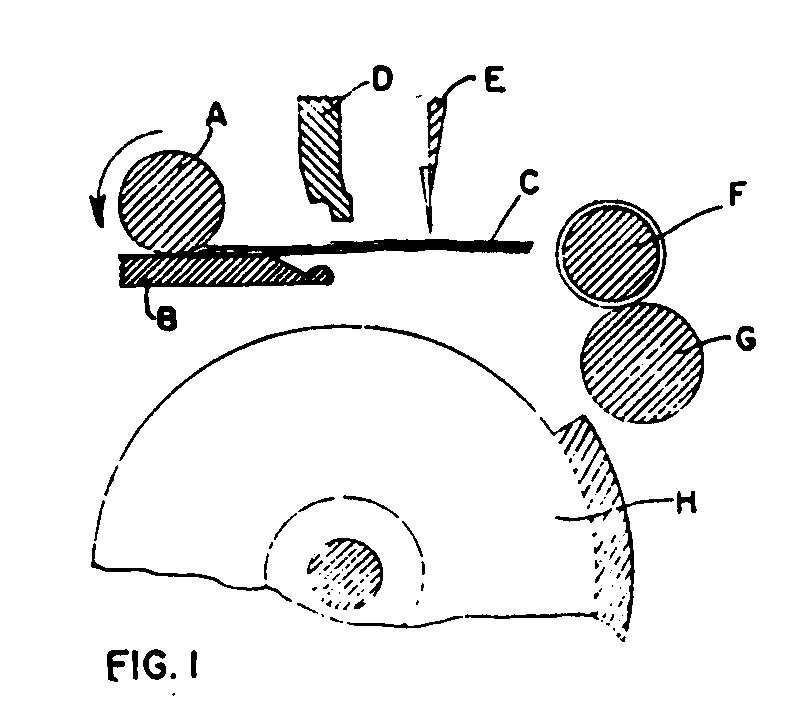
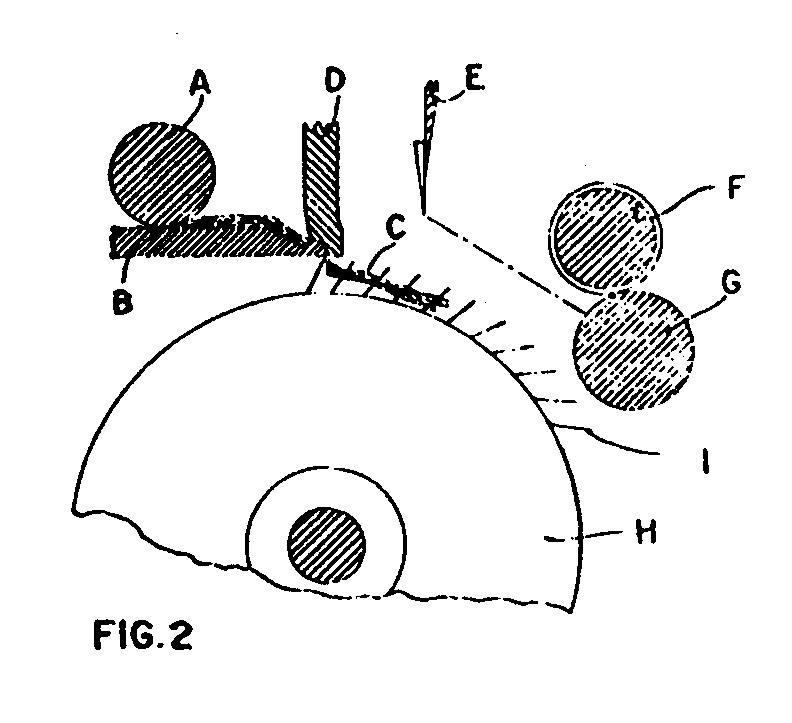
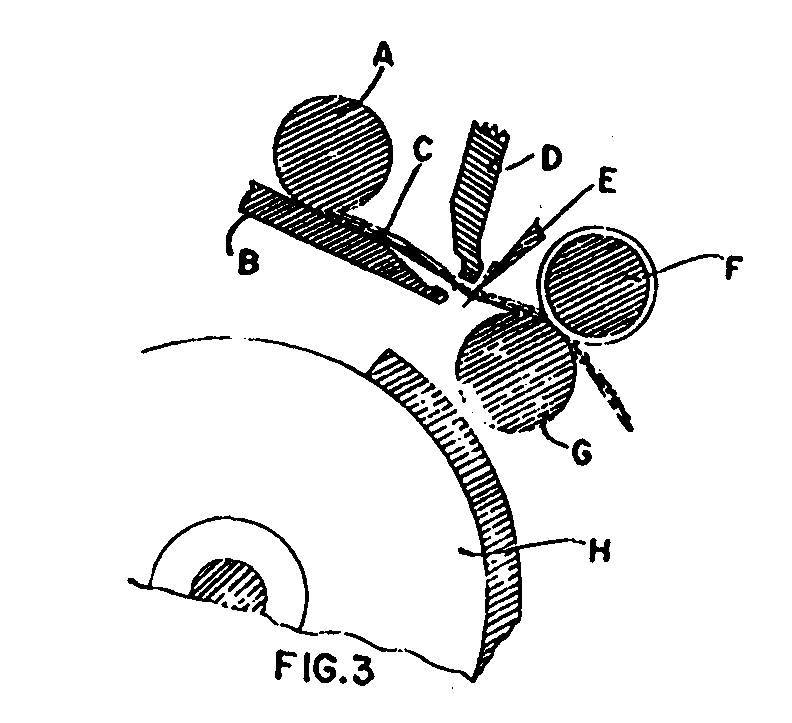
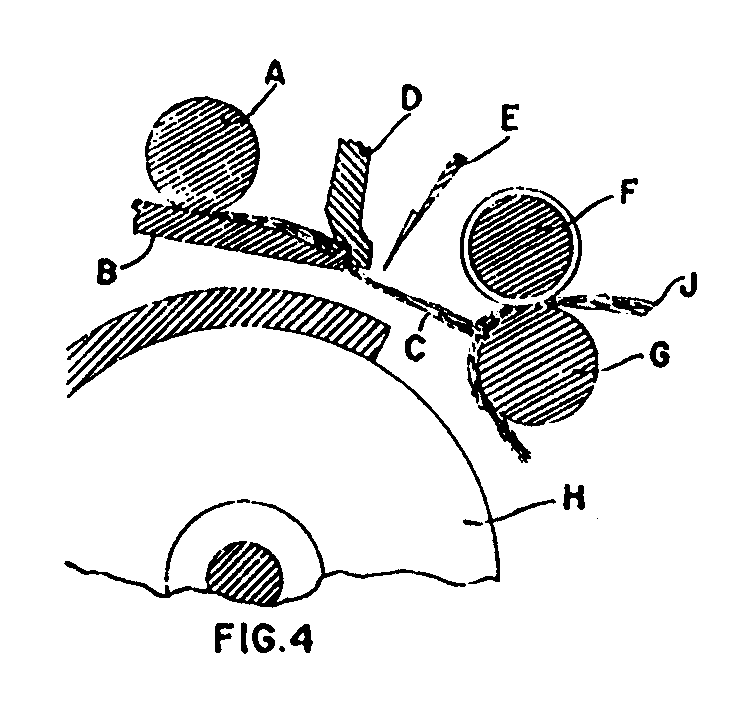
| 215 | Tuft combing: | ||
| This subclass is indented under subclass 115. Method or apparatus comprising a step of, or means for,
drawing the fibers through the teeth in approximately fiber length
bunches. Figures 1 through 4, below, are illustrative of a tuft combing
operation.
| |||
| 216 | Tuft translating type: | ||
This subclass is indented under subclass 215. Method or apparatus wherein each fiber length bunch is carried
through a combing area in such a manner that the length of such
bunch (i.e., tuft) is substantially perpendicular to its direction
of travel (in the combing zone) and the tuft is presented broadside
to the comb teeth.
| |||
| 217 | Rotary: |
| This subclass is indented under subclass 216. Method or apparatus wherein the fiber bunches are carried by a gripping cylinder from which they project toward the comb teeth, said cylinder traveling in a fixed orbital path throughout the entire combing operation. | |
| 218 | Waste clearing: | ||||||||
| This subclass is indented under subclass 215. Method of apparatus including a step of, or means for, removing
short fibers and foreign matter from any portion of the tuft combing apparatus.
SEE OR SEARCH THIS CLASS, SUBCLASS:
SEE OR SEARCH CLASS:
| |||||||||
| 219 | With auxiliary pressing: | ||||
| This subclass is indented under subclass 215. Method or apparatus in which means, other than a nipper,
are provided to press the tuft into intimate contact with a comb
cylinder.
SEE OR SEARCH THIS CLASS, SUBCLASS:
| |||||
| 220 | Nonrotary combing: | ||
This subclass is indented under subclass 215. Method or apparatus wherein the combing means employed,
to comb the trailing portion of a fiber length bunch, are mounted
and secured on a plate or bar which may be movable into the space
between a nipper and a comb cylinder upon release of said tuft portion from
the nipper jaw.
| |||
| 221 | Stationary when combing: |
| This subclass is indented under subclass 220. Method or apparatus wherein the combing means employed remains in a fixed position during the passage of the trailing tuft portion through its teeth. | |
| 223 | Moving to combed position in timed relation to nipper or detaching motion: | ||
This subclass is indented under subclass 221. Method or apparatus wherein movement of the combing means
into its working position is synchronized with the movement of a
grasping and/or detaching means.
| |||
| 224 | Adjusting: |
| This subclass is indented under subclass 221. Method or apparatus wherein means are employed to vary the distance between the combing means and the trailing end of the tuft. | |
| 225 | With oscillating or reciprocating nipper: | ||
| This subclass is indented under subclass 215. Method or apparatus wherein the gripping jaws" opening
and closing motion is supplemented by an additional to-and-fro motion towards
and/or away from either a comb or detaching means. See
(1) Note subclass 215 for the function of the gripping jaw, and
for the definition of the detaching means.
SEE OR SEARCH THIS CLASS, SUBCLASS:
| |||
| 226 | Plural pairs - alternating: | ||
| This subclass is indented under subclass 225. Method or apparatus wherein a second nipper pair is provided
and means are employed for opening jaws of one nipper pair while
closing the other nipper pair, in sequence.
SEE OR SEARCH THIS CLASS, SUBCLASS:
| |||
| 227 | Resilient closing or opening: |
| This subclass is indented under subclass 225. Method or apparatus wherein the nipper jaws are biased into or out of contacting engagement. | |
| 228 | Adjusting: |
| This subclass is indented under subclass 225. Method or apparatus wherein the limit of the nipper"s to and fro motion is varied by changing the amplitude of such motion. | |
| 229 | Detaching (i.e., segment): |
| This subclass is indented under subclass 215. Method or apparatus including a step of, or means for separating a combed fiber-length bunch from a supply (lap) of the fiber to which it is attached. | |
| 230 | Belt: |
| This subclass is indented under subclass 229. Method or apparatus wherein the tuft engaging surface, of at least one of the tuft engaging means, is an endless band. | |
| 231 | Roll: | ||
| This subclass is indented under subclass 229. Method or apparatus wherein the separating is accomplished
by a pair of rolls.
SEE OR SEARCH THIS CLASS, SUBCLASS:
| |||
| 232 | Oscillating or reciprocating: | ||
| This subclass is indented under subclass 231. Method and apparatus wherein at least one roll of the detaching
roll pair is bodily moved toward and away from the fiber-length
bunch.
SEE OR SEARCH THIS CLASS, SUBCLASS:
| |||
| 233 | Rotary comb cylinder: |
| This subclass is indented under subclass 215. Method or apparatus in which the combing of a protruding or leading edge of a lap, which constitutes the bunch or tuft, is accomplished by a cylinder or drum, in which the comb teeth are mounted, rotating about a fixed orbital axis. | |
| 234 | Half lap: |
| This subclass is indented under subclass 233. Method or apparatus wherein the comb teeth, mounted upon the rotating cylinder or drum, are limited to a segment of the drum, or to less than 360+ of the outside circumference of the rotating member. | |
| 235 | Nipper: | ||
| This subclass is indented under subclass 215. Apparatus provided with a pair of opposed jaw means for
gripping a fiber lap and holding the projecting end thereof in the
path of a comb cylinder.
SEE OR SEARCH THIS CLASS, SUBCLASS:
| |||
| 236 | Drafting: | ||||||
This subclass is indented under subclass 65. Methods or apparatus wherein the working comprises feeding
a fiber strip by applying force at some area or point along the
strip length and simultaneously retarding said strip at an area
or point along the strip length removed from that at which the feeding
force is applied, thereby causing said strip to become attenuated.
SEE OR SEARCH CLASS:
| |||||||
| 237 | Producing longitudinal variations: | ||||
This subclass is indented under subclass 236. Method or apparatus wherein are provided a step of or apparatus
for producing cyclical or random variations in the thickness of
the strip by changing the relative displacement of the fibers produced
by the drafting action.
SEE OR SEARCH CLASS:
| |||||
| 238 | By variation of fiber input rate: | ||
| This subclass is indented under subclass 237. Method or apparatus wherein is provided a step of or apparatus
for increasing or decreasing the rate of feed of the fibers into
the drafting zone.
SEE OR SEARCH THIS CLASS, SUBCLASS:
| |||
| 239 | With material sensing: | ||||||||
This subclass is indented under subclass 236. Process or apparatus including a step of or means for detecting
the presence or absence of a condition of the work material, so
as to bring about a change in the drafting operation (other than
the mere cessation thereof) in response to such detection.
SEE OR SEARCH THIS CLASS, SUBCLASS:
SEE OR SEARCH CLASS:
| |||||||||
| 240 | And speed changing: | ||||||
| This subclass is indented under subclass 239. Method or apparatus wherein the change in the drafting operation
is brought about by a change in the rate of rotation of at least
one pair of drafting rolls.
SEE OR SEARCH CLASS:
| |||||||
| 241 | By belt shifting: | ||||
This subclass is indented under subclass 240. Apparatus in whose accomplishment or operation the rotary
speed change is brought about by moving a web (or chain) like power
transmitting element with respect to its mating power transmitting
element.
SEE OR SEARCH CLASS:
| |||||
| 242 | With fiber stretching: | ||||
This subclass is indented under subclass 236. Method or apparatus wherein individual fibers are elongated
during the drafting, in order to parallelize or straighten, but
without breaking thereof.
SEE OR SEARCH THIS CLASS, SUBCLASS:
| |||||
| 243 | With doubling: |
| This subclass is indented under subclass 236. Method or apparatus wherein a plurality of strips are directed into the drafting zone and integrated into a single strip (e.g., sliver). | |
| 244 | Apron type: | ||||||||
| This subclass is indented under subclass 236. Method and apparatus wherein the drafting action is accomplished
by at least one endless belt, guided or trained about a roll cooperating with
a roll or another belt.
SEE OR SEARCH CLASS:
| |||||||||
| 245 | With clearing: | ||||||
| This subclass is indented under subclass 244. Method or apparatus including a step of or means for removing
undesirable material from the endless belt.
SEE OR SEARCH THIS CLASS, SUBCLASS:
SEE OR SEARCH CLASS:
| |||||||
| 246 | With condensing: |
| This subclass is indented under subclass 244. Method or apparatus wherein additional means are employed in close proximity to the drafting zone to assure that the marginal fibers of the strip are moved back into the main body of fibers in order that these marginal fibers may be given a proper drafting or attenuation. | |
| 247 | With fiber orienting: | ||
| This subclass is indented under subclass 244. Method or apparatus wherein additional means are employed
to parallelize, or make straight, the path of the fibers through
the drafting zone.
SEE OR SEARCH THIS CLASS, SUBCLASS:
| |||
| 248 | Pressing or holding fibers against belt: |
| This subclass is indented under subclass 244. Method or apparatus wherein means are employed to restrain the fibers approximately stationary in relation to the moving apron until they are gripped at the exit drafting rollers. | |
| 249 | With auxiliary apron support: | ||
| This subclass is indented under subclass 244. Method or apparatus including a step of or means for holding
the belt against gravity, intermediate its end limits, to insure
the proper drafting of the short as well as the long fibers.
SEE OR SEARCH CLASS:
| |||
| 250 | Tensioning: | ||
| This subclass is indented under subclass 244. Method or apparatus where-in pressure is applied through
a yieldable means to the endless belt to stretch or tension the
belt along its length in order to secure a better grip upon the fibers
as they pass therebetween.
SEE OR SEARCH CLASS:
| |||
| 251 | By roll: |
| This subclass is indented under subclass 250. Method or apparatus wherein the tensioning or stretching of the endless belt is accomplished by cylindrical weighted means about whose axis the endless belt is trained. | |
| 252 | With apron guide: | ||
| This subclass is indented under subclass 244. Method or apparatus wherein means are employed to direct
the endless belt along a path of travel and prevent a lateral shift
of the belt during the travel.
SEE OR SEARCH CLASS:
| |||
| 253 | Including specific cross-guide structure: |
| This subclass is indented under subclass 252. Apparatus wherein the means employed to direct the endless belt along its closed loop path is a bar structure whose length is greater than the width of the belt and said bar is modified in some way to prevent excessive lateral movement of the belt upon its return over the bar. | |
| 254 | Cradles: |
| This subclass is indented under subclass 252. Apparatus wherein the endless belt and its roll guide or drive are supported by an element consisting of two generally parallel side plates, arranged separated from one another and (usually connected together at a point on each of their extremities by a cross bar), at a distance slightly greater than the width of the endless belt and its roll guide, in order to support and guide the endless belt both in its movement about the closed loop and in its lateral movement. | |
| 255 | For plural aprons: |
| This subclass is indented under subclass 254. Device wherein the guide and support element accommodates several endless belts and their roll guides. | |
| 256 | With adjustments: | ||||
| This subclass is indented under subclass 244. Method or apparatus wherein a variation in position of pressure
of an element of the apron can be made with respect to (each other)
or with respect to the element support.
SEE OR SEARCH THIS CLASS, SUBCLASS:
| |||||
| 257 | With cooperating trough: |
| This subclass is indented under subclass 236. Method or apparatus wherein one of the strip retarding means is a body or block like structure which has a contour, usually concave, which cooperates with the strip retarding means to attenuate the strip in its travel. | |
| 258 | Roll type: | ||||||
| This subclass is indented under subclass 236. Method or apparatus wherein the simultaneous feeding and
retarding of a fiber strip is accomplished by a series of cooperating
roll pairs, spaced apart, which causes said strip to become attenuated
lengthwise upon its travel through the series.
SEE OR SEARCH CLASS:
| |||||||
| 259 | Including slip roll: |
| This subclass is indented under subclass 258. Method or apparatus wherein a roll pair, usually free floating and frictionally driven, permits the passage of a strip there-between, without any appreciable pressure upon or drafting of said strip. | |
| 260 | Including changing roll speed or location: | ||
| This subclass is indented under subclass 258. Method and apparatus wherein means are employed for changing
the rate of rotation of a roll of one of the pairs, or changing
the spacing of such a roll with respect to either its mate in the
pair or a roll of another pair.
SEE OR SEARCH THIS CLASS, SUBCLASS:
| |||
| 261 | Roll-spacing adjusting: | ||
This subclass is indented under subclass 260. Method and apparatus wherein the change of the roll spacing
is the relocation of one cooperating roll pair of a drafting frame
with respect to another roll pair of the frame.
| |||
| 262 | With clearing: | ||||||||
This subclass is indented under subclass 258. Method or apparatus comprising a step of, or means for,
removing undesirable material from a drafting roll.
SEE OR SEARCH CLASS:
| |||||||||
| 263 | Pneumatic: | ||
| This subclass is indented under subclass 262. Method or apparatus wherein the undesirable material is
removed from the rolls by a system of imbalanced air pressures.
SEE OR SEARCH CLASS:
| |||
| 264 | Underclearing: | ||||
| This subclass is indented under subclass 262. Method or apparatus wherein the undesirable material is
removed from the bottom roll only.
SEE OR SEARCH THIS CLASS, SUBCLASS:
SEE OR SEARCH CLASS:
| |||||
| 265 | Top roll: | ||||
| This subclass is indented under subclass 262. Method or apparatus wherein the undesirable material is
removed from the upper roll only.
SEE OR SEARCH THIS CLASS, SUBCLASS:
| |||||
| 266 | Pressure-applying devices: | ||||||
| This subclass is indented under subclass 258. Method or means including a step of, or means for, continually
urging a roll of a roll pair into engagement with the other roll
of the pair to effect a working cooperation.
SEE OR SEARCH THIS CLASS, SUBCLASS:
SEE OR SEARCH CLASS:
| |||||||
| 267 | With releasing means: |
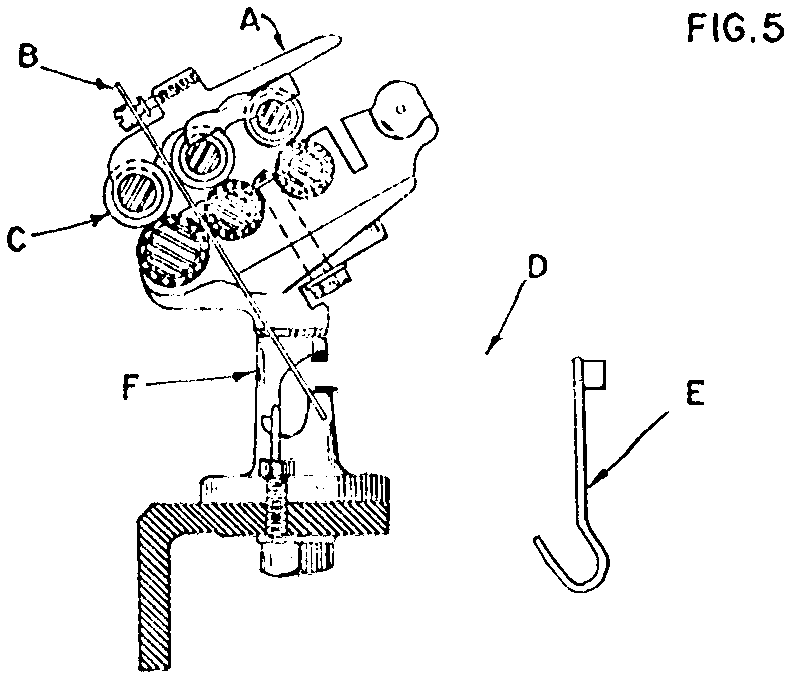
| This subclass is indented under subclass 266. Method or means in which a step of or means for rendering ineffective the pressure applying device so that such device applies no force to the roll(s). | |
| 268 | Responsive to roll relationship: |
| This subclass is indented under subclass 267. Method or means in which the pressure releasing step or means is initiated or activated by movement of one roll of a roll pair from its position of cooperation with the other roll of the pair. | |
| 269 | Gravity pressure means: |
| This subclass is indented under subclass 267. Method or means, in which the pressure applying device is a mass whose weight constitutes the source of roll-urging force, and including a step of or means for elevating such mass to render the weight ineffective upon the roll. | |
| 270 | Signal: |
| This subclass is indented under subclass 266. Method or means including a step of or means for giving a visible or audible response to the pressure or force imposed by the pressure applying device. | |
| 271 | Uniform pressure applying to all rolls or plural pairs from a single source: | ||
This subclass is indented under subclass 266. Method or means including a step of or means for distributing
the pressure equally to each of a plurality of roll pairs.
| |||
| 272 | Magnetic, hydraulic, or pneumatic: | ||
This subclass is indented under subclass 266. Method or means in which that property of mass (greater
than molecular size) being repelled or attracted by an electrical
field of force is employed to urge a roll into working cooperation
with another roll of a pair, or the roll is urged by a fluid pressure
means.
| |||
| 273 | Applied through stirrup ad saddle: | ||||
This subclass is indented under subclass 266. Method or means in which the force or pressure exerted by
the urging means is transmitted to the roll through a stirrup and
saddle.
| |||||
| 274 | Including fulcrumed lever linking stirrup and pressure means: |
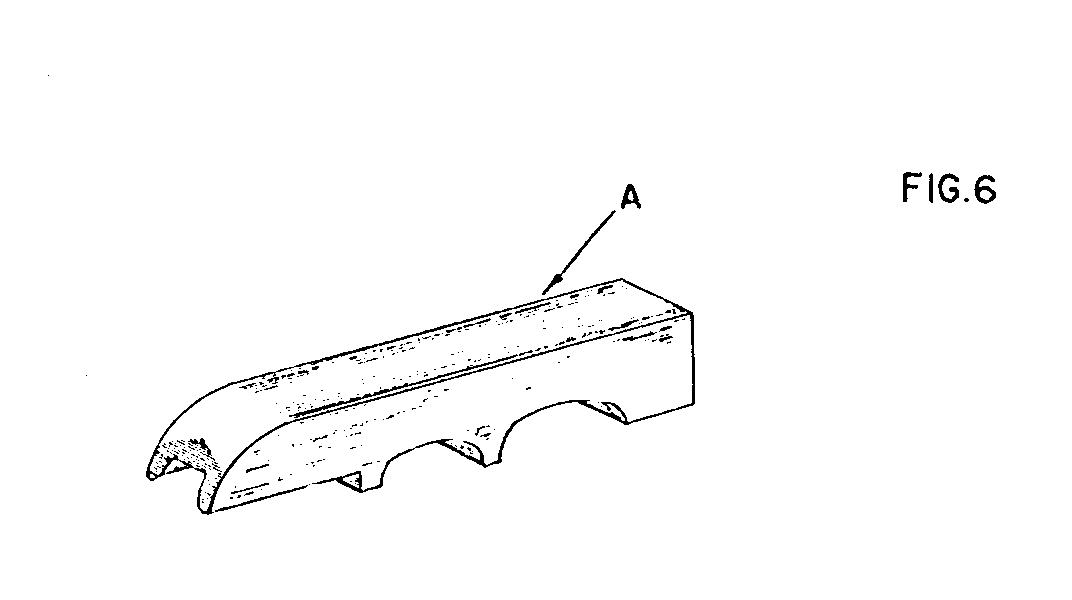
| This subclass is indented under subclass 273. Method or means in which the force exerted by the pressure applying means is applied through a pivoted arm linking means which is pivoted to a fixed center and to which means the stirrup and pressure applying means are both pivotally connected. | |
| 275 | Gravity pressure applying means: | ||||
| This subclass is indented under subclass 274. Method or means in which the rolls are continually urged
by a mass whose weight is the source of pressure.
SEE OR SEARCH THIS CLASS, SUBCLASS:
| |||||
| 276 | With means to vary or permit variation of pressure effect on fulcrumed lever arm: | ||
This subclass is indented under subclass 275. Method or means in which the roll pressure is adjustable.
| |||
| 277 | Spring pressure applying means: | ||||
| This subclass is indented under subclass 273. Method or means in which solid resilient means supplies
the roll pressure.
SEE OR SEARCH THIS CLASS, SUBCLASS:
| |||||
| 278 | Applied through saddle: | ||
| This subclass is indented under subclass 266. Method or means in which pressure is transmitted to the
roll through means acting upon or carried by a saddle.
SEE OR SEARCH THIS CLASS, SUBCLASS:
| |||
| 279 | Spring pressure applying means: | ||||||
| This subclass is indented under subclass 278. Method or means in which solid resilient means supplies
the roll pressure.
SEE OR SEARCH THIS CLASS, SUBCLASS:
| |||||||
| 280 | With pressure-adjusting means: | ||
| This subclass is indented under subclass 279. Method or means in which the pressure applied to the roll
by the resilient means, directly or indirectly, may be varied.
SEE OR SEARCH THIS CLASS, SUBCLASS:
| |||
| 281 | Spring pressure applying means: | ||||||
| This subclass is indented under subclass 266. Method or means in which solid resilient means supplies
the roll pressure.
SEE OR SEARCH THIS CLASS, SUBCLASS:
| |||||||
| 282 | With means to adjust pressure: | ||
| This subclass is indented under subclass 281. Method or means in which the pressure applied to the roll
by the solid resilient means directly or indirectly, may be varied.
SEE OR SEARCH THIS CLASS, SUBCLASS:
| |||
| 283 | Gravity pressure applying means: | ||||||
| This subclass is indented under subclass 266. Method or means wherein source of pressure is a weight.
SEE OR SEARCH THIS CLASS, SUBCLASS:
| |||||||
| 284 | Saddle, per se: |
| This subclass is indented under subclass 266. Means which comprises a saddle* as such. | |
| 285 | Lubricating or antifriction means: |
| This subclass is indented under subclass 284. Device in which means is employed to diminish frictional contact between the bearing surface of a saddle and the shaft of a roll. | |
| 286 | Roll condensing: | ||||
This subclass is indented under subclass 258. Method or apparatus including a step of compacting or compressing
the flowing work material by means of a generally cylindrical, rotating
body, or means comprising such a body and fulfilling such function.
SEE OR SEARCH THIS CLASS, SUBCLASS:
| |||||
| 287 | Reciprocating transverse guide, condenser, or roll: | ||
This subclass is indented under subclass 258. Method or apparatus wherein the strip, in its travel through
the drafting machine, has an additional lateral back and forth motion imparted
to it by the guide or condenser roll.
| |||
| 288 | With fiber guide, condenser, or brake: | ||
This subclass is indented under subclass 258. Method or apparatus wherein the drafting step or means is
accompanied by a step of or means for, passively directing or channeling
the flow of work material, compacting or compressing the moving
material, or retarding its flow.
| |||
| 289 | Including marginal folding: |
| This subclass is indented under subclass 288. Method or apparatus wherein the step of guiding is accompanied by a step of, or wherein the guiding means also performs the function of, turning back upon itself a longitudinal edge portion or area of the material being worked on. | |
| 290 | Presser: |
| This subclass is indented under subclass 288. Method or apparatus in which the guide also serves to urge the work into contact with a drafting roll by establishing a bight between the roll and itself, so that any section of the work material will, during its travel past the guide, engage both the roll and the presser guide. | |
| 291 | Open type: |
| This subclass is indented under subclass 288. Method and apparatus in which the guiding step is carried out by, or the guiding means comprises, an element other than a closed periphery tube. | |
| 292 | Adjustable: |
| This subclass is indented under subclass 288. Method and apparatus in which the guiding step is carried out by, or the guiding means comprises, a device whose mounting, or the relationship of whose parts, may be altered at will. | |
| 293 | Gear or friction driving: | ||||||||
| This subclass is indented under subclass 258. Method or apparatus wherein the drive of the drafting or
feed rolls is accomplished through a system of gearing or through
contact of a nondriven roll with a driven roll.
SEE OR SEARCH CLASS:
| |||||||||
| 294 | Roll stands: | ||
| This subclass is indented under subclass 258. Apparatus wherein means are provided to support the roll
or rolls of a drafting frame against the force of gravity.
SEE OR SEARCH CLASS:
| |||
| 295 | Top roll: |
| This subclass is indented under subclass 294. Apparatus wherein the claimed support means operates to support only the upper roll of a roll pair. | |
| 296 | Web forming: | ||||||||||||||||||||||||||||||||||||||||
This subclass is indented under subclass 144. Method or apparatus for forming a flat nonwoven batt, mat,
or strip of fibers or filaments, the configuration of which is retained
solely by interfiber or interfilament friction.
SEE OR SEARCH THIS CLASS, SUBCLASS:
SEE OR SEARCH CLASS:
| |||||||||||||||||||||||||||||||||||||||||
| 297 | With fiber sampling: |
| This subclass is indented under subclass 296. Method or apparatus including the collection or formation of a representative fiber array or specimen during a web forming operation. | |
| 298 | With split lap preventing: |
| This subclass is indented under subclass 296. Method or apparatus wherein means are provided for preventing undesired division or parting of the nonwoven web during either fabrication or processing. | |
| 299 | Including continuous filaments: | ||||||||
| This subclass is indented under subclass 296. Method or apparatus wherein the nonwoven web is formed of,
or includes, elongate, slender thread, or threadlike constituents
of indeterminate or running length.
SEE OR SEARCH CLASS:
| |||||||||
| 300 | Control means responsive to sensed condition or program: | ||||
| This subclass is indented under subclass 296. Method or apparatus wherein variations from a set norm in
the nonwoven web or constituent supply or in machine operation alters
operation of the machine, or wherein readily changeable data or
information in a preset arrangement or design controls the sequence
of machine operations or an element thereof.
SEE OR SEARCH THIS CLASS, SUBCLASS:
| |||||
| 301 | Irregular, nonuniform, or patterned receiving surface: |
| This subclass is indented under subclass 296. Method or apparatus wherein the formation of the nonwoven web is effected by assembly or deposition of fibers on a collecting member which is so arranged, configured, or designed as to produce a web of varying fiber accumulation, density, or shape, or as to produce discrete or subdivided web portions. | |
| 302 | Stratified or multilayer: | ||||||||
This subclass is indented under subclass 296. Method or apparatus wherein the nonwoven web is formed (a)
by sequential deposition of layers of similar fibers in such a manner
that a line of demarcation is presented between the deposited layers;
(b) by deposition of diverse fibers in such a manner as to form
distinguishable layers; or (c) by superimposition of a plurality
of preformed web.
SEE OR SEARCH CLASS:
| |||||||||
| 303 | With divided fiber stream or separate handling of trash or fugitive fiber: | ||||||||||||
This subclass is indented under subclass 296. Method or apparatus wherein (a) fibers are deposited on
a fluid permeable condenser by a gaseous stream which has several
paths of travel to the condenser; (b) stray fibers caught on the
outside of the condenser are returned to one of the air streams
for recirculation to the condenser; or (c) unwanted material is removed
from the apparatus.
SEE OR SEARCH THIS CLASS, SUBCLASS:
| |||||||||||||
| 304 | Fluid propelled to condenser: | ||||||||||||||||
This subclass is indented under subclass 296. Method or apparatus wherein fibers are carried or conveyed
in a gaseous stream for accumulation, assembly, or collection in
web form upon a foraminous or perforate receiving surface or across
a fiber entrapment area formed by a plurality of spaced receiving
surfaces.
SEE OR SEARCH THIS CLASS, SUBCLASS:
SEE OR SEARCH CLASS:
| |||||||||||||||||
| 305 | With fiber liberation: | ||||||||||||||||||||
This subclass is indented under subclass 304. Method or apparatus including the removal or separation
of discrete fibers, aggregates, or clumps thereof from a fibrous
accumulation in the form of a batt, mass, or web for projection into
the gaseous stream.
SEE OR SEARCH THIS CLASS, SUBCLASS:
SEE OR SEARCH CLASS:
| |||||||||||||||||||||
| 306 | Gripping feed to fiber separator: | ||||||||||
| This subclass is indented under subclass 305. Method or apparatus wherein the trailing portion of a forwardly
moving fibrous accumulation, batt, or mass is nipped or snubbed
while the leading portion is divided or separated by a toothed or
serrated moving member into discrete fibers, aggregates, or clumps
thereof for projection into the gaseous stream.
SEE OR SEARCH THIS CLASS, SUBCLASS:
| |||||||||||
| 307 | Rotary condenser: | ||
| This subclass is indented under subclass 306. Method or apparatus wherein the condenser comprises or includes
a foraminous or perforate revolving cylindrical member.
SEE OR SEARCH CLASS:
| |||
| 308 | Rotary condenser: |
| This subclass is indented under subclass 304. Method or apparatus wherein the condenser comprises or includes a foraminous or perforate revolving cylindrical member. | |