![[Search a list of Patent Appplications for class 409]](../as.gif) CLASS 409, CLASS 409, | GEAR CUTTING, MILLING, OR PLANING |
| Click here for a printable version of this file | |
SECTION I - CLASS DEFINITION
This class is the home for a patent directed to the method of or a machine for penetrating material without substantially reshaping the flow of such material by means of a solid tool whose edge defines a line of cut, where in the device is intended to: (a) form a product from a workpiece, which product includes protuberances intended to interfit with pockets in a cooperating member, generally for the transmission of motive force from one of the members to the other; (b) cut by a rotating cutter that forms a shaped surface on the workpiece; or (c) cut by a cutter that reciprocates relative to a workpiece and forms a shaped surface on the workpiece).
See the Search This Class, Subclass references below for specific subclass references
SECTION II - SUBCLASS REFERENCES TO THE CURRENT CLASS
SEE OR SEARCH THIS CLASS, SUBCLASS:
| 1+, | for a device intended to form a product from a workpiece, which product includes protuberances intended to interfit with pockets in a cooperating member, generally for the transmission of motive force from one of the members to the other . |
| 64+, | for a device intended to cut by a rotating cutter that forms a shaped surface on the workpiece. |
| 243+, | 288, for a device intended to cut by a cutter that reciprocates relative to a workpiece and forms a shaped surface on the workpiece. |
SECTION III - REFERENCES TO OTHER CLASSES
SEE OR SEARCH CLASS:
| 29, | Metal Working, (a) appropriate subclasses for gear cutting, milling, or planing combined with another work-treating operation, particularly subclasses 90.01+ , when the other operation is burnishing; (b) subclasses 1.01-179 (as appearing in the class schedule) for cutting to shape peculiar to the manufacture of a device provided for in that group of subclasses. (This note may be applied to numerous classes not set forth in these search notes, i.e., a device peculiar to the manufacture of a certain article will be found in the class providing for the manufacture of that article.) |
| 30, | Cutlery, for a hand tool used to cut work to shape. |
| 82, | Turning, for cutting to shape of a rotating workpiece; and subclasses 46+ for cutting to subdivide by use of a cutter orbiting about an axis passing through the work. |
| 83, | Cutting, for subdividing of two portions of work, generally. Search subclasses 875+ for grooving with the removal of material by use of a cutter providing no intentional shape to the bottom of the groove. As a practical matter, grooving of Class 83, subclasses 875+ is limited to the action of a saw blade. Search subclass 879 for scoring of a workpiece with no removal of chips. A cutting maching or method or both cut to shape and cut to subdivide with the same or different tools will be found in class (409). |
| 144, | Woodworking, for cutting limited to the shaping of wood. (This note may be applied to numerous classes not set forth in these notes, i.e., a device peculiar to shaping of certain material will be found in the class providing for shaping of that material). |
| 157, | Wheelwright Machines, subclass 13 for apparatus for or method of treating the outer periphery of a rubber tire casing by a slitting or machining operation. |
| 173, | Tool Driving or Impacting, for subject matter directed to driving or impacting a tool, when such subject matter includes combined features peculiar to tool driving, but does not include features limiting the subject matter to a specific tool art, such as specific shape of the work contacting portion of a tool, related tools, or an opposed work support. |
| 269, | Work Holders, the residual locus for a device for clamping, supporting, and/or holding an article(s) in position to be operated on or treated. See the notes thereunder for other related loci. |
| 279, | Chucks or Sockets, for a work or tool holder of general utility adapted to approach the member being held by jaws converging thereupon. |
| 407, | Cutters, for Shaping, for a tool element adapted to be attached to a machine of this class. A tool combined with any other work recognizing (engaging) structure or with means to drive or support the tool and move relative to the tool will be found in this class (409) rather than Class 407. |
| 408, | Cutting by Use of Rotating Axially Moving Tool, for a machine for or process of cutting by use of a tool turning about an axis and moving along that axis toward a workpiece wherein no additional motion is imparted to the cutting edge of the tool during operation; especially subclasses 26+ for the combination of cutting in the manner of that class (408) with cutting in the manner of this class (409). A device which may be converted from an operation of this class to an operation of Class 408 is to be found in this class (409). |
| 451, | Abrading, for shaping a crystalline cutting, particularly subclasses 67+ for abrading combined with cutting to shape. Class 409 is considered to be superior to Class 451, so that a patent including a claim proper for this class and another claim proper for Class 451 will be classified in this class. Similarly, a disclosure of both abrading to shape and cutting to shape with no claim specific to the type of cutting tool will be found in Class 409. |
| 483, | Tool Changing, generally for a process or apparatus including a tool transfer means combined with a tool support or storage means. |
SUBCLASSES
![[List of Patents for class 409 subclass 1]](../ps.gif) 1 1 | GEAR CUTTING: | ||||||
This subclass is indented under the class definition. Apparatus or method particularly adapted to form an element
on a workpiece body, which element is intended to intermesh with
an element on another body whereby motive force may be transmitted
from one of the bodies to the other.
SEE OR SEARCH CLASS:
| |||||||
| 2 | With regulation of operation by use of templet, card or other replaceable information supply: | ||||||||||
This subclass is indented under subclass 1. Apparatus or method for detecting the characteristics (e.g.,
physical, electrical, etc.) of a member carrying operating instructions
for the apparatus, which member is separate from both the workpiece
and the organized structure of the apparatus.
SEE OR SEARCH THIS CLASS, SUBCLASS:
SEE OR SEARCH CLASS:
| |||||||||||
| 3 | Including follower for templet: |
| This subclass is indented under subclass 2. Apparatus or method including means for detecting the physical surface configuration of the separate information member. | |
| 4 | And burnishing simultaneously: | ||
| This subclass is indented under subclass 1. Apparatus for or method of performing the operation of ...
combined with condensing, compacting, smoothing, or polishing the
surface of the workpiece usually by rubbing the workpiece with a
smooth tool having a surface of greater hardness than that of the
workpiece wherein forming and condensing, etc., are performed at
the same time.
SEE OR SEARCH CLASS:
| |||
| 5 | With compensation for backlash in drive means: | ||||
| This subclass is indented under subclass 1. Apparatus or method including provision for tranmission
of force to a workpiece or to a cutting tool wherein a first drive
member transmits force and movement of a second drive member, including
provision to adjust, eliminate, or make other allowance for undesired relative
movement between the drive members and the workpiece or the cutting
tool resulting from clearance between the drive member.
SEE OR SEARCH THIS CLASS, SUBCLASS:
SEE OR SEARCH CLASS:
| |||||
| 6 | With work or product advancing: | ||||||||||||||||||||
This subclass is indented under subclass 1. Apparatus or method including a work station and including
means to move a workpiece to that station or including means to
move the product that has been shaped at the work station away from
that station.
SEE OR SEARCH THIS CLASS, SUBCLASS:
SEE OR SEARCH CLASS:
| |||||||||||||||||||||
| 7 | Utilizing transfer arm: | ||
| This subclass is indented under subclass 6. Apparatus or method including the utilization of means to
advance a workpiece to the tool station comprising use of a horizontally extending
cantilever structure adapted to carry and position the workpiece
into operating position in the securing portion of the work holder.
SEE OR SEARCH CLASS:
| |||
| 8 | Gear chamfering or deburring: | ||||
This subclass is indented under subclass 1. Apparatus or method including a cutting tool to (a) form
a generally straight surface intersecting two surfaces previously
formed on an intermeshing element (gear tooth) or (b) sever off any
protruding edge unintentionally formed on an intermeshing element
during formation thereof.
SEE OR SEARCH CLASS:
| |||||
| 9 | Using relatively reciprocating or oscillating cutter: | ||
This subclass is indented under subclass 8. Apparatus or method wherein the means to form or sever is
a cutting tool adapted to move to-and-fro along a straight or arcuate
line with respect to the workpiece during cutting.
| |||
| 10 | Gear tooth shape generating: | ||||||
This subclass is indented under subclass 1. Apparatus or method including formation of an intermeshable
element by a cutting tool making several cutting passes through
a workpiece with relative repositioning of the workpiece and the
cutting tool between cutting passes so that a first portion of the
final configuration of the intermeshable element is formed by a
first cutting pass and a second portion is formed by a subsequent
pass.
SEE OR SEARCH THIS CLASS, SUBCLASS:
SEE OR SEARCH CLASS:
| |||||||
| 11 | Hobbing: | ||
| This subclass is indented under subclass 10. Apparatus or method in which the cutting tool is adapted
to turn about an axis, the cutting tool including at least three
radially outwardly directed cutting teeth positioned spirally about the
cutting tool axis, each tooth including a cutting edge formed by
intersecting planar surfaces one of which surfaces is generally parallel
to and radiates from the cutting tool axis, said surface directing
a chip formed by the cutting operation away from the cutting edge
wherein the cutting tool is rotated and the cutting tool and workpiece
are moved relative to each other thus causing the cutting edge to form
the intermeshable element on the workpiece, wherein all intermeshable
elements of a gear are generated as a continuous operation.
SEE OR SEARCH CLASS:
| |||
| 12 | Process: |
| This subclass is indented under subclass 11. Method of forming a gear . | |
| 13 | Generating tooth for bevel gear: | ||||
| This subclass is indented under subclass 12. Method wherein the body on which the intermeshable element
is formed is adapted to rotate about an axis and wherein the intermeshable element
is formed so that it extends to a greater radial distance at one
axial end than at the other.
SEE OR SEARCH THIS CLASS, SUBCLASS:
| |||||
| 14 | Including means to shift hob between cutting passes: | ||
This subclass is indented under subclass 11. Apparatus wherein the cutting tool is adjustable relative
to the workpiece, when out of engagement with the workpiece, by
being repositioned along the cutter axis.
| |||
| 15 | With control means energized in response to activator stimulated by condition sensor: | ||||||||||||||
This subclass is indented under subclass 11. Apparatus including means for: (a) detecting any of the
following characteristics; a state or property, a change in a state
or property, or the occurrence of a predetermined event in any of the
following: the workpiece, the product of the apparatus, the apparatus
itself, or the environment of the apparatus affecting the operation
thereof; and (b) initating (as a direct result of that detection)
a signal other than that generated or transmitted by the detected
means, and (c) regulating or modifying (as a direct result of said
initiation) the operation of the means to affect the cutting.
SEE OR SEARCH THIS CLASS, SUBCLASS:
SEE OR SEARCH CLASS:
| |||||||||||||||
| 16 | Plural hobs: | ||
This subclass is indented under subclass 11. Apparatus including a first cutting tool and a second cutting
tool each for performing the operation of that subclass wherein
the cutting tools are capable of relative movement as assembled
in the apparatus with respect to each other during the shaping operation.
| |||
| 17 | Including infeed means: |
| This subclass is indented under subclass 11. Apparatus including means to support the cutting tool and means to support the workpiece and including means to cause relative approach of the cutting tool and workpiece to effect the cutting operation. | |
| 18 | To infeed along axis of work rotation: |
| This subclass is indented under subclass 17. Apparatus including means to support the workpiece for rotation about an axis during cutting thereof wherein the relative approach effected has a component in the direction parallel to that axis. | |
| 19 | Infeed of cutter: | ||
| This subclass is indented under subclass 18. Apparatus including a support adapted to carry the cutting
tool wherein the cutting tool is moved relative to the support and
relative to the workpiece to effect the cutting operation.
SEE OR SEARCH THIS CLASS, SUBCLASS:
| |||
| 20 | And infeed radially of axis of work rotation: | ||||
This subclass is indented under subclass 19. Apparatus wherein the relative approach effected also has
a component in the direction toward or away from the axis about
which the workpiece turns.
SEE OR SEARCH THIS CLASS, SUBCLASS:
| |||||
| 21 | Vertically: |
| This subclass is indented under subclass 19. Apparatus wherein the workpiece is supported to turn about an axis extending generally up and down with respect to the earth and wherein the cutting tool is moved relative to the support and relative to the workpiece along the axis to effect the cutting operation. | |
| 22 | To infeed radially of axis of work rotation: |
| This subclass is indented under subclass 17. Apparatus including means to support the workpiece for rotation about an axis during cutting thereof wherein the relative approach effected has a component in the direction toward or away from that axis. | |
| 23 | Infeed of cutter: | ||
| This subclass is indented under subclass 22. Apparatus including a support adapted to carry the cutting
tool wherein the cutting tool is moved relative to the support and
relative to the workpiece to effect the cutting operation.
SEE OR SEARCH THIS CLASS, SUBCLASS:
| |||
| 24 | And infeed tangentially of work axis: |
| This subclass is indented under subclass 23. Apparatus wherein the cutting tool is moved relative to the workpiece in a straight line that does not pass through the axis of the workpiece to effect the cutting operation. | |
| 25 | Milling with radial faced tool: |
| This subclass is indented under subclass 10. Apparatus or method for formation of an intermeshable element by use of a cutting tool adapted to rotate about an axis, the cutting tool including a planar surface normal to and extending across that axis from which surface extends a protrusion having a sharp cutting edge wherein the cutting tool is unsupported from the end having the planar surface and is supported for rotation from the opposite axial end. | |
| 26 | Process: |
| This subclass is indented under subclass 25. Method of forming a gear . | |
| 27 | Adapted to cut bevel gear: | ||||
| This subclass is indented under subclass 25. Apparatus wherein the body on which the intermeshable element
is formed is adapted to rotate about an axis and wherein the intermeshable
element is formed so that it extends to a greater radial distance
at one axial end than at the other.
SEE OR SEARCH THIS CLASS, SUBCLASS:
| |||||
| 28 | With means to continuously rotate work and means to co-form all teeth of gear: |
| This subclass is indented under subclass 27. Apparatus including means to support and turn the workpiece about an axis relative to the cutting tool such that a first intermeshable element is partially formed, then a second intermeshable element is partially formed, then a third, etc., until all the intermeshable elements of the gear being formed are partially formed, then all the elements are further formed until all the elements have been completed during the final rotation of the workpiece. | |
| 29 | Bevel gear having nonparallel opposing tooth flanks: | ||
This subclass is indented under subclass 27. Apparatus including means to relatively move the cutting
tool and workpiece so that the resulting groove between adjacent
intermeshable elements has walls that are deliberately formed so
that if extended, they would meet.
| |||
| 30 | Including rotary cutter cradle: |
| This subclass is indented under subclass 27. Apparatus wherein the workpiece is supported for rotation about an axis and means are included to support the cutting tool for rotation during the cutting operation about an axis that is offset from the cutting tool to thereby cause the cutting tool to arcuately traverse the rotating workpiece and engage the perimeter of the workpiece so that the peripheral velocity of the workpiece equals the traversing velocity of the cutting tool. | |
| 31 | By relative axial movement between synchronously indexing or rotating work and cutter: |
| This subclass is indented under subclass 10. Apparatus or method including supporting the cutting tool having a cutting edge for continuous or intermittent rotation about a first axis and supporting the workpiece for continuous or intermittent rotation about a second axis and effecting relative movement between the cutting edge and the workpiece generally along the axis of the cutting tool, including controlling the continuous or intermittent rotation of the cutting tool and the continuous or intermittent rotation of the workpiece to cause the cutting tool to form the final configuration of the intermeshable element in more than one engagement by the cutting edge. | |
| 32 | Crowning: | ||
This subclass is indented under subclass 31. Apparatus or method wherein the formed element is generally
ridgelike and is generally higher in the central portion thereof
than at the ends.
| |||
| 33 | Displacing cutter axially relative to work (e.g., gear shaving, etc.): |
| This subclass is indented under subclass 31. Apparatus or method including means for moving the entire cutting tool relative to the workpiece generally along the axis of the cutting tool. | |
| 34 | Using gear shaper-cutter: | ||
| This subclass is indented under subclass 33. Apparatus or method including structure to support a workpiece
and structure to support a cutting tool with provision to cause
the cutting tool to be reciprocated to pass to-and-fro relative
to the workpiece to effect the cutting operation, which cutting
tool support structure also includes provision to cause the cutting
tool to be turned about an axis generally parallel to the direction
of reciprocation between passes, for generating an intermeshable
element in a series of passes.
SEE OR SEARCH CLASS:
| |||
| 35 | Plural distinct cutting edges: |
| This subclass is indented under subclass 34. Apparatus or method including a first and a second sharp edge for cutting to shape, wherein either (a) the first sharp edge is part of a cutting tool that is separate from the cutting tool of which the other sharp edge is a part or (b) the first and second sharp edges are members of the same cutting tool but are axially spaced along the axis about which the cutter is adapted to index or rotate. | |
| 36 | Cutting rotating work, the axis of which lies in a plane intersecting the cutter axis: |
| This subclass is indented under subclass 34. Apparatus or method wherein the workpiece is supported for movement about axis during cutting action relative to the cutting tool and wherein the cutting tool is adapted to be indexed between cutting passes about a second axis, in which apparatus to process the cutting tool axis is neither parallel to nor intersecting of the axis of the workpiece so that the two axes are not lying in a common plane. | |
| 37 | Gear shaving: | ||||||
| This subclass is indented under subclass 10. Apparatus or method including use of a finishing cutter
to cut away a small amount of material from the surface of a previously
formed gear tooth.
SEE OR SEARCH THIS CLASS, SUBCLASS:
| |||||||
| 38 | Using rotary cutter: | ||
| This subclass is indented under subclass 10. Apparatus or method including supporting of the cutting
tool to turn about an axis through more than 360° during
cutting relative to the workpiece and relative to the base of the machine.
SEE OR SEARCH THIS CLASS, SUBCLASS:
| |||
| 39 | Having axially directed cutting edge: | ||
| This subclass is indented under subclass 38. Apparatus or method including use of a sharp cutting edge
intended to be brought into engagement with the workpiece by relative movement
of the cutter and workpiece along the axis of the cutting tool.
SEE OR SEARCH THIS CLASS, SUBCLASS:
| |||
| 40 | Plural rotary cutters: | ||||
This subclass is indented under subclass 38. Apparatus or method including supporting a first cutting
tool for movement through more than 360° during cutting
and including supporting a second cutting tool for movement throughmore
than 360° during cutting, wherein the first and second
cutting tools are relatively movable as assembled in the apparatus.
SEE OR SEARCH THIS CLASS, SUBCLASS:
| |||||
| 41 | On reciprocating carriage: |
| This subclass is indented under subclass 38. Apparatus or method including support of the cutting tool to turn about an axis on a member and including moving that member and the cutting to-and-fro relative to the workpiece during the cutting operation. | |
| 42 | Using reciprocating or oscillating cutter: | ||||
| This subclass is indented under subclass 10. Apparatus or method including supporting and guiding the
cutting tool to move to-and-fro either along a straight or arcuate
line with respect to the workpiece during cutting.
SEE OR SEARCH THIS CLASS, SUBCLASS:
| |||||
| 43 | Bevel gear cutting: | ||||
| This subclass is indented under subclass 42. Apparatus or method wherein the body on which the intermeshable
element is formed is adapted to rotate about an axis and wherein
the intermeshable element is formed so that it extends to a greater
radial distance at one axial end than the other.
SEE OR SEARCH THIS CLASS, SUBCLASS:
| |||||
| 44 | Dual cutters: | ||||
This subclass is indented under subclass 43. Apparatus or method including the use of a first cutting
tool for formation of an intermeshable element and the use of a
second distinct cutting tool for formation of an intermeshable element,
wherein the second cutting tool is of similar or generally allochiral
shape to the first cutting tool and wherein the first and second cutting
tools are relatively movable as assembled in the apparatus.
| |||||
| 45 | Double acting cutter: |
| This subclass is indented under subclass 43. Apparatus or method wherein the cutting tool is adapted to cut in the first direction of movement over the work and is adapted to cut in the return direction of movement over the work. | |
| 46 | Rectilinearly reciprocating cutter: |
| This subclass is indented under subclass 42. Apparatus or method wherein the cutting tool is limited to move to-and-fro along a straight path. | |
| 47 | Cutter comprising a rack: |
| This subclass is indented under subclass 46. Apparatus or method wherein the cutting tool is generally elongated in a first direction with a plurality of cutting teeth extending laterally from one long side thereof, which cutting tool is adapted to be moved laterally relative to the work so that in a cutting pass each tooth engages the workpiece without following another tooth. | |
| 48 | Making a noncircular gear, worm, rotor, or a planar-faced gear: | ||
| This subclass is indented under subclass 10. Apparatus or method wherein the intended product comprises:
(a) A rotary driving member including a plurality of intermeshable
elements intended to sequentially engage similar elements on another
similar member wherein the elements on the member being formed are positioned
in a path that is other than circular about the axis of the rotary
member; (b) a rotary driving member including a ridge-like intermeshable
element extending helically about the axis thereof, which member
is intended to transmit rotary motion to another member; (c) a rotary
member including an element intended to intermesh with a similar
element on another member, wherein the members are not actually
intended to transmit force to one another, but rather are intended
to transmit force to something else (as in the case of the rotary
members of a gear-type pump), or (d) a rotary driving member including
a face normal to the rotary axis thereof and including an intermeshable
element extending generally axially therefrom.
SEE OR SEARCH THIS CLASS, SUBCLASS:
| |||
| 49 | Gear shaving: | ||||
| This subclass is indented under subclass 1. Apparatus or method including use of a finishing cutter
to cut away a small amount of material from the surface of a previously
formed gear tooth.
SEE OR SEARCH THIS CLASS, SUBCLASS:
SEE OR SEARCH CLASS:
| |||||
| 50 | Using rotary cutter: | ||||
| This subclass is indented under subclass 1. Apparatus or method including supporting of the cutting
tool to turn about an axis through more than 3605 during cutting
relative to the workpiece and relative to the base of the machine.
SEE OR SEARCH THIS CLASS, SUBCLASS:
SEE OR SEARCH CLASS:
| |||||
| 51 | Process: |
| This subclass is indented under subclass 50. Method of forming a gear. | |
| 52 | End mill: | ||||
| This subclass is indented under subclass 50. Apparatus including a cutting tool adapted to turn about
an axis, which cutting tool has a distal end provided with a cutting
protuberance terminating in an axially directed cutting edge.
SEE OR SEARCH CLASS:
| |||||
| 53 | Radially faced: |
| This subclass is indented under subclass 52. Apparatus wherein the cutting tool is provided at the distal end with a planar surface generally normal to the axis thereof from which the cutting protuberance extends. | |
| 54 | Using plural, selectively usable tools: |
| This subclass is indented under subclass 53. Apparatus including a first cutting tool and a second cutting tool, wherein only one of the cutting tools is intended to be used at a given time. | |
| 55 | Plural rotary cutters: | ||||
This subclass is indented under subclass 50. Apparatus including means for supporting a first cutting
tool for movement through more than 360° during cutting
and including means for supporting a second cutting tool for movement
through more than 360° during cutting, wherein the first
and second cutting tools are relatively movable as assembled in
the apparatus.
SEE OR SEARCH THIS CLASS, SUBCLASS:
| |||||
| 56 | Cutting action along work axis: | ||
| This subclass is indented under subclass 50. Apparatus in which the product is intended to turn about
an axis during inter meshing, i.e., the work axis, and wherein during
formation of the intermeshable element, the cutting edge of the
cutting tool engages the workpiece and cuttingly moves along this
axis.
SEE OR SEARCH CLASS:
| |||
| 57 | Cutting action intersecting work axis: | ||
This subclass is indented under subclass 56. Apparatus wherein as the cutting edge moves along the work
axis it also moves toward or away from the work axis.
| |||
| 58 | Using reciprocating or oscillating cutter: | ||
| This subclass is indented under subclass 1. Apparatus or method including supporting and guiding the
cutting tool to move to-and-fro either along a straight or arcuate
line with respect to the workpiece during cutting.
SEE OR SEARCH THIS CLASS, SUBCLASS:
| |||
| 59 | Broach: | ||||
This subclass is indented under subclass 58. Apparatus or method including use of a cutting tool having
a pluraltiy of sequentially acting protuberances on each of which
there is a cutting edge, adapted to move in a path with respect
to the workpiece so that a first protuberance makes a shaping cut
into the surface of the workpiece and is followed by a second protuberance
which makes a deeper shaping cut into that surface of the workpiece,
so that the actions of sequentially acting protuberances is cumulative.
SEE OR SEARCH CLASS:
| |||||
| 60 | Including circumferentially disposed cutting edges: | ||
This subclass is indented under subclass 58. Apparatus or method for simultaneously forming multiple
protuberances about the periphery of a generally circular workpiece,
wherein the cutting tool includes a first cutting edge for forming
a first intermeshable element and includes a second cutting edge
spaced about the workpiece from the first cutting edge for forming
a second intermeshable element.
| |||
| 61 | Work dividing or checking of work position or division: |
| This subclass is indented under subclass 1. Apparatus or method including (a) determining of the precise spacing of the intermeshable elements to be formed along the surface of the workpiece body, (b) determining the precise location of the workpiece in an intermeshable element forming machine, or (c) determining that the formed intermeshable elements are properly spaced about the surface of the body. | |
| 62 | With work clamping: |
| This subclass is indented under subclass 1. Apparatus or method including immobilization of the workpiece relative to a machine part. | |
| 63 | WITH FURBISHING OF CUTTER: | ||
This subclass is indented under the class definition. Apparatus or method including restoring the cutting tool
to better operating condition.
| |||
| 64 | MILLING: | ||||||||||
| This subclass is indented under the class definition. Apparatus or method comprising use of a cutting tool rotatably
driven through more than 360° to form a shaped surface
on a workpiece.
SEE OR SEARCH THIS CLASS, SUBCLASS:
SEE OR SEARCH CLASS:
| |||||||||||
| 65 | Thread or helix generating: | ||||||||||||||||||||||
| This subclass is indented under subclass 64. Apparatus or method for formation of a recess extending
about and spirally along a rodlike or tubelike workpiece by a rotating
cutting tool making several cutting passes through the workpiece
with relative positioning of the workpiece and the cutting tool
between cutting passes so that the cutting action of each pass is such
that the final configuration of the recess is formed by more than
one cutting pass.
SEE OR SEARCH THIS CLASS, SUBCLASS:
SEE OR SEARCH CLASS:
| |||||||||||||||||||||||
| 66 | Process: | ||
| This subclass is indented under subclass 65. Method of forming a thread or helix .
SEE OR SEARCH CLASS:
| |||
| 67 | With means to regulate operation by use of templet, card, or other replaceable information supply: | ||||||||||
This subclass is indented under subclass 65. Apparatus or method for detecting the characteristics (e.g.,
physical, electrical, etc.) of a member carrying operating instructions
for the apparatus, which member is separate from both the workpiece
and the organized structure of the apparatus.
SEE OR SEARCH THIS CLASS, SUBCLASS:
SEE OR SEARCH CLASS:
| |||||||||||
| 68 | Complete cycle: | ||
| This subclass is indented under subclass 67. Apparatus intended to move from an inactive or loading position
through the intended operation and then return to the inactive or
loading position of the apparatus.
SEE OR SEARCH THIS CLASS, SUBCLASS:
| |||
| 69 | To regulate cutting depth (e.g., relief, taper, etc.): | ||
This subclass is indented under subclass 67. Apparatus wherein, in response to the replaceable information
supply, the degree of projection of the cutting tool toward the
work is regulated.
| |||
| 70 | To regulate rate of motion (e.g., stopping, etc.): | ||
This subclass is indented under subclass 67. Apparatus wherein, in response to the replaceable information
supply, the velocity of the parts is regulated.
| |||
| 71 | With nonthread or nonhelix generating, milling cutter: | ||
| This subclass is indented under subclass 65. Apparatus including a first rotating cutting tool for formation
of a recess about, and spirally along, a rodlike or tubelike workpiece
by several generating passes and including a second rotating cutting
tool adapted to rotate and form a shaped surface on a workpiece
wherein the second cutting tool is not intended to cut a recess
about and spirally along a workpiece.
SEE OR SEARCH CLASS:
| |||
| 72 | With means to advance work or product | ||||||||||||||||||||
This subclass is indented under subclass 65. With means to advance work or product: Apparatus including
a work station and including means to move a workpiece to that station
or including means to move the product that has been shaped at the
work station away from that station.
SEE OR SEARCH THIS CLASS, SUBCLASS:
SEE OR SEARCH CLASS:
| |||||||||||||||||||||
| 73 | Plural cutters or work holders: | ||||||||
This subclass is indented under subclass 65. Apparatus including a first cutting tool for formation of
a recess extending about and spirally along a rodlike or tubelike
workpiece with relative positioning of the workpiece between cutting
passes and including a second cutting tool for formation of a recess
extending about and spirally along a rodlike or tubelike workpiece by
making several cutting passes through that workpiece with relative
positioning of the workpiece between cutting passes; or, including
a first means for grippingly engaging a first workpiece to present
that workpiece to a cutter and including a second means for grippingly engaging
a second workpiece to present that workpiece to a cutter.
SEE OR SEARCH THIS CLASS, SUBCLASS:
SEE OR SEARCH CLASS:
| |||||||||
| 74 | With planetary cutter: |
| This subclass is indented under subclass 65. Apparatus including movable means to support the cutting tool for rotation about a first axis and including provision to allow rotation of the movable support means about a second axis, the second axis being generally coextensive with the central axis of the rodlike or tubelike workpiece, wherein the cutting tool is adapted to orbit about the workpiece during formation of the helical recess therein. | |
| 75 | With means to move work axially and means to interrelate work movement with cutter rotation: |
| This subclass is indented under subclass 65. Apparatus including means to cause the cutting tool to turn about an axis and including means to displace the workpiece relative to the cutting tool along the axis of the workpiece; also including means to cause the cutting tool to rotate a prescribed number of revolutions for a prescribed amount of axial displacement. | |
| 76 | With means to rotate work and means to interrelatedly infeed the work relative to the cutter: |
| This subclass is indented under subclass 65. Apparatus including a base, including means to cause the workpiece to rotate about the axis thereof relative to the cutting tool and relative to the base, and including means to cause relative motion between the rotating cutter and the workpiece to thereby bring about the cutting action, further including means to cause the cutting tool to approach the workpiece a prescribed distance for a prescribed number of revolutions of the workpiece. | |
| 77 | Means to infeed the cutter: |
| This subclass is indented under subclass 76. Apparatus wherein the means to cause relative approach of the cutting tool and the workpiece acts on the cutting tool so that it also moves relative to the base of the apparatus. | |
| 78 | With means to circumferentially adjust the position of the cutter with respect to the work: |
| This subclass is indented under subclass 65. Apparatus wherein means is provided to alter the position of the work relative to the cutting tool so that the location of the recess formed in the workpiece can be selected. | |
| 79 | With regulation of operation by use of templet, card, or other replaceable information supply: | ||||||||||
This subclass is indented under subclass 64. Apparatus or method for detecting the characteristics (e.g.,
physical, electrical, etc.) of a member carrying operating instructions
for the apparatus, which member is separate from both the workpiece
and the organized structure of the apparatus.
SEE OR SEARCH THIS CLASS, SUBCLASS:
SEE OR SEARCH CLASS:
| |||||||||||
| 80 | With sensing of numerical information and regulation without mechanical connection between sensing means and regulated means (i.e., numerical control): | ||||
This subclass is indented under subclass 79. Apparatus or method including detection of information on
the separate member which information is of a prescribed magnitude
and is other than a physical shape or outline, wherein the detected
information is transmitted to the apparatus for performing the shaping
operation by means other than a mechanical linkage.
SEE OR SEARCH THIS CLASS, SUBCLASS:
| |||||
| 81 | To cut lock key: |
| This subclass is indented under subclass 79. Apparatus or method intended to form the raised portions on a member used to precisely position lock tumblers and actuate a lock cyclinder. | |
| 82 | Using templet other than a key: |
| This subclass is indented under subclass 81. Apparatus or method including detecting the characteristics of a member not identical to the member being formed, i.e., the member detected is not intended to be used to precisely position lock tumblers and actuate a lock cylinder. | |
| 83 | Complete cycle: | ||
| This subclass is indented under subclass 81. Apparatus or method intended to move from an inactive or
loading position through the intended operation and then return
to the inactive or loading position of the apparatus.
SEE OR SEARCH THIS CLASS, SUBCLASS:
| |||
| 84 | Process: |
| This subclass is indented under subclass 79. Method of milling. | |
| 85 | Reproducing means: | ||||||||
This subclass is indented under subclass 79. Apparatus particularly adapted to generate substantially
the form of a separate member, i.e., a pattern member, of the same
or different size.
| |||||||||
| 86 | Including pantograph cutter-carrier: |
| This subclass is indented under subclass 85. Apparatus including four rigid links joined in parallelogram form for carrying the cutting tool and for carrying a follower adapted to trace over the surface of the pattern member and thereby reproduce the form of the pattern member on the workpiece. | |
| 87 | And means to move work at work station |
| This subclass is indented under subclass 86. And means to move work at work station: Apparatus including a base adapted to support the apparatus and including means to cause the workpiece to change positions with respect to the base. | |
| 88 | About work axis: | ||
This subclass is indented under subclass 87. Apparatus wherein the means to cause the workpiece to change
positions acts to cause the workpiece to turn about a pivot point.
| |||
| 89 | Pivotally supported for vertical movement |
| This subclass is indented under subclass 86. Pivotally supported for vertical movement: Apparatus wherein the four rigid links are attached to the apparatus so that during operation the cutting tool and the follower are directed to move in a vertical plane. | |
| 90 | And means to counterbalance carrier: |
| This subclass is indented under subclass 86. Apparatus including means to counteract and lift against the weight of the four rigid links joined in parallelogram form to cause the rigid links to function as if their weight has been reduced. | |
| 91 | Including plural cutters: | ||
This subclass is indented under subclass 86. Apparatus including a first cutting tool adapted to perform
a shaping operation and including a second cutting tool adapted
to perform a shaping operation, wherein the first and second cutting
tools are relatively movable as assembled in the apparatus.
| |||
| 92 | By use of pivotally supported tracer: |
| This subclass is indented under subclass 85. Apparatus including a follower adapted to move over the surface of the pattern member and including means to support the follower to swing about a fixed point during operation thereof. | |
| 93 | Duplicating means: |
| This subclass is indented under subclass 85. Apparatus adapted to generate the form of the pattern member in substantially the same size. | |
| 94 | With means for operation without manual intervention: | ||||||
| This subclass is indented under subclass 93. Apparatus including provision to allow operation thereof,
once started, to continue at least until completion of a prescribed
operation, without any further input from an operative.
SEE OR SEARCH THIS CLASS, SUBCLASS:
| |||||||
| 95 | To make a double curvature foil: | ||||||
This subclass is indented under subclass 94. Apparatus particularly adapted to form an elongated member
having an upper smoothly formed surface and a lower smoothly formed surface
wherein provision is made to establish that the curvature of the
formed surfaces be related, but different, and not allochiral.
SEE OR SEARCH THIS CLASS, SUBCLASS:
| |||||||
| 96 | Including means to sense optical or magnetic image: |
| This subclass is indented under subclass 94. Apparatus including means to detect the form of the pattern member, which detector means is particularly adapted to note light waves of magnetic energy emanating therefrom. | |
| 97 | With means to support templet above or under work: | ||
| This subclass is indented under subclass 94. Apparatus with means to hold the pattern member and the
workpiece against gravity and adjacent each other so that the pattern
member is either directly above or directly below the workpiece.
SEE OR SEARCH THIS CLASS, SUBCLASS:
| |||
| 98 | Including tracer adapted to trigger electrical energy: | ||||
| This subclass is indented under subclass 94. Apparatus including means having a follower adapted to ride
over the form of the pattern member, which means is adapted to be
connected to a supply of electricity to regulate the flow of the
electricity.
SEE OR SEARCH THIS CLASS, SUBCLASS:
| |||||
| 99 | To actuate electrically driven work or tool moving means: |
| This subclass is indented under subclass 98. Apparatus including means utilizing electricity to reposition or drive the cutting tool or the workpiece, wherein the electricity regulated serves to control the movement of the repositioning or driving means. | |
| 100 | To actuate fluid driven work or tool moving means: |
| This subclass is indented under subclass 98. Apparatus including means utilizing hydraulic energy to reposition or drive the cutting tool or the workpiece, wherein the electricity regulated serves to control the movement of the repositioning or driving means. | |
| 101 | Including tracer adapted to trigger fluid energy: | ||||
| This subclass is indented under subclass 94. Apparatus including means having a follower adapted to ride
over the form of the pattern member, which means is adapted to be
connected to a supply of gas or liquid to regulate the flow of that
gas or liquid.
SEE OR SEARCH THIS CLASS, SUBCLASS:
| |||||
| 102 | To actuate fluid driven work or tool moving means: |
| This subclass is indented under subclass 101. Apparatus including means utilizing hydraulic or pneumatic energy to reposition or drive the cutting tool or the workpiece, wherein the gas or liquid regulated serves to control the movement of the repositioning or driving means. | |
| 103 | Including cutter and tracer fixed to move laterally together: |
| This subclass is indented under subclass 102. Apparatus including structure to support the cutting tool and structure to support the follower such that any movement of the follower is accompanied by a corresponding equal movement of the cutting tool supporting structure. | |
| 104 | And provision for circumferential relative movement of cutter and work: | ||||||||
| This subclass is indented under subclass 94. Apparatus particularly adapted to shape a workpiece that
is generally circular in cross section, wherein the cutting tool
is supported for rotation about its axis and for arcuate translatory
movement about the circumference of the workpiece.
SEE OR SEARCH THIS CLASS, SUBCLASS:
| |||||||||
| 105 | Including plural cutters: | ||||
This subclass is indented under subclass 104. Apparatus including a first cutting tool adapted to perform
a shaping operation and including a second cutting tool adapted
to perform a shaping operation, wherein the first and second cutting
tools are relatively movable as assembled in the apparatus.
SEE OR SEARCH THIS CLASS, SUBCLASS:
| |||||
| 106 | Including plural cutters: | ||
This subclass is indented under subclass 94. Apparatus including a first cutting tool adapted to perform
a shaping operation and including a second cutting tool adapted
to perform a shaping operation, wherein the first and second cutting
tools are relatively movable as assembled in the apparatus.
| |||
| 107 | Including cross-slide tool carrier: | ||||
This subclass is indented under subclass 94. Apparatus including a first guideway for supporting the
rotating cutting tool allowing that cutting tool to move in a first
straight line thereon and including a second guideway for supporting
the first guideway and allowing that first guideway to move in a
second straight line normal to the first straight line, so that
the cutting tool can be moved in any direction within a plane by
the cumulative action of the first and second guideways.
SEE OR SEARCH THIS CLASS, SUBCLASS:
| |||||
| 108 | Including plural cutters: | ||||
This subclass is indented under subclass 93. Apparatus including a first cutting tool adapted to perform
a shaping operation and including a second cutting tool adapted
to perform a shaping operation, wherein the first and second cutting
tools are relatively movable as assembled in the apparatus.
SEE OR SEARCH THIS CLASS, SUBCLASS:
| |||||
| 109 | Including cross-slide tool carrier: | ||||
This subclass is indented under subclass 93. Apparatus including a first guideway for supporting the
rotating cutting tool allowing that cutting tool to move in a first
straight line thereon and including a second guideway for supporting
the first guideway and allowing the first guideway to move in a
second straight line normal to the first straight line, so that
the cutting tool can be moved in any direction within a plane by
the cumulative action of the first and second guideways.
SEE OR SEARCH THIS CLASS, SUBCLASS:
| |||||
| 110 | With means to support templet above or under work: | ||
| This subclass is indented under subclass 93. Apparatus with means to hold the pattern member and the
workpiece against gravity and adjacent each other so that the pattern
member is either directly above or directly below the workpiece.
SEE OR SEARCH THIS CLASS, SUBCLASS:
| |||
| 111 | With provision for circumferential relative movement of cutter and work: | ||||||||
| This subclass is indented under subclass 93. Apparatus particularly adapted to shape a workpiece that
is generally circular in cross section, wherein the cutting tool
is supported for rotation about its axis and for relative arcuate
translatory movement about the circumference of the workpiece.
SEE OR SEARCH THIS CLASS, SUBCLASS:
| |||||||||
| 112 | With provision for circumferential relative movement of cutter and work: | ||||||||
| This subclass is indented under subclass 85. Apparatus particularly adapted to shape a workpiece that
is generally circular in cross section, wherein the cutting tool
is supported for rotation about its axis and for relative arcuate
translatory movement about the circumference of the workpiece.
SEE OR SEARCH THIS CLASS, SUBCLASS:
| |||||||||
| 113 | And means for operation without manual intervention: | ||||||
| This subclass is indented under subclass 112. Apparatus including provision to allow operation thereof,
once started, to continue at least until completion of a prescribed
operation, without any further input from an operative.
SEE OR SEARCH THIS CLASS, SUBCLASS:
| |||||||
| 114 | Including tracer adapted to trigger electrical or fluid energy: | ||||||||||
| This subclass is indented under subclass 113. Apparatus including means having a follower adapted to ride
over the form of the pattern member, which means is adapted to be
connected to (a) a supply of electricity to regulate the flow of
the electricity or to (b) a supply of gas or liquid so as to regulate
the flow of that gas or liquid.
SEE OR SEARCH THIS CLASS, SUBCLASS:
| |||||||||||
| 115 | For using planar templet in cutting profile (e.g., contour map from planar map, etc.): |
| This subclass is indented under subclass 85. Apparatus adapted to utilize a generally two-dimensional pattern member on which there are a plurality of forms wherein the apparatus is adapted to utilize a first form to guide the cutting tool to shape at a location on the workpiece and is adapted to utilize a second form to guide the cutting tool to shape at a depth in the workpiece, so that the final result of the workpiece is a three-dimensional figure. | |
| 116 | Including means for operation without manual intervention: | ||||||
| This subclass is indented under subclass 85. Apparatus including provision to allow operation thereof,
once started, to continue at least until completion of a prescribed
operation, without any further input from an operative.
SEE OR SEARCH THIS CLASS, SUBCLASS:
| |||||||
| 117 | Including means for operation without manual intervention: | ||||||
| This subclass is indented under subclass 79. Apparatus including provision to allow operation thereof,
once started, to continue at least until completion of a prescribed
operation, without any further input from an operative.
SEE OR SEARCH THIS CLASS, SUBCLASS:
| |||||||
| 118 | Including simultaneously usable plural tracers or including tracer adapted to simultaneously use plural templets: |
| This subclass is indented under subclass 117. Apparatus including either (a) multiple followers adapted to ride over the form of the pattern member or (b) provision to use multiple pattern members, wherein the cutting tool is caused to move relative to the workpiece and yield a product that is the result of neither a follower nor a pattern member individually, but is the result of two followers or of two pattern members collectively. | |
| 119 | To make a double curvature foil: | ||||||
This subclass is indented under subclass 118. Apparatus particularly adapted to form an elongated member
having an upper smoothly formed surface and a lower smoothly formed surface
wherein provision is made to establish that the curvature of the
formed surfaces be related, but different, and not allochiral.
SEE OR SEARCH THIS CLASS, SUBCLASS:
| |||||||
| 120 | To make a double curvature foil: | ||||||
This subclass is indented under subclass 117. Apparatus particularly adapted to form an elongated member
having an upper formed surface and a lower formed surface wherein
provision is made to establish that the curvature of the formed
surfaces be related, but different, and not allochiral.
SEE OR SEARCH THIS CLASS, SUBCLASS:
| |||||||
| 121 | Including cutter and tracer fixed to move together: | ||
| This subclass is indented under subclass 117. Apparatus including a follower adapted to ride over the
form of the pattern member, which follower is secured to structure
carrying the rotating cutting tool so that any movement of the follower
is accompanied by corresponding equal movement of the cutting tool.
SEE OR SEARCH THIS CLASS, SUBCLASS:
| |||
| 122 | With provision for circumferential relative movement of cutter and work: | ||||||||
| This subclass is indented under subclass 117. Apparatus particularly adapted to shape a workpiece that
is generally circular in cross section, wherein the cutting tool
is supported for rotation about its axis and for relative arcuate
translatory movement about the circumference of the workpiece.
SEE OR SEARCH THIS CLASS, SUBCLASS:
| |||||||||
| 123 | And provision for circumferential relative movement of cutter and work: | ||||||||
| This subclass is indented under subclass 79. Apparatus particularly adapted to shape a workpiece that
is generally circular in cross section, wherein the cutting tool
is supported for rotation about its axis and for relative arcuate
translatory movement about the circumference of the workpiece.
SEE OR SEARCH THIS CLASS, SUBCLASS:
| |||||||||
| 124 | Including cutter and tracer fixed to move together: | ||
| This subclass is indented under subclass 79. Apparatus including a follower adapted to ride over the
form of the pattern member which follower is secured to the structure
carrying the rotating cutting tool so that any movement of the follower
is accompanied by corresponding equal movement of the cutting tool.
SEE OR SEARCH THIS CLASS, SUBCLASS:
| |||
| 125 | Templet, tracer, or cutter: | ||||
| This subclass is indented under subclass 64. Subcombinational apparatus or method comprising (a) pattern
means or the use of pattern means that is separate from the workpiece
and is separate from a milling machine, which pattern means is to
be used to determine the operation of the milling machine; (b) a
follower or the use of a follower to ride over the form of a pattern
and thereby determine the operation of a milling machine; or (c)
a cutting tool or the use of such a cutting tool adapted to shape
the surface of the workpiece, wherein the subcombinational structure
includes sufficient interrelationship to a milling machine as to
exclude the apparatus or method from any class limited to the subcombination.
SEE OR SEARCH CLASS:
| |||||
| 126 | Tracer: | ||
| This subclass is indented under subclass 125. Subcombinational apparatus or method comprising a follower
or the use of a follower to ride over the form of a pattern and
thereby determine the operation of a milling machine, including
sufficient interrelationship to a milling machine as to exclude
the apparatus or method from any class limited to the subcombination.
SEE OR SEARCH THIS CLASS, SUBCLASS:
| |||
| 127 | Adapted to trigger electrical energy: | ||||
| This subclass is indented under subclass 126. Subcombinational apparatus or method in which the follower
is adapted to be connected to a supply of electricity so as to regulate
the flow of that electricity.
SEE OR SEARCH THIS CLASS, SUBCLASS:
| |||||
| 128 | Photocell: |
| This subclass is indented under subclass 127. Subcombinational apparatus or method wherein the control of electricity is done in response to the degree of illumination. | |
| 129 | Adapted to trigger fluid energy: | ||||
| This subclass is indented under subclass 126. Subcombinational apparatus or method in which the follower
is adapted to be connected to a supply of gas or liquid so as to
regulate the flow of that gas or liquid.
SEE OR SEARCH THIS CLASS, SUBCLASS:
| |||||
| 130 | Templet: |
| This subclass is indented under subclass 125. Subcombinational apparatus or method comprising pattern means or the use of pattern means that is separate from the workpiece and is separate from a milling machine and is to be used to determine the operation of the milling machine, including sufficient interrelationship to the milling machine as to exclude the apparatus or method from any class limited to the subcombination. | |
| 131 | Process: |
| This subclass is indented under subclass 64. Method of milling. | |
| 132 | Including infeeding: | ||||
| This subclass is indented under subclass 131. Method including causing relative translatory movement of
a milling tool and a workpiece to effect the shaping operation.
SEE OR SEARCH THIS CLASS, SUBCLASS:
| |||||
| 133 | With means to weigh or test work or product: |
| This subclass is indented under subclass 64. Apparatus combined with means to measure the gravitational attraction of the workpiece or of the shaped article, or combined with means to determine another condition of the workpiece or of the shaped article. | |
| 134 | With means to protect operative or machine (e.g., guard, safety device, etc.): | ||
| This subclass is indented under subclass 64. Apparatus combined with means intended to physically prevent
encounter of a man operating the apparatus or of an element of the
apparatus with an undesirable particle or unsafe condition.
SEE OR SEARCH THIS CLASS, SUBCLASS:
| |||
| 135 | With means to control temperature or lubricate: |
| This subclass is indented under subclass 64. Apparatus combined with means intended to regulate the thermal condition of the apparatus or of the workpiece, or combined with means to apply a friction reducing fluent material to the apparatus or to the workpiece. | |
| 136 | Cutter or work: |
| This subclass is indented under subclass 135. Apparatus particularly adapted to regulate the thermal condition of the cutting tool or of the workpiece, or particularly adapted to apply a lubricating material to the cutting edge of the cutting tool or to the workpiece. | |
| 137 | With means to remove chip: | ||
| This subclass is indented under subclass 64. Apparatus combined with means adapted to move relative to
the cutting tool to carry nonshaped material removed from the shaped material
away from the milling station.
SEE OR SEARCH THIS CLASS, SUBCLASS:
| |||
| 138 | Means to trim edge: | ||||||
This subclass is indented under subclass 64. Apparatus particularly adapted to remove material from the
perimeter bounding a generally planar area of a workpiece.
SEE OR SEARCH THIS CLASS, SUBCLASS:
SEE OR SEARCH CLASS:
| |||||||
| 139 | Means to remove scale or raised surface imperfection: | ||
| This subclass is indented under subclass 64. Apparatus particularly adapted to remove a coating off a
workpiece or particularly adapted to remove an undesirable, relatively
small raised portion from the surface of a workpiece.
SEE OR SEARCH CLASS:
| |||
| 140 | Means to remove flash or burr: | ||||||
This subclass is indented under subclass 139. Apparatus particularly adapted to remove the extraneous
material formed during a previous shaping, molding, or welding operation.
SEE OR SEARCH THIS CLASS, SUBCLASS:
| |||||||
| 141 | With means to dampen vibration: |
| This subclass is indented under subclass 64. Apparatus including means to impart to the cutting tool a vibration characteristic that is different from that imparted by the reaction of the cutting tool and the workpiece such that the resultant vibration of the cutting tool is reduced, or including means specifically intended to absorb the energy of a vibrating cutting tool. | |
| 142 | Means to mill epitrochoidal shape: | ||
This subclass is indented under subclass 64. Apparatus particularly adapted to form the shape on the
workpiece that would be generated by a point fixed to a radius of
a rotating, generating circle, which circle rolls without slipping
over the surface of a fixed, base circle.
| |||
| 143 | Means for internal milling: |
| This subclass is indented under subclass 64. Apparatus particularly adapted to cutting on an inwardly facing surface of a generally enclosed or shell-like workpiece. | |
| 144 | With detachable or auxiliary cutter support to convert cutting action: |
| This subclass is indented under subclass 64. Apparatus including (a) means to hold the cutting tool against gravity and against the force of the shaping action, which means is adapted to be removed and repositioned to allow the cutting tool to be mounted to approach and engage the workpiece in a different manner, or including (b) a first means to hold the cutting tool against gravity and against the force of the shaping action and a second means to alternatively hold the cutting tool against gravity and against the force of a different shaping action. | |
| 145 | Including means to infeed work to cutter | ||||
This subclass is indented under subclass 64. Including means to infeed work to cutter: Apparatus including
a base upon which the apparatus is supported against gravity and including
means to cause the workpiece to move relative to the axis of the
cutting tool and relative to the base during a shaping stroke.
SEE OR SEARCH THIS CLASS, SUBCLASS:
| |||||
| 146 | With compensation for backlash in drive means: | ||||
| Apparatus under subcalss 145 including means for transmission
of force to a workpiece or to a cutting tool wherein a first drive
member transmits force and movement to a second drive member, including
provision to adjust, eliminate, or make other allowance for any
undesired relative movement between the drive members and the workpiece
or the cutting tool.
SEE OR SEARCH THIS CLASS, SUBCLASS:
SEE OR SEARCH CLASS:
| |||||
| 147 | With control means energized in response to activator stimulated by condition sensor: | ||||||||||||
| This subclass is indented under subclass 145. Apparatus including means for: (a) detecting any of the
following characteristics: a state or property, a change in a state
or property, or the occurrence of a predetermined event in any of the
following: the workpiece, the product of the apparatus, the apparatus
itself, or the environment of the apparatus affecting the operation
thereof; and (b) initiating (as a direct result of that detection)
a signal other than that generated or transmitted by the detecting
means; and (c) regulating or modifying (as a direct result of said
initiation) the operation of the means to affect the cutting.
SEE OR SEARCH THIS CLASS, SUBCLASS:
SEE OR SEARCH CLASS:
| |||||||||||||
| 148 | In response to cutter or cutter carriage: |
| This subclass is indented under subclass 147. Apparatus including means for detecting the characteristics of the cutting tool or structure supporting the cutting tool for movement, initiating as a result of that detection a signal and thereby regulating the operation of the apparatus. | |
| 149 | In response to work or work carriage: |
| This subclass is indented under subclass 147. Apparatus including means for detecting the characteristics of the workpiece or structure supporting the workpiece for movement, initiating as a result of that detection a signal and thereby regulating the operation of the apparatus. | |
| 150 | To control rate of infeed or return: |
| This subclass is indented under subclass 149. Apparatus including means to regulate the velocity of the workpiece as it moves relative to the cutting tool during the shaping stroke, or the velocity of the workpiece on the stroke back to the beginning point, in response to the sensed condition. | |
| 151 | To control limit of infeed: |
| This subclass is indented under subclass 149. Apparatus including means to establish the starting point, or the ending point of the cutting stroke, in response to the sensed condition. | |
| 152 | Adapted to hydraulically or pneumatically stimulate control: |
| This subclass is indented under subclass 151. Apparatus wherein the means for regulating the operation receives the initiating impulse from the transmission of fluid pressure. | |
| 153 | Adapted to electrically stimulate control: |
| This subclass is indented under subclass 151. Apparatus wherein the means for regulating the operation receives the initiating impulse from the transmission of electrical energy. | |
| 154 | To control rate of infeed or return: |
| This subclass is indented under subclass 147. Apparatus including means to regulate the velocity of movement of the cutting tool toward the workpiece during the cutting stroke, or the velocity of the cutting tool on the stroke back to the beginning point for the next cutting stroke, in response to the sensed condition. | |
| 155 | To effect stopping of infeed: | ||
This subclass is indented under subclass 147. Apparatus in which means are provided to bring the means
to infeed the workpiece to a halt.
| |||
| 156 | With means to change rate of infeed: |
| This subclass is indented under subclass 145. Apparatus with specific provision to alter the speed of relative approach of the workpiece and the cutting tool during the shaping stroke. | |
| 157 | Means to mill indeterminate length work | ||||||
This subclass is indented under subclass 145. Means to mill indeterminate length work: Apparatus particularly
adapted to shape a workpiece that is effectively infinite in length.
SEE OR SEARCH CLASS:
| |||||||
| 158 | Multiple work station: |
| This subclass is indented under subclass 145. Apparatus including a first rotating cutting tool at a first location to form a shaped surface on a workpiece and including a second rotating cutting tool at a second location to form a shaped surface on a workpiece. | |
| 159 | With means to advance work or product | ||||||||||||||||||||
This subclass is indented under subclass 145. With means to advance work or product: Apparatus including
a work station and including means to move a workpiece to that station
or including means to move the product that has been shaped at the
work station away from that station.
SEE OR SEARCH THIS CLASS, SUBCLASS:
SEE OR SEARCH CLASS:
| |||||||||||||||||||||
| 160 | Vertically: | ||
| This subclass is indented under subclass 159. Apparatus including a base adapted to support the means
for guiding or transporting the workpiece or the product against
gravity, wherein the guiding or transporting means is adapted to direct
the workpiece or product to move in a direction either up or down.
SEE OR SEARCH THIS CLASS, SUBCLASS:
| |||
| 161 | Endless or orbital work or product advancing means: | ||
| This subclass is indented under subclass 159. Apparatus comprising transport means including a surface
adapted to carry a workpiece, which transport means is constructed
of a flaccid, pliant belt or of a series of chainlike links and
is adapted to move in a closed loop in a manner to carry the workpiece
toward or away from the cutting station.
SEE OR SEARCH THIS CLASS, SUBCLASS:
| |||
| 162 | To reciprocate or oscillate work: | ||
This subclass is indented under subclass 145. Apparatus wherein the means to move the workpiece to effect
the shaping stroke is also intended to cyclically return with the
workpiece generally along the path of the shaping stroke to the
starting point.
| |||
| 163 | With work holder: |
| This subclass is indented under subclass 145. Apparatus combined with means to support the workpiece against the force of gravity and/or against the force of the cutting tool during the shaping stroke. | |
| 164 | And means to selectively position work: | ||
| This subclass is indented under subclass 163. Apparatus combined with means to shift the position of the
workpiece from one predetermined position to another predetermined
position between shaping strokes, to allow the cutting tool to engage
a different portion of the workpiece on a subsequent shaping stroke.
SEE OR SEARCH THIS CLASS, SUBCLASS:
| |||
| 165 | Including means to support work for rotation during operation: | ||||
This subclass is indented under subclass 163. Apparatus wherein the structure for moving the workpiece
toward the cutting tool to effect shaping of the workpiece is provided
with means to hold that workpiece against gravity and against the
force of the tool while allowing the workpiece to turn continuously
about an axis when presented to be shaped by the rotating cutting
tool.
SEE OR SEARCH CLASS:
| |||||
| 166 | And including means to infeed cutter toward work axis: | ||
This subclass is indented under subclass 165. Apparatus including structure to cause the rotating cutting
tool to be displaced toward the axis about which the workpiece turns
to effect the cutting action.
| |||
| 167 | With linear axial movement of work: |
| This subclass is indented under subclass 165. Apparatus wherein the work supporting structure is also intended to carry the workpiece axis. | |
| 168 | With angular movement of work: |
| This subclass is indented under subclass 165. Apparatus wherein the support structure is mounted to be pivoted from the first to a second position about an axis which is other than parallel to the workpiece axis to change the position of the workpiece for different presentation to the cutting tool. | |
| 169 | Including friction gearing drive: |
| This subclass is indented under subclass 145. Apparatus wherein the means to cause the workpiece to move toward the cutting tool during the shaping stroke includes a rotary driving member having a generally smooth circular or annular surface and a rotary driven member having a generally smooth circular or annular surface adapted to rollingly engage the corresponding surface of the driving member, whereby moving force is transmitted to the workpiece. | |
| 170 | Including fluid drive: |
| This subclass is indented under subclass 145. Apparatus wherein the means to cause the workpiece to move toward the cutting tool during the shaping stroke includes means adapted to be impelled by the force of flowing liquid or gas acting thereupon, whereby moving force is tranmitted to the workpiece. | |
| 171 | With means to effect stopping upon completion of operation: | ||
This subclass is indented under subclass 64. Apparatus in which means is provided which is intended to
bring movement of the apparatus to a halt upon completion of the
shaping operation.
| |||
| 172 | With means to advance work or product | ||||||||||||||||||||||
This subclass is indented under subclass 64. With means to advance work or product: Apparatus including
a work station and including means to move a workpiece to that station
or including means to move the product that has been shaped at the
work station away from that station.
SEE OR SEARCH THIS CLASS, SUBCLASS:
SEE OR SEARCH CLASS:
| |||||||||||||||||||||||
| 173 | Endless or orbital work or product advancing means: | ||
| This subclass is indented under subclass 172. Apparatus comprising transport means including a surface
adapted to carry a workpiece, which transport means is constructed
of a flaccid, pliant belt or a series of chainlike links and is
adapted to move in a closed loop in a manner to carry the workpiece
toward or away from the cutting station.
SEE OR SEARCH THIS CLASS, SUBCLASS:
| |||
| 174 | With means to precisely reposition work: | ||||||||||||
| This subclass is indented under subclass 64. Apparatus combined with means to move the workpiece from
a first position to a second exact position.
SEE OR SEARCH THIS CLASS, SUBCLASS:
SEE OR SEARCH CLASS:
| |||||||||||||
| 175 | Randomly manipulated, work supported, or work following device: | ||||||
This subclass is indented under subclass 64. Apparatus comprising: (a) a cutting device which is capable
of movement in a path instantaneously under the control of the operative during
cutting, including a cutting device suspended or supported near
the workpiece; (b) a cutting device which as an entirety is disclosed as
deriving from the work a substantial amount of its support against
gravity during cutting; or (c) a cutting device which is intended
to move across the workpiece in a direction dictated by conditions
of the workpiece.
SEE OR SEARCH THIS CLASS, SUBCLASS:
SEE OR SEARCH CLASS:
| |||||||
| 176 | For machining commutator: | ||
| This subclass is indented under subclass 175. Apparatus particularly adapted to be used in shaping the
surface of a segmented annular member to be utilized in an electromotive device
to transfer electrical current from a stationary part to a rotary
part.
SEE OR SEARCH THIS CLASS, SUBCLASS:
| |||
| 177 | For cutting longitudinal groove in shaft (e.g., keyway, etc.): |
| This subclass is indented under subclass 175. Apparatus particularly adapted to cut a rod or rodlike workpiece that is generally elongated and circular in cross-section about a central axis, wherein the cutting tool is adapted to form a recess in the surface of the workpiece extending generally along the central axis. | |
| 178 | With work supported guide means: |
| This subclass is indented under subclass 175. Apparatus combined with means adapted to rest on the workpiece, which means includes a surface intended to direct the movement of the cutting tool when making the cutting stroke by engagement of the cutting tool supporting structure with the directing surface. | |
| 179 | To guide tool to move in arcuate path: |
| This subclass is indented under subclass 178. Apparatus particularly adapted to direct the movement of the cutting tool to be in a curved route during the stroke. | |
| 180 | With work follower: |
| This subclass is indented under subclass 175. Apparatus comprising a cutting device which is intended to move across the workpiece in a direction dictated by conditions of the workpiece. | |
| 181 | Randomly manipulated: |
| This subclass is indented under subclass 175. Apparatus comprising a cutting device which is capable of movement in a path instantaneously under the control of the operative during the cutting stroke, including a cutting device suspended or supported near the workpiece. | |
| 182 | End mill (e.g., router, etc.): | ||||
| This subclass is indented under subclass 181. Apparatus including structure to support and rotate the
cutting tool about an axis such that that axis passes through the
workpiece, wherein no portion of the supporting structure engages
the cutting tool axially beyond the work engaging (cutting edge)
portion thereof.
SEE OR SEARCH CLASS:
| |||||
| 183 | Including means to infeed rotary cutter toward work: | ||
| This subclass is indented under subclass 64. Apparatus including a base and structure to support the
cutting tool for rotation about an axis and including means to carry
the tool and its support and to move the cutting tool relative to
the base and relative to the workpiece to thereby effect the shaping
stroke.
SEE OR SEARCH THIS CLASS, SUBCLASS:
| |||
| 184 | With means to limit penetration into work |
| This subclass is indented under subclass 183. With means to limit penetration into work: Apparatus including means specifically intended to be used to physically restrict the depth of cut by the tool into the workpiece. | |
| 185 | Axially: |
| This subclass is indented under subclass 183. Apparatus comprising means to move the cutting tool and its support in the direction parallel to the axis of the cutting tool with respect to the base and the workpiece. | |
| 186 | With infeed control means energized in response to activator stimulated by condition sensor: | ||||||||||
| This subclass is indented under subclass 185. Apparatus including means for: (a) detecting any of the
following characteristics: a state or property, a change in a state
or property, or the occurrence of a predetermined event in any of the
following; the workpiece, the product of the apparatus, the apparatus
itself, or the environment of the apparatus affecting the operation
thereof; and (b) initiating (as a direct result of that detection)
a signal other than that generated or transmitted by the detecting
means; and (c) regulating or modifying (as a direct result of said
initiation) the operation of the means to affect the cutting.
SEE OR SEARCH THIS CLASS, SUBCLASS:
SEE OR SEARCH CLASS:
| |||||||||||
| 187 | In response to cutter condition: |
| This subclass is indented under subclass 186. Apparatus including means for detecting any of the following characteristics; a state or property, a change in a state or property, or the occurrence of a predetermined event in the cutting tool. | |
| 188 | In response to work condition: |
| This subclass is indented under subclass 186. Apparatus including means for detecting any of the following characteristics: a state or property, a change in a state or property, or the occurrence of a predetermined event in the workpiece. | |
| 189 | With work holder: |
| This subclass is indented under subclass 185. Apparatus with means to support the workpiece against the force of gravity or against the force of the cutting tool during the shaping stroke. | |
| 190 | And laterally: |
| This subclass is indented under subclass 185. Apparatus wherein the means to move the cutting tool and its support in the direction parallel to the axis of the cutting tool also serves to move the cutting tool and its support in the direction normal to the axis of the cutting tool. | |
| 191 | Simultaneously: |
| This subclass is indented under subclass 190. Apparatus wherein the means to carry the cutting tool and its support moves in both the direction parallel to the tool axis in the direction normal to the tool axis at the same time, so that the resultant cutting tool movement during the shaping stroke is diagonal with respect to the cutting axis. | |
| 192 | Plural cutters: | ||
This subclass is indented under subclass 185. Apparatus including a first cutting tool adapted to perform
a shaping operation and including a second cutting tool adapted
to perform a shaping operation, wherein the first and second cutting
tools are relatively movable as assembled in the apparatus.
| |||
| 193 | With infeed control means energized in response to activator stimulated by condition sensor: | ||||||||||
| This subclass is indented under subclass 183. Apparatus including means for: (a) detecting any of the
following characteristics: a state or property, a change in a state
or property, or the occurrence of a predetermined event in any of the
following: the workpiece, the product of the apparatus, the apparatus
itself, or the environment of the apparatus affecting the operation
thereof; and (b) initiating (as a direct result of that detection)
a signal other than that generated or transmitted by the detecting
means; and (c) regulating or modifying (as a direct result of said
initiation) the operation of the means to affect the cutting.
SEE OR SEARCH THIS CLASS, SUBCLASS:
SEE OR SEARCH CLASS:
| |||||||||||
| 194 | In response to cutter condition: |
| This subclass is indented under subclass 193. Apparatus including means for detecting any of the following characteristics: a state or property, a change in a state or property, or the occurrence of a predetermined event in the cutting tool. | |
| 195 | In response to work condition: |
| This subclass is indented under subclass 193. Apparatus including means for detecting any of the following characteristics: a state or property, a change in a state or property, or the occurrence of a predetermined event in the workpiece. | |
| 196 | With means to change rate of infeed: | ||||
This subclass is indented under subclass 183. Apparatus including means to selectively cause the shaping
operation to occur at a first rate or at a second different rate.
| |||||
| 197 | With work holder: |
| This subclass is indented under subclass 183. Apparatus combined with means to support the workpiece against the force of gravity or against the force of the cutting tool during the shaping stroke. | |
| 198 | Indexable: | ||
| This subclass is indented under subclass 197. Apparatus including work supporting structure adapted to
be fixed in a first definite position and adapted to be fixed in
a second definite position to present the workpiece differently
to the cutting tool.
SEE OR SEARCH THIS CLASS, SUBCLASS:
| |||
| 199 | Machining arcuate surface: | ||
This subclass is indented under subclass 183. Apparatus wherein the movement of the cutting tool with
respect to the workpiece is such as to give the workpiece a curved
surface.
| |||
| 200 | With means to move cutter eccentrically: |
| This subclass is indented under subclass 199. Apparatus with means to support the cutting tool for rotation and means to move the cutting tool on the support about a second axis that is generally parallel to, but offset from, the cutter axis. | |
| 201 | Angularly adjustable cutter head: |
| This subclass is indented under subclass 183. Apparatus including structure adapted to support the cutting tool, which support structure is mounted on other structure in such a way that it can be pivotably repositioned thereon. | |
| 202 | Including gantry-type cutter-carrier: | ||
| This subclass is indented under subclass 183. Apparatus including an armlike structure and including a
carriage adapted to rotatably support the cutting tool and be translated
along the armlike structure to carry the cutting tool over the top
of the workpiece and to thereby effect the shaping operation.
SEE OR SEARCH THIS CLASS, SUBCLASS:
| |||
| 203 | Plural cutters: | ||
This subclass is indented under subclass 183. Apparatus including a first cutting tool adapted to perform
a shaping operation and including a second cutting tool adapted
to perform a shaping operation, wherein the first and second cutting
tools are relatively movable as assembled in the apparatus.
| |||
| 204 | Including means to adjustably position cutter: |
| This subclass is indented under subclass 64. Apparatus including a base, including means to rotatatably support the cutting tool in a first position for presentation to the workpiece, and including provision to allow movement of the cutting tool and its support from the first position to a second position for different presentation to the workpiece. | |
| 205 | With work holder or guide: |
| This subclass is indented under subclass 204. Apparatus combined with means to support the workpiece against the force of gravity or against the force of the cutting tool during the shaping operation, or combined with passive means to physically limit movement of the workpiece to be along a prescribed path. | |
| 206 | Linear adjustment: |
| This subclass is indented under subclass 204. Apparatus wherein the support for the cutting tool is such that the cutting tool can be moved to at least three separate positions for presentation of the cutting tool to the workpiece, wherein the three positions are in a straight line. | |
| 207 | With control for adjustment means responsive to activator stimulated by condition sensor: | ||||||||||||
| This subclass is indented under subclass 206. Apparatus including means for: (a) detecting any of the
following characteristics: a state or property, a change in a state
or property, or the occurrence of a predetermined event in any of the
following: the workpiece, the product of the apparatus, the apparatus
itself, or the environment of the apparatus affecting the operation
thereof; and (b) initiating (as a direct result of that detection)
a signal other than that generated or transmitted by the detecting
means; and (c) regulating or modifying (as a direct result of said
initiation) the operation of the adjustment means.
SEE OR SEARCH THIS CLASS, SUBCLASS:
SEE OR SEARCH CLASS:
| |||||||||||||
| 208 | Responsive to position of cutter: |
| This subclass is indented under subclass 207. Apparatus including means for detecting the physical location of the cutting tool. | |
| 209 | And means to clamp cutter support in adjusted position: |
| This subclass is indented under subclass 207. Apparatus including structure to secure the means to movable means to rotatably support the cutting tool in a fixed position. | |
| 210 | With position indicator or limit means: | ||
| This subclass is indented under subclass 206. Apparatus including structure intended to designate to the
operative the location of a portion of the apparatus, or including
a repositionable device intended to physically abut the cutting tool
or tool support structure and thereby restrict the location of the
cutting tool in the apparatus.
SEE OR SEARCH THIS CLASS, SUBCLASS:
| |||
| 211 | And angular adjustment: |
| This subclass is indented under subclass 206. Apparatus wherein the support for the cutting tool can be repositioned to present the cutting tool to the workpiece in at least three positions in a straight line and can be repositioned to present the cutting tool to the workpiece in a first position with the cutting tool turning about a first axis or selectively in a second position with the cutting tool turning about a second axis that is inclined (i.e., not parallel) to the first axis. | |
| 212 | Including gantry-type cutter-carrier: | ||
| This subclass is indented under subclass 206. Apparatus including an armlike structure and including a
carriage adapted to rotatably support the cutting tool and be translated
along the armlike structure to carry the cutting tool over the top
of the workpiece and to thereby effect the shaping operation.
SEE OR SEARCH THIS CLASS, SUBCLASS:
| |||
| 213 | Plural cutters: | ||
This subclass is indented under subclass 206. Apparatus including a first cutting tool adapted to perform
a shaping operation, and including a second cutting tool adapted
to perform a shaping operation, wherein the first and second cutting
tools are relatively movable as assembled in the apparatus.
| |||
| 214 | With position indicator or limit means: | ||
| This subclass is indented under subclass 204. Apparatus including structure intended to designate to the
operative the location of a portion of the apparatus, or including
a repositionable device intended to physically abut the cutting tool
or tool support structure and thereby restrict the location of the
cutting tool in the apparatus.
SEE OR SEARCH THIS CLASS, SUBCLASS:
| |||
| 215 | With right angle cutter device: |
| This subclass is indented under subclass 204. Apparatus including a first rotary shaft turning coaxially with the cutting tool to cause the cutting tool to turn and including a second rotary shaft adapted to engage the first rotary shaft and cause the first shaft to turn, wherein the second rotary shaft turns about an axis that is normal to the axis of the first rotary shaft. | |
| 216 | Compound angular adjustment: |
| This subclass is indented under subclass 204. Apparatus including means to allow movement of the cutting tool from a first to a second position about a first axis or to a third position about a second axis. | |
| 217 | Plural cutters: | ||
This subclass is indented under subclass 204. Apparatus including a first cutting tool adapted to perform
a shaping operation and including a second cutting tool adapted
to perform a shaping operation, wherein the first and second cutting
tools are relatively movable as assembled in the apparatus.
| |||
| 218 | With limit means to aid in positioning of cutter bit or work (e.g., gauge, stop, etc.): |
| This subclass is indented under subclass 64. Apparatus including a device intended to physically abut the cutting tool or tool support structure and thereby restrict the location of a portion of the cutting tool including the cutting edge or of the workpiece. | |
| 219 | Work support: | ||||
| This subclass is indented under subclass 64. Apparatus including a device which, during a shaping operation,
contacts a workpiece for the purpose of (a) supporting the workpiece against
the force of gravity, (b) preventing movement of the workpiece in
a particular direction or in all directions while such work is supported
against the force of gravity, or (c) providing a surface juxtaposed
to the workpiece for constraining the motion of the workpiece against
the reaction of the cutting tool during the performance of a work
shaping operation.
SEE OR SEARCH CLASS:
| |||||
| 220 | With position indicator or stop: |
| This subclass is indented under subclass 219. Apparatus including means to designate to the operative the location of the workpiece with respect to the apparatus or including means to abut the cutting tool or tool support structure and thereby prevent movement of the workpiece. | |
| 221 | Indexable: | ||||||||||||||
| This subclass is indented under subclass 219. Apparatus including work supporting structure adapted to
be fixed in a first definite position and adapted to be fixed in
a second definite position to present the work piece differently
to the cutting tool.
SEE OR SEARCH THIS CLASS, SUBCLASS:
SEE OR SEARCH CLASS:
| |||||||||||||||
| 222 | Including dividing head: |
| This subclass is indented under subclass 221. Apparatus wherein the work supporting structure is supported to be pivoted about an axis from the first definite position to the second definite position, including an equally divided disk or cylinder (a) fixed to the work support so that movement of the work support is accompanied by a corresponding movement of the disk or cylinder relative to other structure, so that the divisions of the disk or cylinder serve to define the locations of the first and second positions of the work support or (b) fixed to nonpivoting structure such that the divisions of the disk or cylinder serve to define the locations of the first and second positions of the relatively movable work support. | |
| 223 | Multiple row dividing head: |
| This subclass is indented under subclass 222. Apparatus wherein the disk is divided differently at different distances from the axis thereof or the cylinder is divided differently at different axial positions therealong. | |
| 224 | With angular adjustment: |
| This subclass is indented under subclass 219. Apparatus including a work supporting structure adapted to be fixed in a first position and adapted to be turned to be fixed in a second position to present the workpiece differently to the cutting tool. | |
| 225 | With work holder or guide: |
| This subclass is indented under subclass 219. Apparatus including means to grippingly engage and immobilize the workpiece or including means to be slidingly engaged by the workpiece to direct movement of the workpiece therealong. | |
| 226 | Including cutter limited to rotary motion: |
| This subclass is indented under subclass 225. Apparatus including a base on which the cutting tool is supported for rotation, wherein there is no relative movement, other than rotary, between the cutting tool and the base during the shaping operation. | |
| 227 | With means to adjust work support vertically: |
| This subclass is indented under subclass 219. Apparatus including a base to support the work supporting structure against gravity and including means to cause the work supporting to move relative to the base to thereby present the workpiece to the cutting tool differently. | |
| 228 | Including cutter limited to rotary motion: |
| This subclass is indented under subclass 64. Apparatus including a base on which the cutting tool is supported for rotation, wherein there is no relative movement, other than rotary, between the cutting tool and the base during shaping. | |
| 229 | Cutter turning about vertical axis: |
| This subclass is indented under subclass 228. Apparatus wherein the cutting tool is supported for rotation about an axis extending up and down with respect to the base of the apparatus. | |
| 230 | Detachable or repositionable tool head: | ||
| This subclass is indented under subclass 64. Apparatus including a base and including means secured to
the base to support the cutting tool for rotation, which means is
adapted to either be readily removed from the base or be moved from
one position to another with respect to the base.
SEE OR SEARCH CLASS:
| |||
| 231 | Cutter spindle or spindle support: | ||||
| This subclass is indented under subclass 64. Apparatus comprising means to support the cutting tool for
rotation including a rotary shaft adapted to partake of all tool
movement during the cutting operation; or comprising means to guidingly
support such a rotary shaft.
SEE OR SEARCH CLASS:
| |||||
| 232 | With cutter holder: | ||
| This subclass is indented under subclass 231. Apparatus comprising structure including or engaging a cutting
bit, which structure is intended to be fixedly secured to the cutting
bit and to participate of all movement of the cutting edge during
the cutting operation.
SEE OR SEARCH THIS CLASS, SUBCLASS:
| |||
| 233 | And draw bar: |
| This subclass is indented under subclass 232. Apparatus including means to fixedly secure the cutting bit to the supporting structure which is designed to be put in tension. | |
| 234 | With cutter holder: | ||||
| This subclass is indented under subclass 64. Apparatus comprising structure including or engaging a cutting
bit having a cutting edge, which structure is intended to be fixedly secured
to the cutting bit and to participate of all movement of the cutting
edge during the cutting operation.
SEE OR SEARCH THIS CLASS, SUBCLASS:
SEE OR SEARCH CLASS:
| |||||
| 235 | Machine frame: |
| This subclass is indented under subclass 64. Apparatus comprising structure supporting the weight of the cutting tool or the workpiece or for counteracting the thrust of the cutting tool, which structure is generally not in contact with the cutting tool or with the workpiece. | |
| 236 | Overarm harness structure: |
| This subclass is indented under subclass 235. Apparatus comprising structure for supporting a workpiece against gravity and including structure for cantilever support of the cutting tool above the workpiece which tool support includes an arm and a column connecting the arm to the work supporting structure. | |
| 237 | Including counterbalancing means: |
| This subclass is indented under subclass 235. Apparatus including means to counteract and lift against the weight of a portion of the apparatus, to cause movable structure to function as if lighter in weight. | |
| 238 | Including means to compensate for deformation: | ||
This subclass is indented under subclass 235. Apparatus including provision to modify the appartus to
overcome the strain of load on the apparatus.
| |||
| 239 | Deflection of cutter spindle: |
| This subclass is indented under subclass 238. Apparatus including provision to modify the apparatus to overcome the strain of loading of the structure for supporting the cutting tool for rotation. | |
| 240 | Convertible from lathe: | ||
| This subclass is indented under subclass 235. Apparatus particularly adapted to be used as a machine frame
for a milling machine or for a lathe, i.e., a machine in which the
workpiece rotates and the cutting tool remains generally stationary.
SEE OR SEARCH CLASS:
| |||
| 241 | Including relatively movable components and means to relatively immobilize these components: | ||
| This subclass is indented under subclass 235. Apparatus wherein members thereof can be repositioned with
respect to each other, including means to secure the otherwise movable members
together.
SEE OR SEARCH THIS CLASS, SUBCLASS:
| |||
| 242 | Tailstock: | ||||
This subclass is indented under subclass 64. Apparatus comprising passive means for supporting the workpiece
for rotary presentation to a milling tool.
SEE OR SEARCH CLASS:
| |||||
| 243 | BROACHING: | ||||||||||||||||||||||
This subclass is indented under the class definition. Apparatus or method (1) employing a multitoothed cutting
tool characterized in that: (a) the functional edges of the tool
teeth are so related to one another that the tip of one tooth extends
further than that of an adjacent tooth from a datum line interior
to the tool and paralleling the path of relative movement of tool
and work (which extent is measured along the normal to such datum
line through the tip); and (b) the differences in such extent between
adjacent teeth are progressive from tooth to tooth (or group of
teeth to group of teeth) along such path of relative movement, resulting
in a stair-step arrangement of teeth (or groups of teeth) along
such path and relative to the datum line of reference; and (2) in
whose operation or performance the teeth succesively engage the work
in substantially overlying paths, each tooth removing a predetermined
amount of material so that the work modification produced is congruent
to the last acting tooth.
SEE OR SEARCH CLASS:
| |||||||||||||||||||||||
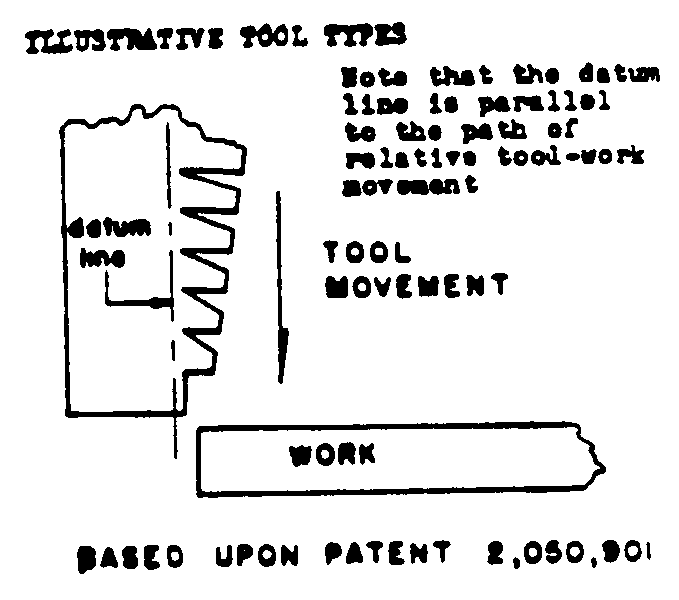
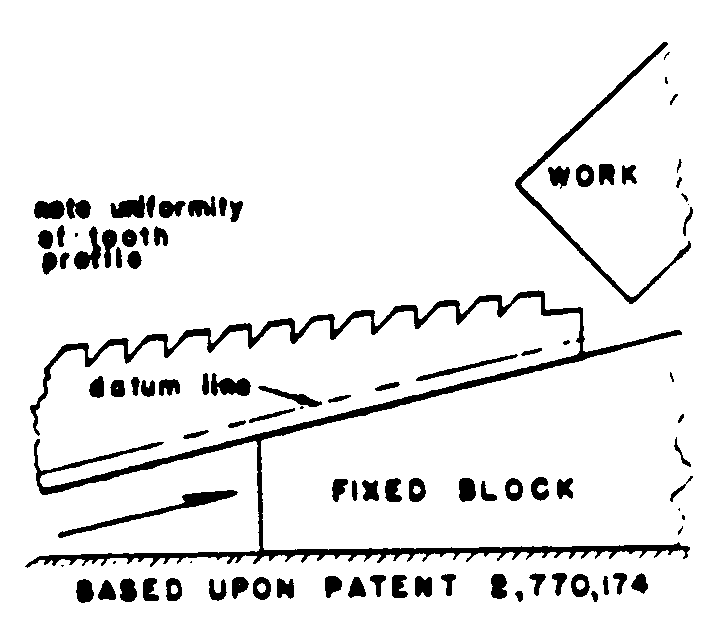
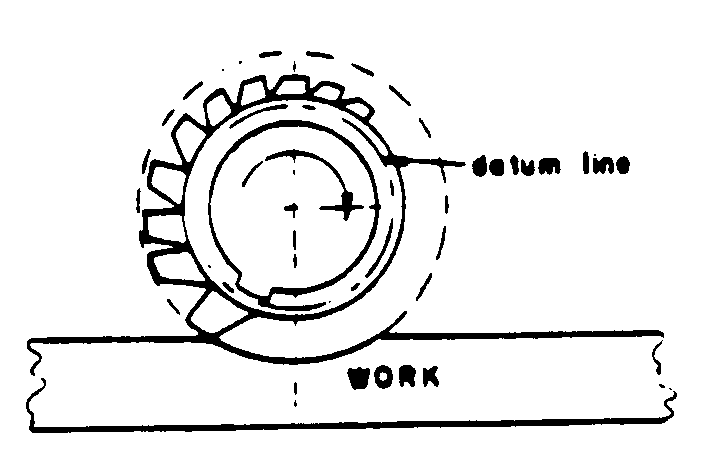
| 244 | Process: | ||
| This subclass is indented under subclass 243. Method including a step of broaching.
SEE OR SEARCH CLASS:
| |||
| 245 | With control means energized in response to activator stimulated by condition sensor: | ||||||||
| This subclass is indented under subclass 243. Apparatus including means for: (a) detecting any of the
following characteristics: a state or property, a change in a state
or property, or the occurrence of a predetermined event in any of the
following: the workpiece, the product of the apparatus, the apparatus
itself, or the environment of the apparatus affecting the operation
thereof; and (b) initiating (as a direct result of that detection)
a signal other than that generated or transmitted by the detecting
means; and (c) regulating or modifying (as a direct result of said
initiation) the operation of the apparatus.
SEE OR SEARCH THIS CLASS, SUBCLASS:
SEE OR SEARCH CLASS:
| |||||||||
| 246 | Responsive to condition of work or product |
| This subclass is indented under subclass 245. Responsive to condition of work or product: Apparatus including means for detecting the characteristics of the workpiece or of the product of the broaching operation, initiating as a direct result of that detection a signal and thereby regulating the operation of the apparatus. | |
| 247 | With means to distribute cutter infeed force: | ||||
This subclass is indented under subclass 243. Apparatus wherein the stress developed in a cutting tool
by a required broaching force is divided or split-up, as distinguished
from concentrated, by broach drive means effective to impart such
force through the simultaneous application of a plurality of force
applicator heads, e.g., push and pull heads.
SEE OR SEARCH THIS CLASS, SUBCLASS:
| |||||
| 248 | With means to select cutter or to select or modify cutter drive: | ||||||
This subclass is indented under subclass 243. Apparatus including (1) a plurality of drive means to power
a broaching machine and means to provide a choice of which drive means
is functional, (2) a plurality of cutting tools and means to provide
a choice of which receives the driving force, or (3) means to significantly
vary the drive of the broaching machine.
SEE OR SEARCH CLASS:
| |||||||
| 249 | With means to clean, lubricate, or modify temperature of work or cutter: |
| This subclass is indented under subclass 243. Apparatus including (a) structure to remove foreign material from the workpiece or from the cutting tool, (b) structure to apply a friction reducing fluent material to the workpiece or to the cutting tool or (c) structure to alter the thermal condition of the workpiece or the cutting tool. | |
| 250 | With product handling means: | ||||
This subclass is indented under subclass 243. Apparatus including means to move or affect the motion of
broached material or scrap of a broaching operation.
| |||||
| 251 | Between plural broaching stations: |
| This subclass is indented under subclass 250. Apparatus comprising means to continuously or incrementally advance material from a first broaching station to a sequentially acting second broaching station. | |
| 252 | Means to eject broached product: |
| This subclass is indented under subclass 250. Apparatus comprising means to remove the broached material from the apparatus at the shaping station. | |
| 253 | Chip removal means: | ||
| This subclass is indented under subclass 250. Apparatus wherein the means to effect motion of the scrap
material comprises means adapted to move relative to the cutting
tool to carry nonshaped material removed from the shaped material
away from the broaching station.
SEE OR SEARCH THIS CLASS, SUBCLASS:
| |||
| 254 | With means to protect operative or machine (e.g., guard, safety device, etc.): | ||
| This subclass is indented under subclass 243. Apparatus combined with means intended to physically prevent
encounter of a man operating the apparatus or of an element of the
apparatus with an undesirable particle or unsafe condition.
SEE OR SEARCH THIS CLASS, SUBCLASS:
| |||
| 255 | With safety means for overload or safety interlock: | ||
| This subclass is indented under subclass 254. Apparatus including a protective device for the machine
operative or machine which (a) functions in repsonce to the development
of operational stress that exceeds, or tends to exceed, the safe
stress limit, to affect the operation of the apparatus of any machine
component or (b) exercises a locking control over an element of the
tool or motive system but is not itself a necessary part of such
system.
SEE OR SEARCH CLASS:
| |||
| 256 | With work immobilizer and means to activate work immobilizer interrelated with cutter infeed, work infeed, or work advance: |
| This subclass is indented under subclass 243. Apparatus combined with means to secure the workpiece in a stationary condition, which securing means is coupled with means to cause the cutting tool to move to perform the cutting stroke, with means to cause the cutting the workpiece to move to perform the cutting stroke, or with means to cause the workpiece to be moved toward the working station, so that movement of the securing means is dependent on the coupled means. | |
| 257 | With work infeed or advancing means and means to clamp the work thereto, which clamping means is interrelated with work or cutter infeed: |
| This subclass is indented under subclass 243. Apparatus combined with means to cause the workpiece to move toward the cutting tool to effect the cutting stroke or with means to cause the workpiece to be moved toward the cutting station before the cutting stroke and with means to secure the workpiece to the moving means, wherein the securing action is dependent on the action of the cutting stroke effected by either movement of the workpiece or of the cutting tool. | |
| 258 | Means to remove flash or burr: | ||||||
This subclass is indented under subclass 243. Apparatus particularly adapted to remove the extraneous
material formed during a previous shaping, molding, or welding operation.
SEE OR SEARCH THIS CLASS, SUBCLASS:
| |||||||
| 259 | Means for cutting groove: | ||||
| This subclass is indented under subclass 243. Apparatus intended to form an elongated recess in a generally
uniform surface of a workpiece, which elongated recess is of a prescribed
cross-sectional shape.
SEE OR SEARCH THIS CLASS, SUBCLASS:
SEE OR SEARCH CLASS:
| |||||
| 260 | Arcuate groove in cylindrical surface: |
| This subclass is indented under subclass 259. Apparatus for forming an elongated recess that is curved into a surface that is generally circular and extends uniformly along the circular axis. | |
| 261 | Rifling: | ||||||||||
This subclass is indented under subclass 260. Apparatus consisting of means for cutting a spiral groove
in the inner surface of the barrel of a small arms or ordnance device.
SEE OR SEARCH THIS CLASS, SUBCLASS:
SEE OR SEARCH CLASS:
| |||||||||||
| 262 | Orbital carrier for cutter: | ||
This subclass is indented under subclass 243. Apparatus including means to support the cutting tool and
move with the cutting tool wherein the movement is in a closed loop.
| |||
| 263 | Orbital carrier for work: | ||
This subclass is indented under subclass 243. Apparatus including means to support the workpiece and move
with the workpiece wherein the movement is in a closed loop.
| |||
| 264 | With means to cyclically manipulate cutter or cutter support: |
| This subclass is indented under subclass 243. Apparatus comprising a machine intended to function through a series of operations so that normally the machine will return to the starting position, combined with cutting tool handling structure to function as a part of the normal series of operations to: (a) transfer the cutting tool between machine parts; (b) apply or remove a tool support; (c) reorient a cutting tool relative to the subsequent and successive cutting path of such tool; (d) remove or introduce a cutting tool (from or to operating position) between successive shaping operation; or (e) reorient, or facilitate reorientation of, the cutting tool with respect to its path of cut. | |
| 265 | To reorient, introduce, or remove cutter: |
| This subclass is indented under subclass 264. Apparatus wherein the butting tool handling structure is effective to (1) realign the cutting tool between successive shaping strokes so as to follow a path of cut different from that of its prior cutting stroke or (2) either (a) position for a subsequent shaping operation a cutting tool not used in the last preceding shaping operation or (b) prepare for the next subsequent shaping operation by removing a cutting tool which has just performed its cutting function. | |
| 266 | Cutter released to interim support at termination of cutting stroke: |
| This subclass is indented under subclass 264. Apparatus including means functional at the end of a cutting stroke to permit transfer of the cutting tool to an inactive tool support. | |
| 267 | To remove and return cutter to cutter support: |
| This subclass is indented under subclass 264. Apparatus comprising means to disconnect the cutting tool from the member used to support the cutting tool during the cutting stroke and including means to reconnect the cutting tool to the supporting structure. | |
| 268 | With plural cutters: | ||
This subclass is indented under subclass 243. Apparatus including a first cutting tool adapted to perform
a shaping operation and including a second cutting tool adapted
to perform a shaping operation, wherein the first and second cutting
tools are relatively movable as assembled in the apparatus.
| |||
| 269 | With means to advance, infeed, or manipulate work: |
| This subclass is indented under subclass 243. Apparatus combined with a base and with means to move the workpiece relative to the base (a) from a remote location to a location closer to the working station, (b) past the cutting tool thereby effecting the cutting stroke, or (c) otherwise from a first to a second position. | |
| 270 | Interrelated with cutter infeed: |
| This subclass is indented under subclass 269. Apparatus wherein the cutting tool is moved relative to the base and relative to the workpiece to effect the cutting operation, wherein action of the workpiece moving means is dependent on such cutting tool movement. | |
| 271 | Including means supporting work and additional means opposing infeed force: |
| This subclass is indented under subclass 270. Apparatus including means to hold the workpiece against the force of gravity and including other means to act against the workpiece to counteract the force placed thereon by the action of the cutting tool during the cutting stroke. | |
| 272 | Including work indexing means for sequential cutting of different surfaces of a single workpiece: | ||
| This subclass is indented under subclass 270. Apparatus comprising means to move the workpiece from a
first definite position to a second definite position between cutting strokes
to thereby present a first portion of the workpiece to the cutting
tool for a first cutting stroke and then present a second portion
of the same workpiece to the cutting tool for a second cutting stroke.
SEE OR SEARCH THIS CLASS, SUBCLASS:
| |||
| 273 | Including work indexing means for sequential cutting of surfaces of different workpieces: |
| This subclass is indented under subclass 270. Apparatus comprising means to support a first and a second workpiece in a fixed relationship and including means to move the support for a first definite position to a second definite position between cutting strokes to thereby present a portion of the first workpiece to the cutting tool for a first cutting stroke and then to present a portion of the second workpiece to the cutting tool for a second cutting stroke. | |
| 274 | With means to retract work from path of tool"s idle return stroke: |
| This subclass is indented under subclass 270. Apparatus wherein, prior to a return movement of the cutting tool, the means to convey work also operates to withdraw the work supporting structure from a tool engagement position. | |
| 275 | To infeed work past cutter: |
| This subclass is indented under subclass 269. Apparatus comprising means to move the workpiece past the cutting tool thereby effecting the cutting stroke. | |
| 276 | With means to hold work during cutting: | ||||||||||||
This subclass is indented under subclass 243. Apparatus including means to support the workpiece against
movement and in the position to be operated on by the cutting tool.
SEE OR SEARCH THIS CLASS, SUBCLASS:
SEE OR SEARCH CLASS:
| |||||||||||||
| 277 | Including work clamping means: | ||
| This subclass is indented under subclass 276. Apparatus including a plurality of opposed elements that
are effective by relative movement therebetween, to grip and hold
the workpiece with respect to the cutting tool.
SEE OR SEARCH THIS CLASS, SUBCLASS:
| |||
| 278 | With means to adjust or facilitate adjustment of work or work holder: | ||||
This subclass is indented under subclass 276. Apparatus combined with means which effects or permits variable
location of the workpiece or of the workpiece supporting means with respect
to the cutting tool.
SEE OR SEARCH CLASS:
| |||||
| 279 | With means on work or work holder to guide cutter during infeed: | ||
This subclass is indented under subclass 276. Apparatus combined with means adapted to engage the workpiece
or the work supporting structure to direct the path of the cutting
tool during its cutting stroke.
| |||
| 280 | Cutter infeed means: |
| This subclass is indented under subclass 243. Apparatus including means to effect movement of a cutting tool to, through, and away from cutting contact with a workpiece to thereby effect the cutting operation. | |
| 281 | Imparting rectilinear motion to cutter: |
| This subclass is indented under subclass 280. Apparatus wherein the means to cause the cutting tool to move to effect the cutting operation serves to cause the cutting tool to move in a straight path during the cutting stroke. | |
| 282 | And rotary motion to cutter: | ||||||
This subclass is indented under subclass 281. Apparatus wherein means is provided to cause the cutting
tool to turn about an axis in addition to the straight-line movement.
SEE OR SEARCH THIS CLASS, SUBCLASS:
SEE OR SEARCH CLASS:
| |||||||
| 283 | Fluid powered means: |
| This subclass is indented under subclass 281. Apparatus wherein the means to cause the cutting tool to move in a straight path to effect the cutting action is adapted to derive moving force from the action of a flowable medium acting against a surface thereof. | |
| 284 | Rack means: | ||||||||
| This subclass is indented under subclass 281. Apparatus including a row of gear teeth arranged in a straight
line extending generally along the workpiece and perpendicularly
to the cutting edge of the cutting tool, also including a gear to
engage the aligned gear teeth, the gear and row of aligned gear
teeth intended to cooperate to cause the cutting tool to move toward the
workpiece to effect the shaping operation.
SEE OR SEARCH THIS CLASS, SUBCLASS:
| |||||||||
| 285 | Screw means: |
| This subclass is indented under subclass 281. Apparatus wherein the means to cause the cutting tool to move in a straight path to effect the cutting action includes a member adapted to turn about an axis, which member has a helical thread adapted to engage a relatively movable member and force relative displacement upon rotation of the helically threaded member. | |
| 286 | Machine frame: |
| This subclass is indented under subclass 243. Apparatus comprising structure supporting the weight of the cutting tool or the workpiece or for counteracting the thrust of the cutting tool, which structure is generally not in contact with the cutting tool or with the workpiece. | |
| 287 | Cutter support or guide: |
| This subclass is indented under subclass 243. Apparatus comprising means to engage and move with the cutting tool during the cutting operation which means is adapted to support the cutting tool against gravity or the reaction from the workpiece, or comprising means to be engaged by the cutting tool and direct the cutting tool to follow the configuration of the means during the cutting operation. | |
| 288 | PLANING: | ||||||||||||||||||
This subclass is indented under the class definition. Apparatus or method for shaping by removal of surface material
from work by a nonrotary cutting tool having a sharp cutting edge.
SEE OR SEARCH THIS CLASS, SUBCLASS:
SEE OR SEARCH CLASS:
| |||||||||||||||||||
| 289 | With regulation of operation by use of templet, card, or other replaceable information supply: | ||||||||||
This subclass is indented under subclass 288. Apparatus or method for detecting the characteristics (e.g.,
physical, electrical, etc.) of a member carrying operating instructions
for the apparatus, which member is separate from both the workpiece
and the organized structure of the apparatus.
SEE OR SEARCH THIS CLASS, SUBCLASS:
SEE OR SEARCH CLASS:
| |||||||||||
| 290 | Including use of tracer adapted to trigger electrical or fluid energy: | ||||||||||
| This subclass is indented under subclass 289. Apparatus or method including use of means having a follower
adapted to ride over the form of the pattern member, which means
is adapted to be connected to (a) a supply of electricity to regulate
the flow of the electricity or to (b) a supply of gas or liquid
so as to regulate the flow of that gas or liquid.
SEE OR SEARCH THIS CLASS, SUBCLASS:
| |||||||||||
| 291 | Including provision for circumferential relative movement of cutter and work: | ||
| This subclass is indented under subclass 290. Apparatus or method particularly adapted to shape a workpiece
that is generally circular in cross section about the central axis
thereof, wherein the cutting tool is supported for movement about
the central axis of the workpiece, or whereon the workpiece is supported
for movement about its central axis, which movement of the cutting
tool relative to the workpiece is less than 360°.
SEE OR SEARCH CLASS:
| |||
| 292 | Including provision for circumferential relative movement of cutter and work: | ||
| This subclass is indented under subclass 289. Apparatus or method particularly adapted to shape a workpiece
that is generally circular in cross section about the cental axis
thereof, wherein the cutting tool is supported for relative movement
about the central axis of the workpiece, or wherein the workpiece
is supported for movement about its central axis, which arcuate
movement of the cutting tool relative to the workpiece is less than
360°.
SEE OR SEARCH CLASS:
| |||
| 293 | Process: |
| This subclass is indented under subclass 288. Method or planing. | |
| 294 | With means to lubricate: |
| This subclass is indented under subclass 288. Apparatus combined with structure to apply a friction reducing fluent material to the apparatus or to the workpiece. | |
| 295 | With product handling means: | ||||
This subclass is indented under subclass 288. Apparatus including means to move or affect the movement
of material that has been planed or of scrap material of a planing
operation.
| |||||
| 296 | Randomly manipulated, work supported, or work following device: | ||||||
This subclass is indented under subclass 288. Apparatus comprising: (a) a cutting device which is capable
of movement in a path instantaneously under the control of the operative during
cutting, including a cutting device suspended or supported near
the workpiece; (b) a cutting device which as an entirety is disclosed as
deriving from the work a substantial amount of its support against
gravity during cutting, or (c) a cutting device which is intended
to move across the workpiece in a direction dictated by conditions
of the workpiece.
SEE OR SEARCH THIS CLASS, SUBCLASS:
SEE OR SEARCH CLASS:
| |||||||
| 297 | Means to remove flash or burr: | ||||||
This subclass is indented under subclass 288. Apparatus particularly adapted to remove the extraneous
material formed during a previous shaping, molding, or welding operation.
SEE OR SEARCH THIS CLASS, SUBCLASS:
| |||||||
| 298 | Elongated work: |
| This subclass is indented under subclass 297. Apparatus particularly adapted to be used on a workpiece having one dimension substantially greater than any other dimension. | |
| 299 | Flash or burr inside hollow work: |
| This subclass is indented under subclass 298. Apparatus particularly adapted to be used on a workpiece including an opening extending generally along the greatest dimension, wherein the apparatus is particularly adapted to remove only extraneous material within the opening. | |
| 300 | Transverse burr: |
| This subclass is indented under subclass 298. Apparatus particularly adapted to the rmoval of a previously formed sharp edge extending in a direction generally normal to the greatest dimension. | |
| 301 | Flat work: |
| This subclass is indented under subclass 297. Apparatus particularly adapted to be used on a three-dimensional workpiece having a first and a second dimension of substantially greater extent than the third dimension. | |
| 302 | Of commutator: | ||
| This subclass is indented under subclass 288. Apparatus particularly adapted to be used in shaping the
surface of a segmented annular member to be utilized in an electromotive device
to transfer electrical current from a stationary part to a rotary
part.
SEE OR SEARCH THIS CLASS, SUBCLASS:
| |||
| 303 | Means for trimming edge (e.g., chamfering, scarfing, etc.): | ||||||
This subclass is indented under subclass 288. Apparatus particularly adapted to remove material from the
perimeter bounding a generally planar area of a workpiece.
SEE OR SEARCH THIS CLASS, SUBCLASS:
SEE OR SEARCH CLASS:
| |||||||
| 304 | Means for cutting groove: | ||||
| This subclass is indented under subclass 288. Apparatus intended to form an elongated recess in generally
uniform surface of a workpiece, which elongated recess is of a prescribed
cross-sectional shape.
SEE OR SEARCH THIS CLASS, SUBCLASS:
SEE OR SEARCH CLASS:
| |||||
| 305 | Arcuate groove: | ||
This subclass is indented under subclass 304. Apparatus particularly adapted to form an elongated recess
in a curved surface of a workpiece.
| |||
| 306 | For rifling: | ||||||||||||
This subclass is indented under subclass 305. Apparatus consisting of means for cutting a spiral groove
in the inner surface of the barrel of a small arms or ordnance device.
SEE OR SEARCH THIS CLASS, SUBCLASS:
SEE OR SEARCH CLASS:
| |||||||||||||
| 307 | Inside hollow work: | ||||
| This subclass is indented under subclass 304. Apparatus particularly adapted to cutting on an inwardly
facing surface of a generally enclosed or shell-like workpiece.
SEE OR SEARCH THIS CLASS, SUBCLASS:
| |||||
| 308 | Means for shaving by blade spanning work surface: |
| This subclass is indented under subclass 288. Apparatus adapted to remove a very thin layer of the surface of the workpiece at a single pass by use of a cutting tool extending substantially across the entire surface of the workpiece, the purpose of the cutting operation being to remove only surface imperfections from a previously shaped surface. | |
| 309 | Concave work surface (e.g., bearing, stereotype printing plate, etc.): | ||
| This subclass is indented under subclass 308. Apparatus particularly adapted to remove a very thin layer
of the inside of an inwardly curved surface.
SEE OR SEARCH THIS CLASS, SUBCLASS:
| |||
| 310 | Circumferential surface: |
| This subclass is indented under subclass 308. Apparatus particularly adapted to remove a very thin layer of material from the outer surface of a rodlike or spherical workpiece. | |
| 311 | Including rack driven infeed means: | ||||||||
| This subclass is indented under subclass 308. Apparatus including a row of gear teeth arranged in a straight
line extending generally along the workpiece and perpendicularly
to the cutting edge of the cutting tool, also including a gear to
engage the aligned gear teeth, the gear and row of aligned gear
teeth intended to cooperate and cause relative movement of the cutting
tool and the workpiece to effect the shaping operation.
SEE OR SEARCH THIS CLASS, SUBCLASS:
| |||||||||
| 312 | Including roller infeed means: |
| This subclass is indented under subclass 308. Apparatus including a circular member having a peripheral surface adapted to engage and cause the workpiece to move relative to the cutting tool to effect the shaping operation. | |
| 313 | Means for cutting arcuate surface: |
| This subclass is indented under subclass 288. Apparatus particularly adapted to form a surface of the workpiece into a curved shape. | |
| 314 | Cycloidal surface: |
| This subclass is indented under subclass 313. Apparatus particularly adapted to form a curved surface on the workpiece wherein a cross section through the surface would show the shape to be that generated by a point on the periphery of a circle, which circle is rolled over a planar surface. | |
| 315 | With work infeed and means to arcuately reposition the cutter: |
| This subclass is indented under subclass 313. Apparatus including a base intended to support the apparatus against gravity, including structure to cause the workpiece to move relative to the base and relative to a cutting edge of the cutting tool to effect the shaping operation, and including means to cause the cutting tool to move along a curved path relative to the base and relative to the workpiece to relocate the path of the cutting action with respect to the workpiece, so that a series of cutting passes yields an arcuate surface on the workpiece. | |
| 316 | With work infeed and means to arcuately reposition the work: |
| This subclass is indented under subclass 313. Apparatus including a base intended to support the apparatus against gravity, including structure to cause the workpiece to move relative to the base and relative to the cutting edge of the cutting tool to effect the shaping operation, and including means to cause the workpiece to additionally move along a curved path relative to the base and relative to the cutting tool to relocate the path of the cutting action with respect to the workpiece, so that a series of cutting passes yields an arcuate surface on the workpiece. | |
| 317 | With means to relatively infeed cutter and work: |
| This subclass is indented under subclass 288. Apparatus including structure to cause the approach of the cutting tool and the workpiece, which approach causes the shaping operation to be effected. | |
| 318 | And means to rotate work and cutter at same rate about converging axis: | ||
| This subclass is indented under subclass 317. Apparatus including means to support the workpiece against
gravity and cause that workpiece to turn about a first axis and
including means to support the cutting tool against gravity and
cause that cutting tool to turn about a second axis inclined relative
to the first axis such that as the workpiece is infed relative to the
cutting tool there is no relative rotation between the workpiece
and the cutting tool.
SEE OR SEARCH CLASS:
| |||
| 319 | With plural sequentially acting cutters or with double acting cutter: | ||
This subclass is indented under subclass 317. Apparatus including (a) a first cutting tool adapted to
make a first cutting pass through a workpiece and a second cutting
tool adapted to follow the first cutting tool generally through the
same portion of the workpiece to expand the cut of the first cutting
tool, wherein the cutting tools are independent of each other, i.e., they
are not on the same tool holder; or including (b) a cutting tool
adapted to make a first cutting pass through a workpiece in a first direction
and then make a second cutting pass in the opposite direction through
the workpiece to expand the cut of the first cutting pass.
| |||
| 320 | And means to vary rate of infeed: | ||
This subclass is indented under subclass 317. Apparatus including provision to cause the relative approach
of the cutting tool and the workpiece during the shaping operation
to be selectively at a first velocity or at a second velocity.
| |||
| 321 | Reciprocating work infeed means: |
| This subclass is indented under subclass 317. Apparatus including a base on which the apparatus is supported and including a carriage adapted to move cyclically to-and-fro to carry the workpiece and present that workpiece to the cutting tool to perform the shaping operation. | |
| 322 | With fluid-driven bed: |
| This subclass is indented under subclass 321. Apparatus including means to cause the carriage to move relative to the base to perform the shaping operation, which means is adapted to derive carriage moving force from the action of a flowable medium acting against a surface thereof. | |
| 323 | With rack-driven bed: | ||||||||
| This subclass is indented under subclass 321. Apparatus including a row of gear teeth arranged in a straight
line extending generally along the workpiece and perpendicularly
to the cutting edge of the cutting tool and also including a gear
to engage the aligned gear teeth, the gear and row of aligned gear
teeth intended to cooperate to cause the work to move toward the
cutting tool to effect the shaping operation.
SEE OR SEARCH THIS CLASS, SUBCLASS:
| |||||||||
| 324 | With screw-driven bed: | ||
| This subclass is indented under subclass 321. Apparatus including means to cause the carriage to move
relative to the base to perform the shaping operation, which means
includes a member adapted to turn about an axis, the member having
a helical thread adapted to engage a relatively movable second member and
force relative displacement of the second member upon rotation of
the helically-threaded member.
SEE OR SEARCH THIS CLASS, SUBCLASS:
| |||
| 325 | And means to permit repositioning of cutter laterally: |
| This subclass is indented under subclass 321. Apparatus including a guiding surface to carry the cutting tool transversely to the direction of infeed of the carriage adapted to permit the cutting tool to be selectively moved therealong. | |
| 326 | Reciprocating cutter infeed means: | ||
This subclass is indented under subclass 317. Apparatus including provision to allow the cutting tool
to cyclically move to-and-fro over a surface of the workpiece to
perform the shaping operation.
| |||
| 327 | Reciprocating cutter horizontally: | ||
This subclass is indented under subclass 326. Apparatus including means to support the workpiece and including
means to allow the cutting tool to move to-and-fro over the upper or
lower surface of the workpiece to perform the shaping operation.
| |||
| 328 | With work support and lead screw to reposition work support: |
| This subclass is indented under subclass 327. Apparatus with means to hold the workpiece against the force of gravity and against the force of the cutting tool and including a helically-spiralled member adapted to interfit with the holding means to cause displacement thereof upon rotation of the helically-spiralled member. | |
| 329 | With fluid-powered means to drive cutter: |
| This subclass is indented under subclass 327. Apparatus wherein the means to cause the cutting tool to move to-and-fro is adapted to derive the cutting tool moving force from the action of a flowable medium acting against a surface thereof. | |
| 330 | With pivoting link to drive cutter: |
| This subclass is indented under subclass 327. Apparatus wherein the means to cause the cutting tool to move to-and-fro includes a rigid connecting member pivotally secured to the tool and pivotally secured to a second member. | |
| 331 | Link driven by crank: |
| This subclass is indented under subclass 330. Apparatus wherein the second member causing the rigid connecting member to move is adapted to turn about an axis and is pivotally connected to the connecting member at a location offset from the axis so that rotation of the second member causes the end of the link connected thereto to orbitally swing and drive the cutting tool. | |
| 332 | With rack to drive cutter: | ||||||||
| This subclass is indented under subclass 327. Apparatus including a row of gear teeth arranged in a straight
line extending generally along the workpiece and perpendicularly
to the cutting edge of the cutting tool, also including a gear to
engage the aligned gear teeth, the gear and row of aligned gear
teeth intended to cooperate and cause the cutting tool to move toward the
workpiece to effect the shaping operation.
SEE OR SEARCH THIS CLASS, SUBCLASS:
| |||||||||
| 333 | With screw to drive cutter: | ||
| This subclass is indented under subclass 327. Apparatus in which the means to cause the cutting tool to
move to-and-fro includes a member adapted to turn about an axis,
the member having a helical thread adapted to engage a relatively
movable second member and force relative displacement of the second
member upon rotation of the helically-threaded member.
SEE OR SEARCH THIS CLASS, SUBCLASS:
| |||
| 334 | With link or cam to drive cutter: |
| This subclass is indented under subclass 326. Apparatus wherein the means to cause the cutting tool to move to-and-fro includes (a) a rigid connecting member pivotally secured to the tool and pivotally secured to a second member or (b) a rotary member with a spiral or profiled surface adapted to slidingly engage a reaction surface upon rotation thereof. | |
| 335 | With rack to drive cutter: | ||||||||
| This subclass is indented under subclass 326. Apparatus including a row of gear teeth arranged in a straight
line extending generally along the workpiece and perpendicularly
to the cutting edge of the cutting tool, also including a gear to
engage the aligned gear teeth, the gear and row of aligned gear
teeth intended to cooperate and cause the cutting tool to move toward the
workpiece to effect the shaping operation.
SEE OR SEARCH THIS CLASS, SUBCLASS:
| |||||||||
| 336 | Including means causing return stroke: | ||||||
This subclass is indented under subclass 317. Apparatus including means to cause the direction of approach
of the cutting tool and the workpiece to be reversed.
SEE OR SEARCH THIS CLASS, SUBCLASS:
| |||||||
| 337 | Machine frame: |
| This subclass is indented under subclass 288. Apparatus comprising structure supporting the weight of the cutting tool or the workpiece or for the weight of the cutting tool or the workpiece or for counteracting the thrust of the cutting tool, which structure is generally not in contact with the cutting tool or with the workpiece. | |
| 338 | Means to permit repositioning of cutter: |
| This subclass is indented under subclass 337. Apparatus including a base, including means to support the cutting tool in a first position for presentation to the workpiece, and including provision to allow movement of the cutting tool from the first position to a second position for different presentation to the workpiece. | |
| 339 | Laterally: |
| This subclass is indented under subclass 338. Apparatus wherein the allowed movement of the cutting tool relative to both the workpiece and the base is in the direction normal to the direction of movement caused to effect the shaping operation. | |
| 340 | Plural independently positioned cutters: |
| This subclass is indented under subclass 339. Apparatus including means to support a first cutting tool in a first position for presentation to a workpiece, and including provision to allow movement of the first cutting tool from a first position to a second position for different presentation to the workpiece, and including means to support a second cutting tool in a first position for presentation to a workpiece and including provision to allow movement of the second cutting tool from the first position to a second position for different presentation to the workpiece, wherein the repositional movement of the first cutting tool is not necessarily accompanied by the repositional movement of the second cutting tool. | |
| 341 | Including clutch: | ||
This subclass is indented under subclass 339. Apparatus including means to cause repositioning of the
cutting tool from the first to the second position and including
means for coupling power, frictionally or positively, to the repositioning
means before the beginning or after the end of infeed (the cutting
stroke), and then disengaging during the remainder of the infeed.
| |||
| 342 | Including repositioning means and means to effect stopping thereof: | ||
This subclass is indented under subclass 339. Apparatus including means to cause movement of the cutting
tool in the second direction and means to terminate that movement.
| |||
| 343 | Including relatively movable components and means to relatively immobilize these components: | ||
| This subclass is indented under subclass 337. Apparatus wherein members thereof can be repositioned with
respect to each other, including means to secure the otherwise relatively movable
members together.
SEE OR SEARCH THIS CLASS, SUBCLASS:
| |||
| 344 | Work table: | ||
| This subclass is indented under subclass 337. Apparatus including a generally planar upwardly facing surface
particularly adapted to support a workpiece against gravity.
SEE OR SEARCH CLASS:
| |||
| 345 | Tool head: |
| This subclass is indented under subclass 288. Apparatus for supporting the cutting tool of a planer. | |
| 346 | With selectively usable cutting edges: | ||
This subclass is indented under subclass 345. Apparatus including a first means for supporting a first
cutting tool of a planer and including a second means for supporting
a second cutting tool of a planer, and including provision to allow
use of one or both of the cutting tools during relative approach
of the workpiece.
| |||
| 347 | With means to permit repositioning of cutter for idle return stroke: |
| This subclass is indented under subclass 345. Apparatus including means to allow movement of the cutting tool out of the cutting position to permit relative movement of the cutting tool and the workpiece for return to the starting position for a subsequent approach and further shaping of the workpiece. | |
| 348 | Comprising pivotable cutter or cutter support: |
| This subclass is indented under subclass 347. Apparatus including means to limit the cutting tool to swing about an axis in moving out of cutting position. | |
CROSS-REFERENCE ART COLLECTIONS
The following subclasses are collections of published disclosures pertaining to various specified aspects of the cutting art which aspects do not form appropriate bases for subclasses in the foregoing classification (i.e., subclasses superior hereto in the schedule), wherein original copies of patents are placed on the basis of proximate function of the apparatus. These subclasses assist a search based on remote function of the apparatus and may be of further assistance to the searcher, either as a starting point in searching this class or as an indication of further related fields of search inside or outside the class. Thus, there is here provided a second access for retrieval of a limited number of types of disclosures.
| (1) Note. Disclosures are placed in these subclasses for their value as references and as leads to appropriate main or secondary fields of search, without regard to their original classification or their claimed subject matter. |
| (2) Note. The disclosures found in the following subclasses are examples, only, of the indicated subject matter, and in no instance do they represent the entire extent of the prior art. |
| 900.1 | Machine button or locator: |
| Aligning element used for positioning or orienting a machine part or a workplace relative to some reference system, which element is used in an apparatus of this class. | |
| 900.2 | Machine tool carriage clamp: |
| A device used for joining, gripping or supporting a moving part of an apparatus of this class, which moving part holds or shifts another part. | |
| 901 | STEREOTYPE PRINTING PLATE: | ||
| Making or modifying a stereotype printing plate by a process
or apparatus of this class.
SEE OR SEARCH THIS CLASS, SUBCLASS:
| |||
| 902 | TIRE MOLD: |
| Making a mold to be used in the manufacture or vulcanizing of a rubber vehicle tire by a method or apparatus of this class. | |
| 903 | WORK HOLDER: |
| Structure to be used with the apparatus of this class, which structure is intended to support a workpiece against gravity and/or against the force of the cutting tool. | |
| 904 | WITH HYDROSTATIC BEARING: |
| This subclass is indented under the class definition. Method or apparatus including use of fluid to support one member relatively to another and thereby reduce the friction between the two members. | |