SECTION I - CLASS DEFINITION
This class includes machines, tools, and processes not otherwise
classified for operating upon stone or stone-like substance, which
has previously been removed from its native position in the earth,
and also some miners" hand-tools. This class does not include:
(1) Inventions classifiable in the class for Mining or In Situ
Disintegration of Hard Material, for mining valuable material or
disintegrating hard material in situ (See Search Notes below for
specific class reference.);
(2) Inventions classifiable in the class for Abrading, for operating
upon the surface of the material with an abradant; (See Search
Notes below for specific class reference.);
(3) Processes and apparatus for comminuting stone and stone-like
substance, classifiable in the class for Solid Material Comminution
or Disintegration. (See Search Notes below for specific class
reference.) Class 125 includes some patents for working stone or
stone-like comminuting elements (e.g., millstones) to prepare them for
use. See particularly subclasses 27+ and 42.
(4) Inventions which are equally useful for operation upon
metal and are classifiable in classes for Metal Working; for Turning;
for Cutting; for Cutting by Use of Rotating Axially Moving Tool;
and for Gear Cutting, Milling, or Planing. (See Search Notes below
for specific class references);
(5) Inventions which are equally useful for operation upon
softer material, like wood and are classifiable in classes for
Cutting; for Wood Turning; and for Woodworking (See Search Notes
below for specific class references);
(6) A process or means for boring into the earth, concrete,
stone or the like in situ is classified in the class for Boring
or Penetrating the Earth, as is a hammer or impact device for impacting
an earth penetrating means. (See Search Notes below for specific
class reference.);
(6A) The class for Tool Driving or Impacting provides for
subject matter directed to driving or impacting a tool, when such
subject matter includes combined features peculiar to tool driving,
but which does not include features limiting the subject matter
to a specific tool art, such as specific shape of the work contacting
portion of a tool, related tools, or an opposed work support. Class 125
has not been cleared as to subject matter in conflict with this
line. (See Search Notes below for specific class reference.)
(7) Tools in which the invention resides merely in the means
for securing the operating portion of the tool to the handle or
holder. These are classified in the class for Chucks or Sockets.
(See Search Notes below for specific class reference.)
(8) The subcombination of cleaning stone or brick by detergent,
for which see the class for Cleaning and Liquid Contact With Solids.
(See Search Notes below for specific class reference.)
(9) Ice picks and chippers, for which see the class for Cutlery
Cutlery. (See Search Notes below for specific class reference.)
SECTION II - REFERENCES TO OTHER CLASSES
SEE OR SEARCH CLASS:
| 29, | Metal Working, for inventions equally useful for operation upon
metal (see (4) above). |
| 30, | Cutlery, for ice picks and chippers (also see (9) above). |
| 82, | Turning, for inventions equally useful for operation upon
metal (see (4) above). |
| 83, | Cutting, for inventions equally useful for operation upon
metal (see (4) above). |
| 83, | Cutting, for inventions equally useful for operation upon
softer material, like wood (see (5) above). |
| 134, | Cleaning and Liquid Contact With Solids, for the subcombination of cleaning stone or brick by
detergent (also see (8) above). |
| 142, | Wood Turning, equally useful for operation upon softer material,
like wood (see (5) above). |
| 144, | Woodworking, equally useful for operation upon softer material,
like wood (see (5) above). |
| 173, | Tool Driving or Impacting, for subject matter directed to driving or impacting
a tool, when such subject matter includes combined features peculiar
to tool driving, but which does not include features limiting the
subject matter to a specific tool art, such as specific shape of
the work contacting portion of a tool, related tools, or an opposed
work support. (see (6A) above). |
| 175, | Boring or Penetrating the Earth, for a process or means for boring into the earth, concrete, stone
or the like in situ;
subclass 135 for a hammer or impact device for impacting an earth
penetrating means; and see the class definition of Class 175 for
the line between Class 125 and Class 175 (also see (6) above). |
| 241, | Solid Material Comminution or Disintegration, for processes and apparatus for comminuting stone
and stone-like substances. See the main class definition of that
class (241) for the line. (also see (3) above). |
| 279, | Chucks or Sockets, for t.ools in which the invention resides merely
in the means for securing the operating portion of the tool to the handle
or holder. (see (7) above). |
| 299, | Mining or In Situ Disintegration of Hard Material, for mining valuable material or disintegrating hard
material in situ. (See (1) above). |
| 451, | Abrading, for operating upon the surface of the material with
an abradant (see (2) above). |
| 408, | Cutting by Use of Rotating Axially Moving Tool, for inventions equally useful for operation upon
metal (see (4) above). |
| 409, | Gear Cutting, Milling, or Planing, for inventions equally useful for operation upon
metal (see (4) above). |
SUBCLASSES
![[List of Patents for class 125 subclass 1]](../ps.gif) 1 1 | MISCELLANEOUS: |
| | This subclass is indented under the class definition. Inventions relating to the stone-working art are not otherwise
classifiable. |
| | |
| 2 | DRESSING: |
| | This subclass is indented under the class definition. Mechanically operating upon stone to cut, chip, or otherwise
remove material from the surface thereof in such a manner as to
produce a surface of definite form, the tool having a cutting movement
independent of the relative feeding movement between the tool and
the stone. |
| | |
| 3 | Rotary cutter: |
| | This subclass is indented under subclass 2. The stone is operated upon by the rotation of a cutter other
than a grinding-wheel.
SEE OR SEARCH CLASS:
| 408, | Cutting by Use of Rotating Axially Moving Tool, appropriate subclasses, for drilling machines which
feed the work or tool or both relative to one another along the
axis of the tool; and, see the Notes thereto for other machines
in which a rotating tool is fed relative to work. |
|
| | |
| 4 | Cutter-support feed: |
| | This subclass is indented under subclass 3. Machines in which the cutter-support is given a feeding
movement during operation of the cutting-tool. |
| | |
| 5 | Rotary tools: |
| | This subclass is indented under subclass 3. Rotary power-operated tools adapted to be interchangeably
secured to power-driven arbors of stone-dressing machines. |
| | |
| 7 | Cutter-support feed: |
| | This subclass is indented under subclass 6. Machine in which the picking-tool support is given a feeding
movement during operation of the picking-tool. |
| | |
| 8 | Arm-supported tool: |
| | This subclass is indented under subclass 2. Machines in which a tool capable of independent operation
is supported on the end of an arm which extends considerably beyond
the main frame of the machine. |
| | |
| 9 | PLANING: |
| | This subclass is indented under the class definition. Material is removed from a stone-surface by movement of
a tool with a cutting edge along the surface of the stone. |
| | |
| 10 | TURNING: |
| | This subclass is indented under the class definition. The stone is given a continuous rotary movement against
a tool. |
| | |
| 11.01 | Grinding-wheel dressing: |
| | This subclass is indented under subclass 10. Subject matter in which the wheel is sharpened by cutting
away its glazed or loaded grinding surface, thereby exposing sharp
new cutting grains to the work.
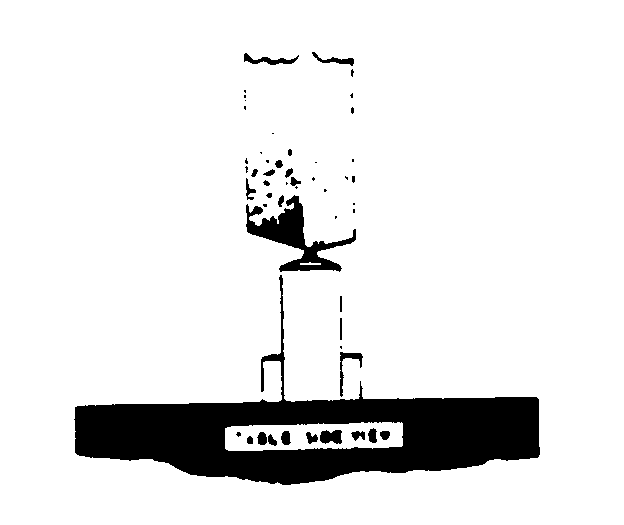
| | (1)
Note. For ease of cutting and proper chip removal, voids
are provided in the grinding wheel. As cutting proceeds, some chips
become firmly lodged in the voids. This reduces grain clearance
and cutting efficiency. This condition is called "loading".
| SEE OR SEARCH CLASS:
| 451, | Abrading,
subclass 442 for an accessory having a function supplemental to
grinding such as "truing," subclass 72 for a combined
abrading machine with dressing, subclasses 21 and 22 for a grinding
machine with grinding wheel wear compensation, and subclass 56 for
a method of grinding and tool forming. |
|
| | |
| 11.02 | Indexing of tool point: |
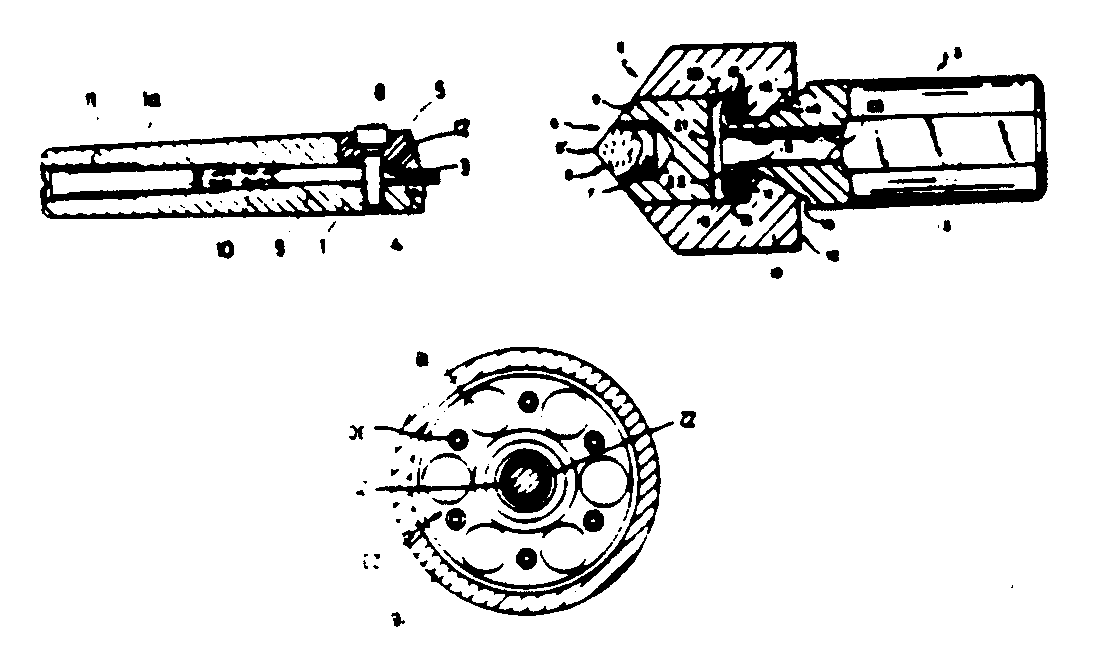
| | This subclass is indented under subclass 11.01. Subject matter in which a dressing tool for truing up the
grinding wheel has a plurality of cutting edges and is secured to
a tool holder for a movement which causes a change from one cutting
edge to another.
| | (1)
Note. The dressing tool may include a truing head consisting
of a cylinder provided with a series of separate retractable diamond
tools each of which is capable of being rigidly locked. |
| | (2)
Note. The dressing tool may include a body having a shank,
an insert holder and an indexable head diamond insert press fitted
into the insert holder.
| |
| | |
| 11.03 | Rotary or crush dressing: |
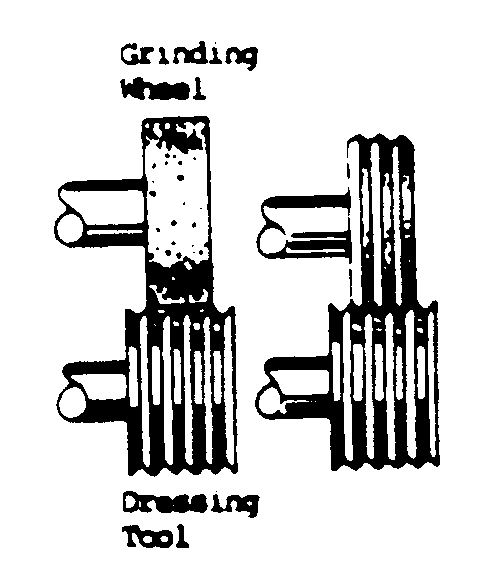
| | This subclass is indented under subclass 11.01. Subject matter for dressing the grinding wheel surface by
use of a (heavy crushing) pressure between the tool and the grinding
wheel to break the grinding wheel abrasive bond or by the use of
a dressing tool which rotates during dressing.
|
| | |
| 11.04 | Contouring of grinding wheel face: |
| | This subclass is indented under subclass 11.01. Subject matter to produce a form other than flat on the
wheel surface.
| | (1)
Note. This form may be a curve or radius, an angle, indentation
or serration (tooth), or any type of profile other than straight. | |
| | |
| 11.05 | Cam controlled: |
| | This subclass is indented under subclass 11.04. Subject matter for forming a shape on the grinding wheel
with a relative movement between the grinding wheel and dressing
tool, the path of which is guided or controlled by a rotatable,
pivotal or rockable member having a contour.
| | (1)
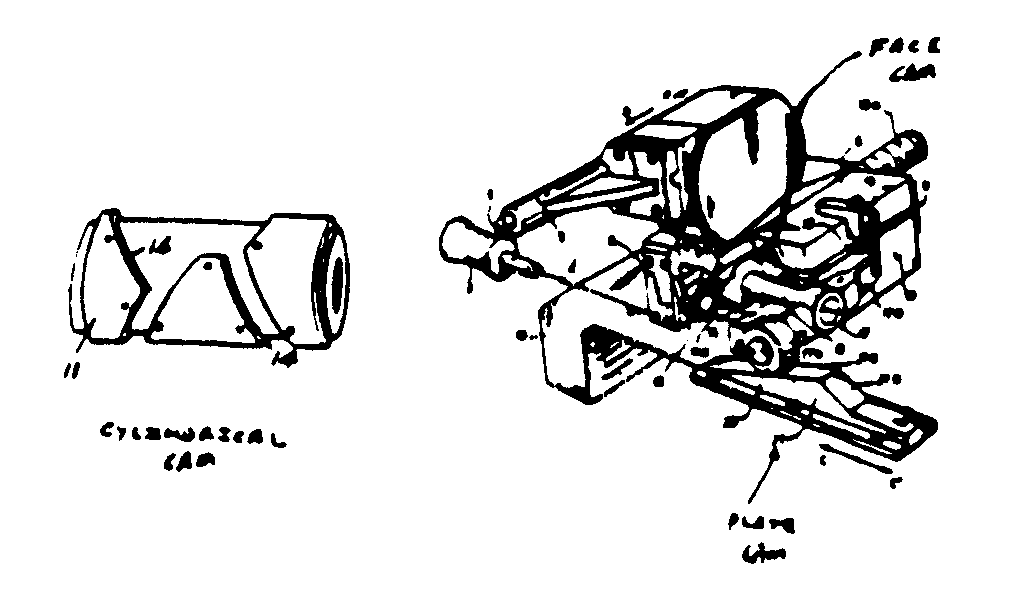
Note. Three generic types of cam are: face, cylindrical,
and plate.
| | (1)
The face cam consists of a cam track cut into the periphery
of a wheel. |
| | (2)
The cylindrical cam has the cam track cut into the face of
a cylinder. |
| | (3)
The plate cam use the periphery of edge of a longitudinal
member. The cam follower presses against the edge of a plate cam
and is held there by pressure from a spring or the pressure of the grinding
wheel itself. | |
| | (2)
Note. In cam controlled, the dressing tool is mounted in
a floating holder that is actuated by a cam to produce required shape
in the wheel.
| |
| | |
| 11.06 | Templet-or pattern-controlled: |
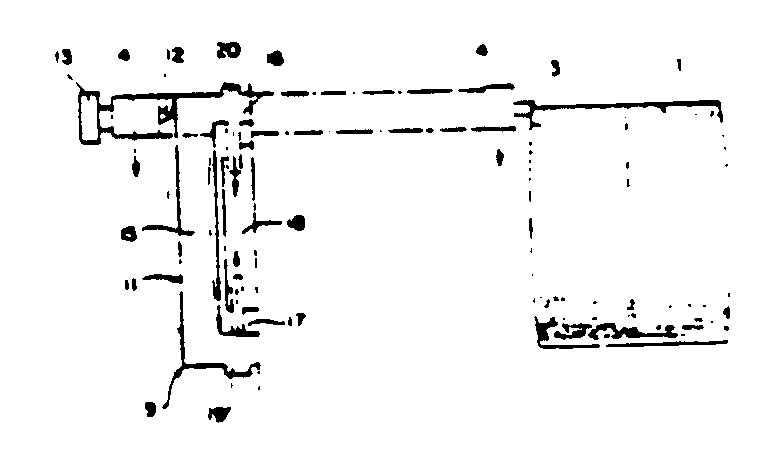
| | This subclass is indented under subclass 11.04. Subject matter which includes an original or model form
contour for imitation and a stylus. The point of the stylus following
the form contour activates the dressing tool to duplicate the form
contour on the periphery of the grinding wheel.
| | (1)
Note. The device duplicates the motion path of a tracer moving
over a templet, but does so with a reduction in motion in proportion
to the pantograph ratio. The templet is the exact form that is
required on the grinding wheel but is enlarged by an amount equal
to the pantograph ratio.
| |
| | |
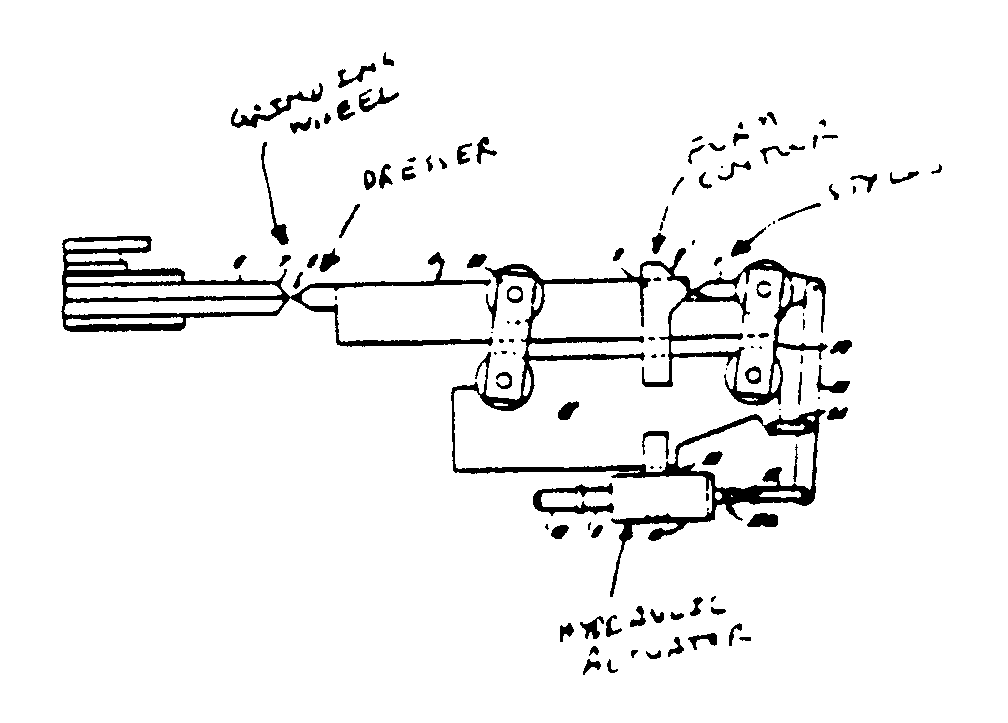
| 11.07 | Hydraulically actuated: |
| | This subclass is indented under subclass 11.06. Subject matter in which the dressing motion is imparted
by fluid acting on a piston.
SEE OR SEARCH THIS CLASS, SUBCLASS:
| 11.2, | for dressing tool motion controlled by fluid actuated
drive means. |
|
| | |
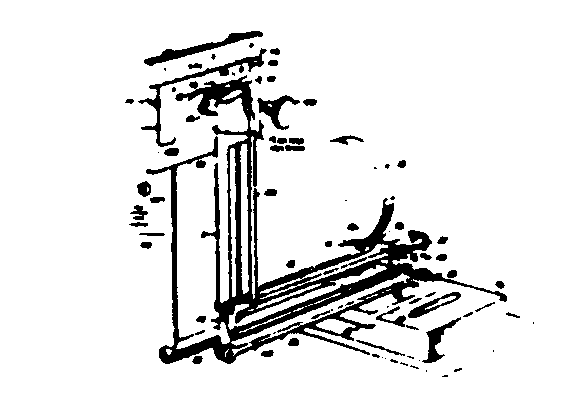
| 11.08 | Pantograph: |
| | This subclass is indented under subclass 11.06. Subject matter in which the dressing tool is operated by
a device, having a stylus for tracing and copying, mounted on multiple
jointed members in the form of a parallelogram.
|
| | |
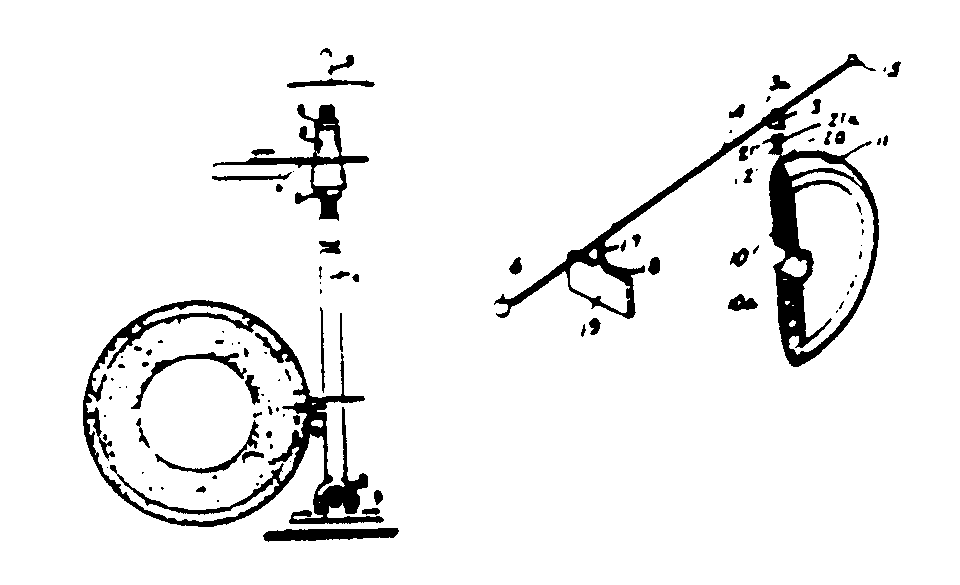
| 11.09 | Fulcrum bar: |
| | This subclass is indented under subclass 11.06. Subject matter which includes a single lever or arm having
one end journaled for universal movement and the other end operating
over a form template.
| | (1)
Note. The arm or lever has a single support which may be
a spherical bearing, a gimble mechanism, a ball or roller type bearing
or other similar means which permits the lever movement.
| |
| | |
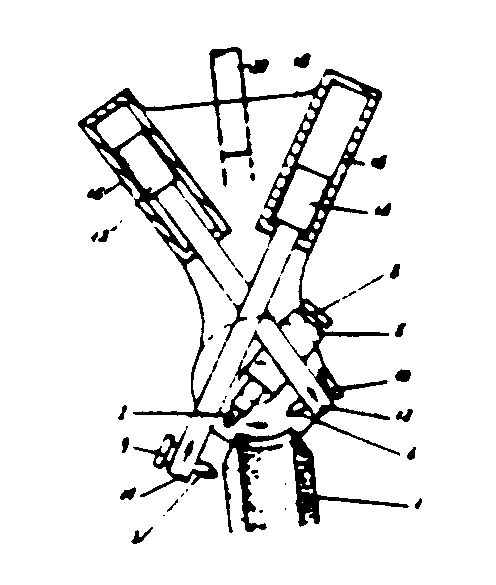
| 11.12 | Generation of arc or bevel by two or more tools: |
| | This subclass is indented under subclass 11.04. Subject matter in which a curved or bevel surface on a grinding
wheel is accomplished by two or more dressing tools.
| | (1)
Note. Both tools may produce bevel surface on each side of
a wheel or one tool may produce a bevel surface and the other tool
may produce a curved surface.
| |
| | |
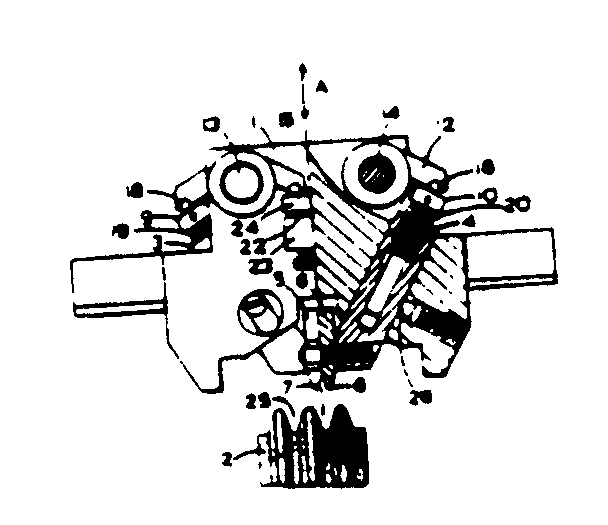
| 11.13 | With compound motion of tool: |
| | This subclass is indented under subclass 11.04. With compound motion of tool:ubject matter in which the
dressing tool is moved in a main dressing motion and also has an
additional or separate motion which motion together produces the
desired shape.
|
| | |
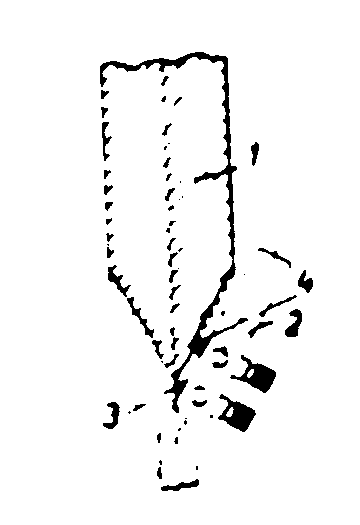
| 11.15 | Forming bevel: |
| | This subclass is indented under subclass 11.04. Subject matter in which the dressing tool cuts an inclination
that forms an angle other than a right angle with respect to the
grinding wheel axis of rotation.
|
| | |
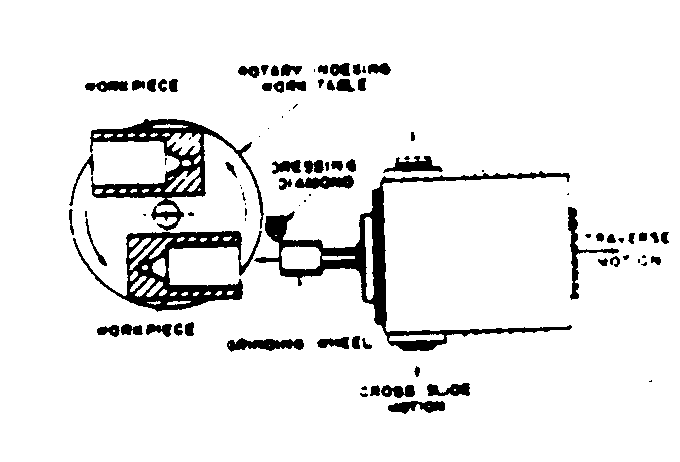
| 11.18 | Peripheral grinding face: |
| | This subclass is indented under subclass 11.01. Subject matter in which the tool is especially adapted for
dressing of a grinding wheel which is used in grinding the internal
bore of a workpiece.
|
| | |
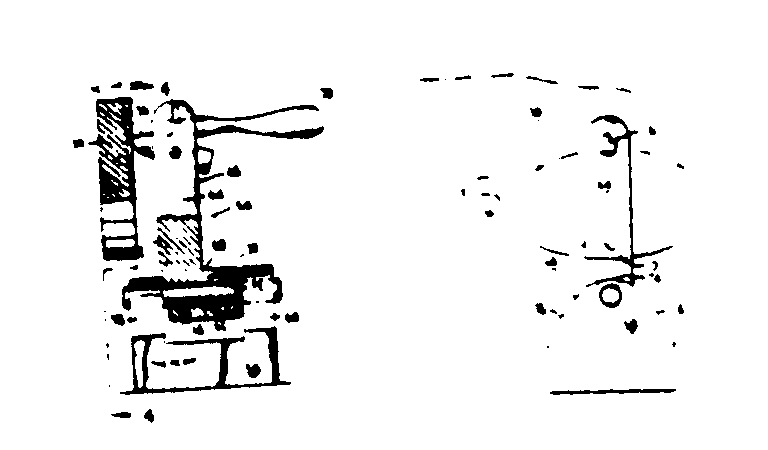
| 11.19 | Radial grinding face: |
| | This subclass is indented under subclass 11.01. Subject matter which provides for movement of dressing
tool across the side face of the grinding wheel, i.e., the dresser
acts along the radial face of the grinding.
|
| | |
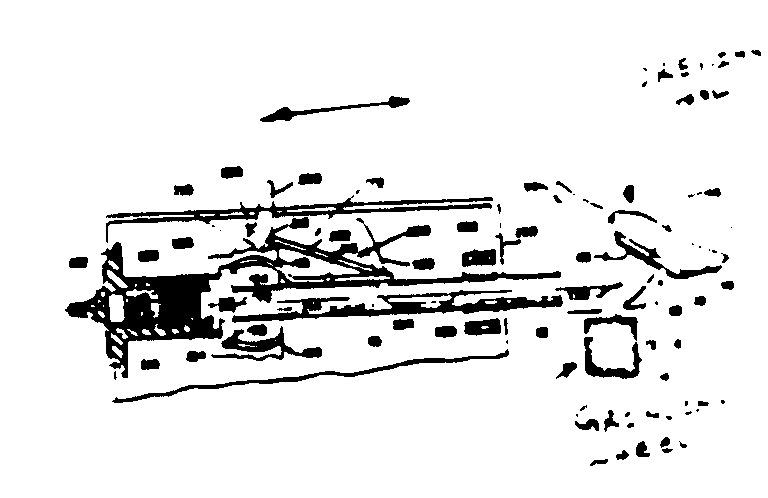
| 11.21 | Rectilinearly reciprocating tool: |
| | This subclass is indented under subclass 11.01. Subject matter in which the dressing tool traverses back-and-forth
in a straight line across the face of the grinding wheel.
| | (1)
Note. The dressing tool may dress the wheel during forward
movement or during backward movement.
| |
| | |
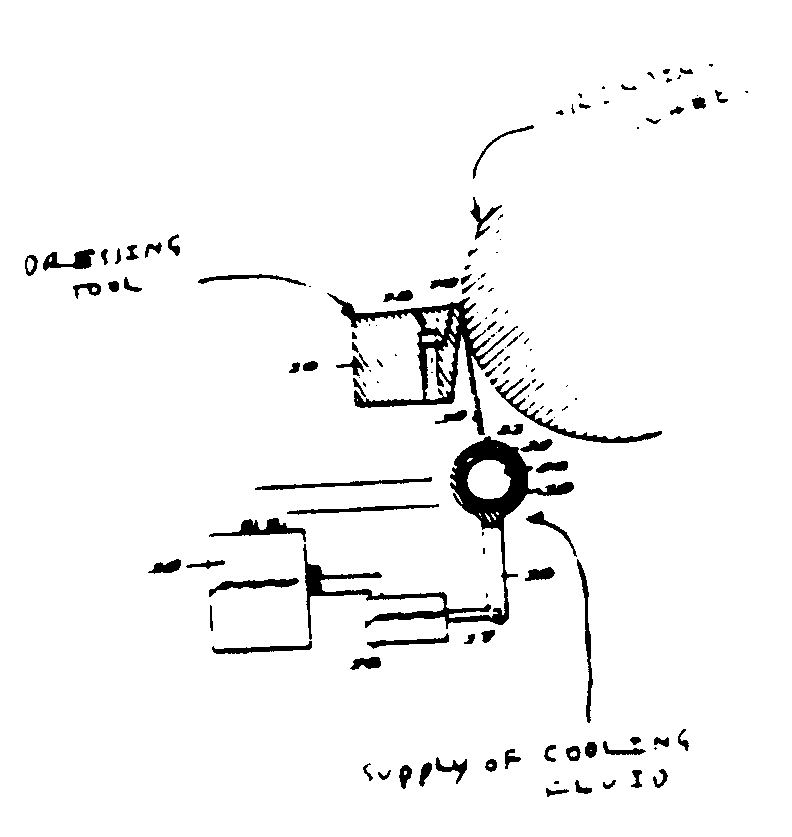
| 11.22 | Coolant supply: |
| | This subclass is indented under subclass 11.01. Subject matter in which a coolant fluid or similar means
is provided to cool the dressing tip.
| | (1)
Note. The life of the dressing tip is extended by preventing
it from becoming overheated during the wheel dressing and truing
operation.
| |
| | |
| 11.23 | With compensator for tool wear: |
| | This subclass is indented under subclass 11.01. Subject matter including a supplementary mechanism responsive
to the operation of means for dressing the wheel and effective to adjust
the distance between the wheel and the dressing tool by a predetermined
fixed amount to offset the reduction in the dressing tool which
results from the dressing operation. |
| | |
| 12 | SAWING: |
| | This subclass is indented under the class definition. The stone is divided into two or more smaller stones by
sawing a kerf either entirely through the stone or to a sufficient
depth to permit the portions to be readily broken apart.
SEE OR SEARCH CLASS:
| 30, | Cutlery,
subclass 166 , is the generic place for hand manipulable saws
and see (3) Note thereto for other classes where hand manipulated
saws and sawing machines will be found. |
| 83, | Cutting,
subclasses 875+ and 915.3 for ice-cutting machines. |
| 175, | Boring or Penetrating the Earth,
subclass 91 for earth boring means including a continuously
rotating bit describing a noncircular cross-sectional bore. |
|
| | |
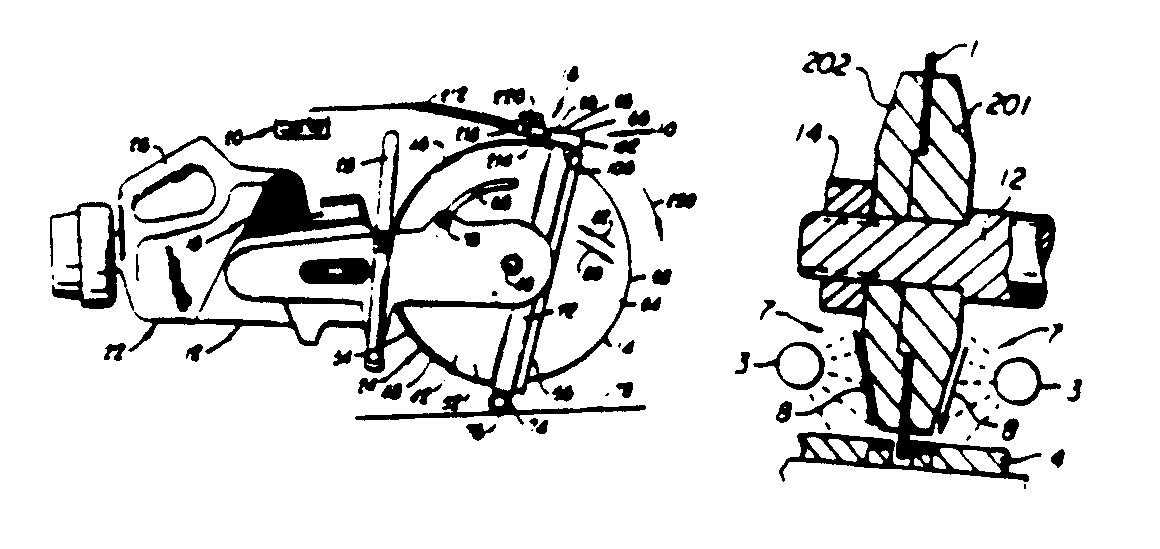
| 13.01 | Rotary: |
| | This subclass is indented under subclass 12. Subject matter in which sawing of stone or similar material
is accomplished by rotation of a circular saw in the plane of the
kerf.
| | (1)
Note. The device usually comprises a blade which is held
between a pair of plates or supported by a frame assembly or similar
support means and operatively connected to a drive means to rotate
at a very high speed.
| SEE OR SEARCH CLASS:
| 30, | Cutlery,
subclass 347 for rotary blades. |
| 83, | Cutting,
subclasses 409+ for cutting by using rotatable-disc tool pair or tool
and carrier. |
| 175, | Boring or Penetrating the Earth,
subclass 91 for rotating cutters forming circular bores. |
| 408, | Cutting by Use of Rotating Axially Moving Tool, appropriate subclasses for drilling machines which
feed the work or tool or both relative to one another along the
axis of the tool; and, see the notes thereto for other machines
in which a rotating tool is fed relative to work. |
|
| | |
| 13.02 | Having internal cutting edge: |
| | This subclass is indented under subclass 13.01. Subject matter including a rotary blade having an opening
with a cutting edge on the internal edge of the opening, the workpiece
being projected into the opening for cutting.
SEE OR SEARCH CLASS:
| 451, | Abrading,
subclass 180 for an abrading machine in which grinding is done by
the internal peripheral face of an annular tool having rotary motion. |
|
| | |
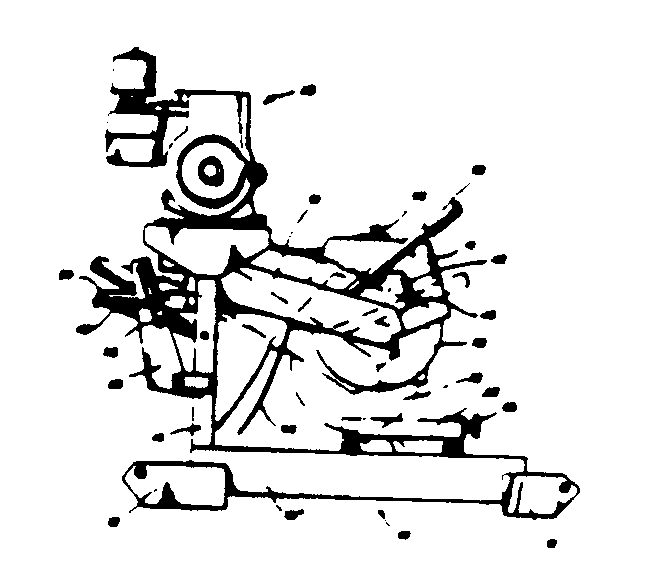
| 13.03 | With pivoted frame: |
| | This subclass is indented under subclass 13.01. Subject matter in which the saw blade is mounted for movement
on a swingable arm adjacent to the workpiece.
SEE OR SEARCH CLASS:
| 83, | Cutting,
subclass 490 for cutting by saws mounted on a rotatable carrier movable
during cutting. |
| 451, | Abrading,
subclass 236 for abrading machines in which the tool is mounted on
a swinging carrier, permitting its application to and removal from
the work, as desired. |
|
| | |
| 15 | Saw blades: |
| | This subclass is indented under subclass 13.01. Rotary disk saws adapted to be interchangeably secured to
power-driven arbors of stone-sawing machines. |
| | |
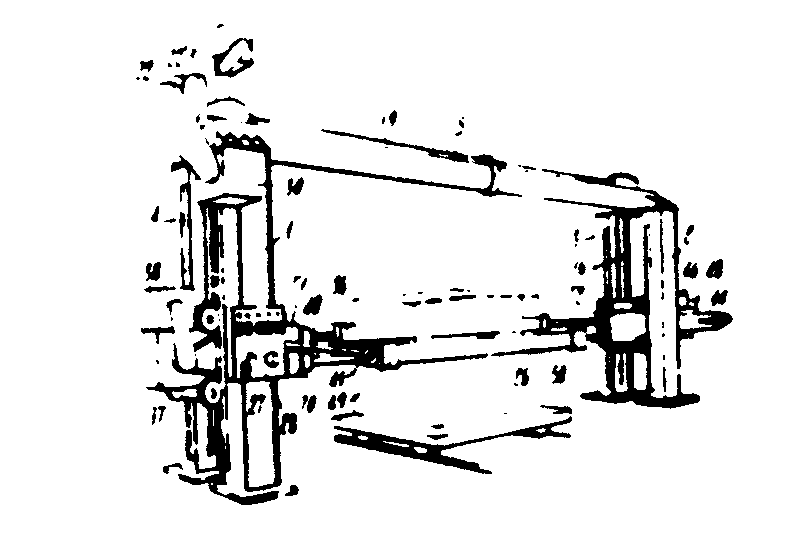
| 16.01 | Reciprocating: |
| | This subclass is indented under subclass 12. Subject matter wherein the cutting blade moves back and
forth in a straight line.
SEE OR SEARCH CLASS:
| 83, | Cutting,
subclass 746 for cutting by tool reciprocable along elongated edge
and by rectilinearly reciprocating tool. |
| 451, | Abrading,
subclass 164 for abrading machine having rectilinearly reciprocating
tool. |
|
| | |
| 17 | Saw racks: |
| | This subclass is indented under subclass 16.01. Frames in which the saws are mounted and which reciprocate
with the saws during operation. |
| | |
| 18 | Saw blades: |
| | This subclass is indented under subclass 16.01. Reciprocating saw-blades adapted to be interchangeably secured
to the other parts of the machine for receiving a reciprocating
movement. |
| | |
| 19 | Oscillating: |
| | This subclass is indented under subclass 12. Sawing stone by the oscillation of a saw-blade in the plane
of the kerf. |
| | |
| 20 | Disk cutting: |
| | This subclass is indented under subclass 12. Cutting of a cylindrical kerf by rotary movement of a saw
in a closed path around the periphery of the disk.
SEE OR SEARCH CLASS:
| 175, | Boring or Penetrating the Earth,
subclasses 403+ for a core forming type earth boring bit. |
|
| | |
| 21 | Endless: |
| | This subclass is indented under subclass 12. Sawing stone by the continuous travel of an endless flexible
member along its own length while in contact with the stone. |
| | |
| 22 | Saw teeth: |
| | This subclass is indented under subclass 12. Abrading or cutting units adapted to be independently secured
to or formed along the edge of a saw-blade at spaced-apart points. |
| | |
| 23.01 | SPLITTING, SHEARING AND PUNCHING: |
| | This subclass is indented under the class definition. Subject matter for shearing, splitting, or punching of stone
by the application of opposing forces to different portions of an
integral stone.
SEE OR SEARCH CLASS:
| 225, | Severing by Tearing or Breaking,
subclasses 93+ for breaking or tearing apparatus. |
| 241, | Solid Material Comminution or Disintegration,
subclass 4 which includes physical steps of separation of
the laminations of materials (such as mica) when combined with the
comminuting or disintegrating step. |
|
| | |
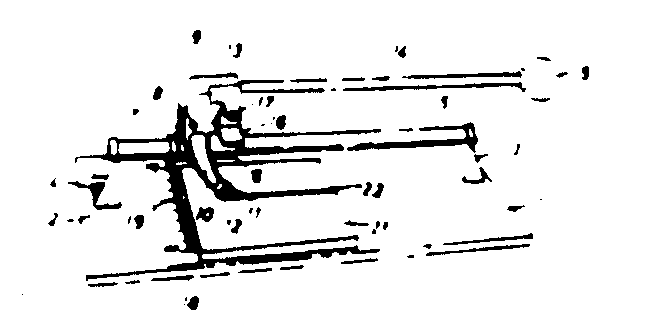
| 23.02 | Roller-type cutters: |
| | This subclass is indented under subclass 23.01. Subject matter in which a working force is applied by at
least one member having a cutter in the form of a rotatable element
which is traversed across the workpiece.
| | (1)
Note. Cutting to a desired size or shape is usually accomplished
by scoring the surface of the workpiece.
| |
| | |
| 25 | SLATE SURFACING: |
| | This subclass is indented under the class definition. Dressing the surfaces of slates or thin slabs of stone. |
| | |
| 26 | BRICK CLEANING: |
| | This subclass is indented under the class definition. Removing foreign material adhering to bricks.
SEE OR SEARCH CLASS:
| 134, | Cleaning and Liquid Contact With Solids, for processes of cleaning brick by detergent action. |
|
| | |
| 27 | MILLSTONE DRESSING: |
| | This subclass is indented under the class definition. Cutting or cleaning the grooves or millstones or like objects.
SEE OR SEARCH CLASS:
| 241, | Solid Material Comminution or Disintegration,
subclasses 291+ for comminuting elements (e.g., millstones). Patents
including claims to both the comminuting element and the process or
apparatus for dressing or fashioning it are classified in class
241 on the basis of the article. |
|
| | |
| 28 | Rotary cutter: |
| | This subclass is indented under subclass 27. Operating upon the grooves of millstones by the continuous
rotation of a cutter other than a grinding-wheel. |
| | |
| 30.01 | PRECIOUS STONE WORKING: |
| | This subclass is indented under the class definition. Subject matter for working various minerals, such as diamond,
emerald, ruby, or sapphire, valued for their rarity or appearance.
SEE OR SEARCH CLASS:
| 29, | Metal Working,
subclass 25.35 for piezoelectric device making. |
| 175, | Boring or Penetrating the Earth,
subclass 434 for an earth boring bit which includes a diamond
on its cutting edge. |
| 356, | Optics: Measuring and Testing,
subclass 30 which includes claims for nominal cutting of crystal
to prepare it for optical examination. |
|
| | |
| 35 | WORK SUPPORTS: |
| | This subclass is indented under the class definition. Supporting structures for holding stones in place while
being operated upon.
SEE OR SEARCH CLASS:
| 269, | Work Holders, appropriate subclasses. Class 269 is the residual
locus for patents to a device for clamping, supporting and/or
holding an article (or articles) in position to be operated on or
treated. See notes thereunder for other related loci. |
|
| | |
| 36 | TOOLS: |
| | This subclass is indented under the class definition. Tools for operating upon stone not otherwise classifiable.
SEE OR SEARCH CLASS:
| 30, | Cutlery,
subclasses 164.5+ for ice picks and chippers. |
| 175, | Boring or Penetrating the Earth,
subclasses 327+ for an earth boring bit or bit element. |
| 299, | Mining or In Situ Disintegration of Hard Material,
subclasses 79.1+ for a cutter head or tooth for mining or disintegrating
hard material in situ. |
|
| | |
| 37 | Traction rotated: |
| | This subclass is indented under subclass 36. A freely rotatable wheel adapted to wear down the surface
of the stone by traveling across the same. |
| | |
| 38 | Surface traversing: |
| | This subclass is indented under subclass 36. The cutting portions are rigidly held in place and are adaped
to be moved along the stone-surface to remove material therefrom. |
| | |
| 39 | Diamond: |
| | This subclass is indented under subclass 38. The cutting portion consists of a diamond rigidly held in
place.
SEE OR SEARCH CLASS:
| 175, | Boring or Penetrating the Earth,
subclass 434 for an earth boring bit which includes a diamond
on its cutting edge. |
|
| | |
| 40 | Impact: |
| | This subclass is indented under subclass 36. For dressing stone by striking against the stone-surface.
SEE OR SEARCH CLASS:
| 81, | Tools,
subclass 463 , and see the notes thereto for other impact tools. |
| 175, | Boring or Penetrating the Earth,
subclasses 414+ for an impact type earth boring bit. |
|
| | |
| 42 | Millstone picks: |
| | This subclass is indented under subclass 40. For cleaning and cutting the grooves of millstones. The
cutting element usually consists of a blade with its cutting edge
extending laterally and transversely of the handle.
| | (1)
Note. See the note under subclass 27. | |
| | |
CROSS-REFERENCE ART COLLECTIONS
| 901 | FORMING PIEZOELECTRIC CRYSTALS: |
| | This subclass is indented under the class definition. Apparatus having means to form an element which has ability
to generate voltage when mechanical force is applied or to produce mechanical
force when a voltage is applied. |
| | |
![[Search a list of Patent Appplications for class 125]](../as.gif) CLASS 125,
CLASS 125,