SECTION I - CLASS DEFINITION
This class provides for design patents claiming ornamental
designs for:
Special Purpose Vehicle
Vehicle Drawn by Animal
Rail Vehicle
Telpher Carrier or Chair Lift
Water Craft or Hull
Aircraft, Spacecraft, or Fuselage
Trailer or Trailer Body
Cycle or Motorcycle
Perambulator, Invalid Chair or Stretcher
Tire
Parts, Accessories, and Attachments For Vehicle Not Elsewhere
Specified
| | (1)
Note. Design patents in this class are classified by what
is claimed and shown in full lines only. Broken, hatched or stippled lines,
which may be included in design patent drawings, are considered
as environment only. |
SECTION II - REFERENCES TO OTHER CLASSES
SEE OR SEARCH CLASS:
| D6, | Furnishings,
subclass 333 for infant or child s car seat; subclass 356 for
vehicle type seat. |
| D7, | Equipment for Preparing or Serving Food or Drink
not Elsewhere Specified,
subclasses 619 through 625for generic beverage container holder. |
| D8, | Tools and Hardware,
subclass 303 for handlebar grip or hand grip; subclasses 356 & 382
for cleat or chock hardware for boat; subclass 360 for pulley or
pulley block; subclass 375 for caster or wheel for a caster. |
| D9, | Packages and Containers for Goods,
subclasses 516 through 575for disposable bottle, jug, or can. |
| D10, | Measuring, Testing or Signaling Instruments,
subclass 107 for buoy; subclass 112 for ignition timing light;
subclass 120 for vehicle siren or horn. |
| D11, | Jewelry, Symbolic Insignia and Ornaments,
subclasses 200 through 241for vehicle seat belt. |
| D13, | Equipment for Production, Distribution of Transformation
of Energy,
subclasses 112 through 116for vehicle type electric motor; subclasses 126-127
for ignition component. |
| D15, | Machines Not Elsewhere Specified,
subclasses 1 through 6for engine; subclasses 10-33 for tractor, bulldozer
or earth working machinery; subclass 152 for oil collecting drip pan. |
| D16, | Photography and Optical Equipment,
subclass 137 for traffic light viewing prism. |
| D19, | Office Supplies: Artists and Teachers Materials,
subclasses 63 through 64for flight trainer or simulator. |
| D20, | Sales and Advertising Equipment,
subclasses 10 through 44for vehicle attached sign; subclass 13 for registration
or vehicle license plate; subclass 17, for road or highway sign. |
| D21, | Games, Toys and Sports Equipment,
subclasses 424 through 435for childs riding toy vehicle; subclasses 447-
452 for toy aircraft or spacecraft; subclass; subclasses 533-560
for vehicle models or a toy representation of a vehicle; 535 for
toy stroller or baby carriage; subclass 556 for toy forklift; subclass
563 for toy vehicle wheel; subclass 581 for action toy that includes
animal and rider; subclasses 760-770 for ski or non-motorized sport
accessory such as skate, surfboard, snow board or aquaplane; subclass
779 for skateboard or roller-skate wheel. |
| D24, | Medical and Laboratory Equipment,
subclasses 183 through 184for static patient support. |
| D29, | Equipment for Safety, Protection, and Rescue,
subclass 124 for rescue type articles. |
| D34, | Material of Article Handling Equipment,
subclass 3 for trash compactor or vehicle transportable or
pick up type refuses container; subclasses 12-27 for hand cart;
subclasses 28-34 for forklift; subclass 29 for belt type conveyor; subclass
30, for mobile aircraft stairs; subclass 31 for vehicle jack or
jack stand; subclass 32 ramp for a vehicle. |
SECTION III - GLOSSARY
BLOCK
A portion of the tread surface set off from the surrounding
tread surface by grooves.
CIRCUMFERENTIAL
Extending along the road contacting surface and parallel to
the sides.
EQUATORIAL
Relating to the centerline of the road contacting surface, running
midway between and parallel to the sides of a tire.
GROOVE
A void, furrow, or channel in the tread surface that extends
circumferentially, laterally or diagonally in a straight, curved
or zigzag direction.
INNER BEAD
The thickened inner boundary of a tire sidewall designed
to contact a supporting hub or wheel rim.
LATERAL
Extending in a direction perpendicular to the sides of
a tire.
NOTCH
A short, relatively wide indentation in one or both sides of
a groove or rib that does not fully transect the surface on which
it is located.
RIB
A strip forming part of the road-contacting tread surface that
extends around the tire, undivided by lateral or diagonal grooves.
SHOULDER
The transitional portion of a tire located between the road-contacting
surface and the sidewalls.
SIDEWALL
The portion of a tire generally perpendicular to the
tread that is located between the hub or rim-contacting inner bead
and the shoulder.
SIPE
A small slot molded into the road contacting surface tread
elements usually having no apparent width and represented in the
drawing by an articulated single line on the tread surface.
TREAD
The road contacting surface of a tire.
SUBCLASSES
![[List of Patents for class D12 subclass 1]](../ps.gif) 1 1 | SPECIAL PURPOSE VEHICLE: |
| | This subclass is indented under the class definition. Design for a conveyance or means for transportation for
a specific task.
| | (1)
Note. This subclass is the residual class for all land vehicles
not specifically provided for in Class D12 or the excluded subject
matter outlined in the See or Search Notes below. |
SEE OR SEARCH CLASS:
| D15, | Machines Not Elsewhere Specified,
subclasses 1 through 6for engine; subclasses 10-33 for tractor, bulldozer,
or earth working machinery. |
| D19, | Office Supplies: Artists and Teachers Materials,
subclasses 63 through 64for flight trainer or simulator. |
| D21, | Games, Toys and Sports Equipment,
subclasses 424 through 435for child s riding toy vehicle; subclass 535 for toy
stroller or baby carriage; subclass 556 for toy forklift; subclasses
760-770 for ski or non-motorized sport accessory such as skate,
surfboard, snow board or aquaplane; subclasses 533-560 for vehicle
models or a toy representation of a vehicle. |
| D29, | Equipment for Safety, Protection, and Rescue,
subclass 124 for rescue type articles. |
| D34, | Material of Article Handling Equipment,
subclass 3 for trash compactor or vehicle transportable or
pick-up type refuses container; subclasses 12-27 for hand cart. |
|
| | |
| 17 | VEHICLE DRAWN BY ANIMAL: |
| | This subclass is indented under the class definition. Design for conveyance or means for transportation that
is pushed or pulled by an animal.
| | (1)
Note. This subclass contains industrial designs for vehicles
intended to be drawn by an animal or animals. Watercraft and aircraft
excluded. |
SEE OR SEARCH THIS CLASS, SUBCLASS:
| 6 | through 11 , for sleigh or sled |
| 300 | through 318 , for watercraft |
| 319 | through 345 , for aircraft or spacecraft |
SEE OR SEARCH CLASS:
| D21, | Games, Toys and Sports Equipment,
subclass 425 for cart or wagon; subclass 581 for action toy
that includes animal and rider. |
|
| | |
| 36 | RAIL VEHICLE: |
| | This subclass is indented under the class definition. Design for a conveyance or means for transportation that
operates upon rigid tracks.
| | (1)
Note. Includes Train. |
SEE OR SEARCH CLASS:
| D21, | Games, Toys and Sports Equipment,
subclasses 424 through 435for a riding toy vehicle; subclasses 540 and 541
for toy rail vehicle. |
|
| | |
| 52 | TELPHER CARRIER OR CHAIR LIFT: |
| | This subclass is indented under the class definition. Design for conveyance via enclosure or series of chairs
suspended from a cable.
SEE OR SEARCH CLASS:
| D6, | Furnishings,
subclass 333 for infant or child s car seat; subclass 356, for vehicle
type seat. |
| D7, | Equipment for Preparing or Serving Food or Drink
not Elsewhere Specified,
subclasses 619 through 625for generic beverage container holder. |
| D8, | Tools and Hardware,
subclass 303 for handlebar grip or hand grip. |
| D11, | Jewelry, Symbolic Insignia and Ornaments,
subclasses 200 through 241for vehicle seat belt. |
| D29, | Equipment for Safety, Protection, and Rescue,
subclass 124 for rescue type articles. |
| D34, | Material of Article Handling Equipment,
subclass 29 for belt type conveyor; subclass 30 for mobile
aircraft stairs. |
|
| | |
| 82 | MOTORCAR, BUS OR TRUCK: |
| | This subclass is indented under the class definition. Design for land type conveyance or means of transportation
operated by motor.
SEE OR SEARCH CLASS:
| D6, | Furnishings,
subclass 333 for infant or child s car seat; subclass 356 for vehicle
type seat. |
| D10, | Measuring, Testing, or Signaling Instruments,
subclass 112 for ignition timing light; subclass 120 for vehicle siren
or horn. |
| D11, | Jewelry, Symbolic Insignia and Ornaments,
subclasses 200 through 241for vehicle seat belt. |
| D13, | Equipment for Production, Distribution of Transformation of Energy
subclasses 112 through 116for vehicle type electric motor; subclasses 126-127
for ignition component. |
| D15, | Machines Not Elsewhere Specified,
subclasses 1 through 6for engine. |
| D20, | Sales and Advertising Equipment,
subclass 13 for registration or vehicle license plate; subclass
17 for road or highway sign. |
| D21, | Games, Toys and Sports Equipment,
subclasses 424 through 435for toy vehicle that is designed to hold a child;
subclass 563 for toy vehicle wheel; subclasses 760-770 for ski or non-motorized
sport accessory such as skate, subclasses 533-560 for vehicle models
or toy representation of vehicle. |
| D34, | Material of Article Handling Equipment,
subclass 31 for vehicle jack or jack stand; subclass 32 ramp
for vehicle. |
|
| | |
| 101 | TRAILER OR TRAILER BODY: |
| | This subclass is indented under the class definition. Design for a non-motorized wheeled vehicle designed
to be towed by another vehicle.
SEE OR SEARCH THIS CLASS, SUBCLASS:
| 6 | through 11 , for snow vehicle trailer. |
| 97, | for truck semi-trailer. |
| 100, | for motor home. |
| 156, | for truck-mounted camper. |
SEE OR SEARCH CLASS:
| D21, | Games, Toys, and Sports Equipment,
subclass 558 for articulated type toy vehicle that includes
toy trailer. |
|
| | |
| 107 | CYCLE OR MOTORCYCLE: |
| | This subclass is indented under the class definition. Design for a unicycle, bicycle, or motor operated two or
three-wheeled vehicle that may include a saddle type seat.
| | (1)
Note. Includes only pedal, lever or engine-driven vehicle. |
SEE OR SEARCH CLASS:
| D21, | Games, Toys and Sports Equipment,
subclass 432 for toy cycle or motorcycle; subclass 538 for toy
representation of a cycle. |
|
| | |
| 128 | PERAMBULATOR, INVALID CHAIR OR STRETCHER: |
| | This subclass is indented under the class definition. Design for baby buggy, wheel chair, walker, or manual
type conveyance for transporting the sick or injured.
SEE OR SEARCH CLASS:
| D6, | Furnishings,
subclass 333 for infant or child s car seat. |
| D8, | Tools and Hardware,
subclass 303 for handlebar grip or hand grip. |
| D21, | Games, Toys and Sports Equipment,
subclasses 424 through 435for toy vehicle that is designed to hold a child;
subclass 535 for toy stroller or baby carriage; subclass 563 for
toy vehicle wheel; subclass 779 for skateboard or roller-skate wheel. |
| D24, | Medical and Laboratory Equipment,
subclasses 183 through 184for static patient Support. |
| D29, | Equipment for Safety, Protection and Rescue,
subclass 124 , for rescue type articles. |
|
| | |
| 159 | Chassis element: |
| | This subclass is indented under subclass 400. Design for part or attachment for the frame of a vehicle
supported on springs that attaches to the axles and supports or
holds the body and motor.
| | (1)
Note. Includes shock absorber or spring. |
SEE OR SEARCH CLASS:
| D21, | Games, Toys, and Sports Goods,
subclass 763 for roller skate chassis. |
|
| | |
| 160 | Axle element: |
| | This subclass is indented under subclass 159. Design for part or attachment for the supporting shaft
or vehicle member on or with which a wheel or set of wheels revolves. |
| | |
| 163 | Radiator, grille or bumper: |
| | This subclass is indented under subclass 400. Design for an engine cooling device through which water
or other fluids circulate as coolant; a screen, divider, barrier,
or decorative element on the front end of a vehicle; or a rigid
or flexible bar or member attached to either end of a vehicle to
absorb impact in a collision.
| | (1)
Note. Includes radiator casings and assembly combinations. | |
| | |
| 167 | Bumper or guard: |
| | This subclass is indented under subclass 163. Design for a rigid or flexible bar or member that attaches
to either end of a vehicle to absorb impart in a collision. |
| | |
| 300 | WATERCRAFT OR HULL: |
| | This subclass is indented under the class definition. Design for boat or underside of a water type vessel or
conveyance.
SEE OR SEARCH CLASS:
| D6, | Furnishings,
subclass 356 for vehicle type seat. |
| D7, | Equipment for Preparing or Serving Food or Drink
not Elsewhere Specified,
subclasses 619 through 625for generic beverage container holder. |
| D8, | Tools and Hardware,
subclass 303 for handlebar grip or hand grip; subclasses 356 & 382
for cleat or chock hardware for boat. |
| D10, | Measuring, Testing or Signaling Instruments,
subclass 107 for buoy; subclass 112 for ignition timing light; subclass
120 for vehicle siren or horn. |
| D11, | Jewelry, Symbolic Insignia and Ornaments,
subclasses 200 through 241for vehicle seat belt. |
| D21, | Games, Toys and Sports Equipment,
subclasses 424 through 435for riding type toy vehicle; subclasses 542-547 for
toy watercraft; subclasses766-770 for ski, surfboard or water sled. |
|
| | |
| 319 | AIRCRAFT, SPACECDAFT, OR FUSELAGE: |
| | This subclass is indented under the class definition. Design for conveyance or means of transportation within
the atmosphere of the earth or space.
| | (1)
Note. Includes glider. |
SEE OR SEARCH CLASS:
| D19, | Office Supplies: Artists and Teachers Materials,
subclasses 63 through 64for flight trainer or simulator. |
| D21, | Games, Toys and Sports Equipment,
subclasses 424 through 435for riding type toy vehicle; subclasses 447- 452 for
toy aircraft or spacecraft; subclasses 533-560 for vehicle models
or toy representation of vehicle. |
| D34, | Material of Article Handling Equipment,
subclass 30 for mobile aircraft stairs; subclass 32 ramp for
vehicle. |
|
| | |
| 400 | PARTS, ACCESSORIES AND ATTACHMENTS NOT ELSEWHERE SPECIFIED: |
| | This subclass is indented under the class definition. Design for vehicle type elements, accessories or attachments
not elsewhere provided for.
| | (1)
Note. Includes parts, components, and accessories which exist
only in connection with a vehicle and cannot be placed in another
class. |
SEE OR SEARCH CLASS:
| D6, | Furnishings,
subclass 333 for infant or child s car seat; subclass 356 for vehicle
type seat. |
| D7, | Equipment for Preparing or Serving Food or Drink
not Elsewhere Specified,
subclasses 619 through 625for generic beverage container holder. |
| D8, | Tools and Hardware,
subclass 303 for handlebar grip or hand grip. |
| D10, | Measuring, Testing, or Signaling Instruments,
subclass 112 for ignition timing light; subclass 120 for vehicle siren
or horn. |
| D11, | Jewelry, Symbolic Insignia and Ornaments,
subclasses 200 through 241for vehicle seat belt. |
| D13, | Equipment for Production, Distribution of Transformation
of Energy,
subclasses 112 through 116for vehicle type electric motor; subclasses 126-127
for ignition component. |
| D15, | Machines Not Elsewhere Specified,
subclasses 1 through 6for engine; subclass 152 for oil collecting drip pan. |
| D16, | Photography and Optical Equipment,
subclass 137 for traffic light viewing prism. |
| D19, | Office Supplies: Artists and Teachers Materials,
subclasses 63 through 64for flight trainer or simulator. |
| D20, | Sales and Advertising Equipment,
subclass 13 for registration or vehicle license plate; subclass
17 for road or highway sign. |
| D21, | Games, Toys and Sports Equipment,
subclass 563 for toy vehicle wheel. |
| D24, | Medical and Laboratory Equipment,
subclasses 183 through 184for static patient support. |
| D29, | Equipment for Safety, Protection, and Rescue,
subclass 124 for rescue type articles. |
| D34, | Material of Article Handling Equipment,
subclass 3 for trash compactor or vehicle transportable or
pick up type refuses container; subclasses 12-27 for hand cart;
subclass 30 for mobile aircraft stairs; subclass 31 for vehicle
jack or jack stand; subclass 32 ramp for vehicle. |
|
| | |
| 401 | Cover, canopy, or top: |
| | This subclass is indented under subclass 400. Design for vehicle attached tent, shelter or enclosure.
SEE OR SEARCH THIS CLASS, SUBCLASS:
| 190, | for vehicle window awning. |
| 223, | for fitting such as bow, stay, bracket. |
SEE OR SEARCH CLASS:
| D21, | Games, Toys, and Sports Goods,
subclasses 834 through 838for tent. |
|
| | |
| 402 | Cycle type: |
| | This subclass is indented under subclass 401. Design directed to two or three-wheeled vehicle only.
| | (1)
Note. Includes motorcycle. |
SEE OR SEARCH THIS CLASS, SUBCLASS:
| 114 | through 127 , for element or attachment for cycle or motorcycle. |
|
| | |
| 407 | Cycle type: |
| | This subclass is indented under subclass 406. Design for device specific to supporting or holding
a two or three-wheeled vehicle.
| | (1)
Note. Includes basket. | |
| | |
| 411 | Beverage container holder or cage: |
| | This subclass is indented under subclass 407. Design for bottle or receptacle or support for liquid
such as water.
| | (1)
Note. Includes holder or cage in combination with water bottle. |
SEE OR SEARCH CLASS:
| D7, | Equipment for Preparing or Serving Food or Drink
Not Elsewhere Specified,
subclass 510 for water bottle, per se. |
| D9, | Packages and Containers for Goods,
subclasses 516 through 575for disposable bottle, jug, or can. |
|
| | |
| 413 | Fully enclosed: |
| | This subclass is indented under subclass 412. Design that completely surrounds articles.
SEE OR SEARCH THIS CLASS, SUBCLASS:
| 410 | through 413 , for fully enclosed or molded cycle type carrier. |
|
| | |
| 414.1 | Cargo or flatbed type: |
| | This subclass is indented under subclass 406. Design designed to fit in the rear or loading area or
a truck.
| | (1)
Note. Includes carrier or accessory type compartment mountable
in a truck cargo area or flatbed trailer. |
SEE OR SEARCH THIS CLASS, SUBCLASS:
| 415 | through 426.1 , for console or compartment design for a vehicle. |
|
| | |
| 415 | Console, compartment, or interior accessory mount. |
| | This subclass is indented under subclass 500. Design for holder or support for supplemental items
carried inside the passenger area of a vehicle.
| | (1)
Note. Includes here and, in the indented subclasses, vehicle
attached desk. |
SEE OR SEARCH CLASS:
| D6, | Furnishings,
subclasses 407 through 635for vehicle mounted audiotapes, disc, or media
holder, per se. |
|
| | |
| 421 | Armrest type: |
| | This subclass is indented under subclass 415. Design for supporting the arm of vehicle passenger.
| | (1)
Note. Includes armrest, per se. | |
| | |
| 422 | Pocket type: |
| | This subclass is indented under subclass 415. Design that is substantially flat in the closed or empty
condition.
SEE OR SEARCH CLASS:
| D3, | Travel Goods and Personal Belongings,
subclass 303 for generic pocket type storage container. |
|
| | |
| 425 | Tray or open bin. |
| | This subclass is indented under subclass 415. Design for supporting articles partially uncovered or
unenclosed.
SEE OR SEARCH CLASS:
| D3, | Travel Goods and Personal Belongings,
subclasses 304 through 314for open top bin, tray or basket; subclass 315
for generic carrier or caddy. |
|
| | |
| 426.1 | Desk type: |
| | This subclass is indented under subclass 415. Design for flat or sloping writing surface for vehicle
that may include enclosed storage.
SEE OR SEARCH CLASS:
| D6, | Furnishings,
subclasses 406.3 through 406.6for lap desk. |
|
| | |
| 500 | TIRE: |
| | This subclass is indented under the class definition. Design for a hoop or resilient covering fitted around
a land vehicle wheel, usually filled with compressed air to reduce
shock during movement.
| | (1)
Note. Sipe placement or configuration is not considered unless
specifically noted. |
| | (2)
Note. See Glossary of Terms in the Class definition. |
SEE OR SEARCH CLASS:
| 152, | Resilient Tires and Wheels,
subclasses 209.1 through 212for tire tread configurations. |
| D8, | Tools and Hardware,
subclass 375 for caster or wheel for furniture caster. |
| D21, | Games, Toys and Sports Equipment,
subclass 563 for toy vehicle wheel; subclass 779 for skateboard
or roller-skate wheel. |
|
| | |
| 502 | With tread pattern: |
| | This subclass is indented under subclass 500. Design that includes an ornamental pattern or configuration
shown on the road-contacting surface.
| | (1)
Note. Unless specifically noted, sipe, shoulder, and sidewall
configuration are not considered. | |
| | |
| 503 | Simulative: |
| | This subclass is indented under subclass 502. Design for a tire tread that includes a symbol or representation
of another article, either in form or as applied ornamentation.
SEE OR SEARCH THIS CLASS, SUBCLASS:
| 605, | for simulative features on sidewall portion of tire. |
|
| | |
| 504 | Letter or number: |
| | This subclass is indented under subclass 503. Design that includes one or more numbers or characters
of the alphabet.
SEE OR SEARCH CLASS:
| D18, | Printing and Office Machinery,
subclasses 24 through 33for type fonts or designs used in the printing
arts. |
|
| | |
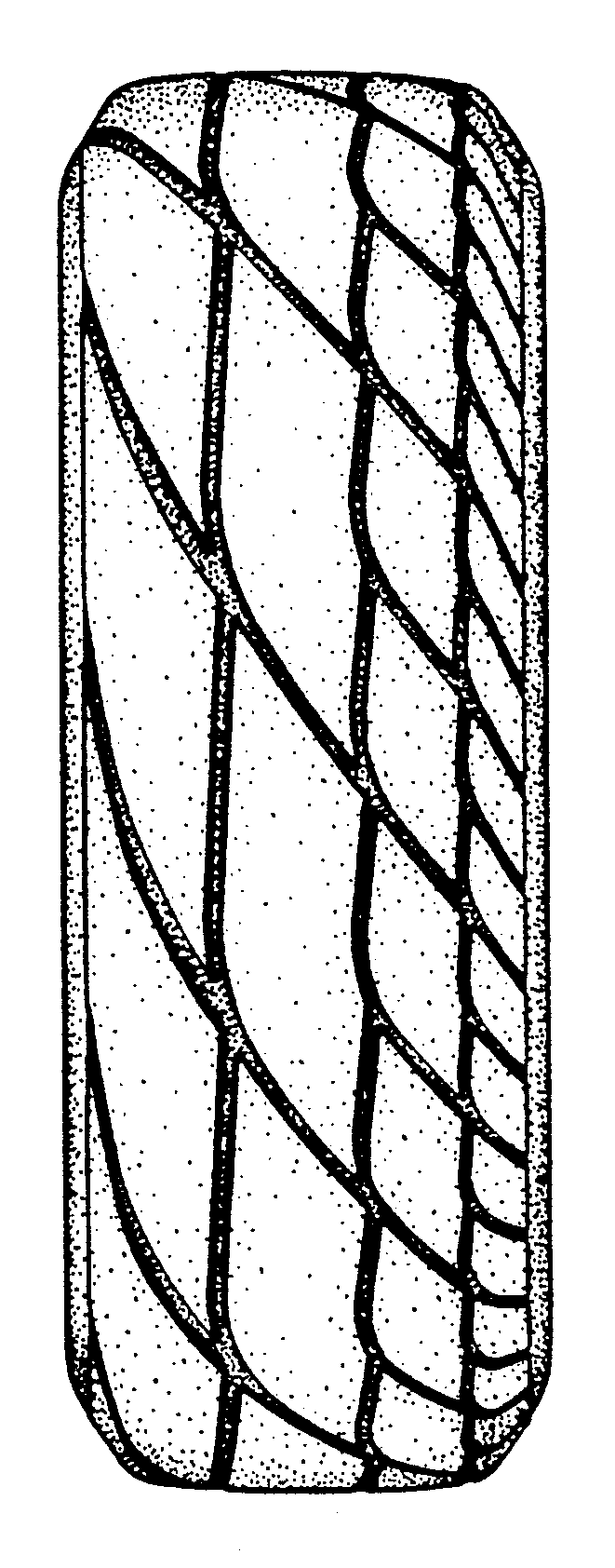
| 505 | Asymmetrical type: |
| | This subclass is indented under subclass 502. Design with tread pattern that shows a different and
unbalanced tread pattern configuration on either side of the assumed
equatorial centerline.
Typical asymmetrical tire tread. SEE OR SEARCH CLASS:
| 152, | Resilient Tires and Wheels,
subclass 209.8 , 209.9, 455, and 456 for asymmetric tire. |
|
| | |
| 507 | Repeating shape: |
| | This subclass is indented under subclass 505. Design characterized by one or more geometric shapes
that repeat throughout the tread surface.
SEE OR SEARCH THIS CLASS, SUBCLASS:
| 539, | for directional type tire tread with repeating shape. |
| 574, | for nondirectional type tire tread with repeating
shape. |
|
| | |
| 508 | Triangle: |
| | This subclass is indented under subclass 507. Design characterized by tread element having a three-sided
shape.
SEE OR SEARCH THIS CLASS, SUBCLASS:
| 540, | for directional type tire tread with repeating triangle. |
| 575, | for nondirectional type tire with repeating triangle. |
|
| | |
| 509 | Circle or oval: |
| | This subclass is indented under subclass 507. Design characterized by tread element having a round
or ovoid shape.
SEE OR SEARCH THIS CLASS, SUBCLASS:
| 541, | for directional type tire tread with repeating circle
or oval. |
| 576, | for nondirectional type tire with repeating circle
or oval. |
|
| | |
| 510 | Square or rectangle: |
| | This subclass is indented under subclass 507. Design characterized by tread element having four sides
and four right angles.
SEE OR SEARCH THIS CLASS, SUBCLASS:
| 542, | for directional type tire tread with repeating square
or rectangle. |
| 577, | for nondirectional type tire with repeating square
or rectangle. |
|
| | |
| 511 | Diamond or oblique rectangle: |
| | This subclass is indented under subclass 507. Design characterized by tread element or elements having
four sides and two acute and two obtuse angles.
SEE OR SEARCH THIS CLASS, SUBCLASS:
| 543, | for directional type tire tread with repeating diamond
or oblique rectangle. |
| 578, | for nondirectional type tire with repeating diamond
or oblique rectangle. |
|
| | |
| 512 | Discrete tread blocks or ribs arrayed on a plain surface: |
| | This subclass is indented under subclass 505. Design characterized by individual block-shaped tread
elements or individual circumferential strips that protrude from
a substantially flat background.
| | (1)
Note. May include an inconsequential groove configuration.
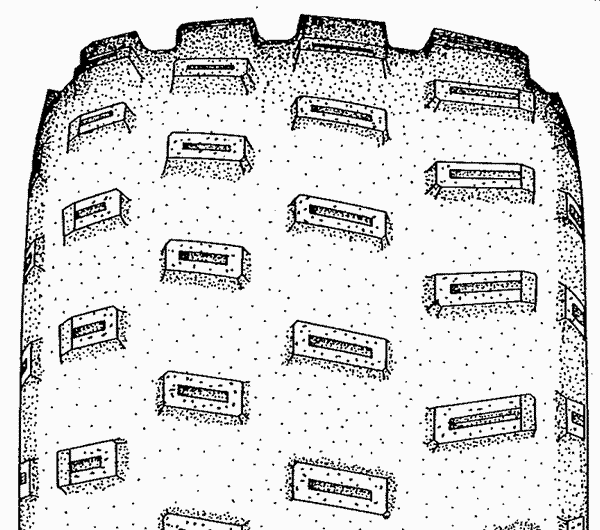
Example of discrete tread blocks arrayed on a plain asymmetricaltire tread surface. | SEE OR SEARCH THIS CLASS, SUBCLASS:
| 544, | for directional type tire tread with tread block
or rib array. |
| 579, | for nondirectional type tire with tread block or
rib array. |
|
| | |
| 513 | Tessellated: |
| | This subclass is indented under subclass 505. Design characterized by an individual tread element or
elements placed or rotated into a mosaic type configuration and
having a generally consistent pattern of voids between tread elements.
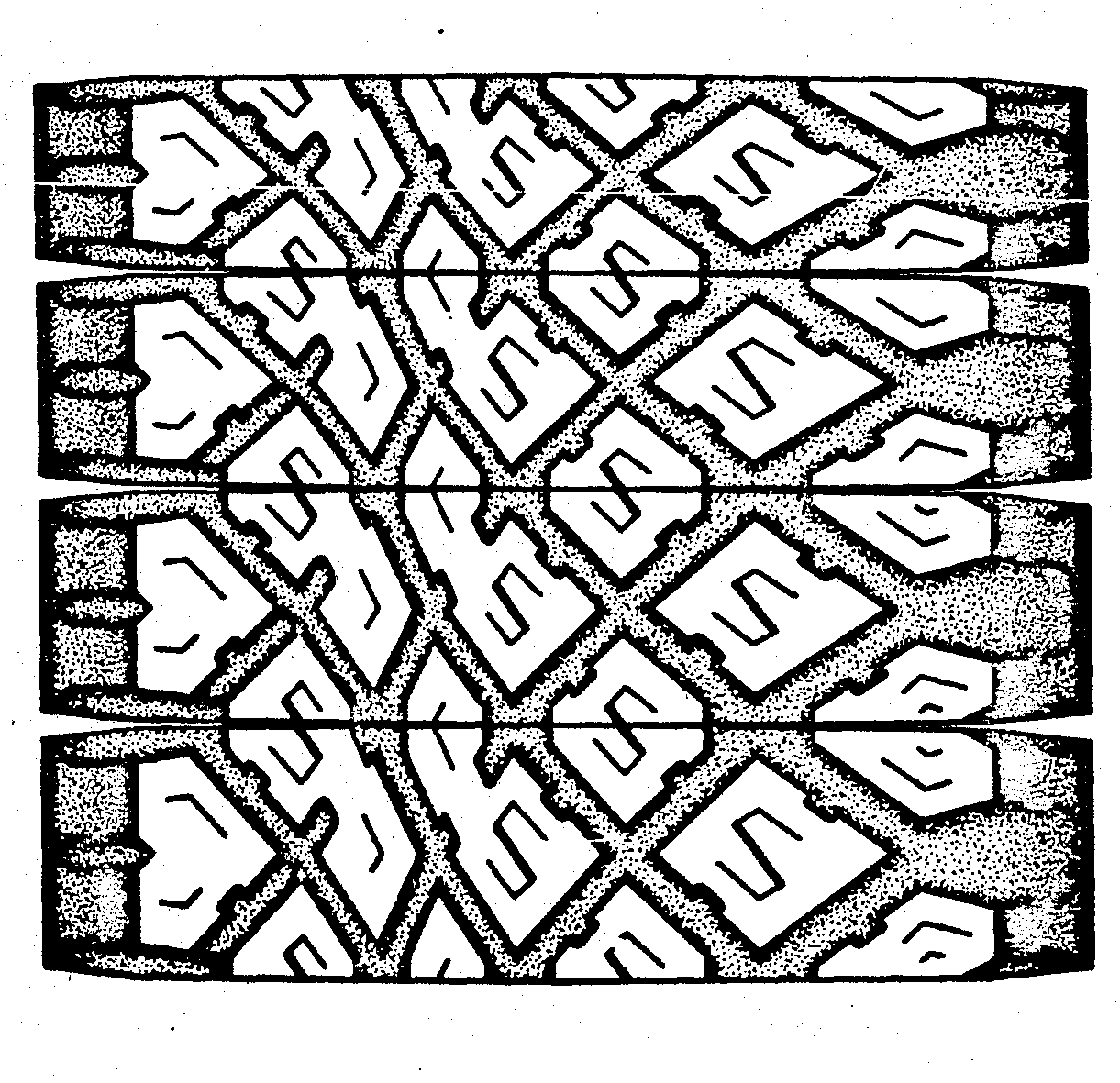
Example of tessellated, asymmetrical type tire tread. SEE OR SEARCH THIS CLASS, SUBCLASS:
| 545, | for directional type tire tread with tessellated
or mosaic pattern. |
| 580, | for nondirectional type tire tread with tessellated
pattern. |
|
| | |
| 514 | Circumferential groove width at least 10 percent of tread
width: |
| | This subclass is indented under subclass 505. Design that shows one or more circumferential channels
or furrows of substantial depth with a width that appears to be
at least 10 percent of the roadway contact surface.
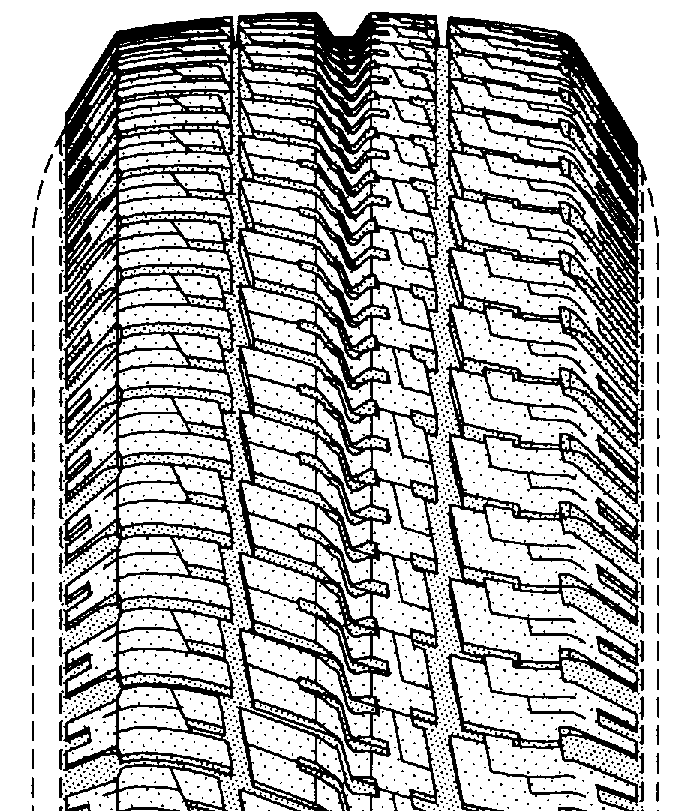
Example of an asymmetrical type tire tread having a circumferentialgroove width at least 10 percent of tread width. SEE OR SEARCH THIS CLASS, SUBCLASS:
| 546, | for directional type tire tread with circumferential
groove at least 10 percent of tread width. |
| 581, | for nondirectional type tire with circumferential
groove at least 10 percent of tread width. |
|
| | |
| 515 | Uninterrupted circumferential groove: |
| | This subclass is indented under subclass 505. Design that shows at least one major circumferential
groove with sides that are continuous and not intersected by lateral
or diagonal grooves.
| | (1)
Note. Groove intersection by sipes or notches is not considered. |
SEE OR SEARCH THIS CLASS, SUBCLASS:
| 547, | for directional type tire tread with uninterrupted
circumferential groove. |
| 582, | for nondirectional type tire with uninterrupted
circumferential groove. |
|
| | |
| 516 | Zigzag type: |
| | This subclass is indented under subclass 515. Design that shows an uninterrupted circumferential groove
or grooves that turn sharply in alternating directions. |
| | |
| 517 | Straight sides: |
| | This subclass is indented under subclass 515. Design that shows the sides of the major circumferential
groove(s) parallel with one another and with the outer edges of
the tire tread. |
| | |
| 518 | Notchless: |
| | This subclass is indented under subclass 517. Design that shows no notch or sipe, minor groove, or
other indentation in the major circumferential groove. |
| | |
| 519 | Uninterrupted circumferential rib: |
| | This subclass is indented under subclass 505. Design having a continuous major circumferential rib
and which may contain notches or sipes that do not fully transect
the rib.
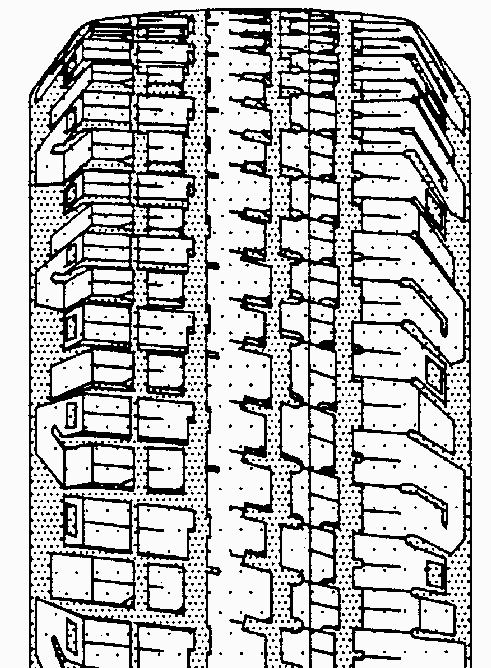
Example of uninterrupted cicumferential rib on asymmetricaltype tire tread. SEE OR SEARCH THIS CLASS, SUBCLASS:
| 551, | for directional type tire tread with uninterrupted
circumferential rib. |
| 586, | for nondirectional type tire with uninterrupted
circumferential rib. |
SEE OR SEARCH CLASS:
| 152, | Resilient Tires and Wheels, Dig. 3 for slits in tire treads. |
|
| | |
| 520 | Zigzag type: |
| | This subclass is indented under subclass 519. Design that shows an uninterrupted circumferential rib
or ribs that turn sharply in alternating directions. |
| | |
| 521 | Fully transected by sipe: |
| | This subclass is indented under subclass 519. Design that includes one or more lateral or diagonal
slits that cut completely across the major circumferential rib.
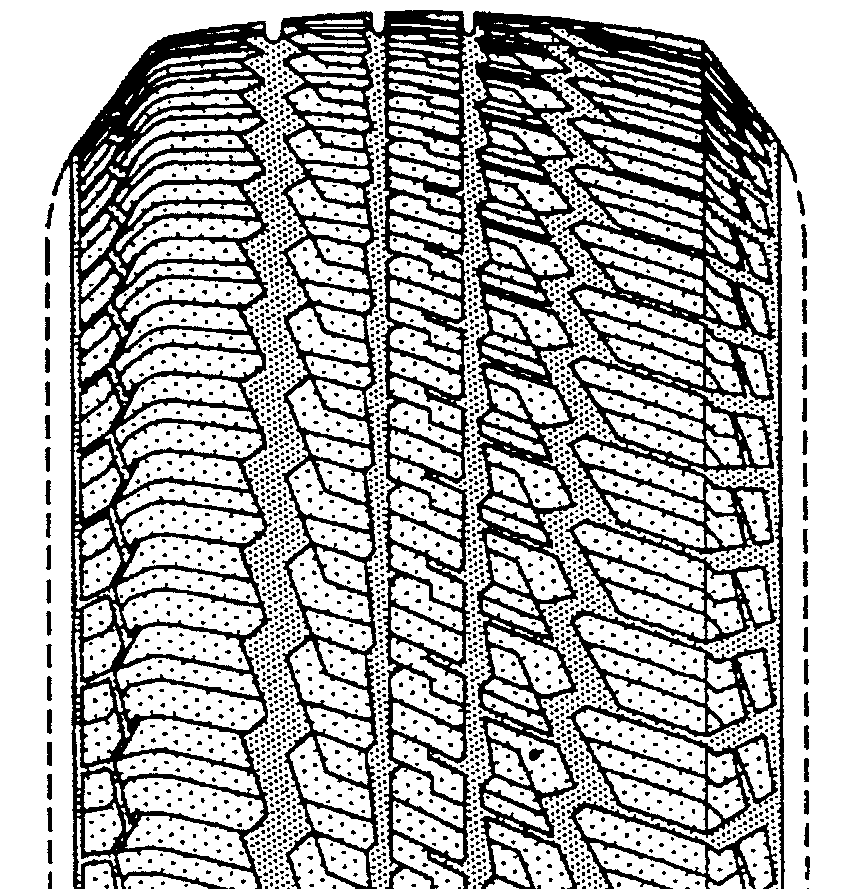
Example of uninterrupted circumferential rib fully transectedby sipe. SEE OR SEARCH CLASS:
| 152, | Resilient Tires and Wheels, Dig. 3 for slits in tire treads. |
|
| | |
| 522 | Laterally opposed notches: |
| | This subclass is indented under subclass 519. Design that includes notches located directly across
from one another along both sides of at least one major circumferential
rib, resulting in a repeating narrowed or hourglass rib configuration.
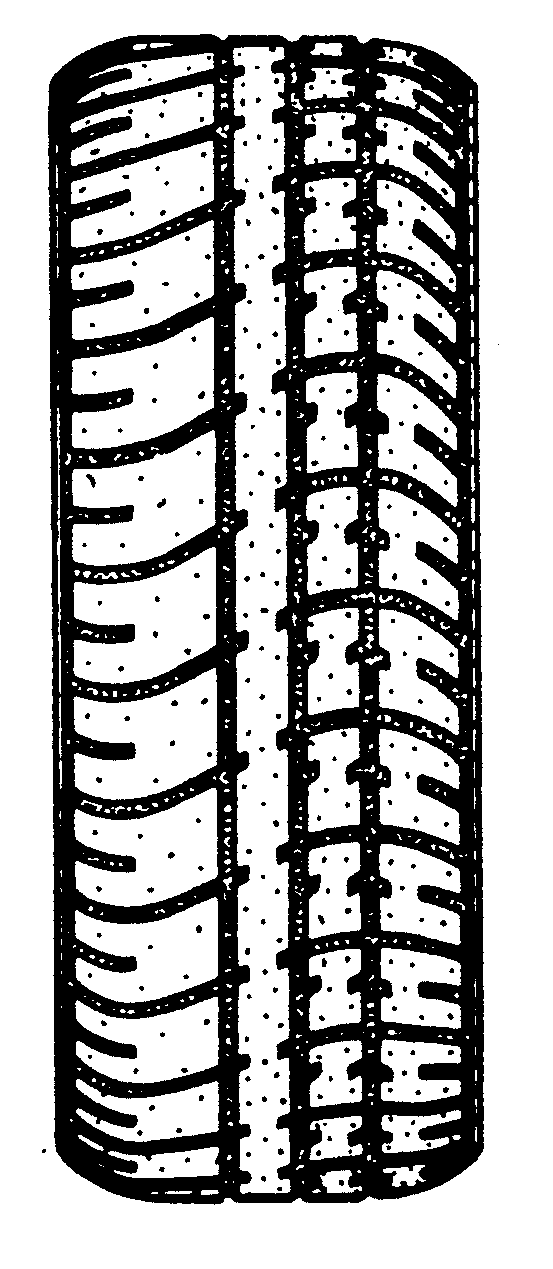
Example of latterally opposed notches in uninterrupted cicumferentialrib on asymmetrical tire tread. |
| | |
| 523 | Straight sides: |
| | This subclass is indented under subclass 519. Design wherein the sides of the major uninterrupted rib
are substantially parallel with one another and with the outer edges
of the tire tread. |
| | |
| 524 | Notchless: |
| | This subclass is indented under subclass 523. Design that shows no notch or sipe, minor groove, or
other indentation in the major circumferential rib. |
| | |
| 525 | Lateral groove: |
| | This subclass is indented under subclass 505. Design characterized by substantial void channels or
furrows in the tread that extend laterally (i.e., horizontally across)
the tread surface.
SEE OR SEARCH THIS CLASS, SUBCLASS:
| 557, | for directional type tire tread with lateral groove. |
| 592, | for nondirectional type tire with lateral groove. |
|
| | |
| 528 | Straight sides: |
| | This subclass is indented under subclass 527. Design wherein the major groove is defined by straight
sides that are substantially parallel with one another and with
the outer edges of the tire tread. |
| | |
| 530 | Diagonal groove: |
| | This subclass is indented under subclass 505. Design characterized by substantial void channels or
furrows in the tread that extend diagonally about the tread surface.
SEE OR SEARCH THIS CLASS, SUBCLASS:
| 563, | for directional type tire tread with diagonal groove. |
| 563, | for directional type tire tread with diagonal groove. |
|
| | |
| 532 | Straight sides: |
| | This subclass is indented under subclass 531. Design wherein the major groove is defined by straight
sides that are substantially parallel with one another and with
the outer edges of the tire tread. |
| | |
| 533 | Directional type: |
| | This subclass is indented under subclass 502. Design having a symmetrical pattern about the equatorial
centerline with the configuration on one side of the circumferential
centerline being a mirror image of the side opposite, generally resulting
in a "V"- or "U"-shaped tread
pattern.
| | (1)
Note. The configuration of the tread pattern shown will not
be identical to that seen when the image is rotated 180 degrees
about the center.
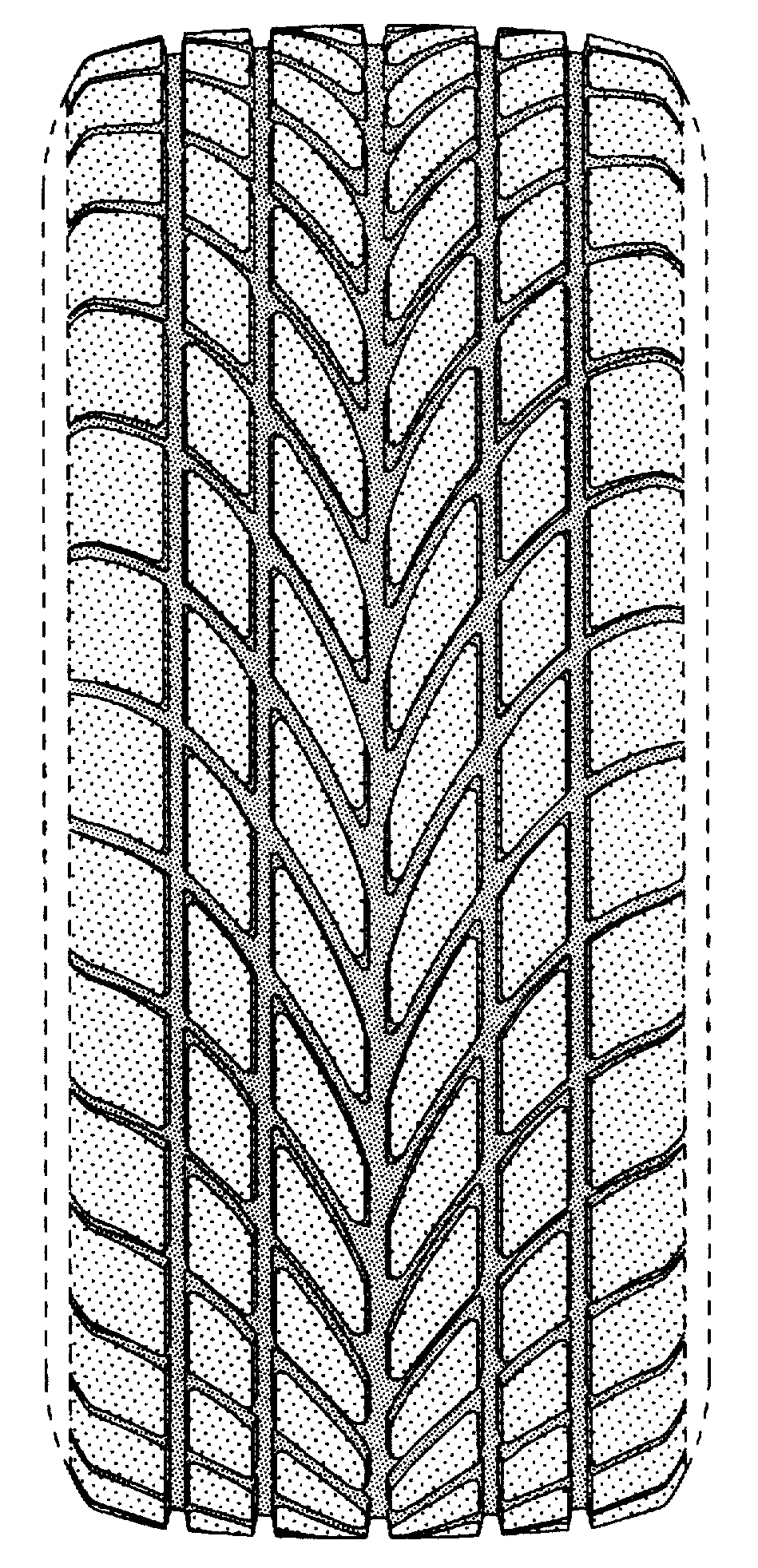
Typical directional type tire tread. | |
| | |
| 538 | Single rib: |
| | This subclass is indented under subclass 537. Design that consists of a single strip wherein all elements
are related by relatively substantial connections. |
| | |
| 539 | Repeating shape: |
| | This subclass is indented under subclass 533. Design characterized by one or more geometric shapes
that repeat throughout the tread surface.
SEE OR SEARCH THIS CLASS, SUBCLASS:
| 507, | for asymmetric type tire tread with repeating shape |
| 574, | for nondirectional type tire tread with repeating
shape |
|
| | |
| 540 | Triangle: |
| | This subclass is indented under subclass 539. Design characterized by tread element having a three-sided
shape.
SEE OR SEARCH THIS CLASS, SUBCLASS:
| 508, | for asymmetric type tire tread with repeating triangle. |
| 575, | for nondirectional type tire tread with repeating
triangle |
|
| | |
| 541 | Circle or oval: |
| | This subclass is indented under subclass 539. Design characterized by tread element having a round
or ovoid shape.
SEE OR SEARCH THIS CLASS, SUBCLASS:
| 509, | for asymmetric type tire tread with repeating circle
or oval. |
| 576, | for nondirectional type tire tread with repeating
circle or oval. |
|
| | |
| 542 | Square or rectangle: |
| | This subclass is indented under subclass 539. Design characterized by tread element having four sides
and four right angles.
SEE OR SEARCH THIS CLASS, SUBCLASS:
| 510, | for asymmetric type tire tread with repeating square
or rectangle. |
| 577, | for nondirectional tire tread with repeating square
or rectangle. |
|
| | |
| 543 | Diamond or oblique rectangle: |
| | This subclass is indented under subclass 536. Design characterized by tread element or elements having
four sides and two acute and two obtuse angles.
SEE OR SEARCH THIS CLASS, SUBCLASS:
| 511, | for asymmetric type tire tread with repeating diamond
or oblique rectangle. |
| 578, | for nondirectional type tire tread with repeating
diamond or oblique rectangle. |
|
| | |
| 544 | Discrete tread blocks or ribs arrayed on a plain surface: |
| | This subclass is indented under subclass 533. Design characterized by individual block-shaped tread
elements or individual circumferential strips that protrude from
a substantially flat background.
| | (1)
Note. May include an inconsequential groove configuration.
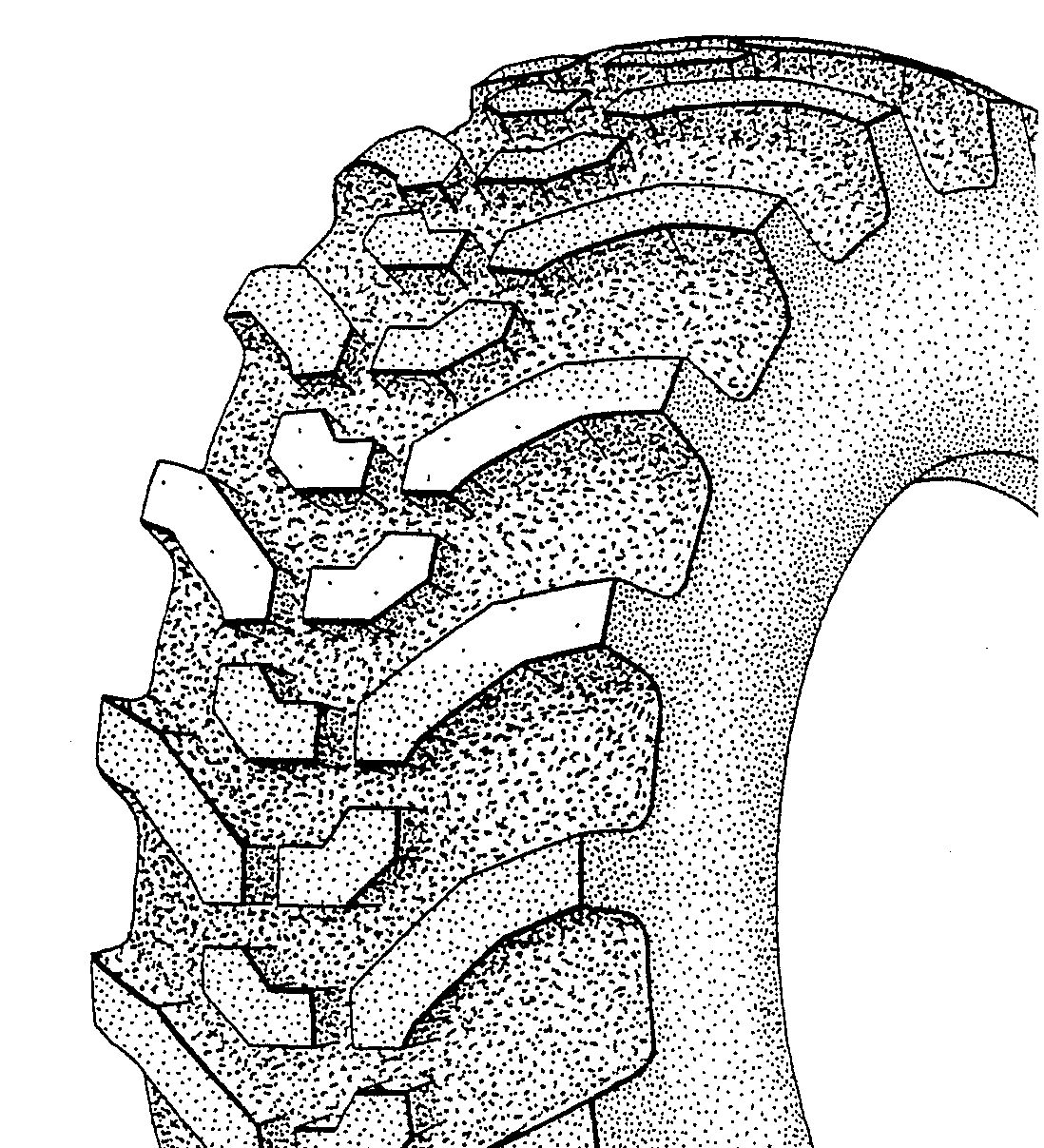
Example of discrete tread blocks arrayed on plain directionaltire surface. | SEE OR SEARCH THIS CLASS, SUBCLASS:
| 512, | for asymmetric type tire tread with discrete tread
block or rib array. |
| 579, | for nondirectional tire tread with discrete tread
block or rib array. |
|
| | |
| 545 | Tessellated: |
| | This subclass is indented under subclass 533. Design characterized by an individual tread element or
elements placed or rotated into a mosaic type configuration and
having a generally consistent pattern of voids between tread elements.
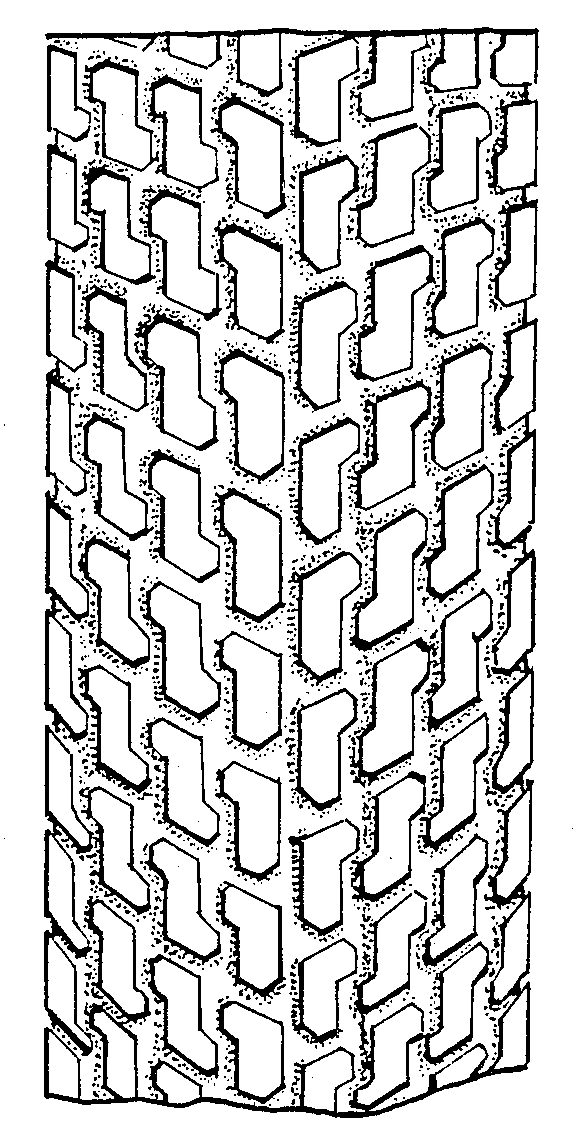
Example of tessellated tie tread. SEE OR SEARCH THIS CLASS, SUBCLASS:
| 513, | for asymmetric type tire tread with tessellated
pattern. |
| 581, | for nondirectional type tire tread with tessellated
pattern. |
|
| | |
| 546 | Circumferential groove width at least 10 percent of tread
width: |
| | This subclass is indented under subclass 533. Design that shows one or more circumferential channels
or furrows of substantial depth with a width that appears to be
at least 10 percent of the roadway contact surface.
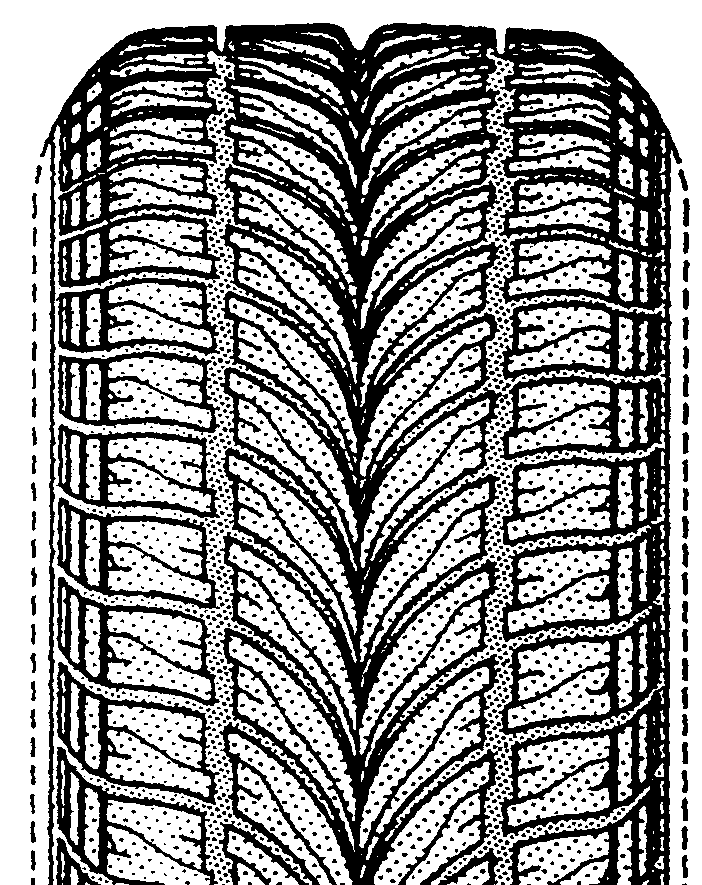
Example of directional type tire tread having equatorial circumferentialgroove width at least 10 percent of tread width. SEE OR SEARCH THIS CLASS, SUBCLASS:
| 514, | for asymmetric type tire tread with circumferential
groove at least 10 percent of tread width. |
| 581, | for nondirectional type tire tread with circumferential
groove at least 10 percent of tread width. |
|
| | |
| 547 | Uninterrupted equatorial circumferential groove: |
| | This subclass is indented under subclass 533. Design having a continuous circumferential groove along
the equatorial centerline that is not intersected by lateral or
diagonal groves.
| | (1)
Note. The intersection of groove sides solely by sipes and
or notches is not considered.
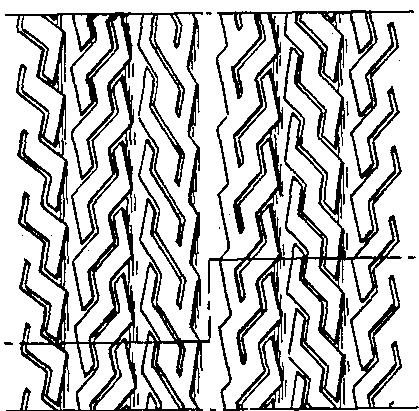
Example of directional type tire tread with uninterruptedequatorial circumferential groove. | SEE OR SEARCH THIS CLASS, SUBCLASS:
| 582, | for nondirectional type tire tread with uninterrupted
equatorial circumferential groove. |
|
| | |
| 548 | Zigzag type: |
| | This subclass is indented under subclass 547. Design that shows an equatorial circumferential groove
that turns sharply in alternating directions. |
| | |
| 549 | Straight sides: |
| | This subclass is indented under subclass 547. Design wherein the sides of the uninterrupted equatorial
groove are substantially parallel with one another and with the
outer edges of the tire tread. |
| | |
| 550 | Notchless: |
| | This subclass is indented under subclass 549. Design that shows no notch or sipe, minor groove, or
other indentation in the equatorial circumferential groove. |
| | |
| 551 | Uninterrupted equatorial circumferential rib: |
| | This subclass is indented under subclass 533. Design having a continuous circumferential rib along
the centerline of the tread surface; the rib may contain notches
or sipes that do not fully transect the rib.
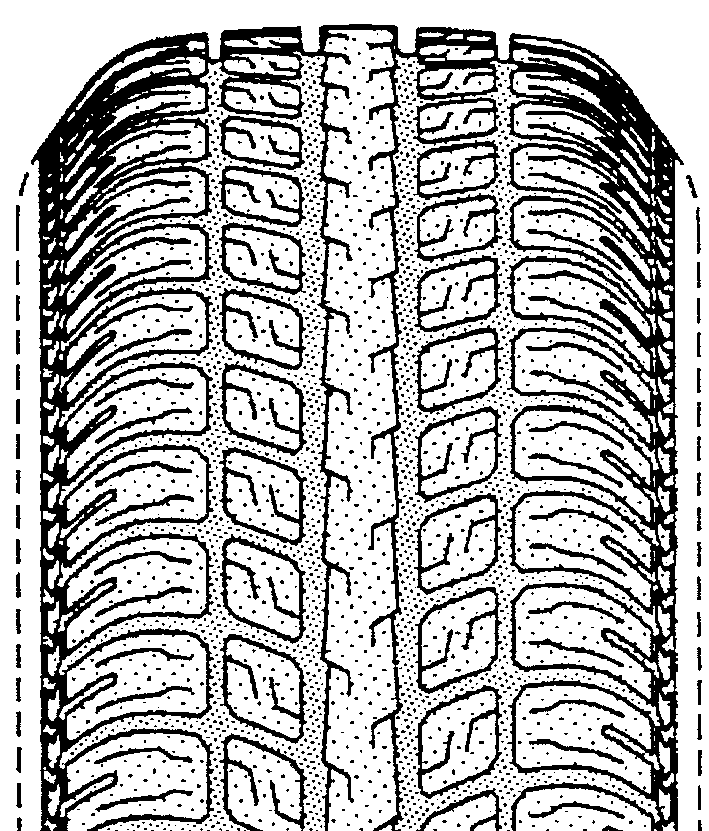
Example of directional type tire tread with uninterrupted equatorialcircumferential rib. SEE OR SEARCH THIS CLASS, SUBCLASS:
| 586, | for nondirectional type tire tread with uninterrupted
equatorial circumferential rib. |
|
| | |
| 552 | Zigzag type: |
| | This subclass is indented under subclass 551. Design that shows an equatorial circumferential rib that
turns sharply in alternating directions. |
| | |
| 553 | Fully transected by sipe: |
| | This subclass is indented under subclass 551. Design that includes one or more lateral or diagonal
slits that cut completely across the equatorial circumferential
rib.
SEE OR SEARCH CLASS:
| 152, | Resilient Tires and Wheels, Dig. 3 for slits in tire treads. |
|
| | |
| 554 | Laterally opposed notches: |
| | This subclass is indented under subclass 551. Design that includes notches located directly across
from one another along both sides of the equatorial circumferential
rib, resulting in a repeating narrowed or hourglass rib configuration. |
| | |
| 555 | Straight sides: |
| | This subclass is indented under subclass 551. Design wherein the sides of the uninterrupted equatorial
rib are substantially parallel with one another and with the outer
edges of the tire tread. |
| | |
| 556 | Notchless: |
| | This subclass is indented under subclass 555. Design that shows no notch or sipe, minor groove or other
indentation in the major circumferential rib. |
| | |
| 557 | Lateral groove: |
| | This subclass is indented under subclass 533. Design characterized by substantial void channels or
furrows in the tread that extend laterally (i.e., horizontally)
across the tread surface.
SEE OR SEARCH THIS CLASS, SUBCLASS:
| 525, | for asymmetrical type tire tread with lateral groove. |
| 592, | for nondirectional type tire tread with lateral
groove. |
|
| | |
| 561 | Straight sides: |
| | This subclass is indented under subclass 560. Design wherein the equatorial groove is defined by straight
sides that are substantially parallel with one another and with
the outer edges of the tire tread. |
| | |
| 563 | Diagonal groove: |
| | This subclass is indented under subclass 533. Design characterized by substantial void channels or
furrows in the tread that extend diagonally about the tread surface.
SEE OR SEARCH THIS CLASS, SUBCLASS:
| 530, | for asymmetrical type tire tread with diagonal groove. |
| 599, | for nondirectional type tire tread with diagonal
groove. |
|
| | |
| 565 | Straight sides: |
| | This subclass is indented under subclass 564. Design wherein the equatorial groove is defined by straight
sides that are substantially parallel with one another and with
the outer edges of the tire tread. |
| | |
| 567 | Straight sides: |
| | This subclass is indented under subclass 566. Design wherein the equatorial groove is defined by straight
sides that are substantially parallel with one another and with
the outer edges of the tire tread. |
| | |
| 568 | Nondirectional type: |
| | This subclass is indented under subclass 502. Design that discloses a symmetrical pattern about the
equatorial centerline with the configuration on one side of the
centerline being an inverted mirror image of the side opposite.
| | (1)
Note. The configuration of the tread pattern shown will be
identical to that seen when the tire is rotated 180 degrees about
the center.
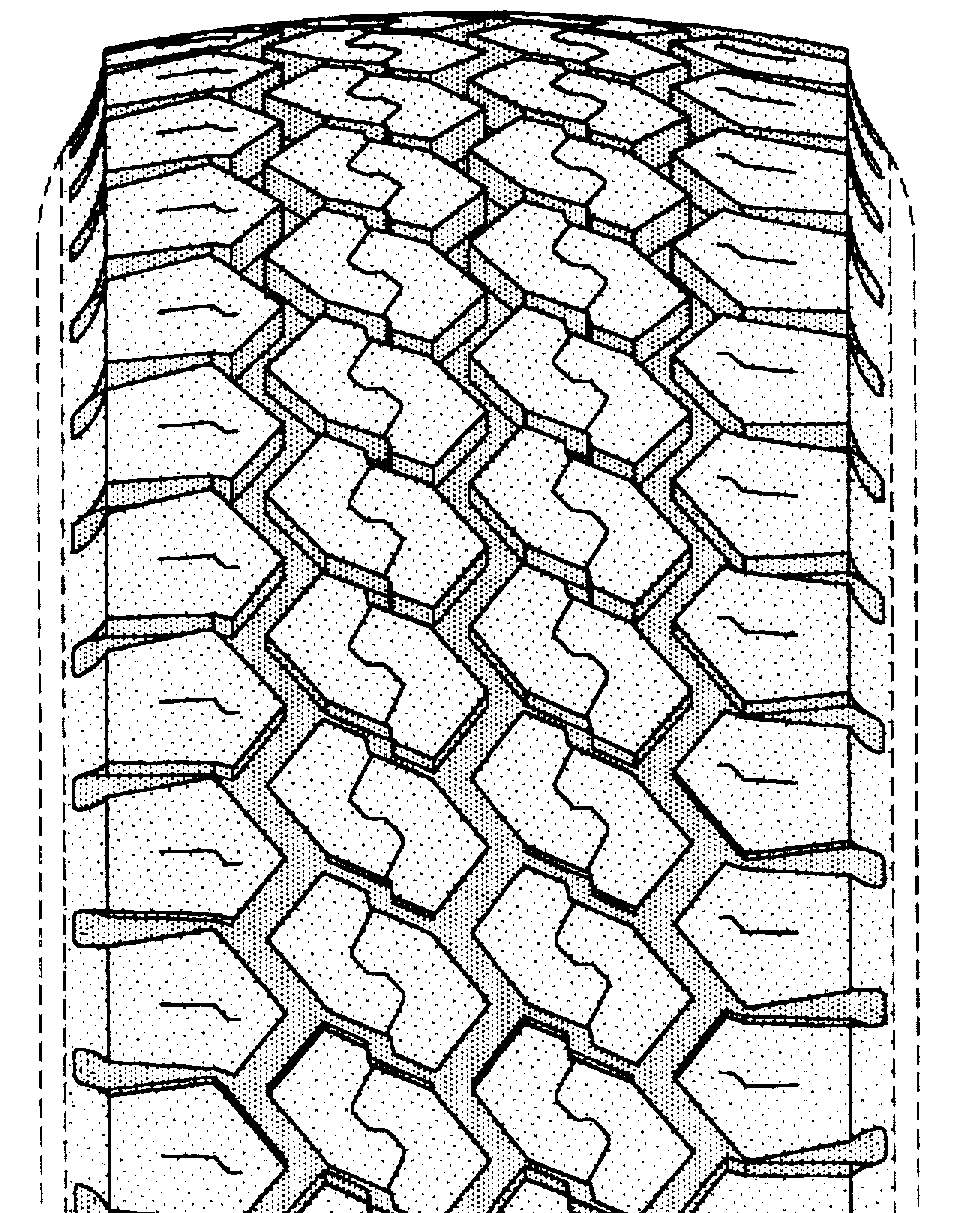
Typical nondirectional type tire tread. | |
| | |
| 573 | Single rib: |
| | This subclass is indented under subclass 572. Design that consists of a single strip wherein all elements
are related by relatively substantial connections. |
| | |
| 574 | Repeating shape: |
| | This subclass is indented under subclass 568. Design characterized by one or more simple geometric
shapes that repeat throughout the tread surface.
SEE OR SEARCH THIS CLASS, SUBCLASS:
| 507, | for asymmetric type tire tread with repeating shape. |
| 539, | for directional type tire tread with repeating shape. |
|
| | |
| 575 | Triangle: |
| | This subclass is indented under subclass 574. Design characterized by tread element having a three-sided
shape.
SEE OR SEARCH THIS CLASS, SUBCLASS:
| 508, | for asymmetric type tire tread with repeating shape. |
| 540, | for directional type tire tread with repeating shape. |
|
| | |
| 576 | Circle or oval: |
| | This subclass is indented under subclass 574. Design characterized by tread element having a round
or ovoid shape.
SEE OR SEARCH THIS CLASS, SUBCLASS:
| 509, | for asymmetric type tire tread with repeating circle
or oval. |
| 541, | for directional type tire tread with repeating shape. |
|
| | |
| 577 | Square or rectangle: |
| | This subclass is indented under subclass 574. Design characterized by tread element having four sides
and four right angles.
SEE OR SEARCH THIS CLASS, SUBCLASS:
| 510, | for asymmetric type tire tread with repeating square
or rectangle. |
| 542, | for directional type tire tread with repeating square
or rectangle. |
|
| | |
| 578 | Diamond or oblique rectangle: |
| | This subclass is indented under subclass 574. Design characterized by tread element or elements having
four sides and two acute and two obtuse angles.
SEE OR SEARCH THIS CLASS, SUBCLASS:
| 511, | for asymmetric type tire tread with repeating diamond
or oblique rectangle. |
| 543, | for directional type tire tread with repeating diamond
or oblique rectangle. |
|
| | |
| 579 | Discrete tread blocks or ribs arrayed on plain surface: |
| | This subclass is indented under subclass 568. Design characterized by individual block-shaped tread
elements or individual circumferential strips that protrude from
a substantially flat background.
| | (1)
Note. May include an inconsequential groove configuration.
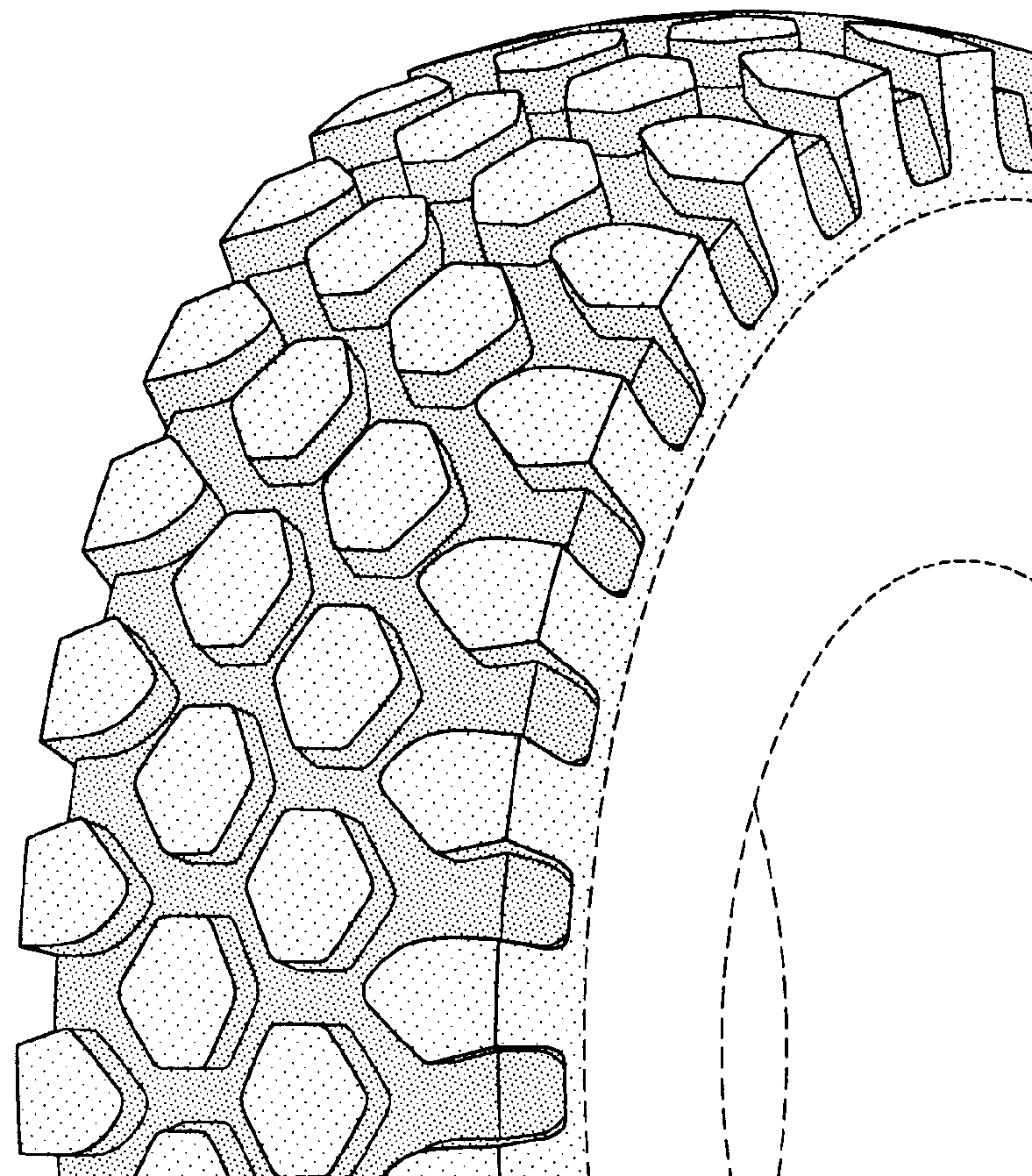
Example of discrete tread blocks arrayed on plain, nondirectionaltype tire tread surface. | SEE OR SEARCH THIS CLASS, SUBCLASS:
| 512, | for asymmetric type tire tread with discrete tread
block or rib array. |
| 544, | for directional type tire tread with discrete tread
block or rib array. |
|
| | |
| 580 | Tessellated: |
| | This subclass is indented under subclass 568. Design characterized by an individual tread element or
elements placed or rotated into a mosaic type configuration and
having a generally consistent pattern of voids between tread elements.
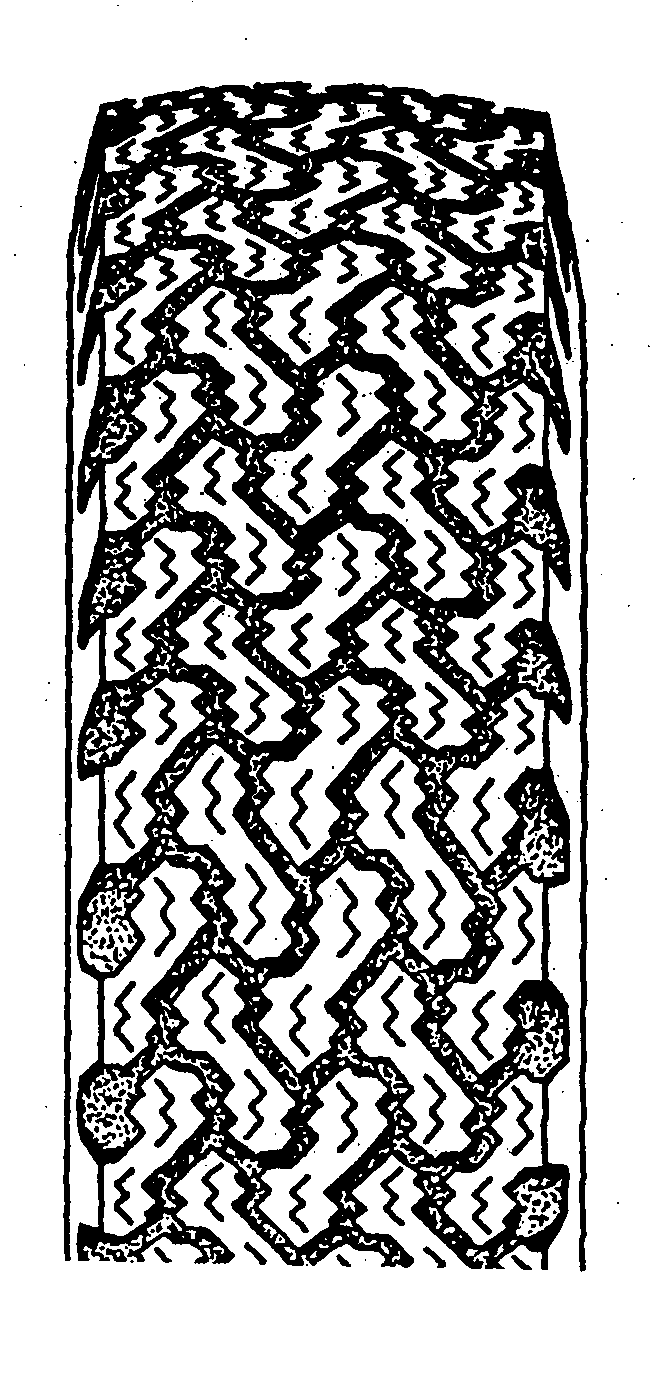
Example of tessellated nondirectional type tire tread. SEE OR SEARCH THIS CLASS, SUBCLASS:
| 513, | for asymmetrical type tire tread with tessellated
pattern. |
| 545, | for directional type tire tread with tessellated
pattern. |
|
| | |
| 581 | Circumferential groove width at least 10 percent of tread
width: |
| | This subclass is indented under subclass 568. Design that shows one or more circumferential channels
or furrows of substantial depth with a width that appears to be
at least 10 percent of the roadway contact surface.
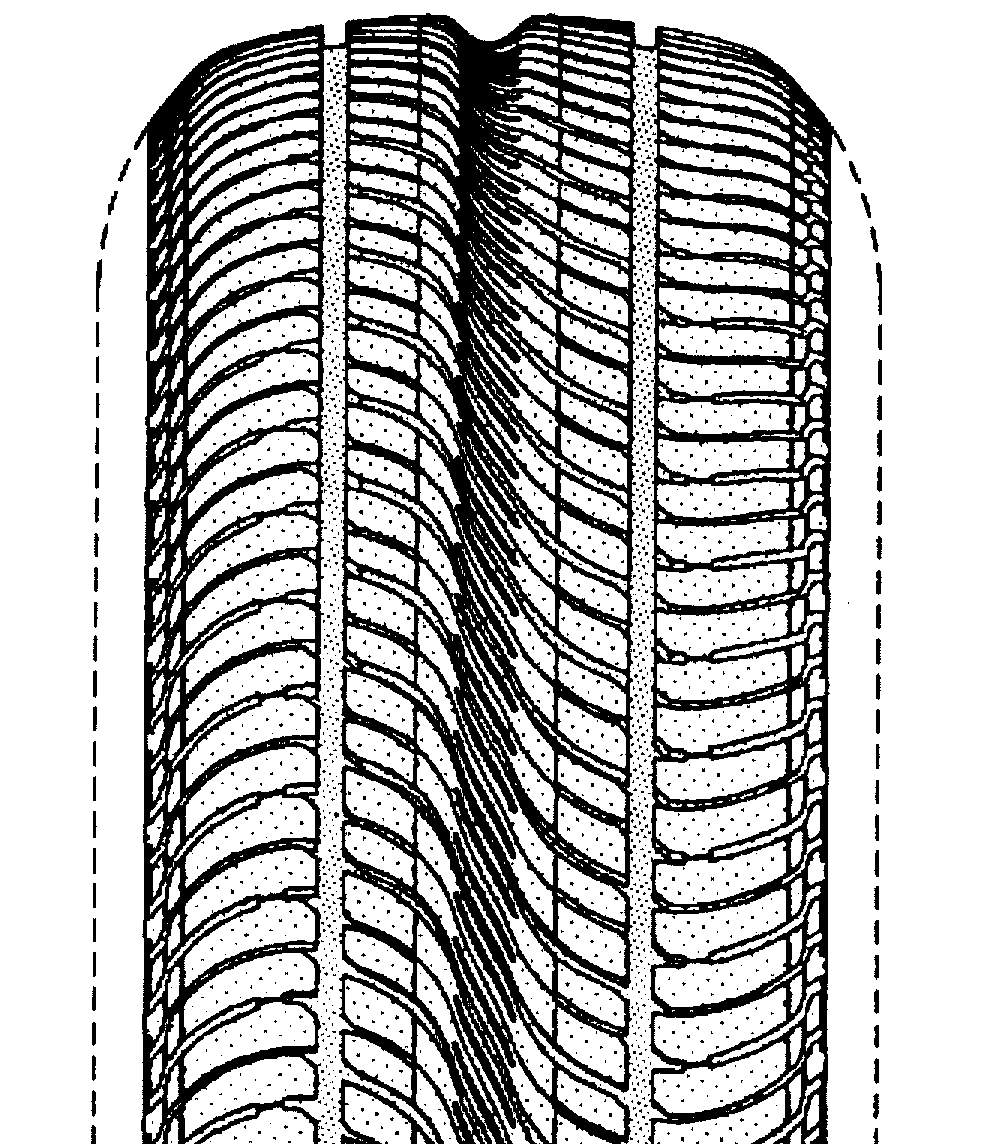
Example of nondirectional type tire tread with equatorialcircumferential groove having groove width at least 10 percent oftread width. SEE OR SEARCH THIS CLASS, SUBCLASS:
| 514, | for asymmetric type tire tread with circumferential
groove at least 10 percent of tread width. |
| 546, | for directional type tire tread with circumferential
groove at least 10 percent of tread width. |
|
| | |
| 582 | Uninterrupted equatorial circumferential groove: |
| | This subclass is indented under subclass 568. Design having a continuous circumferential groove along
the equatorial centerline that is not intersected by lateral or
diagonal groves.
| | (1)
Note. The intersection of groove sides solely by sipes and
or notches is not considered.
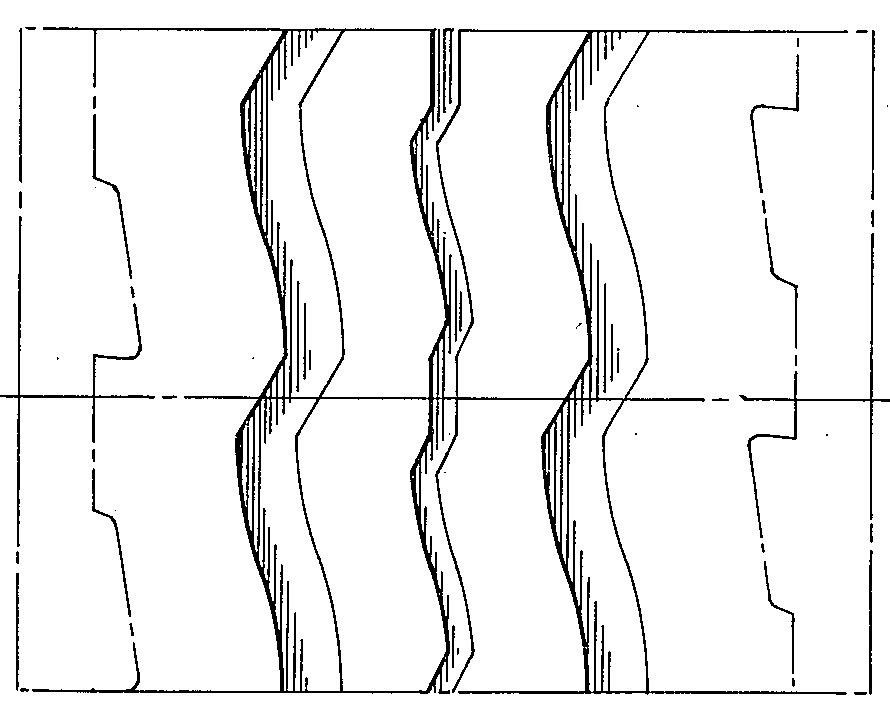
Example of nondirectional type tire tread with uninterruptedequatorial circumferential groove. | SEE OR SEARCH THIS CLASS, SUBCLASS:
| 515, | for asymmetric type tire tread with uninterrupted
circumferential groove. |
| 547, | for directional type tire tread with uninterrupted
circumferential groove. |
|
| | |
| 583 | Zigzag type: |
| | This subclass is indented under subclass 582. Design that shows an equatorial circumferential groove
that turns sharply in alternating directions. |
| | |
| 584 | Straight sides: |
| | This subclass is indented under subclass 582. Design wherein the sides of the uninterrupted equatorial
groove are substantially parallel with one another and with the
outer edges of the tire tread. |
| | |
| 585 | Notchless: |
| | This subclass is indented under subclass 584. Design that shows no notch or sipe, minor groove, or
other indentation in the uninterrupted equatorial groove. |
| | |
| 586 | With uninterrupted equatorial circumferential rib: |
| | This subclass is indented under subclass 568. Design having a continuous circumferential rib along
the centerline of the tread surface and which may contain notches
or sipes that do not fully transect the rib.
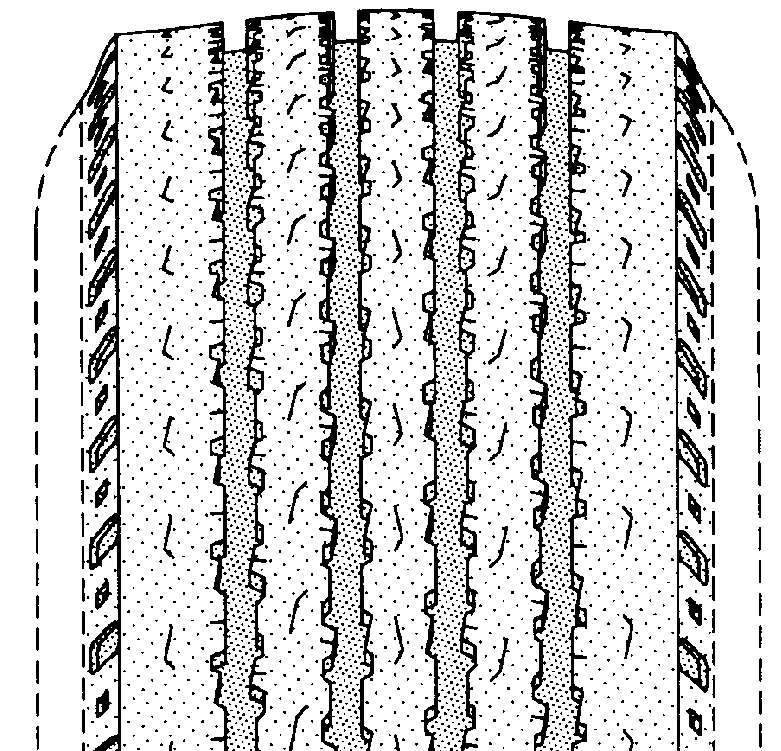
Example of nondirectional type tire tread with uninterruptedequatorial circumferential rib. SEE OR SEARCH THIS CLASS, SUBCLASS:
| 519, | for asymmetric type tire tread with uninterrupted
circumferential rib. |
| 551, | for directional type tire tread with uninterrupted
circumferential rib. |
SEE OR SEARCH CLASS:
| 152, | Resilient Tires and Wheels, Dig. 3 for slits in tire treads. |
|
| | |
| 587 | Zigzag type: |
| | This subclass is indented under subclass 586. Design that shows an equatorial circumferential rib that
turns sharply in alternating directions. |
| | |
| 588 | Fully transected by sipe: |
| | This subclass is indented under subclass 586. Design that includes one or more lateral or diagonal
slits that cut completely across the equatorial circumferential
rib.
SEE OR SEARCH CLASS:
| 152, | Resilient Tires and Wheels, Dig. 3 for slits in tire treads. |
|
| | |
| 589 | Laterally opposed notches: |
| | This subclass is indented under subclass 586. Design that includes notches located directly across
from one another along both sides of the equatorial circumferential
rib, resulting in a repeating narrowed or hourglass rib configuration. |
| | |
| 590 | Straight sides: |
| | This subclass is indented under subclass 586. Design wherein the sides of the uninterrupted equatorial
rib are substantially parallel with one another and with the outer
edges of the tire tread. |
| | |
| 591 | Notchless: |
| | This subclass is indented under subclass 590. Design that shows no notch or sipe, minor groove or other
indentation in the major circumferential rib. |
| | |
| 592 | Lateral groove: |
| | This subclass is indented under subclass 568. Design characterized by substantial void channels or
furrows in the tread that extend laterally (i.e., horizontally)
across the tread surface.
SEE OR SEARCH THIS CLASS, SUBCLASS:
| 525, | for asymmetrical type tire tread with lateral groove. |
| 557, | for directional type tire tread with lateral groove. |
|
| | |
| 595 | Straight sides: |
| | This subclass is indented under subclass 594. Design wherein the sides of the equatorial uninterrupted
groove are parallel with one another and with the outer edges of
the tire tread. |
| | |
| 597 | Straight sides: |
| | This subclass is indented under subclass 596. Design wherein the sides of the major equatorial groove
are substantially parallel with one another and with the outer edges
of the tire tread. |
| | |
| 599 | Diagonal groove: |
| | This subclass is indented under subclass 568. Design characterized by a substantially void channel
or furrow that extends diagonally about the tread surface.
SEE OR SEARCH THIS CLASS, SUBCLASS:
| 530, | for asymmetrical type tire tread with diagonal groove. |
| 563, | for directional type tire tread with diagonal groove. |
|
| | |
| 601 | Straight sides: |
| | This subclass is indented under subclass 600. Design wherein the major groove is defined by straight
sides that are substantially parallel with one another and with
the outer edges of the tire tread. |
| | |
| 603 | Straight sides: |
| | This subclass is indented under subclass 602. Design wherein the equatorial circumferential groove
is defined by straight sides that are substantially parallel with
one another and with the outer edges of the tire tread. |
| | |
| 604 | Element or attachment: |
| | This subclass is indented under subclass 500. Design directed to parts or accessories for the designs
classified in subclasses 500 through 603.
SEE OR SEARCH THIS CLASS, SUBCLASS:
| 202, | for tire cover or support. |
| 204, | for wheel or wheel cover. |
| 205, | for wire type spoke. |
| 207, | for tire hub. |
| 208, | for tire rim. |
| 501, | for tire combined with wheel or wheel rim. |
|
| | |
| 605 | Sidewall or shoulder: |
| | This subclass is indented under subclass 604. Design for portion of a tire comprising the inner bead
and non-road contacting edge or side surface.
SEE OR SEARCH THIS CLASS, SUBCLASS:
| 206, | for sidewall features having air-diverting vanes
(e.g., aircraft tires). |
| 503, | for simulative tire tread. |
SEE OR SEARCH CLASS:
| 152, | Resilient Tires and Wheels,
subclasses 523 through 524for sidewall inlays or covers. |
| 244, | Aeronautics and Astronautics,
subclass 103 S for hub or sidewall air-diverting vanes on aircraft
tires. |
|
| | |
| 606 | Valve or valve stem: |
| | This subclass is indented under subclass 604. Design for the inflating stem or protruding shaft used
for inflation.
| | (1)
Note. Includes valve or stem in combination with a dust cover
or cap. |
SEE OR SEARCH CLASS:
| 152, | Resilient Tires and Wheels,
subclasses 427 through 431for valve stem and dust cap configurations. |
| D10, | Measuring, Testing or Signaling Instruments,
subclasses 85 through 86for pressure gauge. |
|
| | |
CROSS-REFERENCE ART COLLECTIONS
| 900 | TIRE TREAD INCLUDING FEATURE WITHIN GROOVE: |
| | This subclass is indented under the class definition. Collection of design and utility patent cross-reference
art showing distinct tire tread elements that are completely within
the tread groove recesses and that do not extend to the roadway
contacting surfaces.
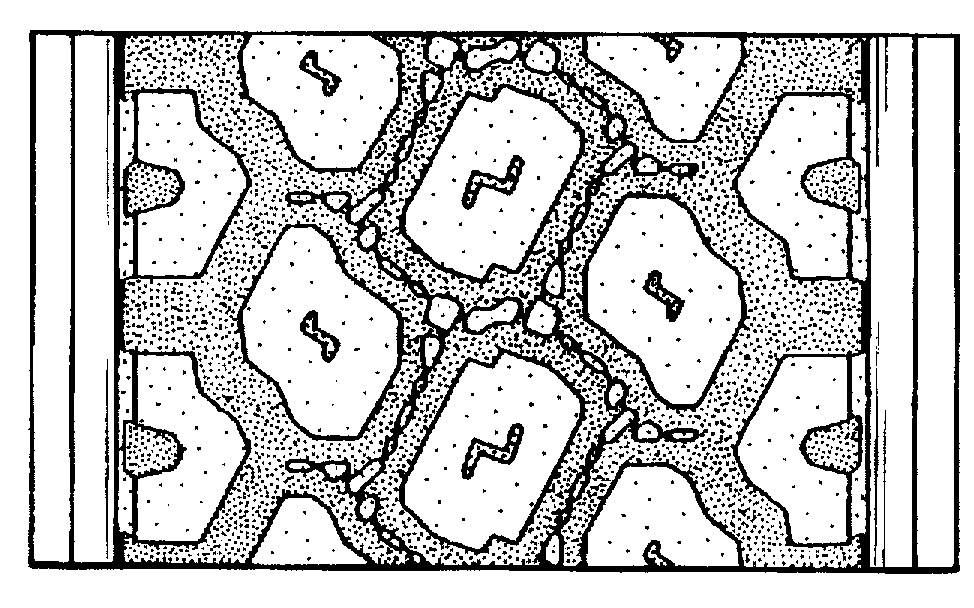
Example of tire tread including feature within groove. |
| | |
| 901 | TIRE TREAD INCLUDING TIE BAR: |
| | This subclass is indented under the class definition Collection
of design and utility patent cross-reference art showing features
that span the void between two tread blocks and that are below the
road-contacting surfaces of the tire tread.
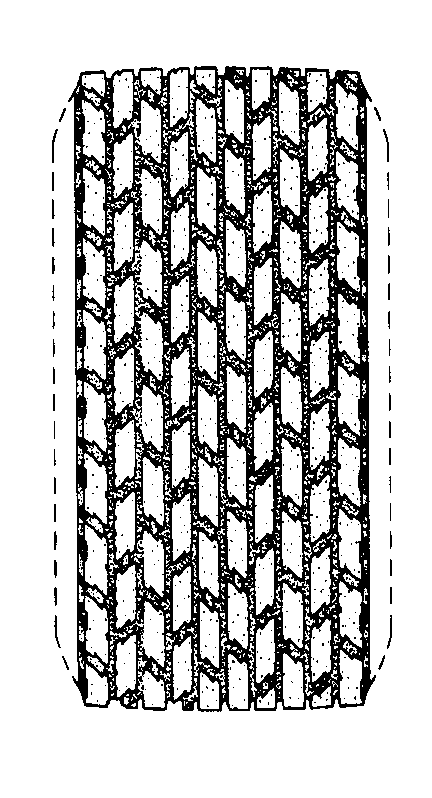
Example of tire tread including tie bar feature. SEE OR SEARCH CLASS:
| 152, | Resilient Tires and Wheels, Dig. 1 for pebble ejectors. |
|
| | |
![[Search a list of Patent Appplications for class D12]](../as.gif) CLASS D12,
CLASS D12,