![[Search a list of Patent Appplications for class D25]](../as.gif) CLASS D25, CLASS D25, | BUILDING UNITS AND CONSTRUCTION ELEMENTS |
| Click here for a printable version of this file | |
SECTION I - CLASS DEFINITION
This class provides for design patents claiming ornamental designs for:
1. Structure
2. Prefabricated Unit
3. Stair, Ladder, Scaffold or Similar Support
4. Trellis of Treillage Unit
5. Architectural Stock Material
6. Miscellaneous
| (1) Note. Design patents in this class are classified by what is claimed and shown in full lines only. Broken, hatched, or stippled lines, which may be included in design patent drawings, are considered as environment only. |
SECTION II - REFERENCES TO OTHER CLASSES
SEE OR SEARCH CLASS:
| D5, | Textile or Paper Yard Goods, Sheet Material, appropriate subclasses for cloth, textile, or wallpaper. |
| D6, | Furnishings, subclass 421 and 553-574 for structure that encloses telephone only; subclasses 582-594 for linoleum-type floor rug or tiles assembled into floor or wall covering. |
| D8, | Tools and Hardware, for fence or railing hardware; subclass 1 for plant stake; subclasses 323-329 for gate hinge; subclass 331-335 for gate latch; subclass 377 for track for sliding doors; subclass 384 for concrete wall tie. |
| D11, | Jewelry, Symbolic Insignia, and Ornaments, subclasses 143 through 163for form or flower arrangement. |
| D12, | Transportation, subclasses 101 through 106for mobile home or trailer; subclass 203 for step place for vehicle; subclass 325 for space habitat. |
| D14, | Recording, Communication, or Information Retrieval Equipment, subclass 219 for grille for audio or video equipment. |
| D21, | Games, Toys, and Sports Goods, subclasses 484 through 504for toy construction building blocks; subclasses 506-511 for toy building; subclass 802 for diving board; subclasses 815 and 816 for portable swimming or wadding pool; subclasses 834-838 for tent. |
| D23, | Environmental Heating and Cooling; Fluid Handling and Sanitary Equipment, subclass 266 for pipe, tubing, or hose; subclass 267 for roof-type gutter; subclass 308 for tiles assembled into countertop; subclass 404 for fireplace mantel. |
| D26, | Lighting, subclass 68 for lamp combined with post; subclasses 120-124 for lens or glass for lighting fixture. |
| D34, | Material of Article Handling Equipment, subclass 28 for escalator; subclass 30 for mobile stair for boarding aircraft; subclass 31 for vehicle jack or jack stand; subclass 33 for elevator. |
| D99, | Miscellaneous, subclasses 1 through 7for burial vault. |
SUBCLASSES
![[List of Patents for class D25 subclass 1]](../ps.gif) 1 1 | STRUCTURE: | ||||||||||||
| This subclass is indented under the class definition. Design for building, supporting framework, or
infrastructure.
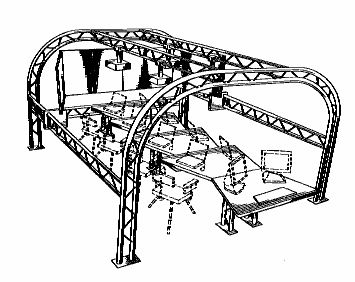
Example of a design for a structure.
SEE OR SEARCH THIS CLASS, SUBCLASS:
SEE OR SEARCH CLASS:
| |||||||||||||
| 35 | PREFABRICATED UNIT: | ||||||||||||||||||||||
| This subclass is indented under the class definition. Design for factory built-type building or enclosure.
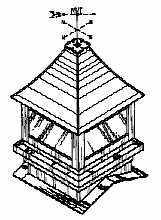
Example of a design for a prefabricated unit.
SEE OR SEARCH THIS CLASS, SUBCLASS:
SEE OR SEARCH CLASS:
| |||||||||||||||||||||||
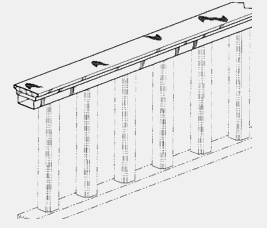
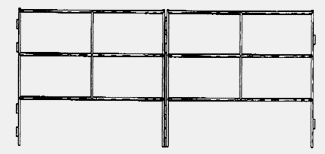
| 38.1 | Railing unit or fence: | ||||||||||
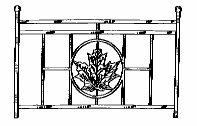
This subclass is indented under subclass 35. Design for a prefabricated unit which is a barrier or structure
to impede movement, enclose an area, or for support
which is a railing unit or fence.
SEE OR SEARCH THIS CLASS, SUBCLASS:
SEE OR SEARCH CLASS:
| |||||||||||
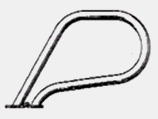
| 41.1 | Grab rail: | ||||||
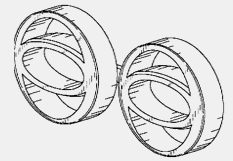
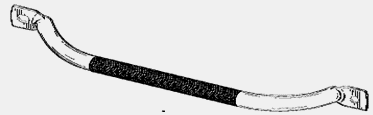
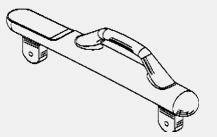
This subclass is indented under subclass 38.1. Design for a railing unit with a rail or bar which is used
for supporting a user to prevent falling.
SEE OR SEARCH THIS CLASS, SUBCLASS:
SEE OR SEARCH CLASS:
| |||||||
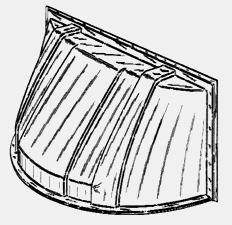
| 47.1 | Window well or window well cover: | ||
This subclass is indented under subclass 35. Design for a shield or protective guard for a window well, the
window well, or window well panel.
| |||
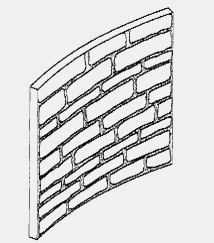
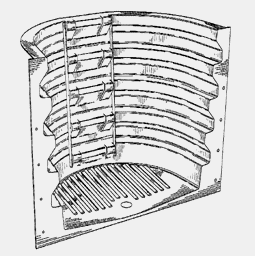
| 48.1 | Closure: | ||||||||||
This subclass is indented under subclass 35. Design for a prefabricated unit which is intended to cover
or temporarily block or close off an interior or exterior opening
of a building or area.
SEE OR SEARCH THIS CLASS, SUBCLASS:
SEE OR SEARCH CLASS:
| |||||||||||
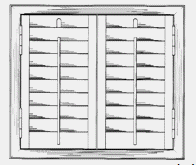
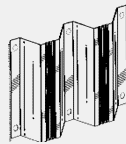
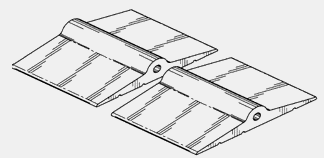
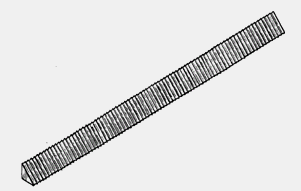
| 48.2 | Weatherstrip, threshold, or sill: | ||||
This subclass is indented under subclass 48.1. Design for a weatherstrip, threshold, or
sill or combination thereof at an entryway.
SEE OR SEARCH THIS CLASS, SUBCLASS:
| |||||
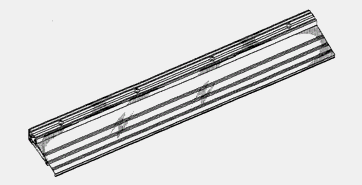
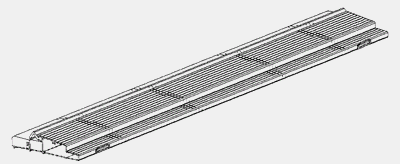
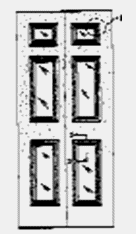
| 48.3 | For passage, e.g., door, etc.: | ||
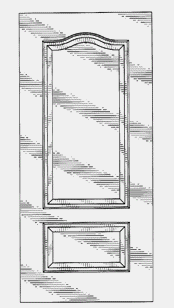
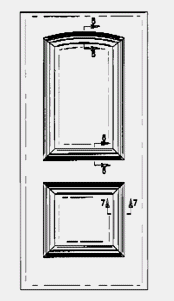
This subclass is indented under subclass 48.1. Design for an interior or exterior closure for an opening
of a building or area which allows normal entry or exit such as
a door.
| |||
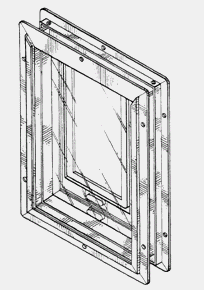
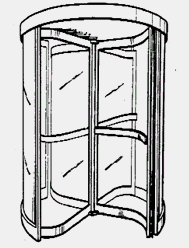
| 48.4 | Flexible or folding: | ||||||
This subclass is indented under subclass 48.3. Design for a flexible or folding interior or exterior closure
for an opening of a building or area which allows normal entry or
exit such as a door.
SEE OR SEARCH THIS CLASS, SUBCLASS:
| |||||||
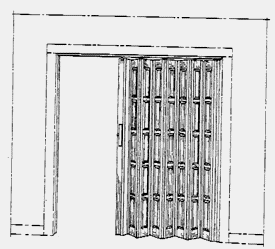
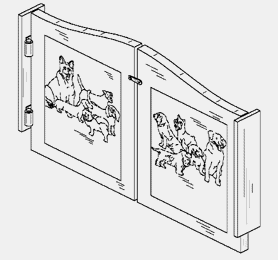
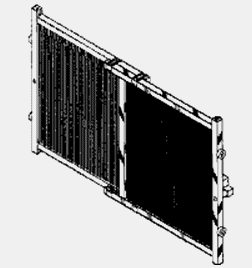
| 48.5 | Gate: | ||
This subclass is indented under subclass 48.3. Design for a moveable or temporary closure or barrier used
to close an opening in a wall, fence, or other
enclosure such as a doorway or stairway.
| |||
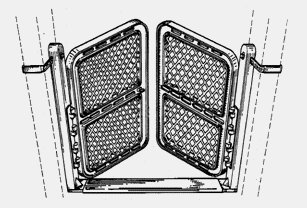
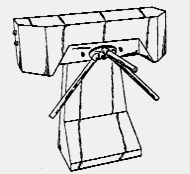
| 48.6 | Turnstile: |
| This subclass is indented under subclass 48.5. Design for a mechanical gate normally consisting of revolving
arms fixed to a post allowing one person to pass at a time or to
enforce one-way foot traffic.
Example of a design for a turnstile. | |
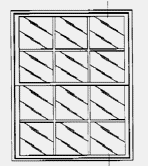
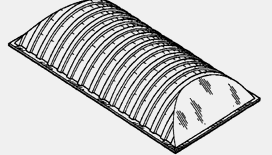
| 48.7 | Window: | ||
| This subclass is indented under subclass 48.1. Design for an opening in a wall or roof of a structure which
is normally fitted with glass to admit light and sometimes air.
Figure 1. Example of a design for a window.
Figure 2. Example of a design for a skylight. SEE OR SEARCH CLASS:
| |||
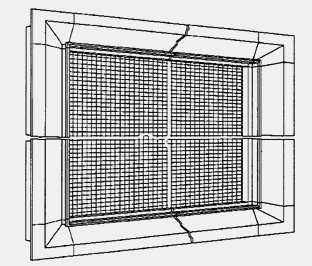
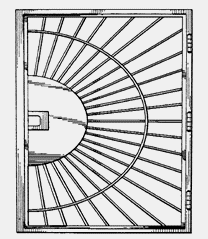
| 48.8 | Screen, grill, or guard: | ||||||||
This subclass is indented under subclass 48.1. Design for a window or door insertion for permitting air
flow, protecting from insects, etc., or
a window or door grill or guard for protecting the window or door.
SEE OR SEARCH THIS CLASS, SUBCLASS:
SEE OR SEARCH CLASS:
| |||||||||
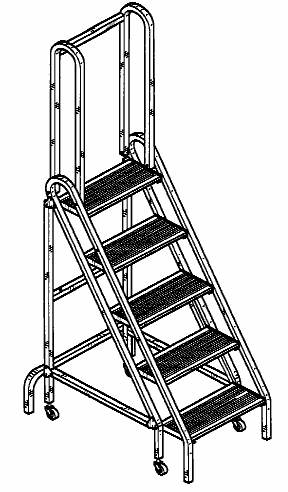
| 62 | STAIR, LADDER, SCAFFOLD, OR SIMILAR SUPPORT: | ||||||||
| This subclass is indented under the class definition. Design for flight of fixed steps or non-permanent
structure to elevate or channel human body.
Example of design for a stair.
SEE OR SEARCH CLASS:
| |||||||||
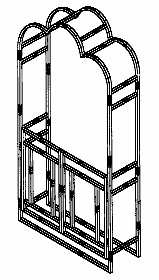
| 100 | TRELLIS OR TREILLAGE UNIT: | ||
| This subclass is indented under the class definition. Design for light framework or structure for supporting climbing
plants.
Example of a design for a trellis. SEE OR SEARCH CLASS:
| |||
| 102 | ARCHITECTURAL STOCK MATERIAL: | ||||||||||||||||
| This subclass is indented under the class definition. Design for fabrication parts for building constriction.
Example of a design for architectural stock material.
SEE OR SEARCH CLASS:
| |||||||||||||||||
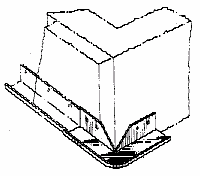
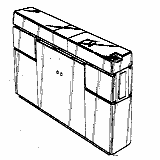
| 199 | MISCELLANEOUS: | ||
This subclass is indented under the class definition. Design directed to a building unit or construction element
not elsewhere provided for.
| |||