![[Search a list of Patent Appplications for class 546]](../as.gif) CLASS 546, CLASS 546, | ORGANIC COMPOUNDS -- PART OF THE CLASS 532-570 SERIES |
| Click here for a printable version of this file | |
SECTION I - LINES WITH OTHER CLASSES AND WITHIN THIS CLASS
In this series of classes, Class 546 is to be considered as an integral part of Class 260 (after subclass 544) and follows the schedule hierarchy retaining all pertinent definitions and class lines of Class 260.
SUBCLASSES
![[List of Patents for class 546 subclass 1]](../ps.gif) 1 1 | Hetero ring is six-membered consisting of one nitrogen and five carbons: | ||
| This subclass is indented under subclass 1. Compounds under Class 540, ... which contain a six-membered
hetero ring consisting of one nitrogen and five carbon atoms.
SEE OR SEARCH CLASS:
| |||
| 2 | Heavy metal or aluminum containing: | ||||||
This subclass is indented under subclass 1. Compounds which include aluminum or a metal having a specific
gravity greater than four.
SEE OR SEARCH THIS CLASS, SUBCLASS:
| |||||||
| 3 | Arsenic containing: |
| This subclass is indented under subclass 2. Compounds which contain arsenic. | |
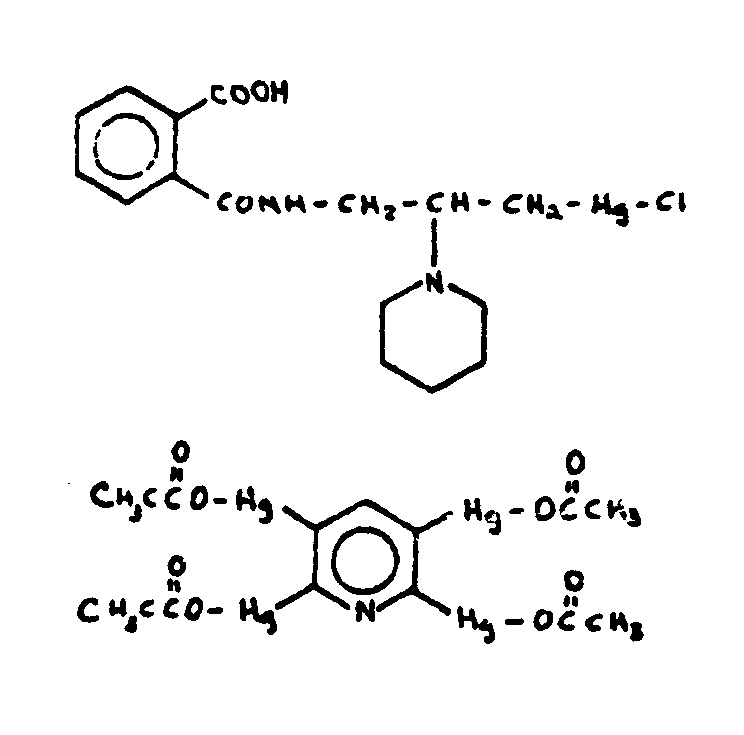
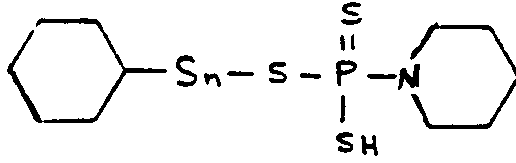
| 4 | The metal bonded directly to carbon, which carbon is a ring carbon of the six-membered hetero ring or which carbon is attached directly or indirectly to the six-membered hetero ring by nonionic bonding: | ||||
This subclass is indented under subclass 2. Compounds wherein the metal is bonded directly (a) to a
ring carbon of the six-membered hetero ring, or (b) to a carbon
atom which additionally is attached directly or indirectly to the
six-membered hetero ring by nonionic bonding.
| |||||
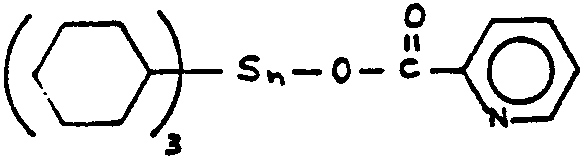
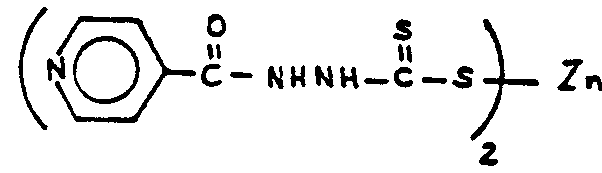
| 5 | The metal is bonded directly to chalcogen of a -C(=X)X- group, wherein the X"s are the same or diverse chalcogens, which group is attached directly or indirectly to the six-membered hetero ring by nonionic bonding: | ||||
This subclass is indented under subclass 2. Compounds wherein the metal is bonded directly to the singly
bonded chalcogen of a group, in which the X"s are the
same or diverse chalcogens (i.e., oxygen, sulfur, selenium, or tellurium),
which group is additionally attached directly or indirectly to the
six-membered hetero ring by nonionic bonding.
| |||||
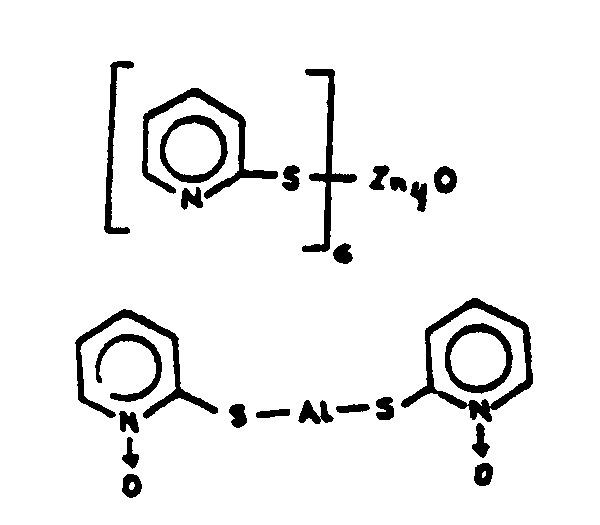
| 6 | The metal is bonded directly to chalcogen which chalcogen is attached directly or indirectly to the six-membered hetero ring by nonionic bonding: | ||
This subclass is indented under subclass 2. Compounds wherein the metal is bonded directly to a chalcogen
(i.e., oxygen, sulfur, selenium, or tellurium) which is attached directly
or indirectly to the six-membered hetero ring by nonionic bonding.
| |||
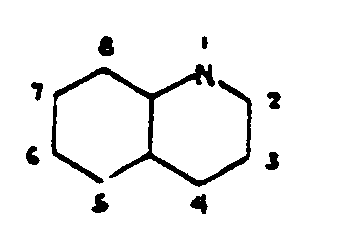
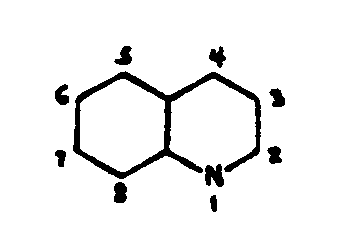
| 7 | The chalcogen is bonded directly to ring carbon of a quinoline ring system (including hydrogenated): | ||
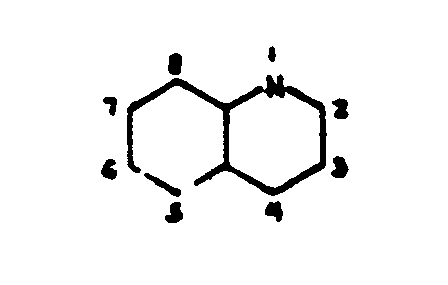
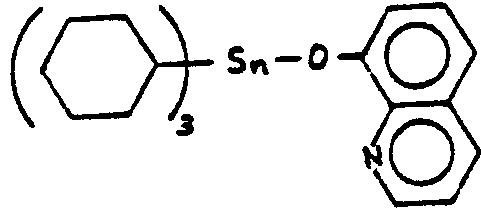
| This subclass is indented under subclass 6. Compounds wherein the chalcogen (i.e., oxygen, sulfur, selenium,
or tellurium) is attached directly to a ring carbon of a quinoline
ring system; said ring system, having the following basic structure,
may contain double bonds between ring members:
| |||
| 8 | The metal is in an anion and the six-membered hetero ring is in a cation: | ||||
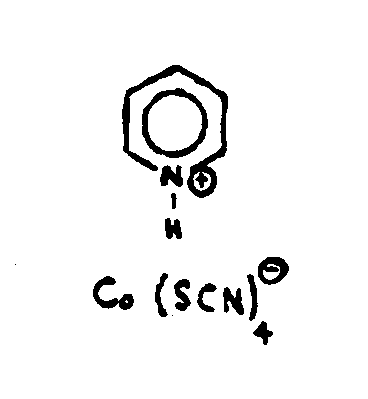
This subclass is indented under subclass 2. Compounds wherein the metal is in an anion, i.e., a group
with a negative charge, and the six-membered hetero ring is in a
cation, i.e., a group with a positive charge.
| |||||
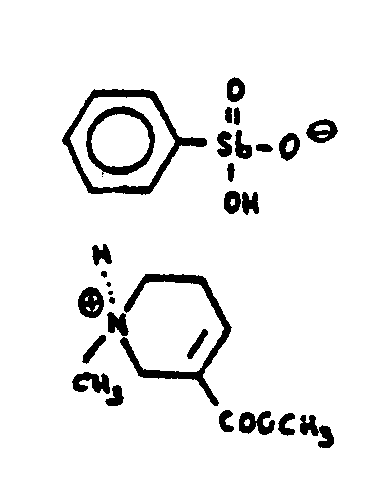
| 9 | The metal is bonded directly to halogen in the anion: | ||
This subclass is indented under subclass 8. Compounds in which the metal in the anion is bonded directly
to halogen; i.e., a metal-halogen bond.
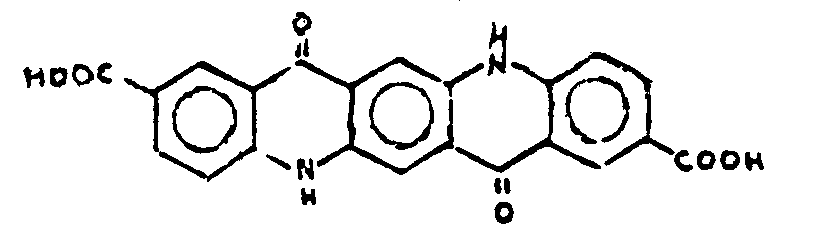
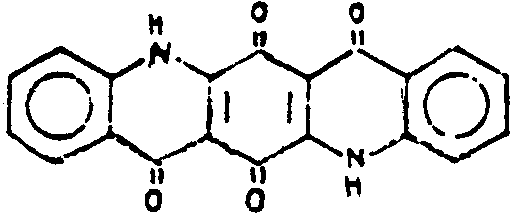
| |||
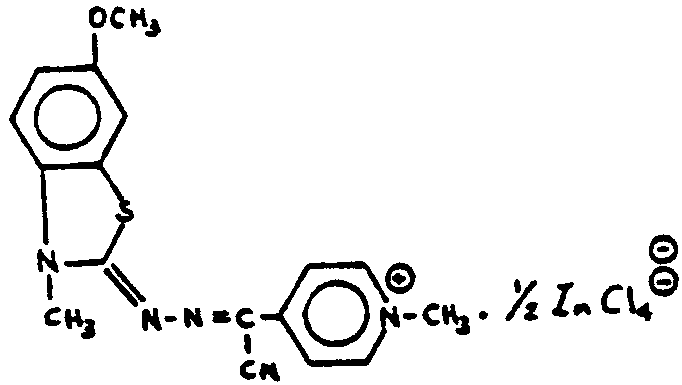
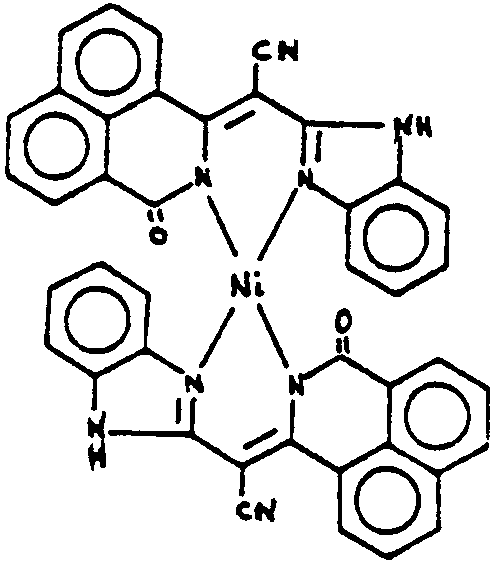
| 10 | Polycyclo ring system having the six-membered hetero ring as one of the cyclos: | ||
This subclass is indented under subclass 2. Compounds wherein the six-membered hetero ring is a cyclo
in a polycyclo ring system.
| |||
| 11 | Piperidine containing: |
| This subclass is indented under subclass 2. Compounds which contain a piperidine ring, i.e., a six-membered hetero ring consisting of one ring nitrogen and five ring carbons with no double bonds between ring members. | |
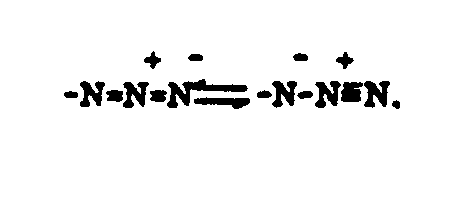
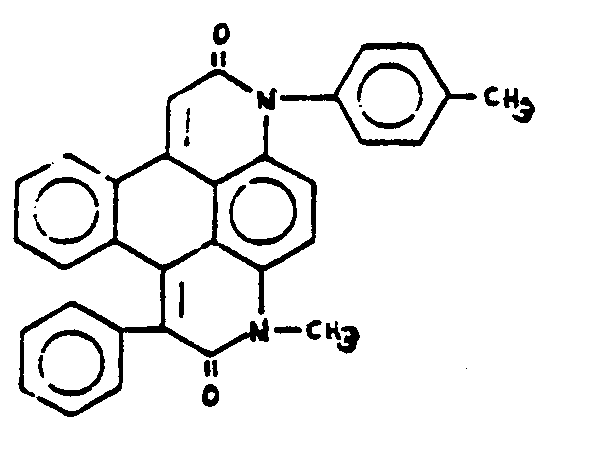
| 12 | Azide or acyclic nitrogen containing: | ||||
This subclass is indented under subclass 2. Compounds which contain an acyclic nitrogen atom or an azide
group.
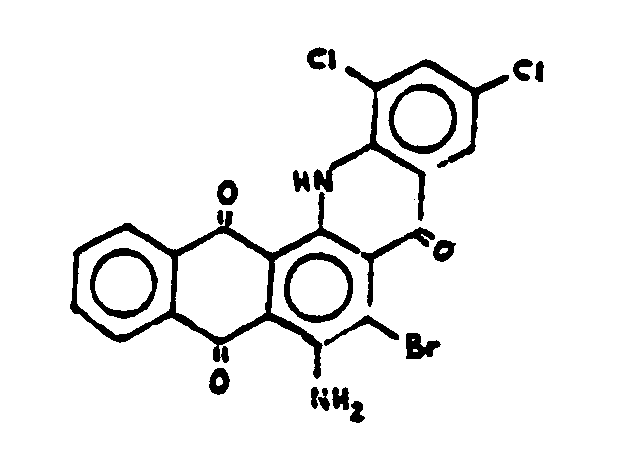
| |||||
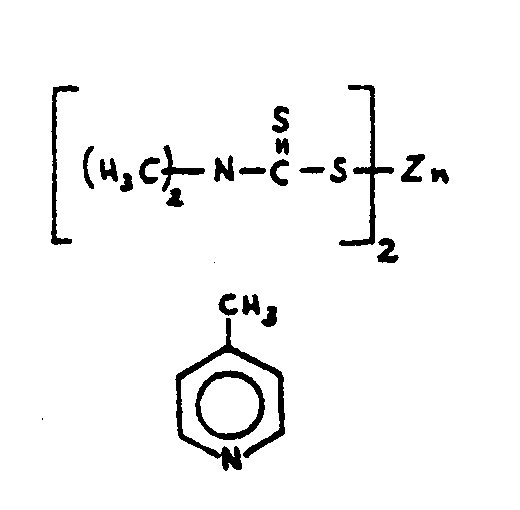
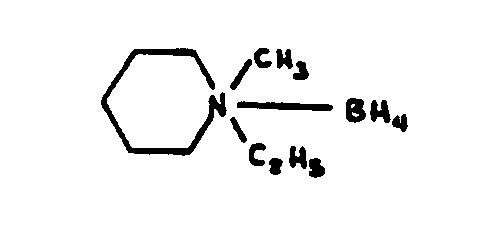
| 13 | Boron containing: | ||
This subclass is indented under subclass 1. Compounds which contain boron.
| |||
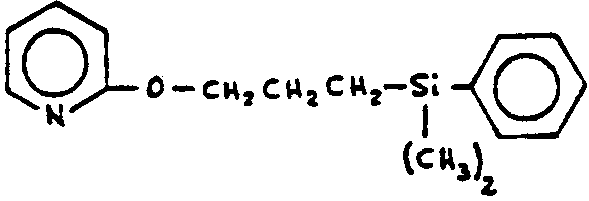
| 14 | Silicon containing: | ||
This subclass is indented under subclass 1. Compounds which contain silicon.
| |||
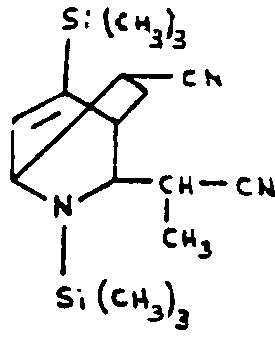
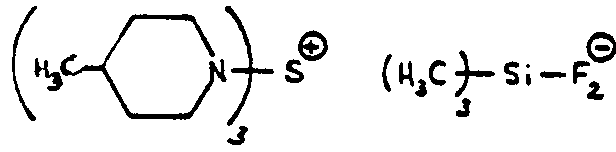
| 15 | Spiro: | ||
This subclass is indented under subclass 1. Compounds which contain a spiro ring system.
| |||
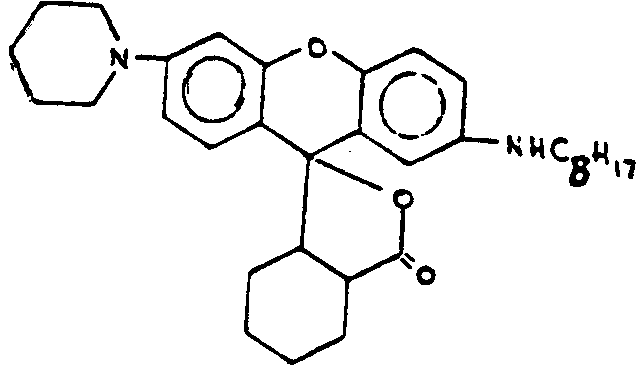
| 16 | The spiro includes the six-membered hetero ring: | ||
This subclass is indented under subclass 15. Compounds wherein at least one of the rings in the spiro
ring system is the six-membered hetero ring which consists of one
ring nitrogen and five ring carbons.
| |||
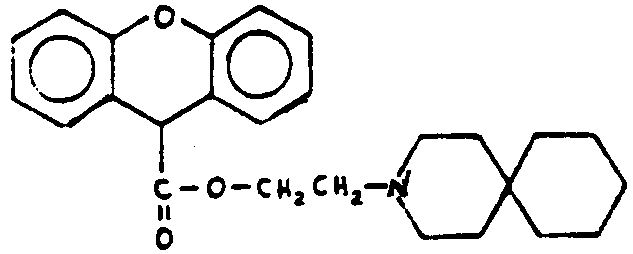
| 17 | Polycyclo ring system having one of the two rings which form the spiro as one of the cyclos: | ||
This subclass is indented under subclass 16. Compounds wherein one of the two rings which form the spiro
ring system is additionally one of the cyclos of a polycyclo ring
system.
| |||
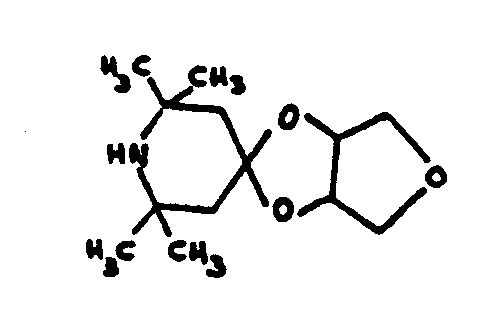
| 18 | Polycyclo ring system having the six-membered hetero ring as one of the cyclos: | ||
This subclass is indented under subclass 17. Compounds wherein the six-membered hetero ring is one of
the cyclos of the polycyclo ring system.
| |||
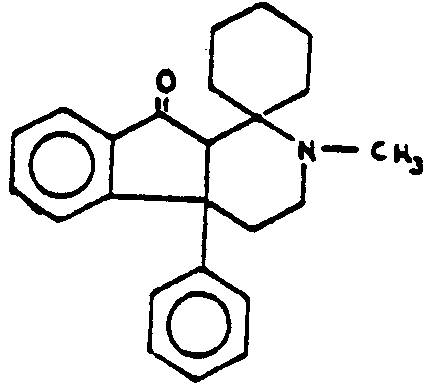
| 19 | At Least three ring hetero atoms in the two rings which form the spiro: | ||
This subclass is indented under subclass 16. Compounds wherein the spiro ring system contains at least
two ring hetero atoms in addition to the ring nitrogen of the six-membered
hetero ring.
| |||
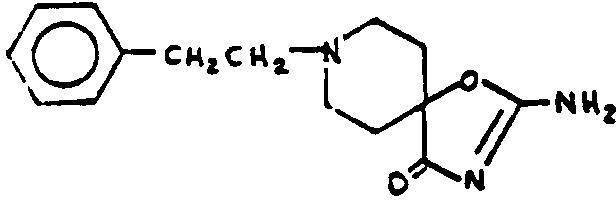
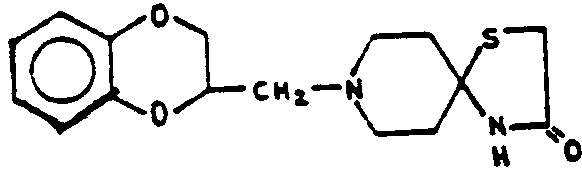
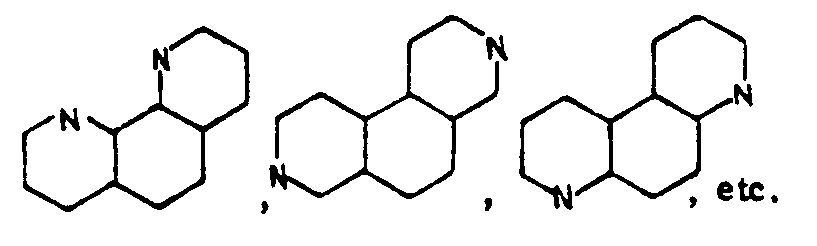
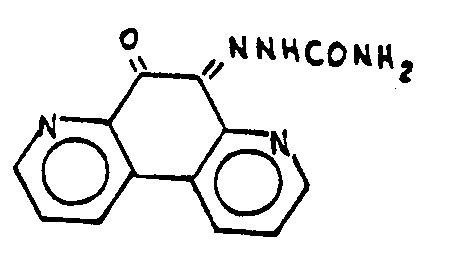
| 20 | At least three ring nitrogens in the two rings which form the spiro: | ||
This subclass is indented under subclass 19. Compounds wherein the spiro ring system includes at least
two ring nitrogen atoms in addition to the one ring nitrogen of
the six-membered hetero ring.
| |||
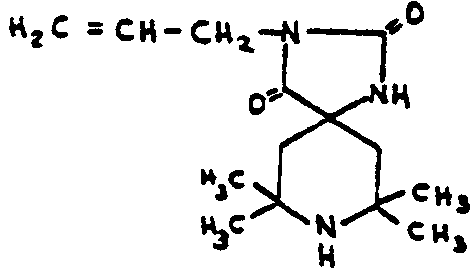
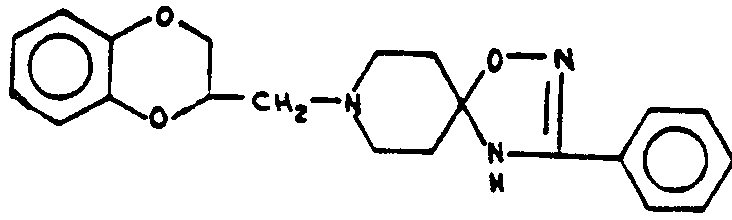
| 21 | Phosphorus attached directly to the six-membered hetero ring by nonionic bonding: | ||
This subclass is indented under subclass 1. Compounds wherein phosphorus is attached directly to the
six-membered hetero ring by nonionic bonding.
| |||
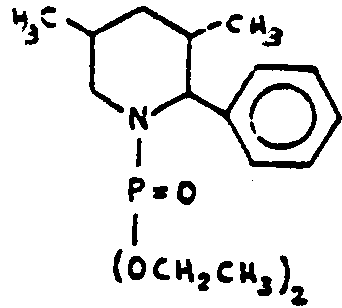
| 22 | Phosphorus attached indirectly to the six-membered hetero ring by nonionic bonding: | ||
This subclass is indented under subclass 1. Compounds wherein phosphorus is attached indirectly to the
six-membered hetero ring by nonionic bonding.
| |||
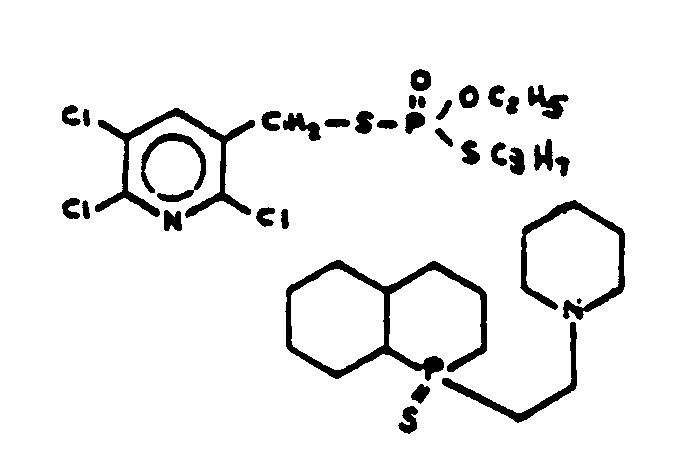
| 23 | Polycyclo ring system having the six-membered hetero ring as one of the cyclos: | ||||
This subclass is indented under subclass 22. Compounds wherein the six-membered hetero ring is one of
the cyclos of a polycyclo ring system.
| |||||
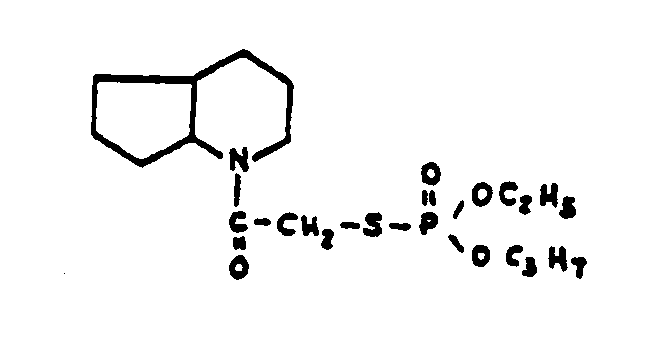
| 24 | Chalcogen bonded directly to ring carbon fo the six-membered hetero ring: | ||
This subclass is indented under subclass 22. Compounds wherein chalcogen (i.e., oxygen, sulfur, selenium,
or tellurium) is bonded directly to a ring carbon of the six-membered hetero
ring.
| |||
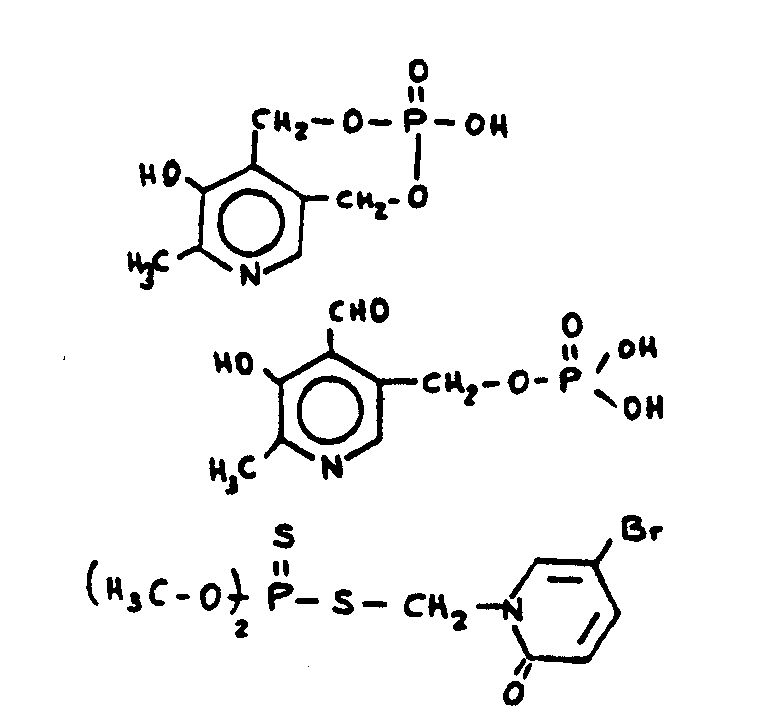
| 25 | The phosphorus is bonded directly to the chalcogen: | ||
This subclass is indented under subclass 24. Compounds in which the phosphorus is bonded directly to
the chalcogen (i.e., oxygen, sulfur, selenium, or tellurium).
| |||
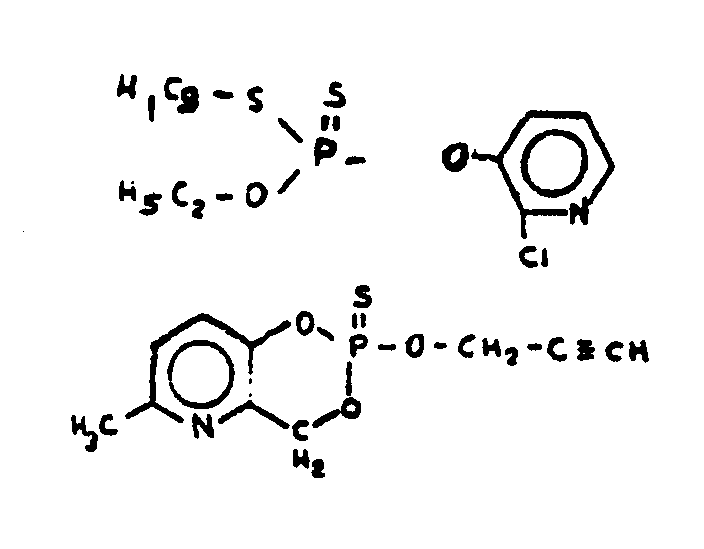
| 26 | Polycyclo ring system having the six-membered hetero ring as one of the cyclos: | ||
This subclass is indented under subclass 1. Compounds wherein the six-membered hetero ring is one of
the cyclos of a polycyclo ring system.
| |||
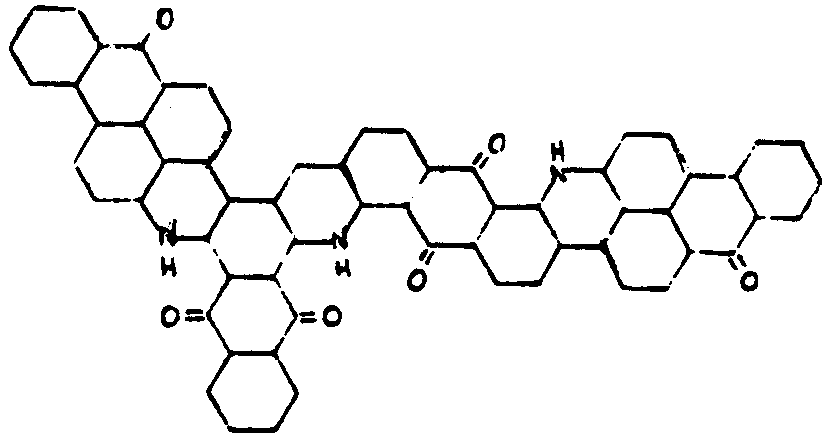
| 27 | The polycyclo ring system has at least ten cyclos and at least four ring nitrogens: | ||
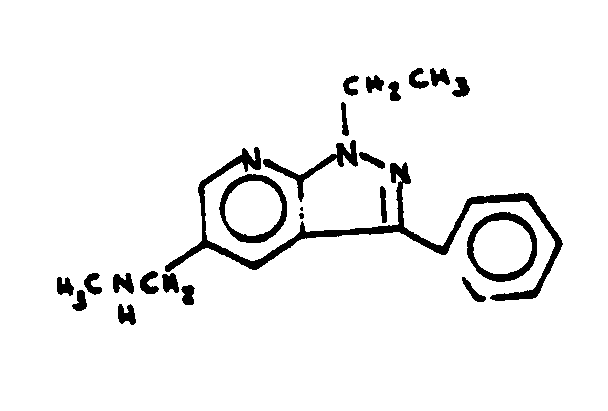
This subclass is indented under subclass 26. Compounds wherein the polycyclo ring system contains at
least ten cyclos and at least four ring nitrogens.
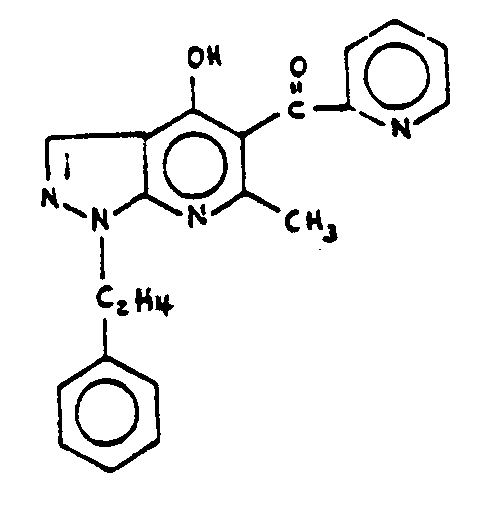
| |||
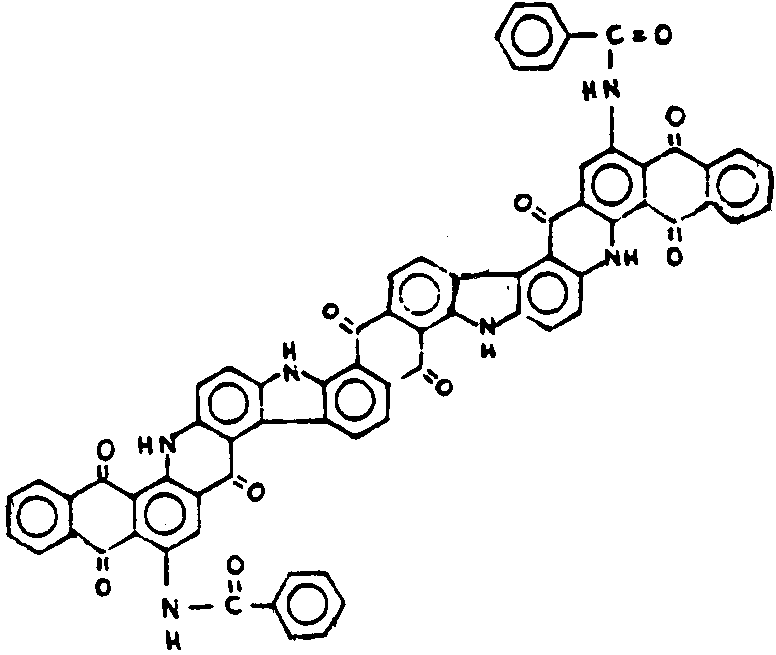
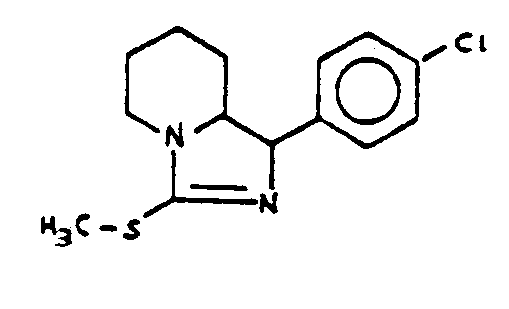
| 28 | Nonacyclo ring system having the six-membered hetero ring as one of the cyclos: | ||
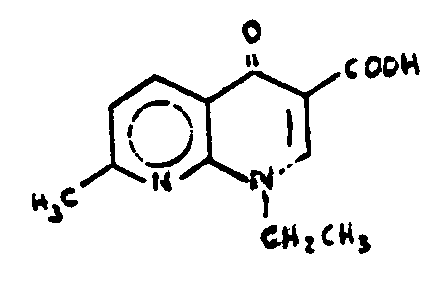
This subclass is indented under subclass 26. Compounds in which the polycyclo ring system consists of
exactly nine rings.
| |||
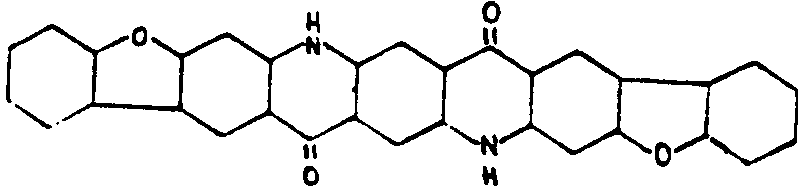
| 29 | The six-membered hetero ring shares ring nitrogen with a five-membered cyclo which contains additional ring nitrogen: | ||
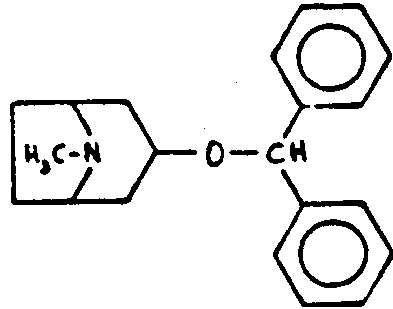
This subclass is indented under subclass 28. Compounds wherein the nitrogen atom of the six-membered
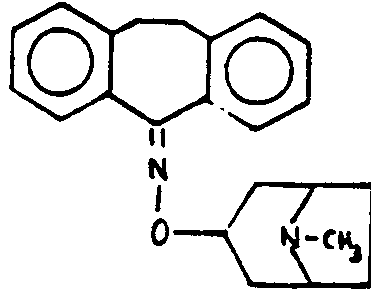
hetero ring is also a member of a five-membered cyclo which contains
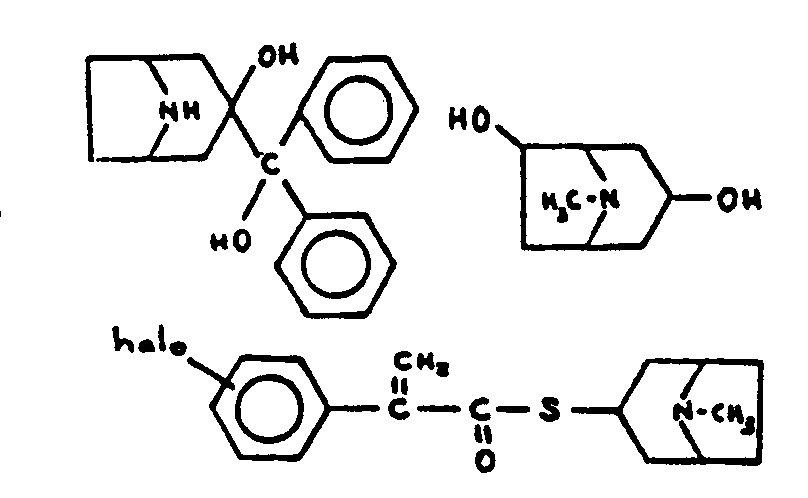
additional ring nitrogen.
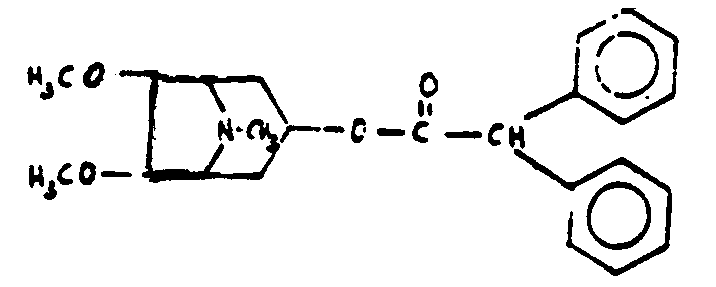
| |||
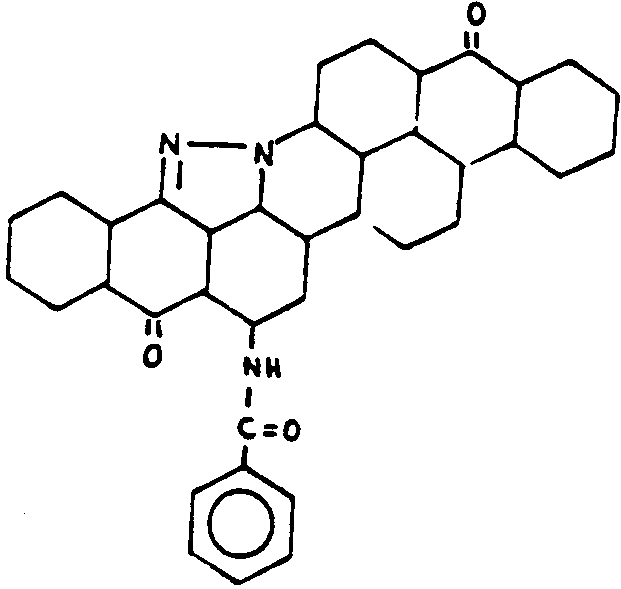
| 30 | Octacyclo ring system having the six-membered hetero ring as one of the cyclos: | ||
This subclass is indented under subclass 26. Compounds in which the polycyclo ring system consists of
exactly eight rings.
| |||
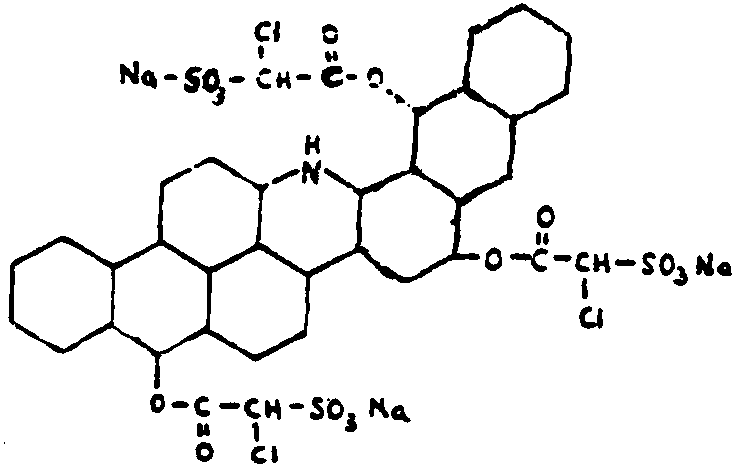
| 31 | Plural ring hetero atoms in the octacyclo ring system (e.g., flavanthrone, cepharanthrine, etc.): | ||
This subclass is indented under subclass 30. Compounds wherein the octacyclo ring system includes at
least one ring hetero atom in addition to the ring nitrogen of the
six-membered hetero ring.
| |||
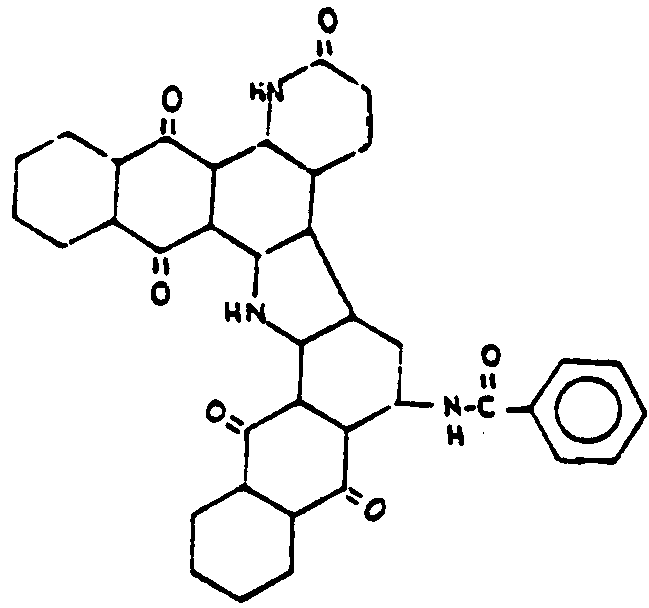
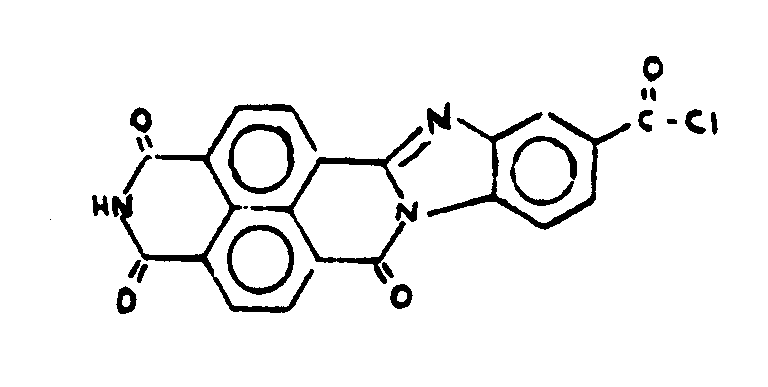
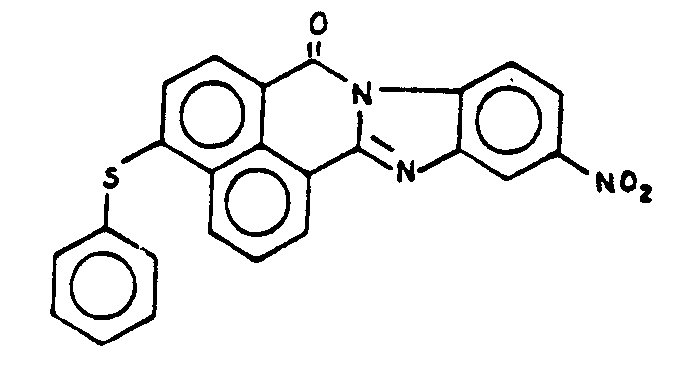
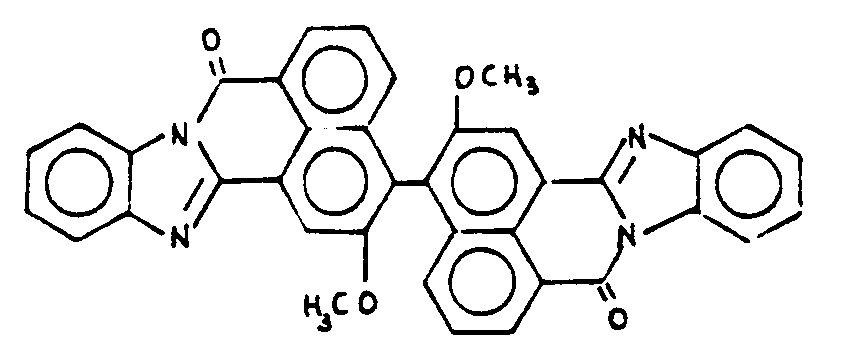
| 32 | At least four ring nitrogens in the octacyclo ring system (e.g., naphthoylene dibenzimidazole, etc.): | ||
This subclass is indented under subclass 31. Compounds wherein the octacyclo ring system contains at
least four ring nitrogens.
| |||
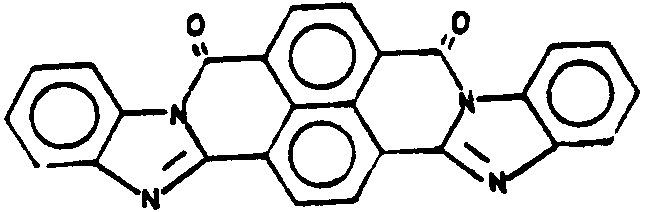
| 33 | Heptacyclo ring system having the six-membered hetero ring as one of the cyclos: | ||
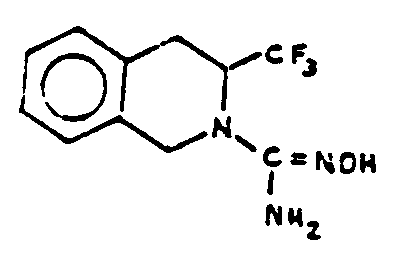
This subclass is indented under subclass 26. Compounds in which the polycyclo ring system consists of
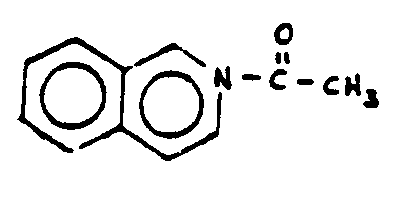
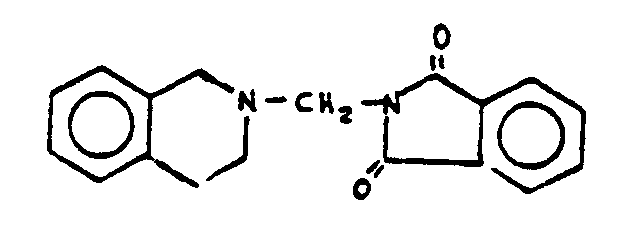
exactly seven rings.
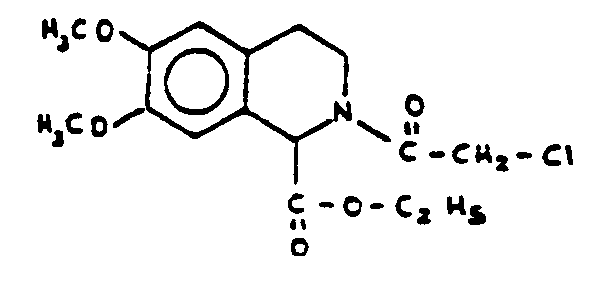
| |||
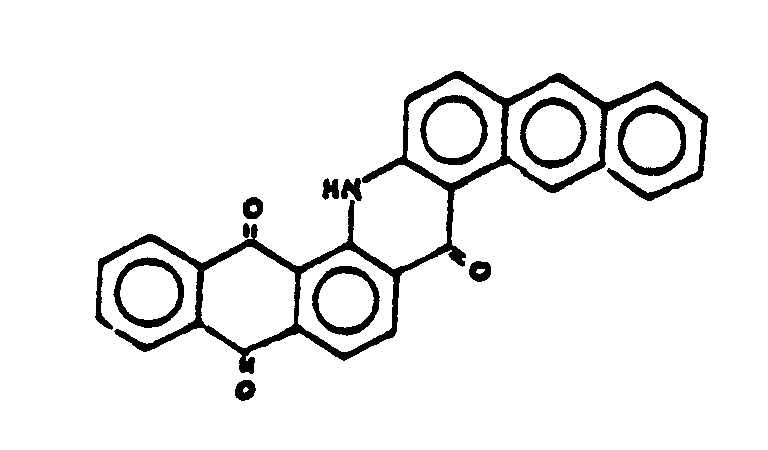
| 34 | Two of the cyclos share at least three ring members (e.g., protoveratrine, etc.): | ||
This subclass is indented under subclass 33. Compounds wherein at least three ring members of one cyclo
are ring members of an additional cyclo in the heptacyclo ring system
(i.e., bridged).
| |||
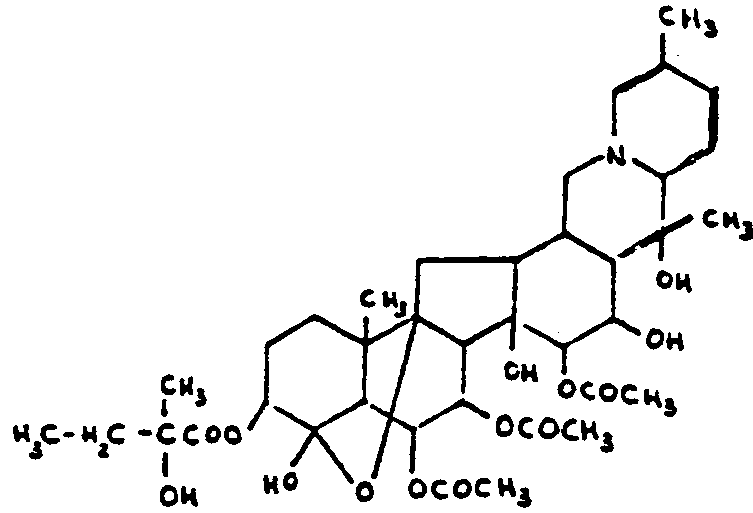
| 35 | At least three ring hetero atoms in the heptacyclo ring system: | ||
This subclass is indented under subclass 34. Compounds wherein the heptacyclo ring system includes at
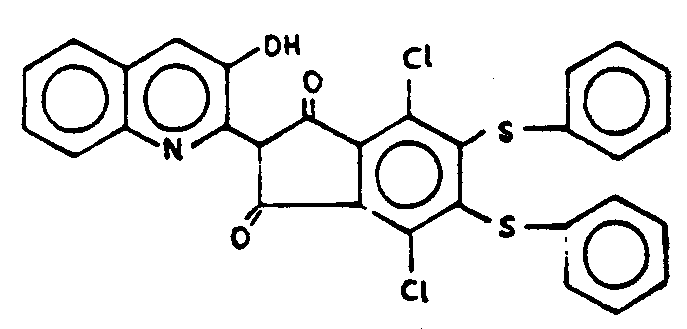
least two ring hetero atoms in addition to the ring nitrogen of
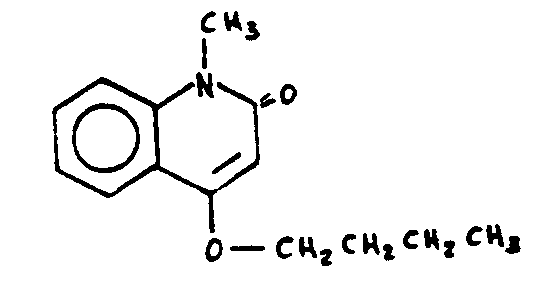
the six-membered hetero ring.
| |||
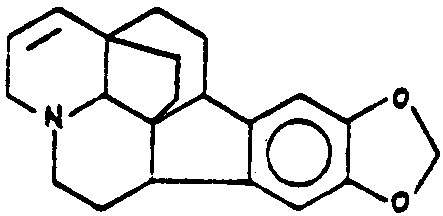
| 36 | Plural ring hetero atoms in the heptacyclo ring system: | ||
This subclass is indented under subclass 33. Compounds wherein the heptacyclo ring system includes at
least one ring hetero atom in addition to the ring nitrogen of the
six-membered hetero ring.
| |||
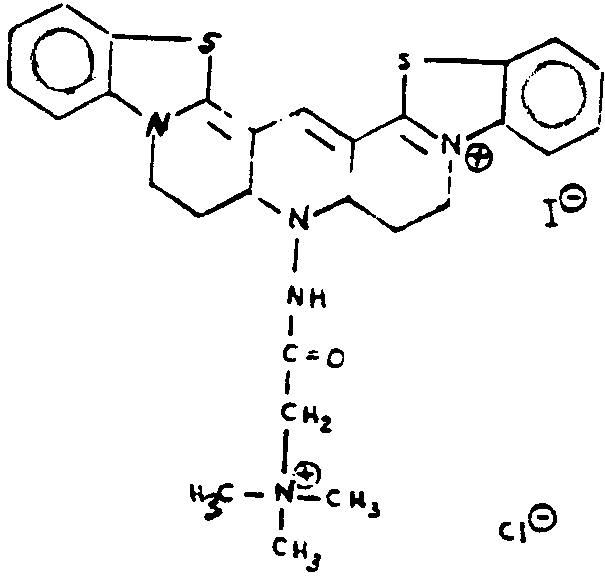
| 37 | Ring carbon is shared by three of the cyclos (e.g., perylene tetracarboxylic acid diimide, etc.): | ||
This subclass is indented under subclass 36. Compounds wherein one ring carbon is a member of three of
the cyclos in the heptacyclo ring system (i.e., peri-fusion).
| |||
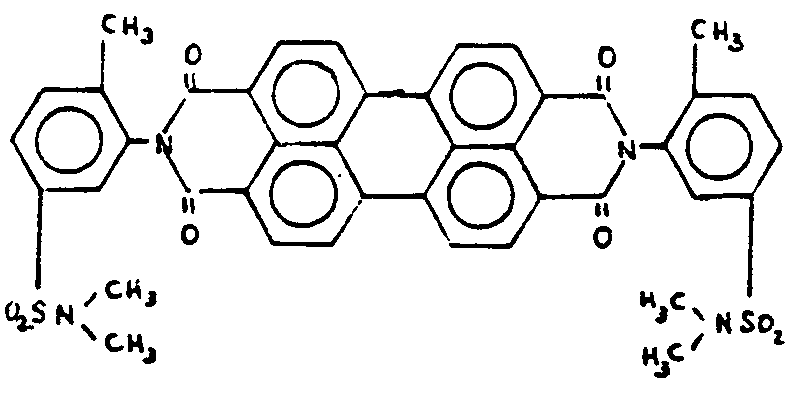
| 38 | Hexacyclo ring system having the six-membered hetero ring as one of the cyclos: | ||
This subclass is indented under subclass 26. Compounds in which the polycyclo ring system consists of
exactly six rings.
| |||
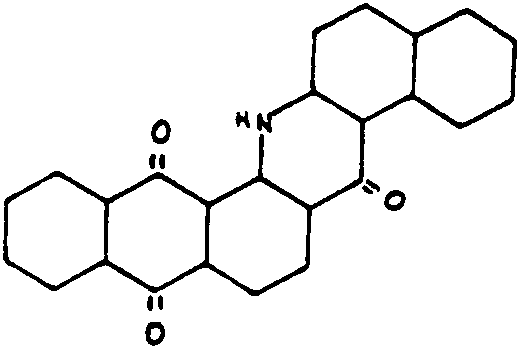
| 39 | Two of the cyclos share at least three ring members (e.g., etheno morphides, etc.): | ||
This subclass is indented under subclass 38. Compounds wherein at least three ring members of one cyclo
are ring members of an additional cyclo in the hexacyclo ring system
(i.e., bridged).
| |||
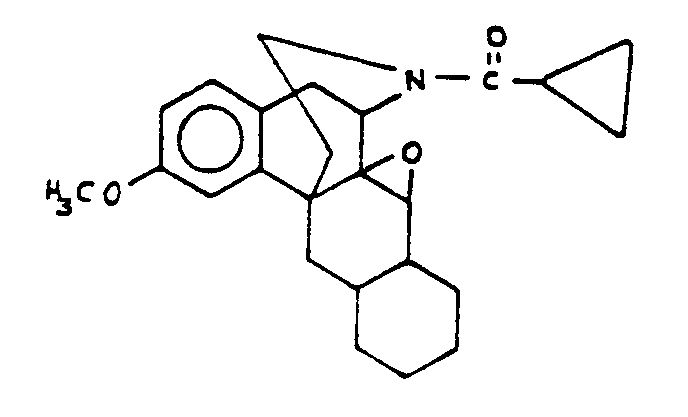
| 40 | Plural ring nitrogens in the hexacyclo ring system (e.g., reserpic acid lactone, etc.): | ||
This subclass is indented under subclass 39. Compounds wherein the hexacyclo ring system includes at
least two ring nitrogens.
| |||
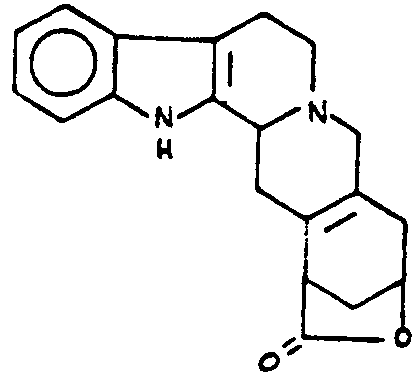
| 41 | Plural ring hetero atoms in the hexacyclo ring system: | ||
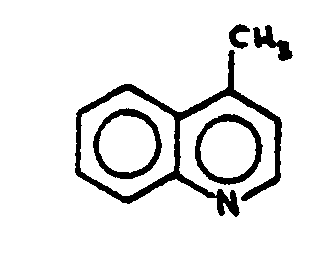
This subclass is indented under subclass 38. Compounds wherein the hexacyclo ring system contains at
least one ring hetero atom in addition to the ring nitrogen in the
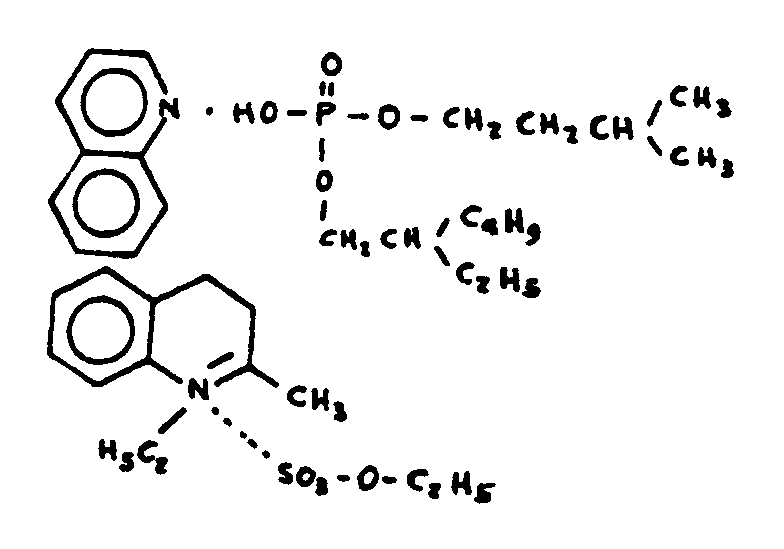
six-membered hetero ring.
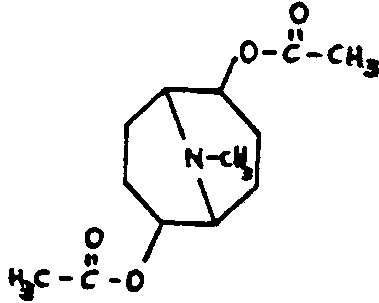
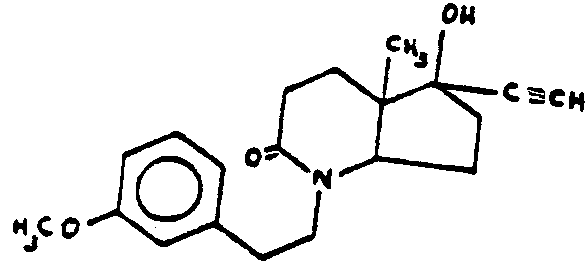
| |||
| 42 | Pentacyclo ring system having the six-membered hetero ring as one of the cyclos: |
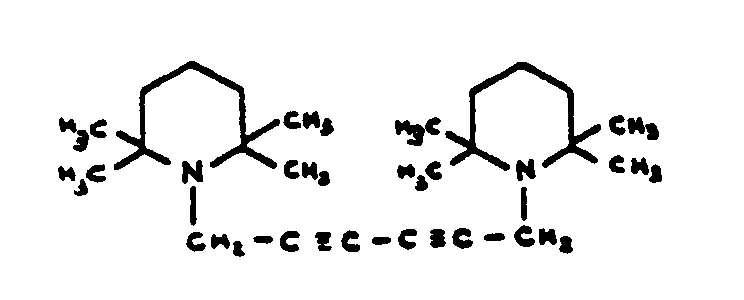
| This subclass is indented under subclass 26. Compounds in which the polycyclo ring system consists of exactly five rings. | |
| 43 | Two of the cyclos share at least three ring members (i.e., bridged): | ||
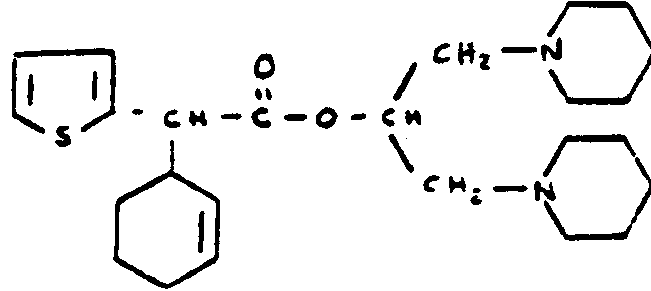
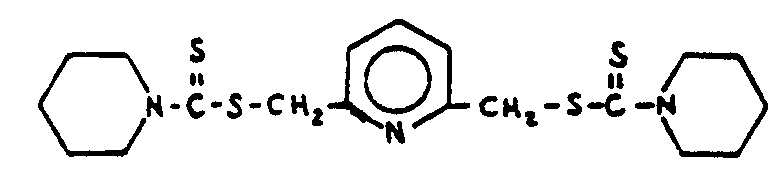
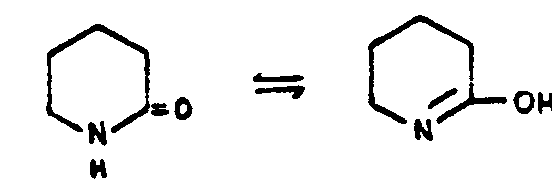
This subclass is indented under subclass 42. Compounds wherein at least three ring members of one cyclo
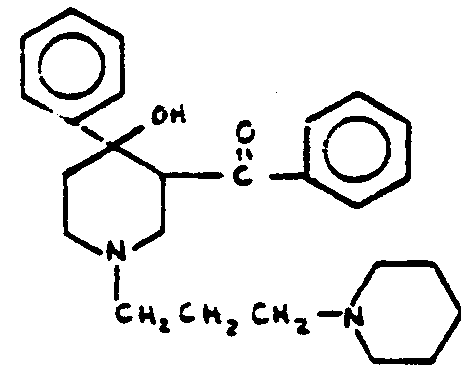
are ring members of an additional cyclo in the pentacyclo ring system
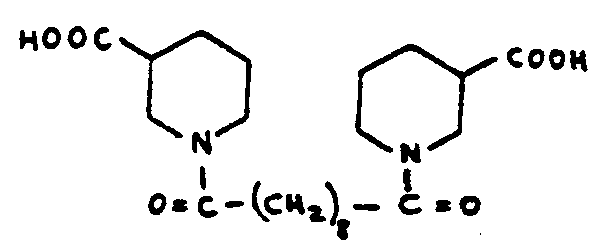
(i.e., bridged).
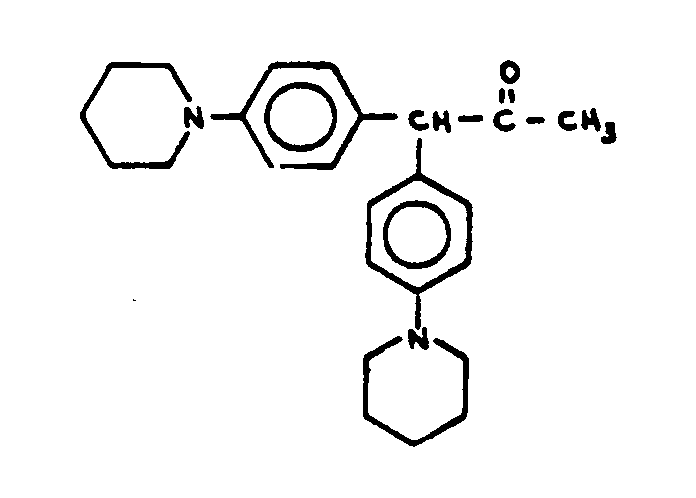
| |||
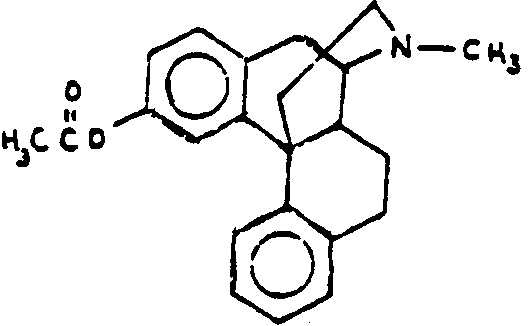
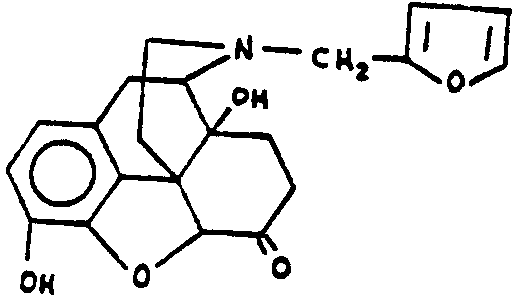
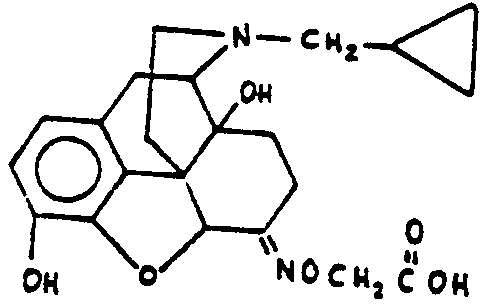
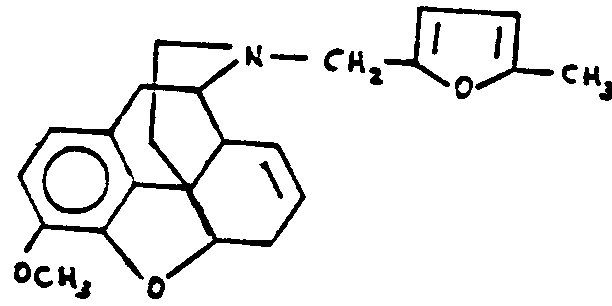
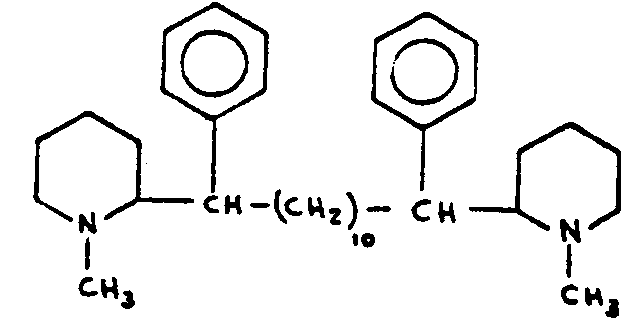
| 44 | One of the five cyclos is five-membered and includes ring chalcogen (e.g., codeine, morphine, etc.): | ||
This subclass is indented under subclass 43. Compounds wherein one of the cyclos of the pentacyclo ring
system is a five-membered hetero ring which contains ring chalcogen
(i.e., oxygen, sulfur, selenium, or tellurium).
| |||
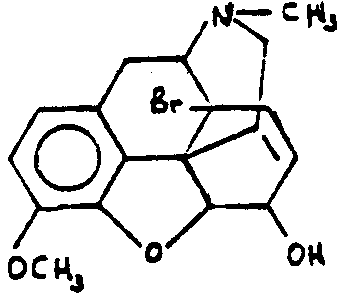
| 45 | Nitrogen or divalent chalcogen double bonded directly to carbocyclic ring of the pentacyclo ring system (e.g., morphinones, etc): | ||
This subclass is indented under subclass 44. Compounds wherein a nitrogen atom or a divalent chalcogen
(i.e., oxygen, sulfur, selenium, or tellurium) is attached directly
by a double bond to a carbocyclic ring of the pentacyclo ring system.
| |||
| 46 | A Single chalcogen is bonded directly to ring carbon of the pentacyclo ring system (e.g., desoxy morphine, etc): | ||||
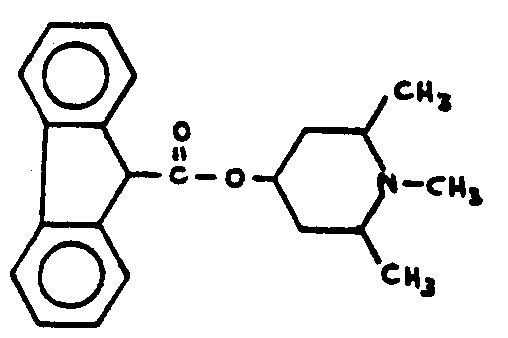
This subclass is indented under subclass 44. Compounds wherein exactly one chalcogen atom (i.e., oxygen,
sulfur, selenium, or tellurium) is bonded directly to a ring carbon
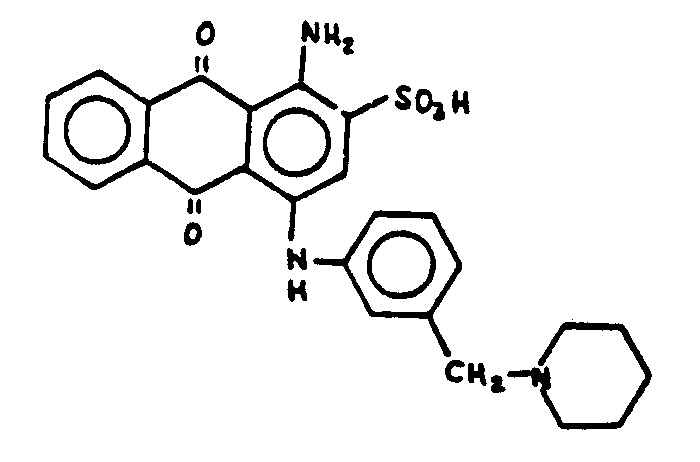
of the pentacyclo ring system.
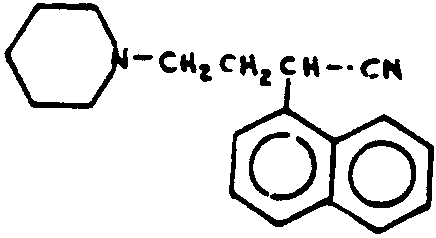
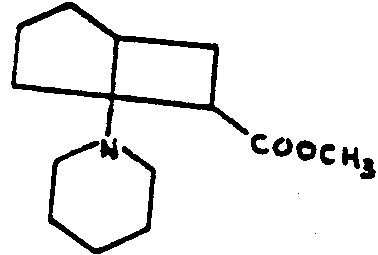
| |||||
| 47 | Plural ring hetero atoms in the pentacyclo ring system: | ||
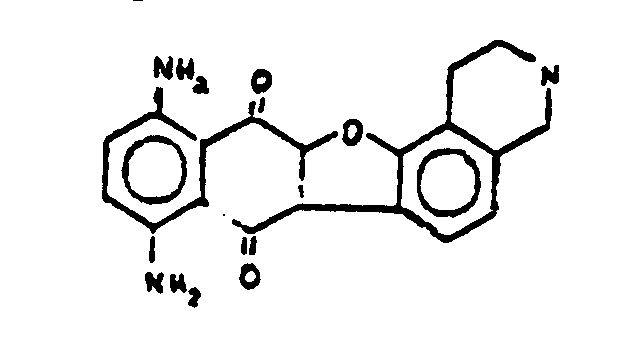
This subclass is indented under subclass 42. Compounds wherein the pentacyclo ring system contains at
least one ring hetero atom in addition to the ring nitrogen of the
six-membered hetero ring.
| |||
| 48 | Three or more ring hetero atoms in the pentacyclo ring system: | ||
This subclass is indented under subclass 47. Compounds wherein the pentacyclo ring system contains at
least two ring hetero atoms in addition to the ring nitrogen of
the six-membered hetero ring.
| |||
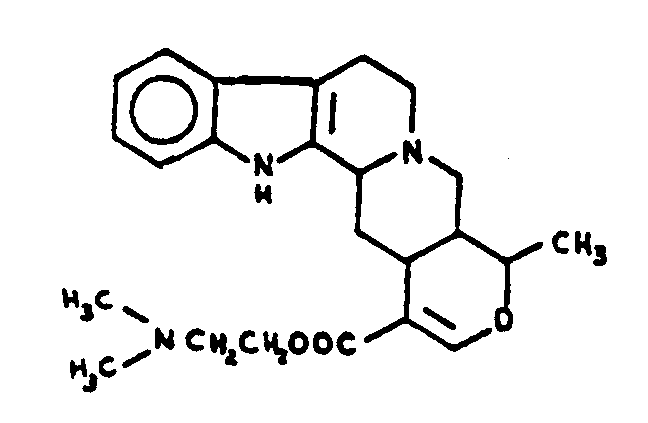
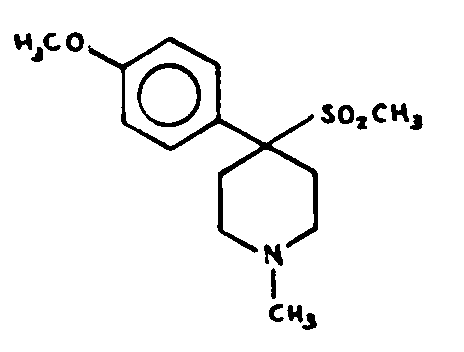
| 49 | Two ring nitrogens in the pentacyclo ring system (e.g., quinacridones, etc.): | ||
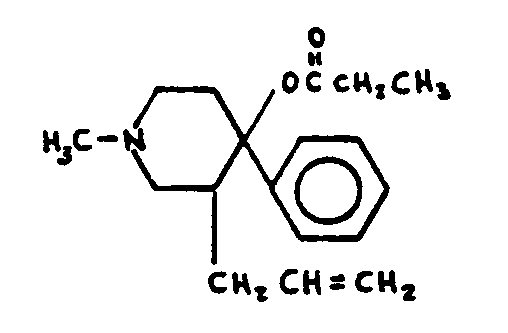
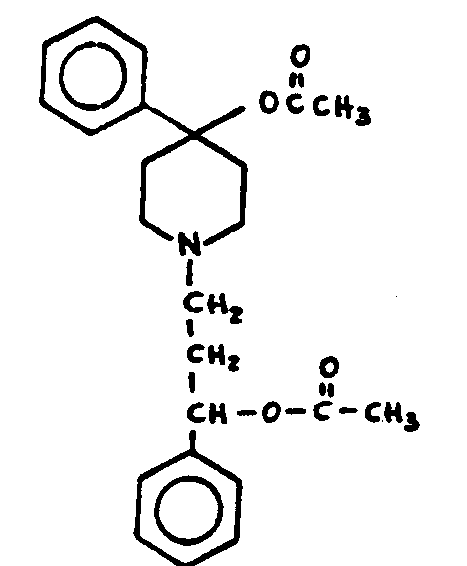
This subclass is indented under subclass 47. Compounds wherein the pentacyclo ring system contains exactly
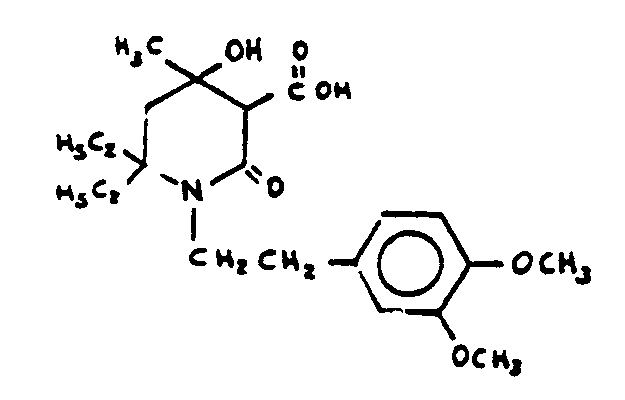
two ring nitrogens.
| |||
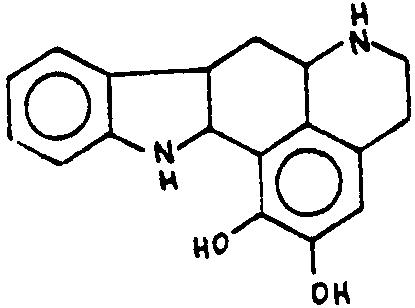
| 50 | Ring nitrogen is shared by two of the cyclos (e.g., yohimbanes, etc.): | ||
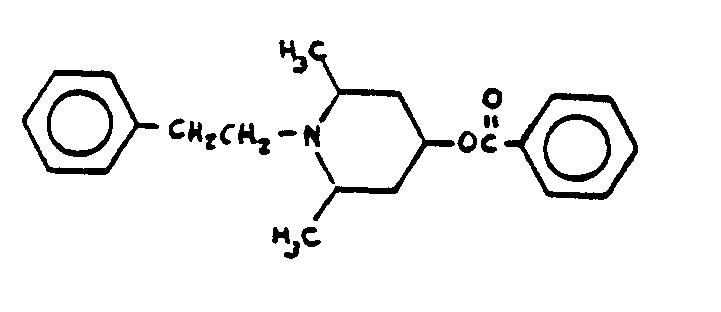
This subclass is indented under subclass 49. Compounds wherein a ring nitrogen is a member of two of
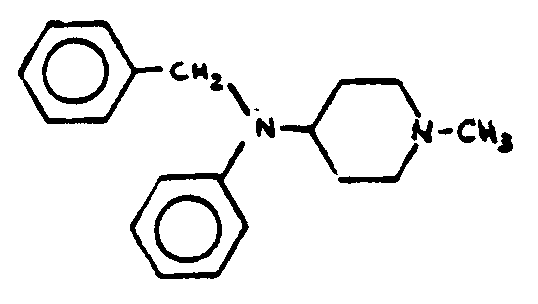
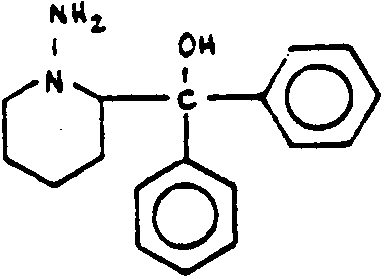
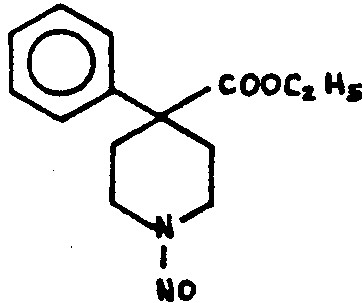
the cyclos in the pentacyclo ring system.
| |||
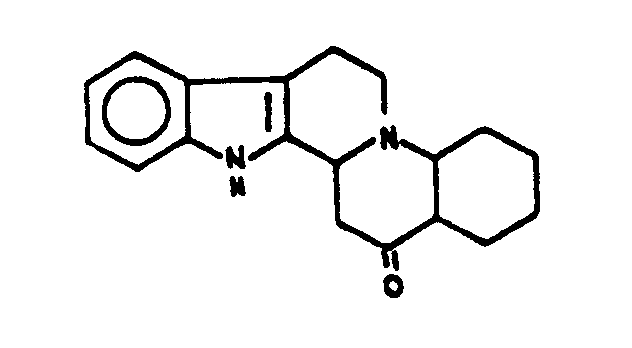
| 51 | Ring nitrogen is shared by five-membered cyclo and six-membered cyclo (e.g., vincamine, etc.): | ||
This subclass is indented under subclass 50. Compounds wherein the ring nitrogen of the six membered
hetero ring is additionally a member of a five-membered cyclo in
the pentacyclo ring system.
| |||
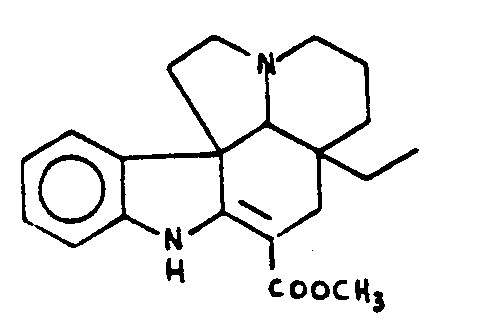
| 52 | Additional ring nitrogen in the five-membered cyclo: | ||
This subclass is indented under subclass 51. Compounds in which the five-membered ring contains additional
ring nitrogen.
| |||
| 53 | Having -C(=X)-; wherein x is chalcogen, bonded directly to ring carbon of the pentacyclo ring system and also bonded directly to chalcogen or nitrogen: | ||
This subclass is indented under subclass 50. Compounds in which a group, wherein X is chalcogen (i.e.,
oxygen, sulfur, selenium, or tellurium) is bonded directly both
to a ring carbon of the pentacyclo ring system and to a chalcogen
or nitrogen atom.
| |||
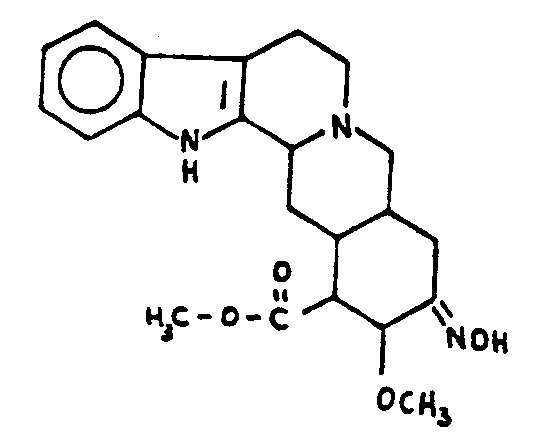
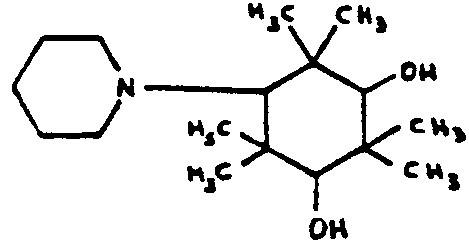
| 54 | Plural chalcogens bonded directly to the same cyclo as is the -C(=X)- group: | ||
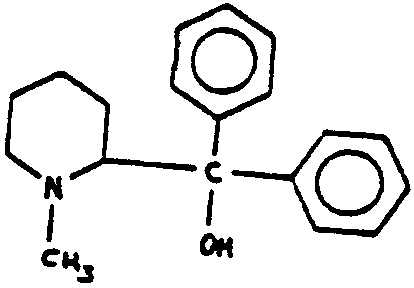
This subclass is indented under subclass 53. Compounds wherein at least two chalcogens (i.e., oxygen,
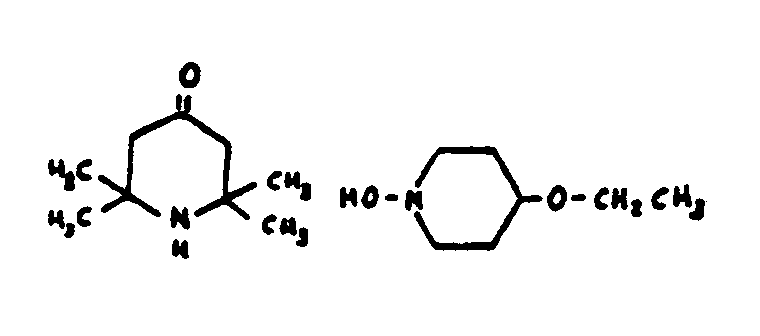
sulfur, selenium, or tellurium) are bonded directly to the same
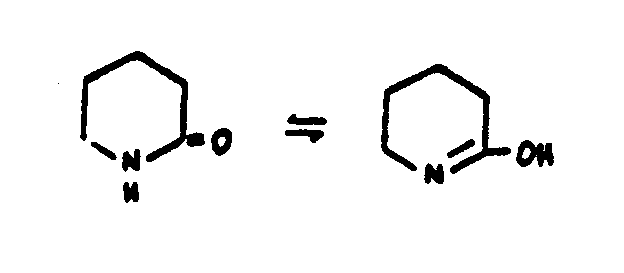
cyclo as is the group.
| |||
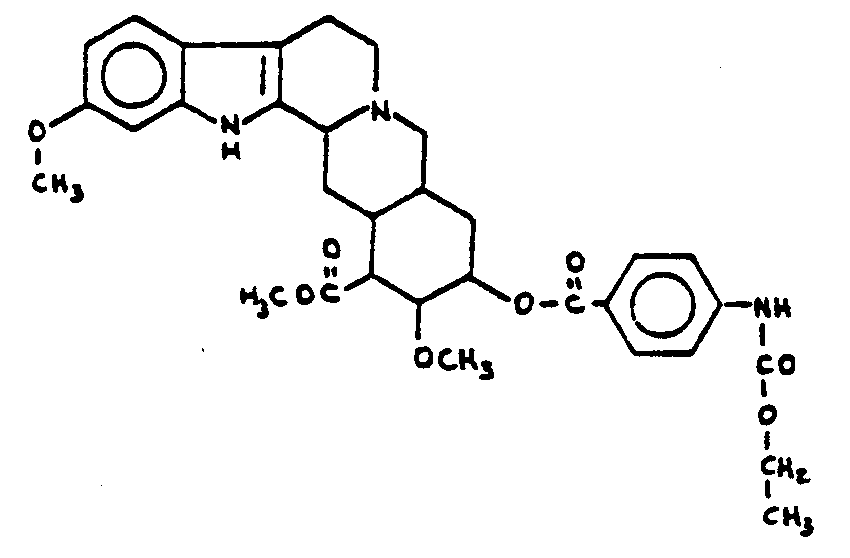
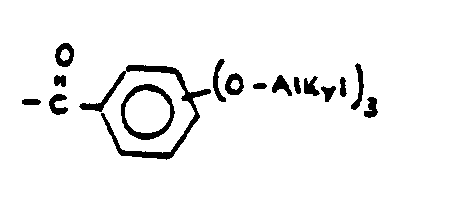
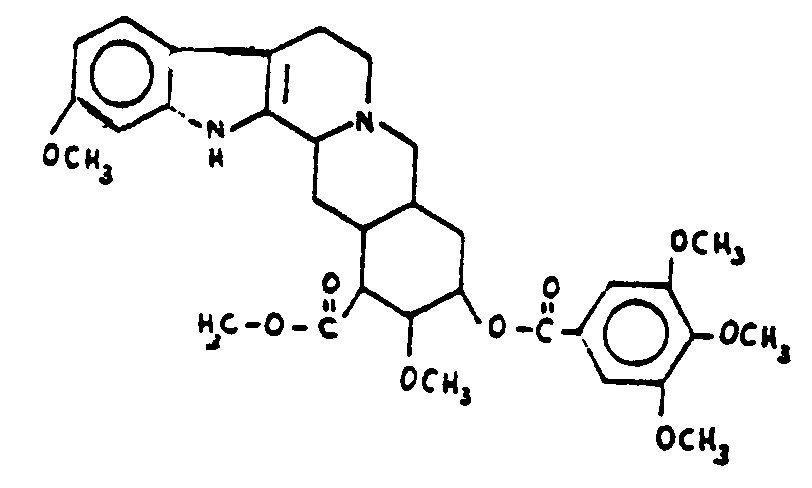
| 55 | Trialkoxybenzoyl bonded directly to at least one of the chalcogens (e.g., reserpine, etc.): | ||
This subclass is indented under subclass 54. Compounds in which bonded directly to at least one of the
chalcogens (i.e., oxygen, sulfur, selenium, or tellurium) is a trialkoxybenzoyl
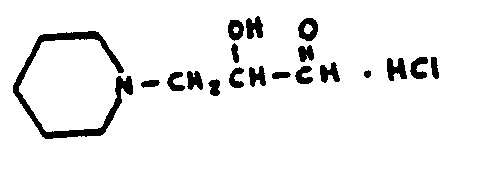
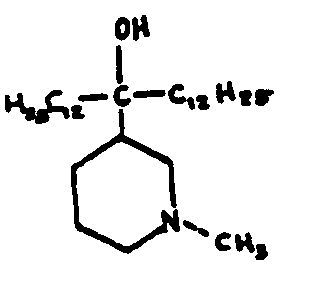
group, i.e.,
| |||
| 56 | Three or more ring carbons of the pentacyclo ring system are substituted (e.g., substituted quinacridones, etc.): | ||
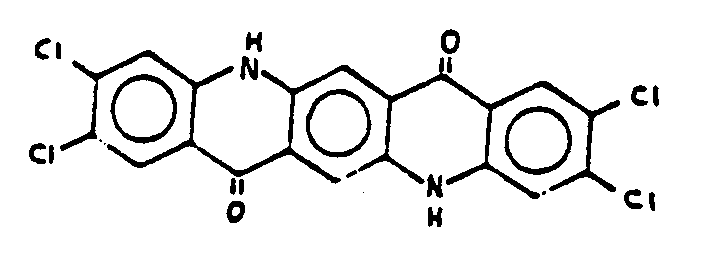
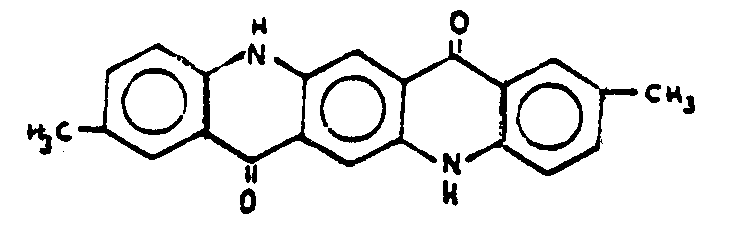
This subclass is indented under subclass 49. Compounds which contain substituents (other than hydrogen)
on at least three of the ring carbons of the pentacyclo ring system.
| |||
| 57 | Three or more chalcogens containing: | ||
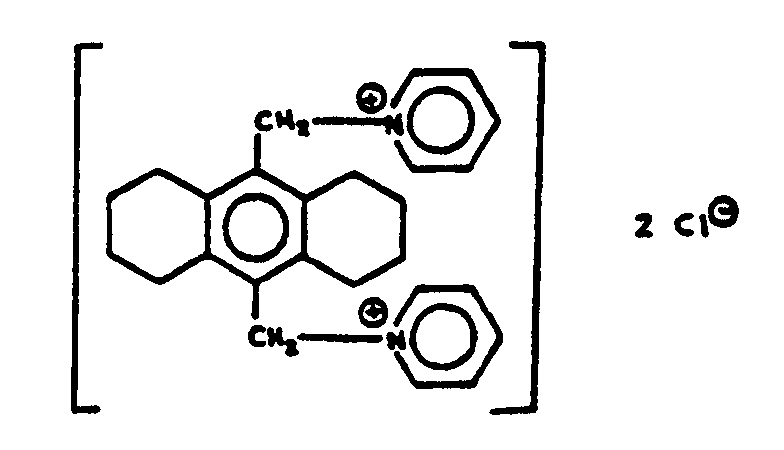
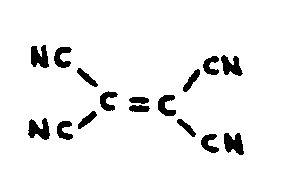
This subclass is indented under subclass 56. Compounds which contain at least three chalcogens (i.e.,
oxygen, sulfur, selenium, or tellurium).
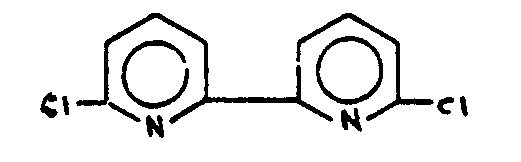
| |||
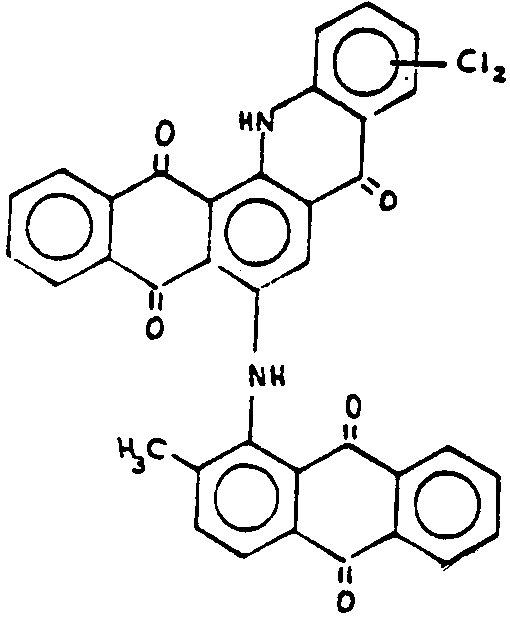
| 58 | The pentacyclo ring system consists of five six-membered cyclos (e.g., anthraquinone-benzacridones, etc): |
| This subclass is indented under subclass 42. Compounds wherein the pentacyclo ring system consists of five six-membered cyclos. | |
| 59 | Nitrogen attached directly to the pentacyclo ring system by nonionic bonding: | ||
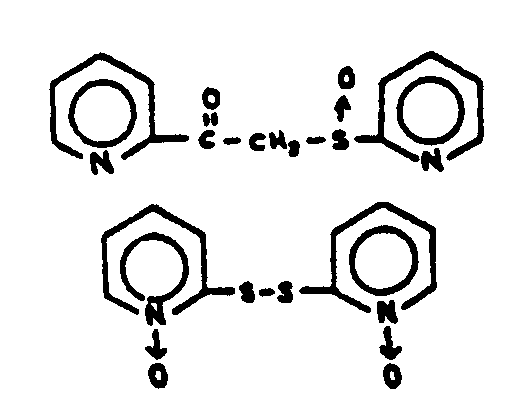
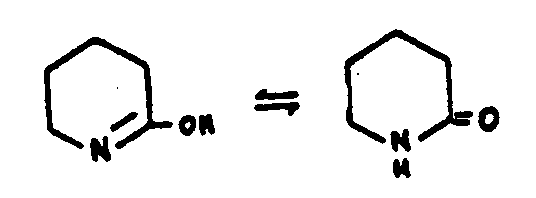
This subclass is indented under subclass 58. Compounds wherein nitrogen is attached directly to the pentacyclo
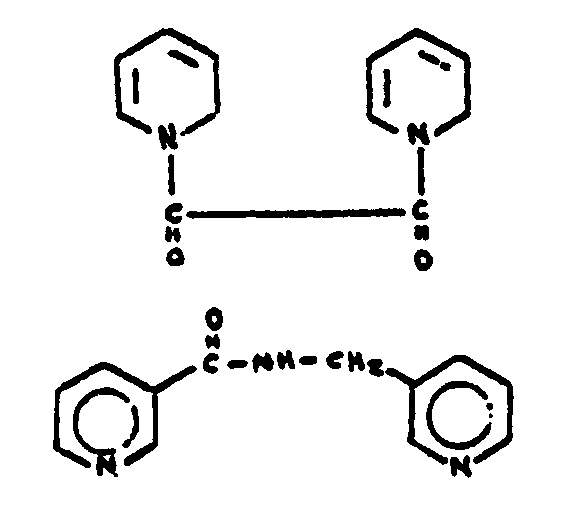
ring system by nonionic bonding.
| |||
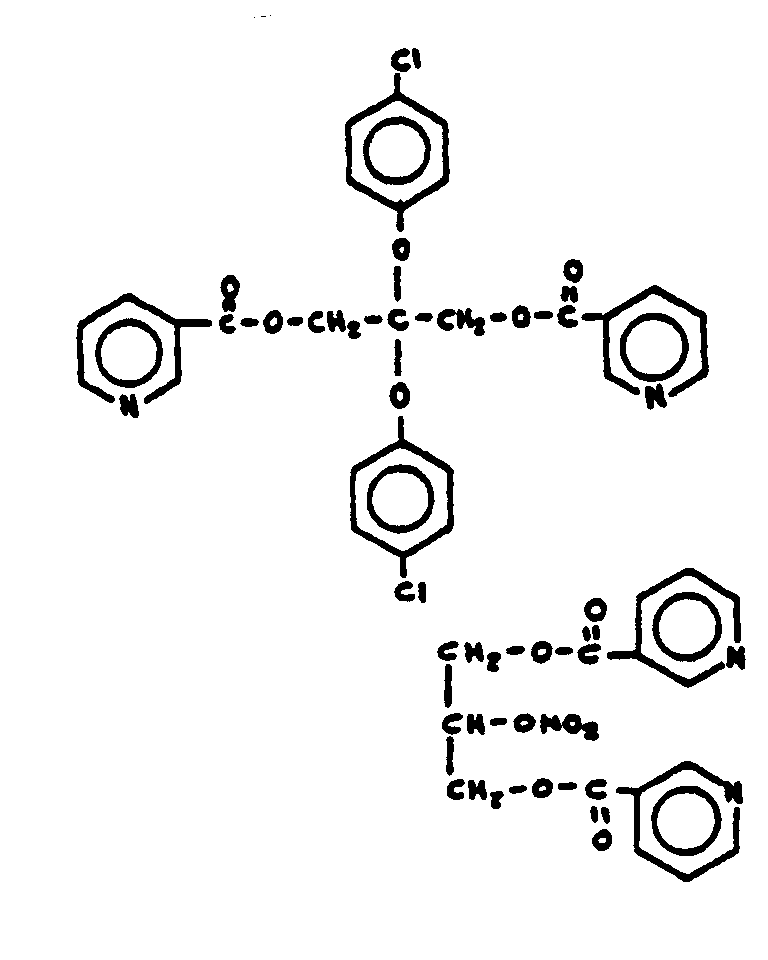
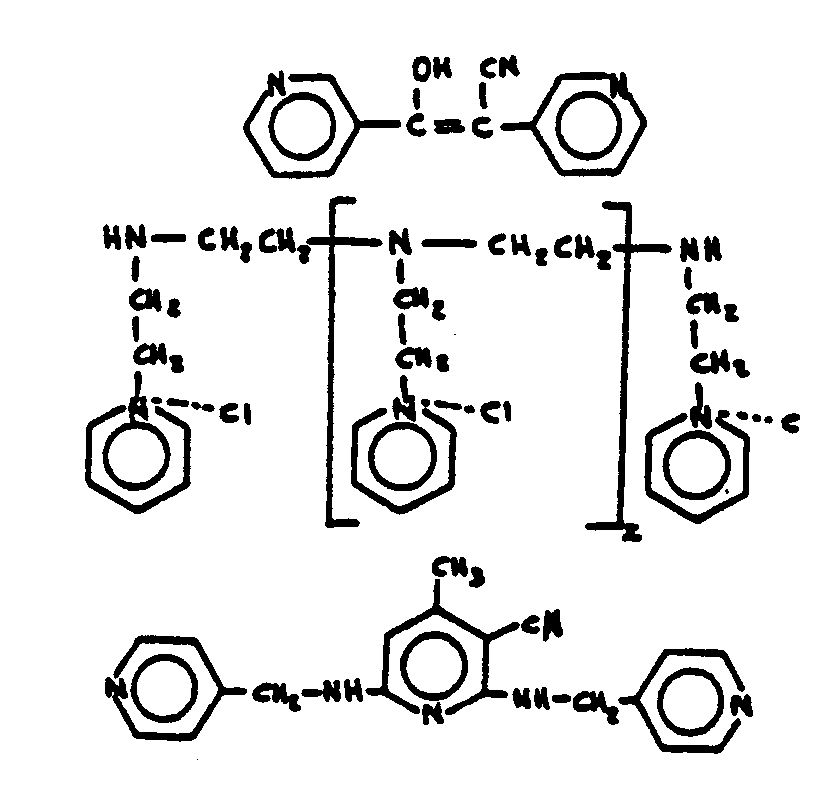
| 60 | An additional ring is bonded directly to the nitrogen: | ||
This subclass is indented under subclass 59. Compounds in which an additional ring is bonded directly
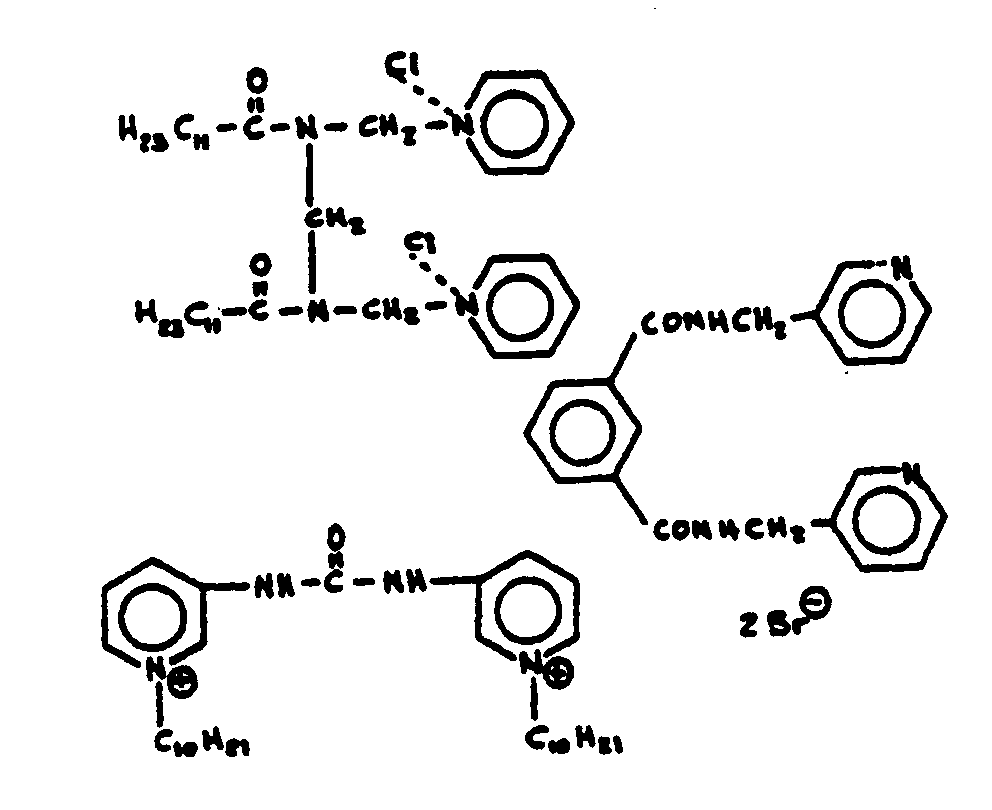
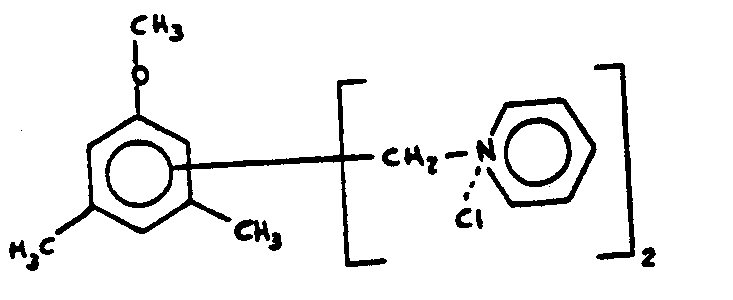
to the nitrogen.
| |||
| 61 | Tetracyclo ring system having the six-membered hetero ring as one of the cyclos: |
| This subclass is indented under subclass 26. Compounds in which the poly-cyclo ring system consists of exactly four rings. | |
| 62 | Plural ring hetero atoms in the tetracyclo ring system (e.g., acronycines, etc.): | ||
This subclass is indented under subclass 61. Compounds wherein the tetracyclo ring system contains at
least one ring hetero atom in addition to the ring nitrogen of the
six-membered hetero ring.
| |||
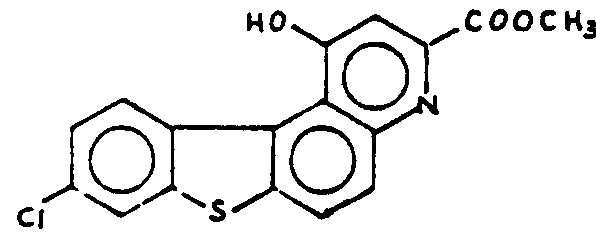
| 63 | Two of the cyclos share at least three ring members (i.e., bridged): | ||
This subclass is indented under subclass 62. Compounds wherein at least three ring members of one cyclo
are ring members of an additional cyclo in the tetracyclo ring system
(i.e., bridged).
| |||
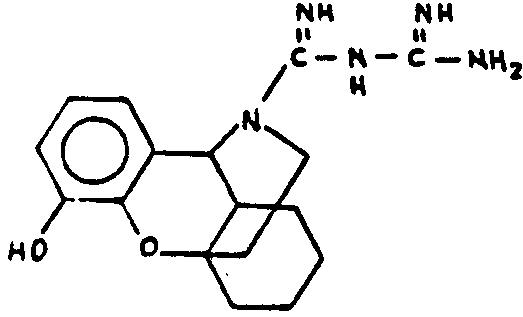
| 64 | Three or more ring hetero atoms in the tetracyclo ring system: | ||
This subclass is indented under subclass 62. Compounds wherein the tetracyclo ring system contains at
least two ring hetero atoms in addition to the ring nitrogen of
the six-membered hetero ring.
| |||
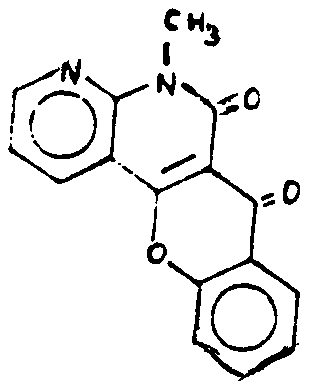
| 65 | Plural ring chalcogens in the tetracyclo ring system: | ||
This subclass is indented under subclass 64. Compounds wherein the tetracyclo ring system contains at
least two ring chalcogens (i.e., oxygen, sulfur, selenium, or tellurium).
| |||
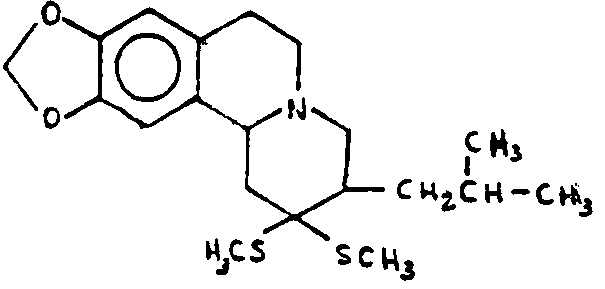
| 66 | Ring carbon is shared by three of the cyclos: | ||
This subclass is indented under subclass 62. Compounds wherein one ring carbon is a member of three of
the cyclos in the tetracyclo ring system (i.e., peri-fusion).
| |||
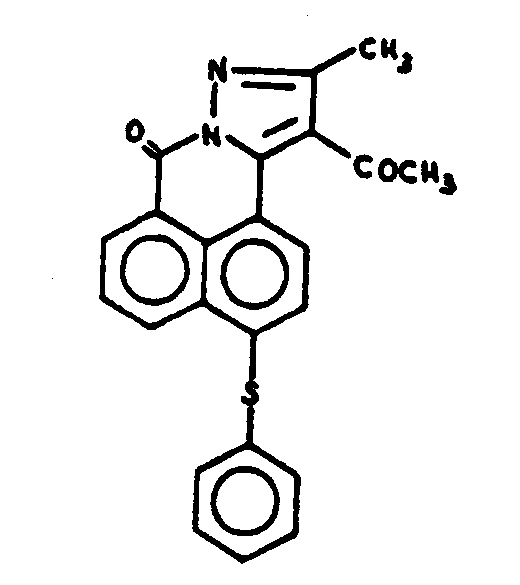
| 67 | The three cyclos consist of two carbocyclic rings and a five-membered hetero ring which includes a ring nitrogen (e.g., ergolines, etc.): | ||
This subclass is indented under subclass 66. Compounds wherein the three cyclos which share the ring
carbon consist of two carbocyclic rings and one five-membered hetero
ring which contains a ring nitrogen.
| |||
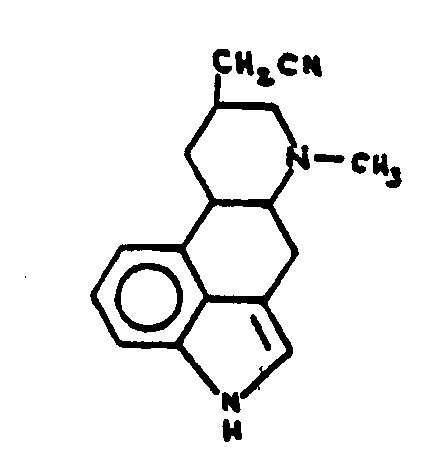
| 68 | Chalcogen or nitrogen bonded directly to ring carbon of the six-membered hetero ring: | ||
This subclass is indented under subclass 67. Compounds wherein chalcogen (i.e., oxygen, sulfur, selenium,
or tellurium) or nitrogen is bonded directly to a ring carbon of
the six-membered hetero ring.
| |||
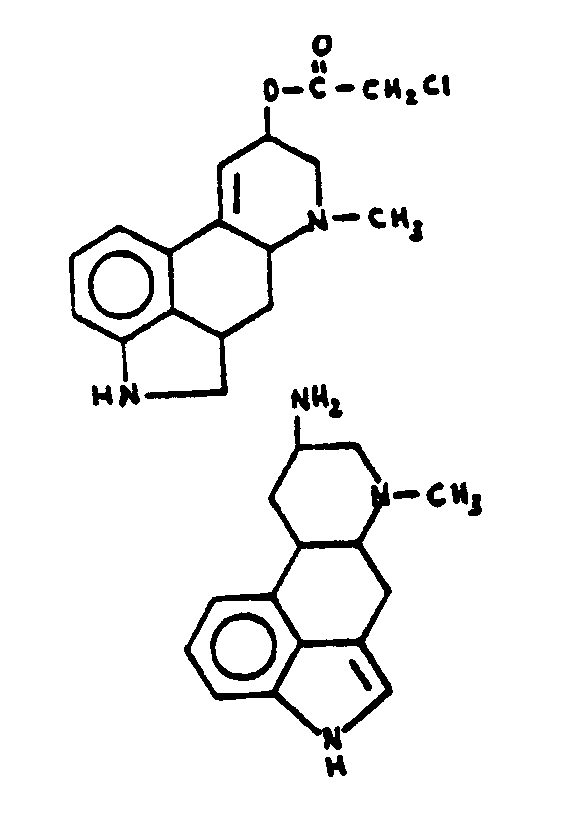
| 69 | Having -C(=X)-, wherein X is chalcogen, bonded directly to the six-membered hetero ring (e.g., lysergic acid, etc.): | ||
This subclass is indented under subclass 67. Compounds wherein a group, in which X is chalcogen
(i.e., oxygen, sulfur, selenium, or tellurium), is bonded directly
to the six-membered hetero ring.
| |||
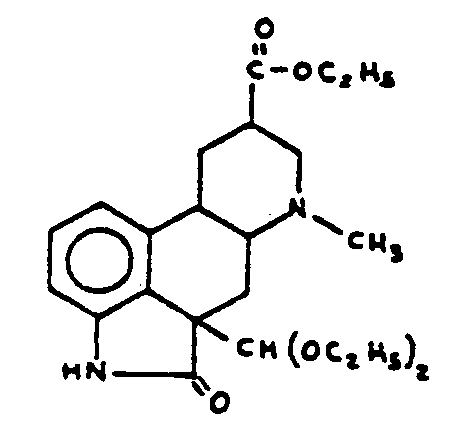
| 70 | Two ring nitrogens in the tetracyclo ring system: | ||
This subclass is indented under subclass 62. Compounds in which the tetracyclo ring system contains exactly
two ring nitrogens.
| |||
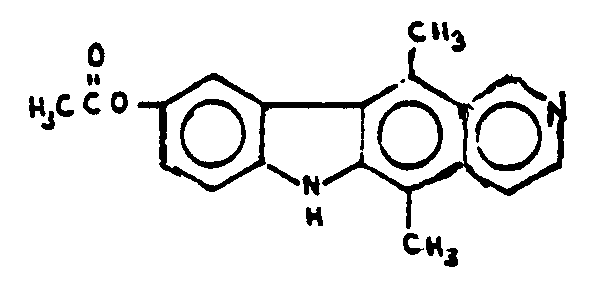
| 71 | Ring nitrogen is shared by two of the cyclos: | ||
This subclass is indented under subclass 61. Compounds wherein the ring nitrogen of the six-membered
hetero ring is a member of an additional cyclo in the tetracyclo
ring system.
| |||
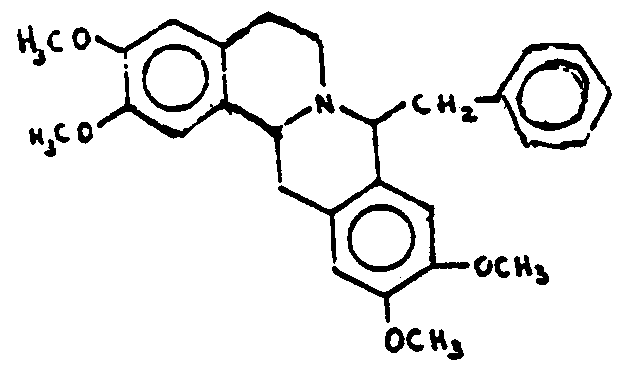
| 72 | Two of the cyclos share at least three ring members or a ring carbon is shared by three of the cyclos (i.e., bridged or peri-fused): | ||
This subclass is indented under subclass 71. Compounds wherein at least three ring members of one cyclo
are ring members of an additional cyclo or a ring carbon is a member
of three of the cyclos in the tetracyclo ring system (i.e., bridged
or peri-fused).
| |||
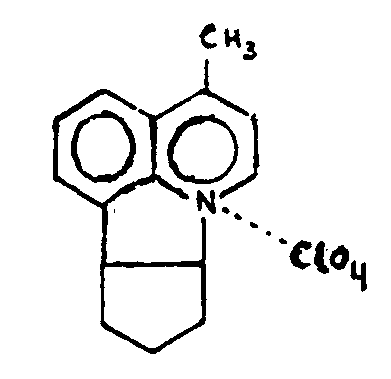
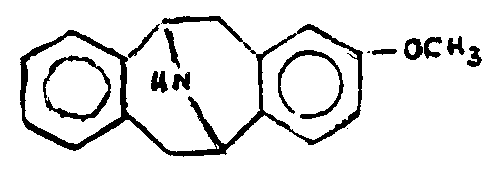
| 73 | The six-membered hetero ring shares ring members with one other cyclo only (e.g., pyrrocolines, etc.): | ||
This subclass is indented under subclass 71. Compounds wherein ring members of the six-membered hetero
ring are ring members of one additional cyclo only in the tetracyclo
ring system.
| |||
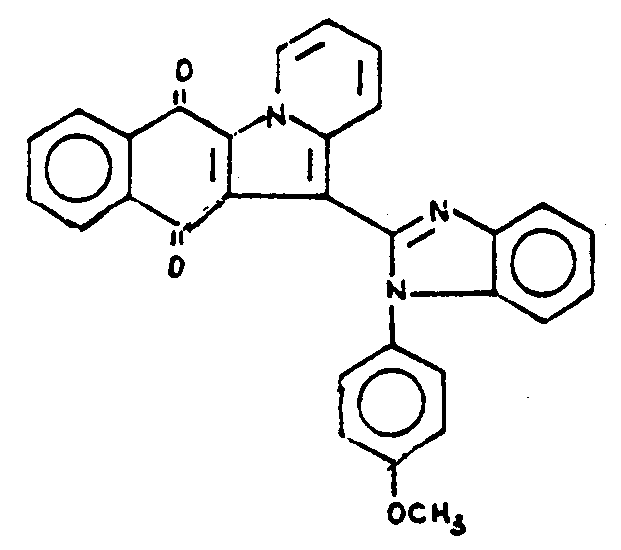
| 74 | Two of the cyclos share at least three ring members (e.g., morphinans, etc.): | ||
This subclass is indented under subclass 61. Compounds wherein at least three ring members of one cyclo
are ring members of an additional cyclo in the tetracyclo ring system
(i.e., bridged).
| |||
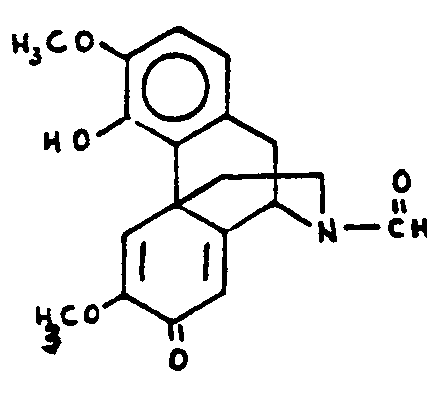
| 75 | Ring carbon is shared by three of the cyclos: | ||
This subclass is indented under subclass 61. Compounds wherein one ring carbon is a member of three of
the cyclos in the tetracyclo ring system (i.e., peri-fusion).
| |||
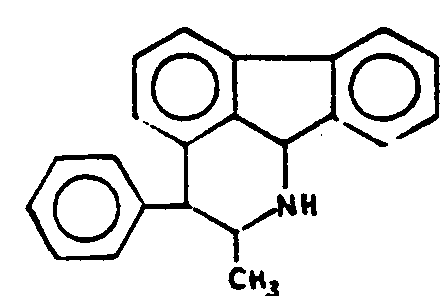
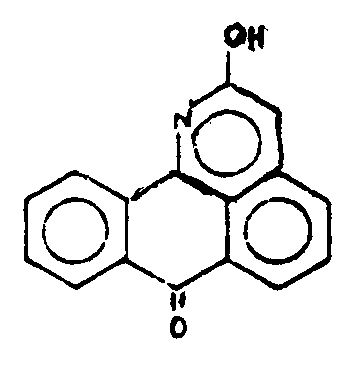
| 76 | Chalcogen bonded directly to ring carbon of the six-membered hetero ring (e.g., anthrapyridones, etc.): | ||
This subclass is indented under subclass 75. Compounds wherein chalcogen (i.e., oxygen, sulfur, selenium,
or tellurium) is bonded directly to a ring carbon of the six-membered hetero
ring.
| |||
| 77 | The six-membered hetero ring shares ring members with one other cyclo only: | ||
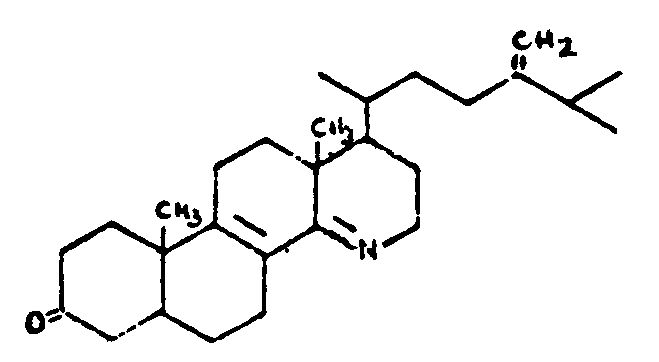
This subclass is indented under subclass 61. Compounds wherein ring members of the six-membered hetero
ring are ring members of one additional cyclo only in the tetracyclo
ring system.
| |||
| 78 | Plural chalcogens bonded directly to carbocyclic rings of the tetracyclo ring system (e.g., pyridoanthraquinones, etc.): | ||
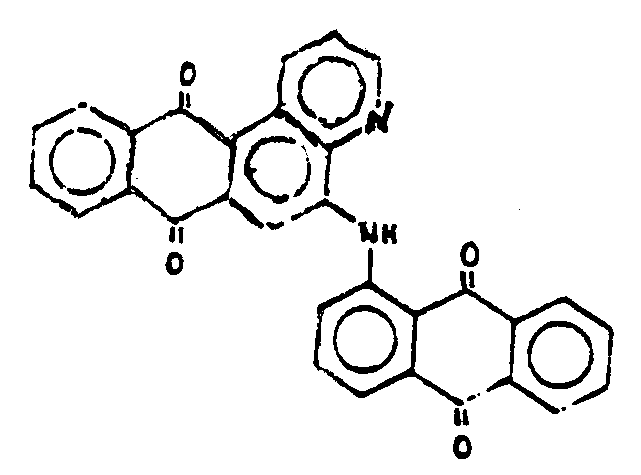
This subclass is indented under subclass 77. Compounds wherein at least two chalcogens (i.e., oxygen,
sulfur, selenium, or tellurium) are bonded directly to carbocyclic
rings of the tetracyclo ring system.
| |||
| 79 | Tricyclo ring system having the six-membered hetero ring as one of the cyclos: |
| This subclass is indented under subclass 26. Compounds in which the polycyclo ring system consists of exactly three rings. | |
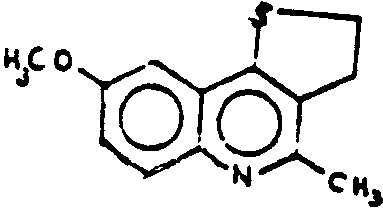
| 80 | Plural ring hetero atoms in the tricyclo ring system: | ||
This subclass is indented under subclass 79. Compounds wherein the tricyclo ring system contains at least
one ring hetero atom in addition to the ring nitrogen of the six-membered hetero
ring.
| |||
| 81 | Plural ring nitrogens in the tricyclo ring system: | ||
This subclass is indented under subclass 80. Compounds wherein the tricyclo ring system contains at least
two ring nitrogens.
| |||
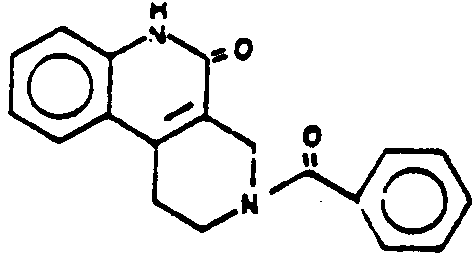
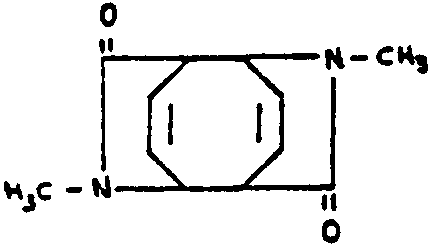
| 82 | Three or more ring hetero atoms in the tricyclo ring system: | ||
This subclass is indented under subclass 81. Compounds wherein the tricyclo ring system contains at least
one additional ring hetero atom.
| |||
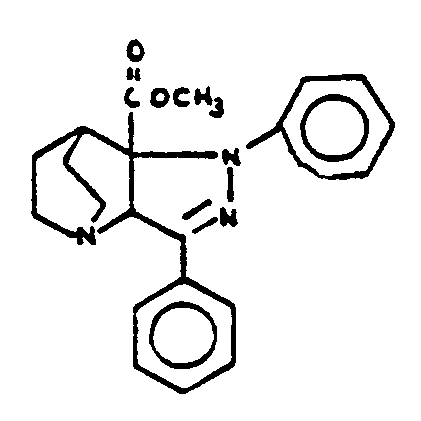
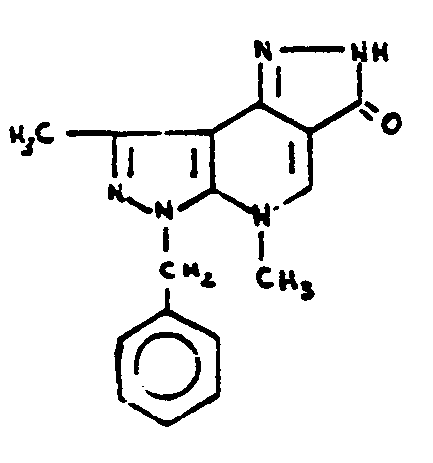
| 83 | At least one of the ring hetero atoms is chalcogen: | ||
This subclass is indented under subclass 92. Compounds wherein at least one of the additional ring hetero
atoms is chalcogen (i.e., oxygen, sulfur, selenium, or tellurium).
| |||
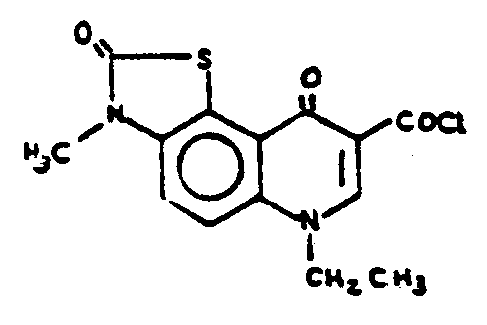
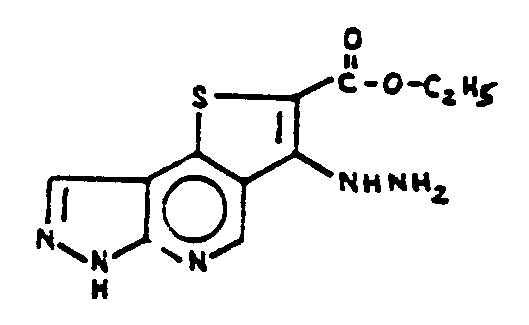
| 84 | One of the cyclos is five-membered: | ||
This subclass is indented under subclass 81. Compounds wherein one of the cyclos of the tricyclo ring
system to five-membered.
| |||
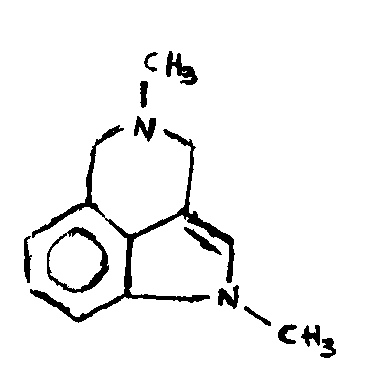
| 85 | The six-membered hetero ring shares ring members with the five-membered cyclo only (e.g., pyrido-indoles, etc.): | ||
This subclass is indented under subclass 84. Compounds in which the six-membered hetero ring has ring
members in common with the five-membered ring only in the tricyclo
ring system.
| |||
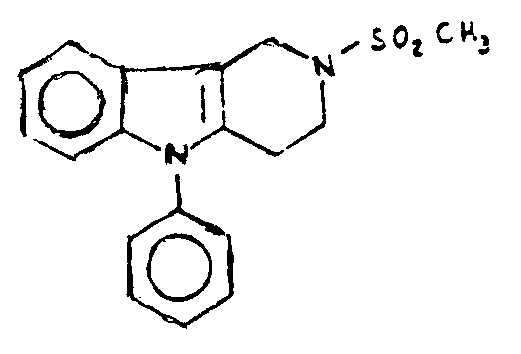
| 86 | Chalcogen bonded directly to ring carbon of the tricyclo ring system: | ||
This subclass is indented under subclass 85. Compounds in which chalcogen (i.e., oxygen, sulfur, selenium,
or tellurium) is bonded directly to ring carbon of the tricyclo
ring system.
| |||
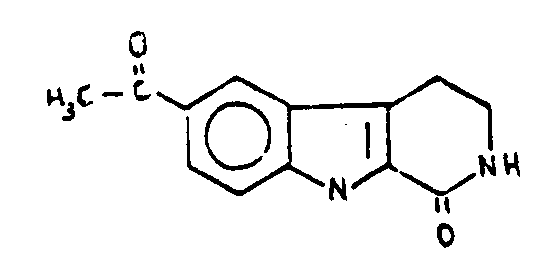
| 87 | Nitrogen attached directly or indirectly to the tricyclo ring system by nonionic bonding: | ||
This subclass is indented under subclass 85. Compounds in which nitrogen is attached directly or indirectly
to the tricyclo ring system by nonionic bonding.
| |||
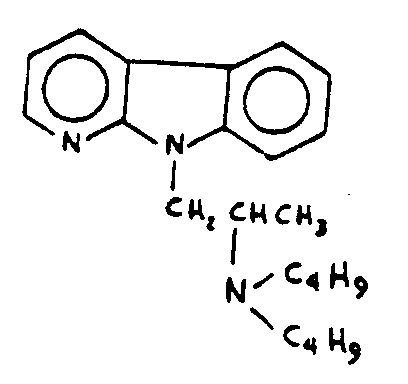
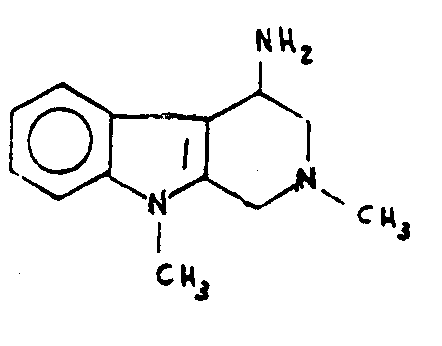
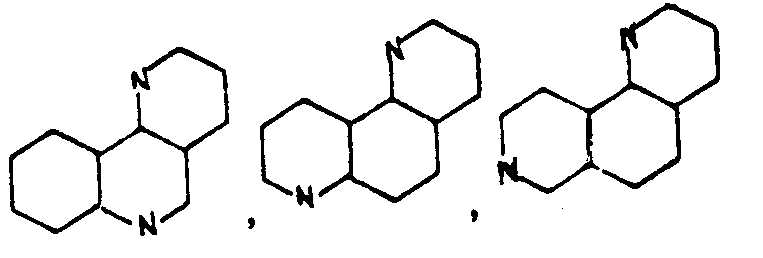
| 88 | Phenanthrolines (including hydrogenated): | ||||
This subclass is indented under subclass 81. Compounds wherein the tricyclo ring system consists of three
six-membered rings forming the phenanthrene configuration in which
two ring carbons have been replaced by ring nitrogens; said ring
system may contain double bonds between ring members.
| |||||
| 89 | Ring oxygen in the tricyclo ring system: | ||
This subclass is indented under subclass 80. Compounds in which the tricyclo ring system contains ring
oxygen.
| |||
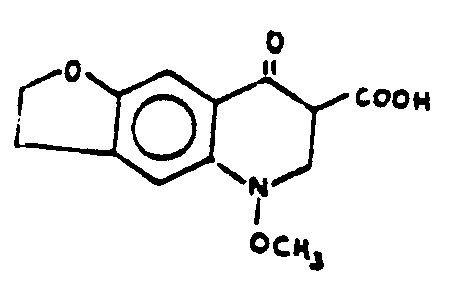
| 90 | Plural ring oxygens in the tricyclo ring system: | ||
This subclass is indented under subclass 89. Compounds in which the tricyclo ring system contains at
least two ring oxygens.
| |||
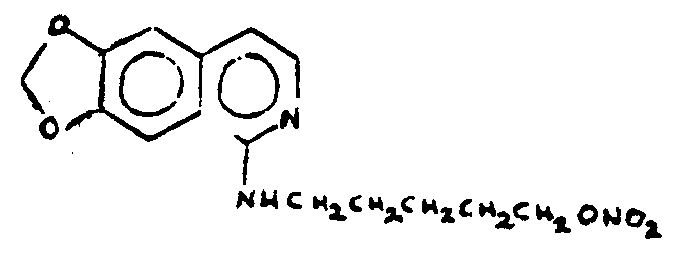
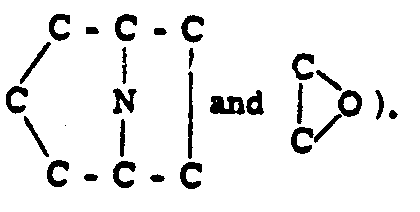
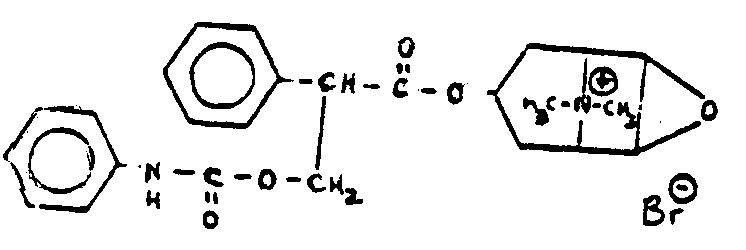
| 91 | Tropane and oxirane in the tricyclo ring system: | ||
| This subclass is indented under subclass 89. Compounds wherein the tricyclo ring system consists of the
tropane and oxirane nuclei.
| |||
| 92 | Plural chalcogens bonded directly to ring carbons of the tricyclo ring system: | ||
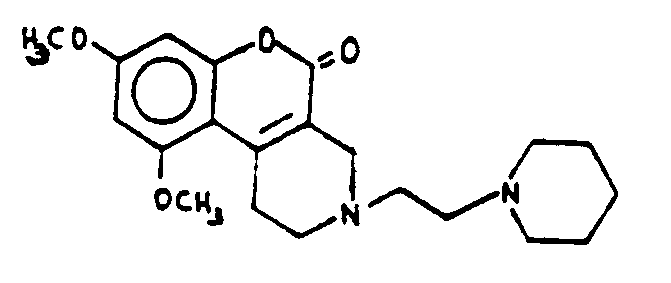
This subclass is indented under subclass 89. Compounds wherein at least two chalcogens (i.e., oxygen,
sulfur, selenium, or tellurium) are bonded directly to ring carbons
of the tricyclo ring system.
| |||
| 93 | One of the cyclos has at least seven members: | ||
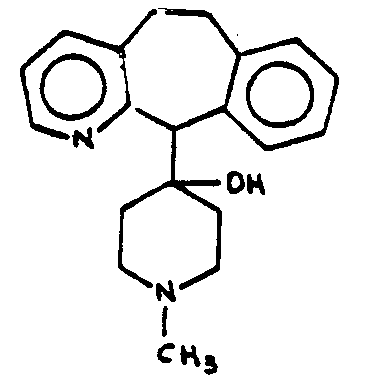
This subclass is indented under subclass 79. Compounds wherein one of the cyclos of the tricyclo ring
system has at least seven members.
| |||
| 94 | Ring nitrogen is shared by two of the cyclos: | ||
This subclass is indented under subclass 79. Compounds wherein the ring nitrogen is a member of two of
the cyclos in the tricyclo ring system.
| |||
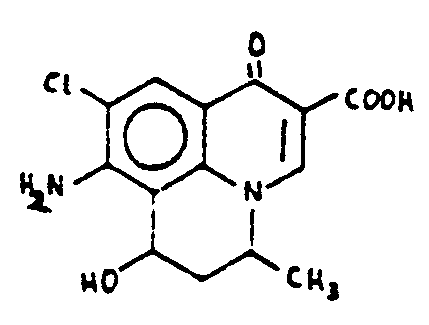
| 95 | Benzo (a) quinolizines (including hydrogenated): |
| This subclass is indented under subclass 94. Compounds wherein the tricyclo ring system has the following
basic structure, which may contain double bonds between ring members:
| |
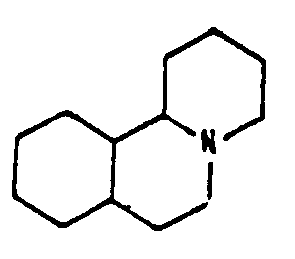
| 96 | Additional polycyclo ring system having ring nitrogen (e.g., emetine, etc.): | ||
This subclass is indented under subclass 95. Compounds which contain an additional polycyclo ring system
having ring nitrogen.
| |||
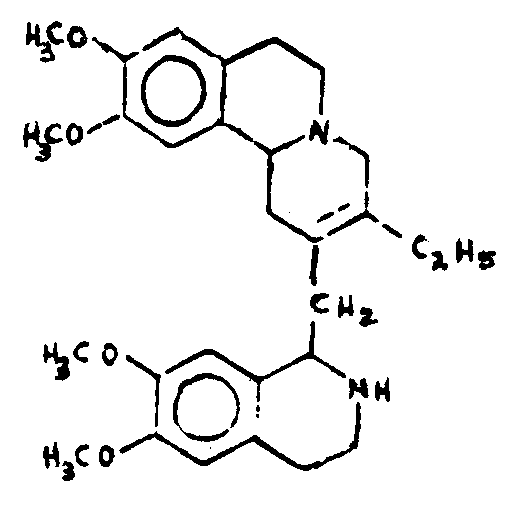
| 97 | Two of the cyclos share at least three ring carbons (e.g., benzomorphans, etc.): | ||
This subclass is indented under subclass 79. Compounds wherein at least three ring carbons of one cyclo
are ring carbons of an additional cyclo in the tricyclo ring system
(i.e., bridged).
| |||
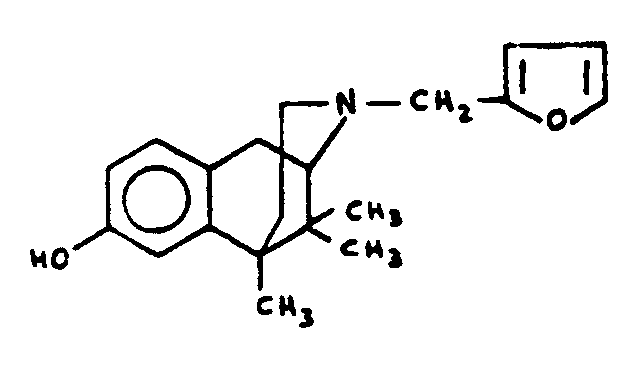
| 98 | Ring carbon is shared by each of the three cyclos (e.g., 1,8-naphthalimides, etc.): | ||
This subclass is indented under subclass 79. Compounds wherein a ring carbon is a member of each of the
cyclos of the tricyclo ring system.
| |||
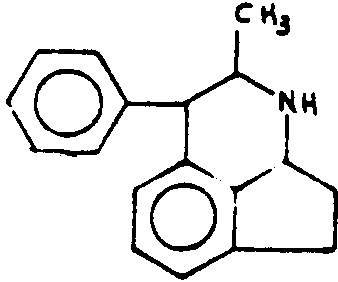
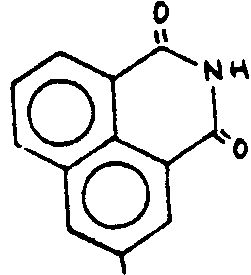
| 99 | Nitrogen, other than as nitro or nitroso, attached directly or indirectly to the tricyclo ring system by nonionic bonding: | ||
This subclass is indented under subclass 98. Compojnds wherein nitrogen, except as a member of the nitro
(-NO2) or nitro-so (-NO) group, is attached
directly or indirectly to the tricyclo ring system by nonionic bonding.
| |||
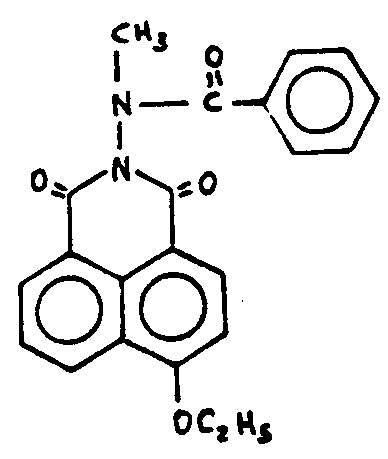
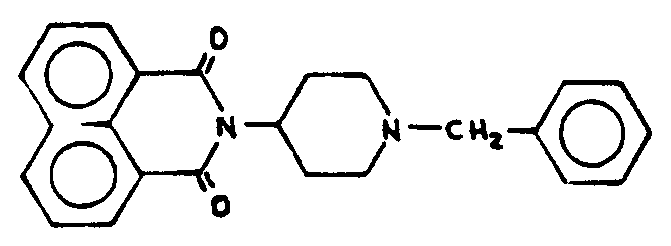
| 100 | The Nitrogen is bonded directly to a carbocyclic ring of the tricyclo ring system: |
| This subclass is indented under subclass 99. Compounds in which the nitrogen is bonded directly to a carbocyclic ring of the tricyclo ring system. | |
| 101 | Each of the three cyclos is six-membered (e.g., benzoquinolines, etc.): | ||
This subclass is indented under subclass 79. Compounds wherein the tricyclo ring system consists of three
six-membered rings.
| |||
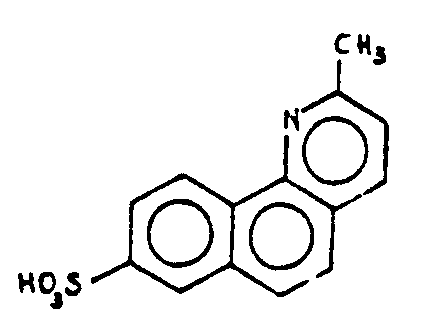
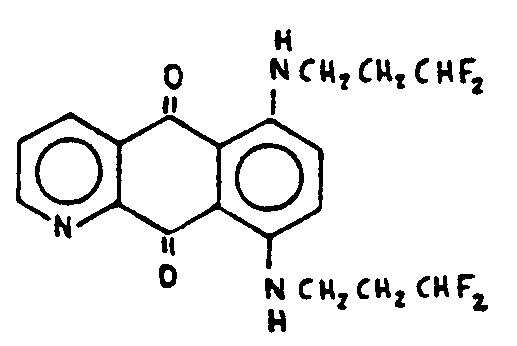
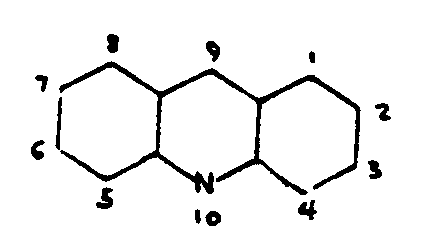
| 102 | Acridines (including hydrogenated): |
| This subclass is indented under subclass 101. Compounds wherein the tricyclo ring system has the following
basic structure, which may contain double bonds between ring members:
| |
| 103 | Chalcogen bonded directly to ring carbon of the six-membered hetero ring: |
| This subclass is indented under subclass 102. Compounds in which chalcogen (i.e., oxygen, sulfur, selenium, or tellurium) is bonded directly to ring carbon of the six-membered hetero ring. | |
| 104 | Nitrogen, other than as nitro or nitroso, attached directly or indirectly to the acridine ring system by nonionic bonding: | ||
This subclass is indented under subclass 102. Compounds in which nitrogen, except as a member of the nitro
(-NO2) or nitroso (-NO) group, is attached
directly or indirectly to the acridine ring system by nonionic bonding.
| |||
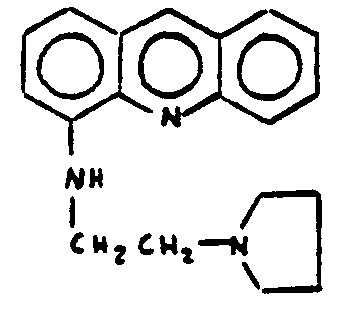
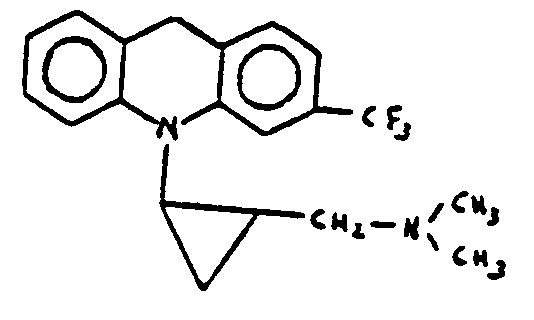
| 105 | The nitrogent is bonded directly to ring carbon of the six-membered hetero ring: |
| This subclass is indented under subclass 104. Compounds in which the nitrogen is bonded directly to ring carbon of the six-membered hetero ring. | |
| 106 | The nitrogen is part of a substituent which contains additional nonionically bonded nitrogen: | ||
This subclass is indented under subclass 105. Compounds wherein the nitrogen is a member of a group containing
additional nitrogen which is attached by nonionic bonding to the acridine
ring system.
| |||
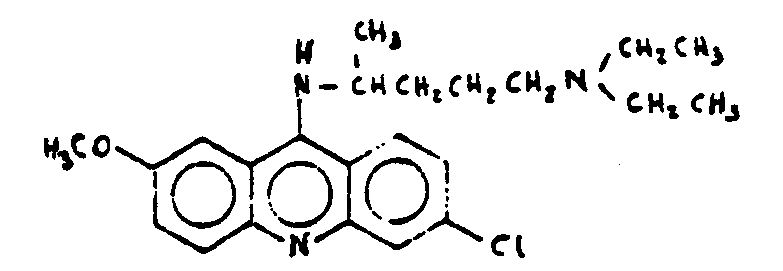
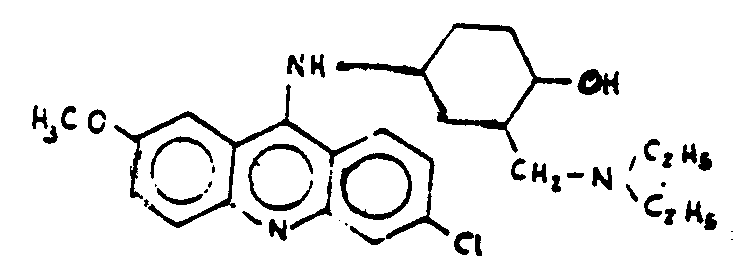
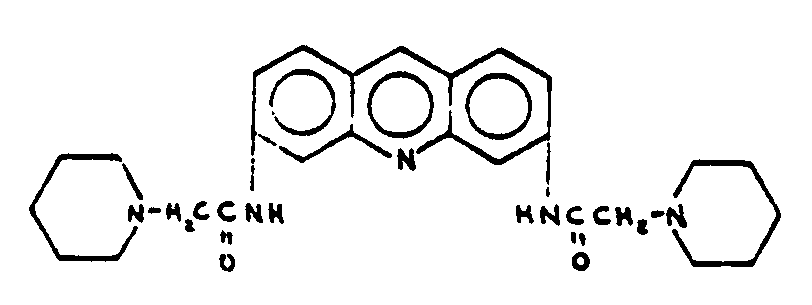
| 107 | Plural nitrogens, other than as nitro or nitroso, attached directly to the carbocyclic rings of the acridine ring system (e.g., 3, 6-diaminoacridines, etc.): | ||
This subclass is indented under subclass 104. Compounds wherein at least two nitrogens, except as members
of the nitro (-NO) or nitroso (-NO) group, are attached directly
to the carbocyclic rings of the acridine ring system.
| |||
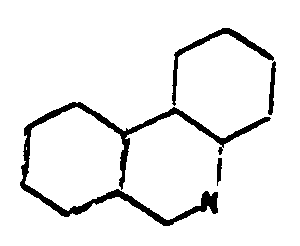
| 108 | Phenanthridines (including hydrogenated): |
| This subclass is indented under subclass 101. Compounds wherein the tricyclo ring system has the following
basic structure, which may contain double bonds between ring members:
| |
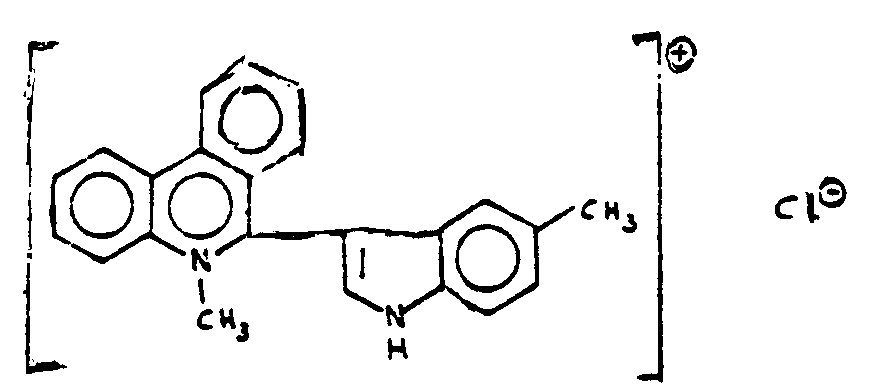
| 109 | Unsaturated ring bonded directly to ring carbon of the six-membered hetero ring: | ||
This subclass is indented under subclass 108. Compounds in which an unsaturated ring, i.e., a ring which
contains at least one double bond between ring members, is bonded
directly to ring carbon of the six-membered hetero ring.
| |||
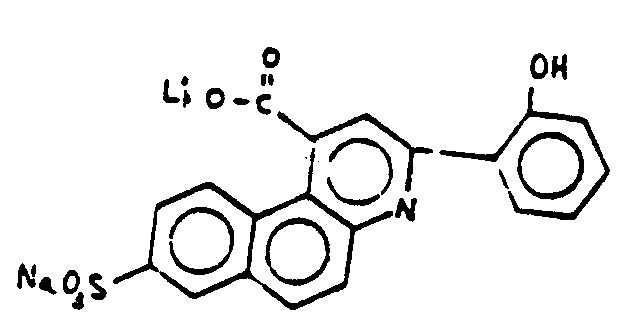
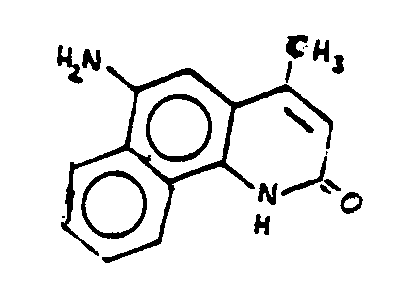
| 110 | Chalcogen or -C(=X)-, wherein X is chalcogen, attached directly to the six-membered hetero ring by nonionic bonding: | ||
This subclass is indented under subclass 101. Compounds in which chalcogen (i.e., oxygen, sulfur,selenium
or tellurium), or a -C- group, in which X is chalcogen, is bonded
directly to the six-membered hetero ring by nonionic bonding.
| |||
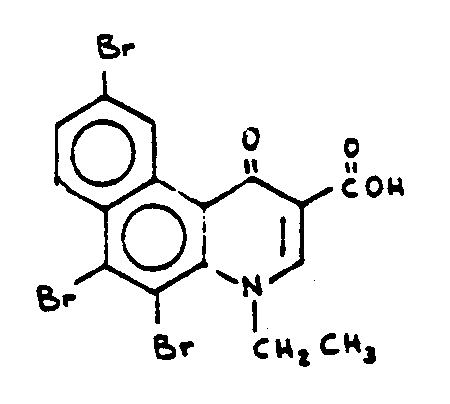
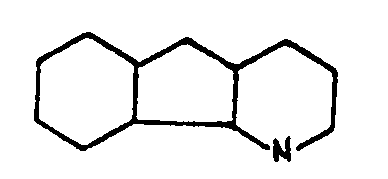
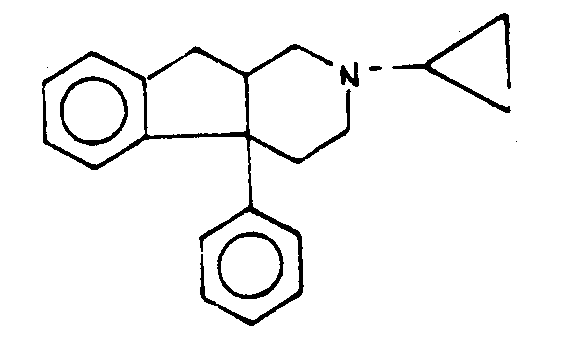
| 111 | The tricyclo ring system consists of a five-membered carbocyclic ring ortho fused to both a six-membered carboxyclic ring and the six-membered hetero ring (e.g., indenopyridines, etc.): | ||
| This subclass is indented under subclass 79. Compounds in which the tricyclo ring system consists of
a five-membered carbocyclic ring ortho fused to both a six-membered
carbocyclic ring and the six-membered hetero ring; e .g.,
| |||
| 112 | Bicyclo ring system having the six-membered hetero ring as one of the cyclos: | ||
This subclass is indented under subclass 26. Compounds in which the polycyclo ring system consists of
exactly two rings.
| |||
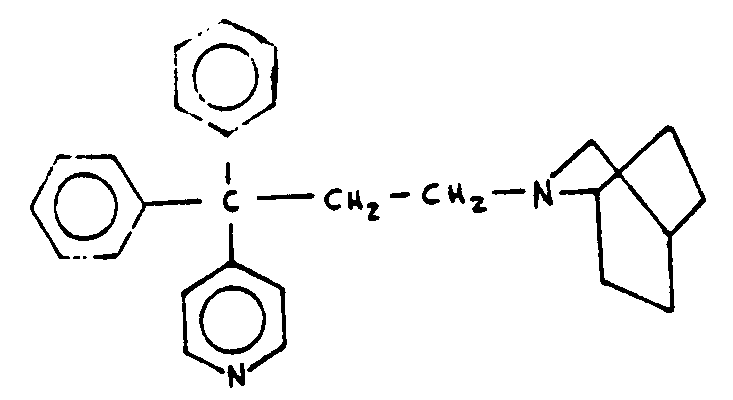
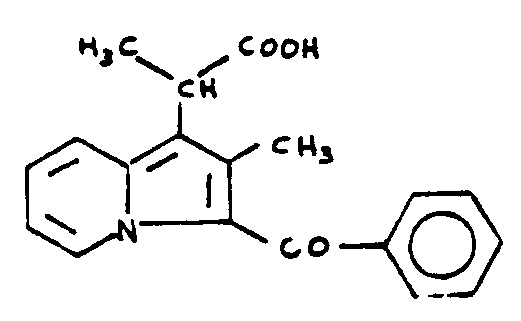
| 113 | Plural ring hetero atoms in the bicyclo ring system: | ||
This subclass is indented under subclass 112. Compounds wherein the bicyclo ring system includes at least
one ring hetero atom in addition to the ring nitrogen of the six-membered hetero
ring.
| |||
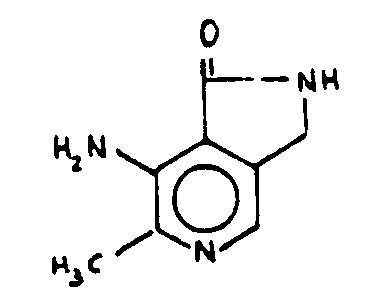
| 114 | Ring sulfur in the bicyclo ring system: | ||
This subclass is indented under subclass 113. Compounds in which the bicyclo ring system contains ring
sulfur.
| |||
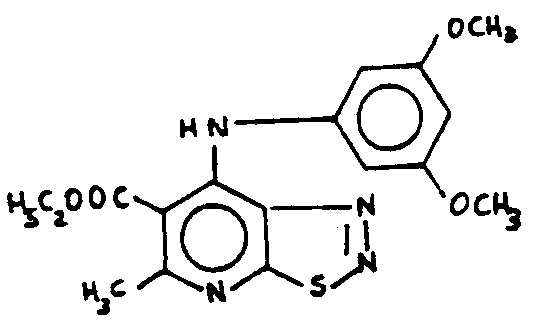
| 115 | Ring oxygen in the bicyclo ring system: | ||
This subclass is indented under subclass 113. Compounds in which the bicyclo ring system contains ring
oxygen.
| |||
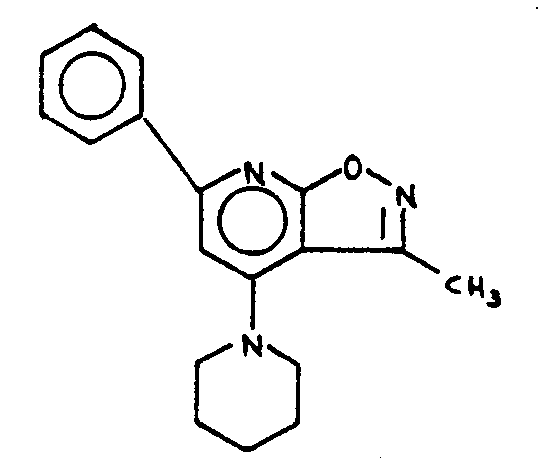
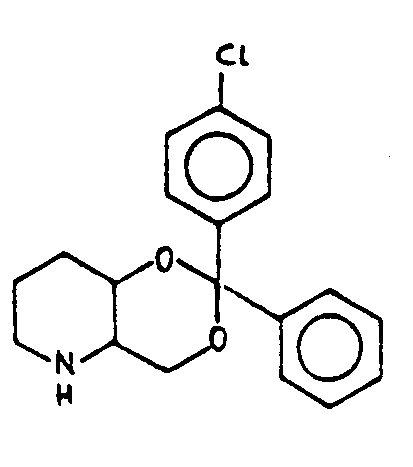
| 116 | Acyclic chalcogen bonded directly to ring carbon of the bicyclo ring system: | ||
This subclass is indented under subclass 115. Compounds in which acyclic chalcogen (i.e., oxygen, sulfur,
selenium, or tellurium) is bonded directly to ring carbon of the
bicyclo ring system.
| |||
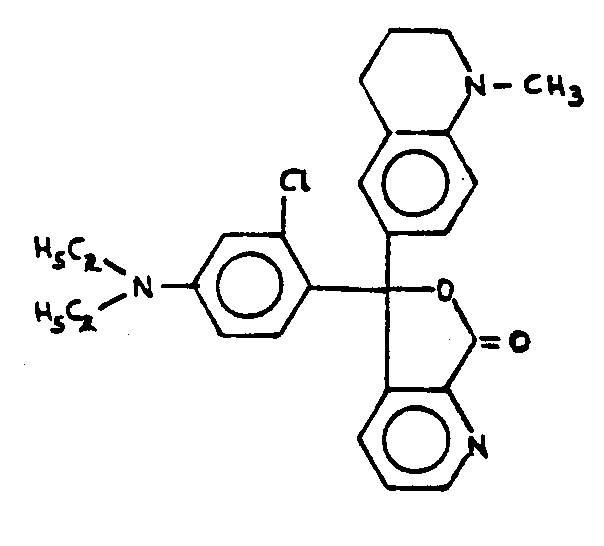
| 117 | At least four ring nitrogens in the bicyclo ring system: | ||
This subclass is indented under subclass 113. Compounds wherein the bicyclo ring system contains at least
four ring nitrogens.
| |||
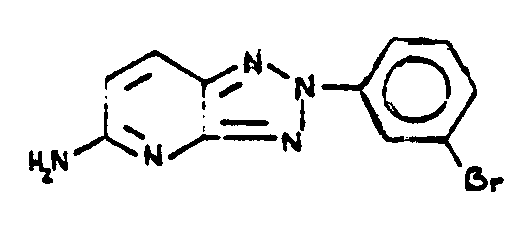
| 118 | Three ring nitrogens in the bicyclo ring system: | ||
This subclass is indented under subclass 113. Compounds wherein the bicyclo ring system contains exactly
three ring nitrogens.
| |||
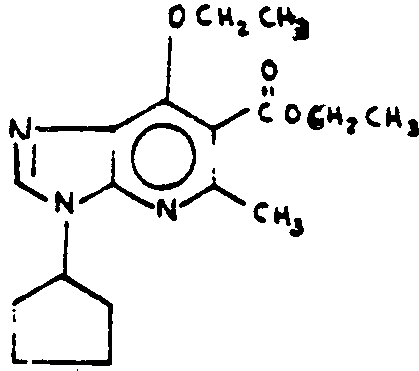
| 119 | Two of the ring nitrogens are bonded directly to each other: | ||
This subclass is indented under subclass 118. Compounds wherein two of the ring nitrogens are bonded directly
to each other.
| |||
| 120 | Having -C(=X)-, wherein X is chalcogen, bonded directly to the bicyclo ring system: | ||
This subclass is indented under subclass 119. Compounds wherein a group, in which X is chalcogen (i.e.,
oxygen, sulfur, selenium, or tellurium), is bonded directly to the
bicyclo ring system.
| |||
| 121 | Ring nitrogen is shared by the two cyclos: | ||
This subclass is indented under subclass 113. Compounds wherein the ring nitrogen is a member of both
cyclos of the bicyclo ring system.
| |||
| 122 | The other cyclo in the bicyclo ring system is also six-membered (e.g., naphthyridines, etc.): |
| This subclass is indented under subclass 113. Compounds wherein the bicyclo ring system consists of two six-membered cyclos. | |
| 123 | Chalcogen and -C(=X)-, wherein X is chalcogen bonded directly to ring carbons of the bicyclo ring system (e.g., 4-oxo-naphthyridine-3-carboxylic acid, etc.): | ||
This subclass is indented under subclass 122. Compounds in which both chalocogen (i.e., oxygen, sulfur,
selenium, or tellurium) and a group, wherein X is chalcogen, are
bonded directly to ring carbons of the bicyclo ring system.
| |||
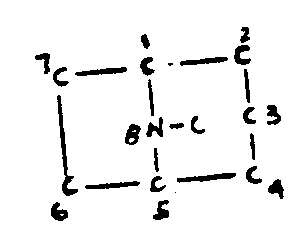
| 124 | Tropanes (including nor and dehydro forms): | ||||
| This subclass is indented under subclass 112. Compounds in which the bicyclo ring system has the following
basic structure:
| |||||
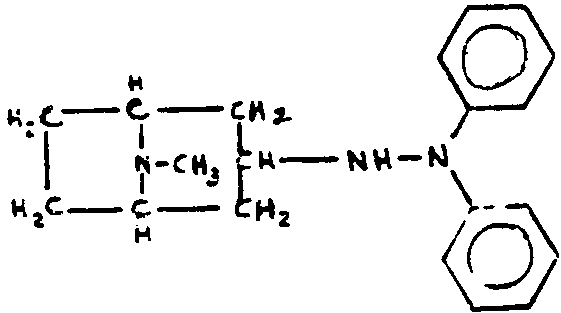
| 125 | Additional hetero ring containing: | ||
This subclass is indented under subclass 124. Compounds which contain an additional hetero ring.
| |||
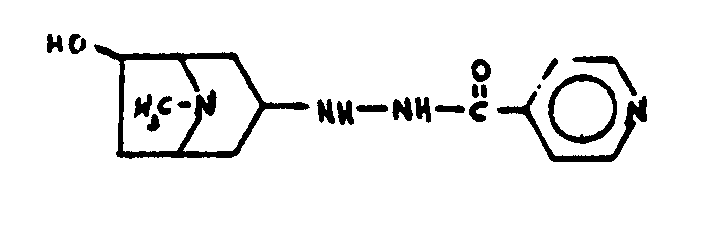
| 126 | Additional polycyclo ring system having the additional hetero ring as one of the cyclos: | ||
This subclass is indented under subclass 125. Compounds wherein the additional hetero ring is one of the
cyclos in a polycyclo ring system.
| |||
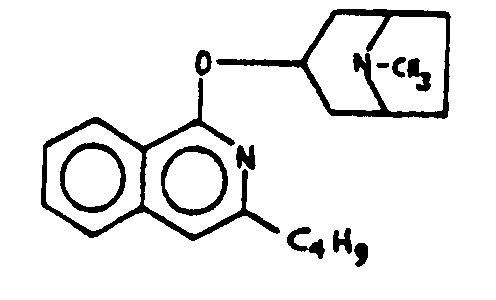
| 127 | Chalcogen bonded directly to ring carbon of the tropane ring system: | ||
This subclass is indented under subclass 124. Compounds wherein chalcogen (i.e., oxygen, sulfur, selenium,
or tellurium) is bonded directly to a ring carbon of the tropane
ring system.
| |||
| 128 | Polycyclo-carbocyclic ring system: | ||
This subclass is indented under subclass 127. Compounds having a carbocyclic ring system which contains
at least two rings.
| |||
| 129 | Additional chalcogen attached directly or indirectly to the tropane ring system by nonionic bonding: | ||
This subclass is indented under subclass 127. Compounds wherein additional chalcogen (i.e., oxygen, sulfur,
selenium, or tellurium) is attached directly or indirectly to the
tropane ring system by nonionic bonding.
| |||
| 130 | Three or more oxygens attached directly or indirectly to the tropane ring system by nonionic bonding: | ||
This subclass is indented under subclass 129. Compounds in which at least three oxygens are attached directly
or indirectly to the tropane ring system by nonionic bonding.
| |||
| 131 | Hydroxy containing or containing oxy bonded directly to a group IA or group IIA light metal (i.e., -OH or -OM containing): | ||
This subclass is indented under subclass 130. Compounds which contain either an -OH or an -OM group, wherein
M is a Group IA or Group IIA metal having specific gravity less
than four.
| |||
| 132 | Having -C(=X), wherein X is chalcogen, bonded directly to the tropane ring system: | ||
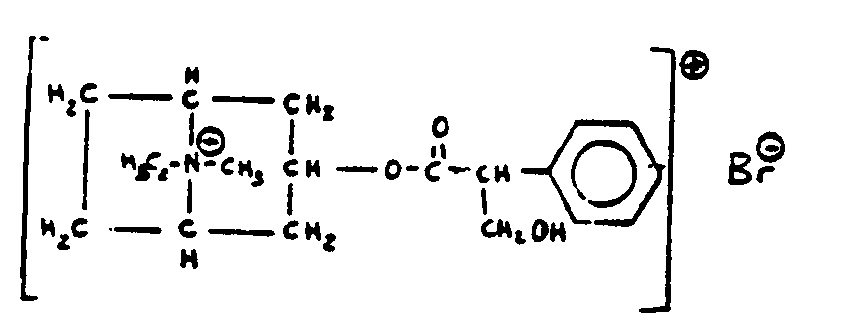
This subclass is indented under subclass 124. Compounds wherein a group, in which X is chalcogen (i.e.,
oxygen, sulfur, selenium, or tellurium), is bonded directly to the
tropane ring system.
| |||
| 133 | Quinuclidines (including unsaturated): | ||
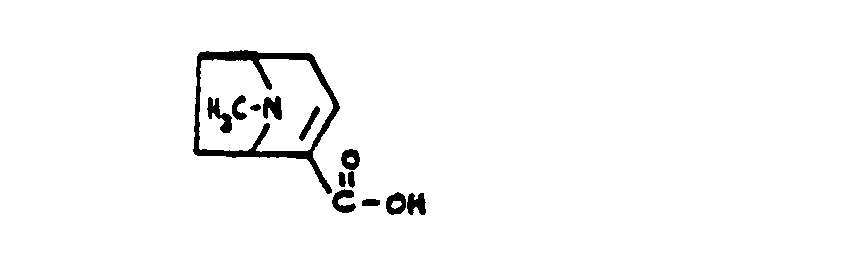
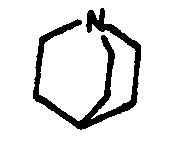
| This subclass is indented under subclass 112. Compounds wherein the bicyclo ring system has the following
basic structure, which may contain double bonds between ring members:
| |||
| 134 | Quinoline containing (including hydrogenated): | ||
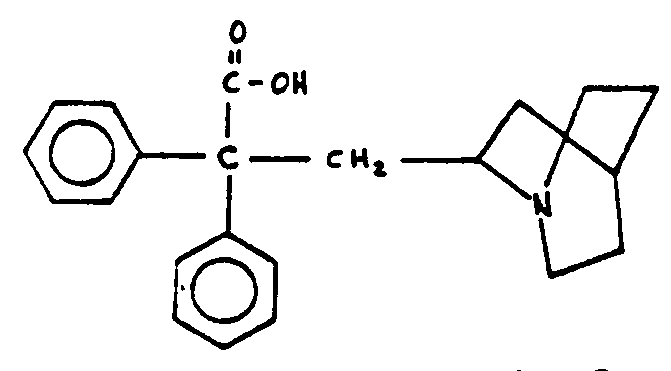
| This subclass is indented under subclass 133. Compounds containing the quinoline ring system, which may
contain double bonds between ring members, i.e.,
| |||
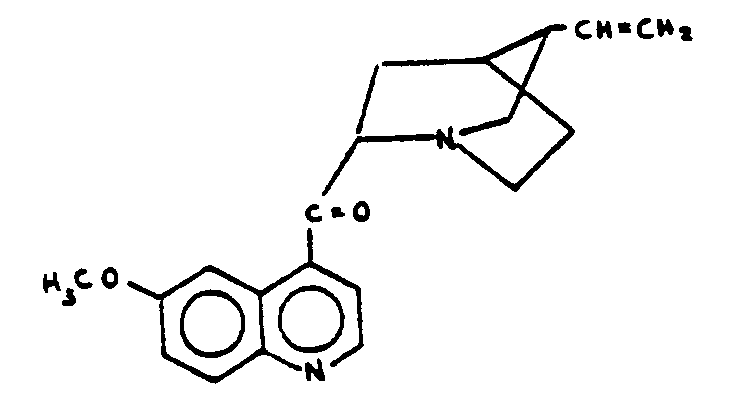
| 135 | Additional hetero ring containing: | ||
This subclass is indented under subclass 134. Compounds which contain an additional hetero ring.
| |||
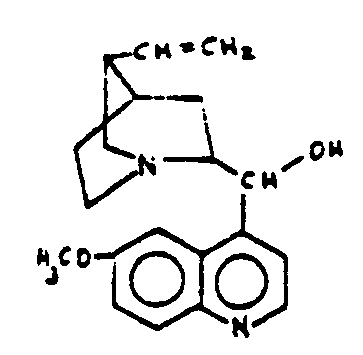
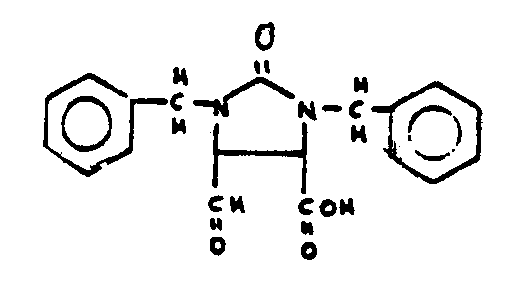
| 136 | Three or more chalcogens attached indirectly to the quinuclidine ring system by nonionic bonding: | ||
This subclass is indented under subclass 134. Compounds in which at least three chalcogens (i.e., oxygen,
sulfur, selenium, or tellurium) are attached indirectly to the quinuclidine
ring system by nonionic bonding.
| |||
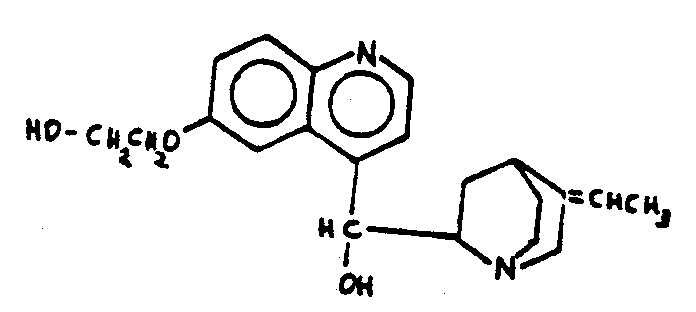
| 137 | Chalcogen bonded directly to ring carbon of the quinuclidine ring system: | ||
This subclass is indented under subclass 133. Compounds wherein chalcogen (i.e., oxygen, sulfur, selenium,
or tellurium) is bonded directly to a ring carbon of the quinuclidine ring
system.
| |||
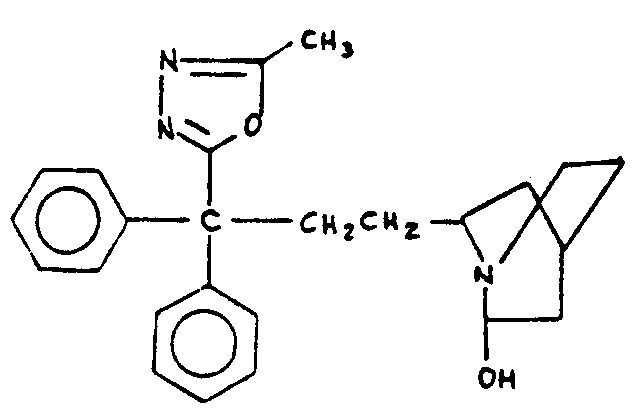
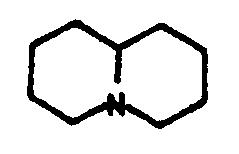
| 138 | Quinolizines (including hydrogenated): | ||
| This subclass is indented under subclass 112. Compounds wherein the bicyclo ring system has the following
basic structure, which may contain double bonds between ring members:
| |||
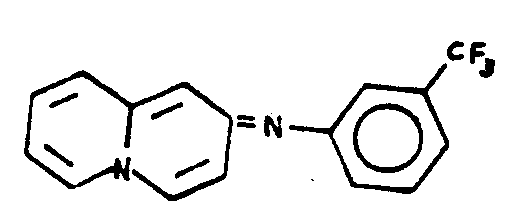
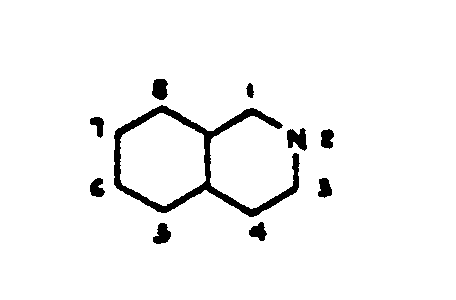
| 139 | Isoquinolines (including hydrogenated): |
| This subclass is indented under subclass 112. Compounds wherein the bicyclo ring system has the following
structure, which may contain double bonds between ring members:
| |
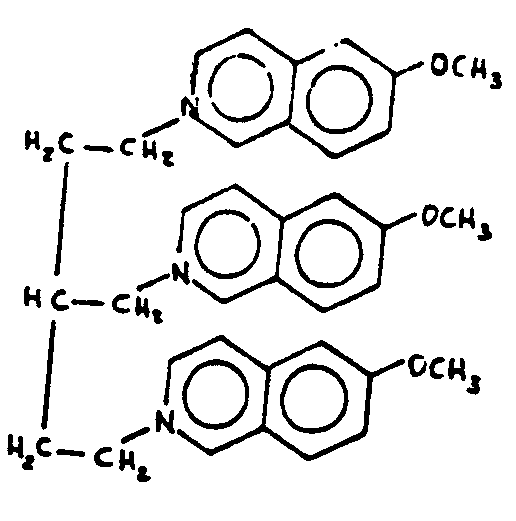
| 140 | Plural isoquinoline ring systems attached directly or indirectly to each other by nonionic bonding: | ||
This subclass is indented under subclass 139. Compounds which contain at least two isoquinoline ring systems
that are attached directly or indirectly to each other by nonionic
bonding.
| |||
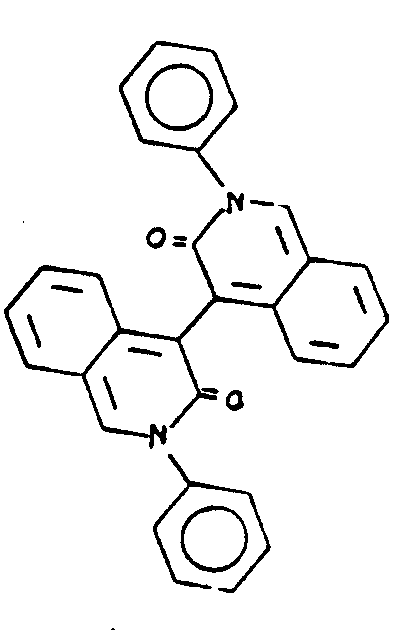
| 141 | Chalcogen attached directly to the six-membered hetero ring by nonionic bonding: | ||
This subclass is indented under subclass 139. Compounds wherein chalcogen (i.e., oxygen, sulfur, selenium,
or tellurium) is attached directly to the six-membered hetero ring
of the isoquinoline ring system by nonionic bonding.
| |||
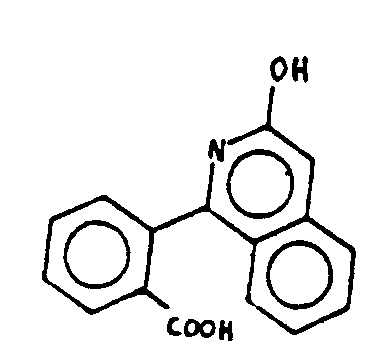
| 142 | Plural chalcogens attached directly to the six-membered hetero ring by nonionic bonding: |
| This subclass is indented under subclass 141. Compounds wherein at least two chalcogens (i.e., oxygen, sulfur, selenium, or tellurium) are attached directly to the six-membered hetero ring of the isoquinoline ring system by nonionic bonding. | |
| 143 | Nitrogen, other than as nitro or nitroso, attached directly to the isoquinoline ring system by nonionic bonding: | ||
This subclass is indented under subclass 139. Compounds wherein nitrogen, except as a member of the nitro
(-NO2) or nitroso (-NO) group, is attached
directly to the isoquinoline ring system by nonionic bonding.
| |||
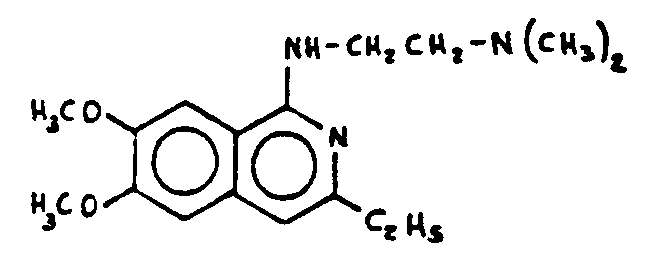
| 144 | Unsaturated ring attached directly to the six-membered hetero ring by nonionic bonding: | ||||
This subclass is indented under subclass 139. Compounds wherein an unsaturated ring, i.e., a ring having
at least one double bond between ring members, is attached directly
to the six-membered hetero ring by nonionic bonding.
| |||||
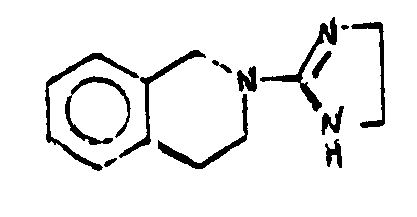
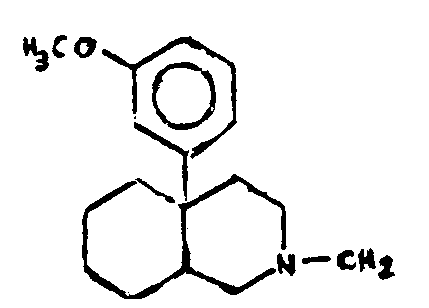
| 145 | Acyclic nitrogen double or triple bonded to carbon which is attached directly or indirectly to the isoquinoline ring system by nonionic bonding: | ||
This subclass is indented under subclass 139. Compounds wherein acyclic nitrogen is attached by a double
or triple bond to carbon which in turn is attached directly or indirectly to
the isoquinoline ring system by nonionic bonding.
| |||
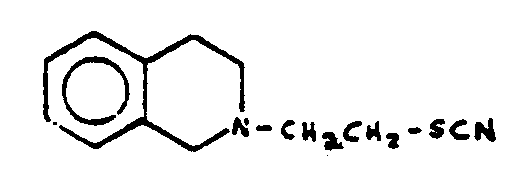
| 146 | Having -C(=X)-, wherein X is chalcogen, attached directly or indirectly to the isoquinoline ring system by nonionic bonding: | ||
This subclass is indented under subclass 139. Compounds wherein a group, in which X is chalcogen (i.e.,
oxygen, sulfur, selenium, or tellurium), is bonded directly or indirectly
to the isoquinoline ring system by nonionic bonding.
| |||
| 147 | The -C(=X)- is Part of a -C(=X)X- group, wherein the X"s are the same or diverse chalcogens: | ||
This subclass is indented under subclass 146. Compounds in which the -C(=X)- is part of a group,
wherein the X"s are the same, or diverse, chalcogens (i.e.,
oxygen, sulfur, selenium, or tellurium.)
| |||
| 148 | Unsaturated hetero ring attached indirectly to the isoquinoline ring system by nonionic bonding: | ||
This subclass is indented under subclass 139. Compounds wherein an unsaturated hetero ring, i.e., a hetero
ring having at least one double bond between ring members, is attached indirectly
to the isoquinoline ring system by nonionic bonding.
| |||
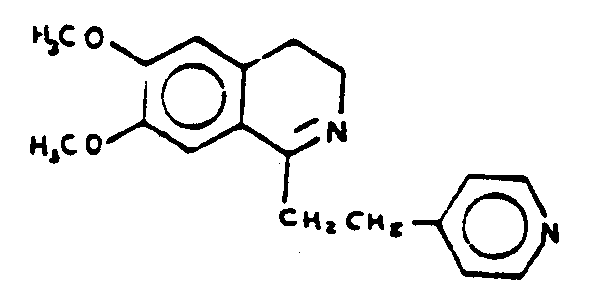
| 149 | Unsaturated carbocyclic ring attached indirectly to the six-membered hetero ring through an acyclic hydrocarbon chain: | ||
This subclass is indented under subclass 139. Compounds wherein an unsaturated carbocyclic ring, i.e.,
a ring consisting of carbon atoms and having at least one double
bond between ring members, is attached indirectly to the six-membered
hetero ring of the isoquinoline ring system through an acyclic hydrocarbon
chain, i.e., a chain consisting of carbon and hydrogen atoms.
| |||
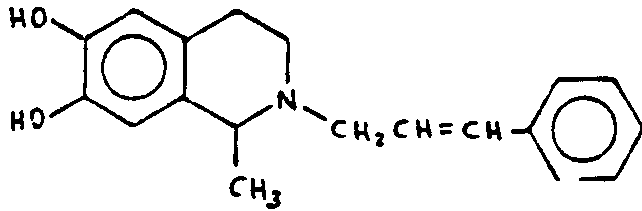
| 150 | Single bond between 3,4-positions: | ||
This subclass is indented under subclass 139. Compounds wherein there is a single bond between the 3,4-positions
of the isoquinoline ring system.
| |||
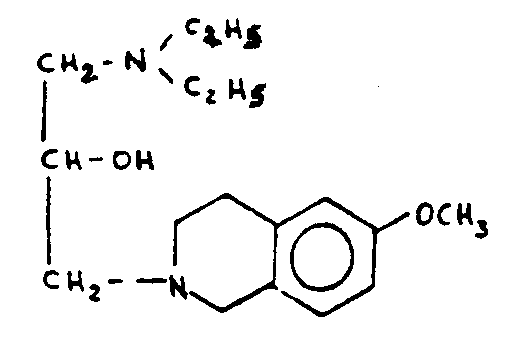
| 151 | N-alkyl or n-alkenyl isoquinoliniums which are otherwise unsubstituted or alkyl or alkenyl substituted only: | ||
This subclass is indented under subclass 139. Compounds wherein the carbon atoms of the isoquinoline ring
system are unsubstituted or contain an alkyl or alkenyl substituent
only and in which the nitrogen atom is pentavalent having bonded
directly thereto an alkyl or alkenyl group.
| |||
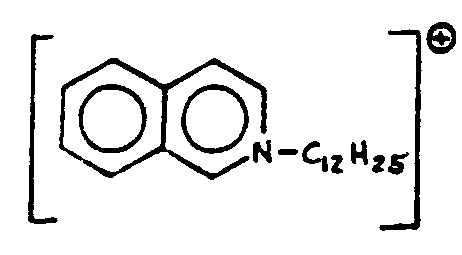
| 152 | Quinolines (including hydrogenated): |
| This subclass is indented under subclass 112. Compounds in which the bicyclo ring system has the following
basic structure, which may contain double bonds between ring members:
| |
| 153 | Chalcogen attached directly to the six-membered hetero ring by nonionic bonding: |
| This subclass is indented under subclass 152. Compounds in which chalcogen (i.e., oxygen, sulfur, selenium, or tellurium) is attached directly to the six-membered hetero ring of the quinoline ring system by nonionic bonding. | |
| 154 | Polycyclo-carbocyclic ring system bonded directly to the six-membered hetero ring (e.g., quinophthalones, etc.): | ||
This subclass is indented under subclass 153. Compounds in which a polycyclo-carbocyclic ring system is
bonded directly to the six-membered hetero ring of the quinoline
ring system.
| |||
| 155 | Plural chalcogens attached directly to the six-membered hetero ring by nonionic bonding: | ||
This subclass is indented under subclass 153. Compounds in which at least two chalcogens (i.e., oxygen,
sulfur, selenium, or tellurium) are attached directly to the six-membered
hetero ring by nonionic bonding.
| |||
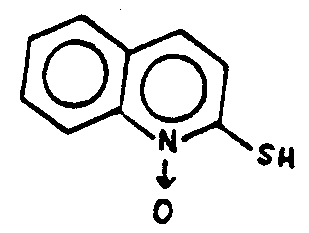
| 156 | Having -C(=X)-, wherein X is chalcogen, bonded directly to the six-membered hetero ring: |
| This subclass is indented under subclass 153. Compounds wherein a group, in which X is chalcogen (i.e., oxygen, sulfur, selenium, or tellurium), is bonded directly to the six-membered hetero ring. | |
| 157 | Chalcogen attached directly at 2-position by nonionic bonding: |
| This subclass is indented under subclass 153. Compounds in which chalcogen (i.e., oxygen, sulfur, selenium, or tellurium) is attached directly at the 2-position of the quinoline ring system by nonionic bonding. | |
| 158 | Single bond between 3,4-positions: | ||
This subclass is indented under subclass 157. Compounds in which there is a single bond between positions
3 and 4 of the quinoline ring system.
| |||
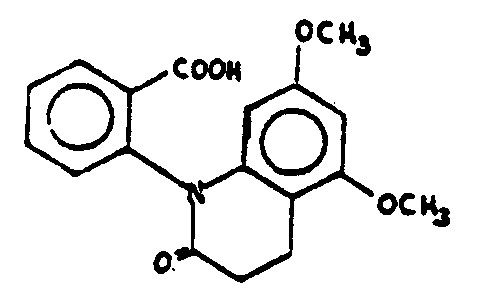
| 159 | Nitrogen, other than as nitro or nitroso, attached directly to the six-membered hetero ring by nonionic bonding: | ||
This subclass is indented under subclass 152. Compounds in which nitrogen, except as a member of the nitro
(-NO2) or nitroso (-NO) group, is attached
directly to the six-membered hetero ring of the quinoline ring system
by nonionic bonding.
| |||
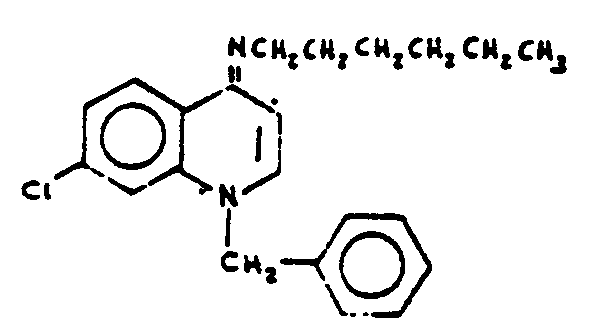
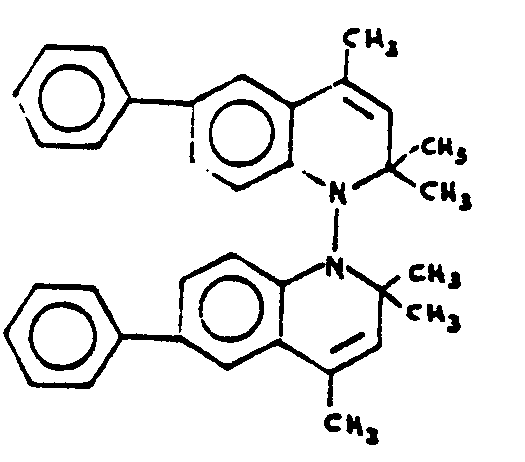
| 160 | Unsaturated carbocyclic ring bonded directly to the nitrogen: |
| This subclass is indented under subclass 159. Compounds in which an unsaturated carbocyclic ring, i.e., a ring consisting of carbon and having at least one double bond between ring members, is bonded directly to the nitrogen. | |
| 161 | Having -C(=X)-, wherein X is chalcogen, bonded directly to the carbocyclic ring: | ||
This subclass is indented under subclass 160. Compounds wherein a group, in which X is chalcogen (i.e.,
oxygen, sulfur, selenium, or tellurium), is bonded directly to the
carbocyclic ring.
| |||
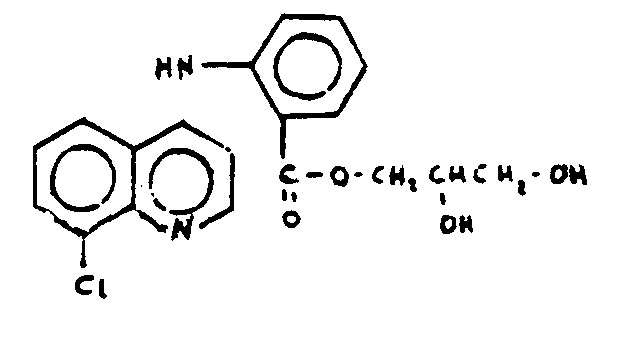
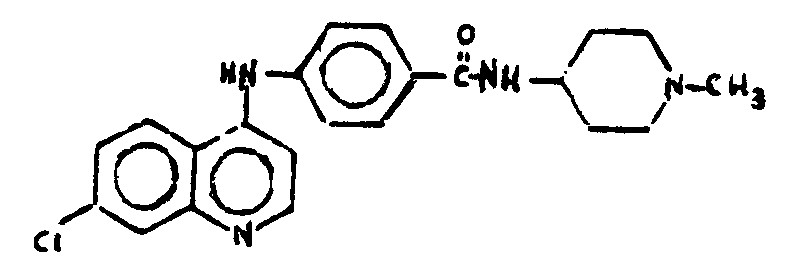
| 162 | Nitrogen attached indirectly to the six-membered hetero ring through the directly attached nitrogen by nonionic bonding: | ||
This subclass is indented under subclass 159. Compounds wherein nitrogen is attached indirectly to the
six-membered hetero ring through the nitrogen which is directly
attached by nonionic bonding.
| |||
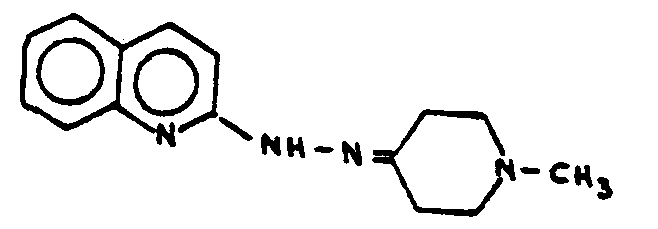
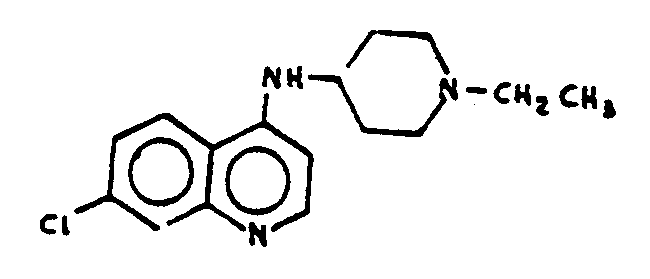
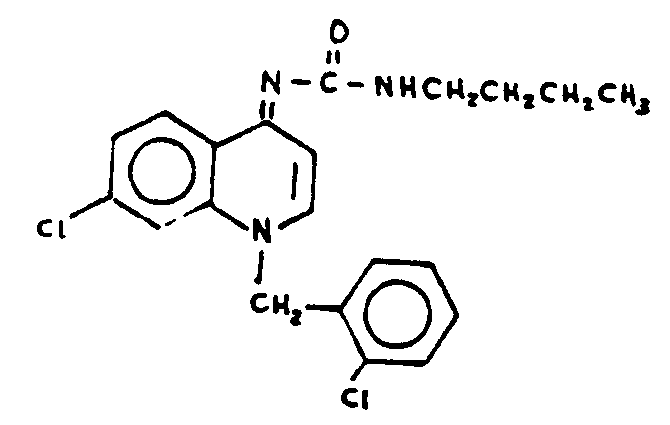
| 163 | Both nitrogens bonded directly to the same acyclic hydrocarbon group: | ||
This subclass is indented under subclass 162. Compounds in which both nitrogen atoms are bonded directly
to the same acyclic hydrocarbon group.
| |||
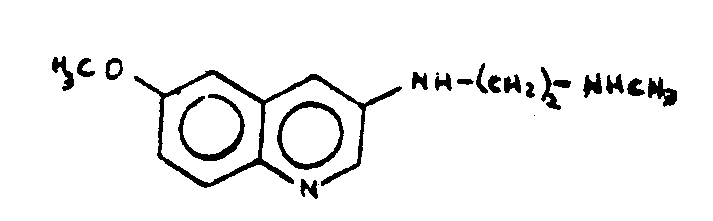
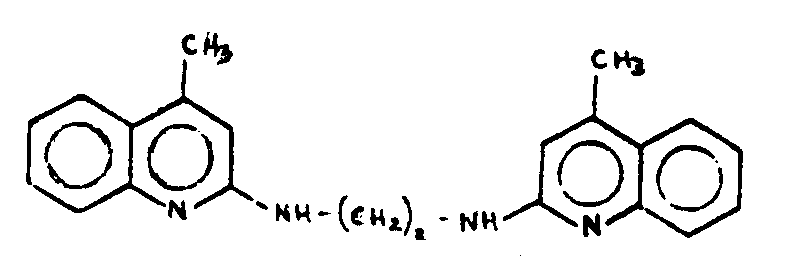
| 164 | Fully saturated quinolines: | ||
This subclass is indented under subclass 152. Compounds wherein the quinoline ring system is fully saturated,
i.e., no double bonds between ring members.
| |||
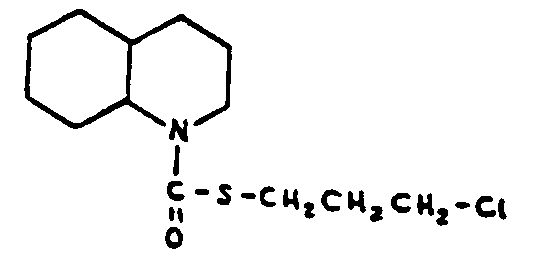
| 165 | Single bond between 1,2-positions and single bond between 3,4-positions: | ||
This subclass is indented under subclass 152. Compounds in which there are single bonds between positions
1 and 2 and positions 3 and 4 of the quinoline ring system.
| |||
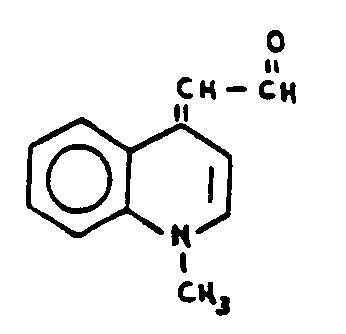
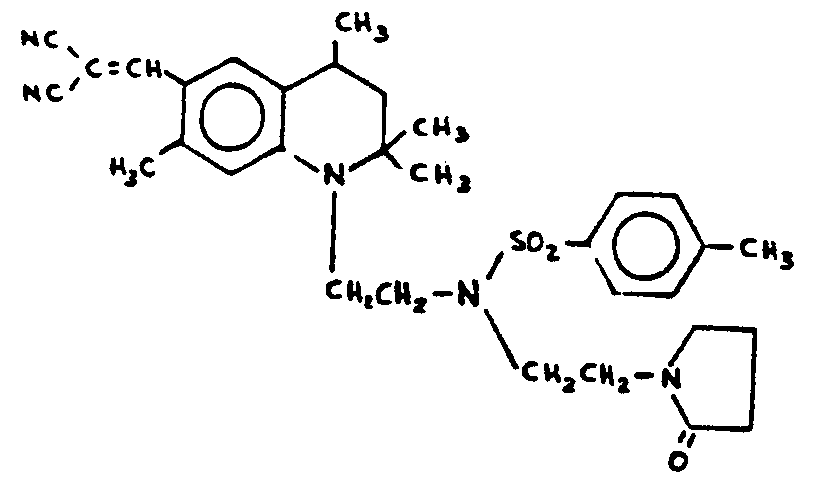
| 166 | The six-membered hetero ring is unsubstituted or alkyl substituted only: | ||
This subclass is indented under subclass 165. Compounds in which the six-membered hetero ring is unsubstituted
or substituted by alkyl groups only.
| |||
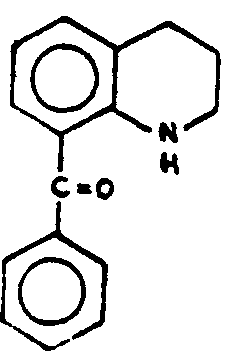
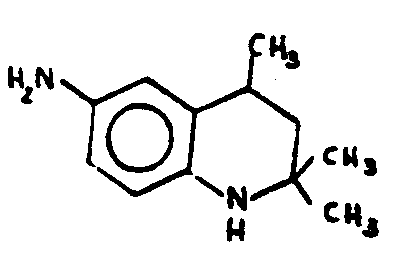
| 167 | Unsaturated hetero ring attached directly to the quinoline ring system by nonionic bonding: | ||
This subclass is indented under subclass 152. Compounds in which an unsaturated hetero ring is attached
directly to the quinoline ring system by nonionic bonding.
| |||
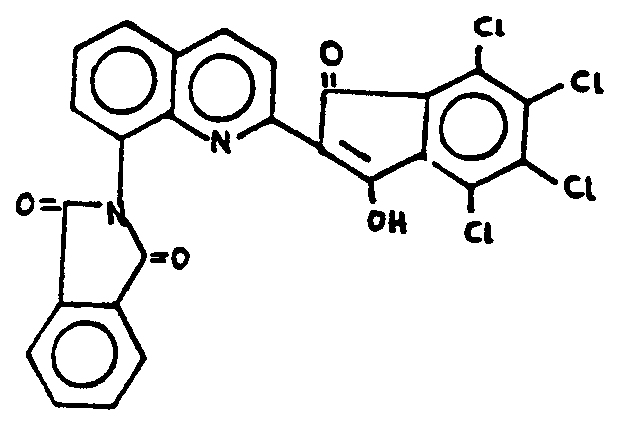
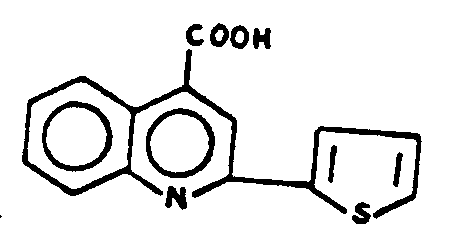
| 168 | Having -C(=X)-, wherein X is chalcogen, bonded directly to the quinoline ring system: |
| Compounds under subclas 152 wherein a group, in which X is chalcogen (i.e., oxygen, sulfur, selenium, or tellurium), is bonded directly to the quinoline ring system. | |
| 169 | Acyclic nitrogen bonded directly to the -C(-X)- group: | ||
This subclass is indented under subclass 168. Compound in which acyclic nitrogen is bonded directly to
the group.
| |||
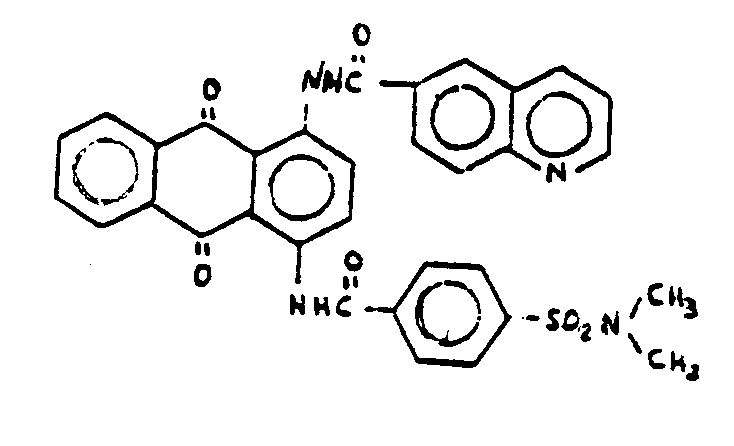
| 170 | The -C(=X)- is part of -C(=X)X- group, wherein the X"s are the same or diverse chalcogens: | ||
This subclass is indented under subclass 168. Compounds wherein the is part of a group, in which the
X"s are the same or diverse chalcogens (i.e., oxygen, sulfur,
selenium, or tellurium).
| |||
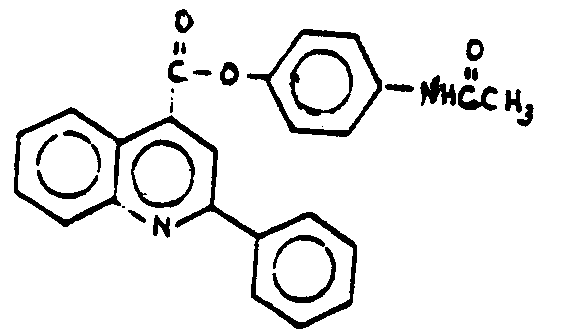
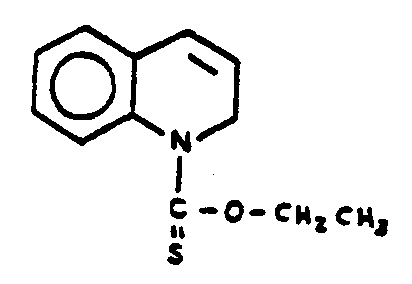
| 171 | Nitrogen, other than as nitro or nitroso, attached directly to the carbocyclic ring of the quinoline ring system by nonionic bonding: |
| This subclass is indented under subclass 152. Compounds wherein nitrogen, except as a member of the nitro (-NO2) or nitroso (-NO) group, is attached directly to the carbocyclic ring of the quinoline ring system by nonionic bonding. | |
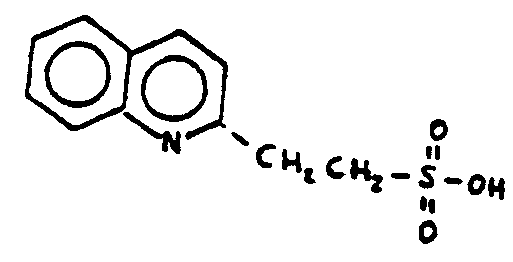
| 172 | Acyclic sulfur bonded directly to oxygen and directly or indirectly to the quinoline ring system by nonionic bonding: | ||
This subclass is indented under subclass 152. Compounds in which acyclic sulfur is bonded both directly
to oxygen and directly or indirectly to the quinoline ring system
by nonionic bonding.
| |||
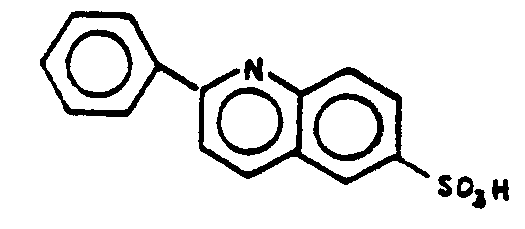
| 173 | Unsaturated carbocyclic ring attached directly to the quinoline ring system by nonionic bonding (e.g., quinophthalones, etc.): |
| This subclass is indented under subclass 152. Compounds in which an unsaturated carbocyclic ring is attached directly to the quinoline ring system by nonionic bonding. | |
| 174 | Having -C(=X)-, wherein X is chalcogen, attached indirectly to the quinoline ring system by nonionic bonding: |
| This subclass is indented under subclass 152. Compounds in which a group, wherein X is chalcogen (i.e., oxygen, sulfur, selenium, or tellurium), is attached indirectly to the quinoline ring system by nonionic bonding. | |
| 175 | Nitrogen bonded directly to the -C(=X)- group: | ||
This subclass is indented under subclass 174. Compounds in which nitrogen is bonded directly to the group.
| |||
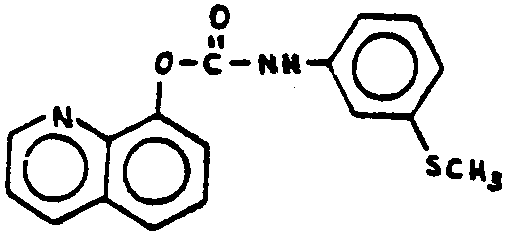
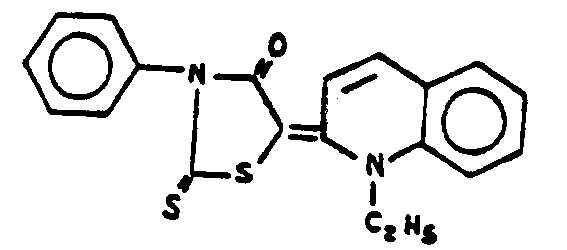
| 176 | Nitrogen, other than as nitro or nitroso, attached indirectly to the quinoline ring system by nonionic bonding: |
| This subclass is indented under subclass 152. Compounds wherein nitrogen, except as a member of the nitro (-NO2) or nitroso (-NO) group, is attached indirectly to the quinoline ring system by nonionic bonding. | |
| 177 | Chalcogen attached directly to the carbocyclic ring of the quinoline ring system by nonionic bonding: | ||
This subclass is indented under subclass 176. Compounds in which chalcogen (i.e., oxygen, sulfur, selenium,
or tellurium) is attached directly to the carbocyclic ring of the
quinoline ring system by nonionic bonding.
| |||
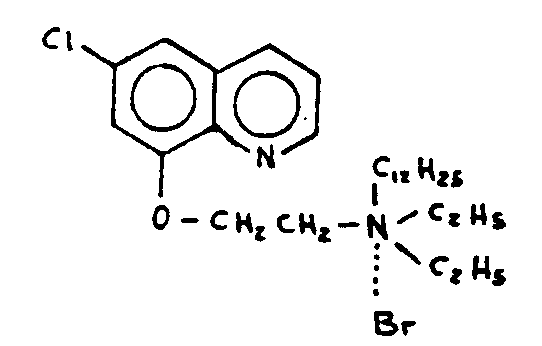
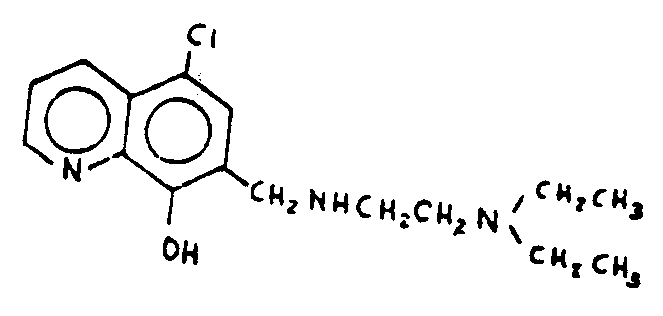
| 178 | Chalcogen attached directly to the carbocyclic ring of the quinoline ring system by nonionic bonding: |
| This subclass is indented under subclass 152. Compounds in which chalcogen (i.e., oxygen, sulfur, selenium, or tellurium) is attached directly to the carbocyclic ring of the quinoline ring system by nonionic bonding. | |
| 179 | The chalcogen is in an -OH, -SH, -OM or -SM group (M is group IA or group IIA light metal): | ||
This subclass is indented under subclass 178. Compounds in which the chalcogen is part of an -OH, -SH,
-OM or -SM group; wherein M is a Group IA or Group IIA metal having
a specific gravity less than four.
| |||
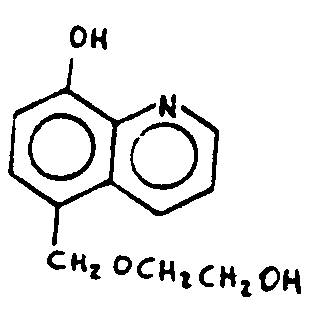
| 180 | Halogen of nitro attached directly or indirectly to the quinoline ring system by nonionic bonding: |
| This subclass is indented under subclass 152. Compounds in which halogen or a nitro group (-NO2) is attached directly or indirectly to the quinoline ring system by nonionic bonding. | |
| 181 | Quinolines which are unsubstituted or which are alkyl or alkenyl substituted only, or salt thereof: | ||
This subclass is indented under subclass 152. Compounds wherein the quinoline ring system is either unsubstituted
or substituted by alkyl or alkenyl groups only, or salts thereof.
| |||
| 182 | Addition salts: | ||
This subclass is indented under subclass 181. Compounds which are addition salts of (a) unsubstituted
quinoline or (b) quinoline substituted by alkyl or alkenyl radicals
only.
| |||
| 183 | Chalcogen bonded directly to ring carbon of the bicyclo ring system: | ||
This subclass is indented under subclass 112. Compounds in which chalcogen (i.e., oxygen, sulfur, selenium,
or tellurium) is bonded directly to ring carbon of the bicyclo ring
system.
| |||
| 184 | Piperdines: |
| This subclass is indented under subclass 1. Compounds in which the six-membered hetero ring, consisting of one nitrogen and five carbons, contains no double bonds between ring members, i.e., the piperidine ring. | |
| 185 | Process of forming a piperidine ring from a pyridine ring or from a partially hydrogenated pyridine ring: | ||
This subclass is indented under subclass 184. Processes wherein the piperidine ring is prepared by the
hydrogenation of pyridine or partially hydrogenated pyridine.
| |||
| 186 | Plural piperidine rings: | ||
This subclass is indented under subclass 184. Compounds which contain at least two piperidine rings.
| |||
| 187 | Additional hetero ring containing: | ||
This subclass is indented under subclass 186. Compounds which contain an additional hetero ring.
| |||
| 188 | Chalcogen attached directly to a ring carbon of a piperidine ring by nonionic bonding: | ||||
This subclass is indented under subclass 186. Compounds in which chalcogen (i.e., oxygen, sulfur, selenium,
or tellurium) is attached directly to a piperidine ring by nonionic
bonding.
SEE OR SEARCH THIS CLASS, SUBCLASS:
| |||||
| 189 | Having -C(=X)-, wherein X is chalcogen, bonded directly to a piperidine ring: | ||
This subclass is indented under subclass 186. Compounds wherein a group, in which X is chalcogen (i.e.,
oxygen, sulfur, selenium, or tellurium), is bonded directly to a
piperidine ring.
| |||
| 190 | Having -C(=X)-, wherein X is chalcogen, attached indirectly to a piperidine ring by nonionic bonding: | ||
This subclass is indented under subclass 186. Compounds wherein a group, in which X is chalcogen (i.e.,
oxygen, sulfur, selenium, or tellurium), is attached indirectly
to a piperidine ring by nonionic bonding.
| |||
| 191 | Carbocyclic ring containing: | ||
This subclass is indented under subclass 186. Compounds which contain a carbocyclic ring.
| |||
| 192 | Additional ring containing: | ||
This subclass is indented under subclass 184. Compounds which contain an additional ring.
| |||
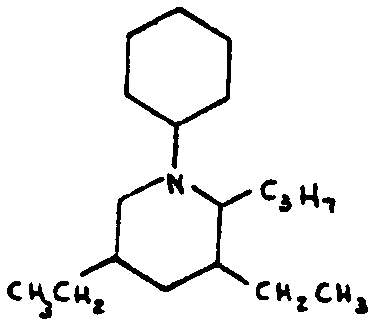
| 193 | Pyridine ring or partially hydrogenated pyridine ring: | ||
This subclass is indented under subclass 192. Compounds in which the additional ring is a pyridine ring
or partially hydrogenated pyridine ring.
| |||
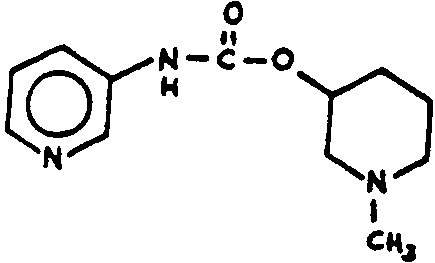
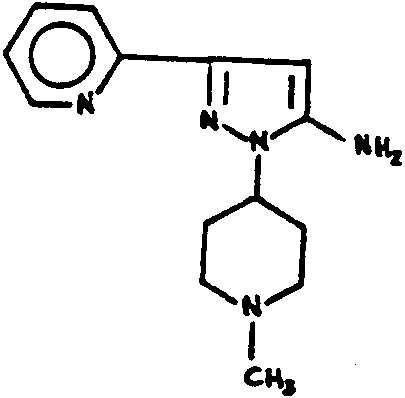
| 194 | Carbocyclic ring containing: | ||
This subclass is indented under subclass 193. Compounds which additionally contain a carbocyclic ring.
| |||
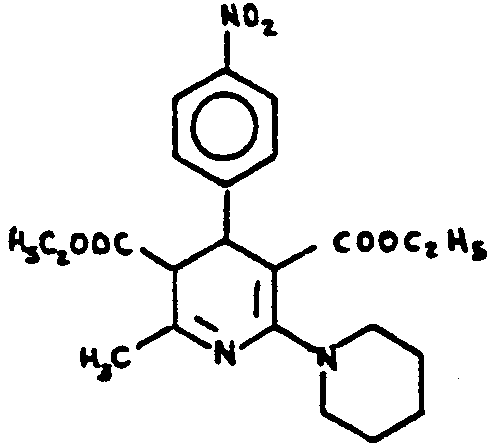
| 195 | The additional ring is one of the cyclos in a polycyclo ring system: | ||
This subclass is indented under subclass 192. Compounds in which the additional ring is one of the cyclos
in a polycyclo ring system.
| |||
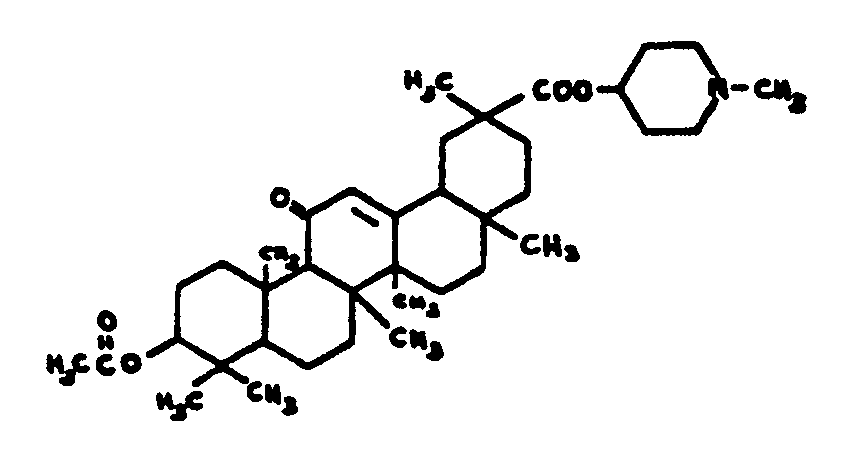
| 196 | Hetero ring in the polycyclo ring system: | ||
This subclass is indented under subclass 195. Compounds wherein the polycyclo ring system contains a hetero
ring.
| |||
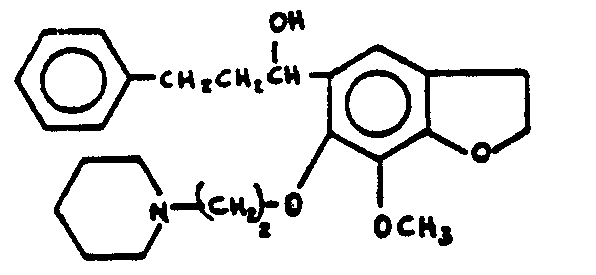
| 197 | Plural ring hetero atoms in the polycyclo ring system: | ||
This subclass is indented under subclass 196. Compounds in which the polycyclo ring system contains at
least two ring hetero atoms.
| |||
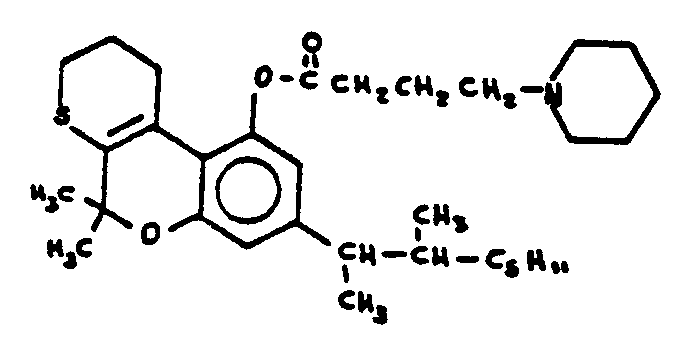
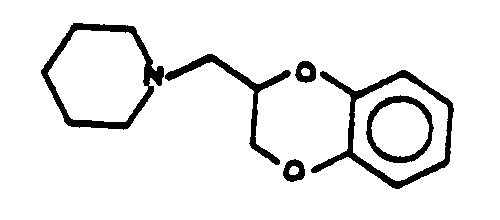
| 198 | Ring nitrogen in the polycyclo ring system: | ||
This subclass is indented under subclass 197. Compounds in which the polycyclo ring system contains a
ring nitrogen.
| |||
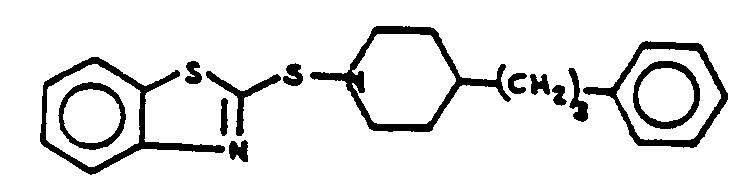
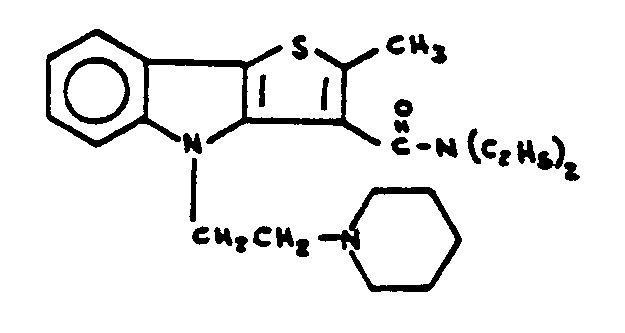
| 199 | Plural ring nitrogens in the polycyclo ring system: | ||
This subclass is indented under subclass 198. Compounds in which the polycyclo ring system contains at
least two ring nitrogen atoms.
| |||
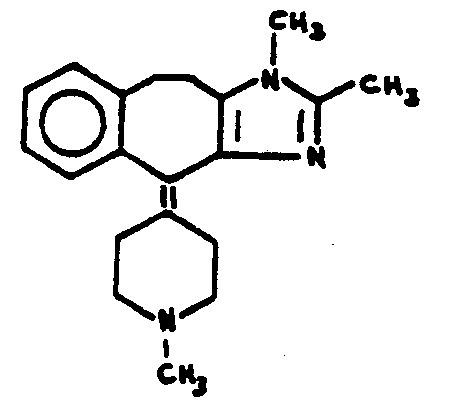
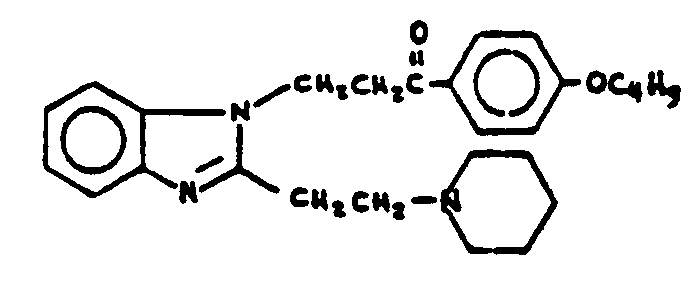
| 200 | Ring nitrogen in the polycyclo ring system: | ||
This subclass is indented under subclass 196. Compounds in which the polycyclo ring system contains a
ring nitrogen.
| |||
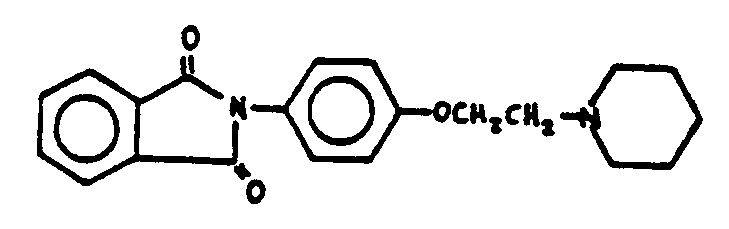
| 201 | Bicyclo ring system which is indole (including hydrogenated): | ||
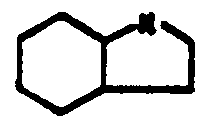
| This subclass is indented under subclass 200. Compounds wherein the polycyclo ring system is bicyclo and
consists of the following basic structure in which the bonds between
the ring members may be single or double bonds:
| |||
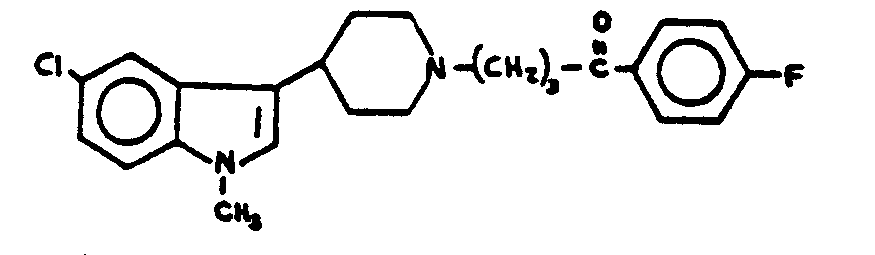
| 202 | Ring sulfur in the polycyclo ring system: | ||
This subclass is indented under subclass 196. Compounds in which the polycyclo ring system contains a
ring sulfur.
| |||
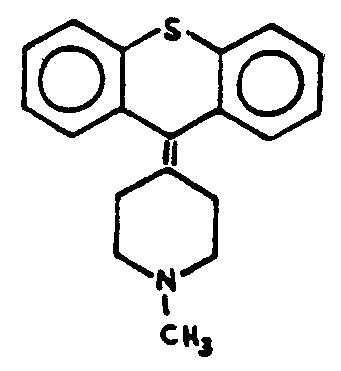
| 203 | The polycyclo ring system is tricyclo-carbocyclic: | ||
This subclass is indented under subclass 195. Compounds in which the polycyclo ring system consists of
three carbocyclic rings.
| |||
| 204 | Chalcogen bonded directly to the tricyclo-carbocyclic ring system: | ||
This subclass is indented under subclass 203. Compounds in which chalcogen (i.e., oxygen, sulfur, selenium,
or tellurium) is bonded directly to the tricyclo-carbocyclic ring
system.
| |||
| 205 | The polycyclo ring system is bicyclo-carbocyclic: | ||
This subclass is indented under subclass 195. Compounds in which the polycyclo ring system consists of
two carbocyclic rings.
| |||
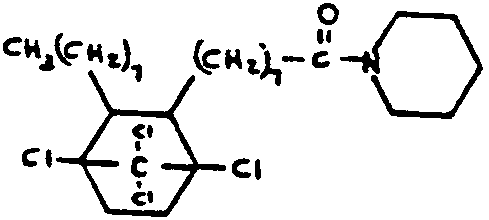
| 206 | Chalcogen bonded directly to the bicyclo-carbocyclic ring system: | ||
This subclass is indented under subclass 205. Compounds in which chalcogen (i.e., oxygen, sulfur, selenium,
or tellurium) is bonded directly to the bicyclo-carbocyclic ring
system.
| |||
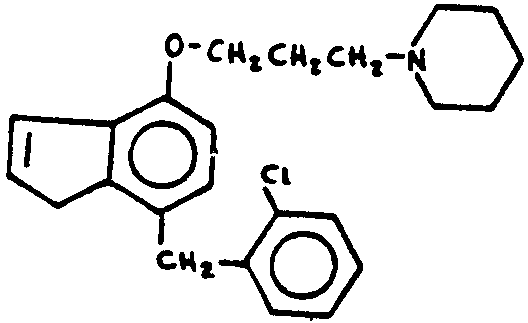
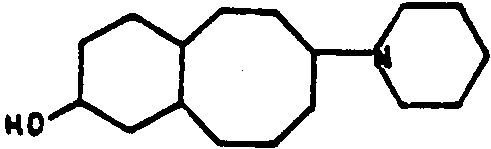
| 207 | The additional ring is a hetero ring: | ||
This subclass is indented under subclass 192. Compounds in which the additional ring is a hetero ring.
| |||
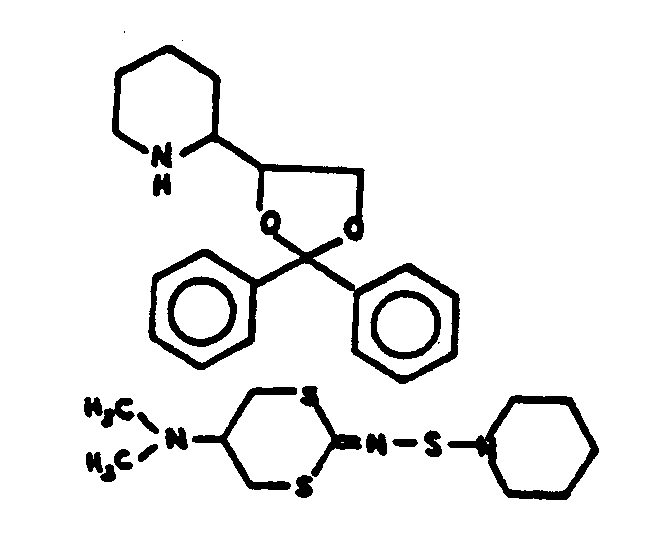
| 208 | The additional hetero ring has at least nitrogen as a ring hetero atom: | ||
This subclass is indented under subclass 207. Compounds in which the additional hetero ring contains ring
nitrogen.
| |||
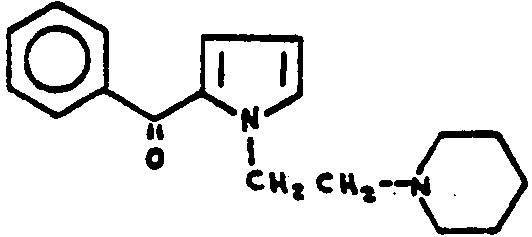
| 209 | Ring sulfur or ring oxygen in the additional hetero ring: | ||
This subclass is indented under subclass 208. Compounds in which the additional heteror ring additionally
contains ring sulfur or ring oxygen.
| |||
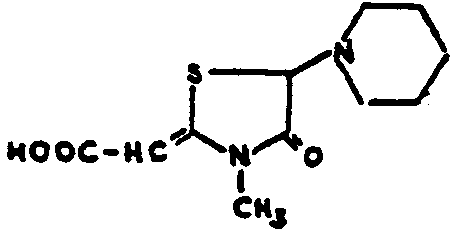
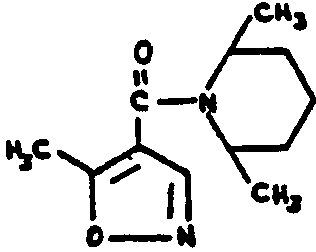
| 210 | Plural ring nitrogens in the additional hetero ring: | ||
This subclass is indented under subclass 208. Compounds in which the additional hetero ring contains at
least two ring nitrogens.
| |||
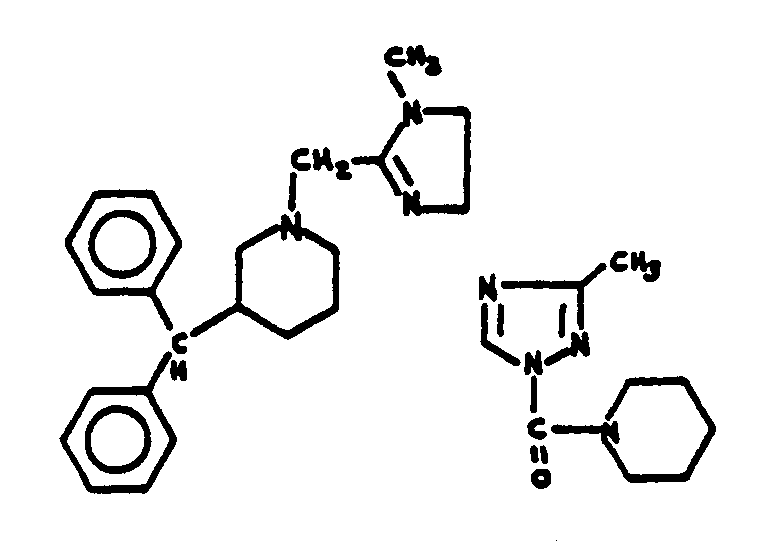
| 211 | 1,2-diazole (including hydrogenated): | ||
| This subclass is indented under subclass 210. Compounds wherein the additional hetero ring consists of
two ring nitrogens in adjacent positions and three ring carbons;
i.e.,
| |||
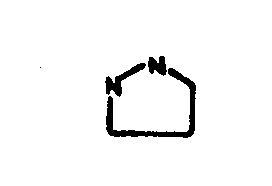
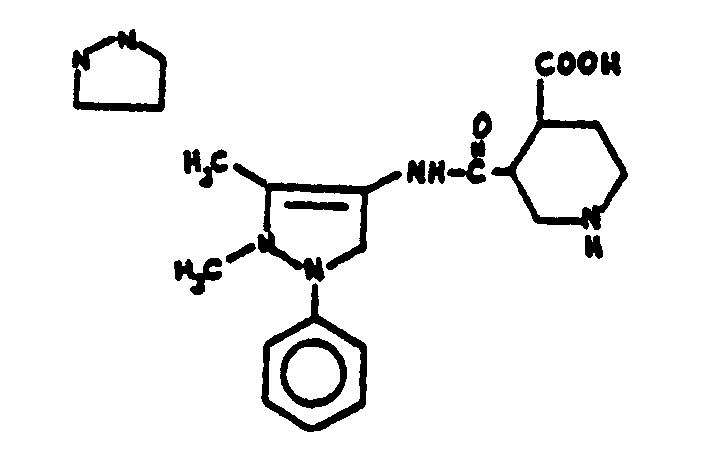
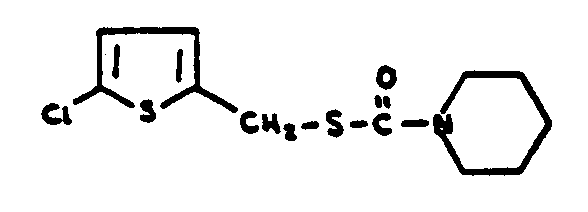
| 212 | The additional hetero ring consists of one sulfur and four carbons: | ||
This subclass is indented under subclass 207. Compounds in which the additional hetero ring consists of
one ring sulfur and four ring carbons.
| |||
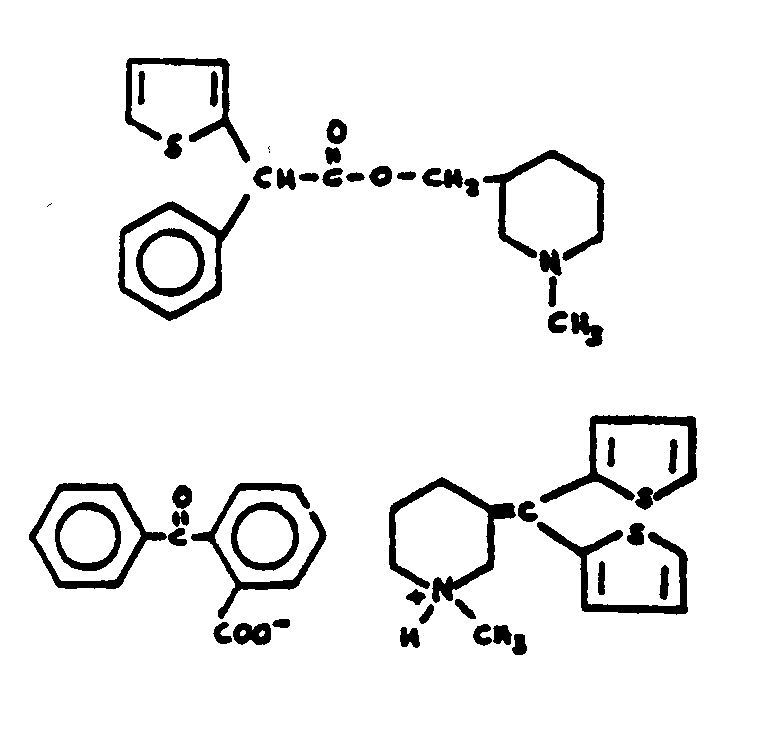
| 213 | Carbocyclic ring containing: | ||
This subclass is indented under subclass 212. Compounds which contain a carbocyclic ring.
| |||
| 214 | The additional hetero ring consists of one oxygen and four carbons: | ||
This subclass is indented under subclass 207. Compounds in which the additional hetero ring consists of
one oxygen and four carbons.
| |||
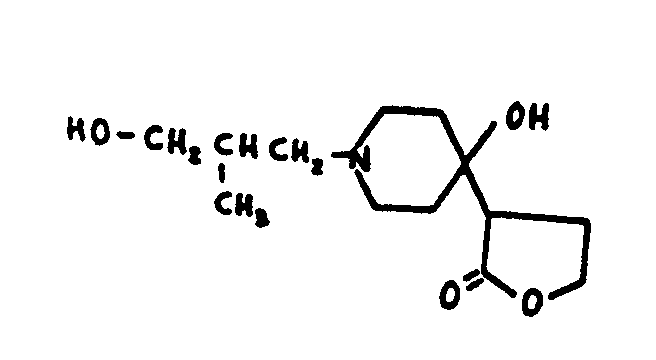
| 215 | Cyano bonded directly to the piperidine ring: | ||
This subclass is indented under subclass 192. Compounds in which a -CbN groups is bonded directly to the
piperidine ring.
| |||
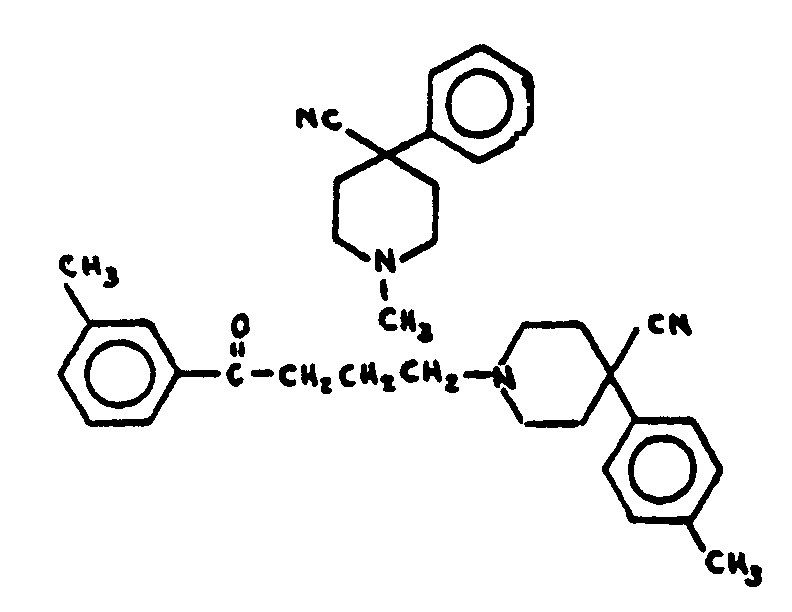
| 216 | Chalcogen bonded directly to ring carbon of the piperidine ring: | ||||
This subclass is indented under subclass 192. Compounds in which chalcogen (i.e., oxygen, sulfur, selenium,
or tellurium) is bonded directly to a ring carbon of the piperidine
ring.
SEE OR SEARCH THIS CLASS, SUBCLASS:
| |||||
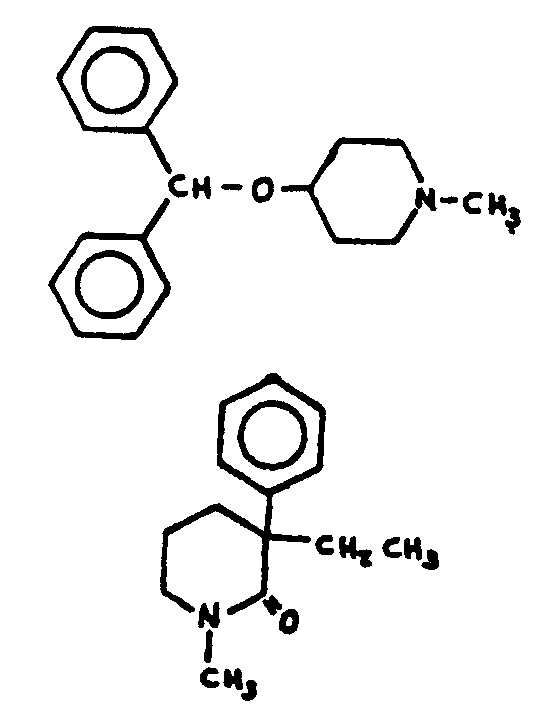
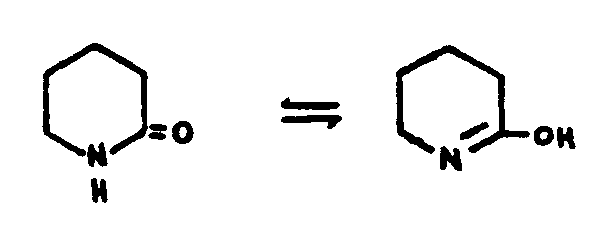
| 217 | Chalcogen and a carbocyclic ring bonded directly at 4-position: | ||
This subclass is indented under subclass 216. Compounds in which chalcogen (i.e., oxygen, sulfur, selenium,
or tellurium) and a carbocyclic ring are bonded directly to the
piperidine ring at the 4-position.
| |||
| 218 | The chalcogen, X, is part of a -C(=X)X-group, wherein the X"s are the same or diverse chalcogens: | ||
This subclass is indented under subclass 217. Compounds in which the chalcogen, X, is part of a group,
wherein the X"s are the same or diverse chalcogens (i.e.,
oxygen, sulfur, selenium, or tellurium).
| |||
| 219 | Plural chalcogens bonded directly to ring carbons of the piperidine ring: | ||||
This subclass is indented under subclass 216. Compounds in which at least two chalcogens (i.e., oxygen,
sulfur, selenium, or tellurium) are bonded directly to ring carbons
of the piperidine ring.
SEE OR SEARCH THIS CLASS, SUBCLASS:
| |||||
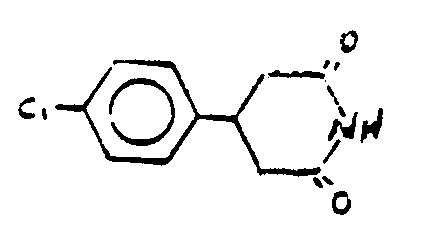
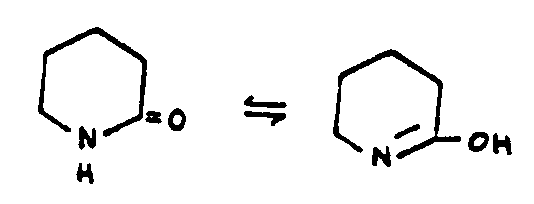
| 220 | Having -C(=X)-, wherein X is chalcogen, attached directly or indirectly to the piperidine ring by nonionic bonding: | ||
This subclass is indented under subclass 219. Compounds wherein a group, in which X is chalcogen (i.e.,
oxygen sulfur, selenium, or tellurium), is attached directly, or
indirectly to the piperidine ring by nonionic bonding.
| |||
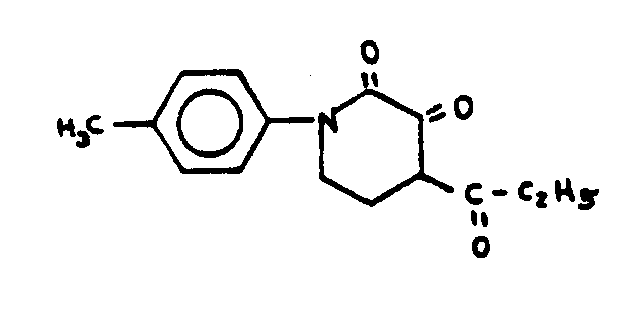
| 221 | Having -C(=X), wherein X is chalcogen, attached directly or indirectly to the piperidine ring by nonionic bonding: | ||
This subclass is indented under subclass 216. Compounds wherein a group, in which X is chalcogen (i.e.,
oxygen, sulfur, selenium, or tellurium), is attached directly or
indirectly to the piperidine ring by nonionic bonding.
| |||
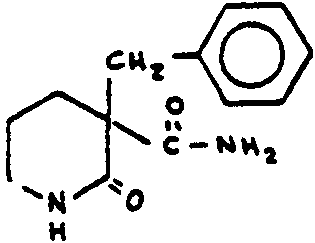

| 222 | The -C(=X)- group and the piperidine ring are bonded directly to the same chalcogen: | ||
This subclass is indented under subclass 221. Compounds wherein the group and the piperidine ring are
each bonded directly to the same chalcogen (i.e., oxygen, sulfur,
selenium, or tellurium) atom.
| |||
| 223 | Nitrogen attached directly to the piperidine ring by nonionic bonding: | ||||
This subclass is indented under subclass 192. Compounds in which nitrogen is attached directly to the
piperidine ring by nonionic bonding.
SEE OR SEARCH THIS CLASS, SUBCLASS:
| |||||
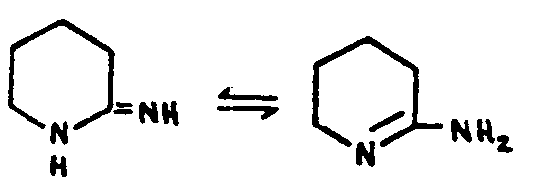
| 224 | Acyclic nitrogen bonded directly to a -C(=X)- group, wherein X is chalcogen: | ||
This subclass is indented under subclass 223. Compounds wherein acyclic nitrogen is bonded directly to
a group, in which X is chalcogen (i.e., oxygen, sulfur, selenium,
or tellurium).
| |||

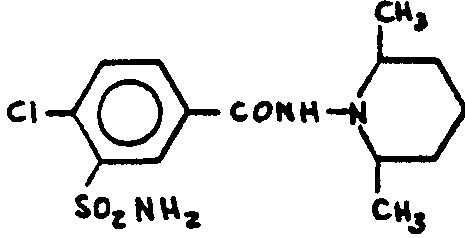
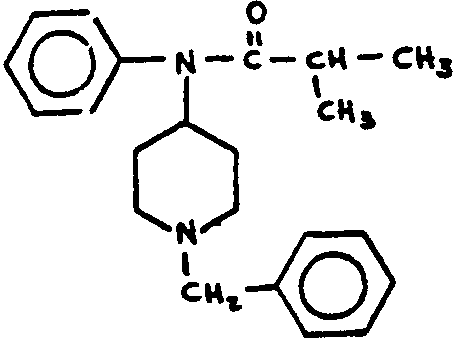
| 225 | Having -C(=X)-, wherein X is chalcogen, bonded directly to the piperidine ring: | ||
This subclass is indented under subclass 192. Compounds in which a group, wherein X is chalcogen (i.e.,
oxygen, sulfur, selenium, or tellurium), is bonded directly to the
piperdine ring.
| |||
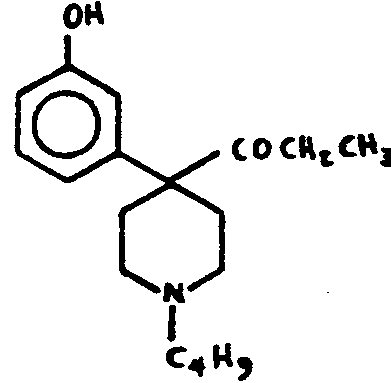
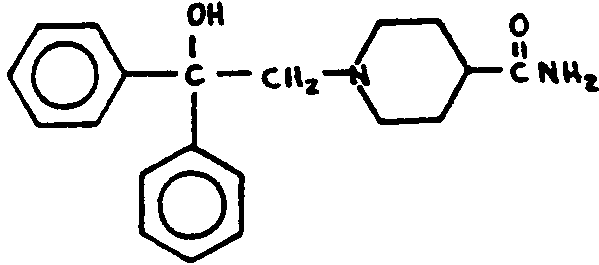
| 226 | At 1-position: | ||
This subclass is indented under subclass 225. Compounds wherein the group is bonded directly to the piperidine
ring at the 1-position, i.e., to the nitrogen atom of the ring.
| |||
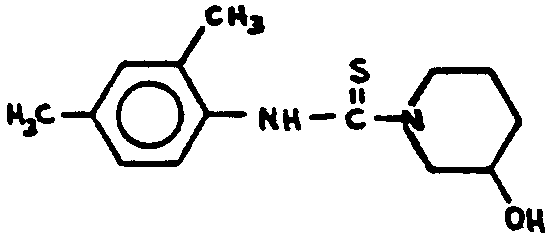
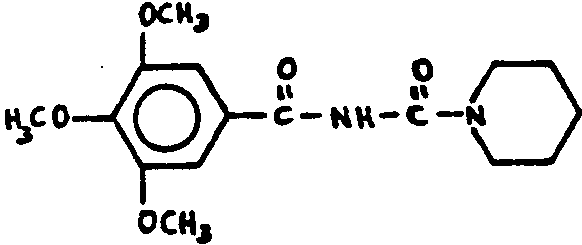
| 227 | The -C(=X)- is part of a -C(=X)X- group, wherein the X"s are the same or diverse chalcogens: | ||
This subclass is indented under subclass 225. Compounds wherein the is part of a group, in which the
X"s are the same, or diverse chalcogens (i.e., oxygen,
sulfur, selenium, or tellurium).
| |||
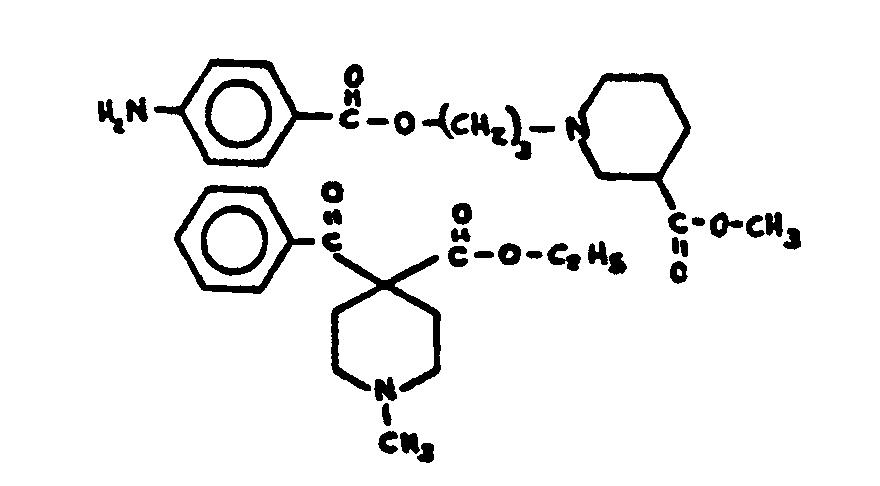
| 228 | Carbocyclic ring bonded directly at 4-position: | ||
This subclass is indented under subclass 227. Compounds in which a carbocyclic ring is bonded directly
to the piperidine ring at the 4-position.
| |||
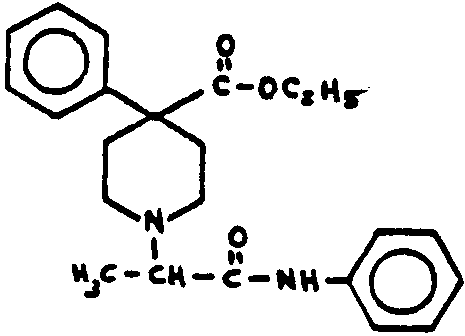
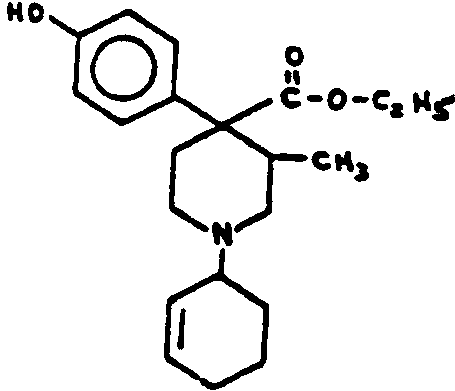
| 229 | Nitrogen attached indirectly to the piperidine ring by nonionic bonding: | ||
This subclass is indented under subclass 192. Compounds in which nitrogen is attached indirectly to the
piperidine ring by nonionic bonding.
| |||
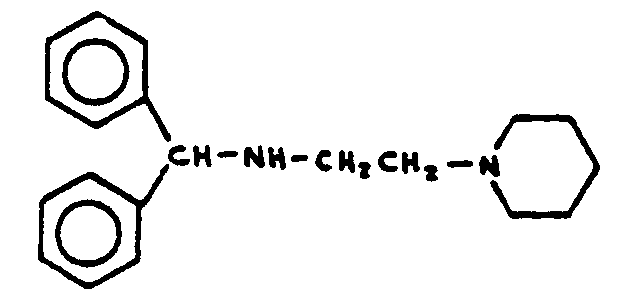
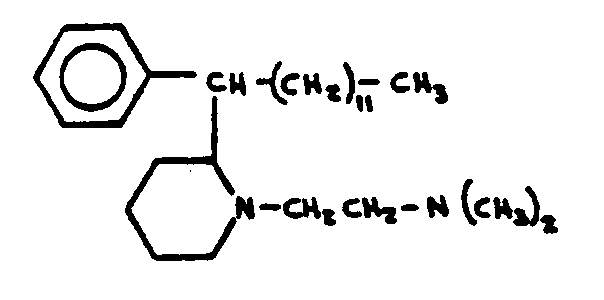
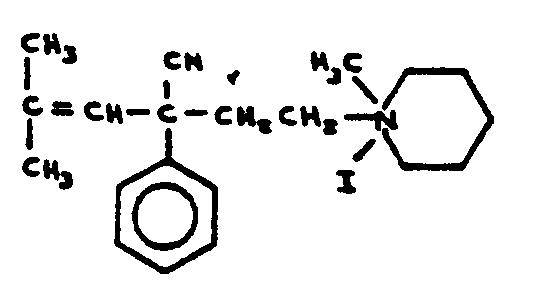
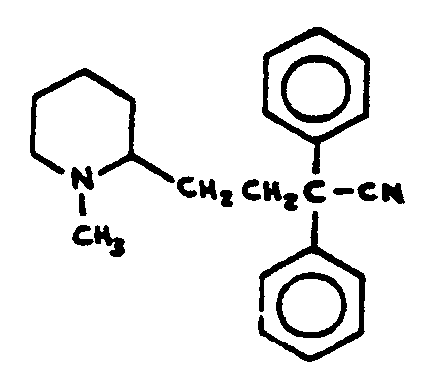
| 230 | Cyano attached indirectly to the piperidine ring by nonionic bonding: | ||
This subclass is indented under subclass 229. Compounds in which the -C N group is attached indirectly
to the piperidine ring by nonionic bonding.
| |||
| 231 | Plural acyclic nitrogens bonded directly to the same carbon or single bonded directly to each other: | ||
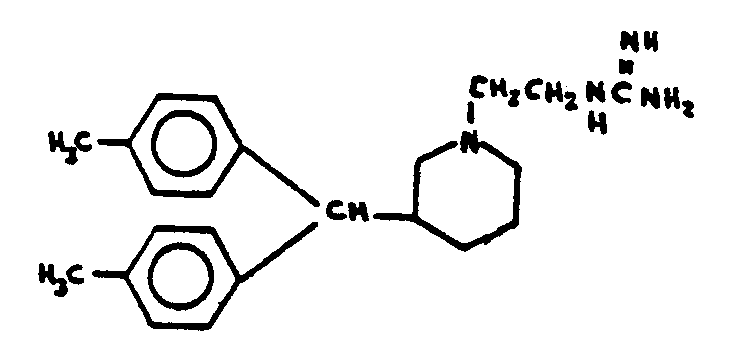
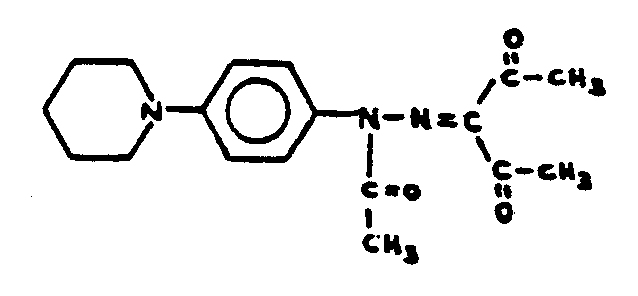
This subclass is indented under subclass 229. Compounds containing at least two acyclic nitrogen atoms
which are bonded directly to the same carbon or single bonded directly
to each other.
| |||
| 232 | Chalcogen attached indirectly to the piperidine ring by nonionic bonding: | ||
This subclass is indented under subclass 229. Compounds in which chalcogen (i.e., oxygen, sulfur, selenium,
or tellurium) is attached indirectly to the piperidine ring by nonionic
bonding.
| |||
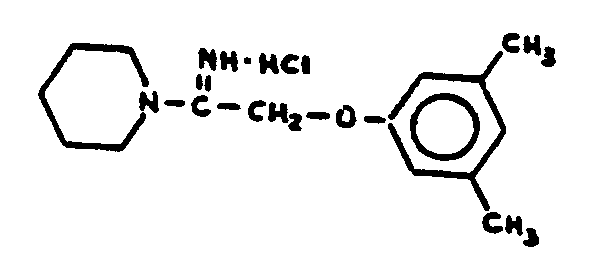
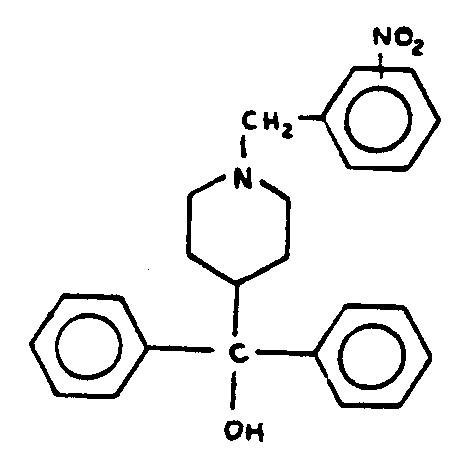
| 233 | Acyclic nitrogen bonded directly to A-C(=X)- group, wherein X is chalcogen: | ||
This subclass is indented under subclass 232. Compounds containing an acyclic nitrogen which is bonded
directly to a group, wherein X is chalcogen (i.e., oxygen, sulfur,
selenium, or tellurium).
| |||
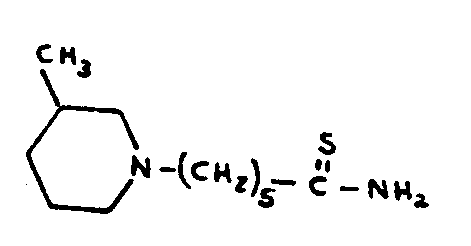
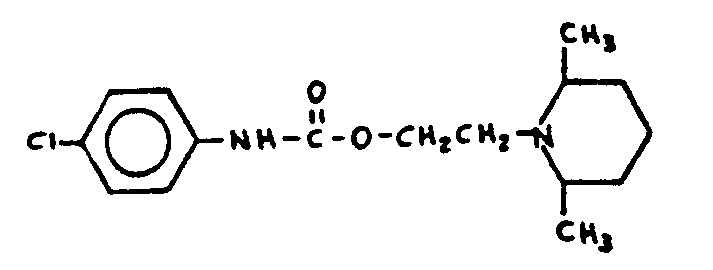
| 234 | Plural carbocyclic rings containing: | ||
This subclass is indented under subclass 233. Compounds which contain at least two carbocyclic rings.
| |||
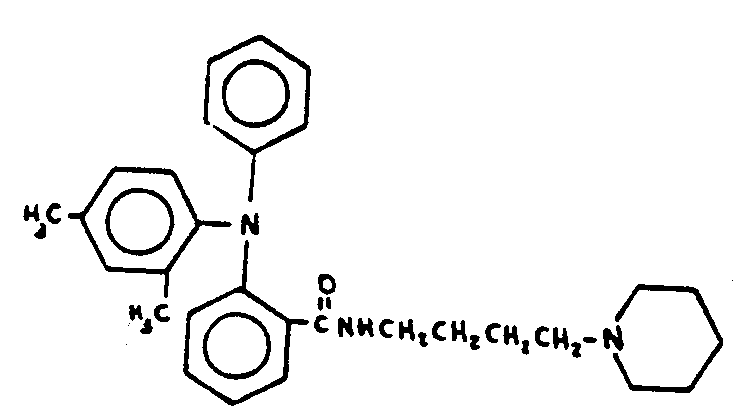
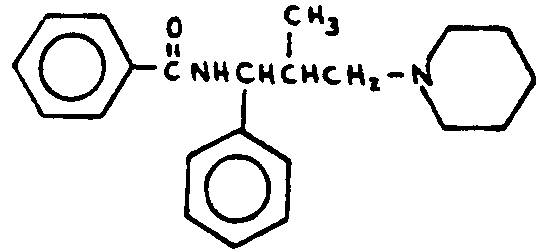
| 235 | The chalcogen, X, is in a -C(=X)- group: | ||
This subclass is indented under subclass 232. Compounds in which the chalcogen, X (i.e., oxygen, sulfur,
selenium, or tellurium), is in a group.
| |||
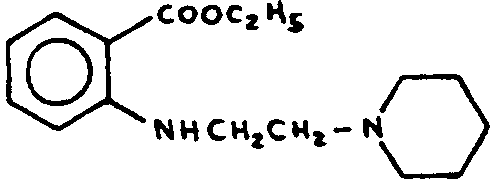
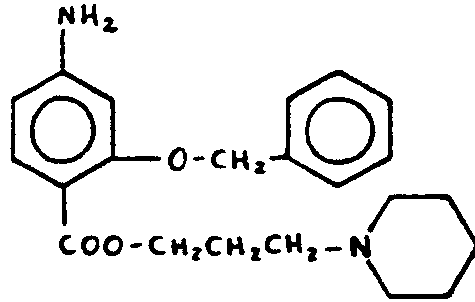
| 236 | Chalcogen attached indirectly to the piperidine ring by nonionic bonding: | ||
This subclass is indented under subclass 192. Compounds in which chalcogen (i.e., oxygen, sulfur, selenium,
or tellurium) is attached indirectly to the piperidine ring by nonionic
bonding.
| |||
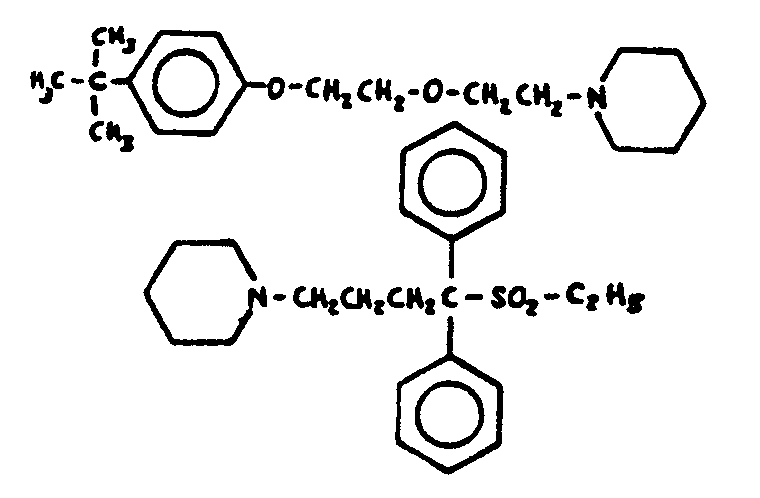
| 237 | The chalcogen, X, is in a -C(=X)- group: | ||
This subclass is indented under subclass 236. Compounds in which the chalcogen, X (i.e., oxygen, sulfur,
selenium, or tellurium), is in a group.
| |||
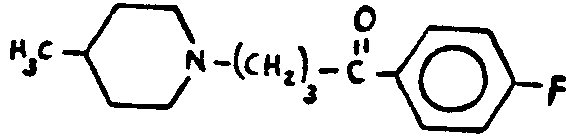
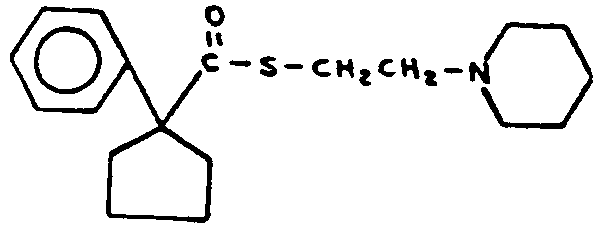
| 238 | The -C(=X)- is part of a -C(=X)X- group, wherein the X"s are the same or diverse chalcogens: | ||
This subclass is indented under subclass 237. Compounds wherein the is part of a group, in which the
X"s are the same, or diverse chalcogens (i.e., oxygen,
sulfur, selenium, or tellurium).
| |||
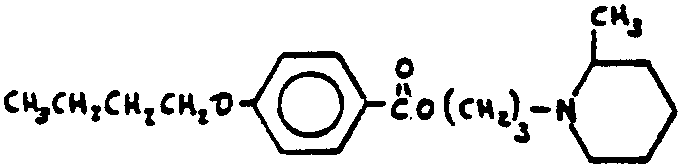
| 239 | Plural carbocyclic rings containing: | ||
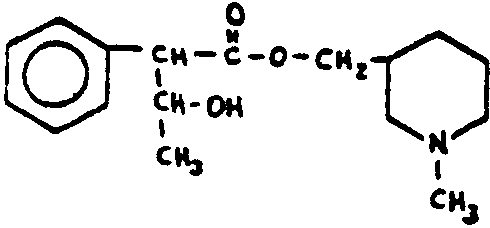
This subclass is indented under subclass 238. Compounds which contain at least two carbocyclic rings.
| |||

| 240 | The chalcogen is in an -OH or -OM group (M is group IA or group IIA light metal): | ||
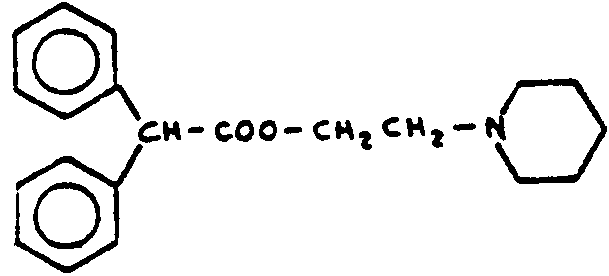
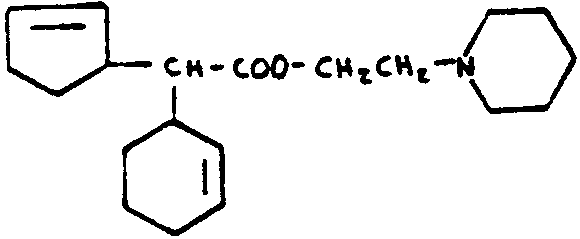
This subclass is indented under subclass 236. Compounds in which the chalcogen is in an -OH or -OM group,
wherein M is a Group IA or Group IIA metal having a specific gravity
less than four.
| |||
| 241 | The -OH or -OM is bonded to an acyclic carbon, which carbon is bonded directly to two rings: | ||
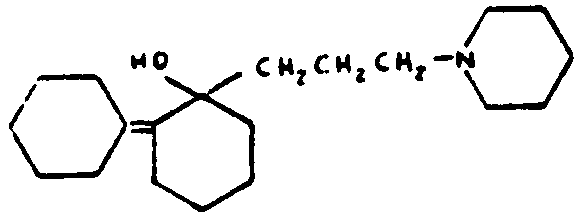
This subclass is indented under subclass 240. Compounds where in the -OH or -OM group is bonded to an
acyclic carbon atom which is bonded directly to two rings.
| |||
| 242 | Chalcogen bonded directly to ring carbon of the piperidine ring: | ||||
This subclass is indented under subclass 184. Compounds wherein chalcogen (i.e., oxygen, sulfur, selenium,
or tellurium) is bonded directly to a ring carbon of the piperidine
ring.
SEE OR SEARCH THIS CLASS, SUBCLASS:
| |||||
| 243 | At 2-position: | ||||
This subclass is indented under subclass 242. Compounds in which the chalcogen (i.e., oxygen, sulfur,
selenium, or tellurium) is bonded to the 2-position of the piperidine
ring.
SEE OR SEARCH THIS CLASS, SUBCLASS:
| |||||
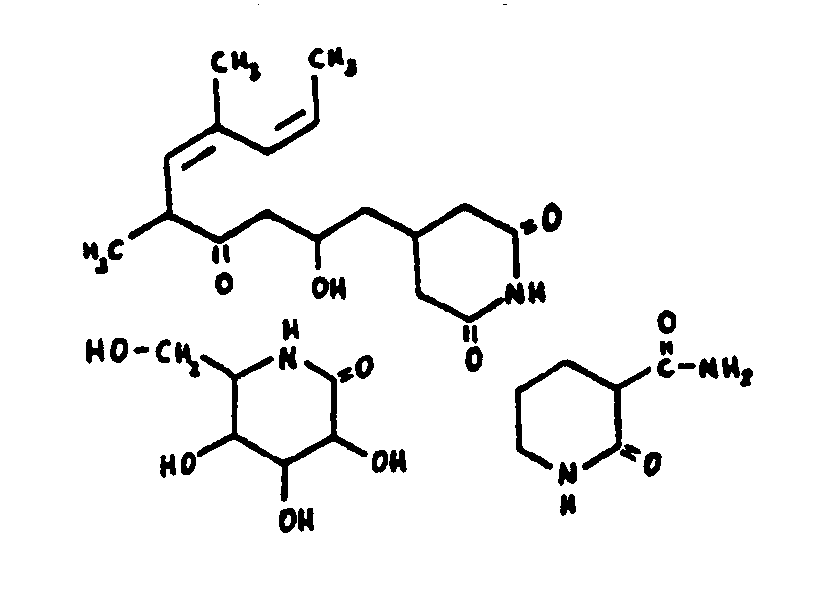
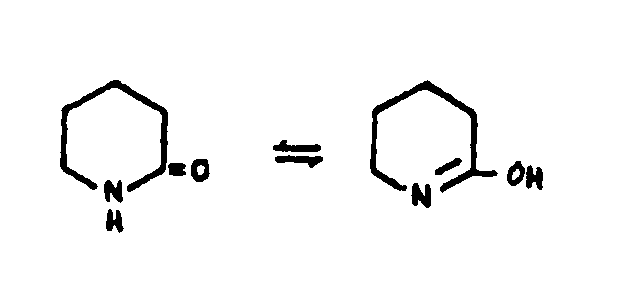
| 244 | Nitrogen attached directly to the piperidine ring by nonionic bonding: | ||||
This subclass is indented under subclass 184. Compounds wherein nitrogen is attached directly to the piperidine
ring by nonionic bonding.
SEE OR SEARCH THIS CLASS, SUBCLASS:
| |||||
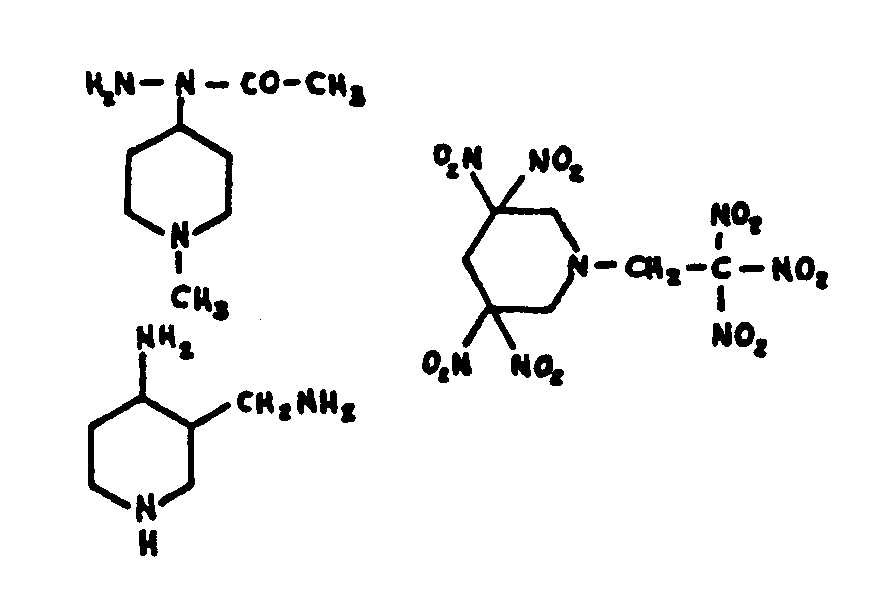
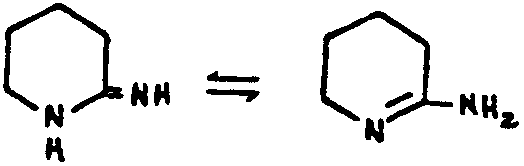
| 245 | Having -C(=X)-, wherein X is chalcogen: | ||
This subclass is indented under subclass 184. Compounds which contain a group, wherein X is chalcogen
(i.e., oxygen, sulfur, selenium, or tellurium, bonded directly to
the piperidine ring.
| |||
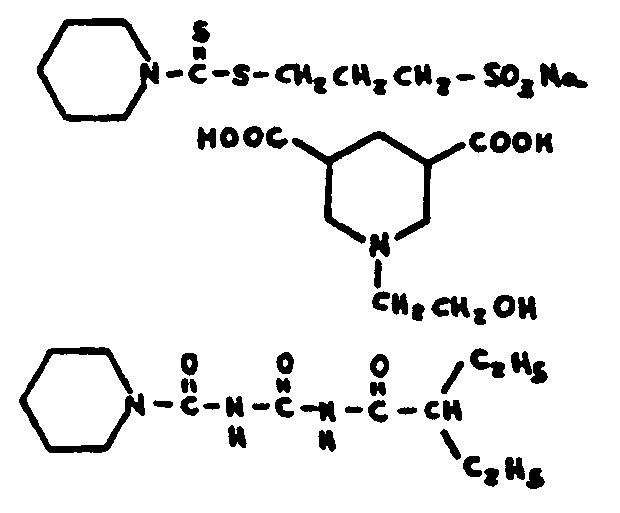
| 246 | Nitrogen attached indirectly to the piperidine ring by nonionic bonding: | ||
This subclass is indented under subclass 184. Compounds in which nitrogen is attached indirectly to the
piperidine ring by nonionic bonding.
| |||
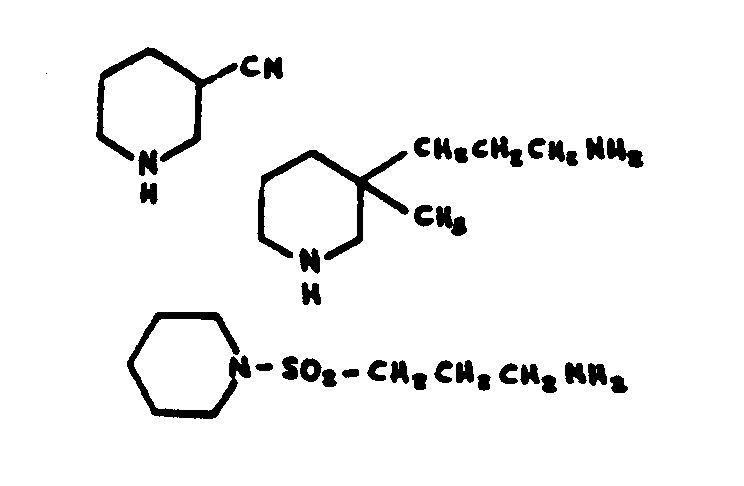
| 247 | Acyclic nitrogen bonded directly to A-C(=X)- group, wherein X is chalcogen: | ||
This subclass is indented under subclass 246. Compounds containing an acyclic nitrogen which is bonded
directly to a group, in which X is chalcogen (i.e., oxygen, sulfur,
selenium, or tellurium).
| |||

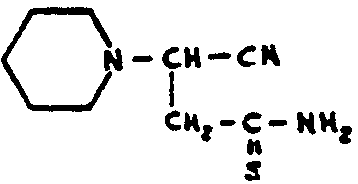
| 248 | Chalcogen attached indirectly to the piperidine ring by nonionic bonding: | ||||
| This subclass is indented under subclass 184. Compounds in which chalcogen (i.e., oxygen, sulfur, selenium,
or tellurium) is attached indirectly to the piperidine ring by nonionic
bonding.
Aliphatic
| |||||
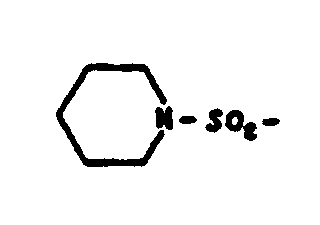
| 249 | Process of forming partially hydrogenated pyridine ring: | ||
This subclass is indented under subclass 1. Compounds whereby a partially hydrogenated pyridine ring
is formed, i.e., a six-membered hetero ring consisting of one nitrogen
and five carbons having one or two double bonds between the ring
members.
| |||
| 250 | Process of forming pyridine ring: | ||
This subclass is indented under subclass 1. Processes of forming the pyridine ring, i.e., six-membered
hetero ring consisting of one nitrogen and five carbons having three
double bonds between the ring members.
| |||
| 251 | The pyridine ring is unsubstituted or hydrocarbyl substituted only: | ||
This subclass is indented under subclass 250. Processes wherein the pyridine ring which is formed is either
unsubstituted or substituted by hydrocarbon groups only.
| |||
| 252 | Starting materials include a hetero ring having at least nitrogen as a ring hetero atom (e.g., starting materials include a piperidine ring, etc.): |
| This subclass is indented under subclass 251. Processes wherein the starting materials include a compound having a hetero ring which contains a ring nitrogen. | |
| 253 | Starting materials include a hydrocarbon: |
| This subclass is indented under subclass 251. Processes which utilize hydrocarbons as starting materials. | |
| 254 | Starting Materials Include an Acyclic Hydrocarbyl Ether or an Acyclic Hydrocarbyl Alcohol: |
| This subclass is indented under subclass 251. Processes which utilize an acyclic hydrocarbyl ether or an acyclic hydrocarbyl alcohol as a starting material. | |
| 255 | Plural pyridine or partially hydrogenated pyridine rings: | ||
This subclass is indented under subclass 1. Compounds which contain at least two of the six-membered
hetero rings, each consisting of one nitrogen and five carbons and
having at least one double bond between ring members, i.e., pyridine
or partially hydrogenated pyridine rings.
| |||
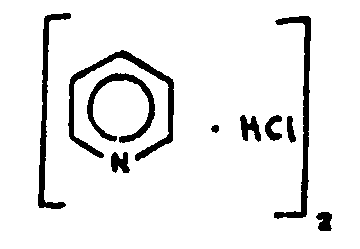
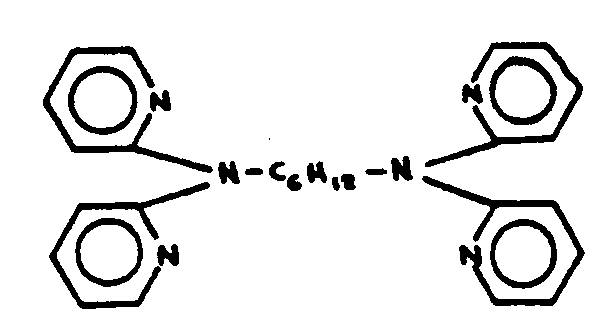
| 256 | Additional hetero ring containing: | ||
This subclass is indented under subclass 255. Compounds which contain an additional hetero ring.
| |||
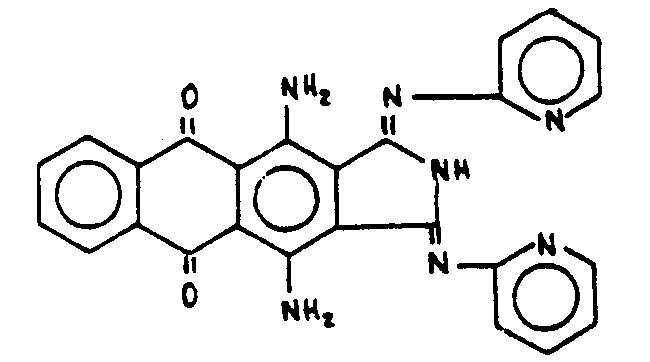
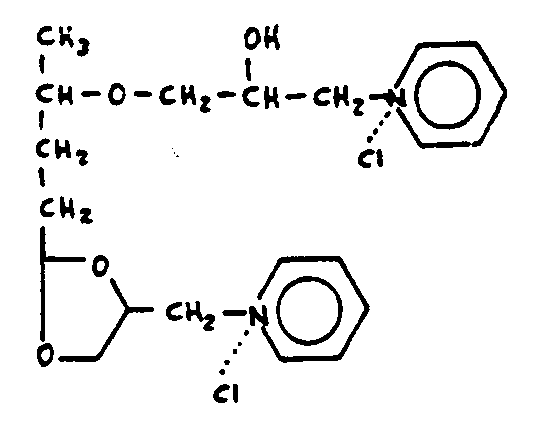
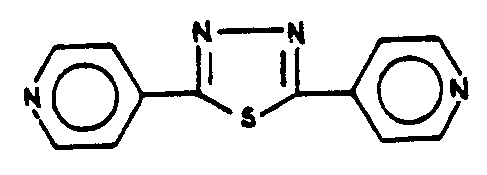
| 257 | Pyridine or partially hydrogenated pyridine rings are bonded directly to each other: | ||
This subclass is indented under subclass 255. Compounds wherein the pyridine or partially hydrogenated
pyridine rings are bonded directly to each other.
| |||
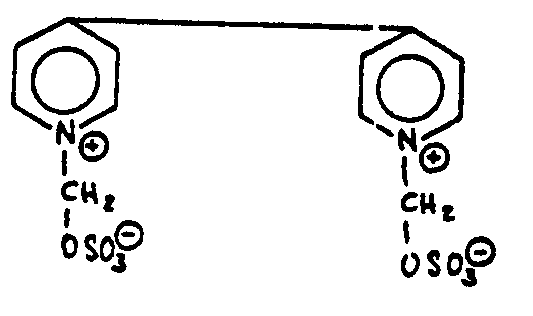
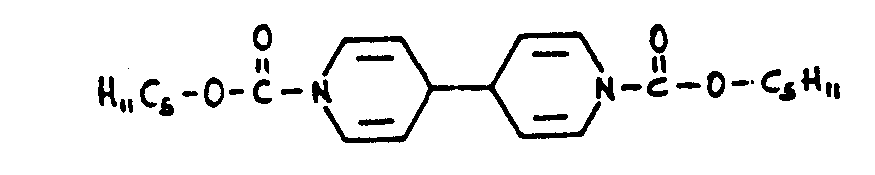
| 258 | Halogen containing or process utilizing halogen or halogen containing compound: | ||
This subclass is indented under subclass 257. compounds which contain halogen or processes which utilize
halogen or a halogen containing compound in the formation, purification,
or recovery of a compound wherein the plural pyridine or partially
hydrogenated pyridine rings are bonded directly to each other.
| |||
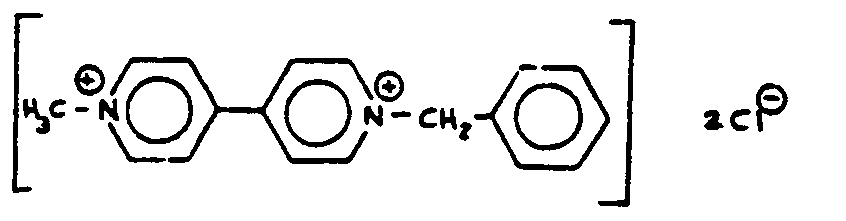
| 259 | Metal containing catalyst utilized: |
| This subclass is indented under subclass 258. Processes utilizing a metal or metal containing compound as catalyst. | |
| 260 | Metal containing catalyst utilized: |
| This subclass is indented under subclass 257. Processes utilizing a metal or metal containing compound as catalyst. | |
| 261 | Chalcogen bonded directly to ring carbon of pyridine or partially hydrogenated pyridine ring: | ||||
This subclass is indented under subclass 255. Compounds containing chalcogen (i.e., oxygen, sulfur, selenium,
or tellurium) which is bonded directly to a ring carbon of a pyridine or
partially hydrogenated pyridine ring.
SEE OR SEARCH THIS CLASS, SUBCLASS:
| |||||
| 262 | Having -C(=X)-, wherein X is chalcogen, bonded directly to pyridine or partially hydrogenated pyridine ring: | ||
This subclass is indented under subclass 255. Compounds in which a group, wherein X is chalcogen (i.e.,
oxygen, sulfur, selenium, or tellurium), bonded directly to pyridine
or partially hydrogenated pyridine ring.
| |||
| 263 | The -C(=X)- is part of a -C(=X)X- group, wherein the X"s are the same or diverse chalcogens: | ||
This subclass is indented under subclass 262. Compounds wherein the is part of a group, in which the
X"s are the same or diverse chalcogens (i.e., oxygen, sulfur,
selenium, or tellurium).
| |||
| 264 | Acyclic nitrogen attached directly or indirectly to pyridine or partially hydrogenated pyridine ring by nonionic bonding: | ||
This subclass is indented under subclass 255. Compounds in which acyclic nitrogen is attached directly
or indirectly to the six-membered hetero ring by nonionic bonding.
| |||
| 265 | Having -C(=X)-, wherein X is chalcogen, bonded directly to the acyclic nitrogen: | ||
This subclass is indented under subclass 264. Compounds in which the acyclic nitrogen is bonded directly
to a group, wherei X is chalcogen (i.e., oxygen, sulfur, selenium,
or tellurium).
| |||
| 266 | Chalcogen attached indirectly to pyridine or partially hydrogenated pyridine ring by nonionic bonding: | ||
This subclass is indented under subclass 255. Compounds wherein chalcogen (i.e., oxygen, sulfur, selenium,
or tellurium) is attached indirectly to a pyridine or partially
hydrogenated pyridine ring by nonionic bonding.
| |||
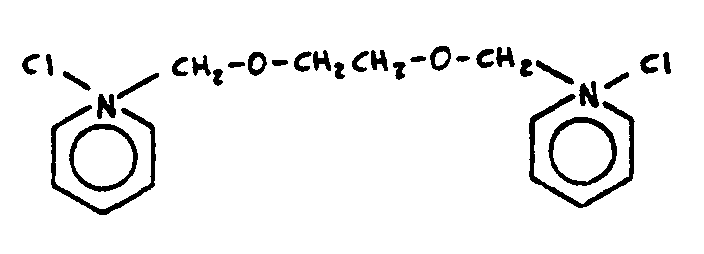
| 267 | The chalcogen, X, is in a -C(=X)-group: | ||
This subclass is indented under subclass 266. Compounds wherein the chalcogen, X (i.e., oxygen, sulfur,
selenium, or tellurium), is in a group.
| |||
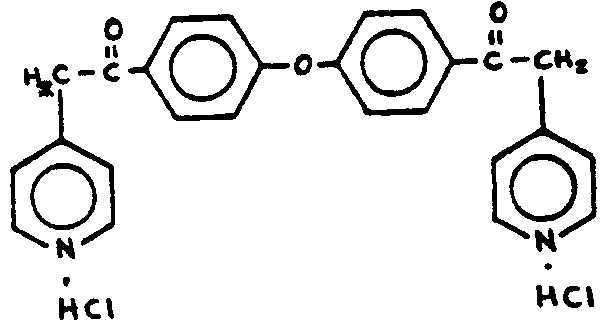

| 268.1 | Additional hetero ring containing: |
| This subclass is indented under subclass 1. Compounds which contain an additional hetero ring. | |
| 268.4 | The additional hetero ring is five-membered having two or more ring hetero atoms of which at least one is nitrogen: | ||
This subclass is indented under subclass 268.1. Compounds wherein the additional hetero ring is five-membered
and has two or more ring hetero atoms of which at least one is nitrogen.
| |||
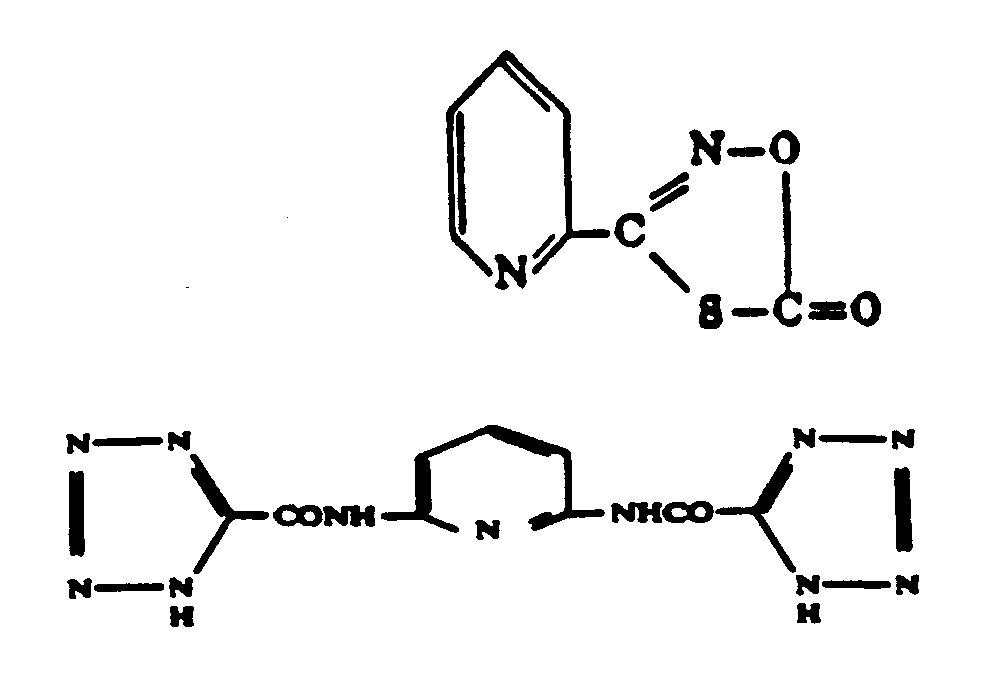
| 268.7 | Thiadiazoles (including hydrogenated): | ||
This subclass is indented under subclass 268.4. Compounds in which the five-membered hetero ring consists
of two ring nitrogens, one ring sulfur, and two ring carbons.
| |||
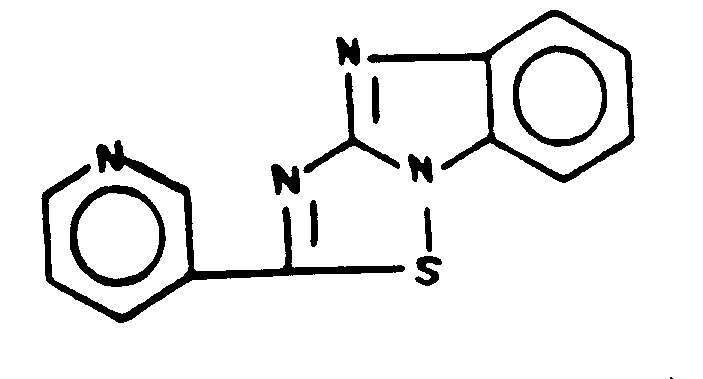
| 269.1 | Oxadiazoles (including hydrogenated): | ||
This subclass is indented under subclass 268.4. Compounds in which the five-membered hetero ring consists
of two ring nitrogens, one ring oxygen, and two ring carbons.
| |||
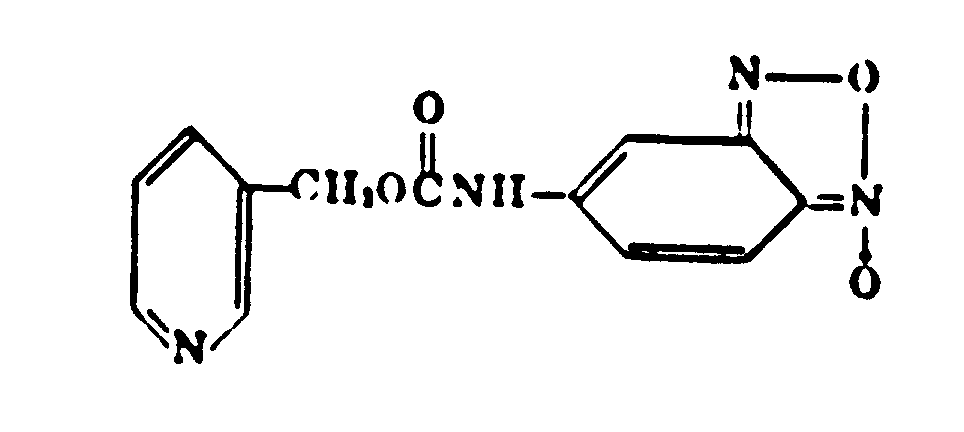
| 269.4 | Oxadiazole ring bonded directly to the six-membered hetero ring: | ||
This subclass is indented under subclass 269.1. Compounds wherein the six-membered hetero ring is bonded
directly to the oxadiazole ring.
| |||
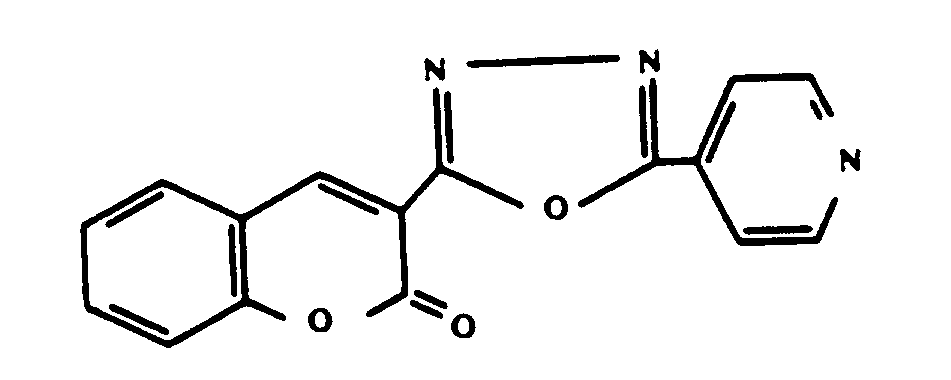
| 269.7 | 1,3-thiazoles (including hydrogenated): | ||
This subclass is indented under subclass 268.4. Compounds in which the five-membered hetero ring has sulfur
in the 1-position, nitrogen in the 3-position, and carbons in the
remaining three positions.
| |||
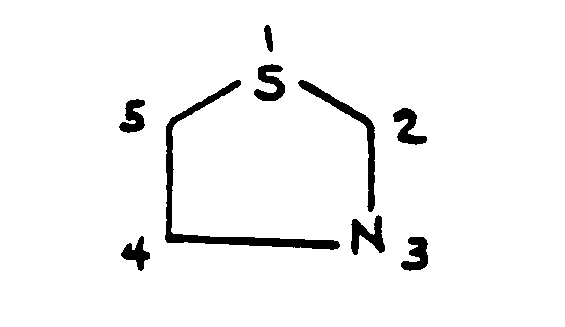
| 270.1 | Polycyclo ring system having the 1,3-thiazole ring as one of the cyclos: | ||
This subclass is indented under subclass 269.7. Compounds wherein the 1,3-thiazole ring is one of the cyclos
of a polycyclo ring system.
| |||
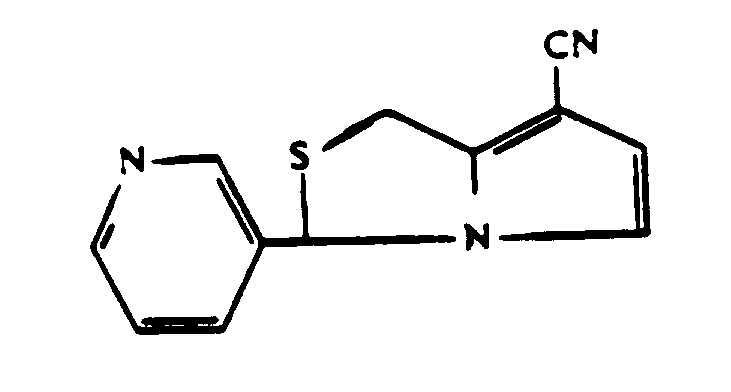
| 270.4 | 1,3-thiazole ring bonded directly to the six-membered hetero ring: |
| This subclass is indented under subclass 269.7. Compounds wherein the six-membered hetero ring is bonded directly to the 1,3-thiazole ring. | |
| 270.7 | Nitrogen attached directly to the 1,3-thiazole ring by nonionic bonding: |
| This subclass is indented under subclass 269.7. Compounds wherein the 1,3-thiazole ring is attached directly to nitrogen by nonionic bonding. | |
| 271.1 | 1,2-thiazoles (including hydrogenated): | ||
This subclass is indented under subclass 268.4. Compounds in which the five-membered hetero ring has sulfur
in the 1-position, nitrogen in the 2-position, and carbons in the
remaining three positions.
| |||
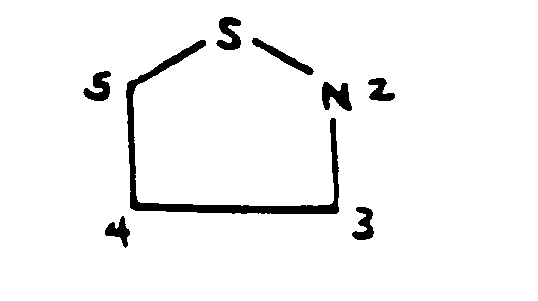
| 271.4 | 1,3-oxazoles (including hydrogenated): | ||
This subclass is indented under subclass 268.4. Compounds in which the five-membered hetero ring has oxygen
in the 1-position, nitrogen in the 3-position, and carbons in the
remaining three positions.
| |||
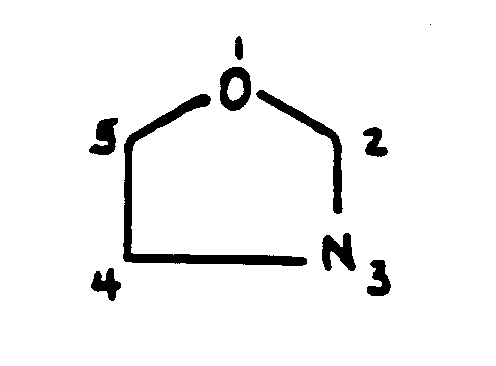
| 271.7 | Polycyclo ring system having the 1,3-oxazole ring as one of the cyclos: | ||
This subclass is indented under subclass 271.4. Compounds wherein the 1,3-oxazole ring is one of the cyclos
of a polycyclo ring system.
| |||
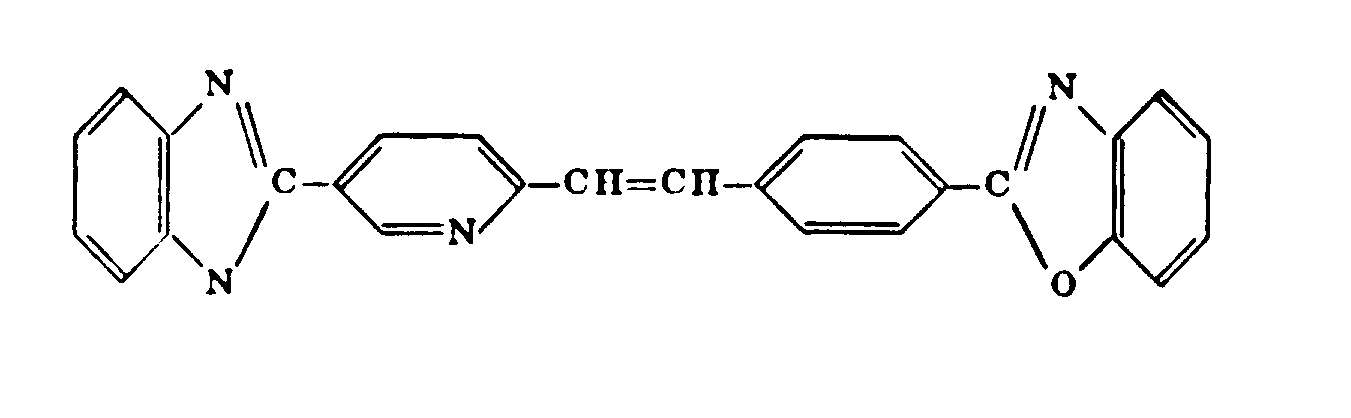
| 272.1 | 1,2-oxazoles (including hydrogenated): | ||
This subclass is indented under subclass 268.4. Compounds in which the five-membered hetero ring has oxygen
in the 1-position, nitrogen in the 2-position, and carbons in the
remaining three positions.
| |||
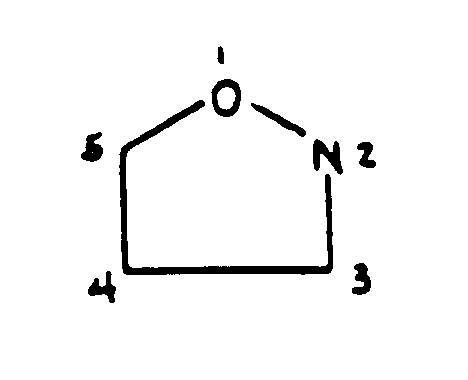
| 272.4 | 1,2,4-triazoles (including hydrogenated): | ||
This subclass is indented under subclass 268.4. Compounds in which the five-membered hetero ring has nitrogens
in the 1,2 and 4-positions and carbons in the remaining two positions.
| |||
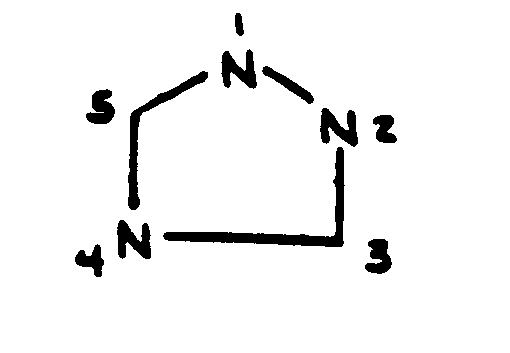
| 272.7 | 1,3-diazoles (including hydrogenated): | ||
This subclass is indented under subclass 268.4. Compounds in which the five-membered hetero ring has nitrogens
in the 1- and 3-positions and carbons in the remaining three positions.
| |||
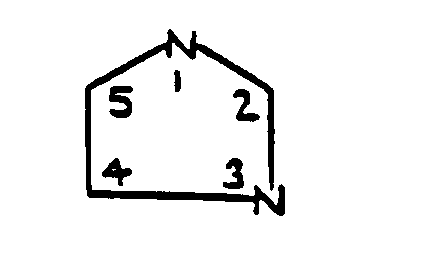
| 273.1 | Polycyclo ring system having the 1,3-diazole ring as one of the cyclos: | ||
This subclass is indented under subclass 272.7. Compounds wherein the 1,3-diazole ring is one of the cyclos
of a polycyclo ring system.
| |||
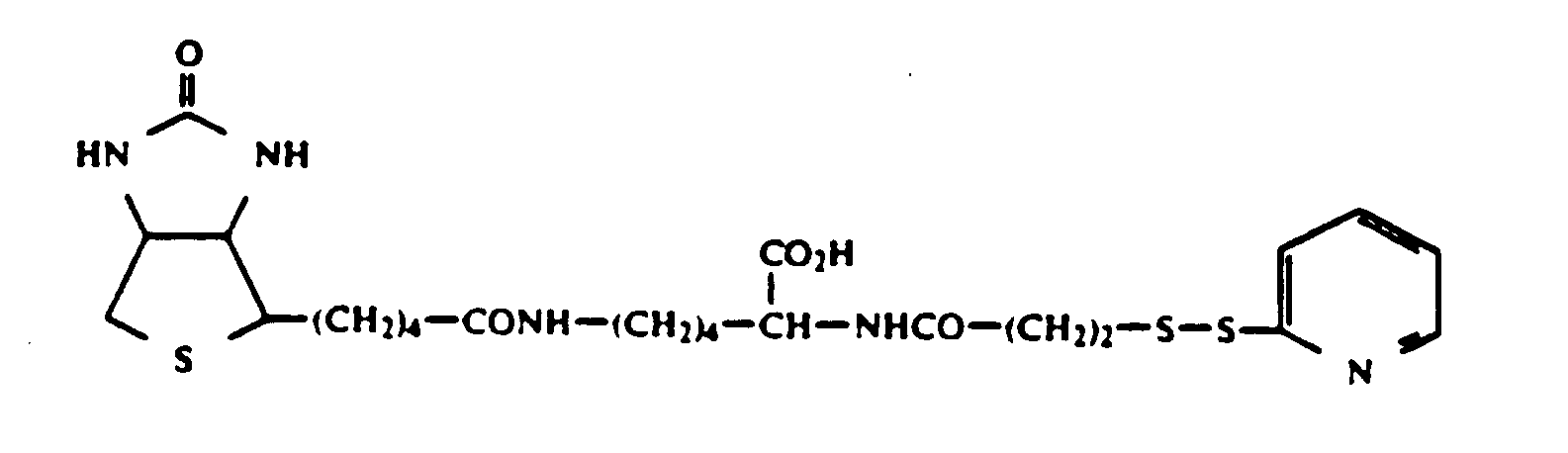
| 273.4 | Bicyclo ring system which is benzimidazole (including hydrogenated): |
| This subclass is indented under subclass 273.1. Compounds wherein the polycyclo ring system is bicyclo and
consists of the following basic structure in which the bonds between
the ring members may be single or double bonds:
| |
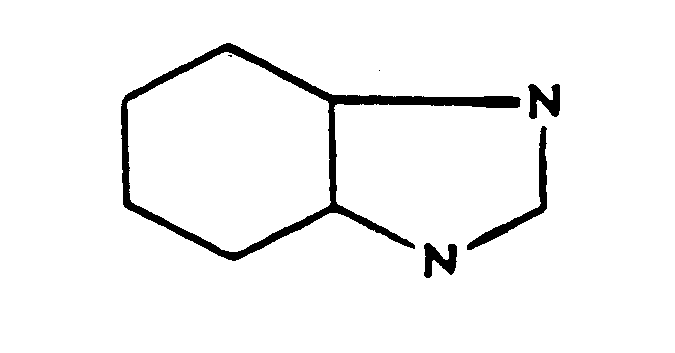
| 273.7 | Chalcogen bonded directly to a ring carbon of the 1,3-diazole ring: |
| This subclass is indented under subclass 273.4. Compounds wherein chalcogen (i.e., oxygen, sulfur, selenium, or tellurium) is bonded directly to a ring carbon of the 1,3-diazole ring. | |
| 274.1 | The 1,3-diazole ring is bonded directly to the six-membered hetero ring: | ||
This subclass is indented under subclass 272.7. Compounds wherein the six-membered hetero ring is bonded
directly to the 1,3-diazole ring.
| |||
| 274.4 | Chalcogen attached directly to the 1,3-diazole ring by nonionic bonding: |
| This subclass is indented under subclass 272.7. Compounds wherein chalcogen (i.e., oxygen, sulfur, selenium, or tellurium) is attached directly to the 1,3-diazole ring by nonionic bonding. | |
| 274.7 | Nitrogen or -C(=X)-, wherein X is chalcogen, attached directly to the 1,3-diazole ring by nonionic bonding: |
| This subclass is indented under subclass 272.7. Compounds in which nitrogen or -C(=X)-, wherein X is chalcogen (i.e., oxygen, sulfur, selenium or tellurium), is attached directly to the 1,3-diazole ring by nonionic bonding. | |
| 275.1 | Chalcogen attached indirectly to the 1,3-diazole ring by acyclic nonionic bonding: |
| This subclass is indented under subclass 272.7. Compounds wherein chalcogen (i.e., oxygen, sulfur, selenium, or tellurium) is attached indirectly to the 1,3-diazole ring by acyclic nonionic bonding. | |
| 275.4 | 1,2-diazoles (including hydrogenated): | ||
This subclass is indented under subclass 268.4. Compounds in which the five-membered hetero ring has nitrogens
in the 1- and 2-positions and carbons in the remaining three positions.
| |||
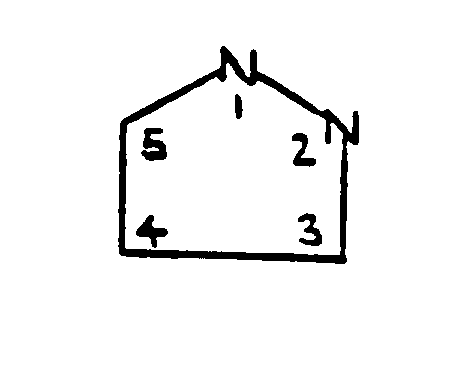
| 275.7 | Polycyclo ring system having the 1,2-diazole ring as one of the cyclos: |
| This subclass is indented under subclass 275.4. Compounds wherein the 1,2-diazole ring is one of the cyclos of a polycyclo ring system. | |
| 276.1 | Chalcogen attached directly to the 1,2-diazole ring by nonionic bonding: |
| This subclass is indented under subclass 275.4. Compounds wherein chalcogen (i.e., oxygen, sulfur, selenium or tellurium) is attached directly to the 1,2-diazole ring by nonionic bonding. | |
| 276.4 | The additional hetero ring is five-membered consisting of one nitrogen and four carbons: | ||
This subclass is indented under subclass 268.1. Compounds wherein the additional hetero ring is five-membered
and consists of one ring nitrogen and four ring carbons.
| |||
| 276.7 | Polycyclo ring system having the five-membered hetero ring as one of the cyclos: | ||
This subclass is indented under subclass 276.4. Compounds wherein the five-membered hetero ring is one of
the cyclos of a polycyclo ring system.
| |||
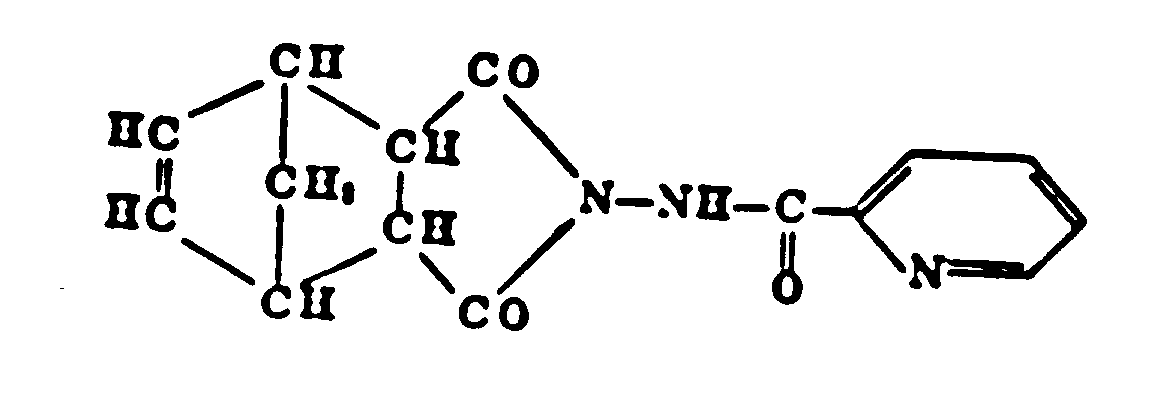
| 277.1 | Bicyclo ring system which is isoindole (including hydrogenated): | ||
| This subclass is indented under subclass 276.7. Compounds wherein the polycyclo ring system is bicyclo and
consists of the following basic structure in which the bonds between
the ring members may be single or double bonds:
| |||
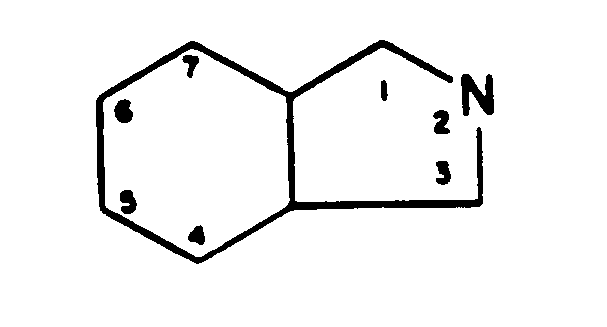
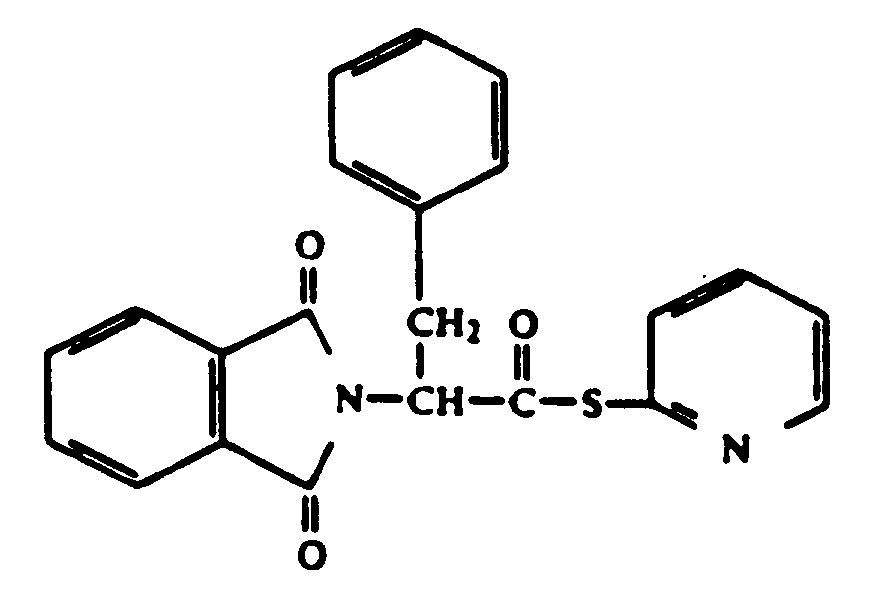
| 277.4 | Bicyclo ring system which is indole (including hydrogenated): |
| This subclass is indented under subclass 276.7. Compounds wherein the polycyclo ring system is bicyclo and
consists of the following basic structure in which the bonds between
the ring members may be single or double bonds:
| |
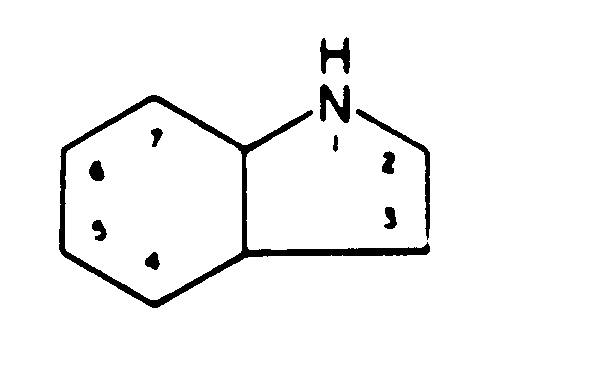
| 277.7 | Chalcogen attached directly to the five-membered hetero ring by nonionic bonding: | ||
This subclass is indented under subclass 277.4. Compounds wherein chalcogen (i.e., oxygen, sulfur, selenium,
or tellurium) is attached directly to the five-membered hetero ring
by nonionic bonding.
| |||
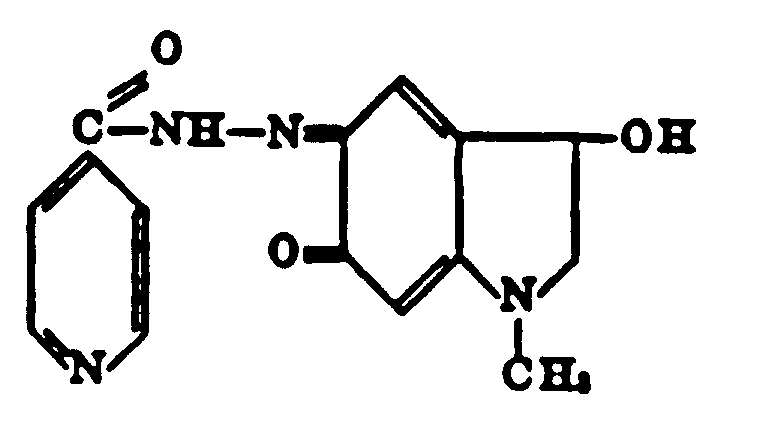
| 278.1 | Having -C(=X)-, wherein X is chalcogen, bonded directly to the five-membered hetero ring: |
| This subclass is indented under subclass 277.4. Compounds in which -C(=X)-, wherein X is chalcogen (i.e., oxygen, sulfur, selenium, or tellurium) is bonded directly to the five-membered hetero ring. | |
| 278.4 | Chalcogen attached directly to the five-membered hetero ring by nonionic bonding: |
| This subclass is indented under subclass 276.4. Compounds wherein chalcogen (i.e., oxygen, sulfur, selenium, or tellurium) is attached directly to the five-membered hetero ring by nonionic bonding. | |
| 278.7 | Plural chalcogens attached directly to the five-membered hetero ring by nonionic bonding: |
| This subclass is indented under subclass 278.4. Compounds wherein at least two chalcogens (i.e., oxygen, sulfur, selenium, or tellurium) are attached directly to the five-membered hetero ring by nonionic bonding. | |
| 279.1 | Nitrogen or -C(=X)-, wherein X is chalcogen, attached directly to the five-membered ring by nonionic bonding: |
| This subclass is indented under subclass 276.4. Compounds in which nitrogen or -C(=X)-, wherein X is chalcogen (i.e., oxygen, sulfur, selenium, or tellurium) is attached directly to the five-membered hetero ring by nonionic bonding. | |
| 279.4 | Nicotine, per se, or its salts: | ||
| This subclass is indented under subclass 276.4. Compounds which have the following structure, or salts thereof:
| |||
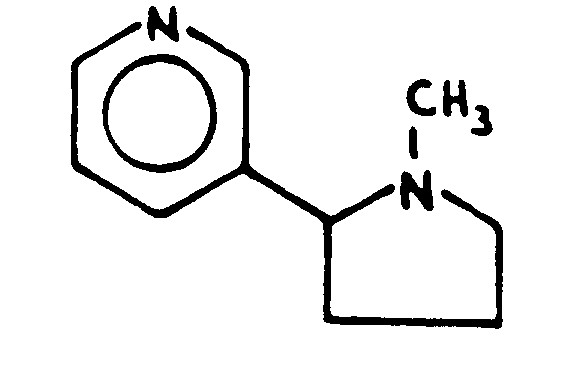
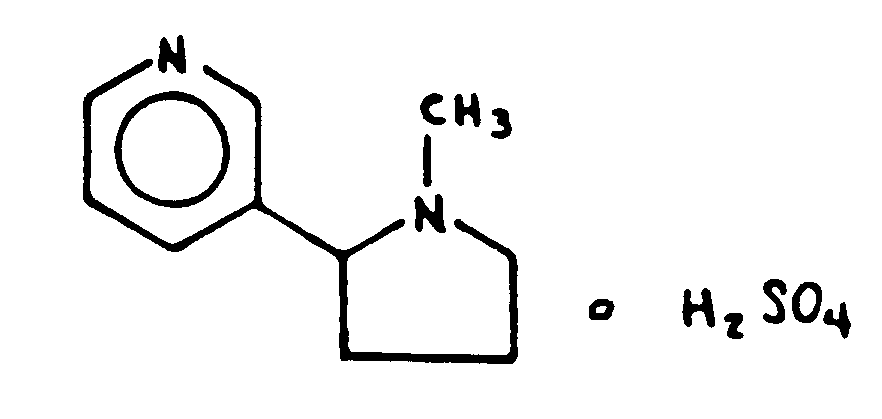
| 279.7 | Ring sulfur in the additional hetero ring: | ||
This subclass is indented under subclass 268.1. Compounds wherein the additional hetero ring contains ring
sulfur.
| |||
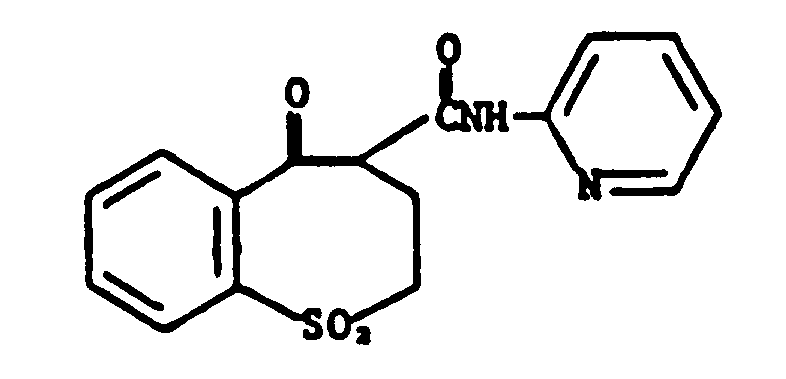
| 280.1 | The additional hetero ring is six-membered: | ||
This subclass is indented under subclass 279.7. Compounds wherein six ring atoms are present in the additional
hetero ring.
| |||
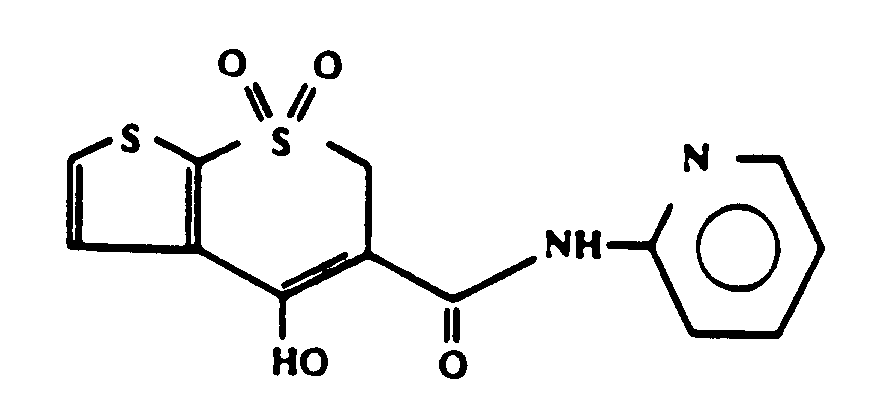
| 280.4 | The additional hetero ring is five-membered: |
| This subclass is indented under subclass 279.7. Compounds wherein five ring atoms are present in the additional hetero ring. | |
| 280.7 | Plural ring sulfurs in the additional hetero ring: |
| This subclass is indented under subclass 280.4. Compounds in which the additional hetero ring contains at least two ring sulfurs. | |
| 281.1 | Polycyclo ring system having the additional hetero ring as one of the cyclos: |
| This subclass is indented under subclass 280.4. Compounds wherein the additional hetero ring is one of the cyclos of a polycyclo ring system. | |
| 281.4 | Nitrogen attached directly to the six-membered hetero ring or to the additional hetero ring by nonionic bonding: | ||
This subclass is indented under subclass 280.4. Compounds wherein the six-membered hetero ring or the additional
hetero ring is attached directly to nitrogen by nonionic bonding.
| |||
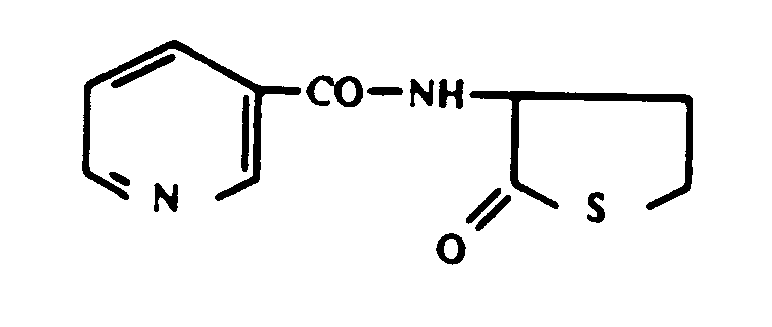
| 281.7 | Ring oxygen in the additional hetero ring: | ||
This subclass is indented under subclass 268.1. Compounds wherein the additional hetero ring contains ring
oxygen.
| |||
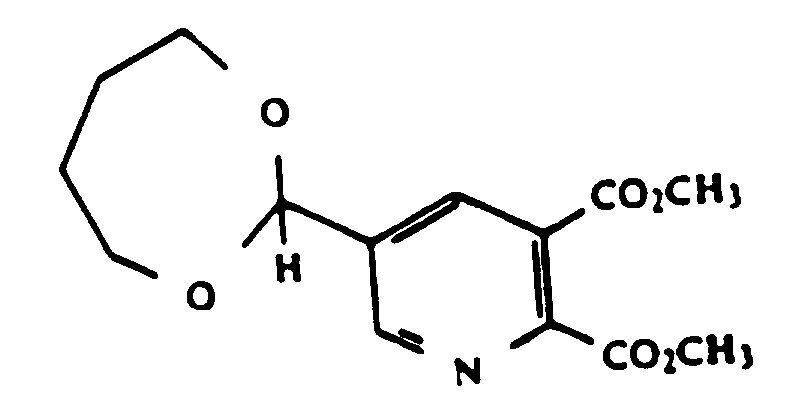
| 282.1 | The additional hetero ring is six-membered: |
| This subclass is indented under subclass 281.7. Compounds wherein six ring atoms are present in the additional hetero ring. | |
| 282.4 | Plural ring oxygens in the additional hetero ring: |
| This subclass is indented under subclass 282.1. Compounds in which the additional hetero ring contains at least two ring oxygens. | |
| 282.7 | Polycyclo ring system having the additional hetero ring as one of the cyclos: |
| This subclass is indented under subclass 282.1. Compounds wherein the additional hetero ring is one of the cyclos of a polycyclo ring system. | |
| 283.1 | Chalcogen attached directly to the additional hetero ring by nonionic bonding: | ||
This subclass is indented under subclass 282.7. Compounds wherein chalcogen (i.e., oxygen, sulfur, selenium,
or tellurium) is attached directly to the additional hetero ring
by nonionic bonding.
| |||
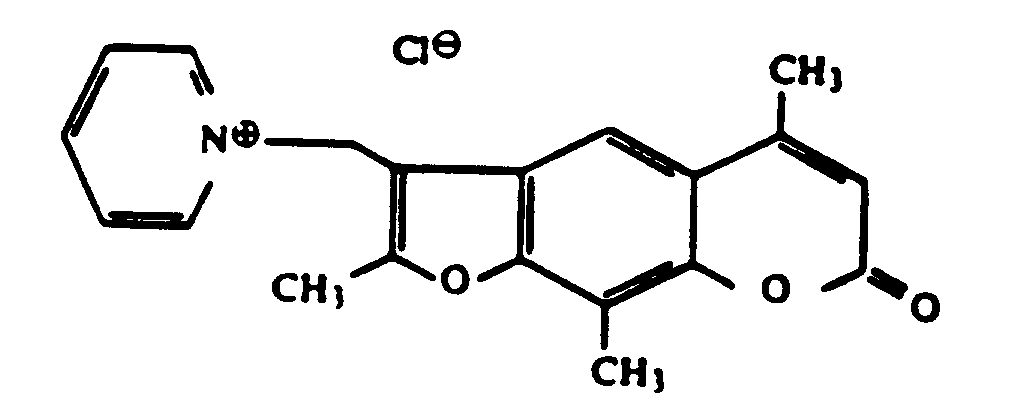
| 283.4 | The additional hetero ring is five-membered: |
| This subclass is indented under subclass 281.7. Compounds wherein five ring atoms are present in the additional hetero ring. | |
| 283.7 | Plural ring oxygens in the additional hetero ring: | ||
This subclass is indented under subclass 283.4. Compounds in which the additional hetero ring contains at
least two ring oxygens.
| |||
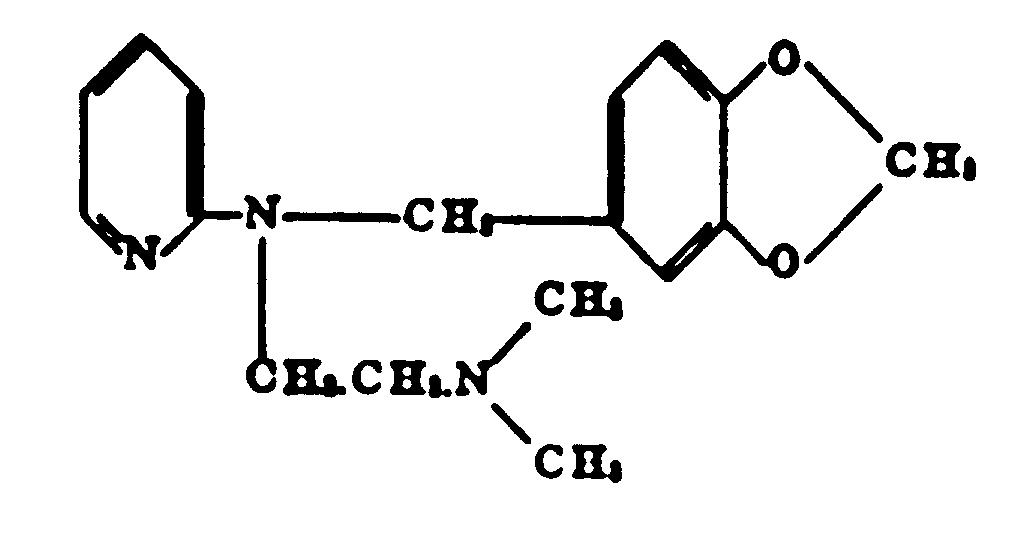
| 284.1 | Polycyclo ring system having the additional hetero ring as one of the cyclos: |
| This subclass is indented under subclass 283.4. Compounds wherein the additional hetero ring is one of the cyclos of a polycyclo ring system. | |
| 284.4 | Chalcogen attached directly to the additional hetero ring by nonionic bonding: |
| This subclass is indented under subclass 283.4. Compounds wherein chalcogen (i.e., oxygen, sulfur, selenium, or tellurium) is attached directly to the additional hetero ring by nonionic bonding. | |
| 284.7 | Nitrogen or -C(=X)-, wherein X is chalcogen, attached directly to the additional hetero ring by nonionic bonding: | ||
This subclass is indented under subclass 283.4. Compounds in which nitrogen or -C(=X)-, wherein
X is chalcogen (i.e., oxygen, sulfur, selenium, or tellurium), is
attached directly to the additional hetero ring by nonionic bonding.
| |||
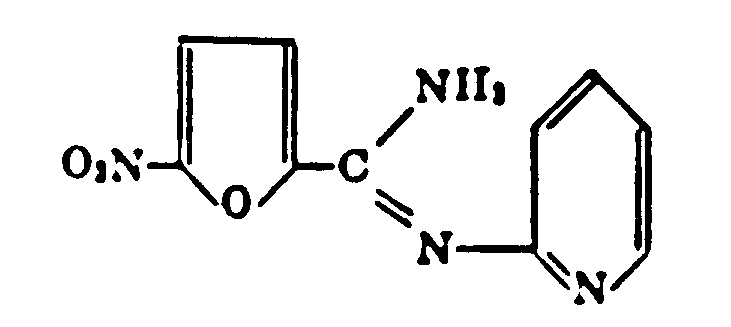
| 285 | Polycyclo-carbocyclic ring system having at least three cyclos: | ||
This subclass is indented under subclass 1. Compounds which contain a polycyclco-carbocyclic ring system
having at least three cyclos.
| |||
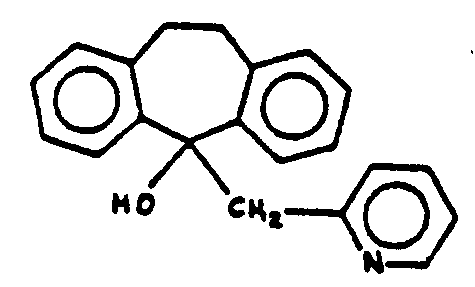
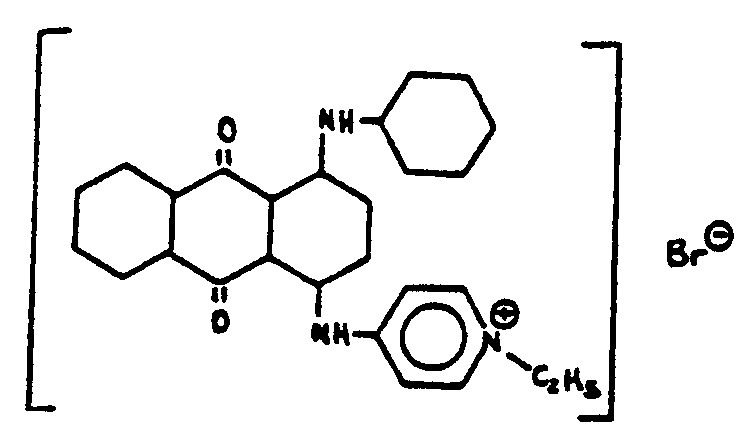
| 286 | Cyano bonded directly to the six-membered hetero ring: | ||
This subclass is indented under subclass 1. Compounds which contain the C N group bonded directly to
the six-membered hetero ring.
| |||
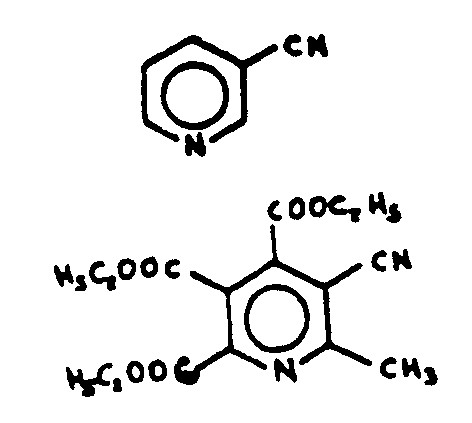
| 287 | Additional cyano containing: | ||
This subclass is indented under subclass 286. Compounds which contain at least two -CbN groups.
| |||
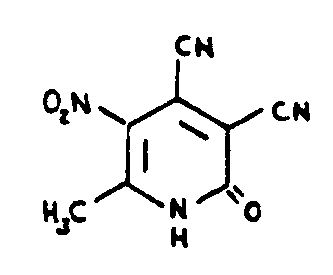
| 288 | Chalcogen bonded directly to ring carbon of the six-membered hetero ring: | ||
This subclass is indented under subclass 286. Compounds wherein chalcogen (i.e., oxygen, sulfur, selenium,
or tellurium) is bonded directly to a ring carbon of the six-membered hetero
ring.
| |||
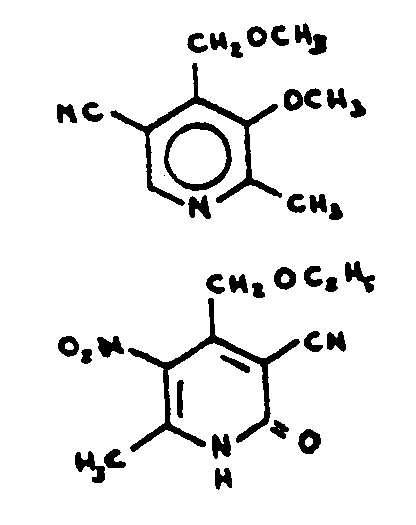
| 289 | Nitrogen attached directly to the six-membered hetero ring by nonionic bonding: | ||
This subclass is indented under subclass 286. Compounds wherein nitrogen is attached directly to the six-membered
hetero ring by nonionic bonding.
| |||
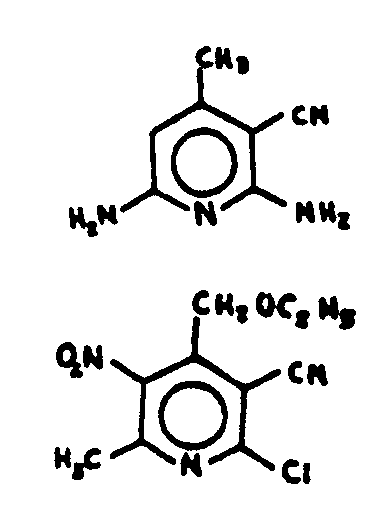
| 290 | Chalcogen bonded directly to ring carbon of the six-membered hetero ring: | ||||
This subclass is indented under subclass 1. Compounds which contain chalcogen (i.e., oxygen, sulfur,
selenium, or tellurium) bonded directly to ring carbon of the six-membered hetero
ring.
SEE OR SEARCH THIS CLASS, SUBCLASS:
| |||||
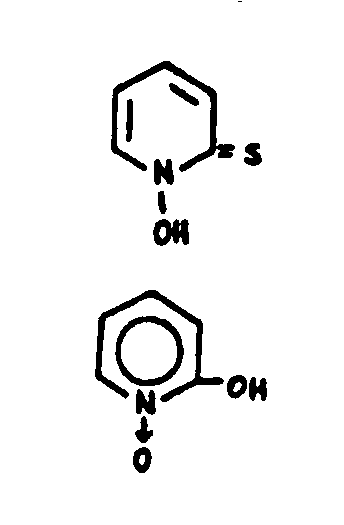
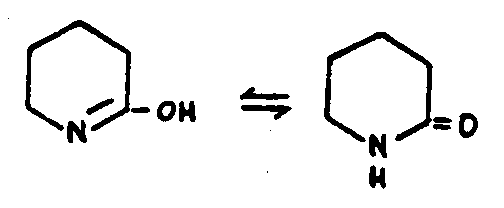
| 291 | Chalcogen and acyclic nitrogen bonded directly to the same carbon: | ||
This subclass is indented under subclass 290. Compounds in which chalcogen (i.e., oxygen, sulfur, selenium,
or tellurium) and acyclic nitrogen are bonded directly to the same
carbon.
| |||
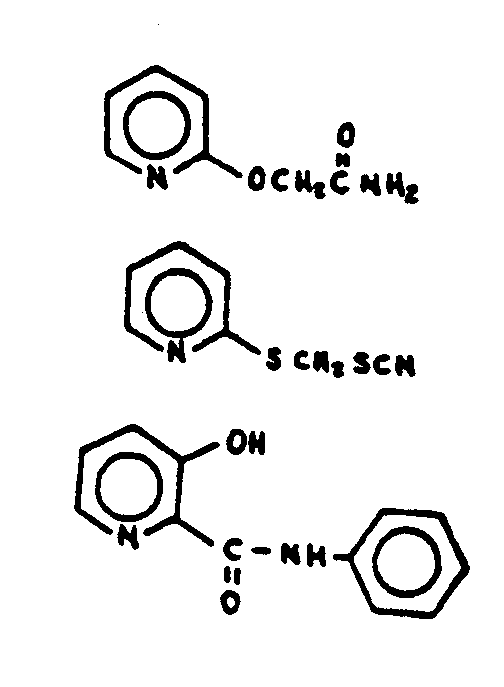
| 292 | The chalcogen or the acyclic nitrogen is bonded directly to the six-membered hetero ring: | ||
This subclass is indented under subclass 291. Compounds in which the chalcogen (i.e., oxygen, sulfur,
selenium, or tellurium) or the acyclic nitrogen is bonded directly
to the six-membered hetero ring.
| |||
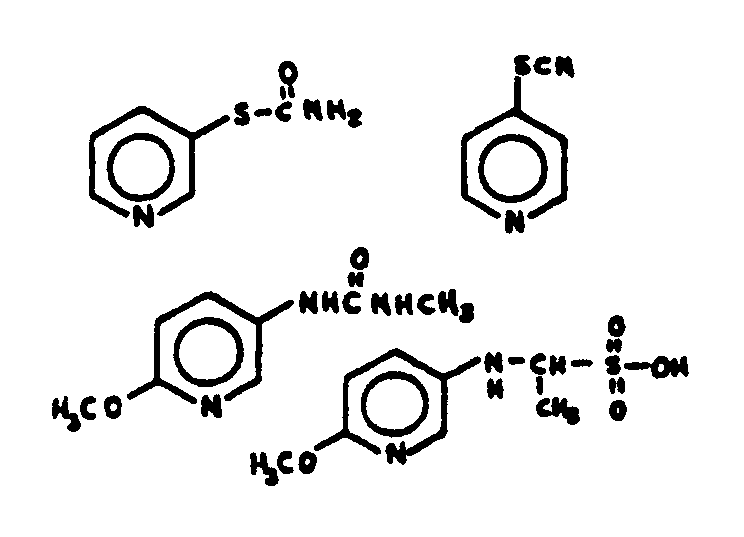
| 293 | Sulfur bonded directly to acyclic nitrogen: | ||
This subclass is indented under subclass 290. Compounds which contain sulfur bonded directly to acyclic
nitrogen.
| |||
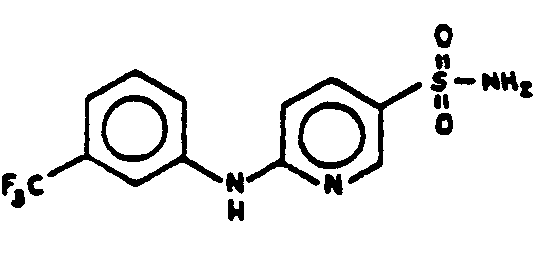
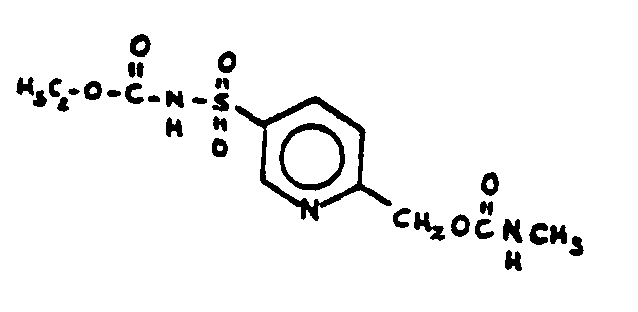
| 294 | Chalcogen bonded directly to chalcogen: | ||
This subclass is indented under subclass 290. Compounds which contain chalcogen (i.e., oxygen, sulfur,
selenium, or tellurium) bonded directly to chalcogen.
| |||
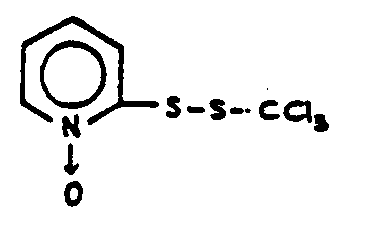
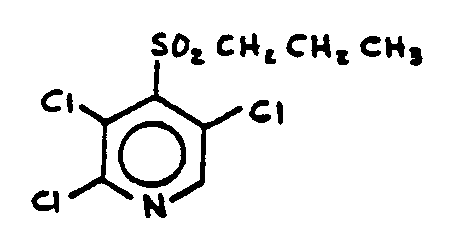
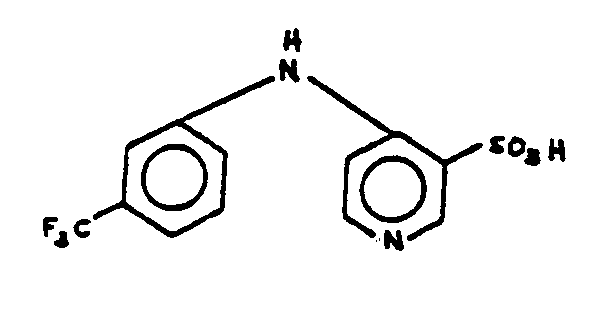
| 295 | Halogen bonded directly to the six-membered hetero ring by nonionic bonding: | ||
This subclass is indented under subclass 294. Compounds which contain halogen bonded directly to the six-membered
hetero ring by nonionic bonding.
| |||
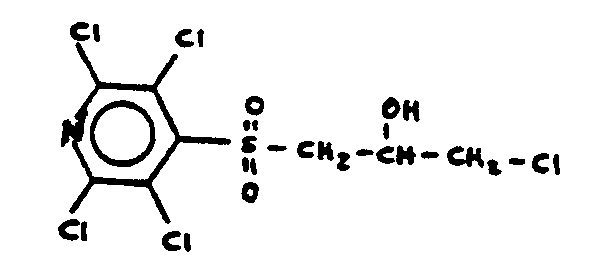
| 296 | Plural chalcogens bonded directly to ring carbons of the six-membered hetero ring: | ||||
This subclass is indented under subclass 290. Compounds containing at least two chalcogens (i.e., oxygens,
sulfur, selenium, or tellurium) which are bonded directly to ring
carbons of the six-membered hetero ring.
SEE OR SEARCH THIS CLASS, SUBCLASS:
| |||||
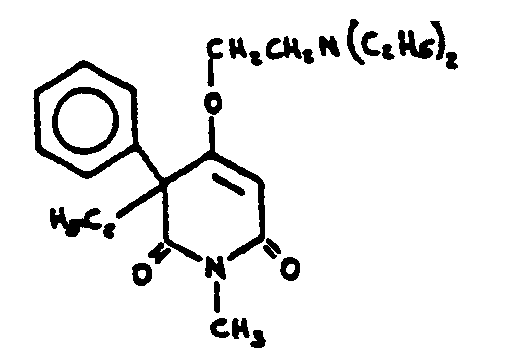
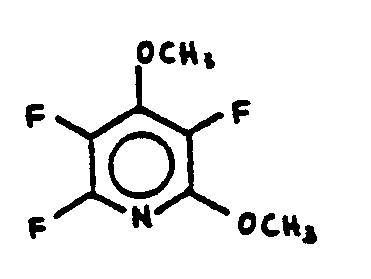
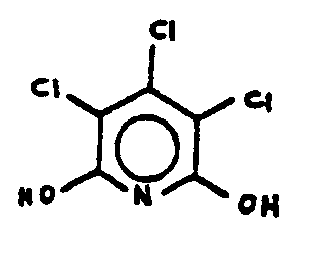
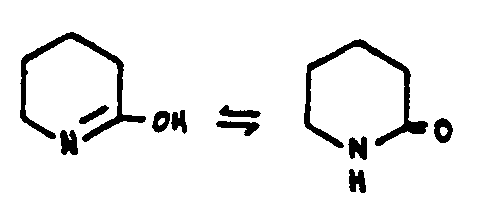
| 297 | Nitrogen attached directly to the six-membered hetero ring by nonionic bonding: | ||
This subclass is indented under subclass 290. Compounds which contain nitrogen attached directly to the
six-membered hetero ring by nonionic bonding.
| |||
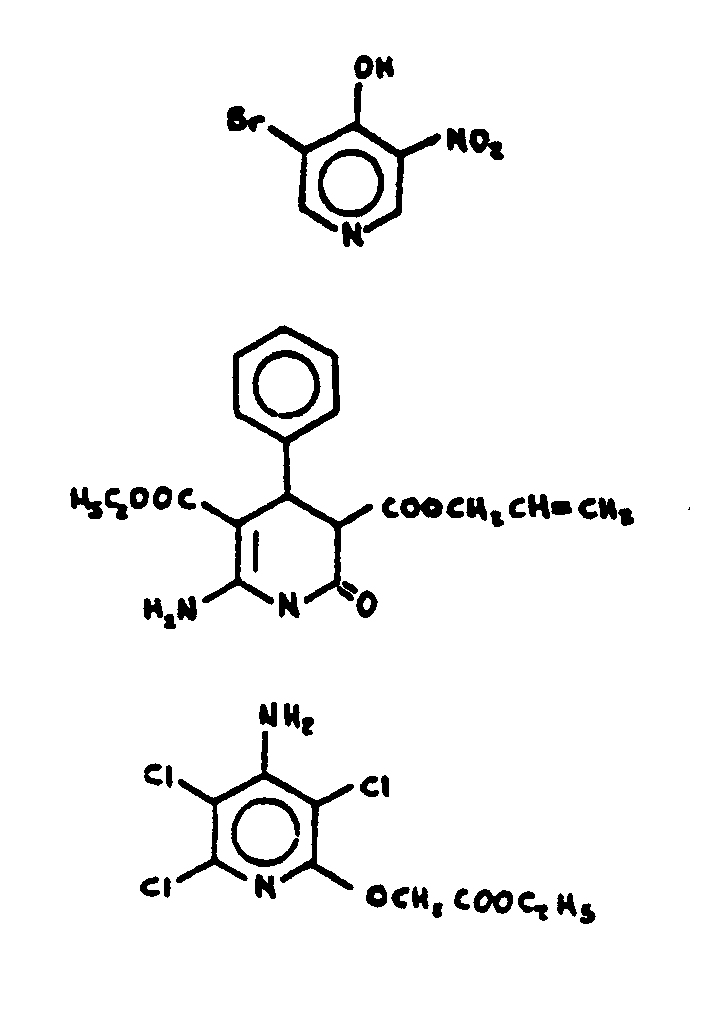
| 298 | Having -C(=X)-, wherein X is chalcogen, bonded directly to the six-membered hetero ring: | ||
This subclass is indented under subclass 290. Compounds wherein a group, in which X is chalcogen (i.e.,
oxygen, sulfur, selenium, or tellurium), is bonded directly to the
six-membered hetero ring.
| |||
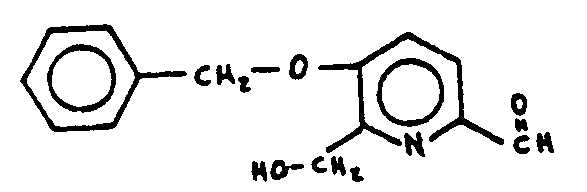
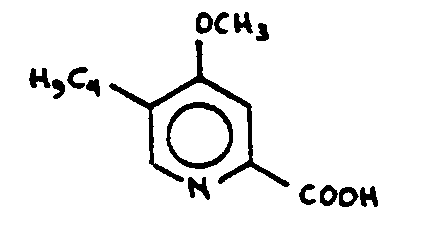
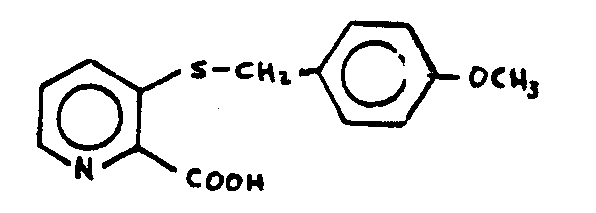
| 299 | Plural -C(=X)- groups, wherein X Is chalcogen, bonded directly to the six-membered hetero ring: | ||
This subclass is indented under subclass 298. Compounds which contain at least two groups bonded directly
to the six-membered hetero ring.
| |||
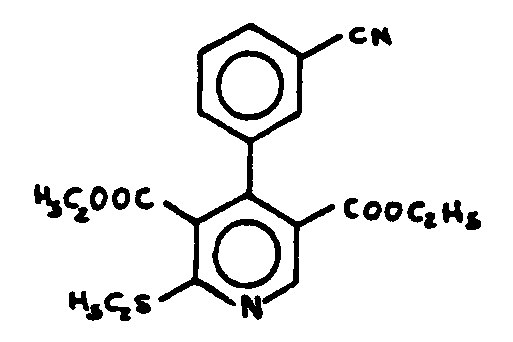
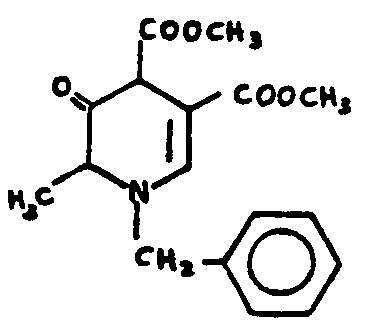
| 300 | Nitrogen attached indirectly to the six-membered hetero ring by nonionic bonding: | ||
This subclass is indented under subclass 290. Compounds in which nitrogen is attached indirectly to the
six-membered hetero ring by nonionic bonding.
| |||
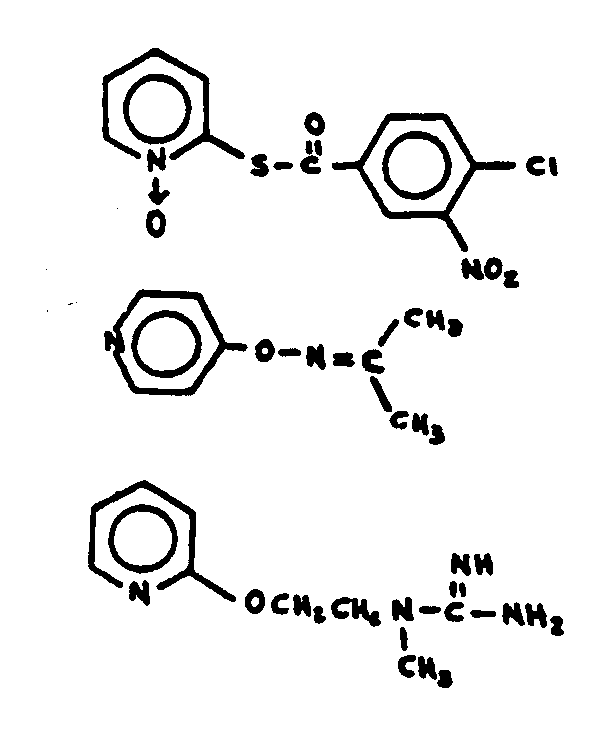
| 301 | Chalcogen attached indirectly to the six-membered hetero ring by nonionic bonding: | ||
This subclass is indented under subclass 290. Compounds in which chalcogen (i.e., oxygen, sulfur, selenium,
or tellurium) is attached indirectly to the six-membered hetero
ring by nonionic bonding.
| |||
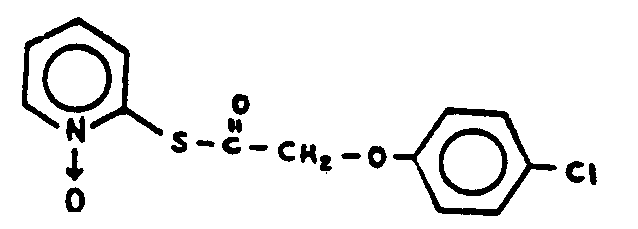
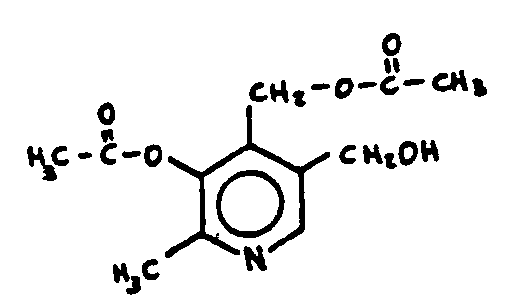
| 302 | Halogen attached directly or indirectly to the six-membered hetero ring by nonionic bonding: | ||
This subclass is indented under subclass 301. Compounds in which halogen is attached directly or indirectly
to the six-membered hetero ring by nonionic bonding.
| |||
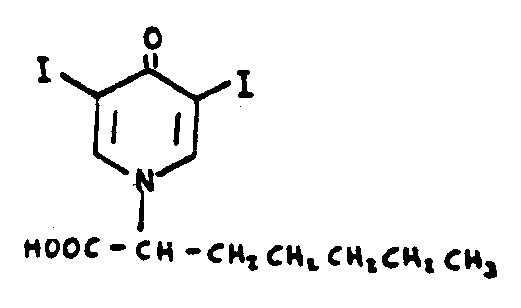
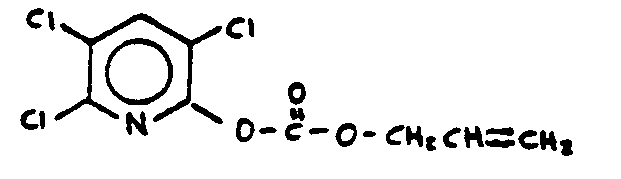
| 303 | Halogen attached directly or indirectly to the six-membered hetero ring by nonionic bonding: | ||
This subclass is indented under subclass 290. Compounds in which halogen is attached directly or indirectly
to the six-membered hetero ring by nonionic bonding.
| |||
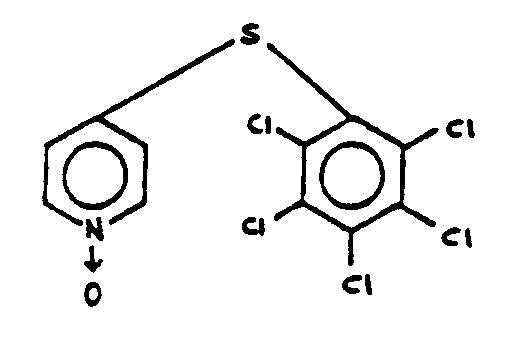
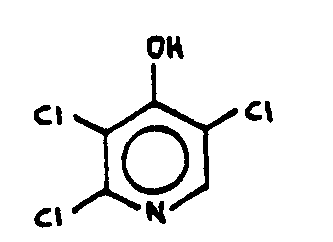
| 304 | Nitrogen attached directly to the six-membered hetero ring by nonionic bonding: | ||||
This subclass is indented under subclass 1. Compounds wherein nitrogen is attached directly to the six-membered
hetero ring by nonionic bonding.
SEE OR SEARCH THIS CLASS, SUBCLASS:
| |||||
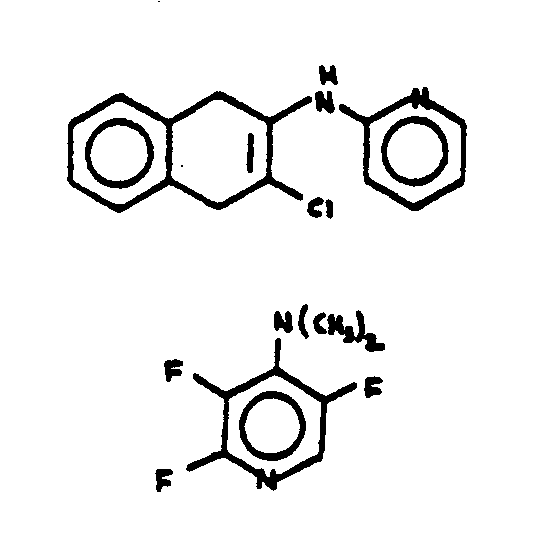
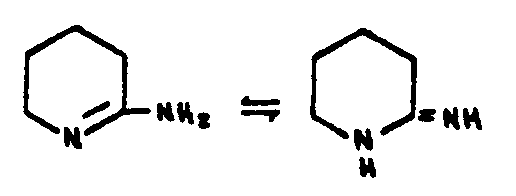
| 305 | Sulfur and acyclic nitrogen bonded directly to the same carbon: | ||
This subclass is indented under subclass 304. Compounds which contain sulfur and acyclic nitrogen bonded
directly to the same carbon.
| |||
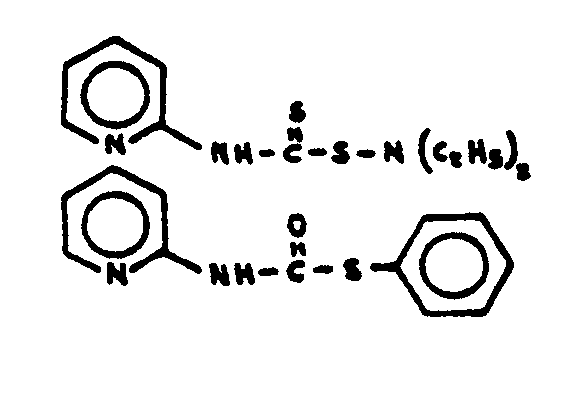
| 306 | Plural acyclic nitrogens bonded directly to the same carbon or single bonded directly to each other: | ||
This subclass is indented under subclass 304. Compounds wherein at least two acyclic nitrogens are bonded
directly to the same carbon or single bonded directly to each other.
| |||
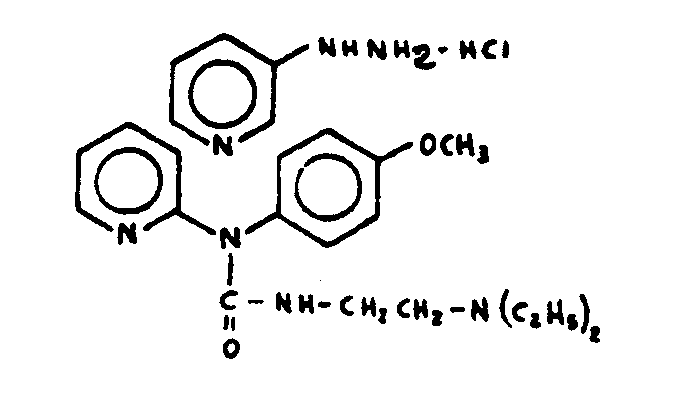
| 307 | Plural nitrogens attached directly to the six-membered hetero ring by nonionic bonding: | ||
This subclass is indented under subclass 304. Compounds in which at least two nitrogens are attached directly
to the six-membered hetero ring by nonionic bonding.
| |||
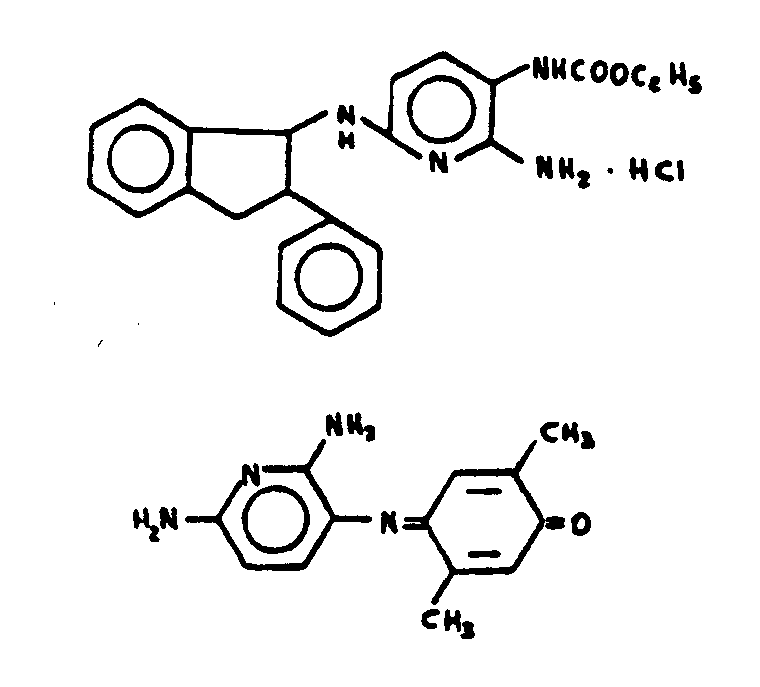
| 308 | Acyclic nitrogen bonded directly to A -C(=X)- group, wherein X Is chalcogen: | ||
This subclass is indented under subclass 307. Compounds in which acyclic nitrogen is bonded directly to
a group, wherein X is chalcogen (i.e., oxygen, sulfur, selenium,
or tellurium).
| |||
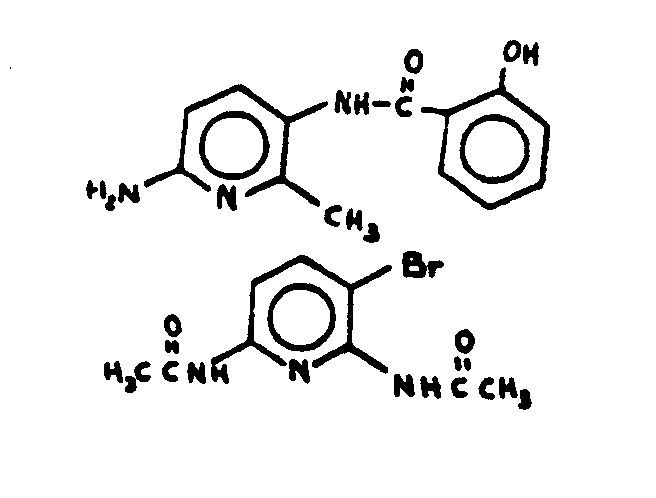
| 309 | Acyclic nitrogen bonded directly to A -C(=X)- group, wherein X Is chalcogen: | ||
This subclass is indented under subclass 304. Compounds in which acyclic nitrogen is bonded directly to
a group, wherein X is chalcogen (i.e., oxygen, sulfur, selenium,
or tellurium).
| |||
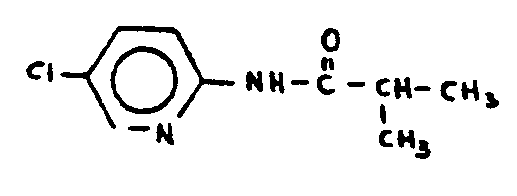
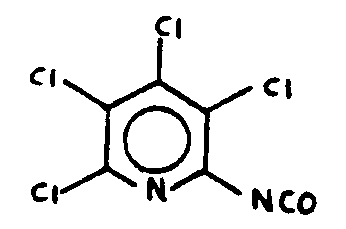
| 310 | Having -C(=X)-, wherein X is chalcogen, bonded directly to the six-membered hetero ring: | ||
This subclass is indented under subclass 304. Compounds wherein a group, in which X is chalcogen (i.e.,
oxygen, sulfur, selenium, or tellurium), is bonded directly to the
six-membered hetero ring.
| |||
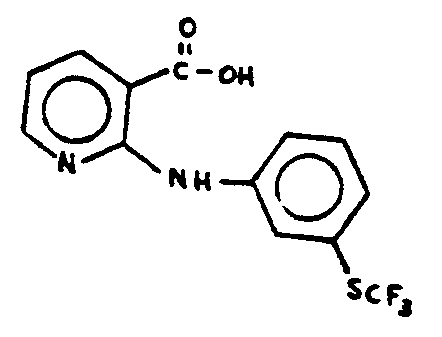
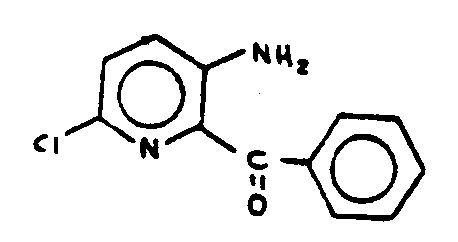
| 311 | The nitrogen bonded additionally only to hydrogen: | ||||
This subclass is indented under subclass 304. Compounds in which the remaining valences of the nitrogen
are bonded only to hydrogen.
SEE OR SEARCH THIS CLASS, SUBCLASS:
| |||||
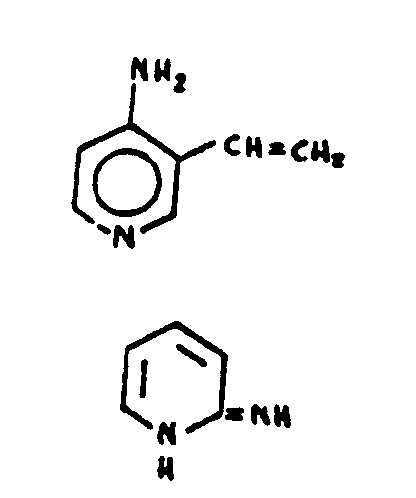
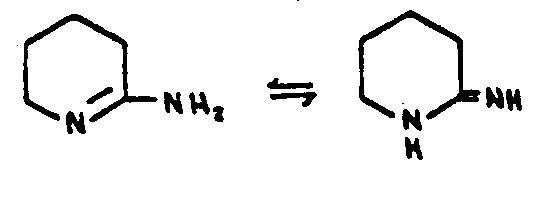
| 312 | Chalcogen attached indirectly to the six-membered hetero ring by nonionic bonding: | ||
This subclass is indented under subclass 304. Compounds which contain chalcogen (i.e., oxygen, sulfur,
selenium, or tellurium) attached indirectly to the six-membered
hetero ring by nonionic bonding.
| |||
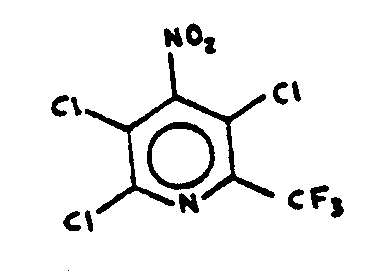
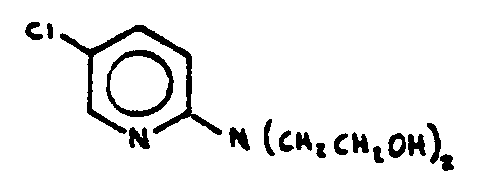
| 313 | Thiocarbonyl bonded directly to the six-membered hetero ring: | ||
This subclass is indented under subclass 1. Compounds wherein a group is bonded directly to the six-membered
hetero ring.
| |||
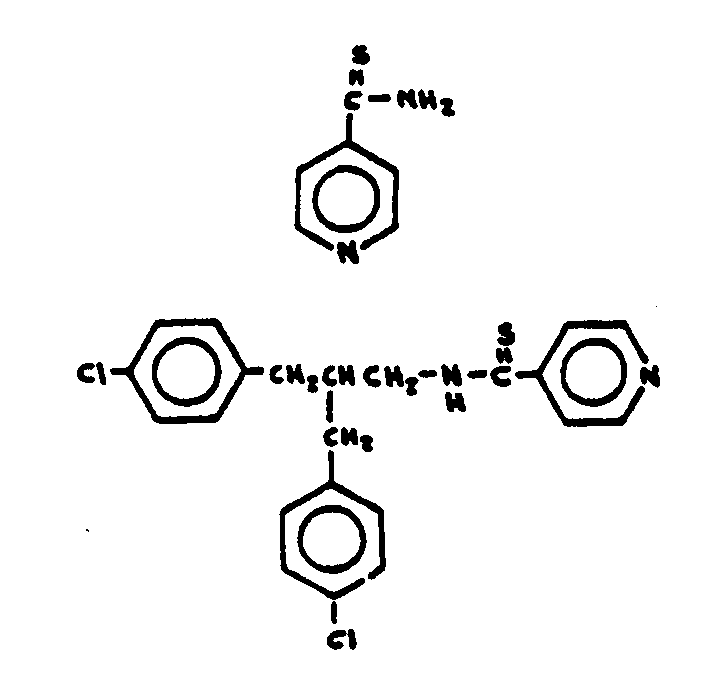
| 314 | Carbonyl bonded directly to the six-membered hetero ring: | ||
This subclass is indented under subclass 1. Compounds wherein a group is bonded directly to the six-membered
hetero ring.
| |||
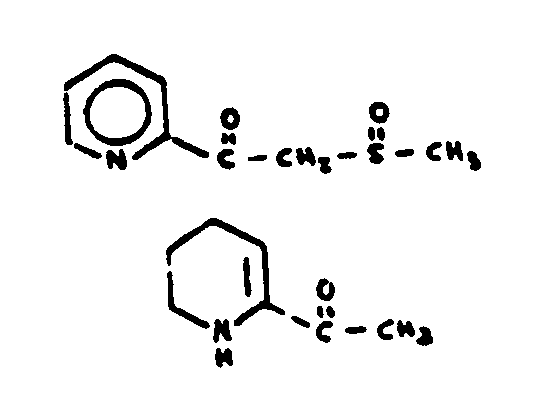
| 315 | At 3-position: | ||
This subclass is indented under subclass 314. Compounds in which the carbonyl group is attached directly
to the 3-posiiton of the six-membered hetero ring.
| |||
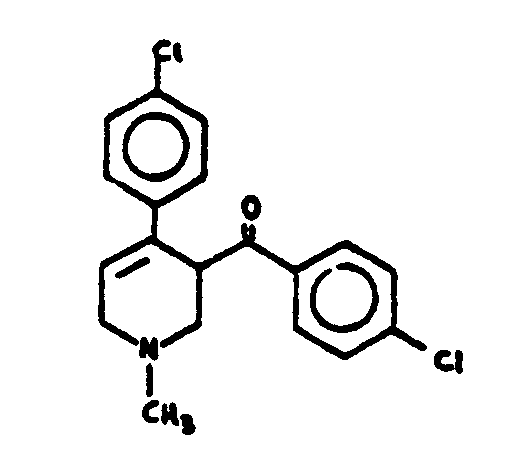
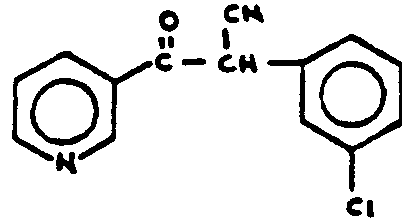
| 316 | Acyclic nitrogen bonded directly to the carbonyl: | ||
This subclass is indented under subclass 315. Compounds in which acyclic nitrogen is bonded directly to
the carbonyl group.
| |||
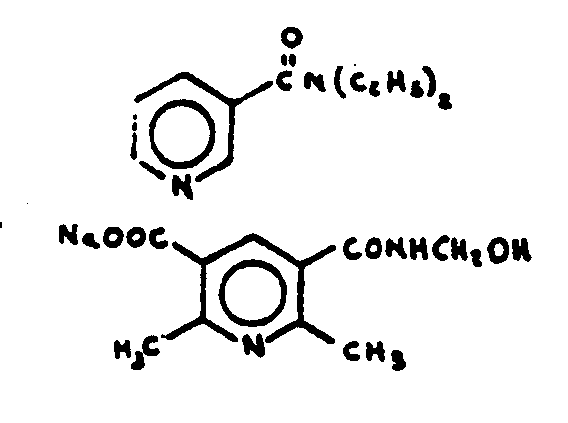
| 317 | Processes of obtaining nicotinamide, per se: | ||
This subclass is indented under subclass 316. Processes whereby nicotinamide, i.e., pyridine-3-carboxylic
acid amide, is prepared.
| |||
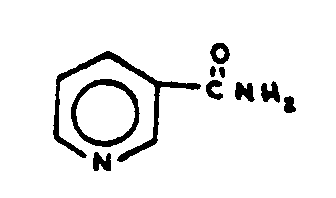
| 318 | The carbonyl is in a -COO- group: | ||
This subclass is indented under subclass 315. Compounds in which the carbonyl is part of a -COO- group.
| |||
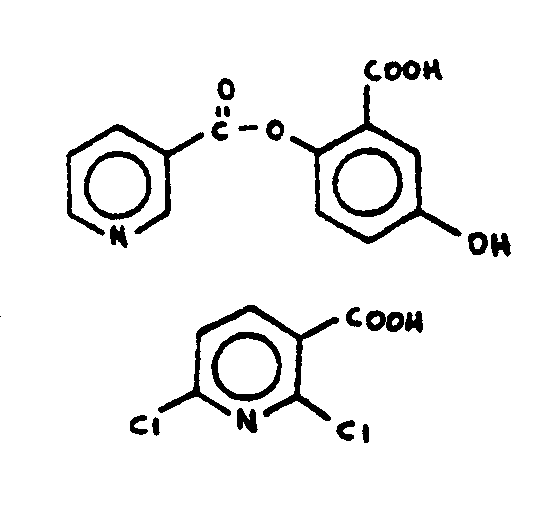
| 319 | Processes of obtaining nicotinic acid, per se, or a derivative of nicotinic acid wherein the only substituents are -COO- Groups, or salt thereof: |
| This subclass is indented under subclass 318. Processes for the preparation of nicotinic acid, per se, or of a derivative thereof wherein the only substituents are additional -COO- groups, or of salts thereof. | |
| 320 | By oxidation: |
| This subclass is indented under subclass 319. Processes wherein the nicotinic acid or carboxy derivative thereof is obtained by an oxidation reaction. | |
| 321 | Additional -COO- group bonded directly to the six-membered hetero ring: | ||
This subclass is indented under subclass 318. Compounds which contain an additional -COO- group bonded
directly to the six-membered hetero ring.
| |||
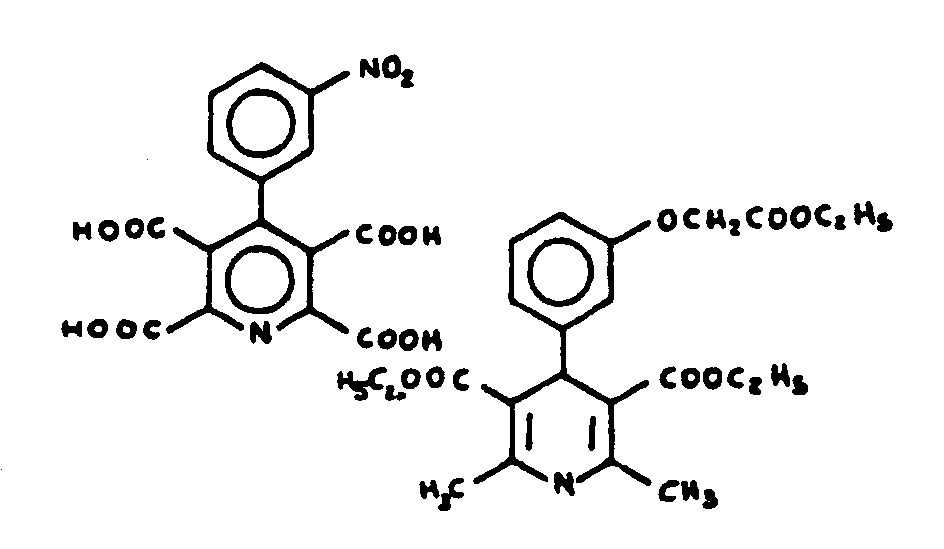
| 322 | Carbocyclic ring containing: | ||
This subclass is indented under subclass 318. Compounds which contain a carbocyclic ring.
| |||
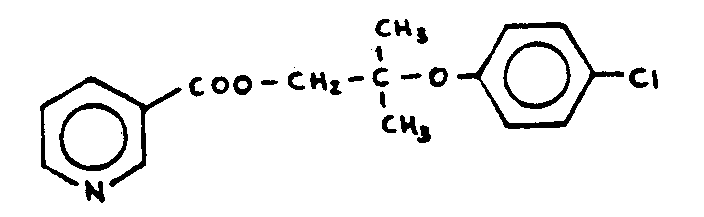
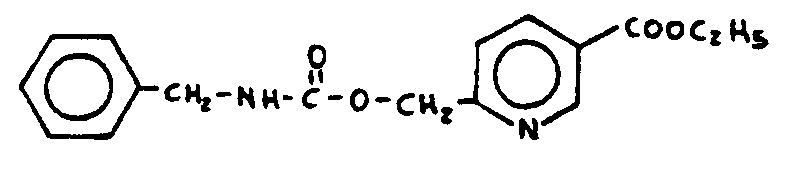
| 323 | Acyclic nitrogen bonded directly to the carbonyl: | ||
This subclass is indented under subclass 314. Compounds in which acyclic nitrogen is bonded directly to
the carbonyl group.
| |||
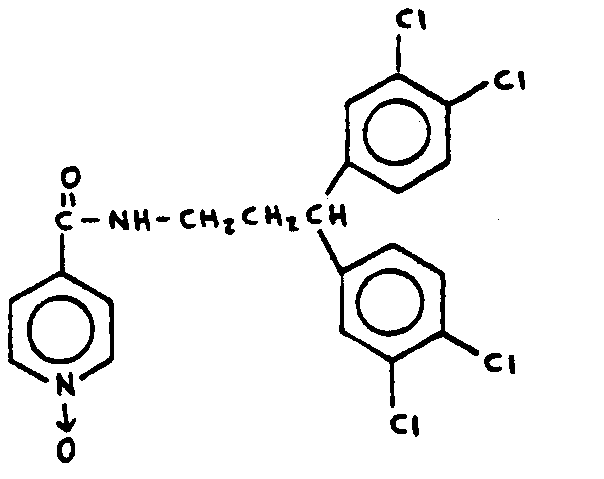
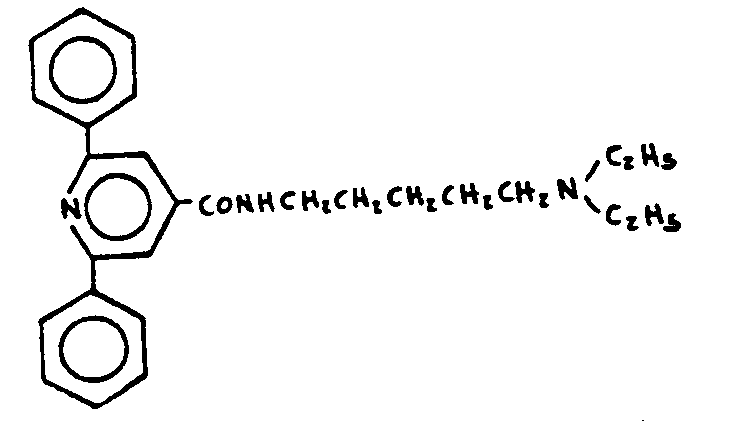
| 324 | Acyclic nitrogen single bonded directly to acyclic nitrogen: | ||
This subclass is indented under subclass 323. Compounds in which acyclic nitrogen is single bonded directly
to acyclic nitrogen.
| |||
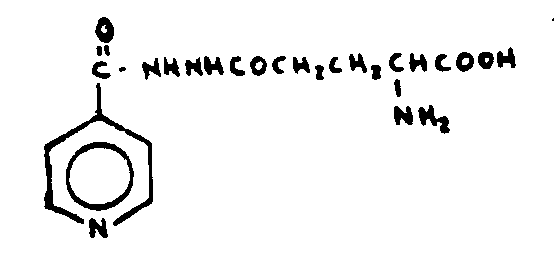
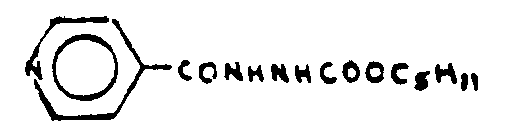
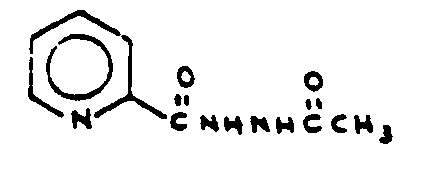
| 325 | Carbon double bonded directly to one of the acyclic nitrogens: | ||
This subclass is indented under subclass 324. Compounds in which carbon is double bonded directly to one
of the acyclic nitrogens.
| |||
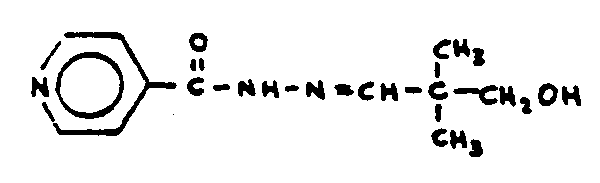
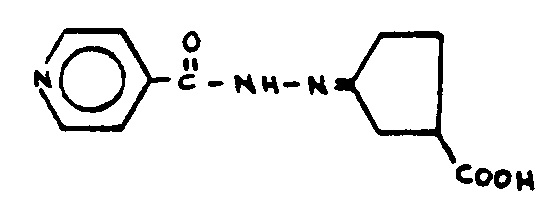
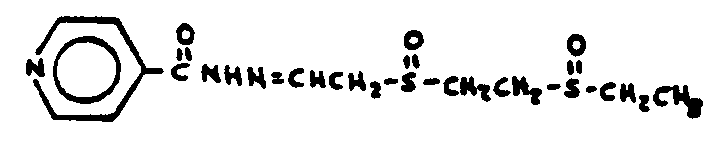
| 326 | The carbonyl is in a -COO- group: | ||
This subclass is indented under subclass 314. Compounds in which the carbonyl group is part of a -COO-
group.
| |||
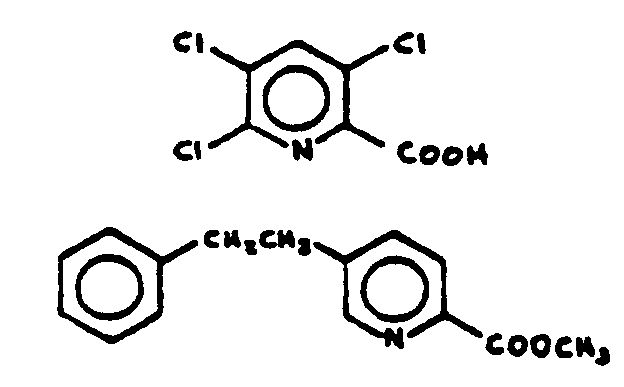
| 327 | Processes: |
| This subclass is indented under subclass 326. Processes of preparing, purifying, or recovering the carboxy containing pyridine compound. | |
| 328 | Acyclic nitrogen attached indirectly to the six-membered hetero ring by nonionic bonding: | ||
This subclass is indented under subclass 314. Compounds wherein acyclic nitrogen is attached indirectly
to the six-membered hetero ring by nonionic bonding.
| |||
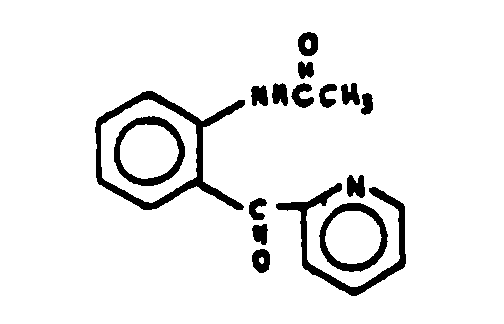
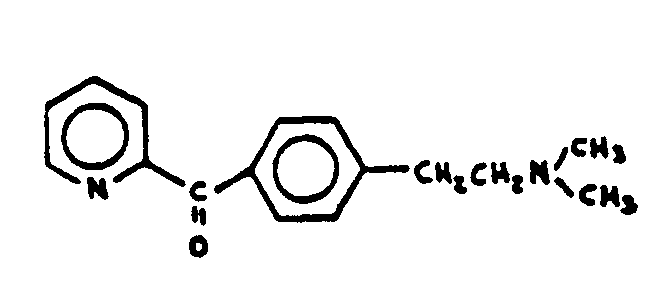
| 329 | Nitrogen attached indirectly to the six-membered hetero ring by nonionic bonding: | ||
This subclass is indented under subclass 1. Compounds wherein nitrogen is attached indirectly to the
six-membered hetero ring by nonionic bonding.
| |||
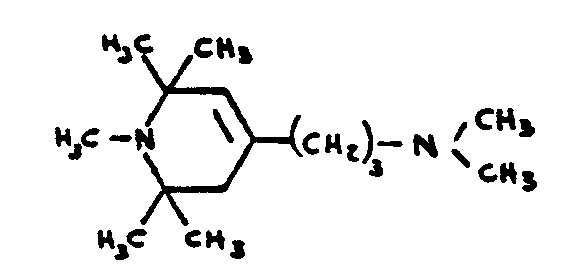
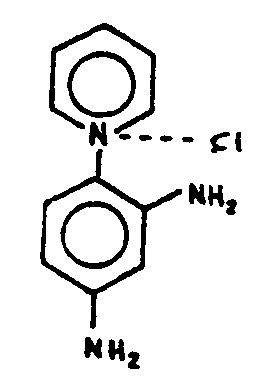
| 330 | Cyano attached indirectly to the six-membered hetero ring by nonionic bonding: | ||
This subclass is indented under subclass 329. Compounds in which a -CbN group is attached indirectly to
the six-membered hetero ring by nonionic bonding.
| |||
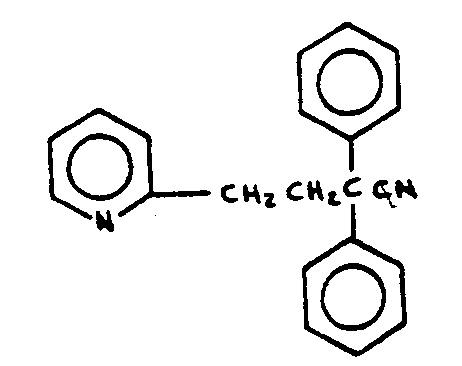
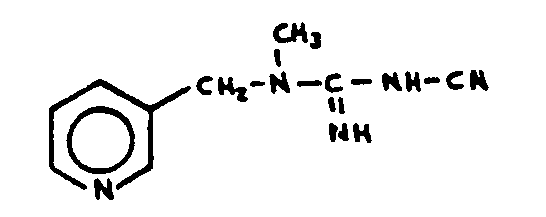
| 331 | Sulfur and acyclic nitrogen bonded directly to the same carbon: | ||
This subclass is indented under subclass 329. Compounds which contain a carbon atom to which is bonded
directly sulfur and acyclic nitrogen.
| |||
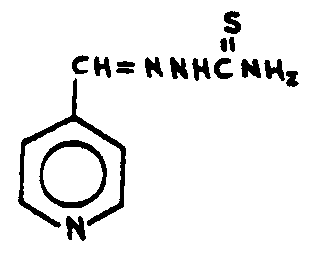
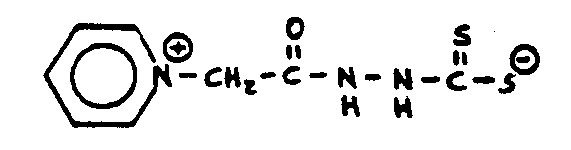
| 332 | Plural acyclic nitrogens bonded directly to the same carbon or single bonded directly to each other: | ||
This subclass is indented under subclass 329. Compounds wherein at least two acyclic nitrogens are bonded
directly to the same carbon or single bonded directly to each other.
| |||
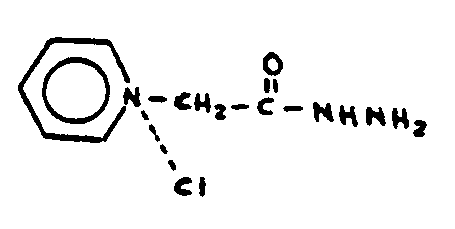
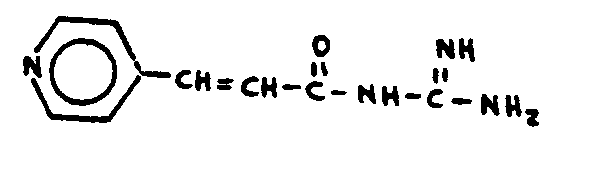
| 333 | The six-membered hetero ring and another ring bonded directly to the same carbon: | ||
This subclass is indented under subclass 329. Compounds wherein the six-membered hetero ring and another
ring are bonded directly to the same carbon.
| |||
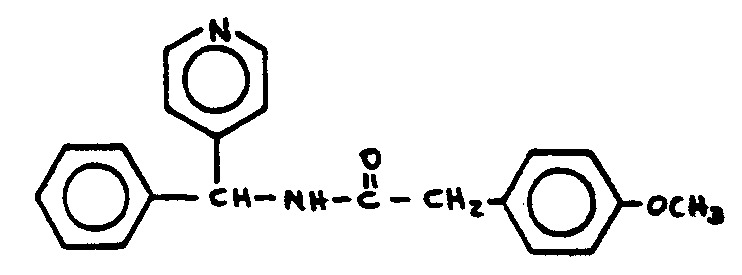
| 334 | Chalcogen attached indirectly to the six-membered hetero ring by nonionic bonding: | ||
This subclass is indented under subclass 329. Compounds wherein chalcogen (i.e., oxygen, sulfur, selenium,
or tellurium) is bonded indirectly to the six-membered hetero ring
by nonionic bonding.
| |||

| 335 | The chalcogen, X, is part of a -C(=X)X- group, wherein the X"s are the same or diverse chalcogens: | ||
This subclass is indented under subclass 334. Compounds in which the chalcogen, X, is part of a group,
wherein the X"s are the same or diverse chalcogens (i.e.,
oxygen, sulfur, selenium, or tellurium).
| |||
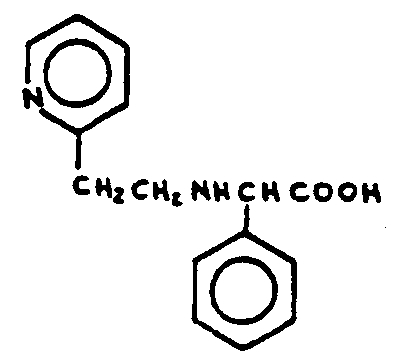
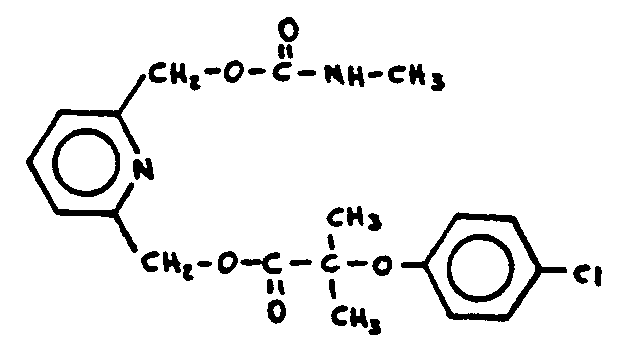
| 336 | Acyclic nitrogen bonded directly to A -C(=X)- group wherein X is chalcogen: | ||
This subclass is indented under subclass 334. Compounds wherein acyclic nitrogen is bonded directly to
a group, in which X is chalcogen (i.e., oxygen, sulfur, selenium,
or tellurium).
| |||
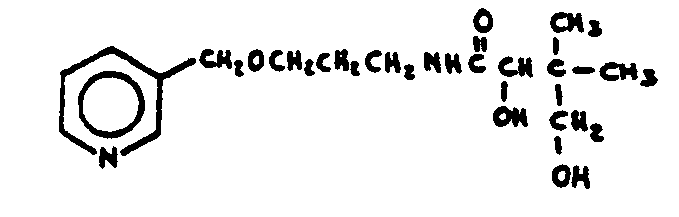
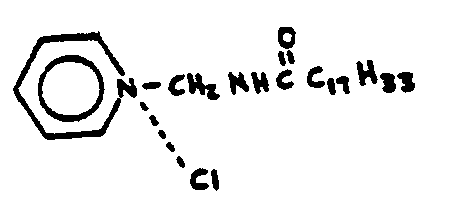
| 337 | Additional ring containing: | ||
This subclass is indented under subclass 336. Compounds which include an additional ring.
| |||
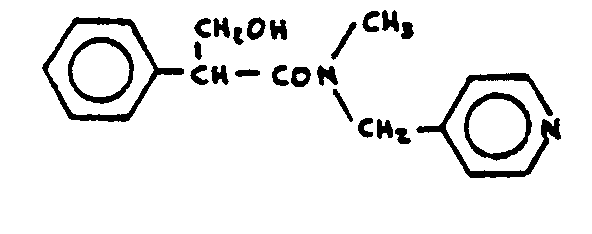
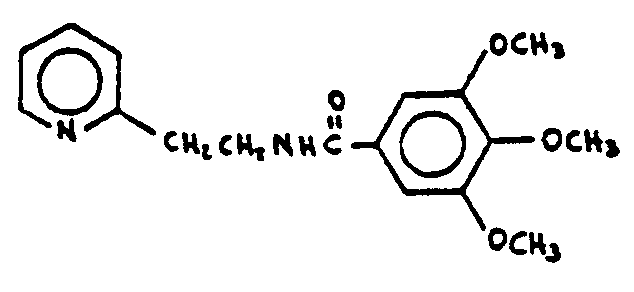
| 338 | Acyclic nitrogen bonded directly to chalcogen: | ||
This subclass is indented under subclass 334. Compounds wherein acyclic nitrogen is bonded directly to
chalcogen (i.e., oxygen, sulfur, selenium, or tellurium).
| |||
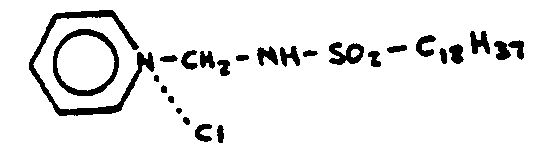
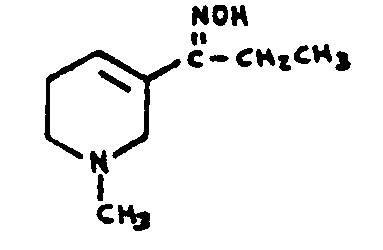
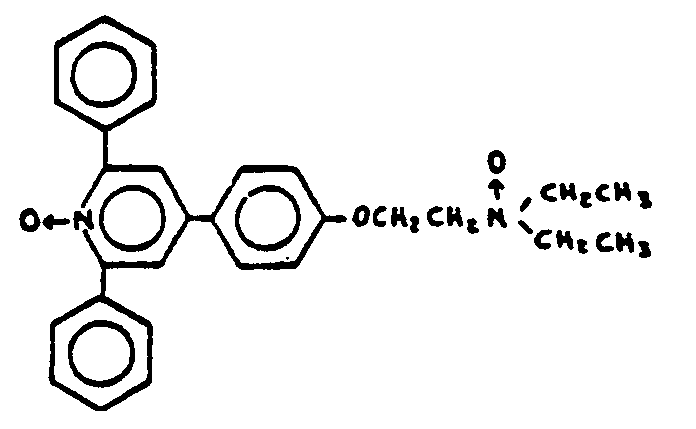
| 339 | Chalcogen attached indirectly to the six-membered hetero ring by nonionic bonding (e.g., sulfato betaines, etc.): | ||
This subclass is indented under subclass 1. Compounds wherein chalcogen (i.e., oxygen, sulfur, selenium,
or tellurium) is attached indirectly to the six-membered hetero
ring by nonionic bonding.
| |||
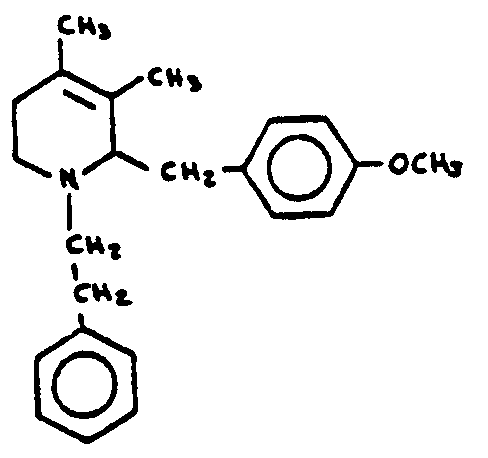
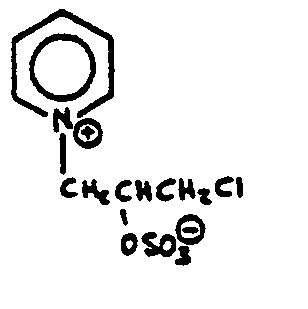
| 340 | The chalcogen, X, is in a -C(=X)- group: | ||
This subclass is indented under subclass 339. Compounds in which the chalcogen, X (i.e., oxygen, sulfur,
selenium, or tellurium), is in a group.
| |||
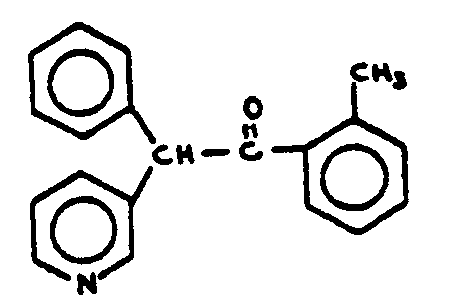
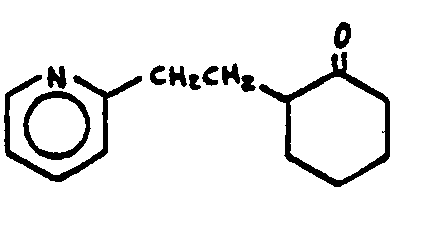
| 341 | The -C(=X)- is part of a -C(=X)X- group, wherein the X"s are the same or diverse chalcogen: | ||
This subclass is indented under subclass 340. Compounds in which the is part of a group, wherein the
X"s are the same or diverse chalcogens (i.e. oxygen, sulfur,
selenium, or tellurium).
| |||
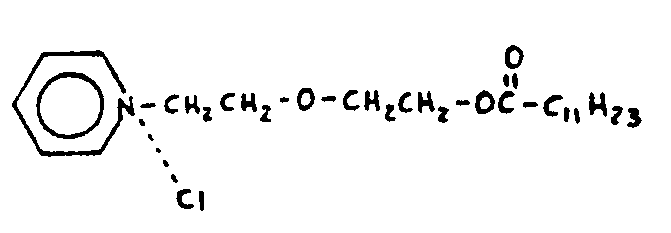
| 342 | Additional ring containing: | ||
This subclass is indented under subclass 341. Compounds which contain an additional ring.
| |||
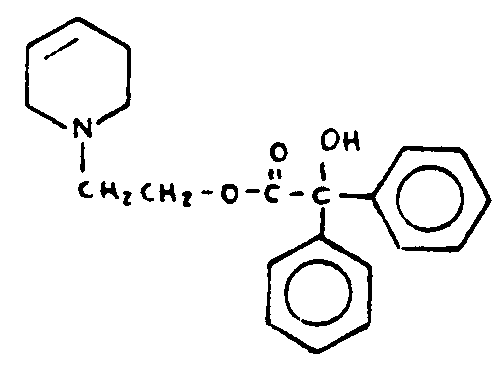
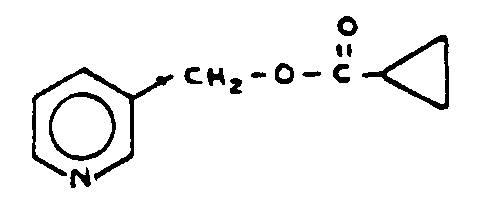
| 343 | The six-membered hetero ring and another ring bonded directly to the same carbon: | ||
This subclass is indented under subclass 339. Compounds wherein the six-membered hetero ring and another
ring are bonded directly to the same carbon.
| |||
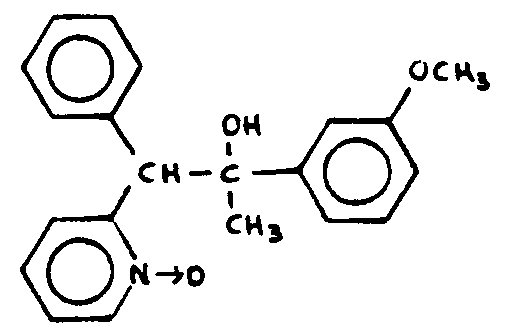
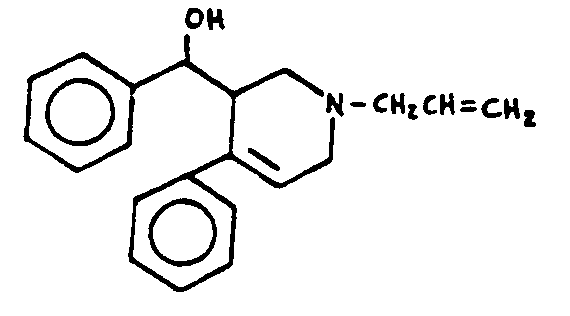
| 344 | The chalcogen is in an -OH or -OM group (M is group IA or group IIA light metal): | ||
This subclass is indented under subclass 339. Compounds in which the chalcogen is part of an -OH or -OM
group; wherein M is a Group IA or Group IIA metal having a specific
gravity less than four.
| |||
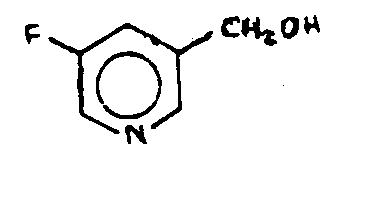
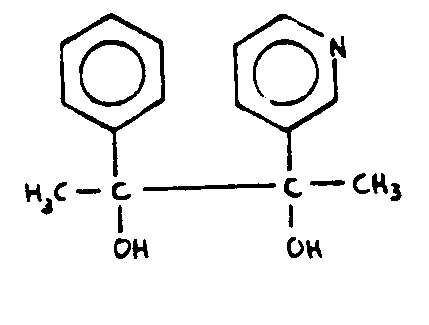
| 345 | Halogen attached directly to the six-membered hetero ring by nonionic bonding: | ||
This subclass is indented under subclass 1. Compounds wherein halogen is attached directly to the six-membered
hetero ring by nonionic bonding.
| |||
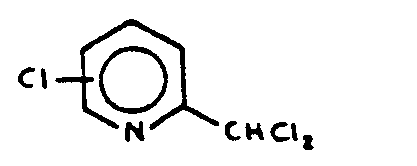
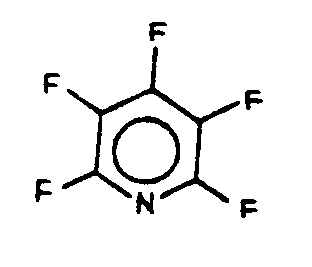
| 346 | Halogen attached indirectly to the six-membered hetero ring by nonionic bonding: | ||
This subclass is indented under subclass 1. Compounds wherein halogen is attached indirectly to the
six-membered hetero ring by nonionic bonding.
| |||
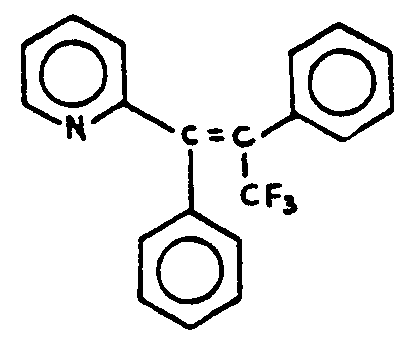
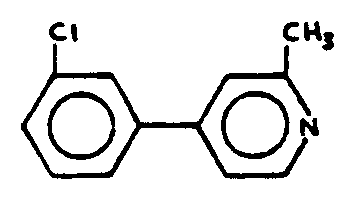
| 347 | The ring nitrogen of the six-membered hetero ring is pentavalent (e.g., quaternary pyridinium salts, etc.): | ||
This subclass is indented under subclass 1. Compounds in which the ring nitrogen of the six-membered
ring is pentavalent.
| |||
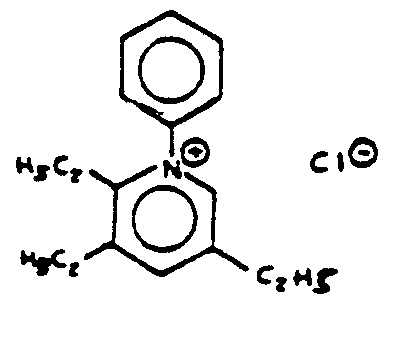
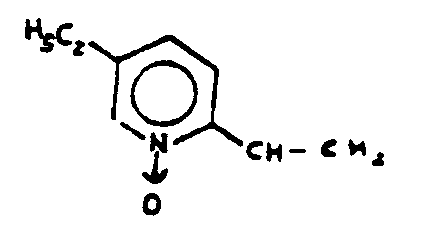
| 348 | Unsubstituted or hydrocarbyl substituted only or salts thereof: | ||||
This subclass is indented under subclass 1. Compounds in which the six-membered hetero ring is unsubstituted
or substituted by hydrocarbon radicals only, or salts thereof.
| |||||
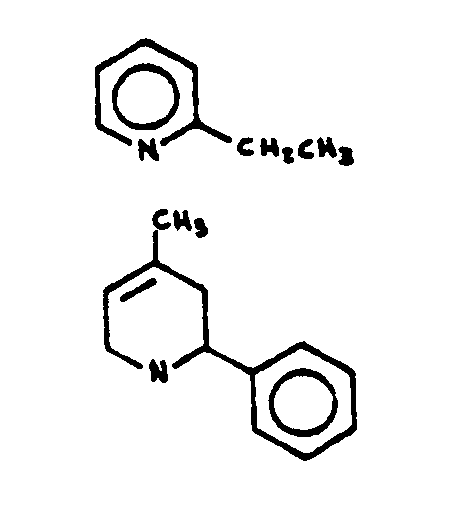
| 349 | Alkylation or dealkylation process: |
| This subclass is indented under subclass 348. Processes in which an alkyl group is formed or removed. | |
| 350 | Unsaturated hydrocarbyl side chain: | ||||
This subclass is indented under subclass 348. Compounds which contain an unsaturated hydrocarbon side
chain.
| |||||
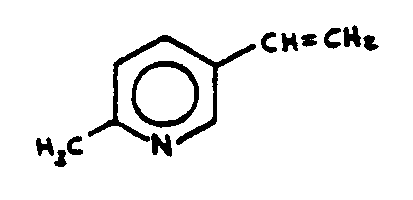
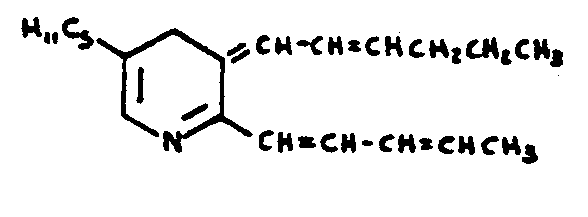
| 351 | Stabilized alkenyl pyridines: | ||
This subclass is indented under subclass 350. Compounds which are alkenyl substituted pyridines that have
been stabilized against polymerization.
| |||
| 352 | Process of forming the unsaturated hydrocarbyl side chain: | ||
This subclass is indented under subclass 350. Processes whereby the unsaturated hydrocarbon side chain
on the six-membered hetero ring is formed.
| |||
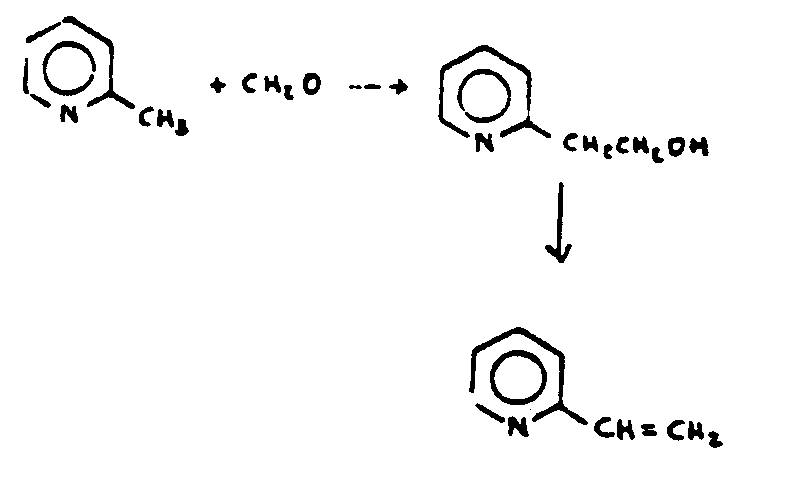
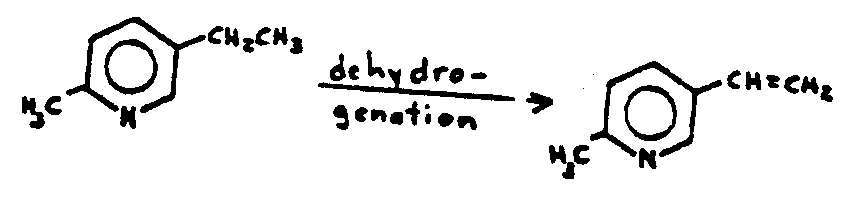
| 353 | Purification or recovery: | ||
This subclass is indented under subclass 348. Processes wherein the unsubstituted or hydrocarbyl substituted
pyridine is separated from impurities or from the reaction medium.
| |||