![[Search a list of Patent Appplications for class 534]](../as.gif) CLASS 534, CLASS 534, | ORGANIC COMPOUNDS -- PART OF THE CLASS 532-570 SERIES |
| Click here for a printable version of this file | |
SUBCLASSES
![[List of Patents for class 534 subclass 7]](../ps.gif) 7 7 | Noble gas containing (i.e., He, Ne, Ar, Kr, Xe, or Rn containing) |
| This subclass is indented under subclass 1. Compounds under Class 532, ... which contain a noble metal (i.e., helium, neon, argon, krypton, xenon or radon). | |
| 10 | Radioactive metal containing (At. No. 43, 61 or 84+; or radioactive isotope of another metal) |
| This subclass is indented under subclass 1. Compound under Class 532, ... , which contains a metal which exhibits spontaneous nuclear disintegration with emission of radioactive particles, either as (1) the naturally unstable metal which has as atomic number of (43, 61 or at least 84), or (2) a metal which has been treated to render an isotope thereof radioactive. | |
| 11 | Actinide series metal (At. No. 89+) | ||
This subclass is indented under subclass 10. Compound which contain metals having an atomic number of
89 or higher.
| |||
| 12 | Containing -C(=X)-, wherein X is chalcogen (e.g., carbonyl containing, etc.) |
| This subclass is indented under subclass 11. Compounds which contain a -C(=X)- group, wherein X is chalcogen (i.e., oxygen, sulfur, selenium or tellurium). | |
| 13 | The -C(=X)- is part of a -C(=X)X- group, wherein the X's are the same or diverse chalcogens | ||
This subclass is indented under subclass 12. Compounds in which the -C(=X)- is part of a -C(=X)X-
group, wherein the X"s are the same or diverse chalcogens.
| |||
| 14 | Technetium containing (At. No. 43; Tc) |
| This subclass is indented under subclass 10. Compounds which contain technetium. | |
| 15 | Rare earth containing (At. No. 21, 39, 57-60 or 62-71) |
| This subclass is indented under subclass 1. Compounds under Class 532, ... , which contain a metal having an atomic number of (21, 39, 57 - 60 or 62 - 71). | |
| 16 | Containing -C(=X)X-, wherein the X's are the same or diverse chalcogens | ||
This subclass is indented under subclass 15. Compounds which contain a -C(=X)X- group, wherein
the X"s are the same or diverse chalcogens (i.e., oxygen,
sulfur, selenium, or tellurium).
| |||
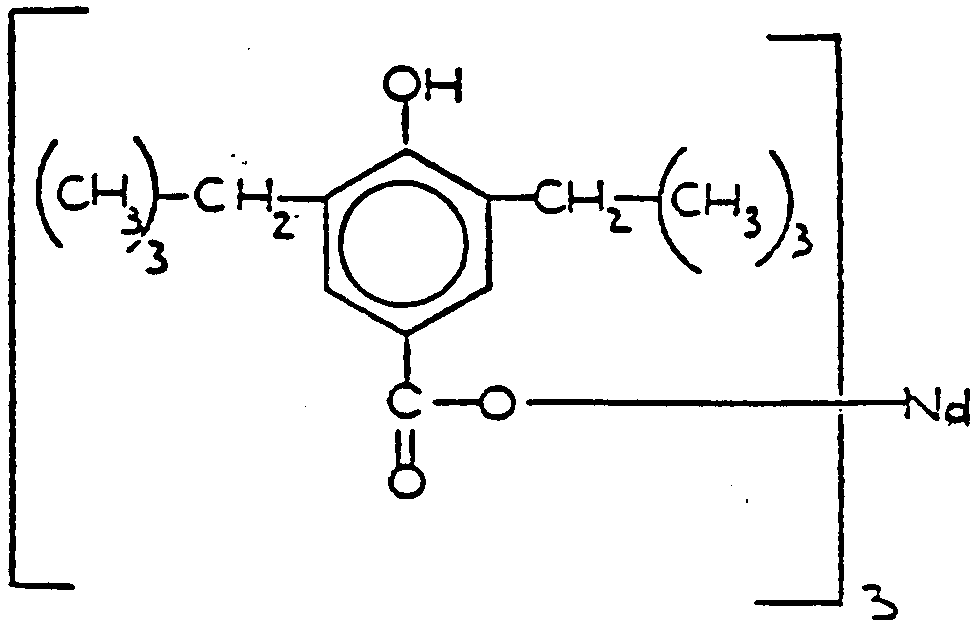
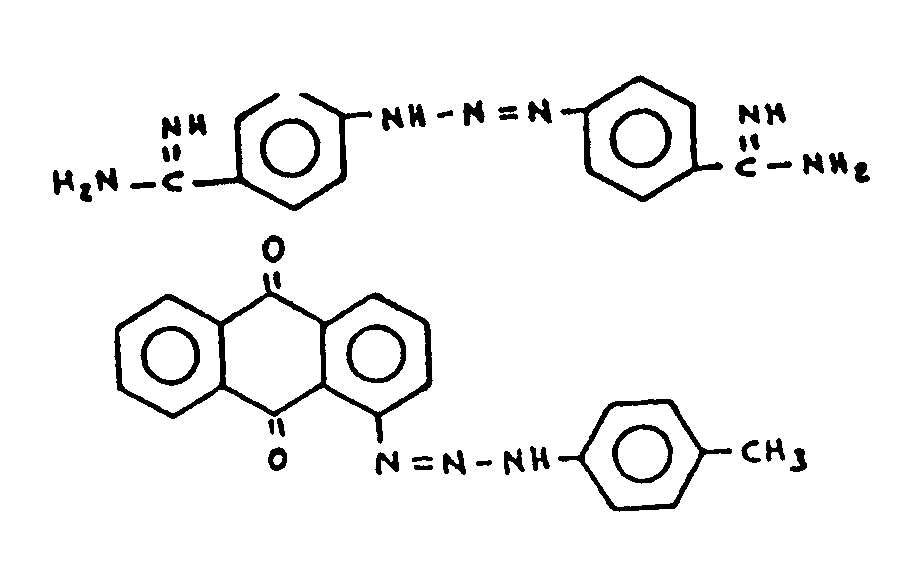
| 550 | Diazoamino (e.g., triazenes, etc.) | ||||||
This subclass is indented under subclass 1. Compounds under Class 532, ... in which nitrogen is attached
directly to an acyclic -N=N= group by nonionic
bonding, i.e., N-N=N-.
SEE OR SEARCH THIS CLASS, SUBCLASS:
| |||||||
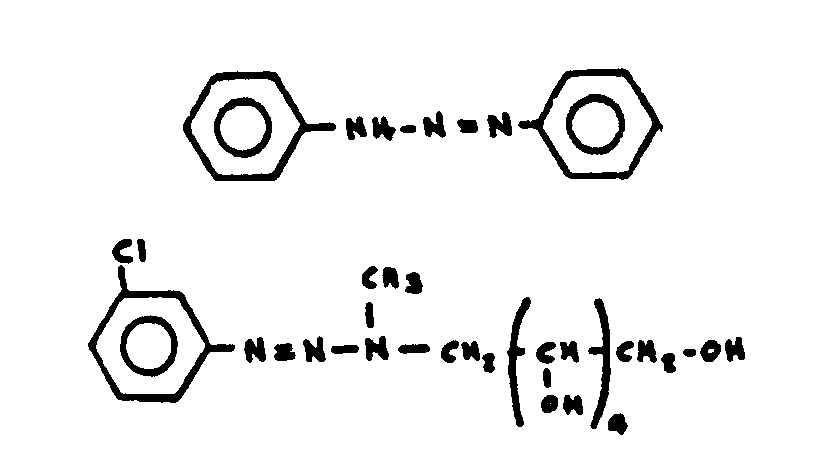
| 551 | Hetero ring containing | ||||
This subclass is indented under subclass 550. Compounds which contain a hetero ring.
| |||||
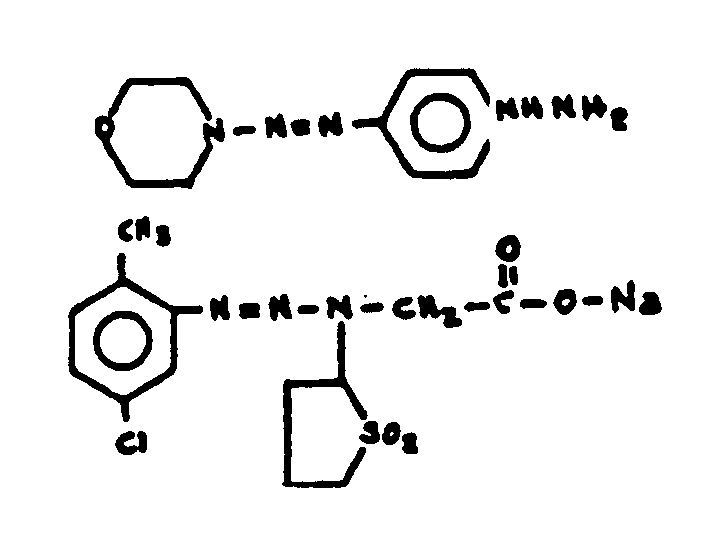
| 552 | Chalcogen or additional nitrogen bonded directly to the diazoamino group | ||
This subclass is indented under subclass 550. Compounds in which chalcogen (i.e., oxygen, sulfur, selenium
or tellurium) or additional nitrogen are bonded directly to the
diazoamino group.
| |||
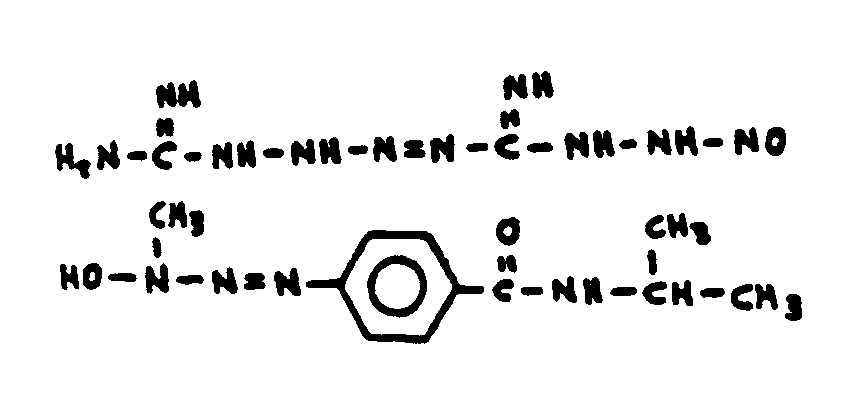
| 553 | Noncarbon atom double or triple bonded and the diazoamino group bonded directly to the same acyclic carbon | ||
This subclass is indented under subclass 550. Compounds in which the diazoamino group is bonded directly
to an acyclic carbon to which a noncarbon atom is attached directly
by a double or triple bond.
| |||
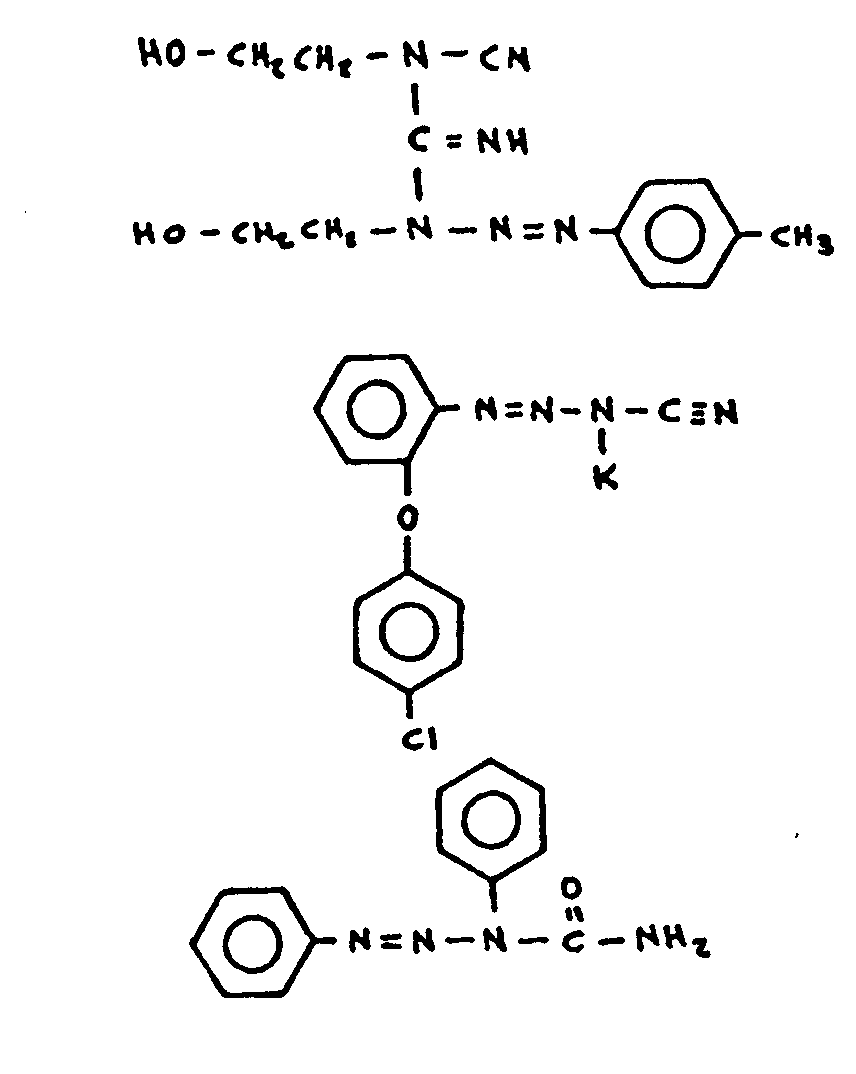
| 554 | Plural benzene rings bonded directly to the diazoamino group | ||
This subclass is indented under subclass 550. Compounds in which at least two benzene rings are bonded
directly to the diazoamino group.
| |||
| 555 | Processes |
| This subclass is indented under subclass 550. Processes for producing, purifying or recovering a compound
containing a diazoamino group.
| |
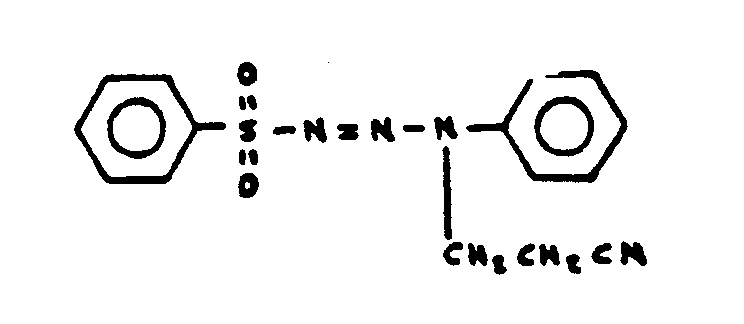
| 556 | Diazooxide or diazotate (e.g., -N=N-O-, etc.) | ||||
This subclass is indented under subclass 1. Compounds under Class 532, in which oxygen is bonded directly
to an acyclic -N=N- or group, which group is attached
directly to carbon by nonionic bonding.
| |||||
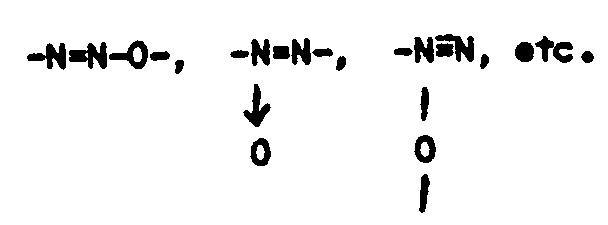
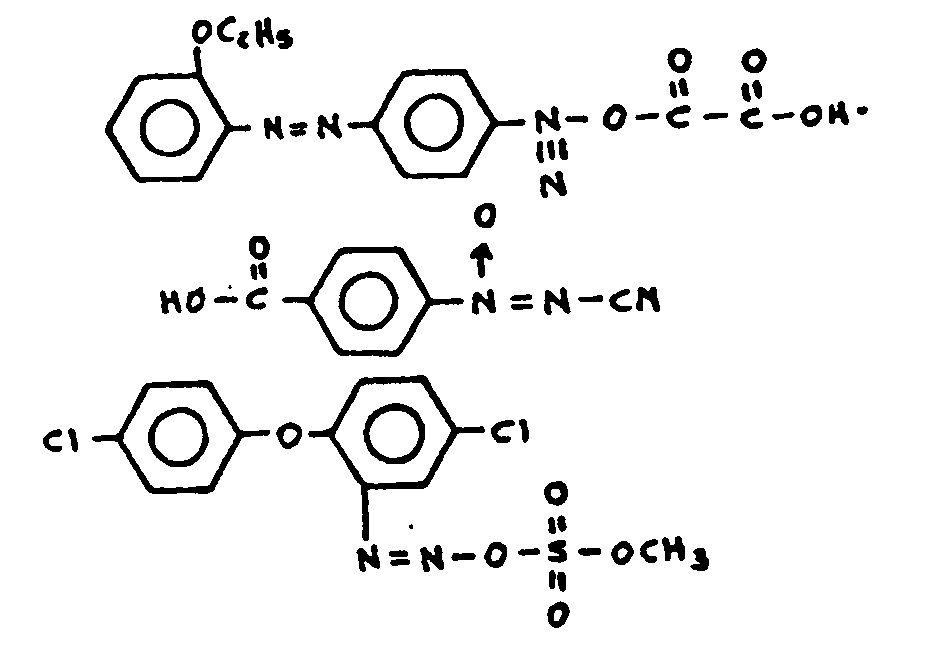
| 557 | Sulfur attached directly to a ring by nonionic bonding | ||
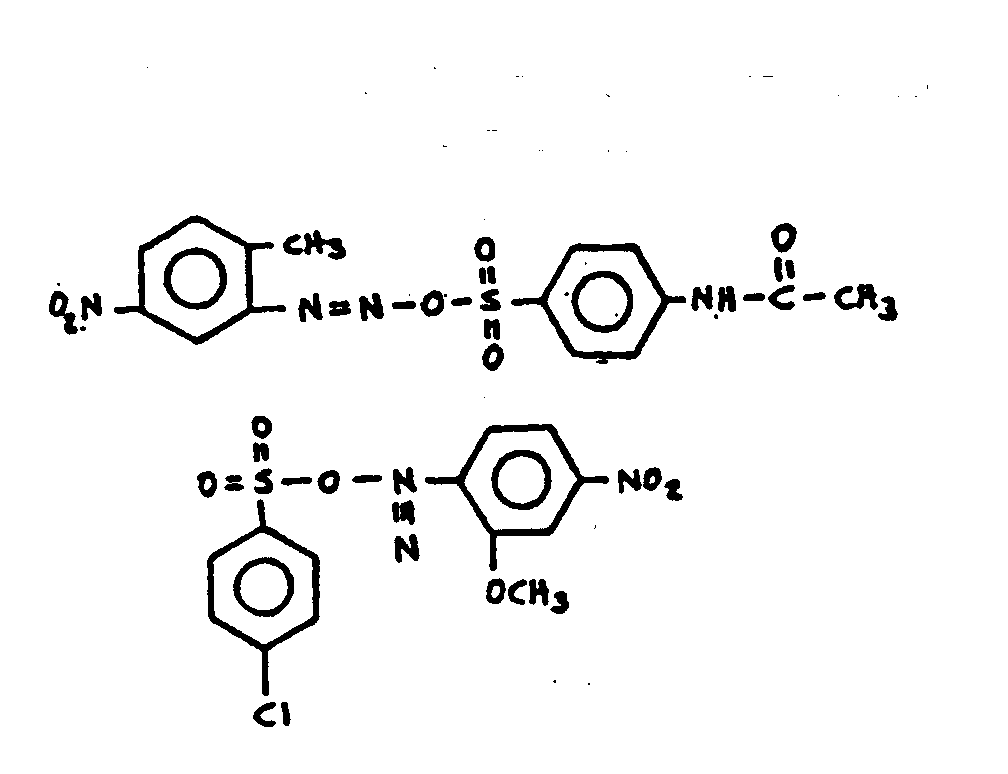
This subclass is indented under subclass 556. Compounds in which sulfur is attached directly to a ring
by nonionic bonding.
| |||
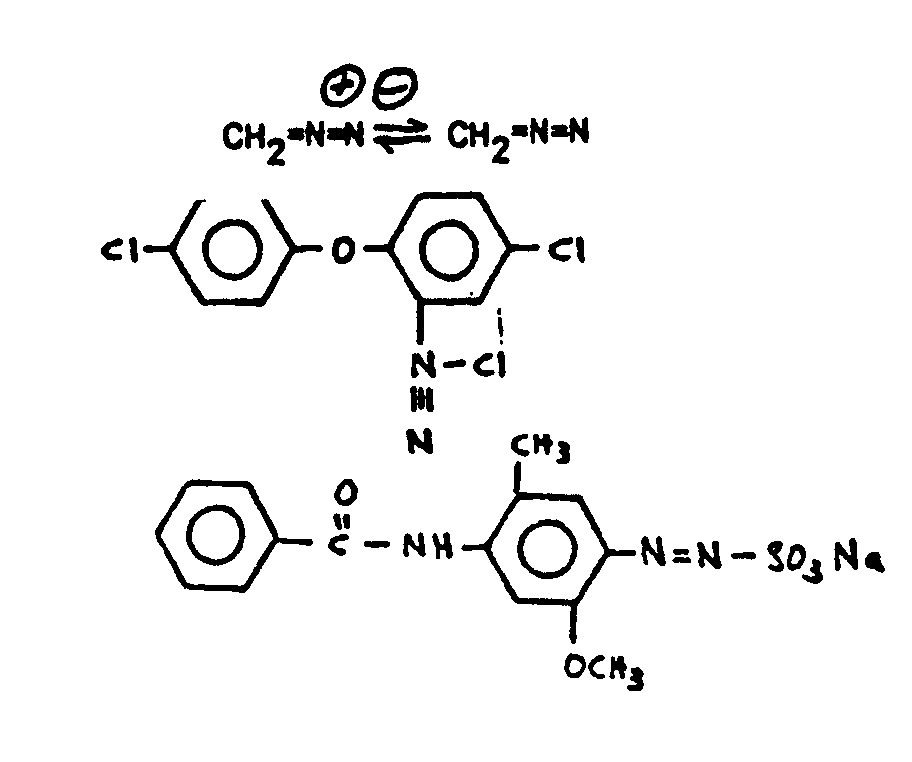
| 558 | Diazo or diazonium (e.g., -N=N-C, etc.) | ||
This subclass is indented under subclass 1. Compounds under Class 532, ... in which only one nitrogen
of a diazo group is bonded directly to carbon; wherein if the remaining nitrogen
is bonded to an additional atom or radical, that atom or radical
is an anion.
| |||
| 559 | With preservative or stabilizer |
| This subclass is indented under subclass 558. Products which contain a diazo or diazonium compound in admixture with a preserving or stabilizing agent whose sole function is to prevent physical or chemical change. | |
| 560 | Hetero ring containing | ||
This subclass is indented under subclass 558. Compounds which contain a hetero ring.
| |||
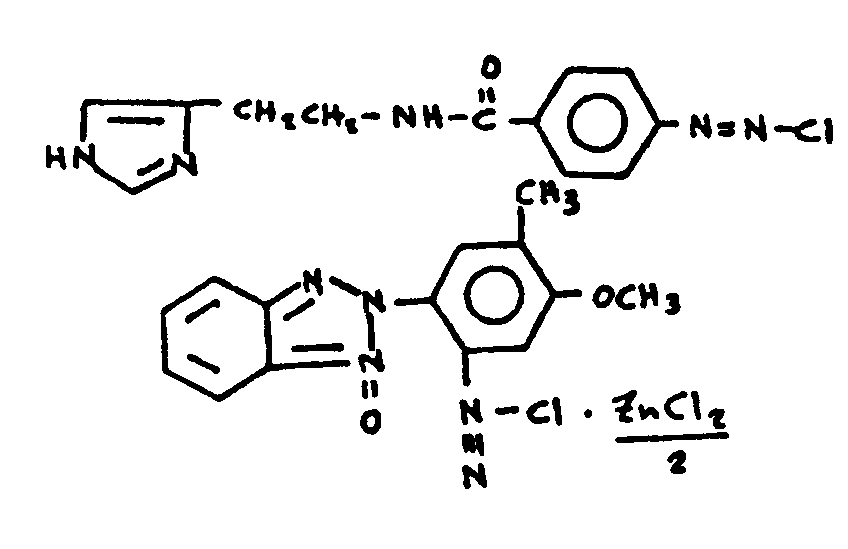
| 561 | Plural diazo or diazonium groups | ||
This subclass is indented under subclass 558. Compounds which contain at least two of the diazo or diazonium
groups.
| |||
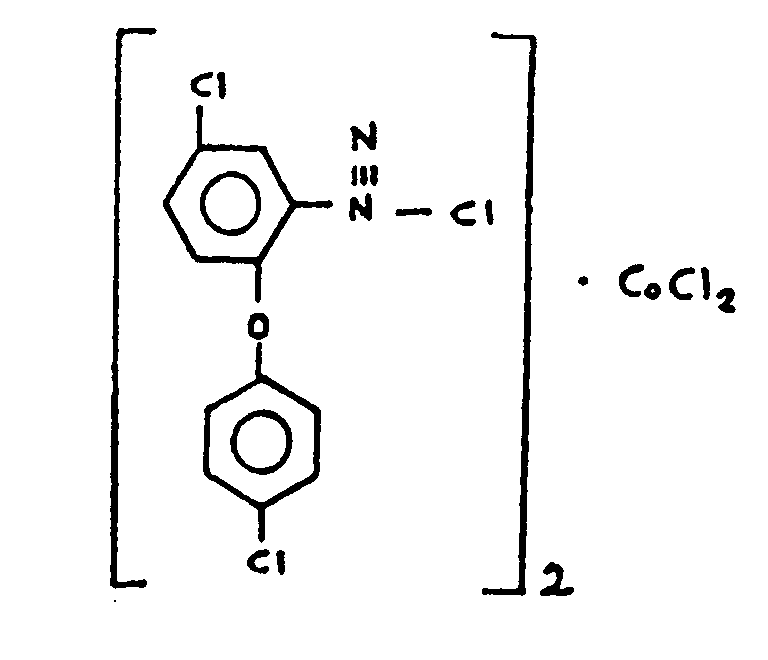
| 562 | Heavy metal or aluminum containing | ||||
This subclass is indented under subclass 558. Compounds which include aluminum or metal with a specific
gravity greater than four.
| |||||
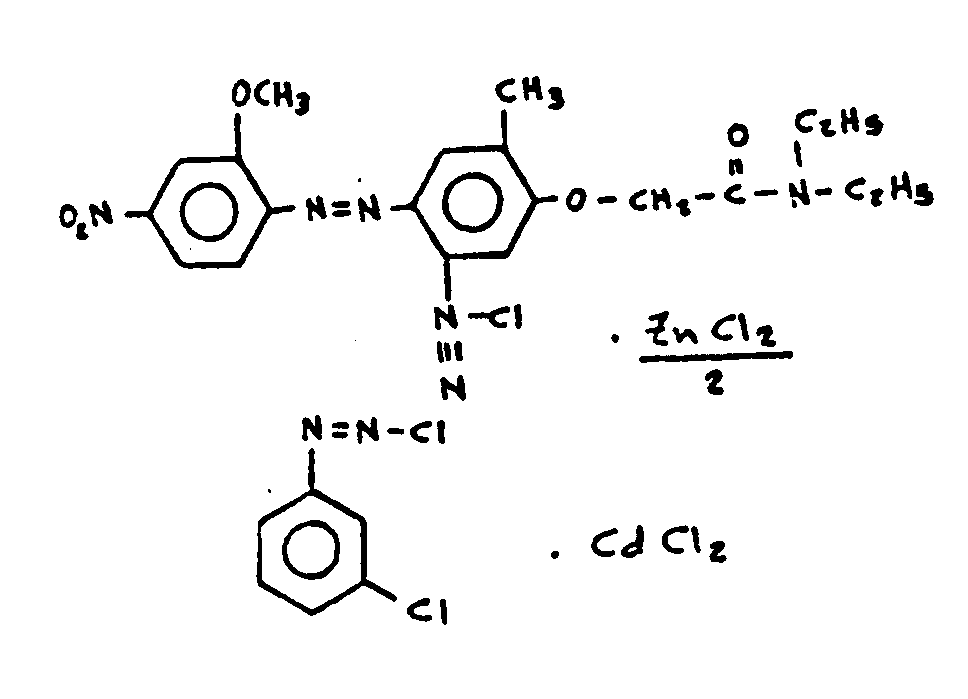
| 563 | Polycyclo ring system having at least three cyclos | ||
This subclass is indented under subclass 558. Compounds which contain a polycyclo ring system having three
or more cyclos.
| |||
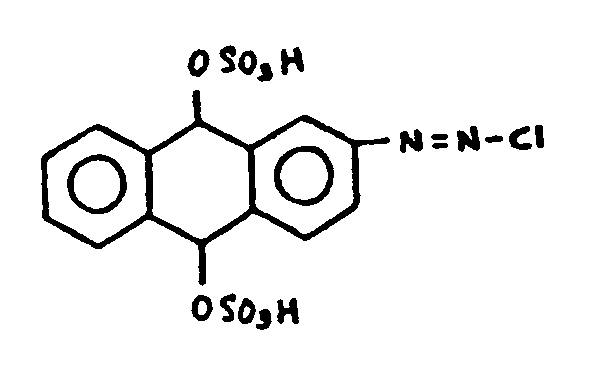
| 564 | Aldehyde or ketone group containing |
| This subclass is indented under subclass 558. Compounds which contain an aldehyde or ketone group; i.e., wherein R is hydrogen or carbon. | |
| 565 | Formation of diazonium group |
| This subclass is indented under subclass 558. Processes of forming the diazonium group. | |
| 566 | Azoxy | ||||
This subclass is indented under subclass 1. Compounds under Class 532, ... in which an azoxy group;
i.e., - or -NN-, is bonded directly to carbons of two discrete organic
radicals.
| |||||
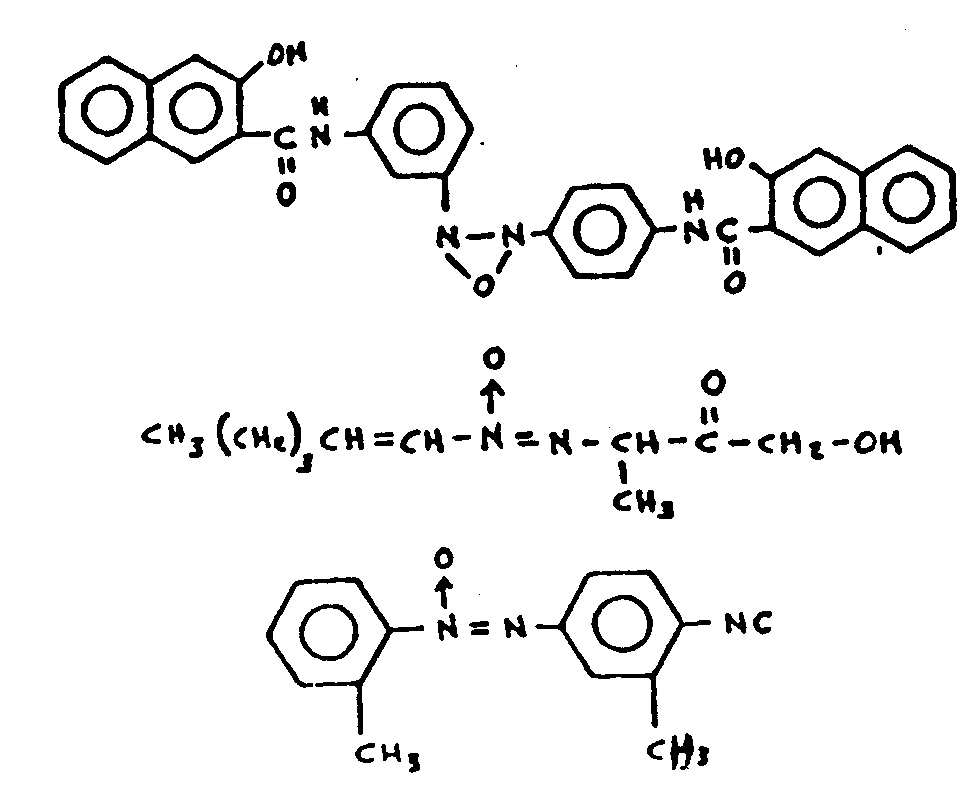
| 567 | Hetero ring containing | ||
This subclass is indented under subclass 566. Compounds which contain a hetero ring.
| |||
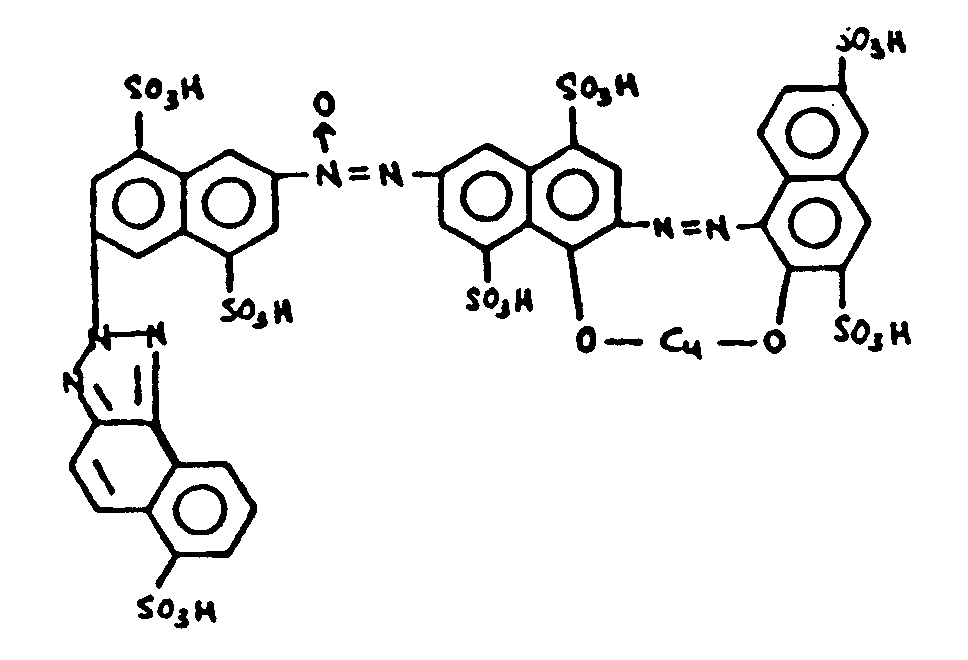
| 568 | Azodioxy | ||
| This subclass is indented under subclass 566. Compounds which contain an azodioxy group, i.e.,
| |||
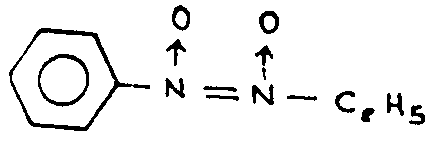
| 569 | Heavy metal or aluminum containing | ||
This subclass is indented under subclass 566. Compounds which include aluminum or a metal with a specific
gravity greater than four.
| |||
| 570 | Sulfonic acid group containing (-(0=)S(=O)-OH, wherein H of -OH may be replaced by a substituted or unsubstituted ammonium ion or metal) | ||
This subclass is indented under subclass 566. Compounds which contain a --OH group bonded directly to
carbon, wherein -H of the -OH may be replaced by a substituted or
unsubstituted ammonium ion or a Group IA or IIA light metal.
| |||
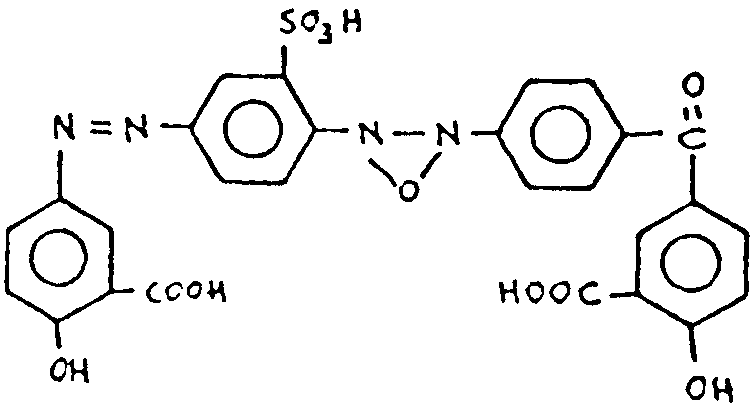
| 571 | Stilbene containing | ||
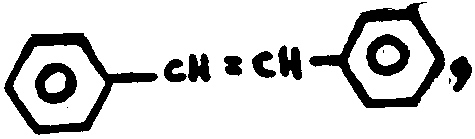
| This subclass is indented under subclass 570. Compounds which contain a stilbene group, i.e., as illustrated
below, wherein any hydrogen may be replaced.
| |||
| 572 | Formation of azoxy group |
| This subclass is indented under subclass 566. Processes of forming the azoxy group. | |
| 573 | Azo | ||
This subclass is indented under subclass 1. Compounds under Class 532, ... in which an acyclic -N=N-
group is bonded directly to carbons of two discrete organic radicals.
| |||
| 574 | Quaternary azo group containing | ||
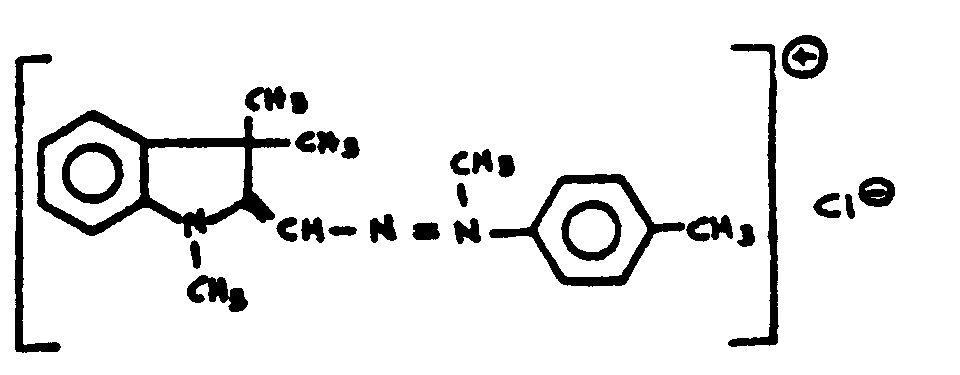
This subclass is indented under subclass 573. Compounds wherein a nitrogen of the azo group is pentavalent
(i.e., -NN-), with a bond to an additional carbon and a bond to
an anion.
| |||
| 575 | Specified crystalline form |
| This subclass is indented under subclass 573. Compounds which are azo compounds having a specifically disclosed crystalline structure, form or modification. | |
| 576 | With preservative or stabilizer |
| This subclass is indented under subclass 573. Products which contain an azo compound in admixture with a preserving or stabilizing agent whose sole function is to prevent physical or chemical change. | |
| 577 | Liquid crystal (e.g., pleochroic, etc.) | ||
This subclass is indented under subclass 573. Compounds which are azo dyes existing either in a semi-crystalline
form or in a transition state between crystalline solid and normal
liquid, i.e., having the appearance of being crystals while having
the viscosities to behave mechanically as liquids, and which usually show
different colors.
| |||
| 578 | Formation of azo group by oxidative coupling |
| This subclass is indented under subclass 573. Processes wherein the azo group is formed by oxidative coupling. | |
| 579 | Formation of azo group by simultaneous diazotization and coupling |
| This subclass is indented under subclass 573. Processes wherein the azo group if formed by simultaneous diazotization and coupling. | |
| 580 | Formation of azo group from diazoamino group |
| This subclass is indented under subclass 573. Processes whereby the azo group is formed from a diazoamino group. | |
| 581 | Formation of azo group by coupling diazonium compound with coupling component in presence of an additional organic compound |
| This subclass is indented under subclass 573. Processes wherein the azo group is formed by the coupling of a diazonium compound with a coupling component in the presence of an additional organic compound. | |
| 582 | Formation of azo group by coupling diazonium compound with coupling component at a specified pH range | ||
This subclass is indented under subclass 573. Processes wherein the azo group is formed by the coupling
of a diazonium compound with a coupling component at a specified
pH range.
| |||
| 583 | Formation of azo group by coupling diazonium compound with coupling component in presence of ammonia, a Group IIA light metal hydroxide or a Group IA or IIA light metal phosphate |
| This subclass is indented under subclass 573. Processes wherein the azo group is formed by the coupling of a diazonium compound with a coupling component in the presence of ammonia, a Group IIA light metal hydroxide, or a Group IA or IIA light metal phosphate. | |
| 584 | Formation of azo group by coupling diazonium compound with coupling component in other than stoichiometric proportions |
| This subclass is indented under subclass 573. Processes wherein the azo group is formed by the coupling of a diazonium compound with a coupling component in proportions other than stoichiometric. | |
| 585 | Formation of azo group by reduction of nitro group |
| This subclass is indented under subclass 573. Processes wherein the azo group is formed by the reduction of a nitro group (i.e., -NO2). | |
| 586 | Formation of azo group from group having nitrogen single bonded to nitrogen |
| This subclass is indented under subclass 573. Processes whereby the azo group is formed from a group having nitrogen singly bonded to nitrogen, e.g., hydrazine group, hydrazone group, etc. | |
| 587 | Formation of azo group directly from nitrogen containing compound by process other than diazotization and coupling |
| This subclass is indented under subclass 573. Processes wherein the azo group is formed from a nitrogen containing compound by some process other than diazotization and coupling. | |
| 588 | Process utilizing azo compound as reactant |
| This subclass is indented under subclass 573. Processes whereby an azo compound is utilized as a reactant in the preparation of a different azo compound. | |
| 589 | Formation of quaternary ammonium or hydrazinium group |
| This subclass is indented under subclass 588. Processes for the preparation of quaternary ammonium or quaternary hydrazinium compounds. | |
| 590 | Ring formation |
| This subclass is indented under subclass 588. Processes whereby a ring is formed. | |
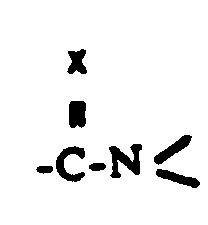
| 591 | Formation of -C(=X)HNH group, wherein X is chalcogen (substitution may be made for hydrogen only) |
| This subclass is indented under subclass 588. Processes whereby a [Fig. 1] group is
formed, wherein X is chalcogen (i.e., oxygen, sulfur, selenium or
tellurium).
FIGURE 1 | |
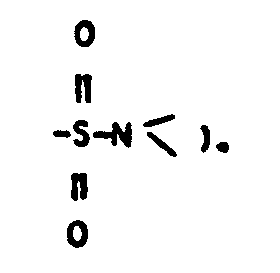
| 592 | Formation of sulfonamide group |
| This subclass is indented under subclass 588. Processes whereby a sulphonamide group is formed (i.e.,
| |
| 593 | Additional reactant containing phosphorus or sulfur |
| This subclass is indented under subclass 588. Processes which utilize a reactant which contains sulfur or phosphorus; said reactant is other than the azo reactant. | |
| 594 | Sulfonic acid group formed or added to the azo reactant (-(O=) S (=O)-OH, wherein H of -OH may be replaced by a substituted or unsubstituted ammonium ion or metal) |
| This subclass is indented under subclass 593. Processes whereby a -SO3H group is formed or added to the azo reactant producing a sulfonated azo compound (H of the SO3H group may be replaced by a substituted or unsubstituted ammonium ion or a metal). | |
| 595 | Formation of -C(=X)X- ester group, wherein the X's may be the same or diverse chalcogens |
| This subclass is indented under subclass 588. Processes whereby a --X- ester group is formed, wherein the X"s may be the same or diverse chalcogens (i.e., oxygen, sulfur, selenium or tellurium). | |
| 596 | Etherification of hydroxy group |
| This subclass is indented under subclass 588. Processes for etherifying hydroxy groups. | |
| 597 | Replacement of halogen by cyano group |
| This subclass is indented under subclass 588. Processes wherein halogen is replaced by a cyano group. | |
| 598 | Replacement of halogen by amino nitrogen |
| This subclass is indented under subclass 588. Processes whereby halogen is replaced by an amino nitrogen. | |
| 599 | Hydrolysis |
| This subclass is indented under subclass 588. Processes wherein azo compounds are reactants in hydrolysis reactions; i.e., decomposition reactions. | |
| 600 | Reduction of nitro or nitrogen oxide group |
| This subclass is indented under subclass 588. Processes whereby a nitro group or a nitrogen oxide group is reduced. | |
| 601 | Nitration |
| This subclass is indented under subclass 588. Processes for the nitration of azo compounds. | |
| 602 | Metallization of the azo reactant in presence of an additional organic compound |
| This subclass is indented under subclass 588. Processes for the preparation of a metallized azo compound by the reaction of an azo compound with a metal or a metallized compound in the presence of an additional organic compound. | |
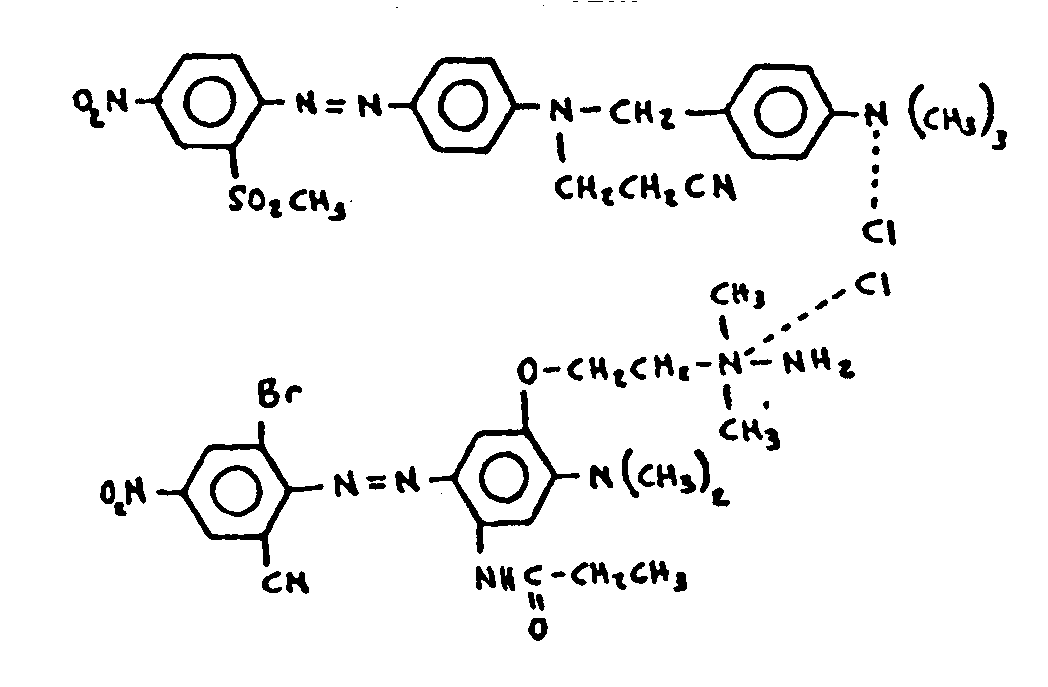
| 603 | Quaternary ammonium or hydrazinium attached indirectly to an azo group by nonionic bonding | ||
This subclass is indented under subclass 573. Compounds wherein a pentavalent nitrogen having four bonds
to carbons or three bonds to carbons and one to an additional nitrogen
is attached indirectly to an azo group by nonionic bonding.
| |||
| 604 | Hetero ring containing | ||
This subclass is indented under subclass 603. Compounds which contain a hetero ring.
| |||
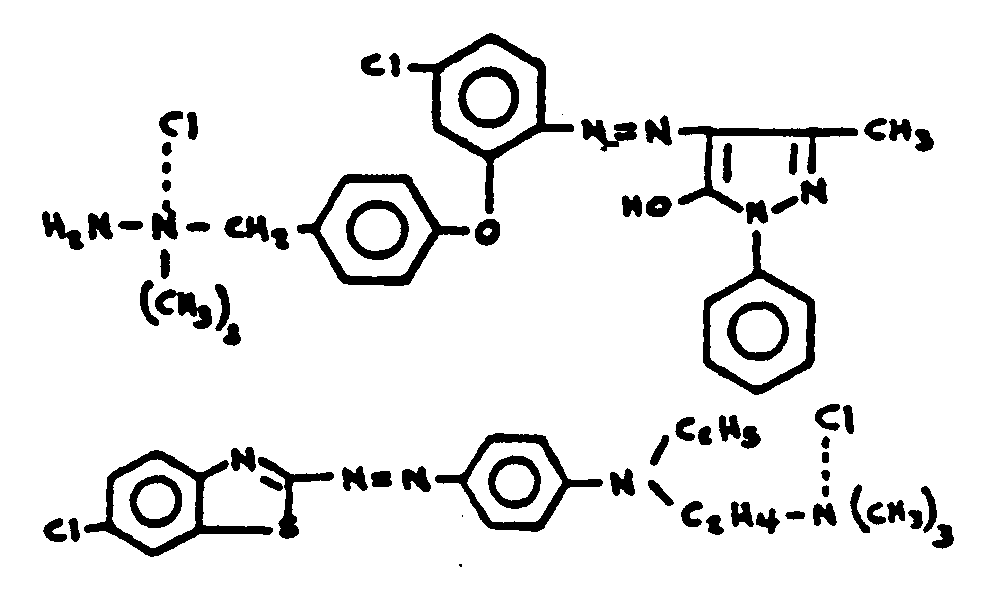
| 605 | The pentavalent nitrogen is a ring member | ||
This subclass is indented under subclass 604. Compounds in which the pentavalent nitrogen is a ring member.
| |||
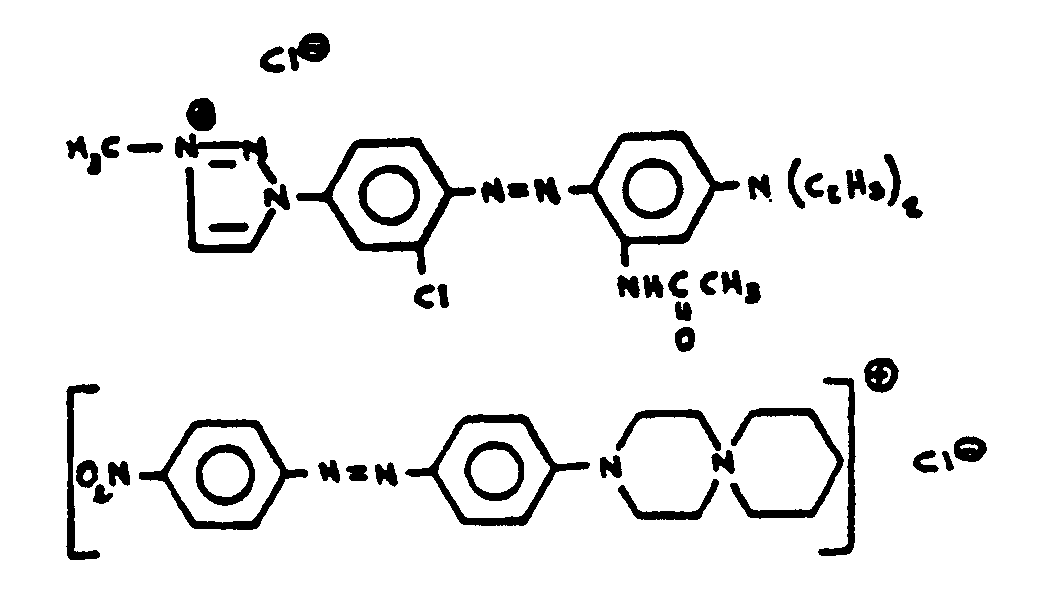
| 606 | Azo bonded directly to a hetero ring or to a polycyclo ring system having a hetero ring as one of the cyclos | ||
This subclass is indented under subclass 605. Compounds wherein an azo group is bonded directly to a hetero
ring or to a polycyclo ring system which contains a hetero ring
as one of the cyclos.
| |||
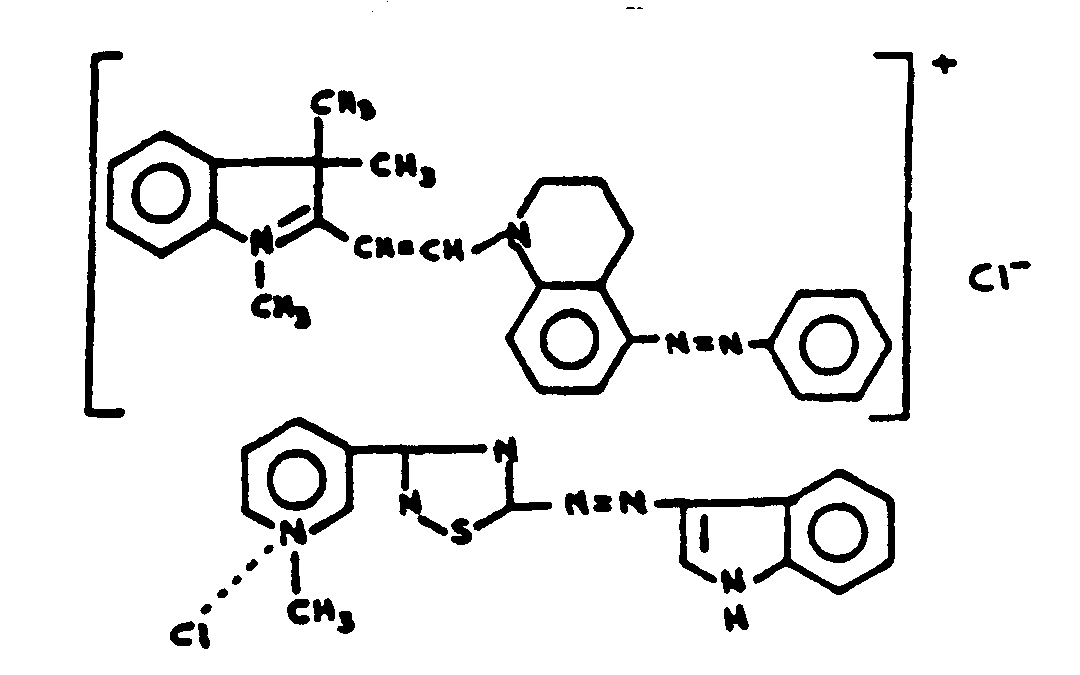
| 607 | The hetero ring contains the pentavalent nitrogen | ||
This subclass is indented under subclass 606. Compounds wherein the pentavalent nitrogen is a member of
the hetero ring or the polycyclo ring system to which the azo group
is directly bonded.
| |||
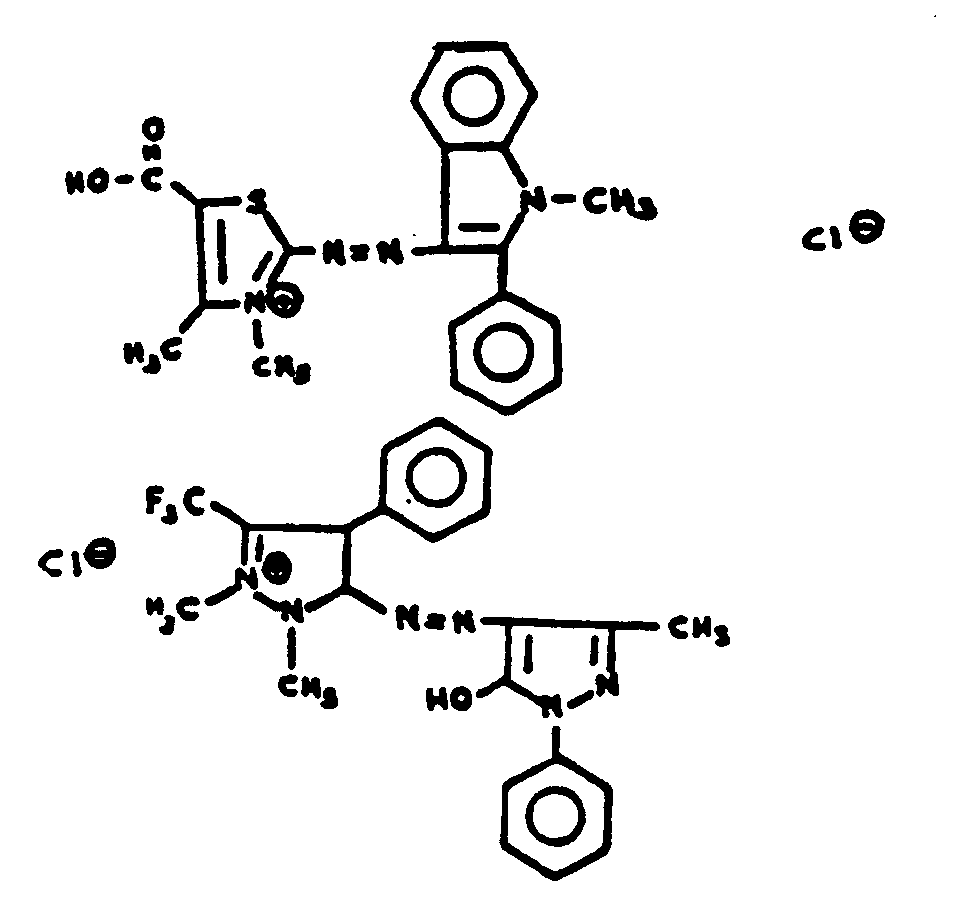
| 608 | Plural azo groups in the same azo moiety attached indirectly to each other by nonionic bonding | ||||
This subclass is indented under subclass 607. Compounds wherein at least two azo groups within the same
azo moiety are attached indirectly to each other by nonionic bonding.
| |||||
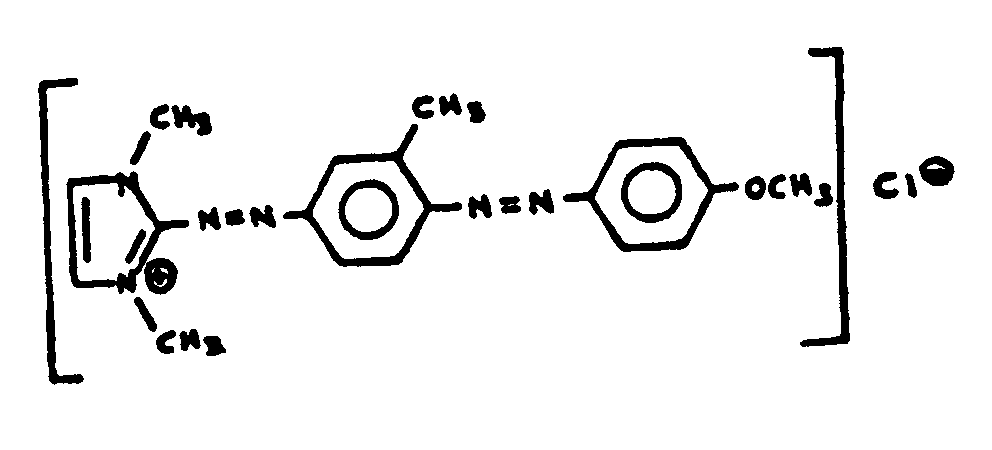
| 609 | Acyclic carbon bonded directly to the azo group | ||
This subclass is indented under subclass 607. Compounds in which an acyclic carbon atom is bonded directly
to the azo group.
| |||
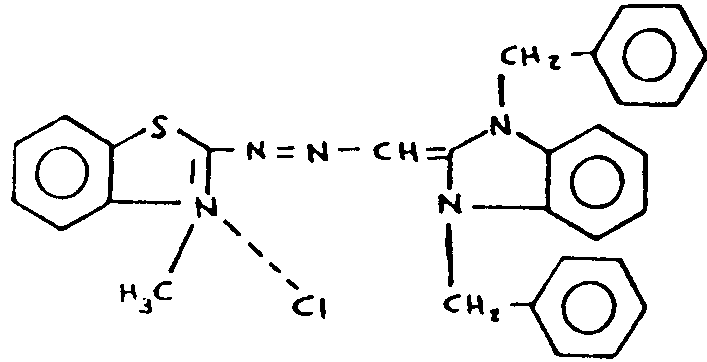
| 610 | Additional hetero ring or polycyclo ring system having a hetero ring as one of the cyclos bonded directly to the azo group | ||
This subclass is indented under subclass 607. Compounds in which an additional hetero ring or a polycyclo
ring system having a hetero ring as one of the cyclos is bonded
directly to the azo group.
| |||
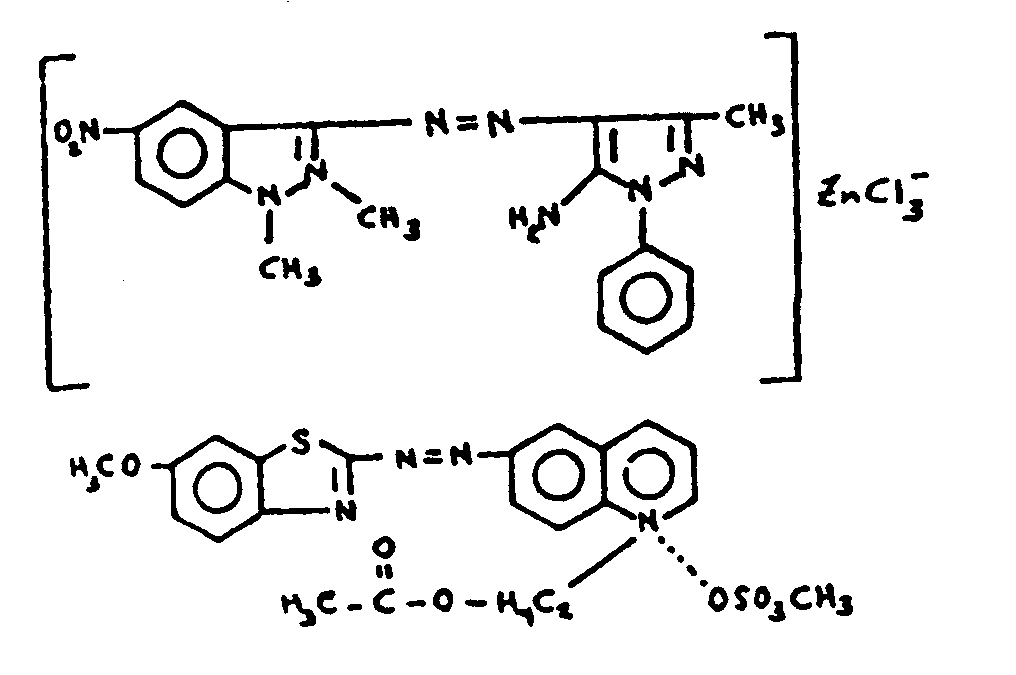
| 611 | The hetero ring is one of the cyclos in a polycyclo ring system | ||
This subclass is indented under subclass 607. Compounds wherein the hetero ring which contains the pentavalent
nitrogen is one of the cyclos in a polycyclo ring system.
| |||
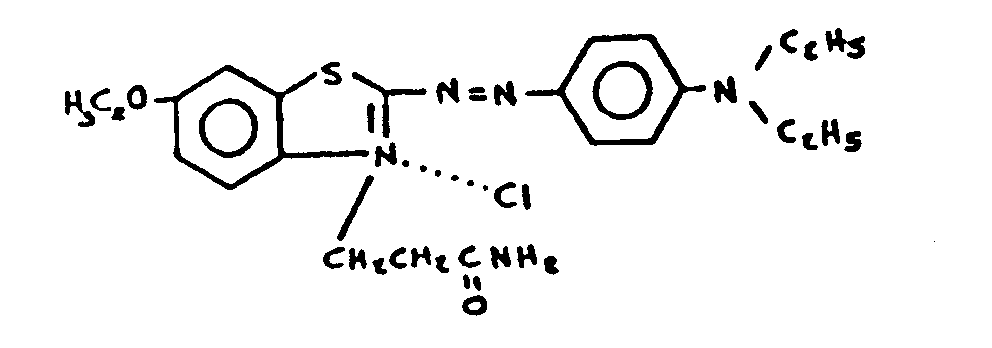
| 612 | Acyclic -C(=X)-, wherein X is chalcogen, attached directly or indirectly to the hetero ring by nonionic bonding | ||
This subclass is indented under subclass 605. Compounds wherein an acyclic -- group, in which X is chalcogen
(i.e., oxygen, sulfur, selenium or tellurium) is attached directly
or indirectly to the hetero ring by nonionic bonding.
| |||
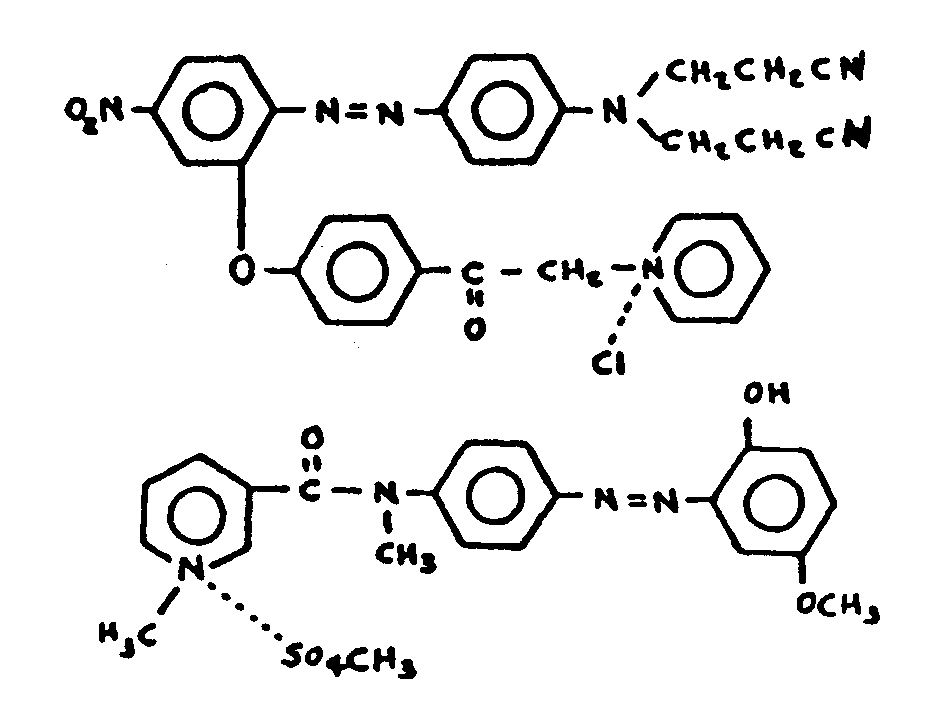
| 613 | Heavy metal or aluminum containing | ||||
This subclass is indented under subclass 603. Compounds which include aluminum or a metal with a specific
gravity greater than four.
| |||||
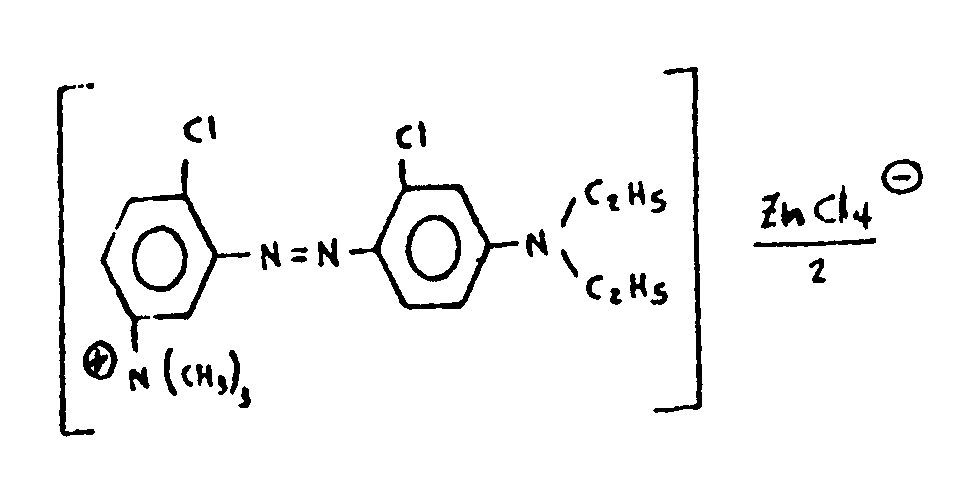
| 614 | Plural azo groups attached indirectly to each other by nonionic bonding | ||
This subclass is indented under subclass 603. Compounds in which at least two azo groups are attached
indirectly to each other by nonionic bonding.
| |||
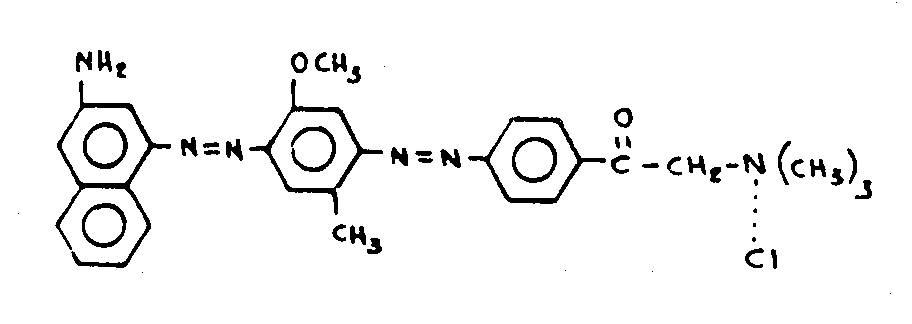
| 615 | Plural nitrogens bonded directly to the same alkylene chain (e.g., diamino alkylene, etc.) | ||
This subclass is indented under subclass 603. Compounds in which at least two nitrogens are bonded directly
to the same alkylene chain.
| |||
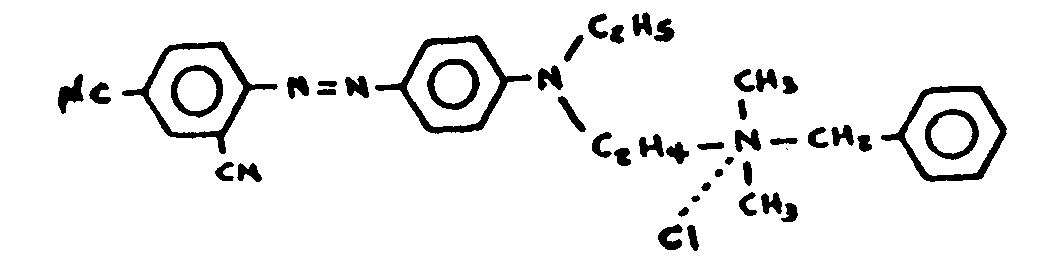
| 616 | Nitrogen oxide, other than as nitro or nitroso, containing | ||||
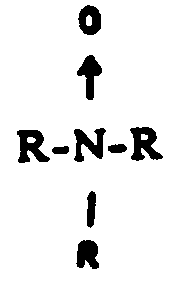
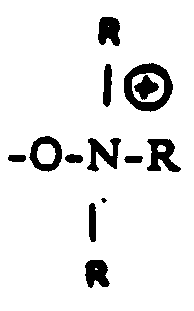
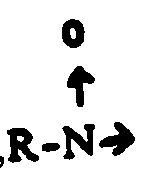
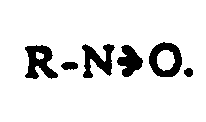
This subclass is indented under subclass 573. Compounds wherein acyclic oxygen is bonded directly to a
nitrogen atom which has three bonds to carbons.
| |||||
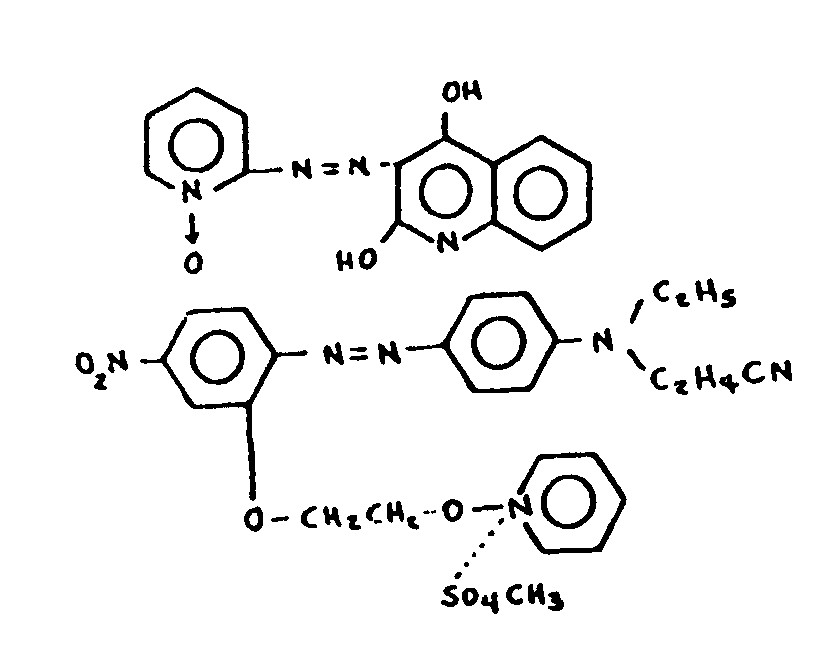
| 617 | Fiber- or substrate-reactive azo compound | ||||
This subclass is indented under subclass 573. Compounds which are azo compounds having a group capable
of reacting with a group of a fiber or a substrate to form a nonionic
bond, e.g., reacting with a hydroxy group of cellulose or an amino
group of a polyamide, etc.
| |||||
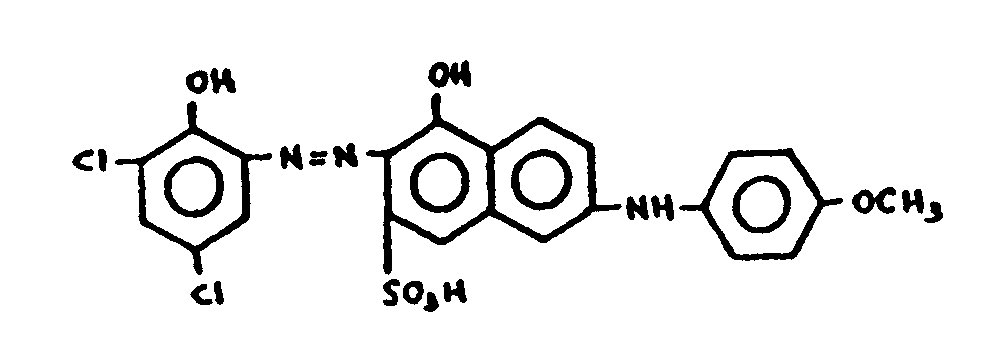
| 618 | Formazan containing (i.e., HNH-N=CH-N=NH, wherein substitution may be made for hydrogen only) | ||
This subclass is indented under subclass 617. Compounds which contain the formazan group, i.e., N-N=-N=N-.
| |||
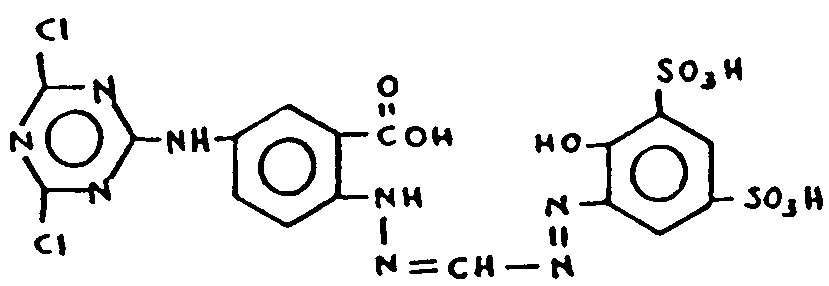
| 619 | Heavy metal or aluminum containing | ||||
This subclass is indented under subclass 617. Compounds which include aluminum or a metal with a specific
gravity greater than four.
| |||||
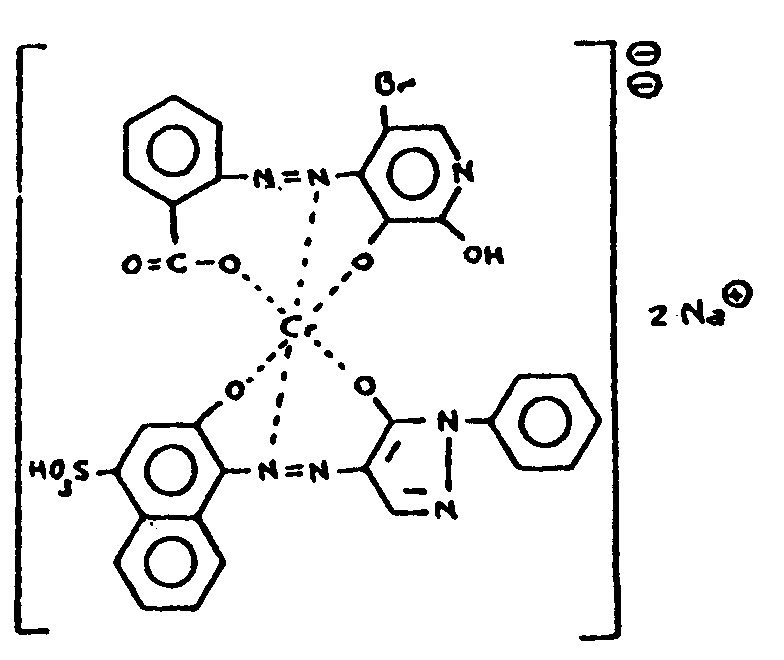
| 620 | Halogen attached directly to a hetero ring or to an alicyclic ring by nonionic bonding | ||
This subclass is indented under subclass 619. Compounds in which halogen is attached directly to a hetero
ring or to an alicyclic ring by nonionic bonding.
| |||
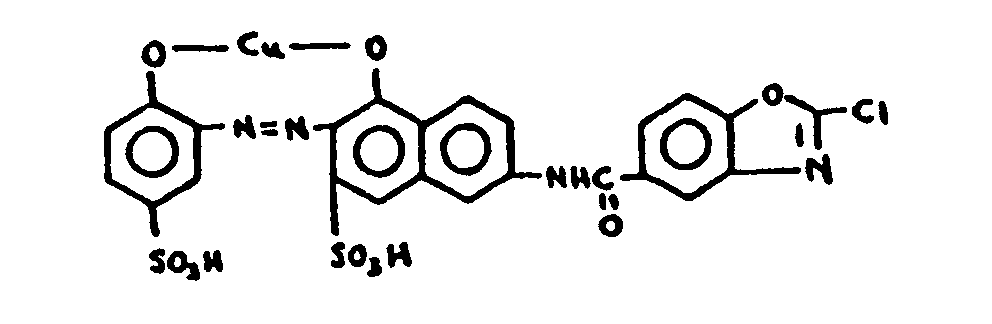
| 621 | Stilbene containing | ||
| This subclass is indented under subclass 620. Compounds which contain the group in Fig. 1, wherein only
hydrogen may be replaced.
FIGURE 1
| |||
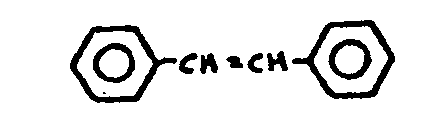
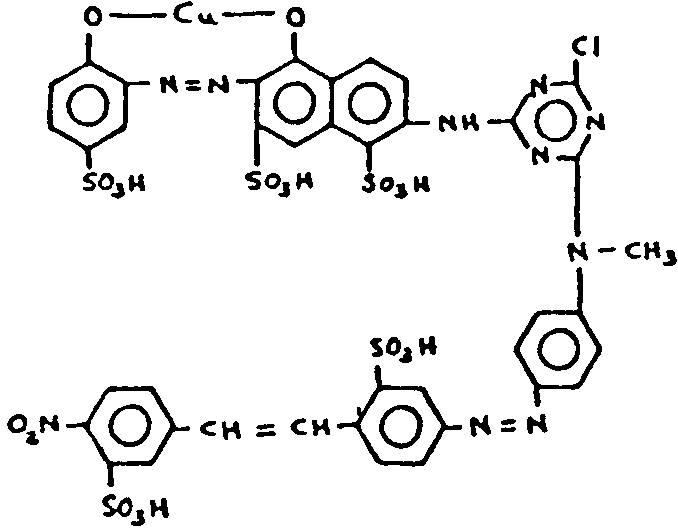
| 622 | The hetero ring is six-membered and contains at least two nitrogens | ||
This subclass is indented under subclass 620. Compounds in which the hetero ring to which halogen is attached
is six-membered and contains at least two ring nitrogens.
| |||
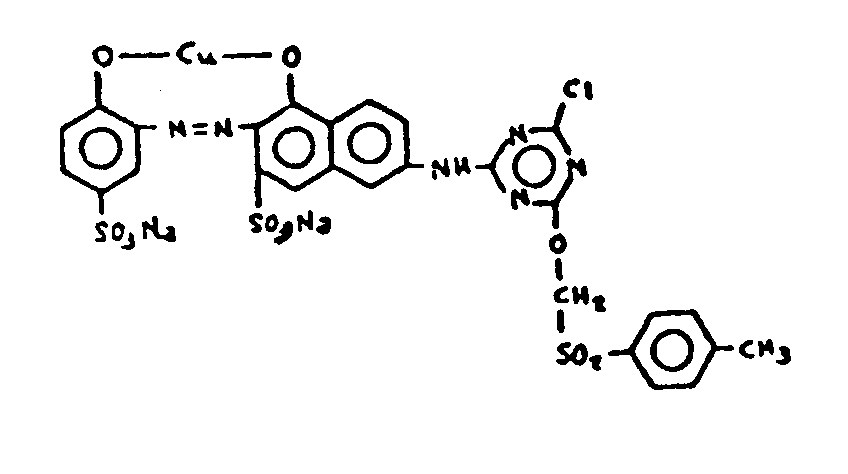
| 623 | Diverse azo moieties bonded to the same metal | ||
This subclass is indented under subclass 622. Compounds wherein azo moieties from different and distinct
azo compounds are bonded to the same metal.
| |||
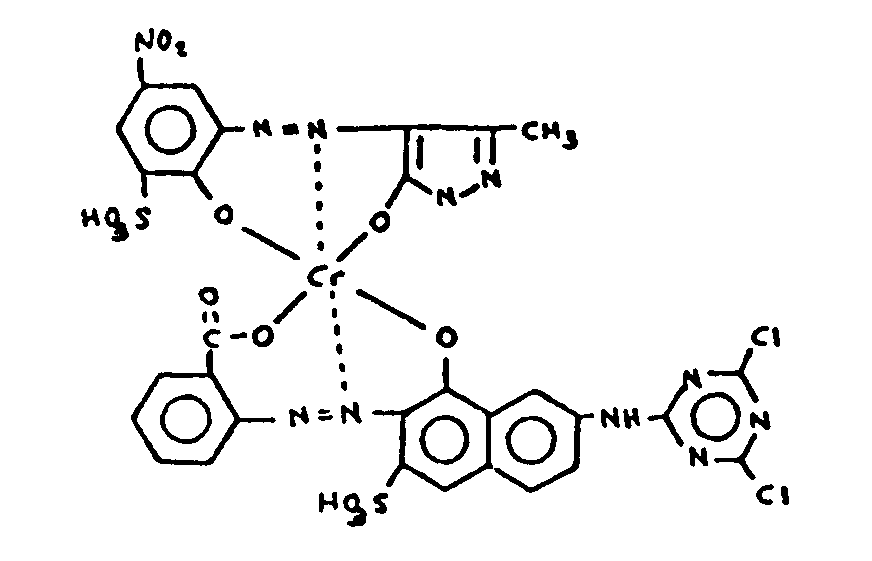
| 624 | At least two such hetero rings attached indirectly to each other by nonionic bonding | ||
This subclass is indented under subclass 622. Compounds wherein at least two of the six-membered hetero
rings having halogen bonded directly thereto are attached indirectly
to each other by nonionic bonding.
| |||
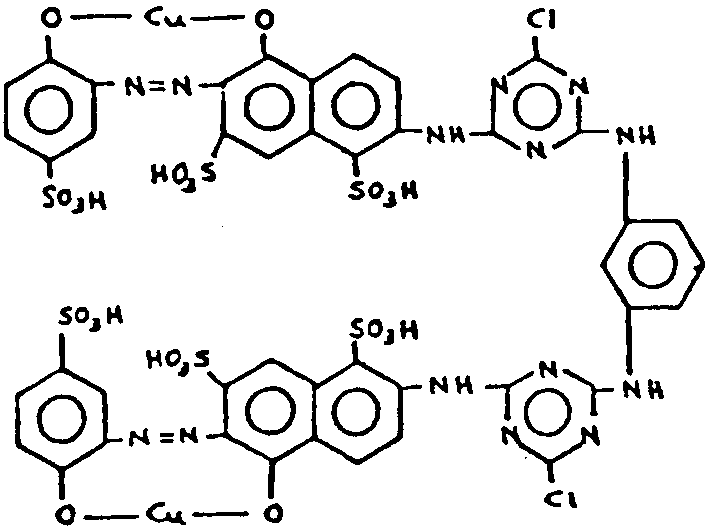
| 625 | Plural azo groups in the same azo moiety attached indirectly to each other by nonionic bonding | ||||
This subclass is indented under subclass 622. Compounds wherein at least two azo groups within the same
azo moiety are attached indirectly to each other by nonionic bonding.
| |||||
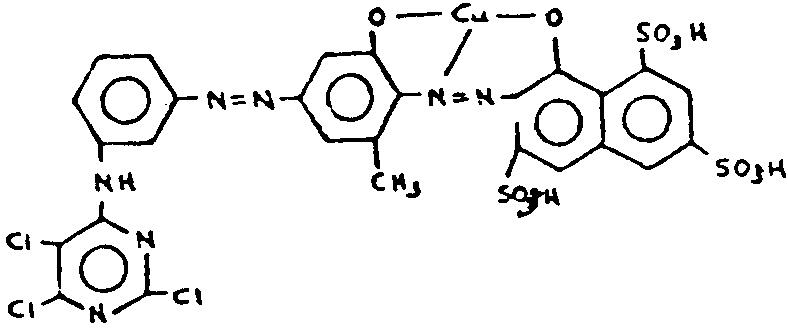
| 626 | Chalcogen or carbon bonded directly to the six-membered hetero ring and is between the hetero ring and the azo group | ||
This subclass is indented under subclass 622. Compounds in which carbon or chalcogen (i.e., oxygen, sulfur,
selenium or tellurium) is bonded directly to the six-membered hetero ring,
which chalcogen or carbon is between the hetero ring and the azo
group.
| |||
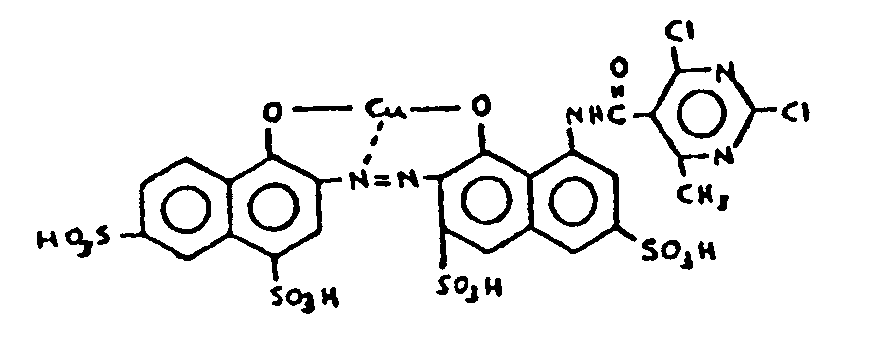
| 627 | Plural halogens attached directly to the hetero ring by nonionic bonding | ||
This subclass is indented under subclass 622. Compounds in which at least two halogens are attached directly
to the six-membered hetero ring by nonionic bonding.
| |||
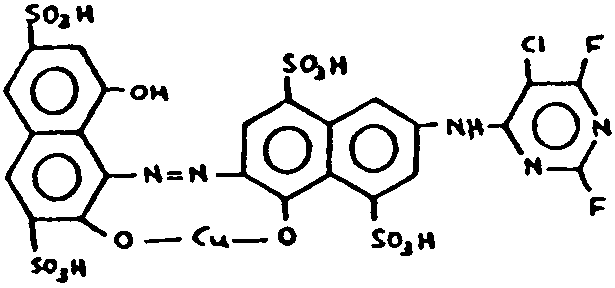
| 628 | Diverse hetero ring containing | ||
This subclass is indented under subclass 622. Compounds which contain an additional hetero ring, which
ring is other than six-membered having at least two ring nitrogens.
| |||
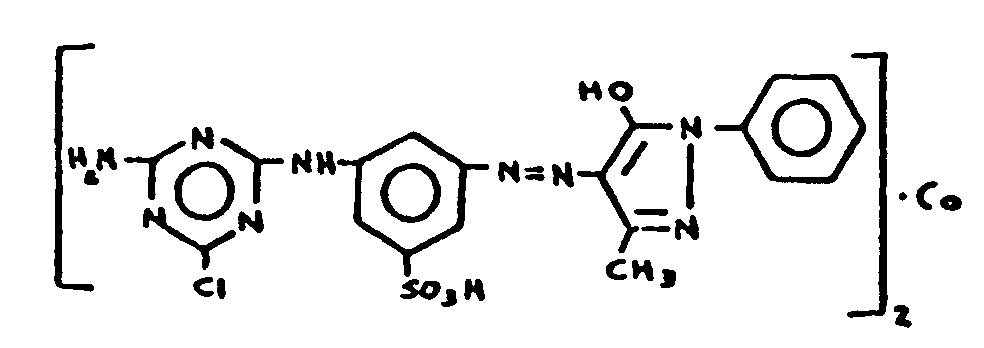
| 629 | Alkylene, alkenyl or alkenylene bonded directly to sulfonyl or sulfonamide, which sulfonyl or sulfonamide is between a ring and the alkylene, alkenyl or alkenylene | ||
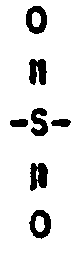
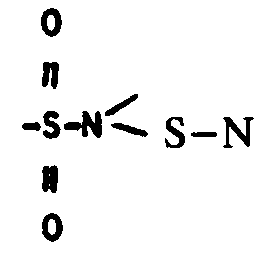
| This subclass is indented under subclass 619. Compounds wherein an alkylene, alkenyl or alkenylene chain
is bonded directly to a sulfonyl group, i.e., Fig. 1, or to a sulfonamide group,
i.e., Fig. 2, which sulfonyl or sulfonamide is between the chain
and a ring.
FIGURE 1
FIGURE 2.
| |||
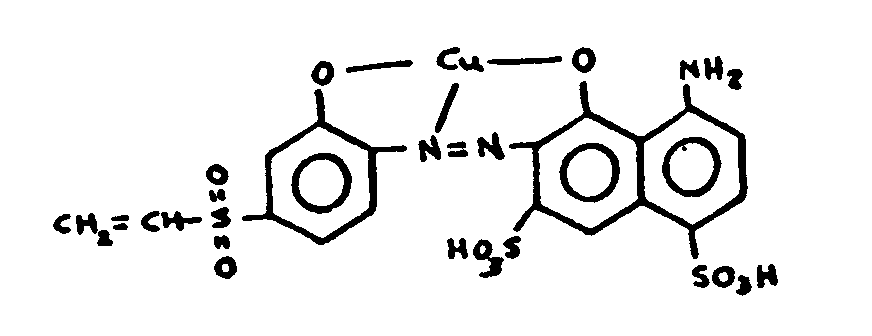
| 630 | Halogen attached directly to a hetero ring or to an alicyclic ring by nonionic bonding | ||
This subclass is indented under subclass 617. Compounds in which halogen is attached directly to a hetero
ring or to an alicyclic ring by nonionic bonding.
| |||
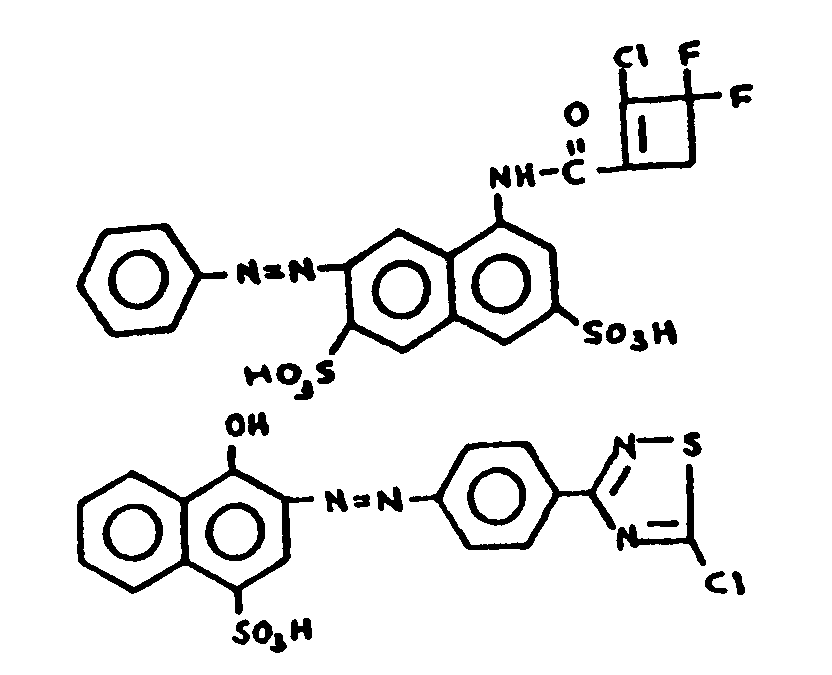
| 631 | Stilbene containing | ||
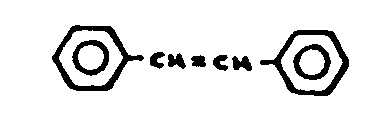
| This subclass is indented under subclass 630. Compounds which contain the [Fig. 1] group, wherein
only hydrogen may be replaced.
FIGURE 1
| |||
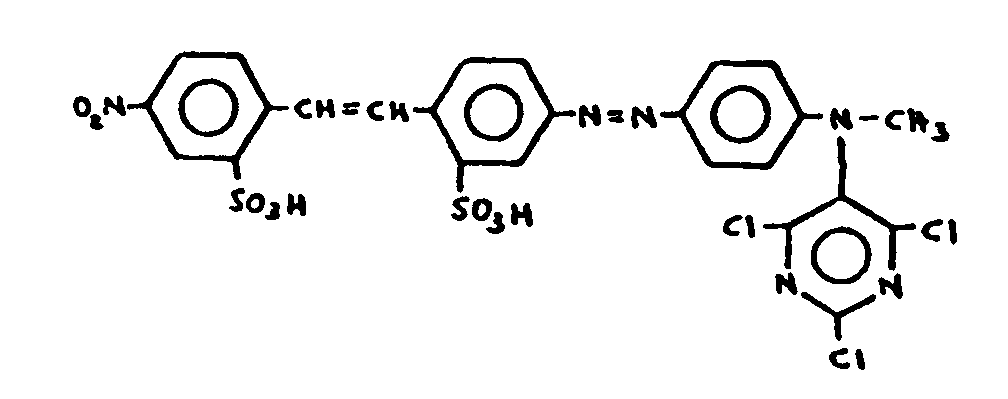
| 632 | The hetero ring is six-membered and contains at least two nitrogens | ||
This subclass is indented under subclass 630. Compounds in which the hetero ring to which halogen is attached
is six-membered and contains at least two ring nitrogens.
| |||
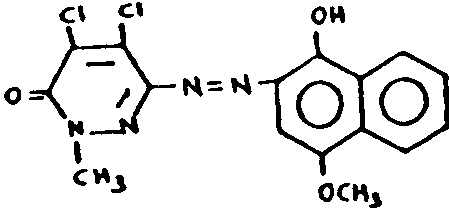
| 633 | Polycyclo ring system having the hetero ring as one of the cyclos | ||
This subclass is indented under subclass 632. Compounds wherein the hetero ring is one of the cyclos in
a polycyclo ring system.
| |||
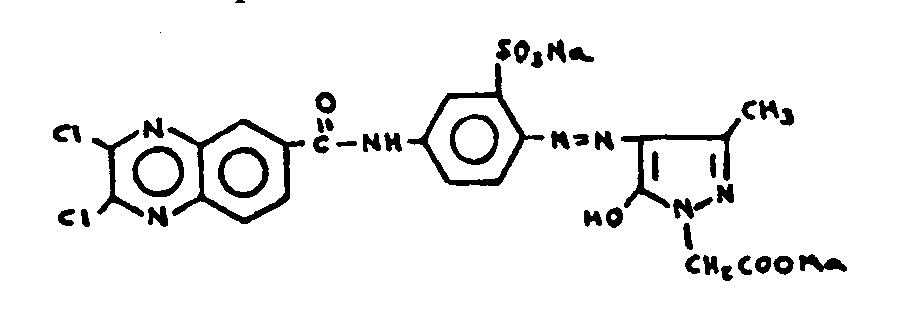
| 634 | At least two such hetero rings attached indirectly to each other by nonionic bonding | ||
This subclass is indented under subclass 632. Compounds which contain at least two of the six-membered
hetero rings having halogen bonded directly thereto attached indirectly
to each other by nonionic bonding.
| |||
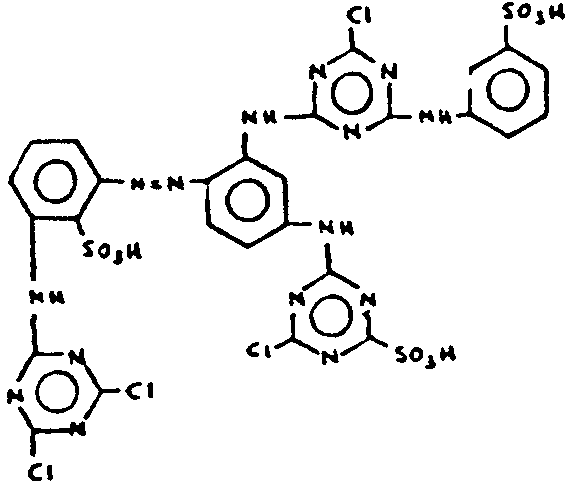
| 635 | Additional hetero ring containing | ||
This subclass is indented under subclass 632. Compounds which contain an additional hetero ring.
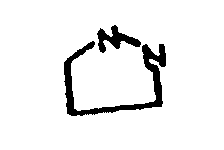
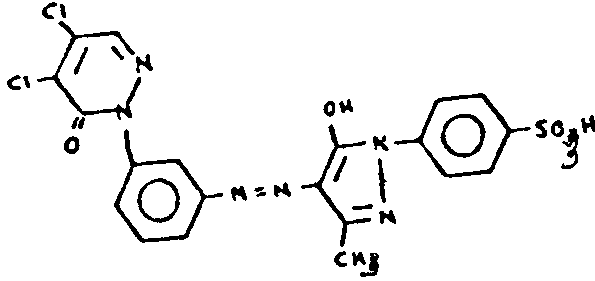
| |||
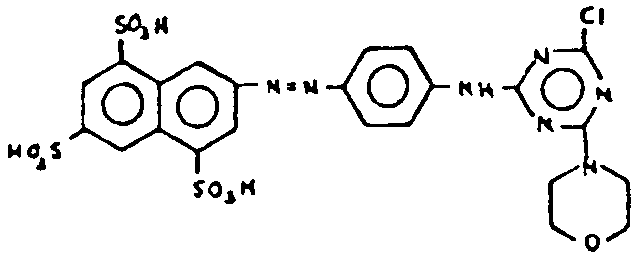
| 636 | Pyrazole containing (including hydrogenated) | ||
| This subclass is indented under subclass 635. Compounds wherein the additional hetero ring has the following
basic structure, which may contain double bonds between ring members:
| |||
| 637 | Plural azo groups attached indirectly to each other by nonionic bonding | ||
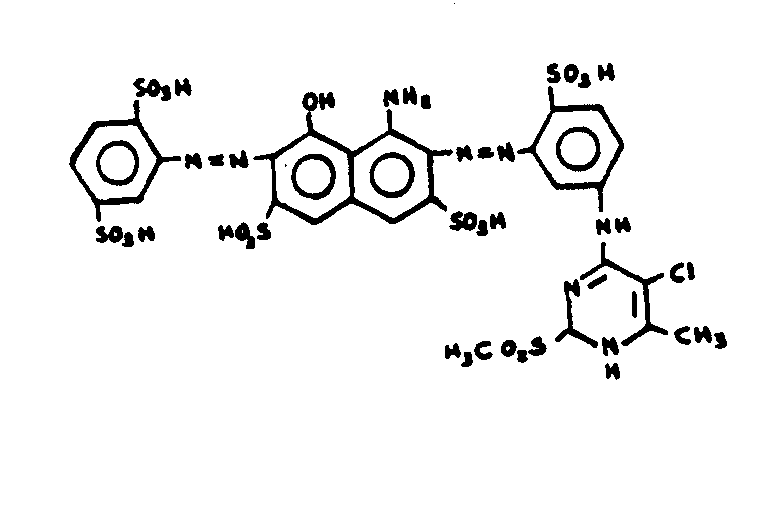
This subclass is indented under subclass 632. Compounds in which at least two azo groups are attached
indirectly to each other by nonionic bonding.
| |||
| 638 | The hetero ring and benzene ring, to which an azo group is bonded directly, bonded directly to the same nitrogen | ||
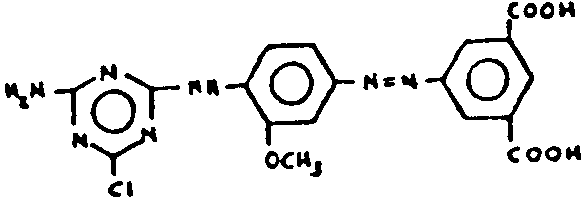
This subclass is indented under subclass 632. Compounds wherein the hetero ring and a benzene ring are
both bonded directly to the same nitrogen, said benzene ring is
additionally bonded directly to the azo group.
| |||
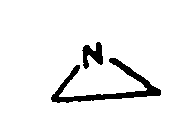
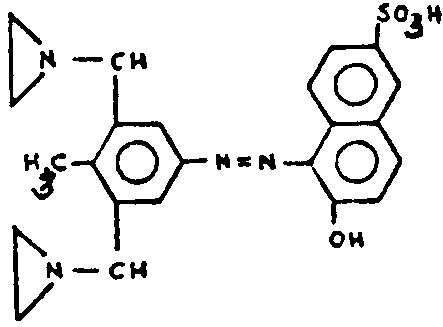
| 639 | Aziridine containing (including unsaturated) | ||
| This subclass is indented under subclass 617. Compounds which contain a hetero ring having the following
basic structure, which may contain a double bond between ring members:
| |||
| 640 | Alkylene, alkenyl, alkenylene, alkynyl or alkynylene attached directly or indirectly to a ring by nonionic bonding | ||
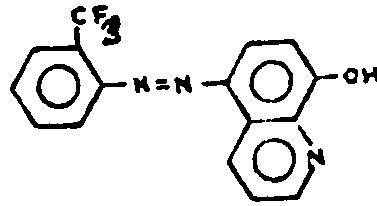
This subclass is indented under subclass 617. Compounds wherein an alkylene, alkenyl, alkenylene, alkynyl
or alkynylene chain is attached directly or indirectly to a ring
by nonionic bonding.
| |||
| 641 | Alkylene, alkenyl or alkenylene bonded directly to sulfonyl or sulfonamido, which sulfonyl or sulfonamido is between a ring and the alkylene, alkenyl or alkenylene | ||
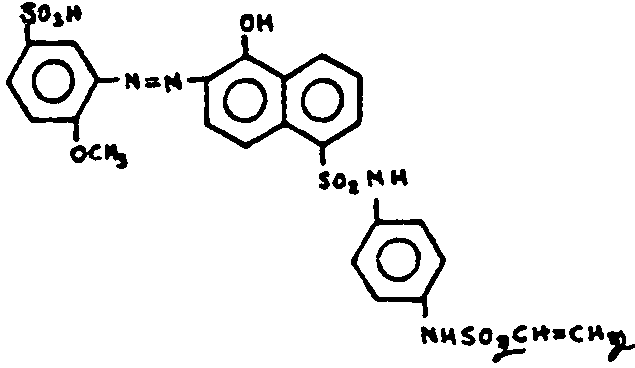
This subclass is indented under subclass 640. Compounds wherein an alkylene, alkenyl or alkenylene chain
is bonded directly to a sulfonyl group, i.e., --, or a sulfonamide
group, i.e., --N, which sulfonyl or sulfonamide is between the chain
and a ring.
| |||
| 642 | The alkylene, alkenyl or alkenylene and the ring are both bonded directly to the same sulfonyl group | ||
This subclass is indented under subclass 641. Compounds wherein the alkylene, alkenyl or alkenylene chain
and the ring are both bonded directly to the same sulfonyl group.
| |||
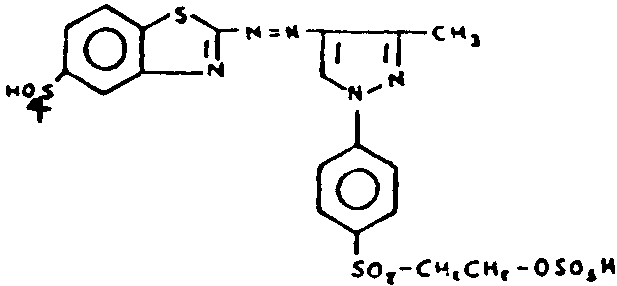
| 643 | Alkylene, alkenyl or alkenylene bonded directly to carboxamido, urea or -C(=X)-, wherein X is chalcogen, which group is between a ring and the alkylene, alkenyl or alkenylene | ||
This subclass is indented under subclass 640. Compounds wherein an alkylene, alkenyl or alkenylene chain
is bonded directly to a -- group, wherein X is chalcogen (i.e.,
oxygen, sulfur, selenium or tellurium), to a -C , group or to a
N--N group, which group is between the chain and a ring.
| |||
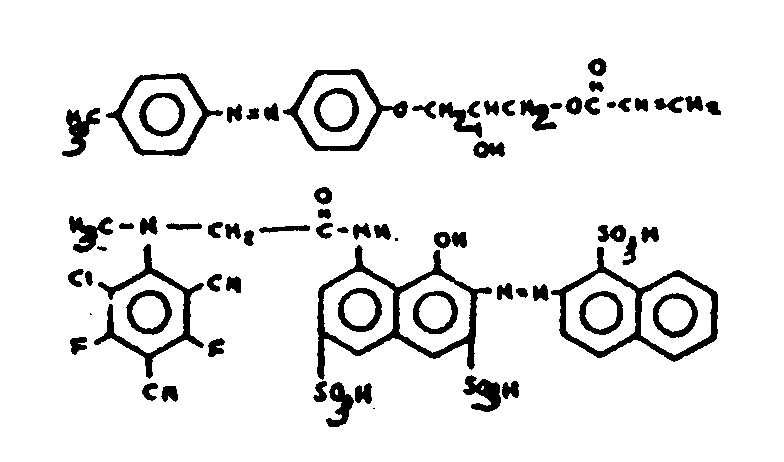
| 644 | Alkylene, alkenyl or alkenylene and a ring bonded directly to the same chalcogen or to plural chalcogens which are bonded directly to each other | ||
This subclass is indented under subclass 640. Compounds in which an alkylene, alkenyl or alkenylene chain
and a ring are both bonded directly to the same chalcogen atom (i.e.,
oxygen, sulfur, selenium or tellurium) or to plural chalcogens which
are bonded directly to each other.
| |||
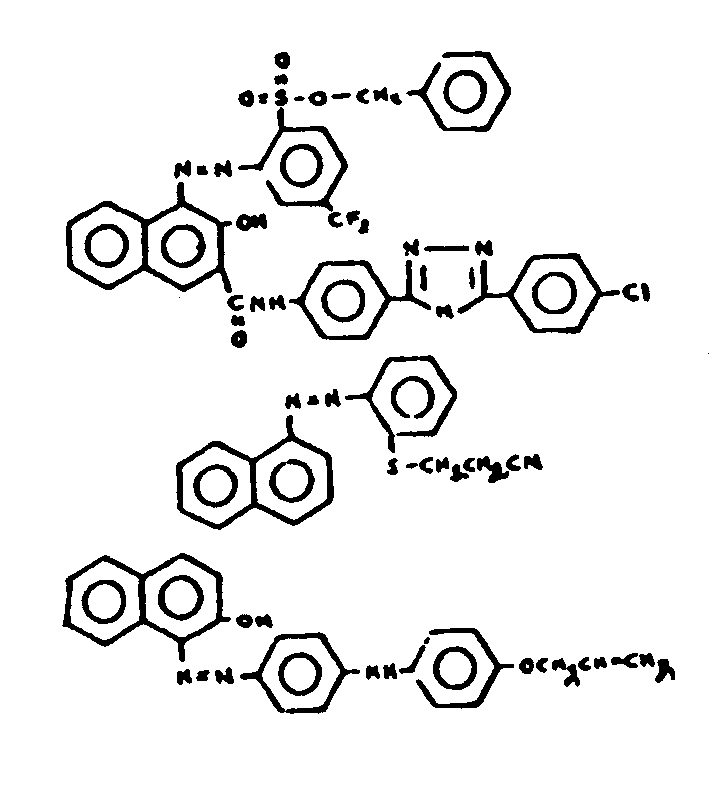
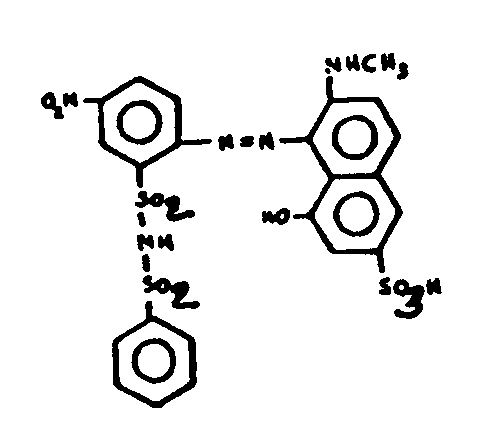
| 645 | Plural sulfonyl groups bonded directly to same amino nitrogen (e.g., sulfonylaminosulfonyl, etc.) | ||
| This subclass is indented under subclass 573. Compounds in which at least two sulfonyl groups are bonded
directly to the same amino nitrogen, e.g.,
| |||
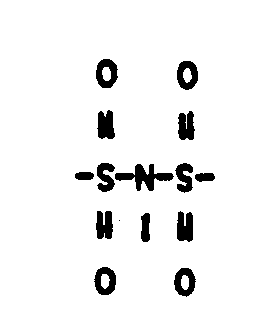
| 646 | Sulfonyl and carbonyl bonded directly to the same amino nitrogen (e.g., sulfonylaminocarbonyl, etc.) | ||
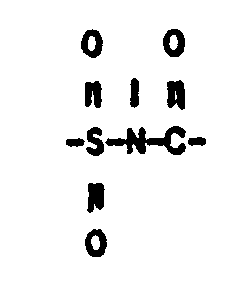
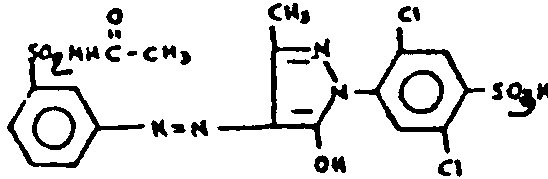
| This subclass is indented under subclass 573. Compounds in which sulfonyl and carbonyl are both bonded
directly to the same amino nitrogen,
| |||
| 647 | Plural amino nitrogens bonded directly to the same sulfonyl (e.g., aminosulfonylamino, etc.) | ||
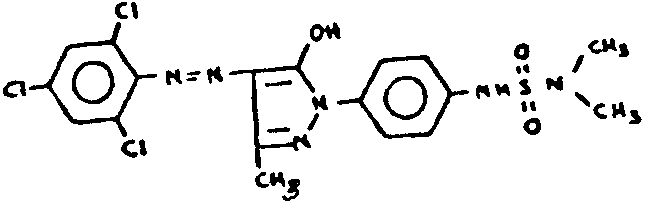
This subclass is indented under subclass 573. Compounds in which at least two amino nitrogens are bonded
directly to the same sulfonyl group; e.g.,N--N, etc.
| |||
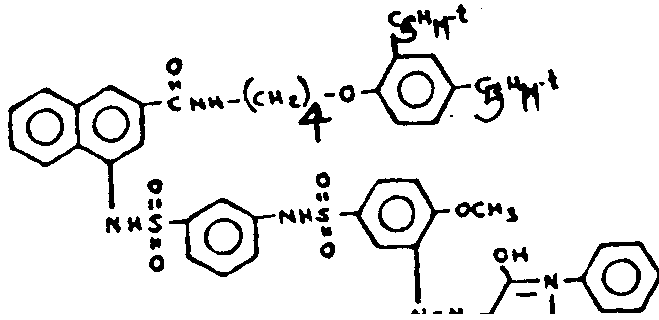
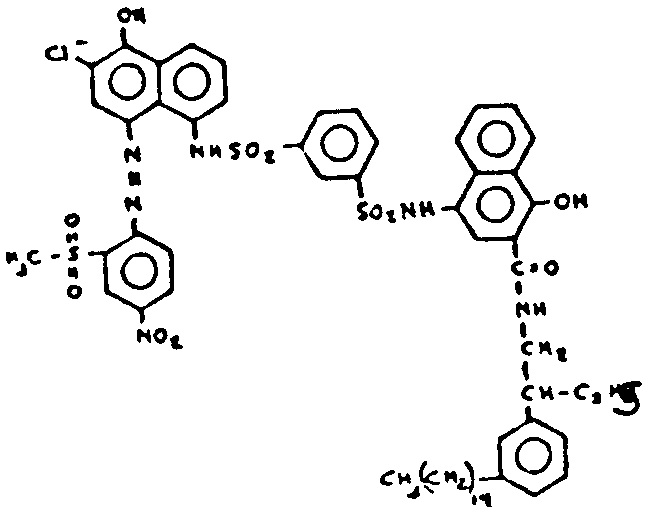
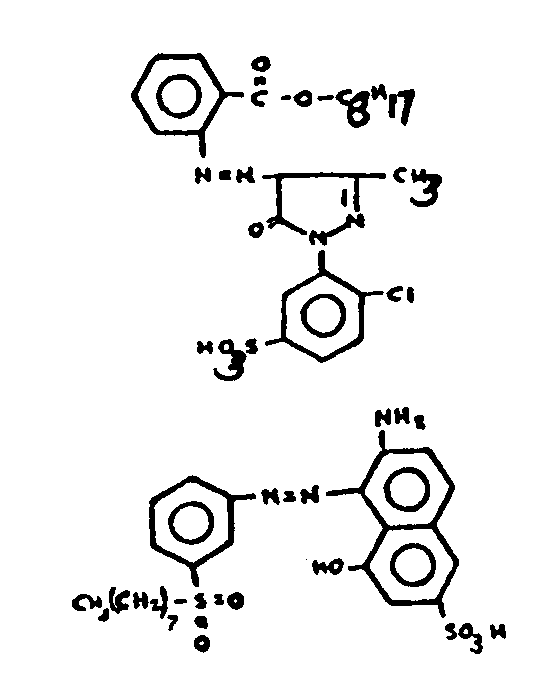
| 648 | Alkyl, having at least eight carbons specified, or plural alkyl chains, each having at least five carbons specified, bonded directly to a ring, which ring is attached directly or indirectly to an acyclic carbon chain, which chain is bonded directly to a urea or carboxamide nitrogen that is between the chain and an additional ring | ||
This subclass is indented under subclass 573. Compounds wherein an alkyl chain, which has at least eight
carbons specified, or plural alkyl chains, each of which has at
least five carbons specified, is bonded directly to a ring.
| |||
| 649 | Alkyl chain having at least eight carbons specified bonded directly to a ring | ||
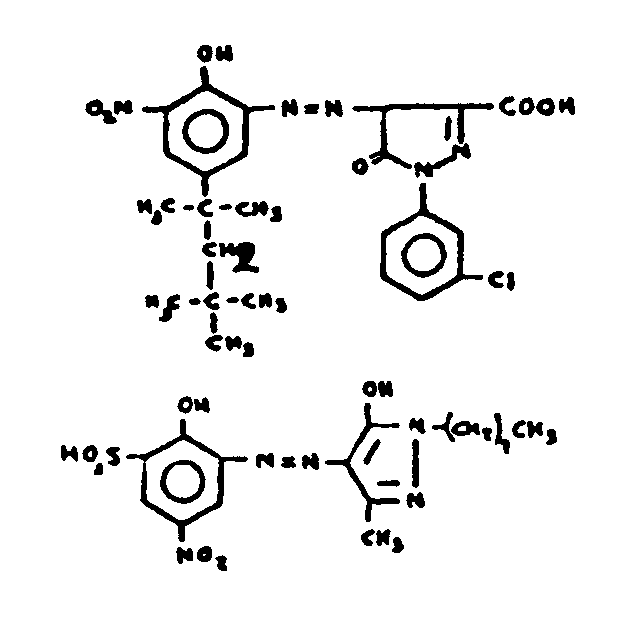
This subclass is indented under subclass 573. Compounds wherein an alkyl chain which has at least eight
carbons specified is bonded directly to a ring.
| |||
| 650 | Sulfonyl or -C(=X)-, wherein X is chalcogen, between a ring and an alkyl chain having at least eight carbons specified | ||
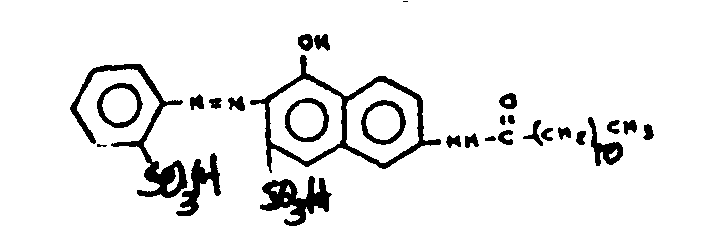
This subclass is indented under subclass 573. Compounds which contain a group or a -- group, wherein
X is chalcogen (i.e., oxygen, sulfur, selenium or tellurium), between
a ring and an alkyl chain which has at least eight carbons specified.
| |||
| 651 | The sulfonyl or -C(=X)- is bonded directly to the ring | ||
This subclass is indented under subclass 650. Compounds in which the sulfonyl group or the -- group is
bonded directly the ring.
| |||
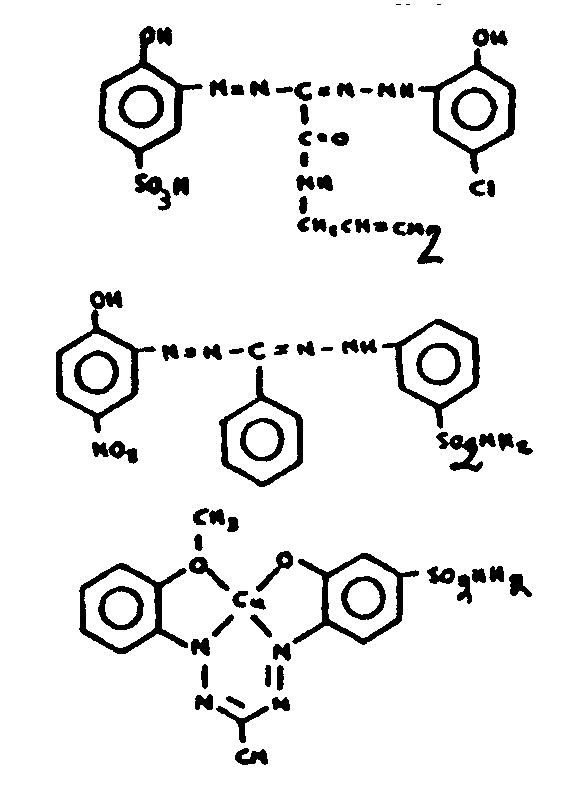
| 652 | Formazan containing (i.e., HNH-N=CH-N=NH, wherein substitution may be made for hydrogen only) | ||
This subclass is indented under subclass 573. Compounds which contain the formazan group, i.e., -N=-N=N-.
| |||
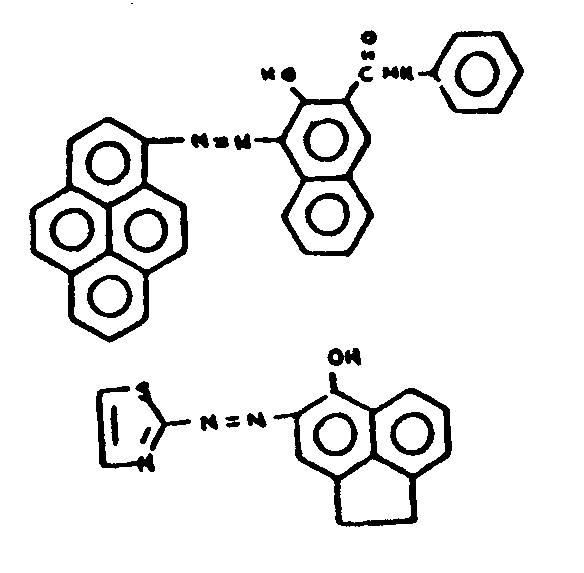
| 653 | Polycyclo carbocyclic ring system having at least three cyclos | ||
This subclass is indented under subclass 573. Compounds which contain a polycyclo carbocyclic ring system
having at least three cyclos.
| |||
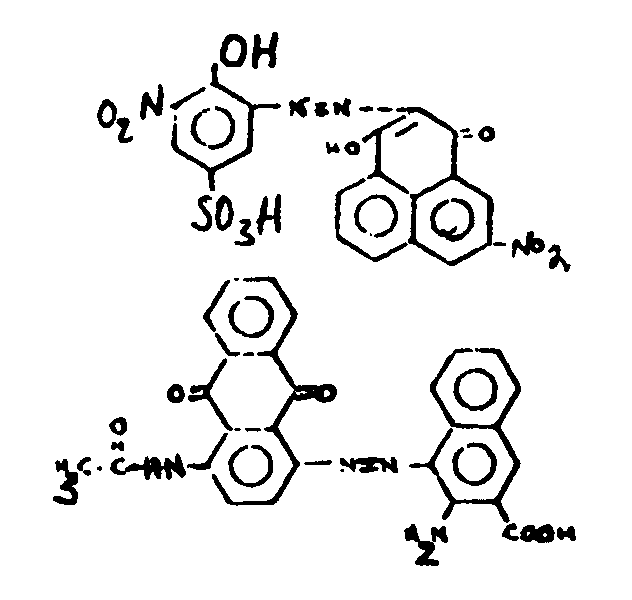
| 654 | The polycyclo ring system consists of three six-membered cyclos and has plural oxygens bonded directly thereto | ||
This subclass is indented under subclass 653. Compounds in which the polycyclo carbocyclic ring system
consists of three six-membered cyclos and has plural oxygens bonded
directly to it.
| |||
| 655 | Hetero ring containing | ||
This subclass is indented under subclass 654. Compounds which contain a hetero ring.
| |||
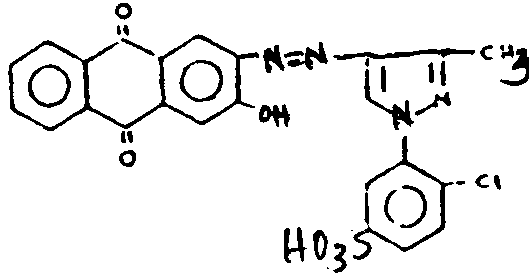
| 656 | At least two such ring systems having plural oxygens bonded directly thereto | ||
This subclass is indented under subclass 654. Compounds which contain at least two polycyclo carbocyclic
ring systems consisting of three six-membered cyclos, each having
plural oxygens bonded directly to it.
| |||
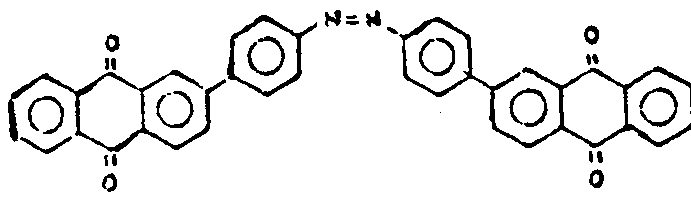
| 657 | The polycyclo ring system has no azo group bonded directly thereto | ||
This subclass is indented under subclass 653. Compounds wherein the polycyclo ring system has no direct
bond to any azo group.
| |||
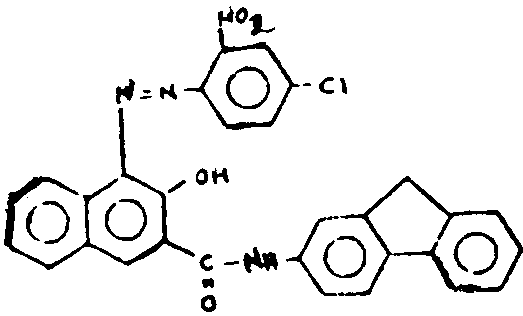
| 658 | Chalcogen double bonded directly to the polycyclo ring system | ||
This subclass is indented under subclass 653. Compounds in which chalcogen (i.e., oxygen, sulfur, selenium
or tellurium) is double bonded directly to the polycyclo ring system.
| |||
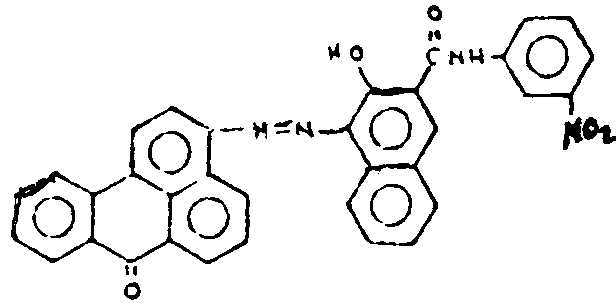
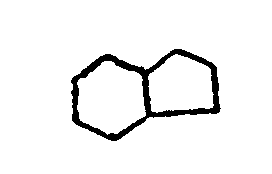
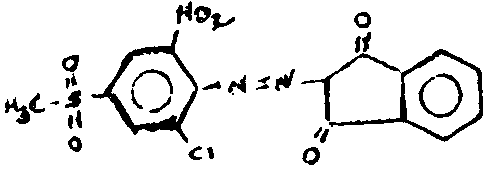
| 659 | Bicyclo carbocyclic ring system consisting of a six-membered ring and a five-membered ring (e.g., indane, etc.) | ||
| This subclass is indented under subclass 573. Compounds which contain a bicyclo carbocyclic ring system
consisting of a six-membered ring and a five-membered ring, ( i.e.,
the structure below) which may contain double bonds between its
members.
| |||
| 660 | Hydroxy and carbonyl of -COO- bonded directly to a monocyclic benzene ring (H or hydroxy may be replaced by a substituted or unsubstituted ammonium ion or a metal) | ||
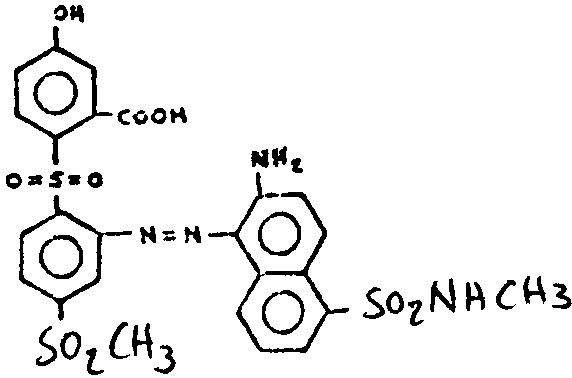
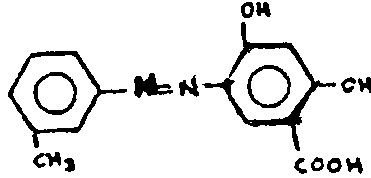
This subclass is indented under subclass 573. Compounds in which -OH and the carbon of a --O- group are
both bonded directly to the same monocyclic benzene ring, wherein
-H of the -OH may be replaced by a substituted or unsubstituted
ammonium ion or a metal.
| |||
| 661 | Heavy metal or aluminum containing | ||||
This subclass is indented under subclass 660. Compounds which include aluminum or a metal with a specific
gravity greater than four.
| |||||
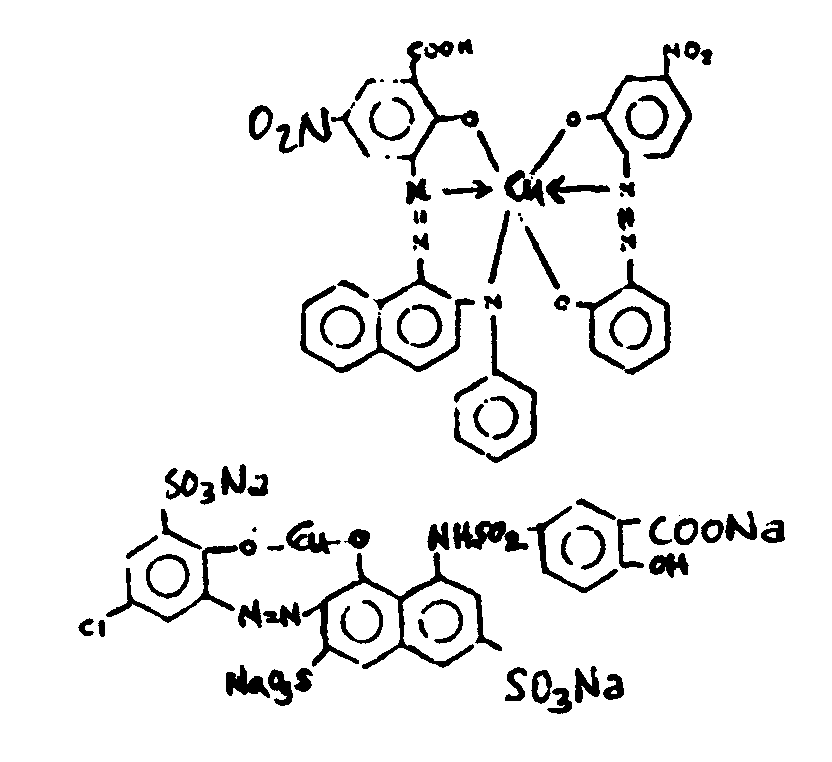
| 662 | Hetero ring containing | ||
This subclass is indented under subclass 661. Compounds which contain a hetero ring.
| |||
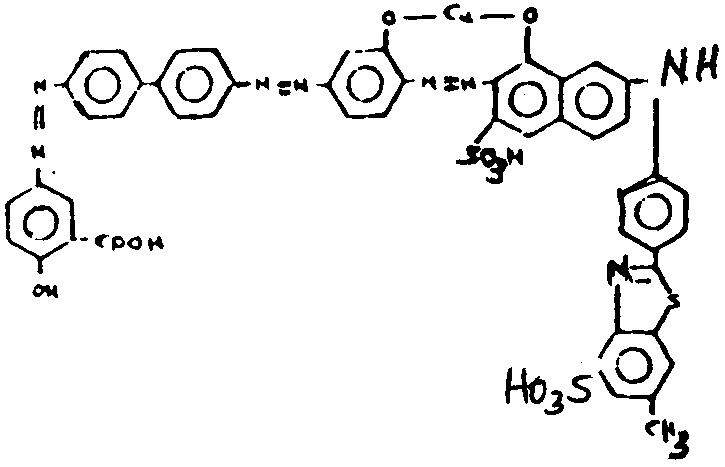
| 663 | Plural azo groups in the same azo moiety attached indirectly to each other by nonionic bonding | ||||
This subclass is indented under subclass 661. Compounds wherein at least two azo groups within the same
azo moiety are attached indirectly to each other by nonionic bonding.
| |||||
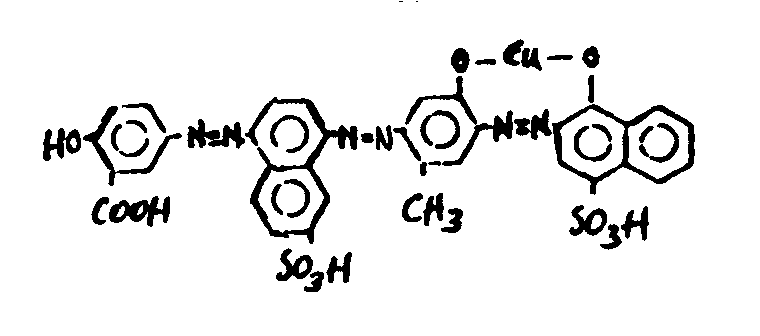
| 664 | Hetero ring containing | ||
This subclass is indented under subclass 660. Compounds which contain a hetero ring.
| |||
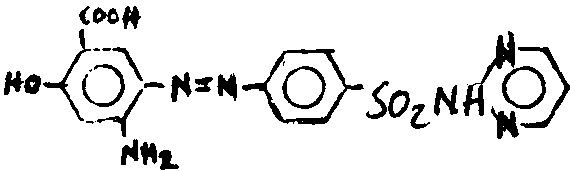
| 665 | Azo bonded directly to the hetero ring or to a polycyclo ring system which contains the hetero ring as one of the cyclos | ||
This subclass is indented under subclass 664. Compounds wherein an azo group is bonded directly to a hetero
ring or to a polycyclo ring system which contains a hetero ring
as one of the cyclos.
| |||
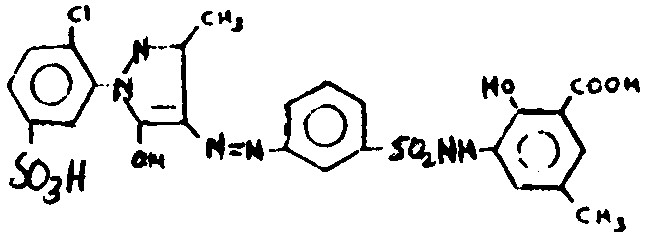
| 666 | At least three azo groups attached indirectly to each other by nonionic bonding | ||
This subclass is indented under subclass 660. Compounds in which at least three azo groups are attached
indirectly to each other by nonionic bonding.
| |||
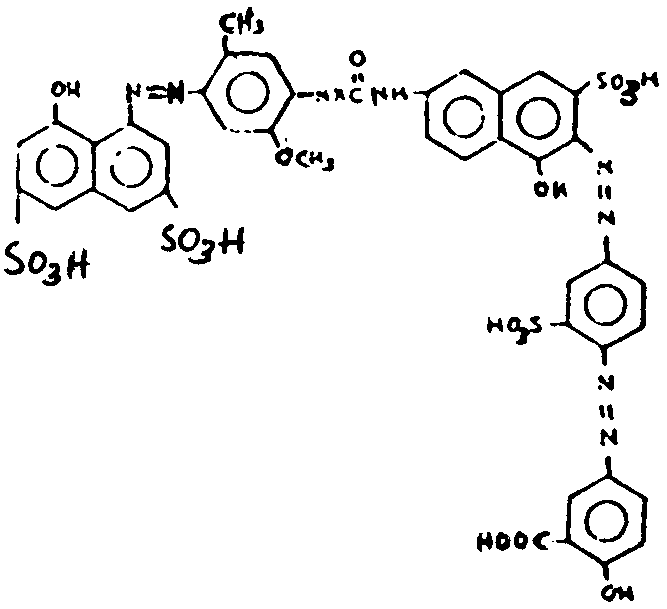
| 667 | Plural monocyclic benzene rings, each having hydroxy and carbonyl of -COO- bonded directly thereto | ||
This subclass is indented under subclass 666. Compounds which contain at least two monocyclic benzene
rings, each of which has an -OH group and a -COO- group bonded directly
to it.
| |||
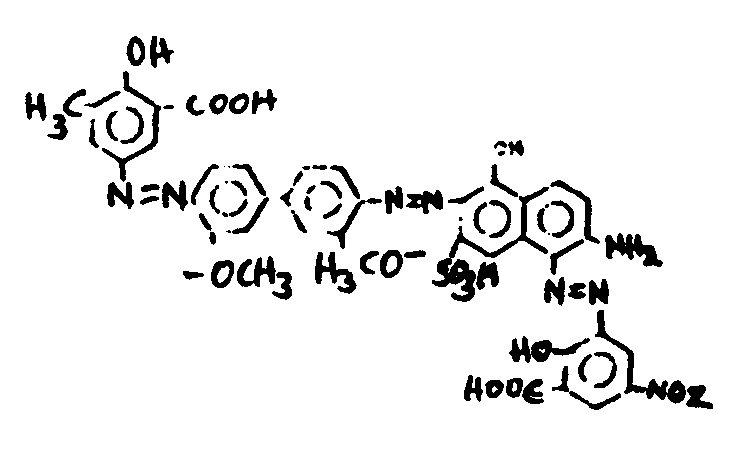
| 668 | Additional monocyclic benzene ring having plural hydroxy groups, hydroxy and nitrogen, or plural nitrogens bonded directly thereto, wherein the nitrogen is other than as nitro, nitroso or azo | ||
This subclass is indented under subclass 666. Compounds which contain an additional monocyclic benzene
ring which has either plural hydroxy groups, hydroxy and nitrogen,
or plural nitrogens bonded directly to it; wherein the nitrogen
is other than as nitro, nitroso or azo.
| |||
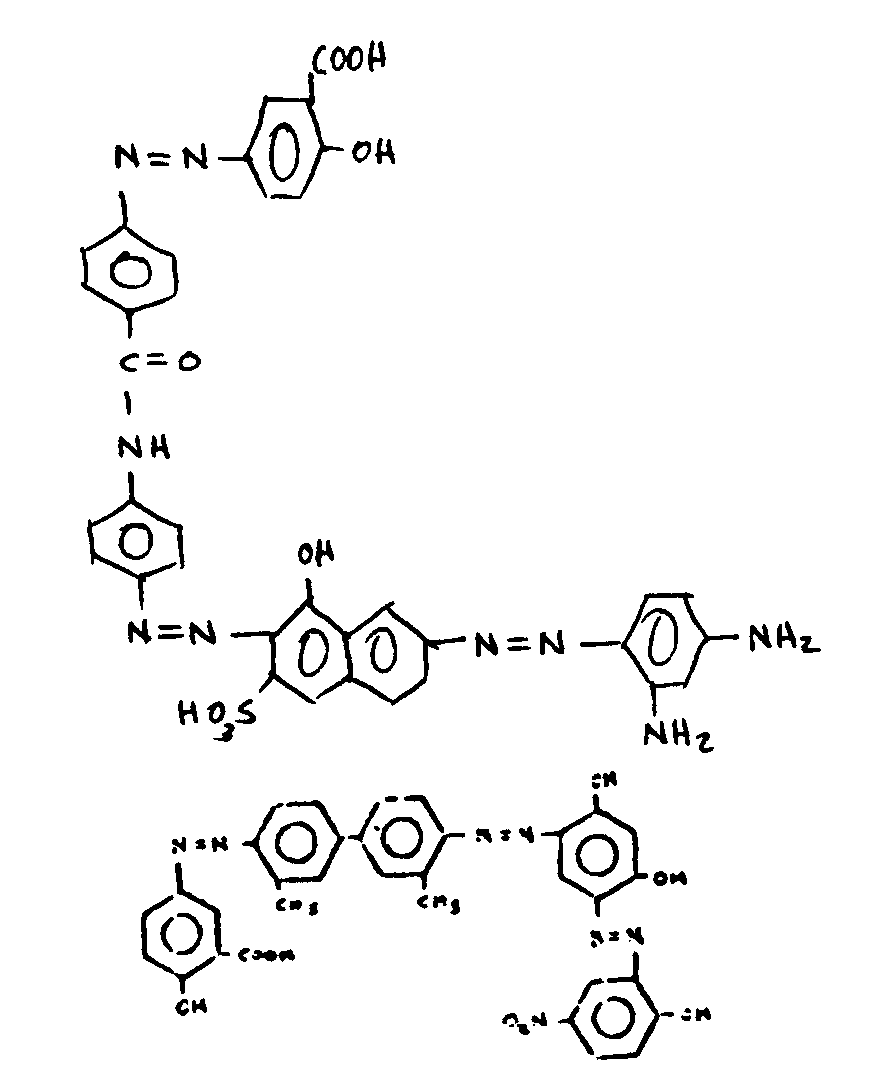
| 669 | Additional -C(=X)-, wherein X is chalcogen | ||
This subclass is indented under subclass 666. Compounds which contain an additional -- group, wherein
X is chalcogen (i.e., oxygen, sulfur, selenium or tellurium).
| |||
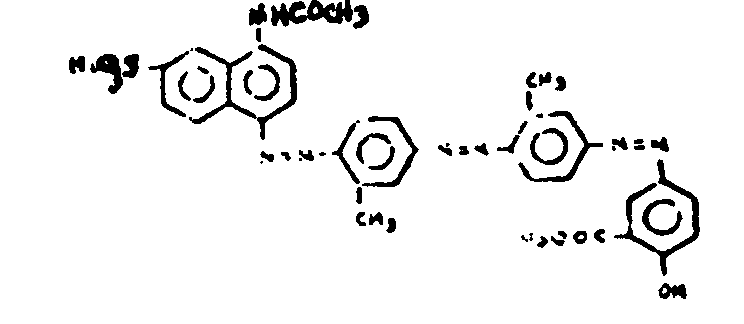
| 670 | Two azo groups attached indirectly to each other by nonionic bonding | ||
This subclass is indented under subclass 660. Compounds in which two azo groups are attached indirectly
to each other by nonionic bonding.
| |||
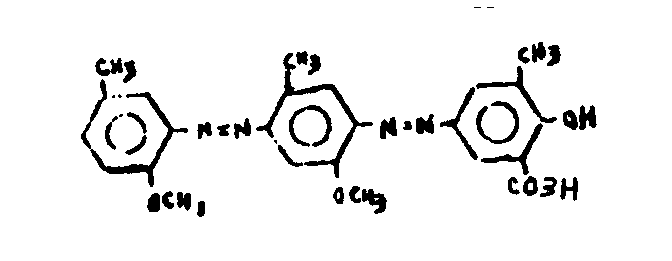
| 671 | Sulfonic acid group containing (-(O=)S(=O)-OH, wherein H of -OH may be replaced by a substituted or unsubstituted ammonium ion or metal) | ||
This subclass is indented under subclass 670. Compounds which contain a --OH group bonded directly to
carbon, wherein H of the -OH may be replaced by a substituted or
unsubstituted ammonium ion or a metal.
| |||
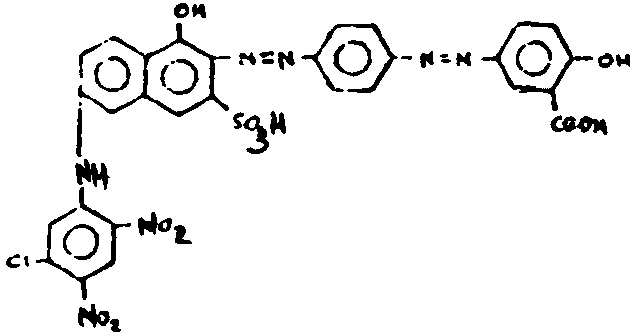
| 672 | Plural monocyclic benzene rings, each having hydroxy and carbonyl of -COO- bonded directly thereto | ||
This subclass is indented under subclass 671. Compounds which contain at least two monocyclic benzene
rings, each of which has an -OH group and a -COO- group bonded directly
to it.
| |||
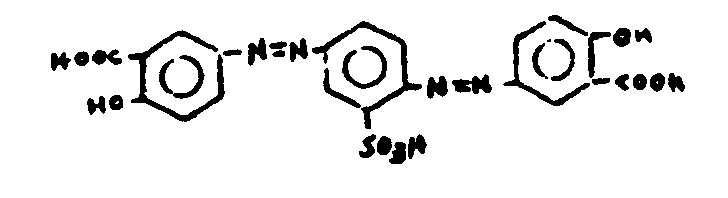
| 673 | Additional -C(=X)-, wherein X is chalcogen | ||
This subclass is indented under subclass 671. Compounds which contain an additional -- group, wherein
X is chalcogen (i.e., oxygen, sulfur, selenium or tellurium).
| |||
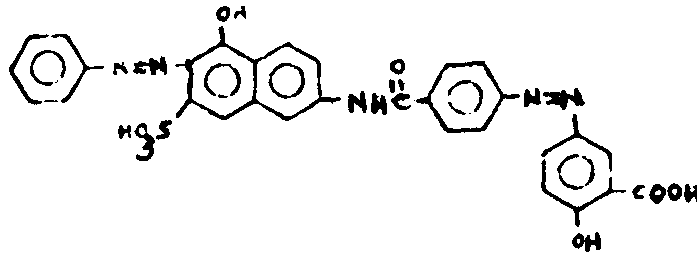
| 674 | Sulfonic acid group containing (-(O=)S(=O)-OH, wherein H of -OH may be replaced by a substituted or unsubstituted ammonium ion or metal) | ||
This subclass is indented under subclass 660. Compounds which contain a --OH group bonded directly to
carbon, wherein -H of the -OH may be replaced by a substituted or
unsubstituted ammonium ion or a metal.
| |||
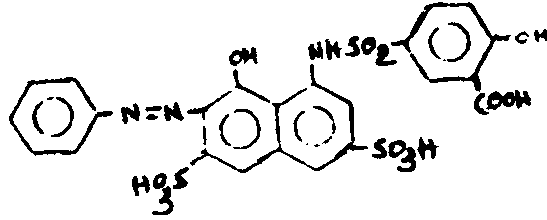
| 675 | Azo attached indirectly to the monocyclic benzene ring by nonionic bonding | ||
This subclass is indented under subclass 674. Compounds in which the azo group is attached indirectly
to the monocyclic benzene ring by nonionic bonding.
| |||
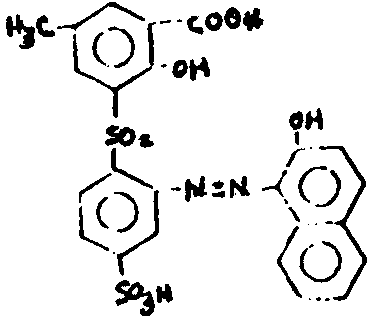
| 676 | Plural -HNH groups or -OH and -HNH bonded directly to a monocyclic benzene ring (H of -OH may be replaced by a substituted or unsubstituted ammonium ion or metal) | ||
This subclass is indented under subclass 573. Compounds wherein at least two -NH2 groups or
a -NH2 group and an -OH group are bonded directly
to a monocyclic benzene ring; wherein -H of the -OH may be replaced
by a substituted or unsubstituted ammonium ion or a metal.
| |||
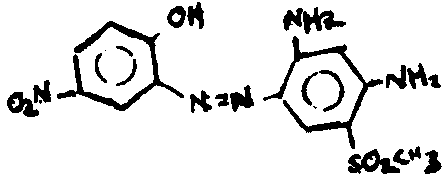
| 677 | Plural azo groups in the same azo moiety attached indirectly to each other by nonionic bonding | ||||
This subclass is indented under subclass 676. Compounds in which at least two azo groups within the same
azo moiety are attached indirectly to each other by nonionic bonding.
| |||||
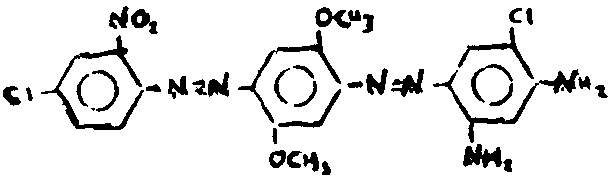
| 678 | Sulfonic acid group containing (-(O=)S(=O)-OH, wherein H of -OH may be replaced by a substituted or unsubstituted ammonium ion or metal) | ||
This subclass is indented under subclass 677. Compounds which contain a --OH group bonded directly to
carbon, wherein -H of the -OH may be replaced by a substituted or
unsubstituted ammonium ion or a metal.
| |||
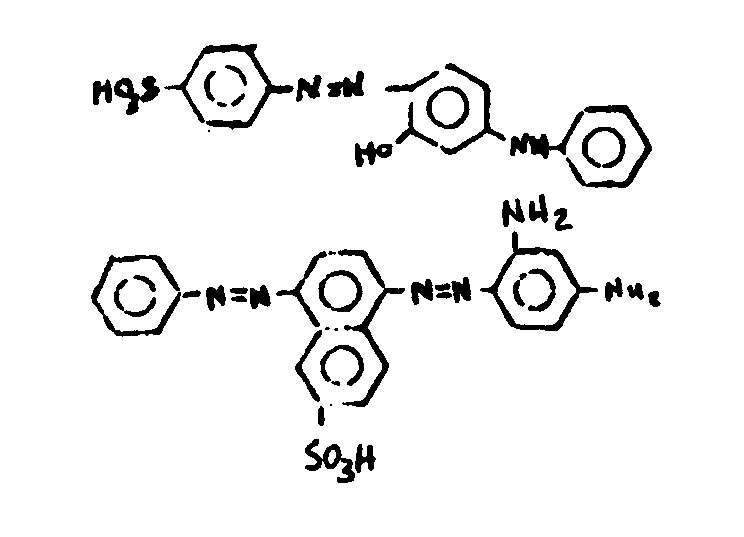
| 679 | Plural monocyclic benzene rings, each having -OH and -HNH or plural -HNH groups bonded directly thereto | ||
This subclass is indented under subclass 678. Compounds which contain at least two of the monocyclic rings,
each of which has plural -NH2 groups or a -NH2 group
and an -OH group bonded directly to it.
| |||
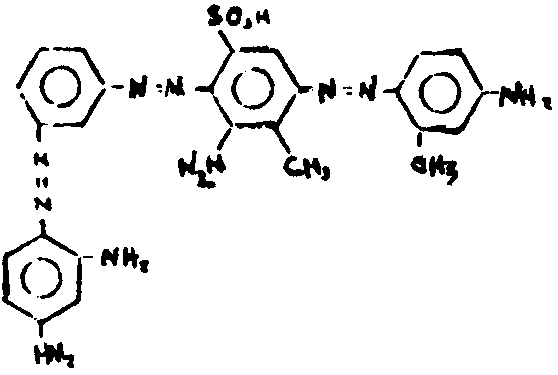
| 680 | Exactly three azo groups attached indirectly to each other by nonionic bonding | ||
This subclass is indented under subclass 678. Compounds in which exactly three azo groups are attached
indirectly to each other by nonionic bonding.
| |||
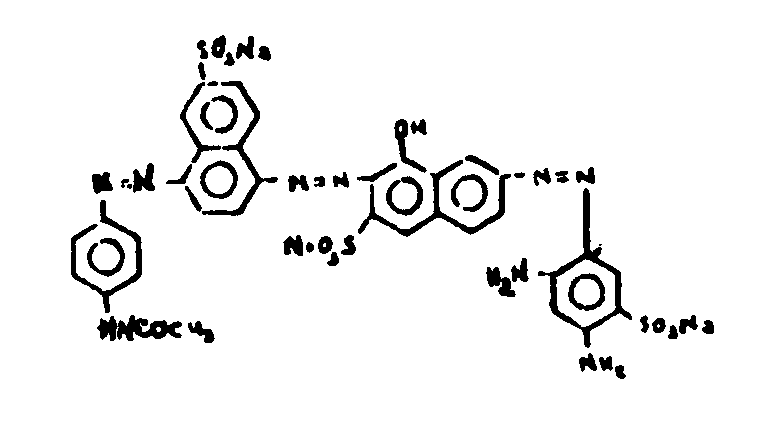
| 681 | Sulfonic acid group containing (-(O=)S(=O)-OH, wherein H of -OH may be replaced by a substituted or unsubstituted ammonium ion or metal) | ||
This subclass is indented under subclass 676. Compounds which contain a --OH group bonded directly to
carbon wherein H of the -OH may be replaced by a substituted or
unsubstituted ammonium ion or a metal.
| |||
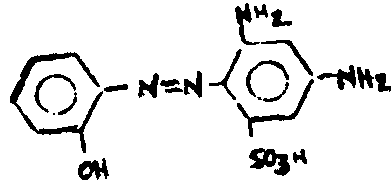
| 682 | Plural hydroxy groups or esters thereof bonded directly to a monocyclic benzene ring (H of hydroxy may be replaced by a substituted or unsubstituted ammonium ion or metal) | ||
This subclass is indented under subclass 573. Compounds wherein at least two -OH groups or esters thereof
are bonded directly to a monocyclic benzene ring; wherein the -H
of the -OH may be replaced by a substituted or unsubstituted ammonium
ion, a metal or an ester radical.
| |||
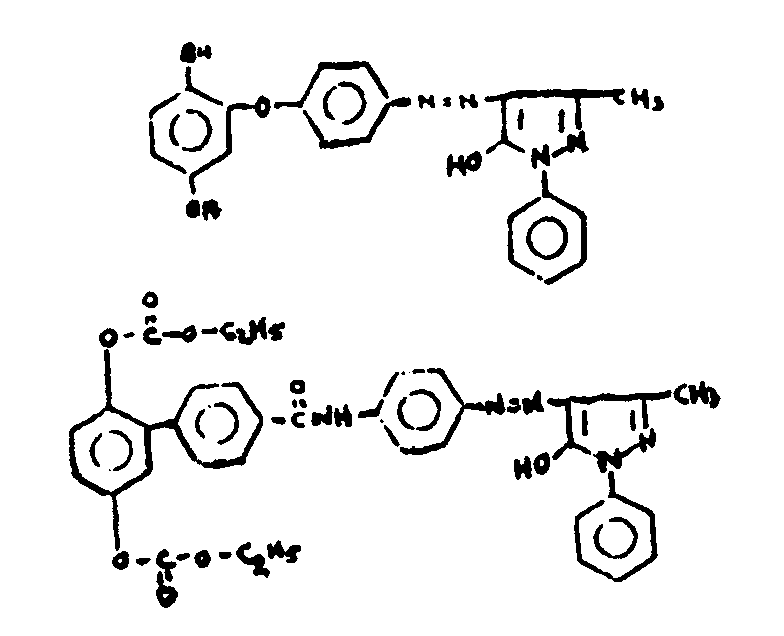
| 683 | Azo bonded directly to the benzene ring | ||
This subclass is indented under subclass 682. Compounds wherein the benzene ring is bonded directly to
an azo group.
| |||
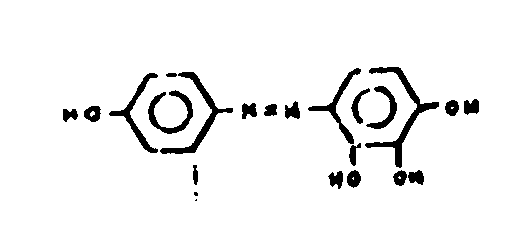
| 684 | Heavy metal or aluminum containing | ||||
This subclass is indented under subclass 683. Compounds which contain aluminum or a metal with a specific
gravity greater than four.
| |||||
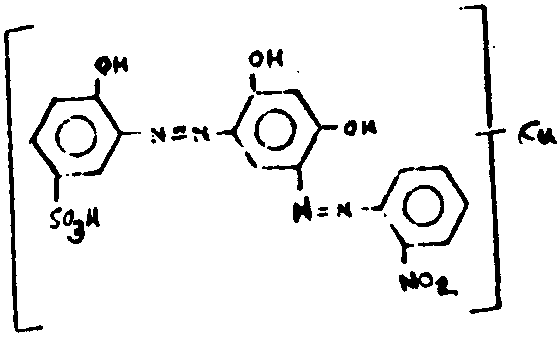
| 685 | At least three azo groups attached indirectly to each other by nonionic bonding | ||
This subclass is indented under subclass 683. Compounds in which at least two azo groups are attached
indirectly to each other by nonionic bonding.
| |||
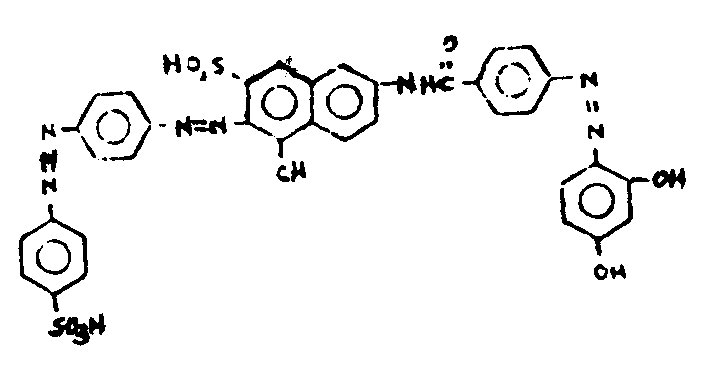
| 686 | Hetero ring containing | ||
This subclass is indented under subclass 685. Compounds which contain a hetero ring.
| |||
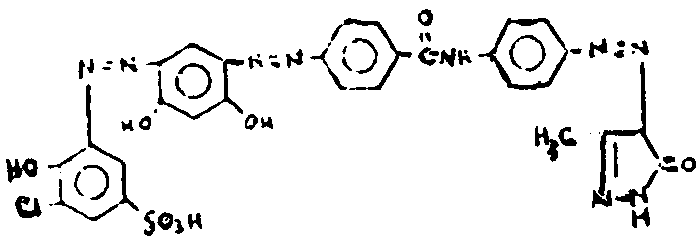
| 687 | Plural monocyclic benzene rings, each having plural hydroxy groups or esters thereof bonded directly thereto | ||
Compounds undersubclass 685 which contain at least two of
the monocyclic benzene rings, each of which has plural -OH groups
or esters thereof, bonded directly to it.
| |||
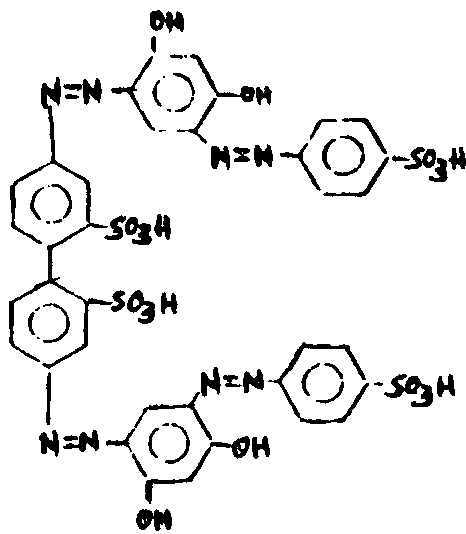
| 688 | Two azo groups attached indirectly to each other by nonionic bonding | ||
This subclass is indented under subclass 683. Compounds wherein exactly two azo groups are attached indirectly
to each other by nonionic bonding.
| |||
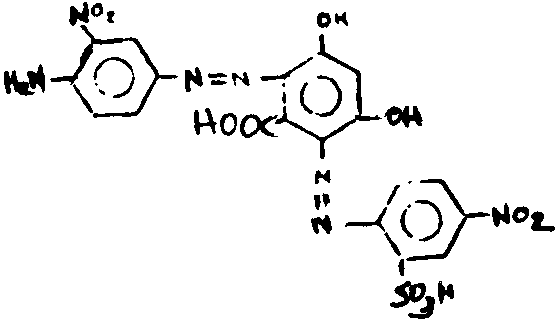
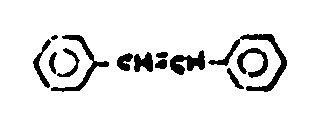
| 689 | Stilbene containing | ||
| This subclass is indented under subclass 573. Compounds which contain the [see Fig. 1] group,
wherein only hydrogen may be replaced.
FIGURE 1
| |||
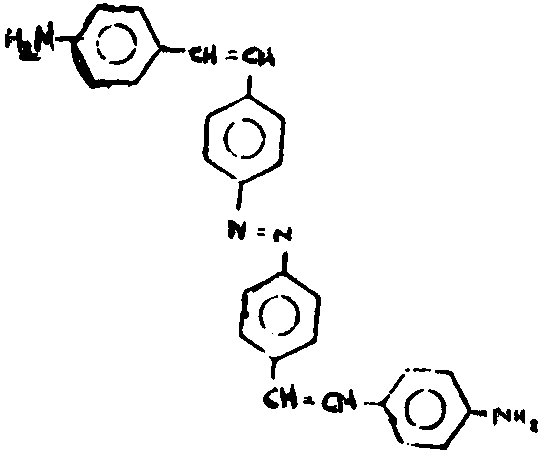
| 690 | Heavy metal or aluminum containing | ||||
This subclass is indented under subclass 689. Compounds which contain aluminum or a metal with a specific
gravity greater than four.
| |||||
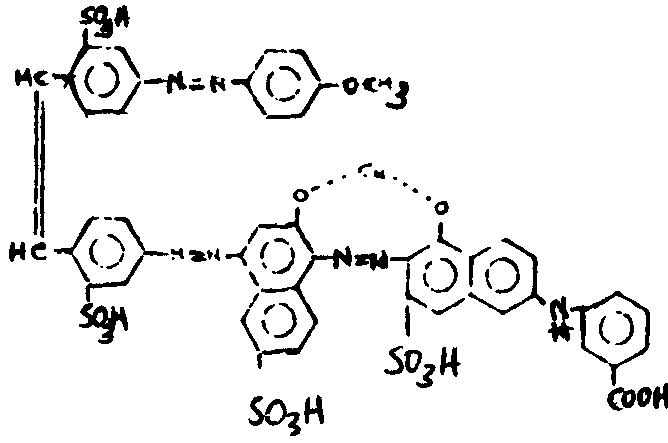
| 691 | Hetero ring containing | ||
This subclass is indented under subclass 689. Compounds which contain a hetero ring.
| |||
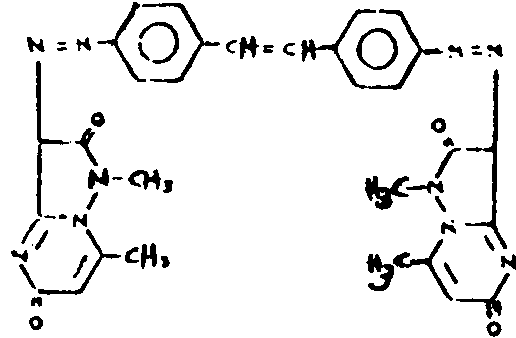
| 692 | Heavy metal or aluminum containing | ||
This subclass is indented under subclass 573. Compounds which contain aluminum or a metal with a specific
gravity greater than four.
| |||
| 693 | Amine salt | ||
This subclass is indented under subclass 692. Compounds which are amine added salts of the metal containing
azo compound.
| |||
| 694 | Arsenic containing | ||
This subclass is indented under subclass 692. Compounds which contain arsenic.
| |||
| 695 | Azo moiety and moiety which contains acyclic -CH=N- group bonded to the same metal | ||
This subclass is indented under subclass 692. Compouonds wherein a moiety having an azo group and a moiety
having an acyclic chain which contains an azomethine group, i.e.,
-CH=N, are bonded directly to the same metal.
| |||
| 696 | Diverse azo moieties bonded to the same metal | ||||
This subclass is indented under subclass 692. Compounds wherein azo moieties from different and distinct
azo compounds are bonded to the same metal.
| |||||
| 697 | Hetero ring containing | ||
This subclass is indented under subclass 696. Compounds which contain a hetero ring.
| |||
| 698 | Hetero ring in each azo moiety | ||
This subclass is indented under subclass 697. Compounds wherein each of the azo moieties contains a hetero
ring.
| |||
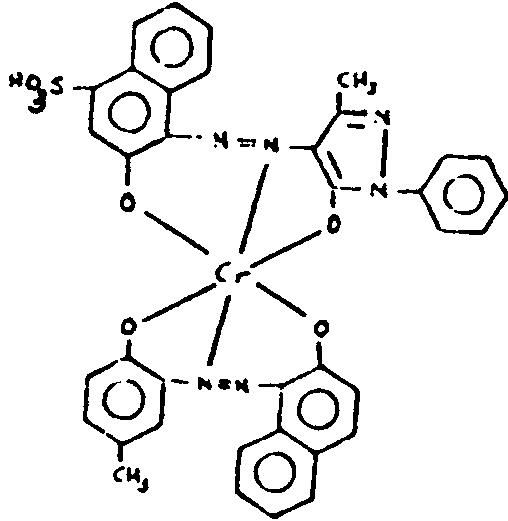
| 699 | Plural azo groups in the same azo moiety attached indirectly to each other by nonionic bonding | ||||
This subclass is indented under subclass 696. Compounds in which at least two azo groups within the same
azo moiety are attached indirectly to each other by nonionic bonding.
| |||||
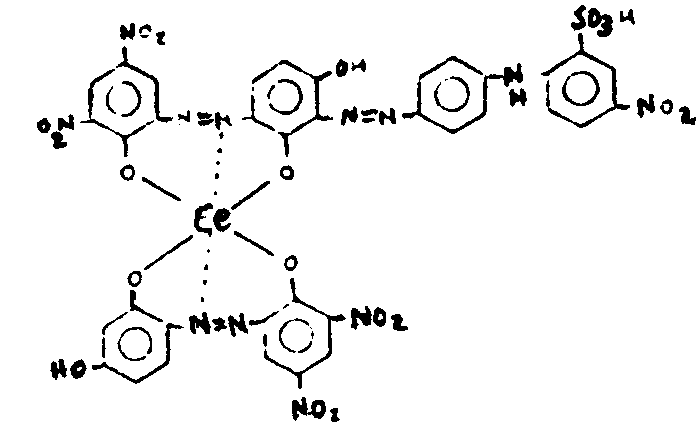
| 700 | Azo bonded directly to an acyclic carbon which is bonded directly to two acyclic carbons, each of which is double or triple bonded to an atom | ||||
This subclass is indented under subclass 692. Compounds in which an azo group is bonded directly to an
acyclic carbon, which carbon is additionally bonded directly to
two acyclic carbons, each of which is double or triple bonded to
an atom.
| |||||
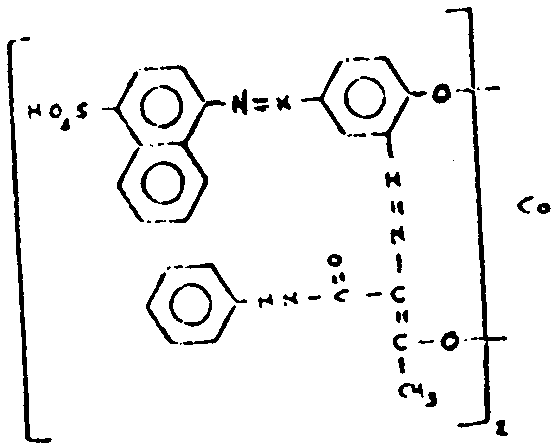
| 701 | Hetero ring containing | ||||
This subclass is indented under subclass 692. Compounds which contain a hetero ring.
| |||||
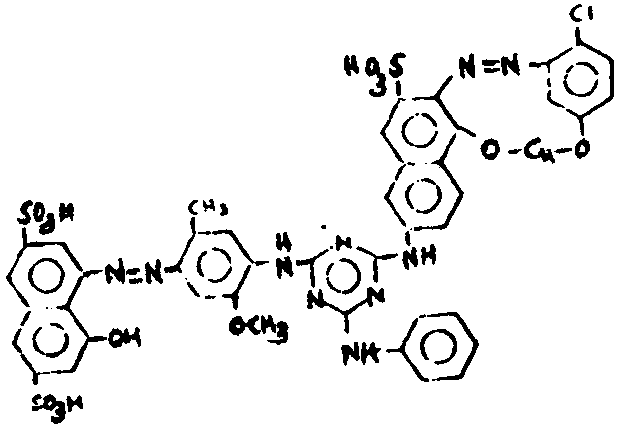
| 702 | Polycyclo ring system containing the hetero ring as one of the cyclos | ||
This subclass is indented under subclass 701. Compounds wherein the hetero ring is one of the cyclos in
a polycyclo ring system.
| |||
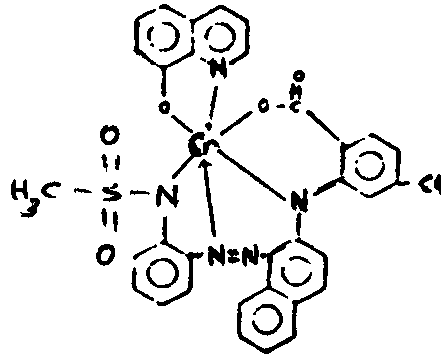
| 703 | Azo bonded directly to the polycyclo ring system | ||
This subclass is indented under subclass 702. Compounds in which an azo group is bonded directly to the
polycyclo ring system.
| |||
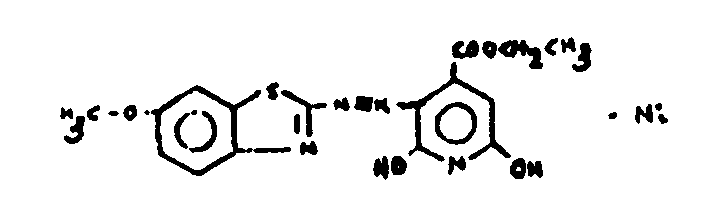
| 704 | The azo group is attached indirectly in the same azo moiety to an additional azo group or to an acyclic chain which contains a -CH=N- group by nonionic bonding | ||||
This subclass is indented under subclass 703. Compounds wherein the azo group is attached indirectly within
the same azo moiety by nonionic bonding to either an additional
azo group or an acyclic chain which contains a azomethine group;
i.e., -CH=N-.
| |||||
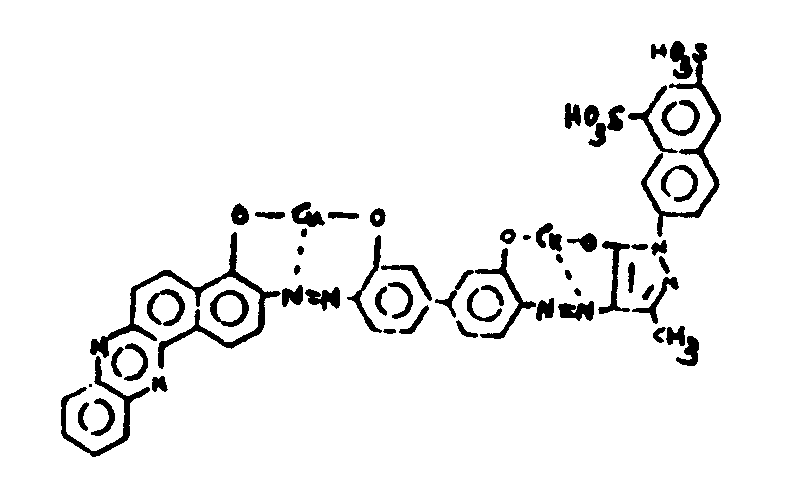
| 705 | Plural ring nitrogens in the polycyclo ring system | ||
This subclass is indented under subclass 703. Compounds wherein the polycyclo ring system contains at
least two ring nitrogens.
| |||
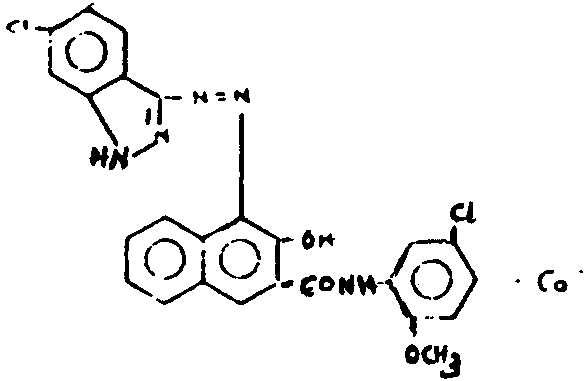
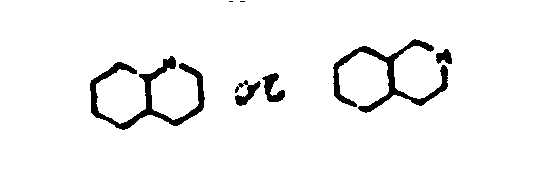
| 706 | Quinoline or isoquinoline containing (including hydrogenated) | ||
| This subclass is indented under subclass 703. Compounds which contain a bicyclo ring system having either
of the following structures, which may contain double bonds between
ring members:
| |||
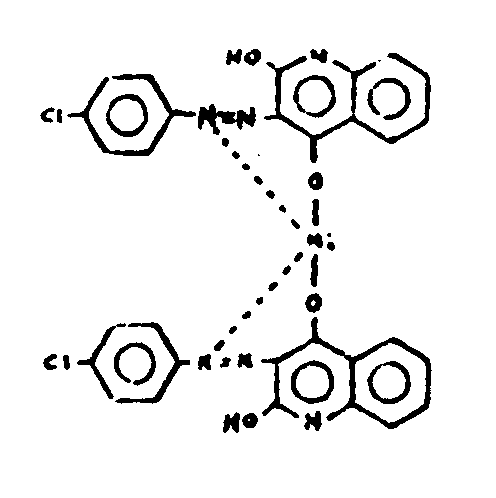
| 707 | Azo bonded directly to the hetero ring | ||
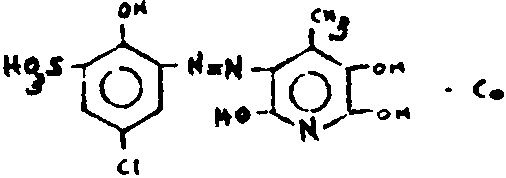
This subclass is indented under subclass 701. Compounds in which the hetero ring is bonded directly to
an azo group.
| |||
| 708 | At least three azo groups in the same azo moiety attached indirectly to each other by nonionic bonding | ||||
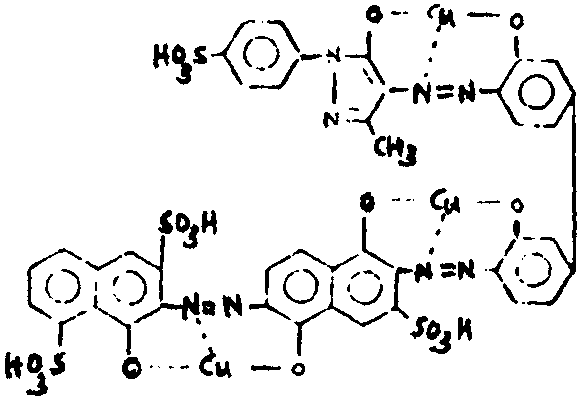
This subclass is indented under subclass 707. Compounds in which at least three azo groups within the
same azo moiety are attached indirectly to each other by nonionic
bonding.
| |||||
| 709 | Two azo groups in the same azo moiety attached indirectly to each other by nonionic bonding | ||||
This subclass is indented under subclass 707. Compounds in which two azo groups in the same azo moiety
are attached indirectly to each other by nonionic bonding.
| |||||
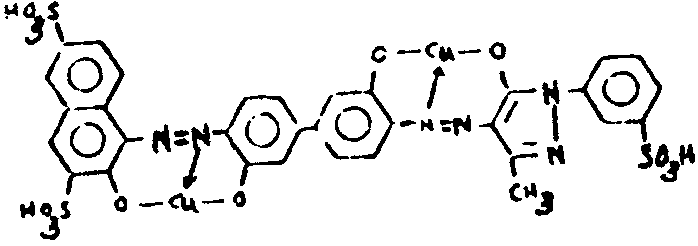
| 710 | Pyrazole (including hydrogenated) | ||
| This subclass is indented under subclass 707. Compounds which contain a hetero ring having the following
structure, which may contain double bonds between ring members:
| |||
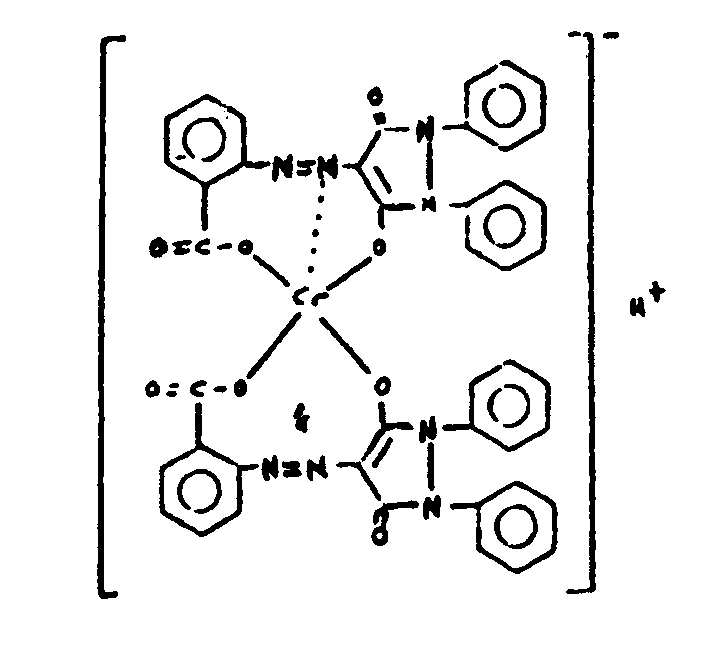
| 711 | Sulfonyl bonded directly to a ring | ||
This subclass is indented under subclass 710. Compounds wherein a sulfonyl group, i.e., --, is bonded
directly to a ring.
| |||
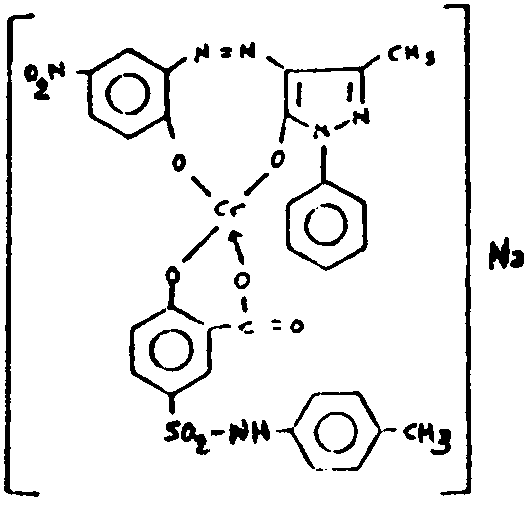
| 712 | Additional chalcogen bonded directly to the sulfonyl | ||
This subclass is indented under subclass 711. Compounds wherein an additional chalcogen (i.e., oxygen,
sulfur, selenium or tellurium) is bonded directly to the sulfonyl
group.
| |||
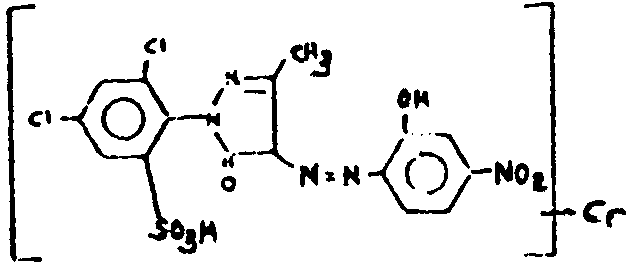
| 713 | Benzene ring containing | ||
This subclass is indented under subclass 692. Compounds which contain a benzene ring.
| |||
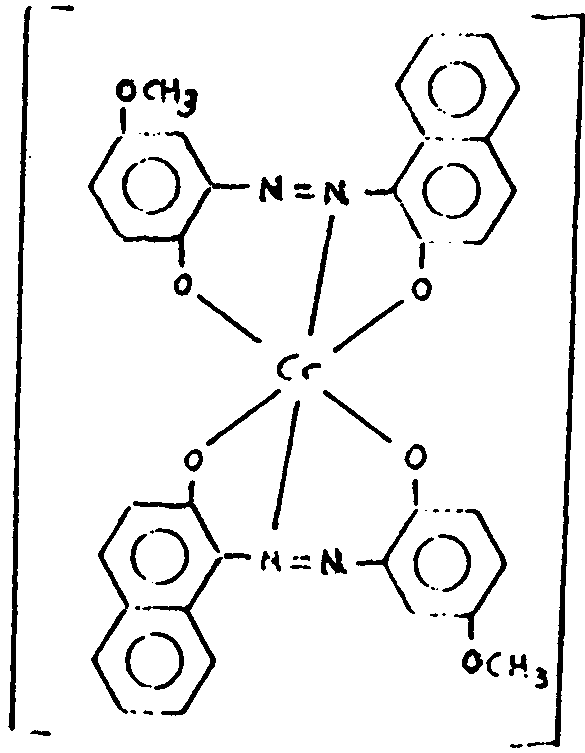
| 714 | At least three azo groups in the same azo moiety attached indirectly to each other by nonionic bonding | ||||
This subclass is indented under subclass 713. Compounds in which at least three azo groups within the
same azo moiety are attached indirectly to each other by nonionic
bonding.
| |||||
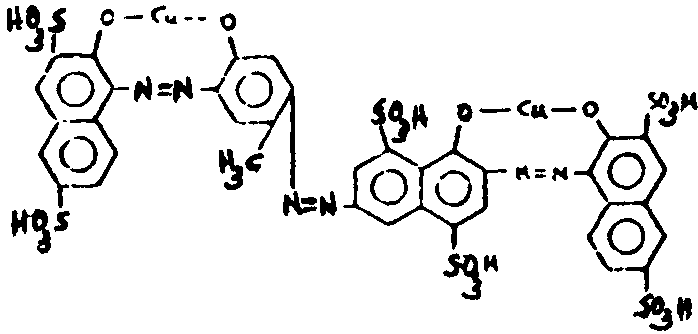
| 715 | Plural monocyclic benzene rings attached directly to each other by nonionic bonding and are between azo groups | ||
This subclass is indented under subclass 714. Compounds wherein between two azo groups are at least two
monocyclic benzene rings which are attached directly to each other
by nonionic bonding.
| |||
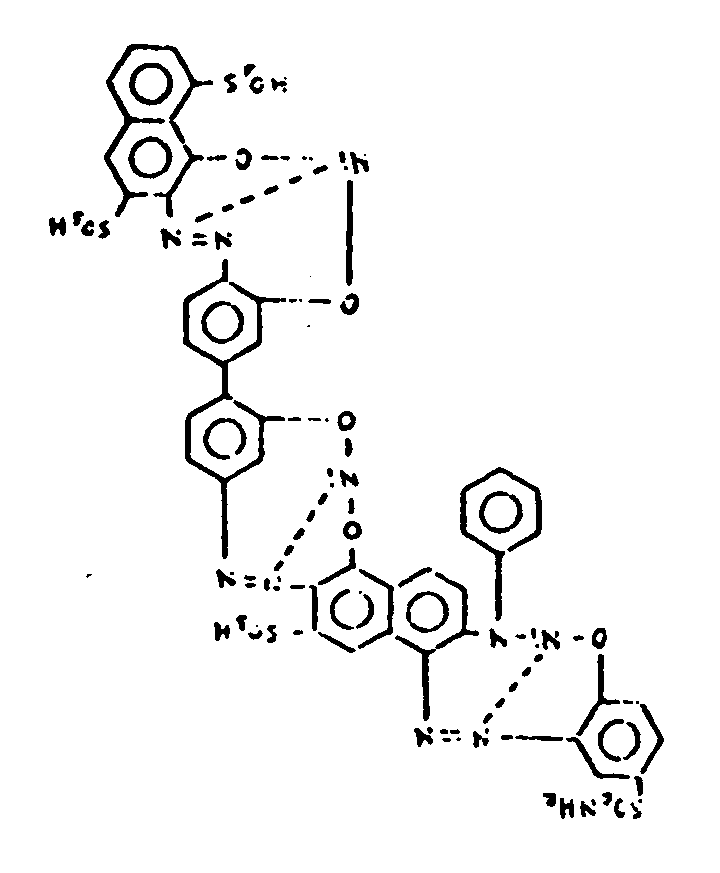
| 716 | Two azo groups in the same azo moiety attached indirectly to each other by nonionic bonding | ||||
This subclass is indented under subclass 713. Compounds in which two azo groups within the same azo moiety
are attached indirectly to each other by nonionic bonding.
| |||||
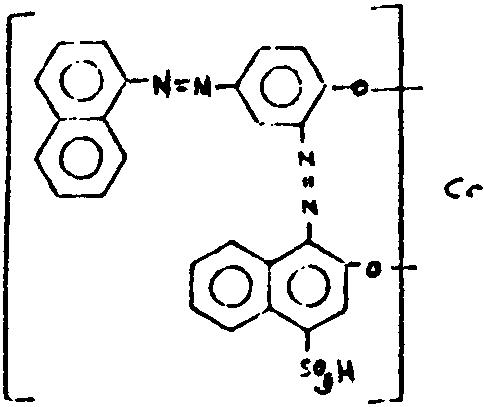
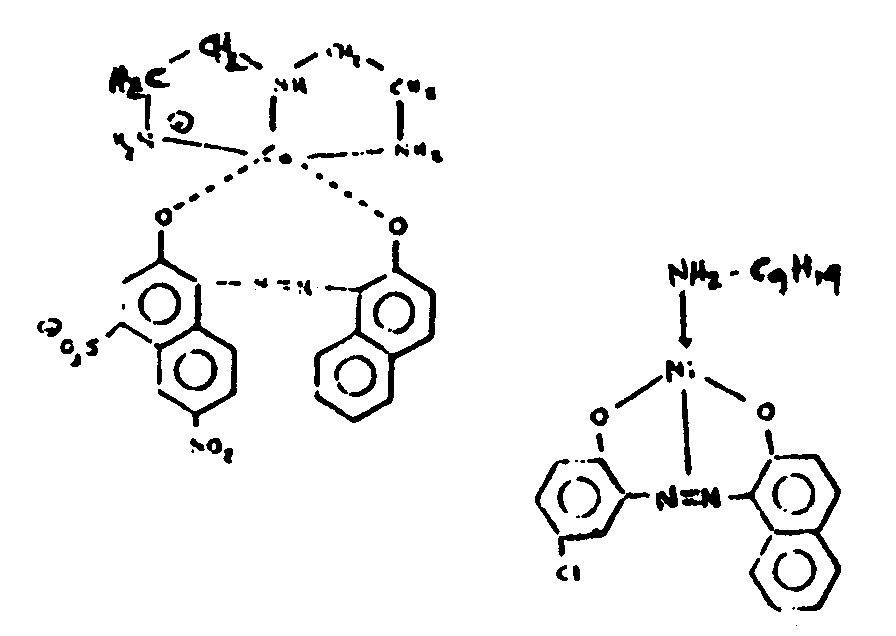
| 717 | Containing -C(=X)-, wherein X is chalcogen (e.g., carbonyl, etc.) | ||
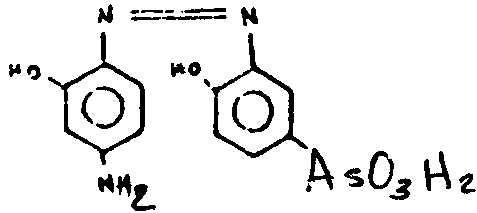
This subclass is indented under subclass 716. Compounds which contain a -C- group, wherein X is chalcogen
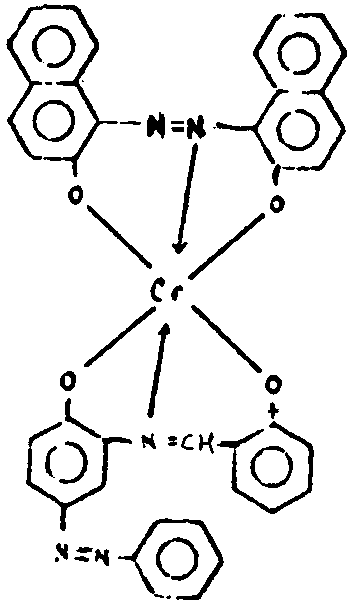
(i.e.,oxygen, sulfur, selenium or tellurium.
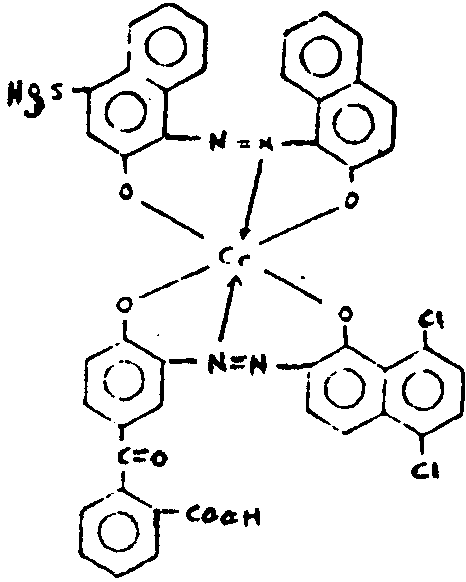
| |||
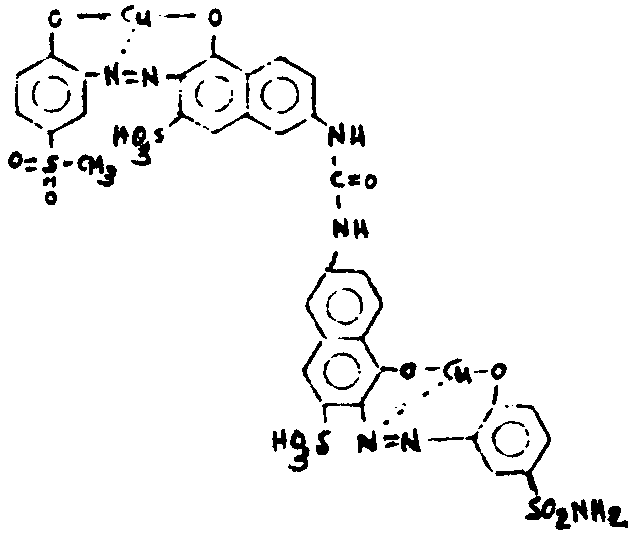
| 718 | Plural monocyclic benzene rings attached directly or indirectly to each other by acyclic nonionic bonding and are between the azo groups | ||
This subclass is indented under subclass 717. Compounds where in between the azo groups are at least two
monocylcic benzene rings which are attached directly or indirectly
to each other by acyclic nonionic bonding.
| |||
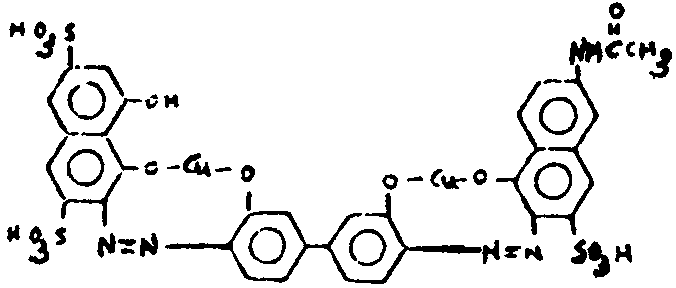
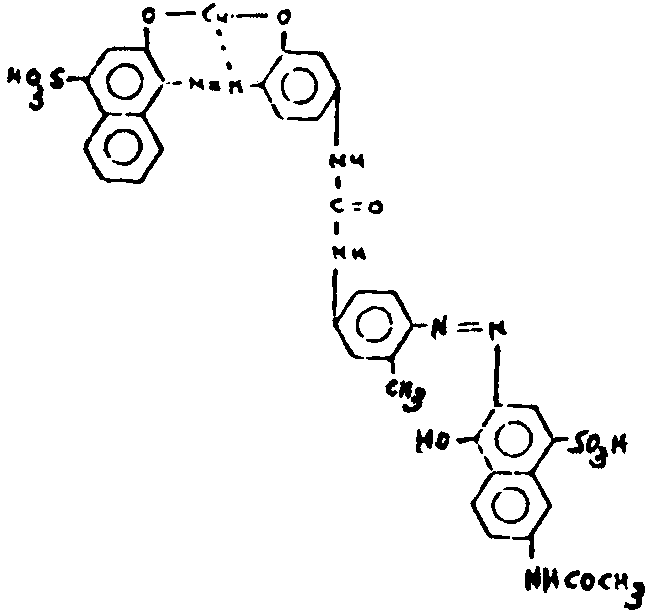
| 719 | Plural monocyclic benzene rings attached directly or indirectly to each other by acyclic nonionic bonding and are between the azo groups | ||
This subclass is indented under subclass 716. Compounds wherein between the azo groups are at least two
monocyclic benzene rings which are attached directly or indirectly
to each other by acyclic nonionic bonding.
| |||
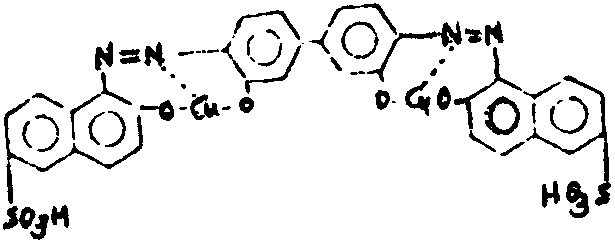
| 720 | Containing -C(=X)-, wherein X is chalcogen (e.g., carbonyl, etc.) | ||
This subclass is indented under subclass 713. Compounds which contain a -- group, wherein X is chalcogen
(i.e., oxygen, sulfur, selenium, or tellurium).
| |||
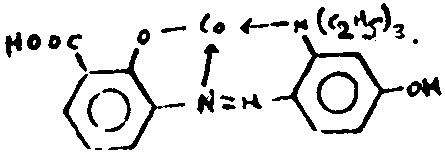
| 721 | Nitrogen bonded directly to the -C(=X)- group (e.g., carboxamide, etc.) | ||
This subclass is indented under subclass 720. Compounds wherein nitrogen is bonded directly to the --
group; i.e., --N.
| |||
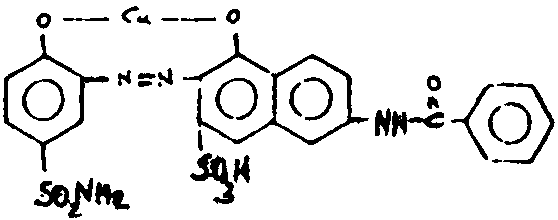
| 722 | Plural bicyclo carbocyclic ring systems bonded directly to the azo group | ||
This subclass is indented under subclass 713. Compounds wherein plural bicyclo carbocyclic ring systems
are bonded directly to the azo group.
| |||
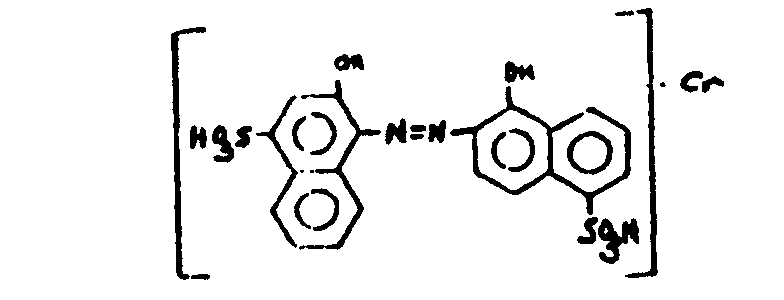
| 723 | Sulfonyl bonded directly to amino nitrogen (e.g., sulfonamide, etc.) | ||
This subclass is indented under subclass 713. Compounds in which amino nitrogen is bonded directly to
a sulfonyl group; i.e., N .
| |||
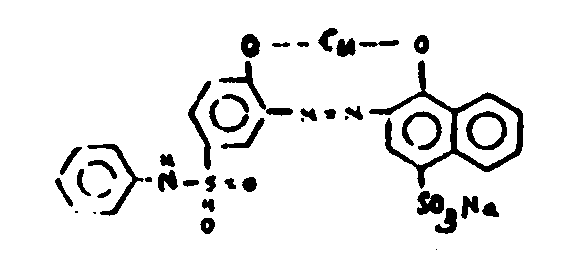
| 724 | Sulfonic acid group containing (-(O=)S(=O)-OH, wherein H of -OH may be replaced by the ammonium ion or a metal) | ||
This subclass is indented under subclass 713. Compounds which contain a --OH group bonded directly to
carbon, wherein H of the -OH may be replaced by theammonium ion
or a metal.
| |||
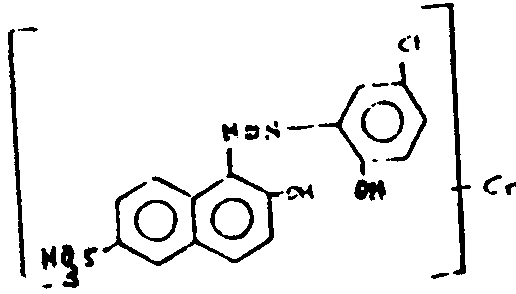
| 725 | Amino nitrogen containing | ||
This subclass is indented under subclass 724. Compounds which contain an amino nitrogen.
| |||
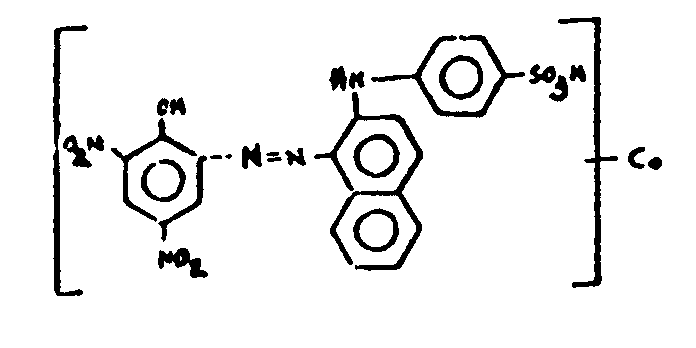
| 726 | Boron or silicon containing | ||
This subclass is indented under subclass 573. Compounds which contain boron or silicon.
| |||
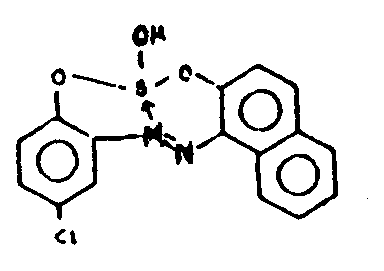
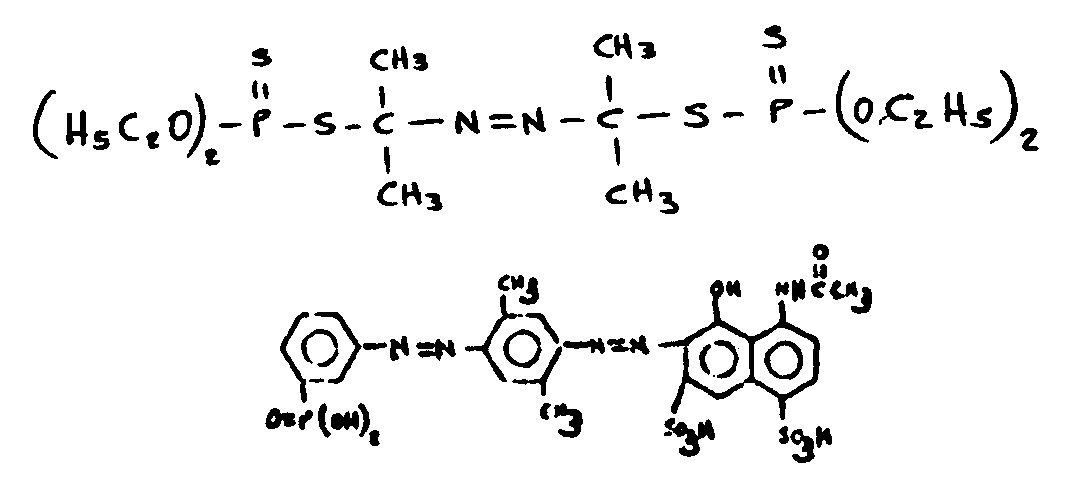
| 727 | Phosphorus attached indirectly to an azo group by nonionic bonding | ||
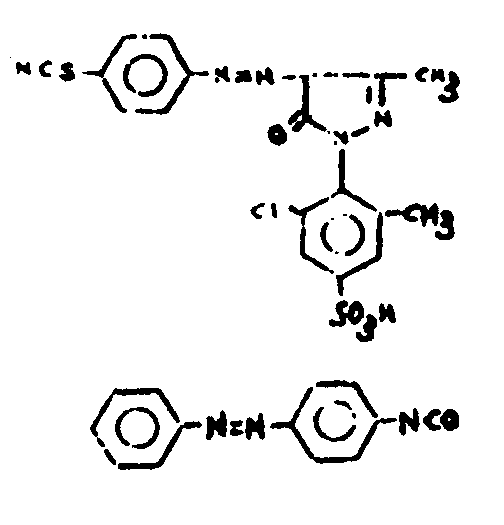
This subclass is indented under subclass 573. Compounds wherein phosphorus is attached indirectly to an
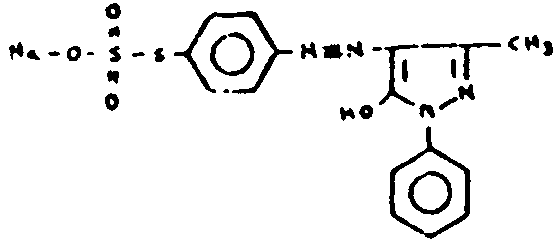
azo group by nonionic bonding.
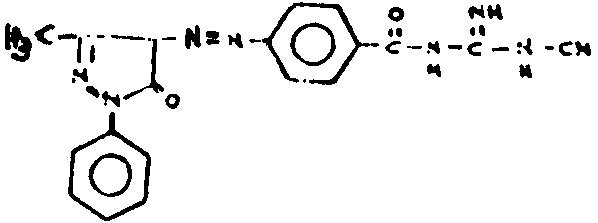
| |||
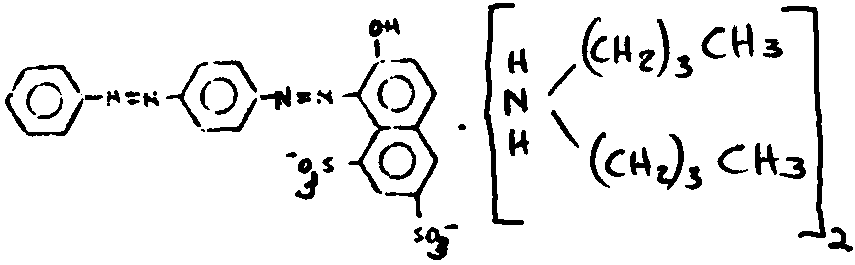
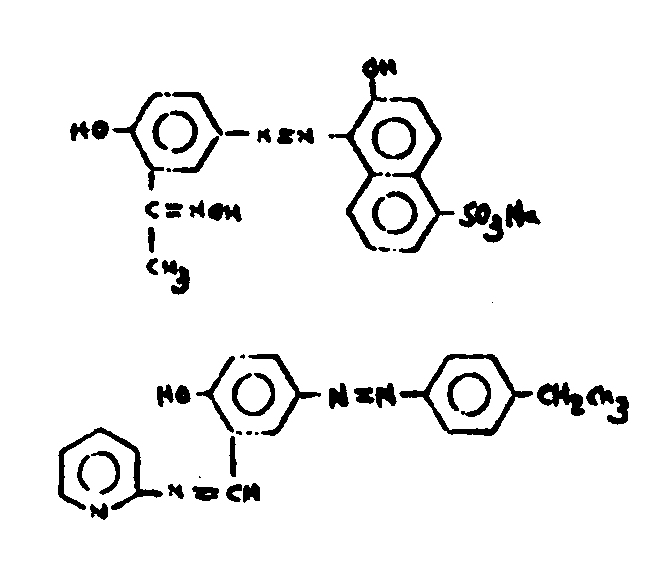
| 728 | Amine salt | ||
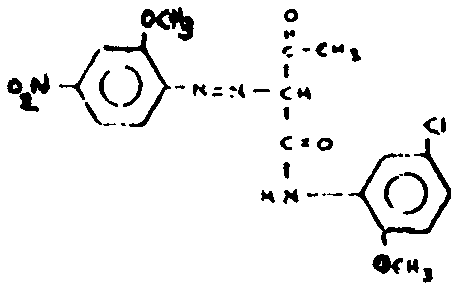
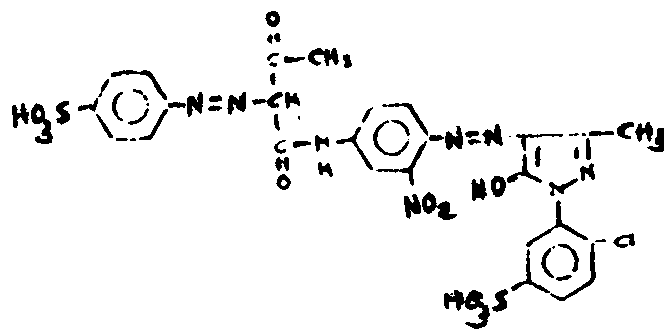
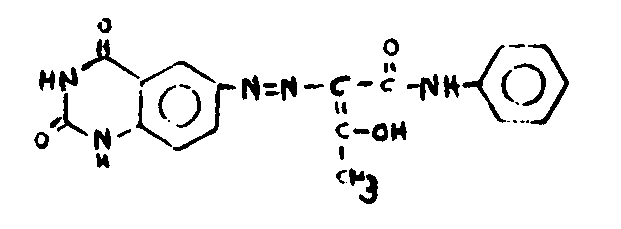
This subclass is indented under subclass 573. Compounds which are amine addition salts of an azo compound.
| |||
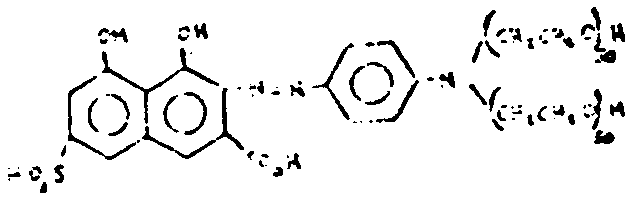
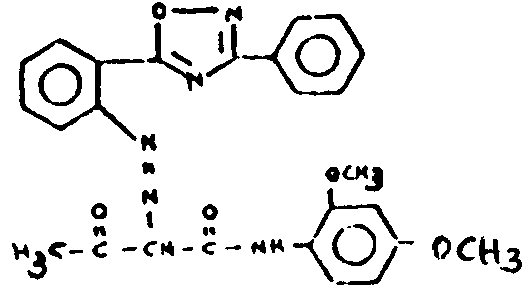
| 729 | Chain containing at least fifteen alkylene oxide groups | ||
This subclass is indented under subclass 573. Compounds which contain a chain composed of a least fifteen
alkylene oxide groups.
| |||
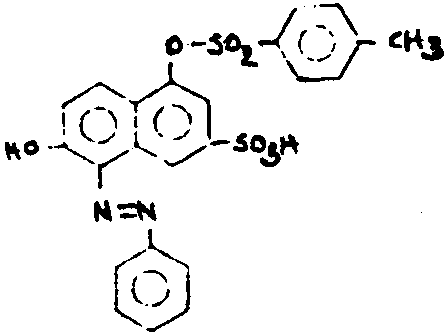
| 730 | Sulfonic acid ester group containing | ||
This subclass is indented under subclass 573. Compounds which contain a sulfonic acid ester radical; i.e.,
---O-- .
| |||
| 731 | Hetero ring containing | ||
This subclass is indented under subclass 730. Compounds which contain a hetero ring.
| |||
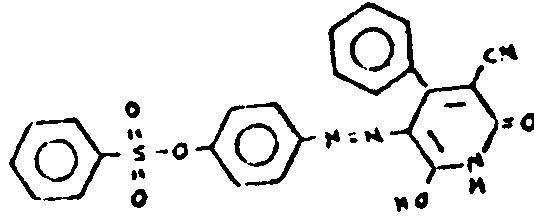
| 732 | Nitrogen, other than as azo, and chalcogen or -C(=X)X- bonded directly to a -C(=X)- group, wherein the X's may be the same or diverse chalcogens (e.g., carbamic, allophanic, etc.) | ||
This subclass is indented under subclass 573. Compounds wherein nitrogen, other than as azo, and chalcogen
(i.e., oxygen, sulfur, selenium or tellurium) or nitrogen, other
than as azo, and --X, wherein the X"s may be the same or
diverse chalcogens, are bonded directly to the same -- group; e.g.,
-N--O-, -N---O-, etc.
| |||
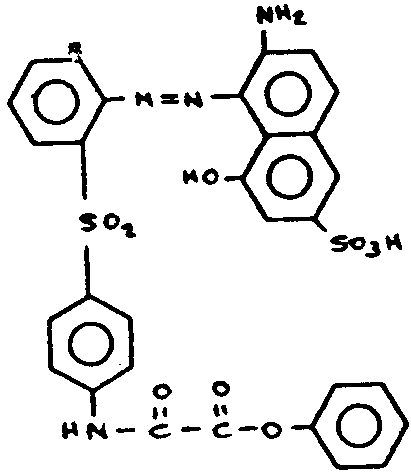
| 733 | Hetero ring containing | ||
This subclass is indented under subclass 732. Compounds which contain a hetero ring.
| |||
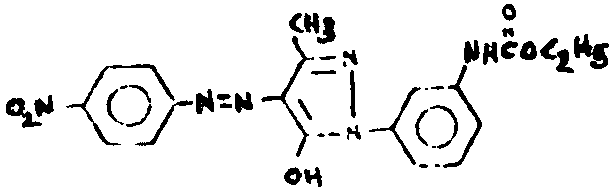
| 734 | Halogen bonded directly to sulfur or to a -C(=X)- group, wherein X is chalcogen | ||
This subclass is indented under subclass 573. Compounds wherein halogen is bonded directly to sulfur or
to a -- group, wherein X is chalcogen, (i.e., oxygen, sulfur, selenium
or tellurium); e.g., -S-halo, --halo, etc.
| |||
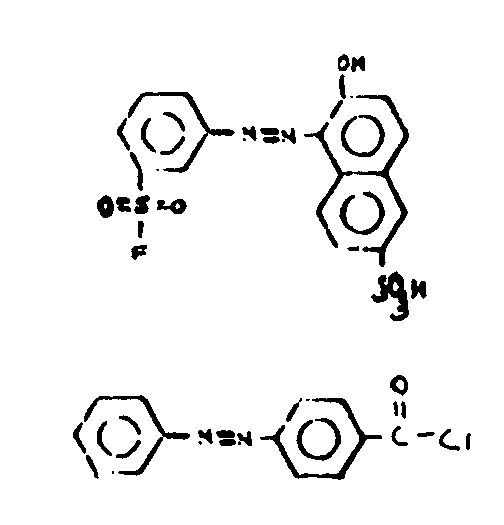
| 735 | Containing acyclic -XCN or -NCX, wherein X is chalcogen (e.g., thiocyanato, isocyanato, etc.) | ||
This subclass is indented under subclass 573. Compounds which contain an acyclic -XCN or -NCX group, wherein
X is chalcogen (i.e., oxygen, sulfur, selenium or tellurium).
| |||
| 736 | Thiosulfuric acid group containing (-S-(O=)S(=O)-OH, wherein H of the -OH may be replaced by the ammonium ion or Group IA or IIA light metal) | ||
This subclass is indented under subclass 573. Compounds which contain a -S--OH group bonded directly to
carbon, wherein H of the -OH may be replaced by the ammonium ion
or a Group IA or IIA light metal.
| |||
| 737 | Cyano and carbon bonded directly to acyclic nitrogen | ||
This subclass is indented under subclass 573. Compounds in which carbon and a cyano group are both bonded
directly to the same acyclic nitrogen atom, i.e., ---C=N.
| |||
| 738 | Acyclic chain which contains -CH=N- (substitution may be made for hydrogen only) | ||
This subclass is indented under subclass 573. Compounds in which an acyclic chain contains a -CH=N
group, wherein substitution may be made for hydrogen only.
| |||
| 739 | Azo bonded directly to an acylic carbon which is bonded directly to two acyclic carbons, each of which is double or triple bonded to an atom | ||||
This subclass is indented under subclass 573. Compounds in which an azo group is bonded directly to an
acyclic carbon, which carbon is additionally bonded directly to
two acyclic carbons, each of which is double or triple bonded to
an atom.
| |||||
| 740 | Hetero ring or polycyclo ring system which contains a hetero ring as one of the cyclos bonded directly to an azo group | ||
This subclass is indented under subclass 739. Compounds in which a hetero ring or a polycyclo ring system
which contains a hetero ring as one of the cyclos is bonded directly
to an azo group.
| |||
| 741 | Hetero ring attached indirectly to an azo group by nonionic bonding | ||
This subclass is indented under subclass 739. Compounds in which a hetero ring is attached indirectly
to an azo group by nonionic bonding.
| |||
| 742 | The acyclic carbon, to which the other two acyclic carbons are bonded, is between the hetero ring and the azo group | ||
This subclass is indented under subclass 741. Compounds wherein the acyclic carbon, to which the other
two cyclic carbons are bonded, is between the hetero ring and the
azo group.
| |||
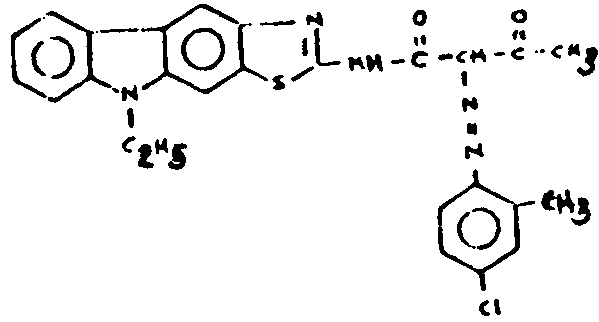
| 743 | At least three azo groups attached indirectly to each other by nonionic bonding | ||
This subclass is indented under subclass 739. Compounds in which at least three azo groups are attached
indirectly to each other by nonionic bonding.
| |||
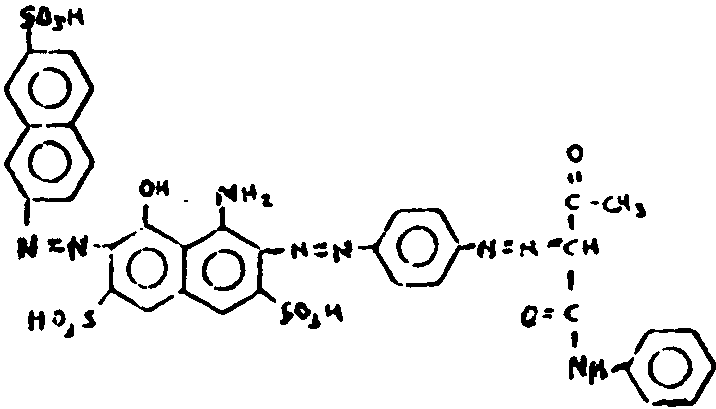
| 744 | Two azo groups attached indirectly to each other by nonionic bonding | ||
This subclass is indented under subclass 739. Compounds in which exactly two azo groups are attached indirectly
to each other by nonionic bonding.
| |||
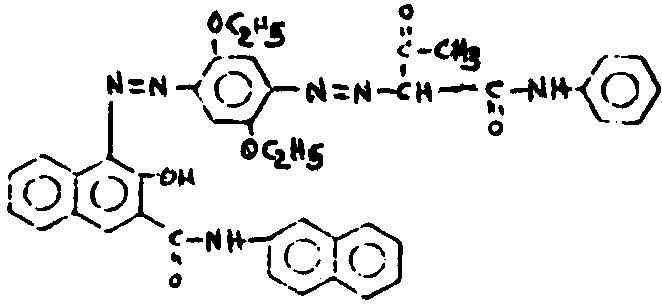
| 745 | Each azo group is bonded directly to an acyclic carbon which is bonded directly to two acyclic carbons, each of which is double or triple bonded to an atom | ||
This subclass is indented under subclass 744. Compounds in which each of the two azo groups is bonded
directly to an acyclic carbon, which carbon is additionally bonded
directly to two acyclic carbons, each of which is double or triple
bonded to an atom.
| |||
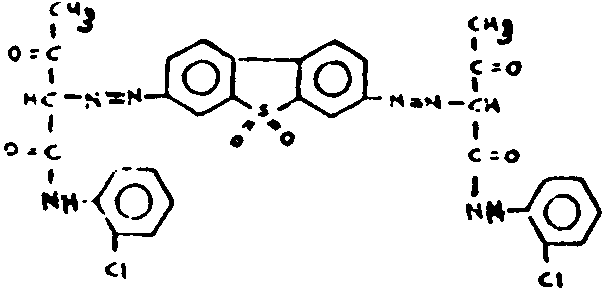
| 746 | Plural benzene rings bonded directly to each other and are between the azo groups | ||
This subclass is indented under subclass 745. Compounds wherein between the azo groups are at least two
benzene rings which are bonded directly to each other.
| |||
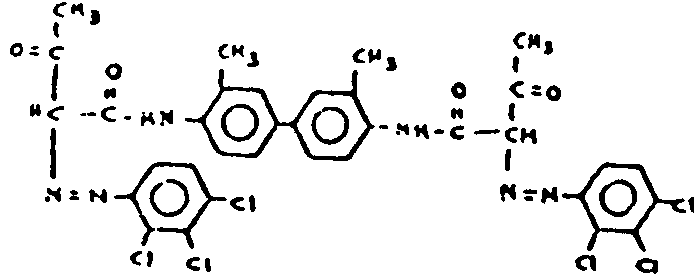
| 747 | Each benzene ring is bonded directly to an azo group | ||
This subclass is indented under subclass 746. Compounds wherein each of the benzene rings is bonded directly
to an azo group.
| |||
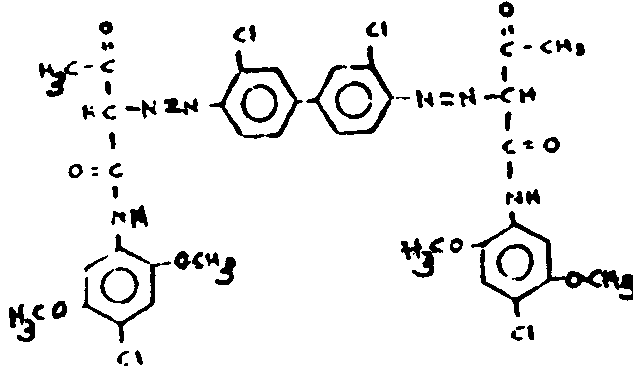
| 748 | Plural amino nitrogens bonded directly to a benzene ring which is between the azo groups | ||
This subclass is indented under subclass 745. Compounds wherein between the azo groups is a benzene ring
to which at least two amino nitrogens are bonded directly.
| |||
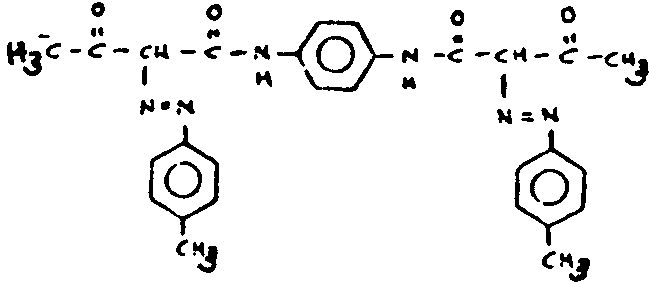
| 749 | Sulfonyl bonded directly to nitrogen | ||
This subclass is indented under subclass 739. Compounds in which sulfonyl is bonded directly to nitrogen,
i.e., --N .
| |||
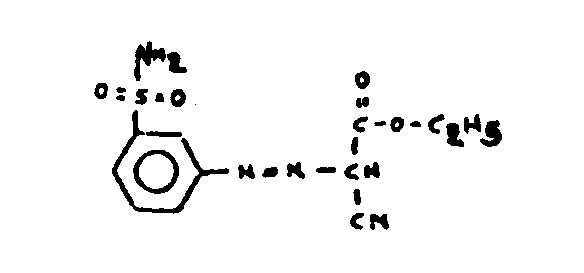
| 750 | Having -C(=X)-, wherein X is chalcogen, attached indirectly by nonionic bonding to the acyclic carbon to which the other two acyclic carbons are bonded | ||
This subclass is indented under subclass 739. Compounds wherein a -C- group, in which X is chalcogen (i.e.,
oxygen, sulfur, selenium or tellurium), is attached indirectly by
nonionic bonding to the acyclic carbon to which the other two acyclic
carbons are bonded.
| |||
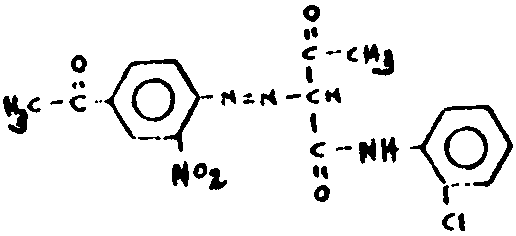
| 751 | Hetero ring containing | ||
This subclass is indented under subclass 573. Compounds which contain a hetero ring.
| |||
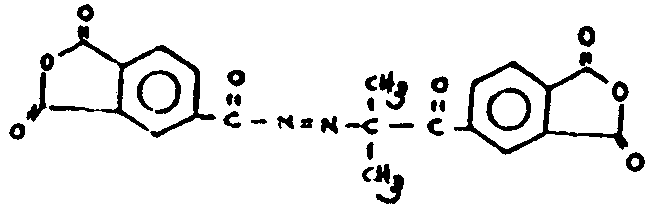
| 752 | Polycyclo ring system having a hetero atom shared by at least two rings or at least two hetero atoms which are not members of the same ring | ||
This subclass is indented under subclass 751. Compounds which contain a polycyclo ring system having at
least two hetero atoms which are not members of the same ring or
having a hetero atom which is shared by at least two rings of the
polycyclo ring system.
| |||
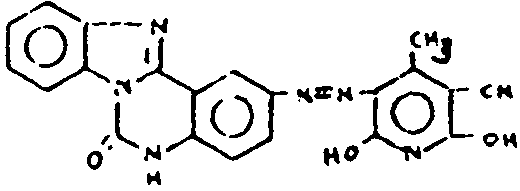
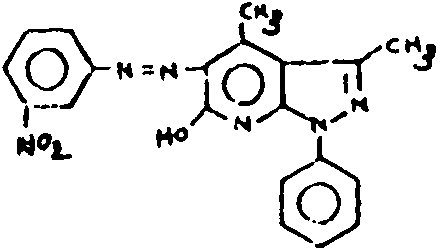
| 753 | Azo bonded directly to the hetero ring or to a polycyclo ring system which contains the hetero ring as one of the cyclos |
| This subclass is indented under subclass 751. Compounds in which an azo group is bonded direclty to the hetero ring or to a polycyclo ring system which contains the hetero ring as one of the cyclos. | |
| 754 | At least three azo groups attached indirectly to each other by nonionic bonding | ||
This subclass is indented under subclass 753. Compounds wherein at least three azo groups are attached
indirectly to each other by nonionic bonding.
| |||
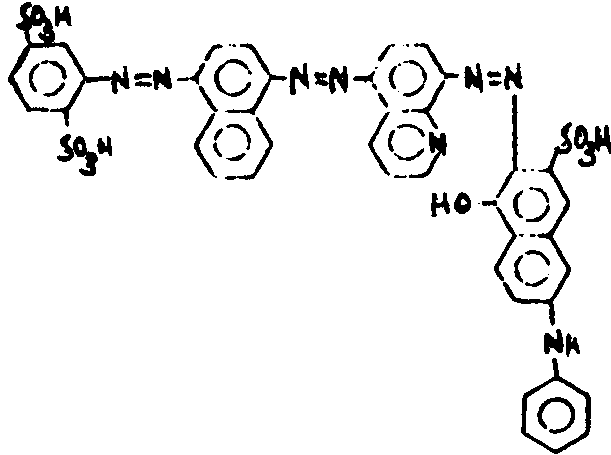
| 755 | Additional hetero ring or polycyclo ring system which contains a hetero ring as one of the cyclos bonded directly to an azo group | ||
This subclass is indented under subclass 754. Compounds in which an additional hetero ring or an additional
polycyclo ring system having a hetero ring as one of the cyclos
is bonded directly to an azo group.
| |||
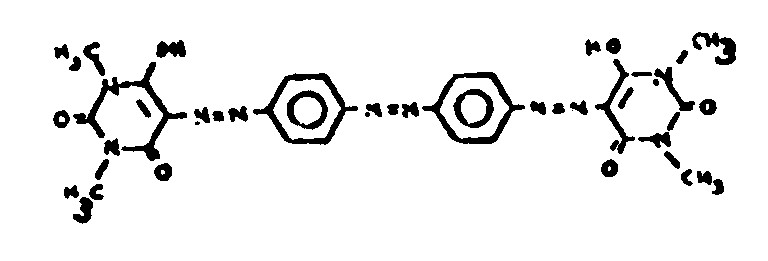
| 756 | Two azo groups attached indirectly to each other by nonionic bonding | ||
This subclass is indented under subclass 753. Compounds in which two azo groups are attached indirectly
to each other by nonionic bonding.
| |||
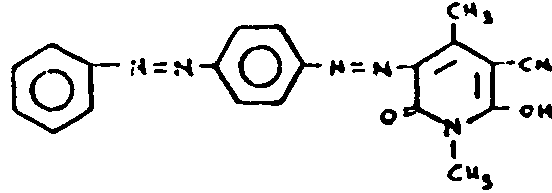
| 757 | Additional hetero ring or polycyclo ring system which contains a hetero ring as one of the cyclos bonded directly to an azo group | ||
This subclass is indented under subclass 756. Compounds in which an additional hetero ring or an additional
polycyclo ring system having a hetero ring as one of the cyclos
is bonded directly to an azo group.
| |||
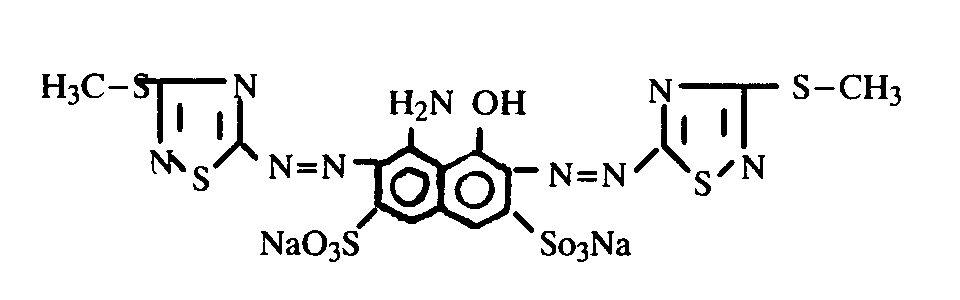
| 758 | Both hetero rings or polycyclo ring systems are between the azo groups | ||
This subclass is indented under subclass 757. Compounds wherein between the azo groups are both hetero
rings or both polycyclo ring systems.
| |||
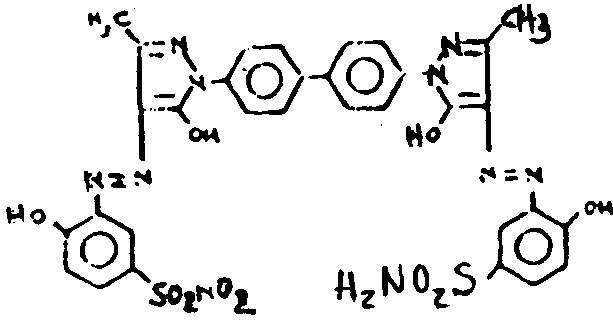
| 759 | Plural monocyclic benzene rings, each bonded directly to an azo group, are between the azo groups | ||
This subclass is indented under subclass 757. Compounds wherein between the azo groups are plural monocyclic
benzene rings, each of which is bonded directly to an azo group.
| |||
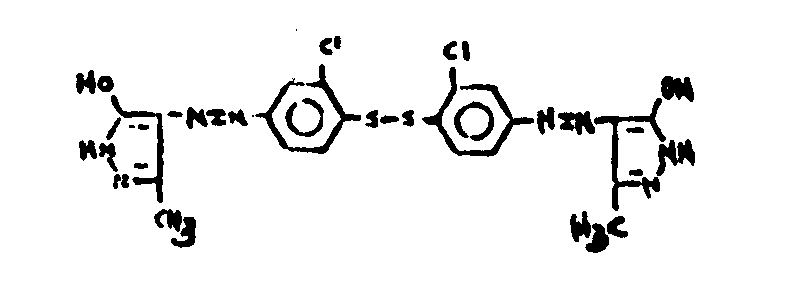
| 760 | The benzene rings are bonded directly to each other | ||
This subclass is indented under subclass 759. Compounds in which the benzene rings are bonded directly
to each other.
| |||
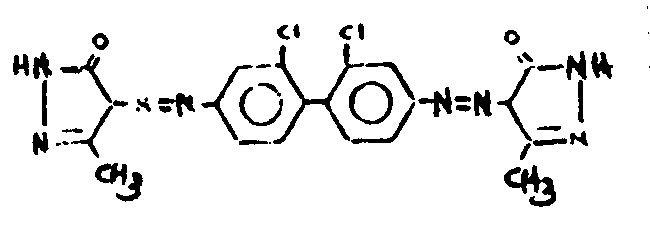
| 761 | Both azo groups are bonded directly to the hetero ring or to the polycyclo ring system | ||
This subclass is indented under subclass 756. Compounds in which both azo groups are bonded directly to
the same hetero ring or to the same polycyclo ring system.
| |||
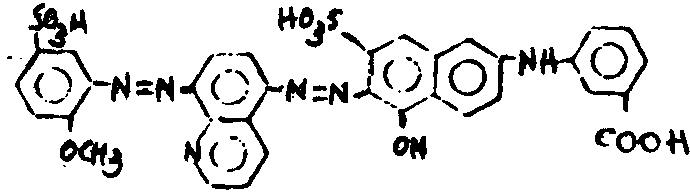
| 762 | Polycyclo ring system having at least three cyclos, at least one of which is a hetero ring | ||
This subclass is indented under subclass 756. Compounds which contain a polycyclo ring system having at
least three cyclos, at least one of which is a hetero ring.
| |||
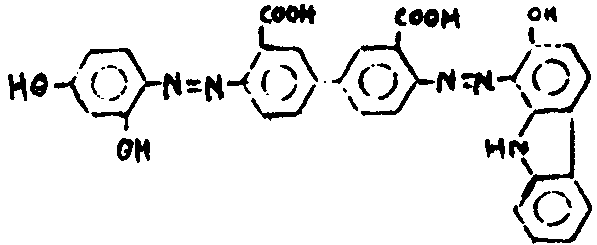
| 763 | Bicyclo carbocyclic ring system | ||
This subclass is indented under subclass 756. Compounds which contain a bicyclo carbocyclic ring system.
| |||
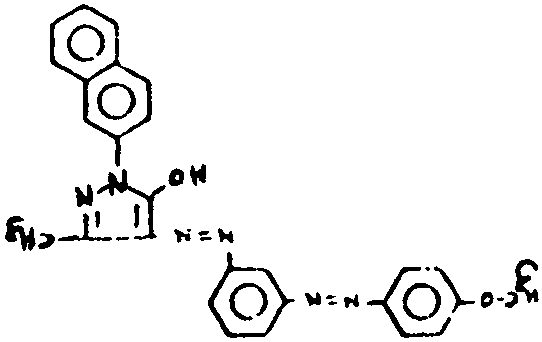
| 764 | Additional ring bonded directly to the hetero ring or to the polycyclo ring system | ||
This subclass is indented under subclass 756. Compounds in which an additional ring is bonded directly
to the hetero ring or to the polycyclo ring system.
| |||
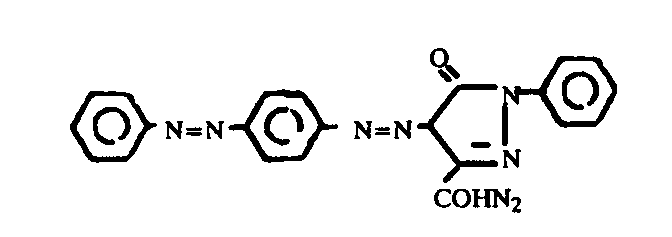
| 765 | Additional hetero ring or polycyclo ring system which contains a hetero ring as one of the cyclos bonded directly to the azo group | ||
This subclass is indented under subclass 753. Compounds in which an additional hetero ring or polycyclo
ring system having a hetero ring as one of the cyclos is bonded
directly to the azo group.
| |||
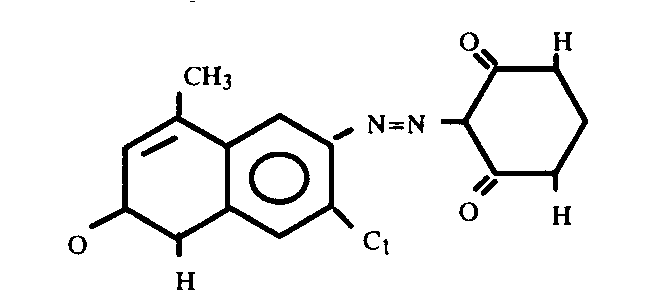
| 766 | The hetero ring is six-membered and contains nitrogen (e.g., pyridine, etc.) | ||
This subclass is indented under subclass 765. Compounds wherein the hetero ring is six-membered and contains
nitrogen, e.g., pyridine, morpholine, etc.
| |||
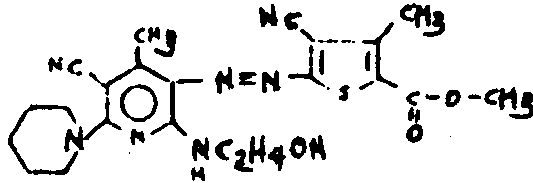
| 767 | The hetero ring contains at least two nitrogens (e.g., pyrimidine, etc.) | ||
This subclass is indented under subclass 766. Compounds wherein the hetero ring contains at least two
nitrogens, e.g., pyrimidine, triazine, etc.
| |||
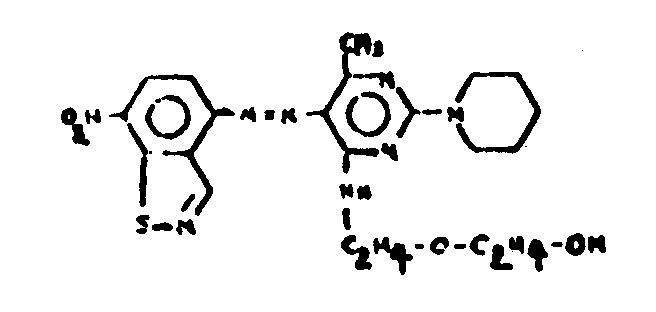
| 768 | The hetero ring is in a bicyclo ring system (e.g., quinoline, benzomorpholine, etc.) | ||
This subclass is indented under subclass 766. Compounds wherein the hetero ring is one of the cyclos in
a bicyclo ring system, e.g., quinoline, benzomorpholine, etc.
| |||
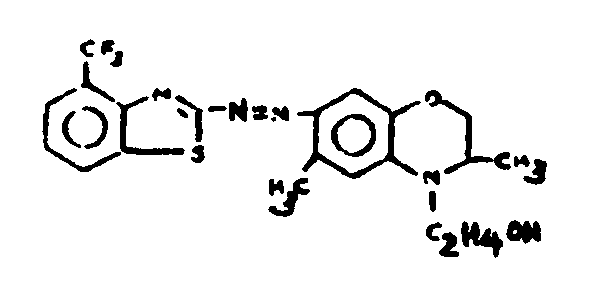
| 769 | Pyrazole (including hydrogenated) | ||
This subclass is indented under subclass 765. Compounds which contain a hetero ring having the following
structure, which may contain double bonds between ring members:
| |||
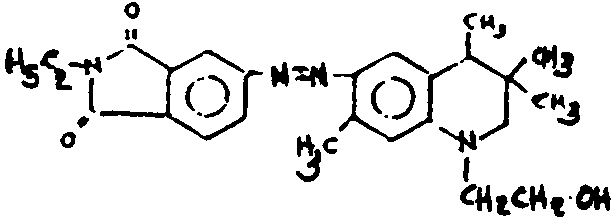
| 770 | The hetero ring is six-membered and consists of one nitrogen and five carbons (e.g., pyridine, etc.) | ||
This subclass is indented under subclass 753. Compounds wherein the hetero ring is six-membered and consists
of one nitrogen and five carbons, e.g., pyridine, etc.
| |||
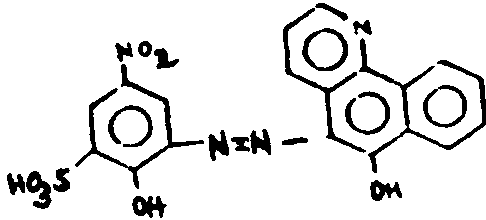
| 771 | Acyclic oxygen bonded directly to the hetero ring | ||
This subclass is indented under subclass 770. Compounds in which acyclic oxygen is bonded directly to
the hetero ring.
| |||
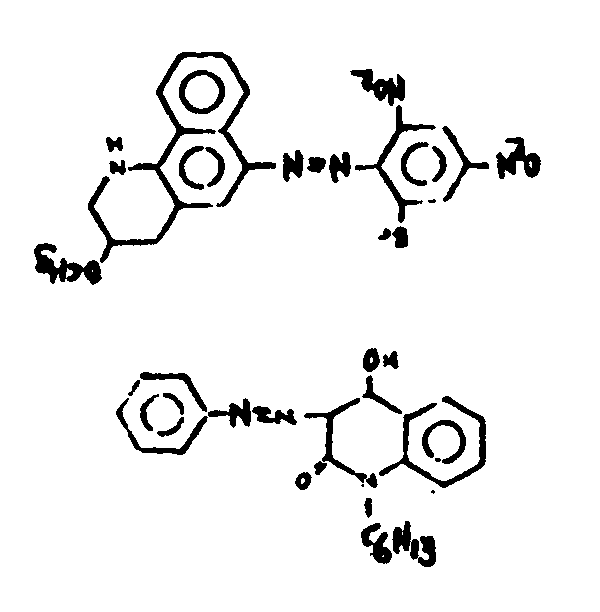
| 772 | Plural acyclic chalcogens bonded directly to the hetero ring at the two positions adjacent to the ring nitrogen | ||
This subclass is indented under subclass 771. Compounds wherein at least two acyclic chalcogens, (i.e.,
oxygen, sulfur, selenium or tellurium) are bonded directly to the
hetero ring at the two positions which are adjacent to the ring in
nitrogen.
| |||
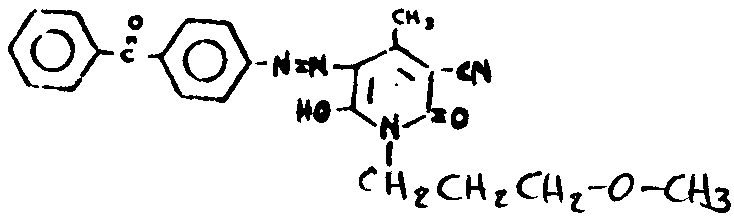
| 773 | Plural acyclic nitrogens, other than as nitro, nitroso or azo, bonded directly to the hetero ring at the two positions adjacent to the ring nitrogen | ||
This subclass is indented under subclass 770. Compounds wherein at least two acyclic nitrogens are bonded
directly to the hetero ring at the two positions which are adjacent
to the ring nitrogen; the nitrogens are other than as nitro, nitroso
or azo.
| |||
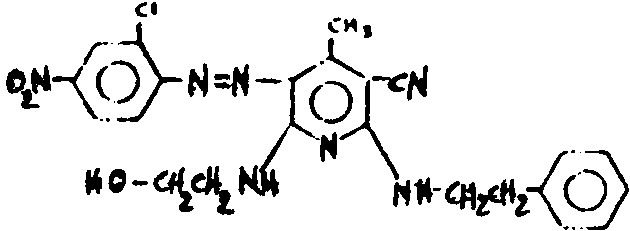
| 774 | Additional hetero ring attached indirectly to the azo group by nonionic bonding | ||
This subclass is indented under subclass 753. Compounds in which an additional hetro ring is attached
indirectly to the azo group by nonionic bonding.
| |||
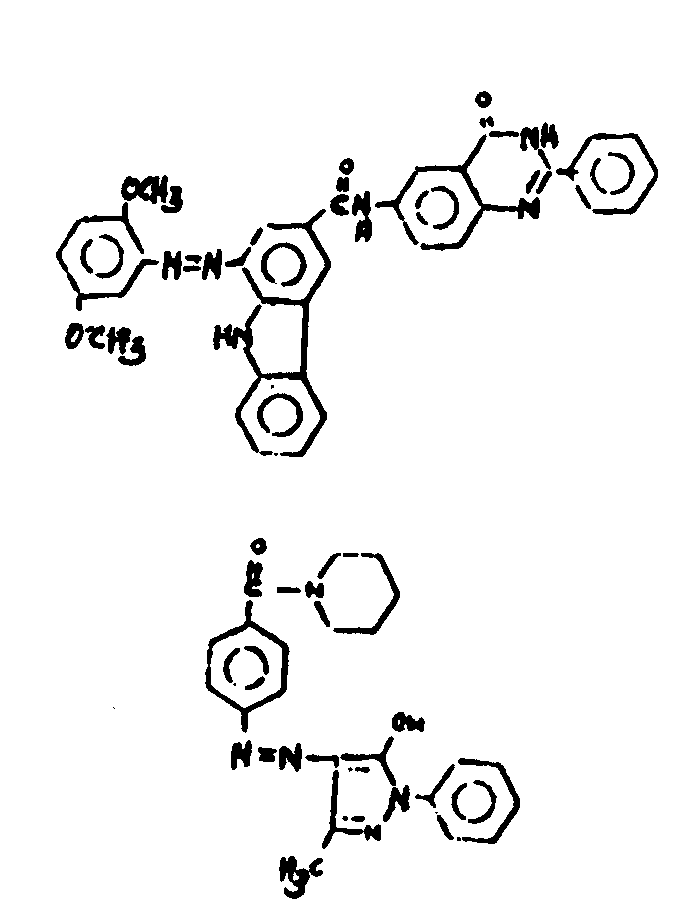
| 775 | The additional hetero ring or a polycyclo ring system which contains the additional hetero ring as one of the cyclos is bonded directly to a ring, which ring is between the azo group and the additional hetero ring | ||
This subclass is indented under subclass 774. Compounds wherein the additional hetero ring or a polycyclo
ring system which contains the additional hetero ring as one of
the cyclos is bonded directly to a ring, which ring is between the
azo group and the additional hetero ring.
| |||
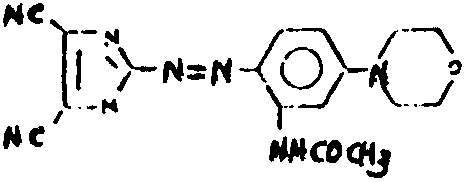
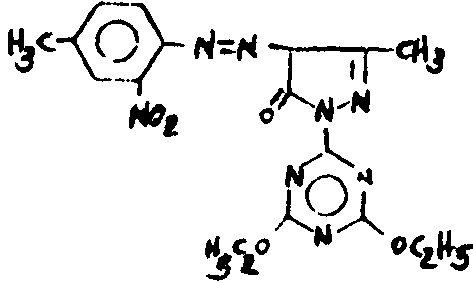
| 776 | A ring and the additional hetero ring or a polycyclo ring system which contains the additional hetero ring as one of the cyclos are bonded directly to the same nitrogen | ||
This subclass is indented under subclass 774. Compounds wherein a ring and the additional hetero ring
or a polycyclo ring system which contains the additional hetero
ring as one of the cyclos are both bonded directly to the same nitrogen.
| |||
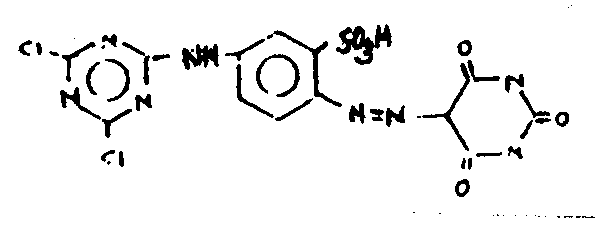
| 777 | The additional hetero ring or a polycyclo ring system which contains the additional hetero ring as one of the cyclos is bonded directly to an alkylene chain, which chain is between the azo group and the additional hetero ring | ||
This subclass is indented under subclass 774. Compounds wherein the additional hetero ring or a polycyclo
ring system which contains the hetero ring as one the cyclos is
bonded directly to an alkylene chain, which chain is between the
azo group and the additional hetero ring.
| |||
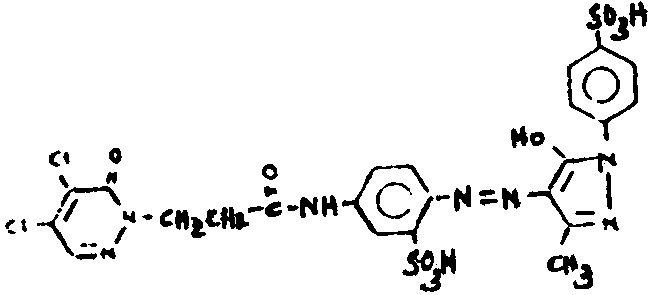
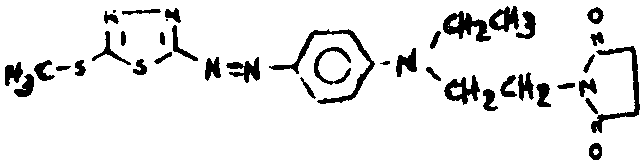
| 778 | Bicyclo carbocyclic ring system bonded directly to the azo group | ||
This subclass is indented under subclass 753. Compounds in which a bicyclo carbocyclic ring system is
bonded directly to the azo group.
| |||
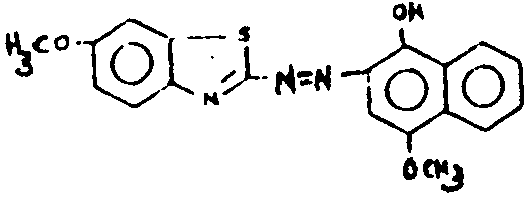
| 779 | The bicyclo carbocyclic ring system is between the azo group and an additional carbocyclic ring | ||
This subclass is indented under subclass 778. Compounds wherein the bicyclo ring system is between the
azo group and an additional carbocyclic ring.
| |||
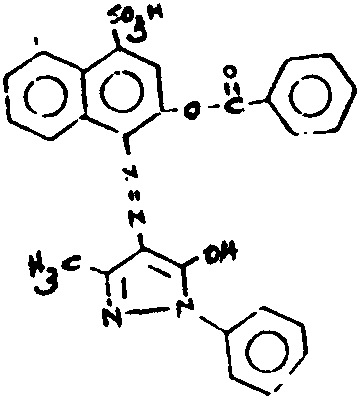
| 780 | Sulfonic acid group containing (-(O=)S(=O)-OH, wherein H of the -OH may be replaced by the ammonium ion or Group IA or IIA light metal) | ||
This subclass is indented under subclass 778. Compounds which contain a --OH group bonded directly to
carbon, wherein H of the -OH may be replaced by the ammonium ion
or a Group IA or IIA light metal.
| |||
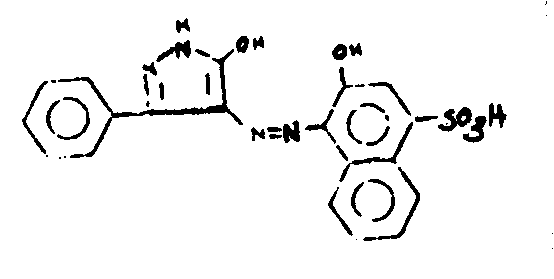
| 781 | Sulfonic acid group containing (-(O=)S(=O)-OH, wherein H of the -OH may be replaced by the ammonium ion or a Group IA or IIA light metal) | ||
This subclass is indented under subclass 753. Compounds which contain a --OH group bonded directly to
carbon wherein H of the -OH may be replaced by the ammonium ion
or a Group IA or IIA light metal.
| |||
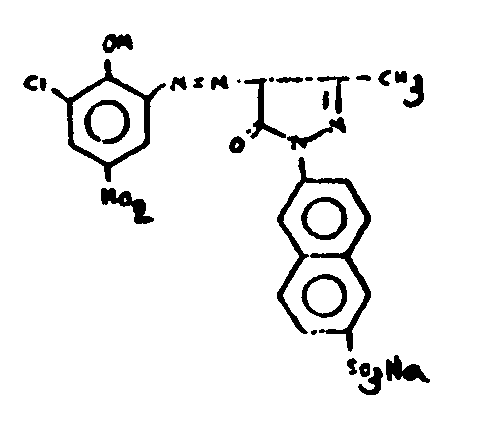
| 782 | The hetero ring is one of the cyclos in a polycyclo ring system | ||
This subclass is indented under subclass 781. Compounds wherein the hetero ring is one of the cyclos of
a polycyclo ring system.
| |||
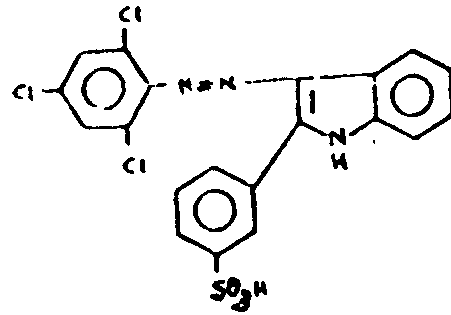
| 783 | Additional sulfonyl containing | ||
This subclass is indented under subclass 781. Compounds which contain an additional -- group.
| |||
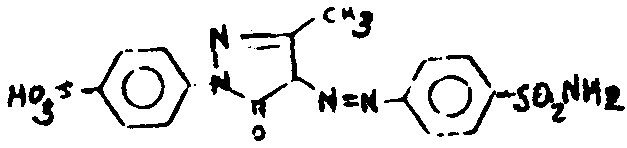
| 784 | Plural sulfonic acid groups | ||
This subclass is indented under subclass 783. Compounds which contain at least two --OH groups bonded
directly to carbon.
| |||
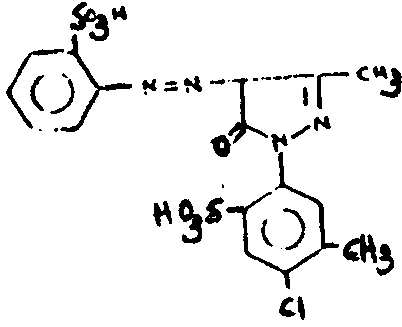
| 785 | Containing acyclic -C(=X)-, wherein X is chalcogen | ||
This subclass is indented under subclass 781. Compounds which contain an acyclic -- group, wherein X is
chalcogen (i.e., oxygen, sulfur, selenium or tellurium).
| |||
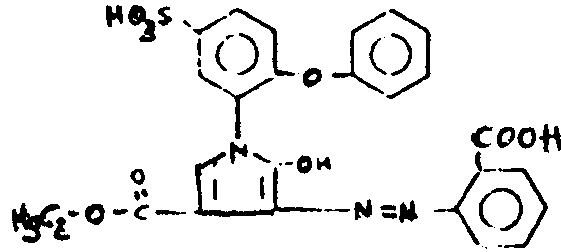
| 786 | The -C(=X)- is bonded directly to nitrogen |
| This subclass is indented under subclass 785. Compounds in which the -- group is bonded directly to nitrogen, i.e., --N . | |
| 787 | The hetero ring is one of the cyclos in a polycyclo ring system | ||
This subclass is indented under subclass 753. Compounds wherein the hetero ring is one of the cyclos of
a polycyclo ring system.
| |||
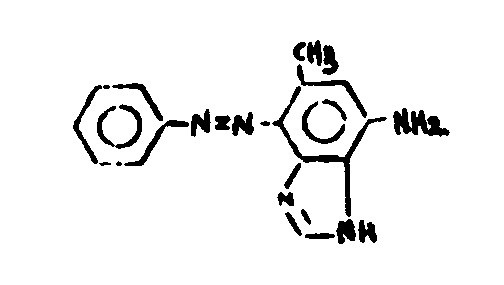
| 788 | The hetero ring consists of sulfur, nitrogen and carbon (e.g., benzothiazole, etc.) | ||
This subclass is indented under subclass 787. Compounds wherein the hetero ring consists of sulfur, nitrogen
and carbon, e.g., benzothlazole, etc.
| |||
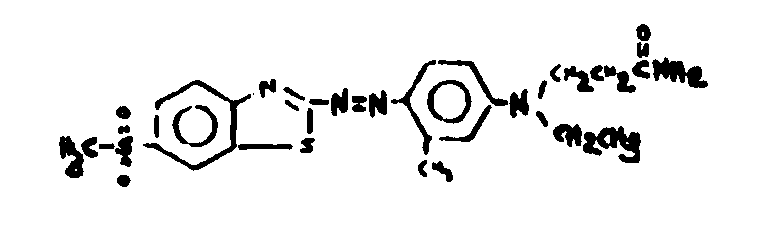
| 789 | Chalcogen double bonded directly to the hetero ring |
| This subclass is indented under subclass 787. Compounds wherein chalcogen (i.e., oxygen, sulfur, selenium or tellurium) is double bonded directly to the hetero ring. | |
| 790 | The hetero ring is five-membered and consists of one nitrogen and four carbons (e.g., indole, etc.) | ||
This subclass is indented under subclass 787. Compounds wherein heter ring is five-membered and consists
of one nitrogen and four carbons; e.g., indole, etc.
| |||
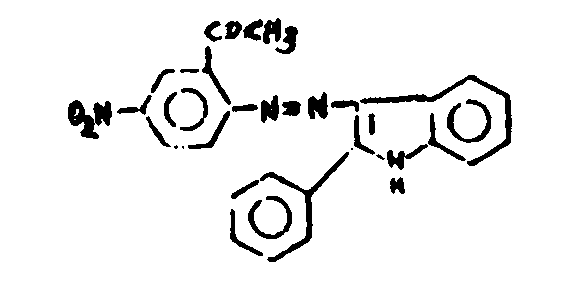
| 791 | Carbocyclic ring bonded directly to the hetero ring or to the polycyclo ring system which contains the hetero ring |
| This subclass is indented under subclass 753. Compounds in which a carbocyclic ring is bonded directly to the hetero ring or to the polycyclo ring system which contains the hetero ring. | |
| 792 | Pyrazole containing (including hydrogenated) | ||
| This subclass is indented under subclass 791. Compounds which contain a hetero ring having the following
structure, which may contain double bonds between ring members:
| |||
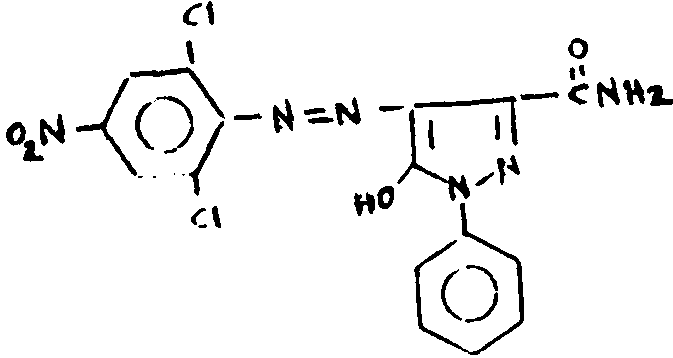
| 793 | Sulfonyl containing | ||
This subclass is indented under subclass 792. Compounds which contain a -- group.
| |||
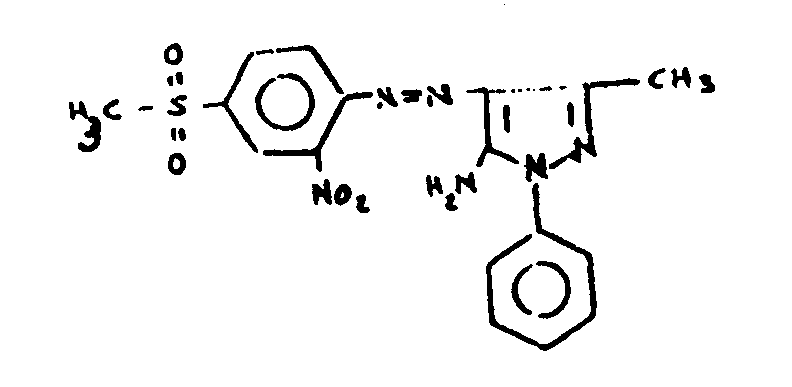
| 794 | Carbocyclic ring attached indirectly to the azo group by nonionic bonding | ||
This subclass is indented under subclass 753. Compounds wherein a carbocyclic ring is attached indirectly
to the azo group by nonionic bonding.
| |||
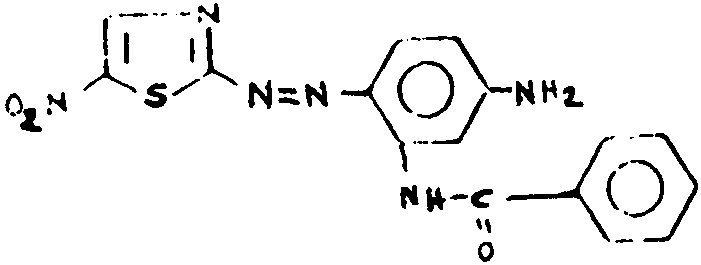
| 795 | The hetero ring is five-membered and contains at least one atom each of sulfur, nitrogen and carbon | ||
This subclass is indented under subclass 753. Compounds in which the hetero ring is five-membered and
contains at least one atom each of each of sulfur, nitrogen, and
carbon.
| |||
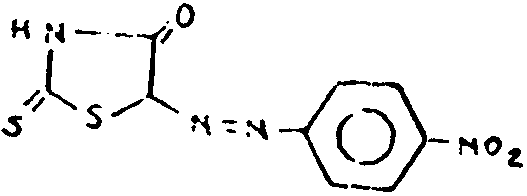
| 796 | At least three azo groups attached indirectly to each other by nonionic bonding | ||
This subclass is indented under subclass 751. Compounds in which at least three azo groups are attached
indirectly to each other by nonionic bonding.
| |||
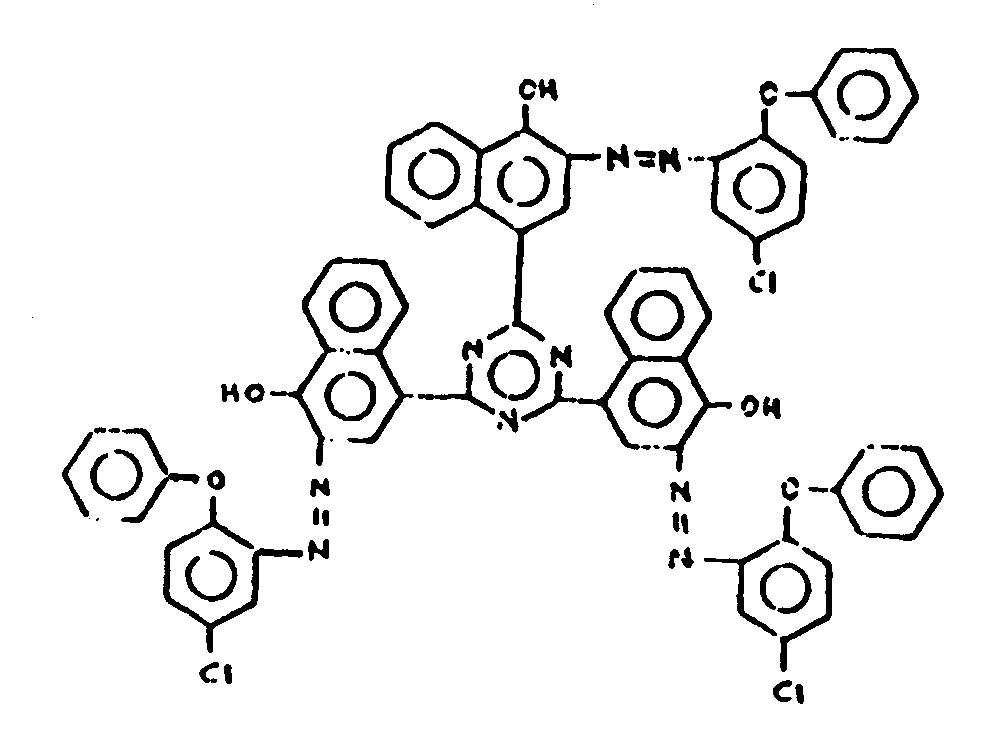
| 797 | Two azo groups attached indirectly to each other by nonionic bonding | ||
This subclass is indented under subclass 751. Compounds in which two azo groups are attached indirectly
to each other by nonionic bonding.
| |||
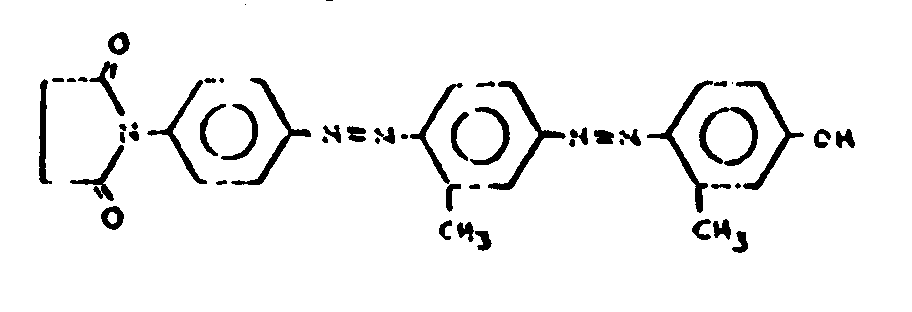
| 798 | Plural carbocyclic rings bonded directly to the azo group | ||
This subclass is indented under subclass 751. Compounds in which plural carbocyclic rings are attached
directly to the azo group.
| |||
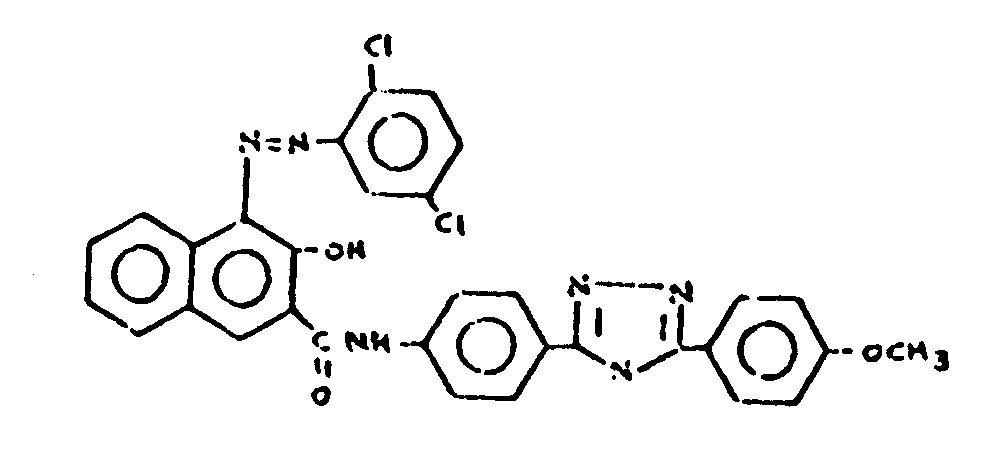
| 799 | The hetero ring or a polycyclo ring system which contains the hetero ring as one of the cyclos is bonded directly to one of the carbocyclic rings or to a bicyclo ring system which contains the carbocyclic ring as one of the cylcos | ||
This subclass is indented under subclass 798. Compounds wherein the hetero ring or a polycyclo ring system
which contains the hetero ring as one of the cyclos is bonded directly
to one of the carbocyclic rings or to a bicyclo ring system which
contains the carbocyclic ring as one of the cyclos.
| |||

| 800 | The hetero ring is one of the cyclos in a polycyclo ring system | ||
This subclass is indented under subclass 799. Compounds in which the hetero ring is one of the cyclos
in a polycyclo ring system.
| |||
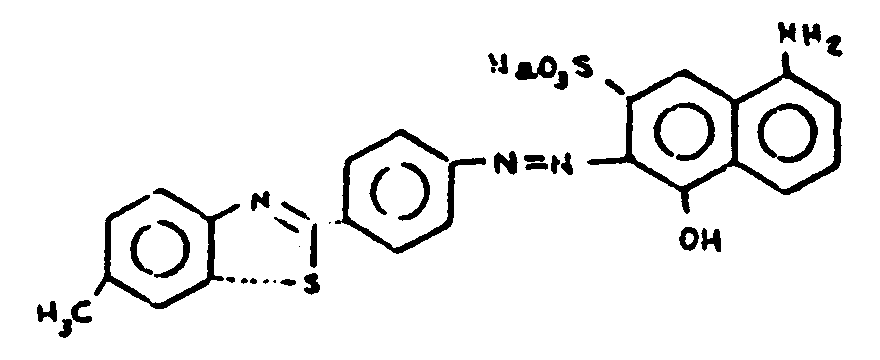
| 801 | The carbocyclic ring or a bicyclo ring system which contains the carbocyclic ring as one of the cyclos and the hetero ring or a polycyclo ring system which contains the hetero ring as one of the cyclos are bonded directly to the same carboxamide group | ||
This subclass is indented under subclass 798. Compounds wherein the carbocyclic ring or a bicyclo ring
system which contains the carbocyclic ring as one of the cyclos
and the hetero ring or a polycyclo ring system which contains the
hetero ring as one of the cyclos are both bonded directly to the
same carboxamide group.
| |||
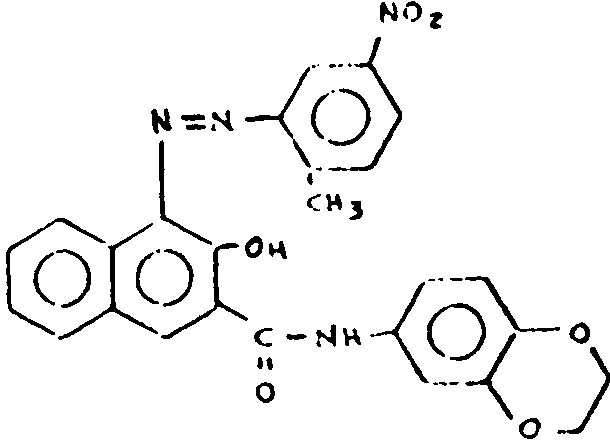
| 802 | The carbocyclic ring or a bicyclo ring system which contains the carbocyclic ring as one of the cyclos and the hetero ring or a polycyclo ring system which contains the hetero ring as one of the cyclos are bonded directly to the same nitrogen atom | ||
This subclass is indented under subclass 798. Compounds wherein the carbocyclic ring or a bicyclo ring
system which contains the carbocyclic ring as one of the cyclos
and the hetero ring or a polycyclo ring system which contains the
hetero ring as one of the cyclos are bonded directly to the same
nitrogen atom.
| |||
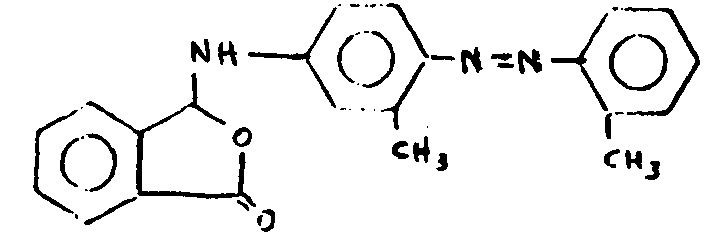
| 803 | The hetero ring is six-membered and contains at least two nitrogens | ||
This subclass is indented under subclass 802. Compounds in which the hetero ring is six-membered and contains
at least two nitrogens.
| |||
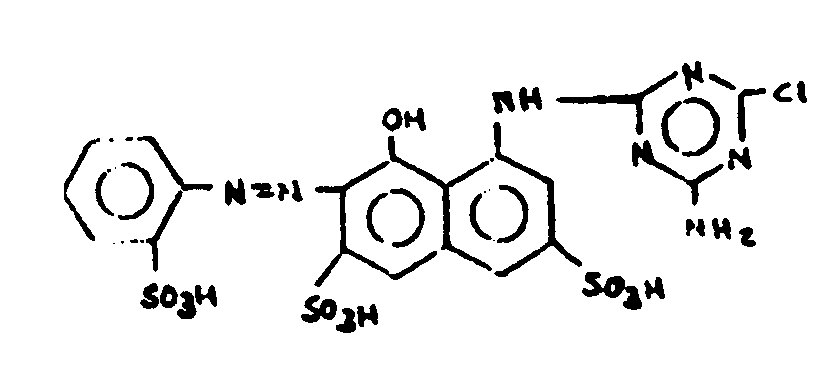
| 804 | The hetero ring or a polycyclo ring system which contains the hetero ring as one of the cyclos is bonded directly to an alkylene chain, which chain is between the hetero ring and the carbocyclic ring | ||
This subclass is indented under subclass 798. Compounds wherein the hetero ring or a polycyclo ring system
which contains the hetero ring as one of the cyclos is bonded directly
to an alkylene chain, which chain is between the hetero ring and
the carbocyclic ring.
| |||
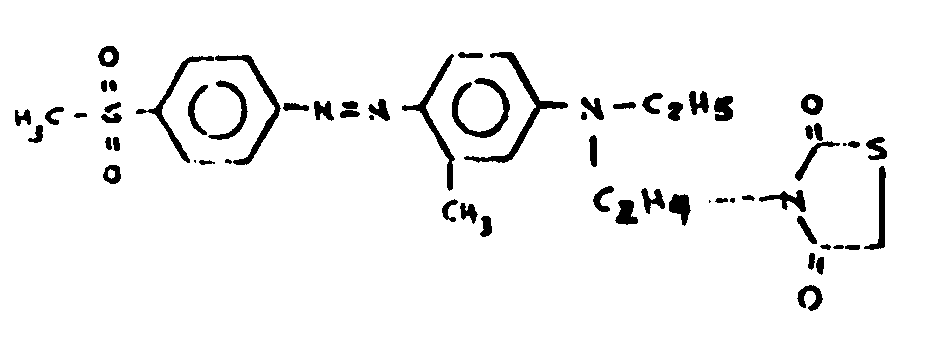
| 805 | Exactly five or exactly six azo groups attached indirectly to each other by nonionic bonding |
| This subclass is indented under subclass 573. Compounds wherein exactly five or exactly six azo groups are attached indirectly to each other by nonionic bonding. | |
| 806 | Exactly four azo groups attached indirectly to each other by nonionic bonding | ||
This subclass is indented under subclass 573. Compounds in which exactly four azo groups are attached
indirectly to each other by nonionic bonding.
| |||
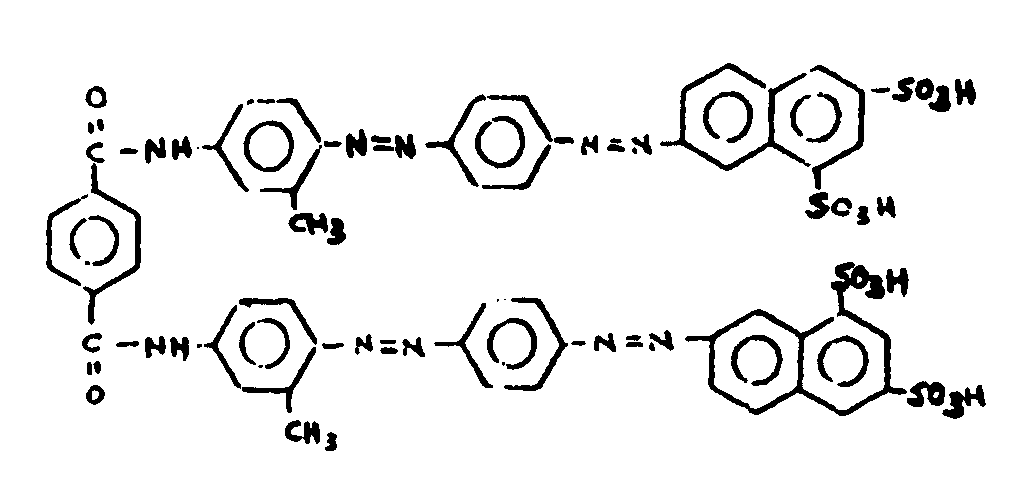
| 807 | Plural nitrogens bonded directly to the same -C(=X)- group, wherein X is chalcogen (e.g., urea, thiourea, etc.) | ||
This subclass is indented under subclass 806. Compounds wherein plural nitrogens are bonded directly to
the same N-- Ngroup, wherein X is chalcogen (i.e., oxygen, sulfur, selenium
or tellurium), e.g., N-- N.
| |||
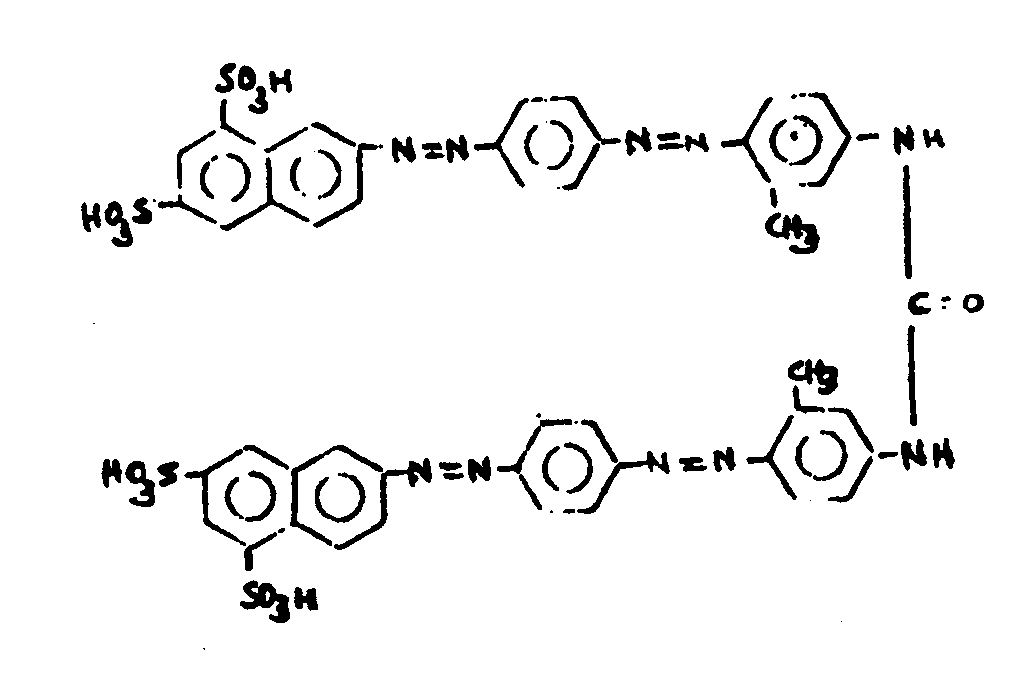
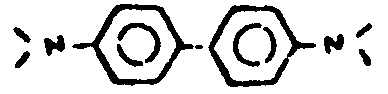
| 808 | Benzidine containing | ||
| This subclass is indented under subclass 806. Compounds which contain the group [see Fig. 1],
wherein the benzene rings may be further substituted.
FIGURE 1.
| |||
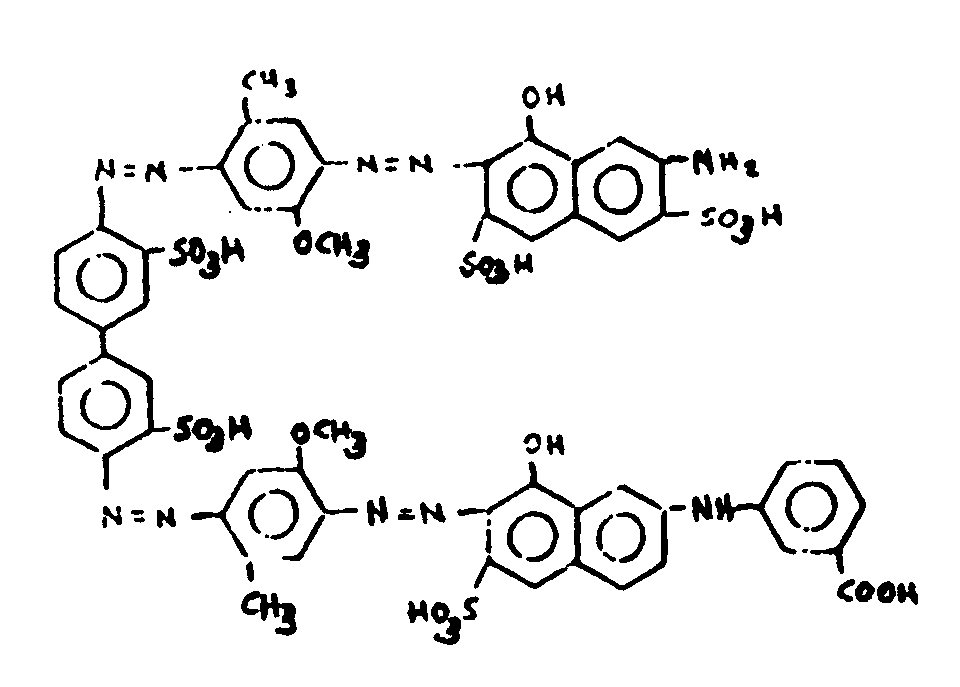
| 809 | Exactly three azo groups attached indirectly to each other by nonionic bonding | ||
This subclass is indented under subclass 573. Compounds in which exactly three azo groups are attached
indirectly to each other by nonionic bonding.
| |||
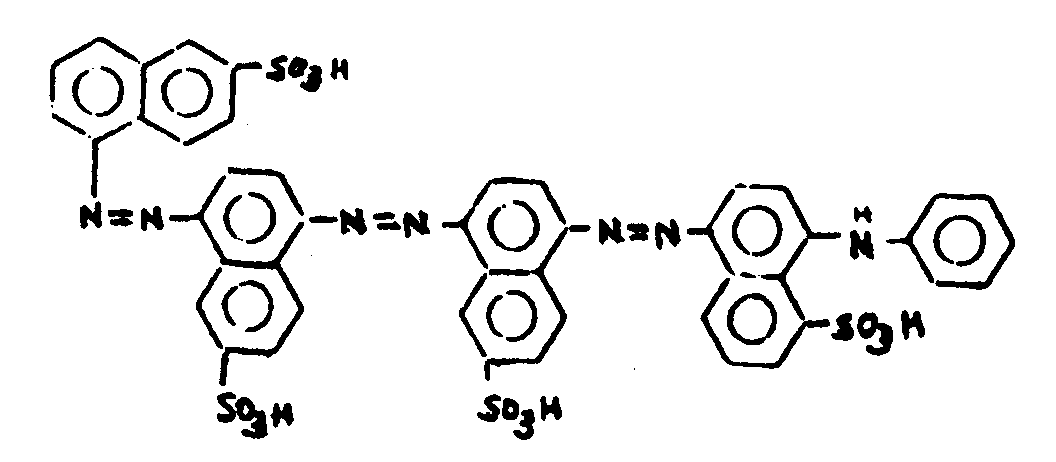
| 810 | Containing -C(=X)-, wherein X, is chalcogen or nitrogen (e.g., carbonyl, etc.) | ||
This subclass is indented under subclass 809. Compounds which contain a -- group, wherein X is nitrogen
or chalcogen (i.e., oxygen, sulfur, selenium or tellurium).
| |||
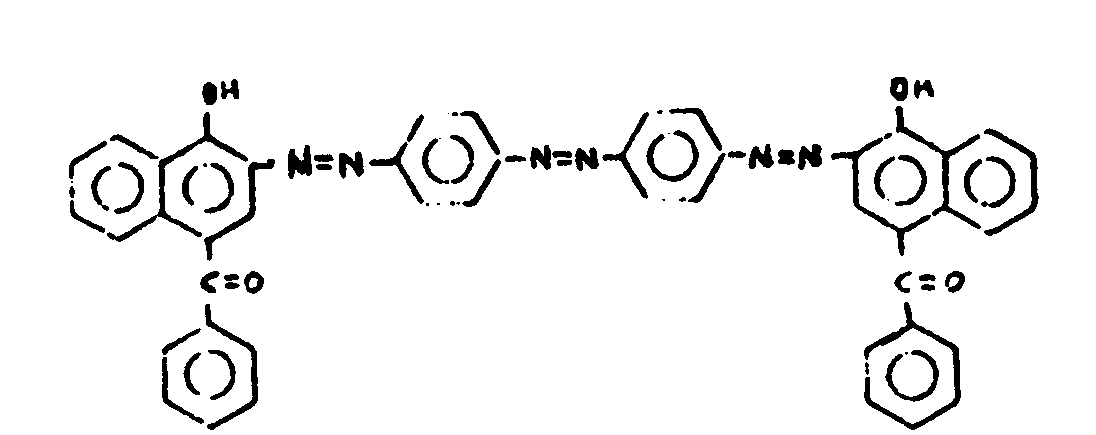
| 811 | Nitrogen single bonded directly to the -C(=X)- group (e.g., carboxamide, guanyl, etc.) | ||
This subclass is indented under subclass 810. Compounds wherein the -- is part of a N-- group.
| |||
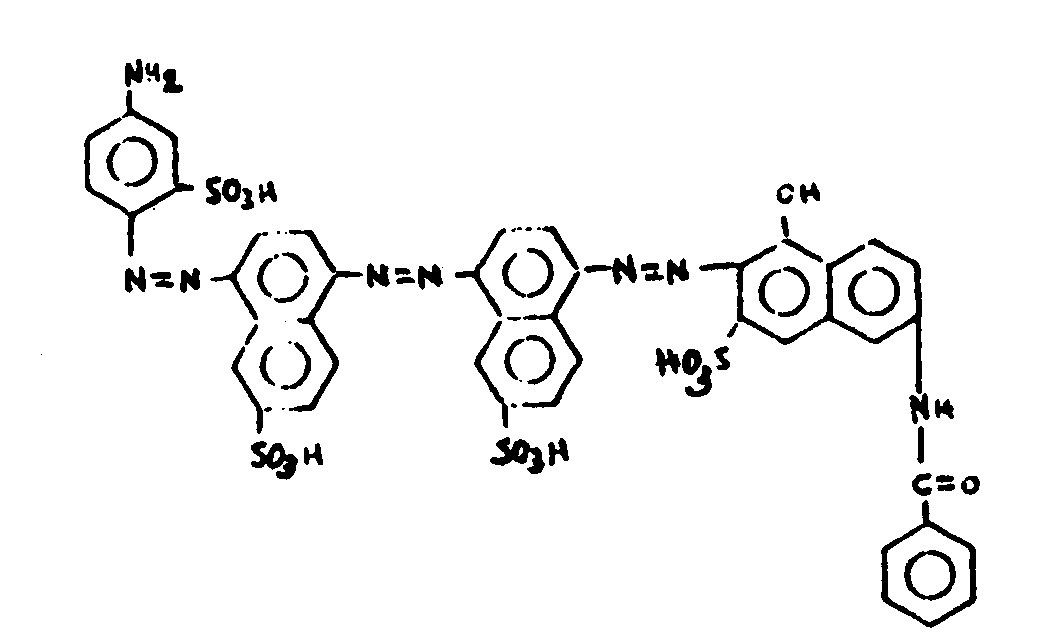
| 812 | Plural -C(=X)- groups containing | ||
This subclass is indented under subclass 811. Compounds which contain at least two of the -- groups.
| |||
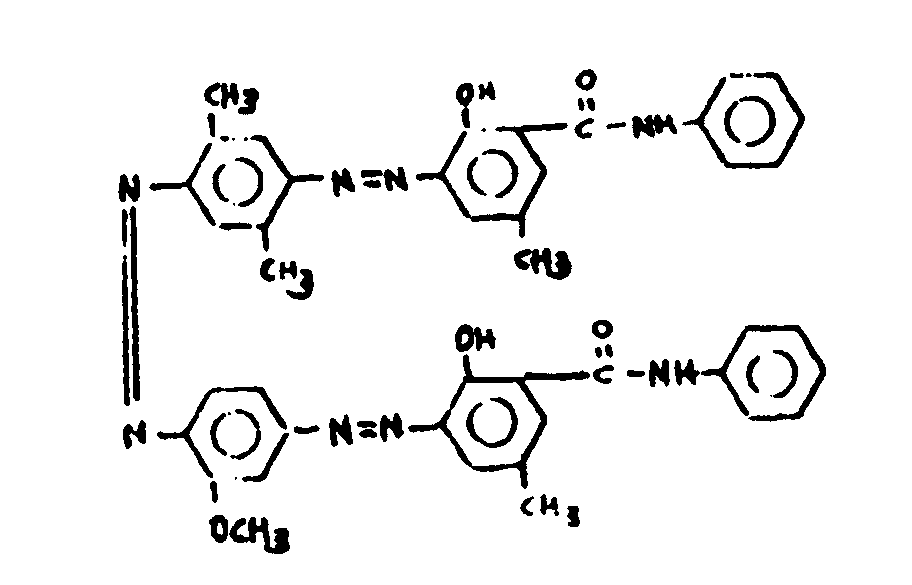
| 813 | Benzidine containing | ||
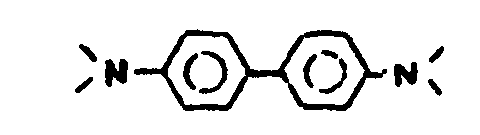
| This subclass is indented under subclass 809. Compounds which contain the group [see Fig. 1],
wherein the benzene rings may be further substituted.
FIGURE 1.
| |||
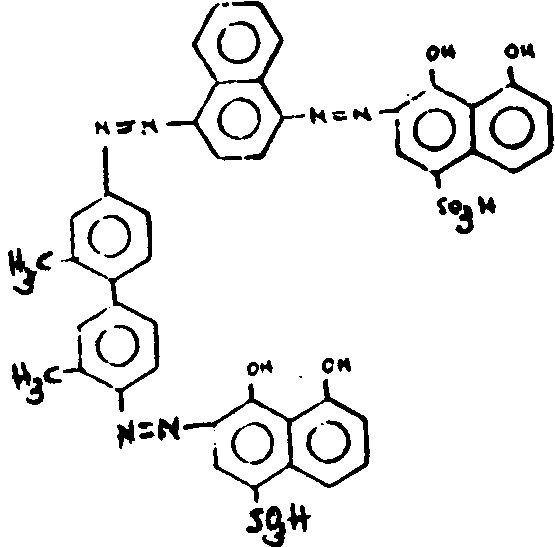
| 814 | Hydroxy and nitrogen, other than as nitro, nitroso or azo, bonded directly to the same bicyclo ring system (H of hydroxy may be replaced by the ammonium ion or a Group IA or IIA light metal) | ||
This subclass is indented under subclass 813. Compounds in which both hydroxy and nitrogen are bonded
directly to the same bicyclo ring system; wherein the nitrogen is
other than as a nitro, nitroso or azo group and the H or hydroxy
may be replaced by the ammonium ion or a Group IA or IIA light metal.
| |||
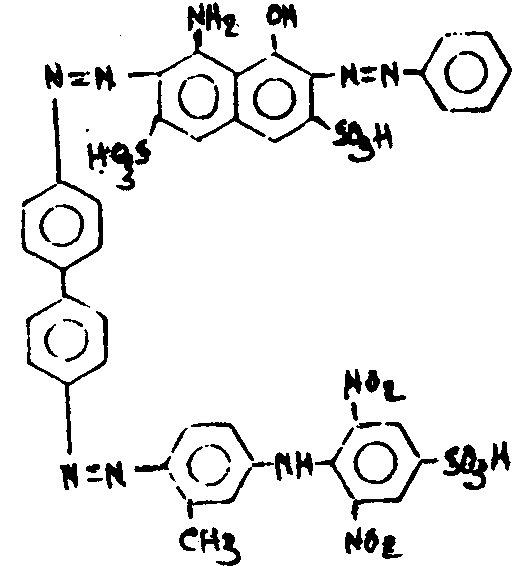
| 815 | Hydroxy bonded directly to a bicyclo ring system (H of hydroxy may be replaced by the ammonium ion or a Group IA or IIA light metal) | ||
This subclass is indented under subclass 809. Compounds wherein -OH is bonded directly to a bicyclo ring
system, wherein H of the -OH may be replaced by the ammonium ion
or a Group IA or IIA light metal.
| |||
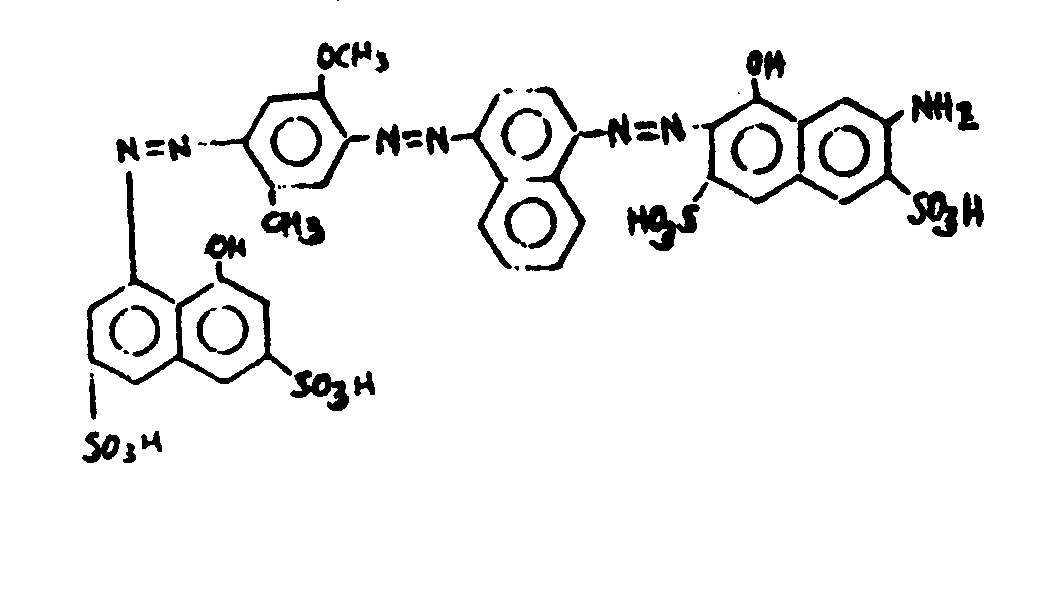
| 816 | Exactly two azo groups attached indirectly to each other by nonionic bonding | ||
This subclass is indented under subclass 573. Compounds in which exactly two azo groups are attached indirectly
to each other by nonionic bonding.
| |||
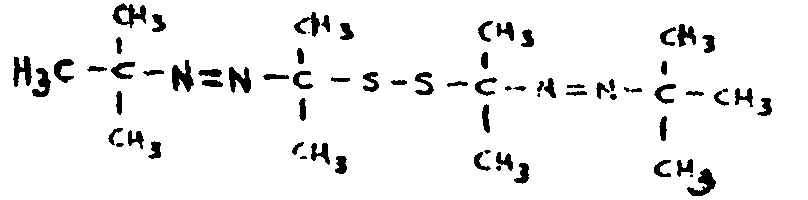
| 817 | Plural benzene rings bonded directly to the same urea or thiourea group and are between the azo groups | ||
This subclass is indented under subclass 816. Compounds wherein between the azo groups are at least two
benzene rings which are bonded directly to the same urea or thiourea group.
| |||
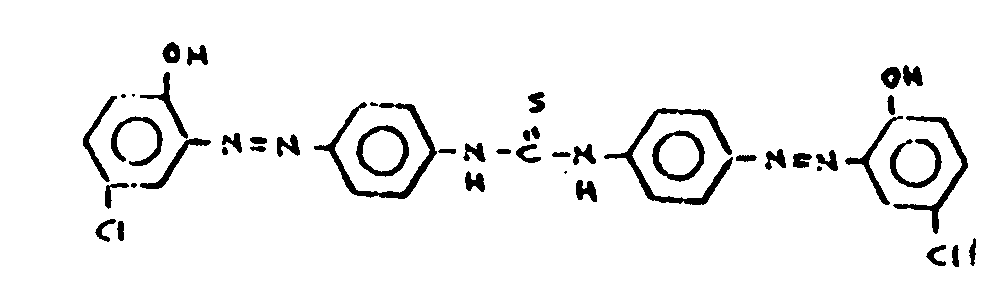
| 818 | Bicyclo ring system containing | ||
This subclass is indented under subclass 817. Compounds which contain a bicyclo ring system.
| |||
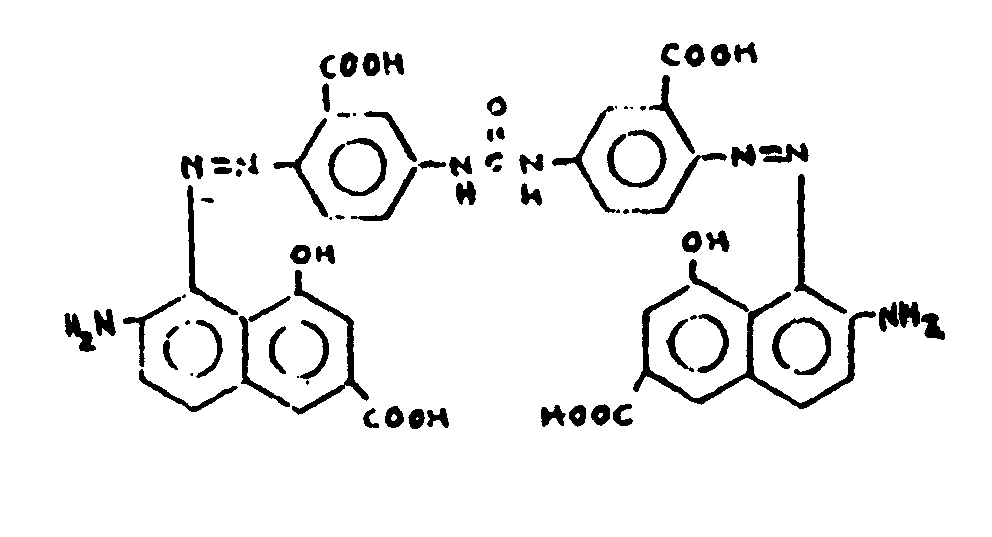
| 819 | Plural benzene rings bonded directly to the same carboxamide or sulfonamide group and are between the azo groups | ||
This subclass is indented under subclass 816. Compounds wherein between the azo groups are at least two
benzene rings which are bonded directly to the same carboxamide
or sulfonamide group.
| |||
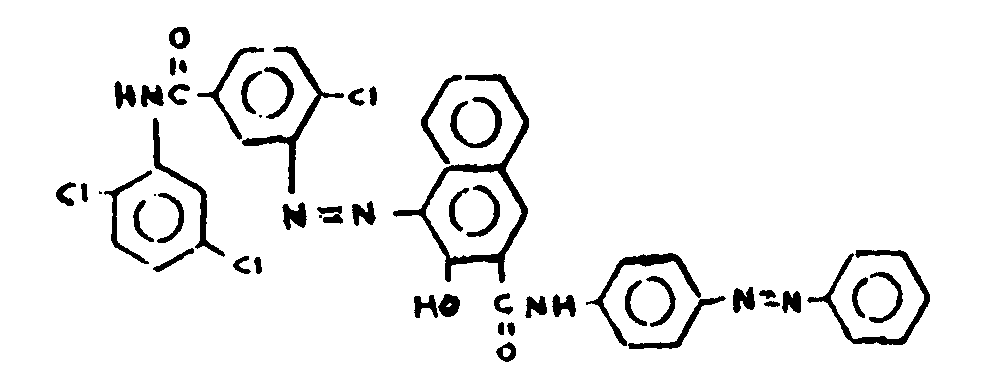
| 820 | Plural carboxamide groups between the azo groups | ||
This subclass is indented under subclass 819. Compounds wherein at least two carboxamide groups are between
the azo groups.
| |||
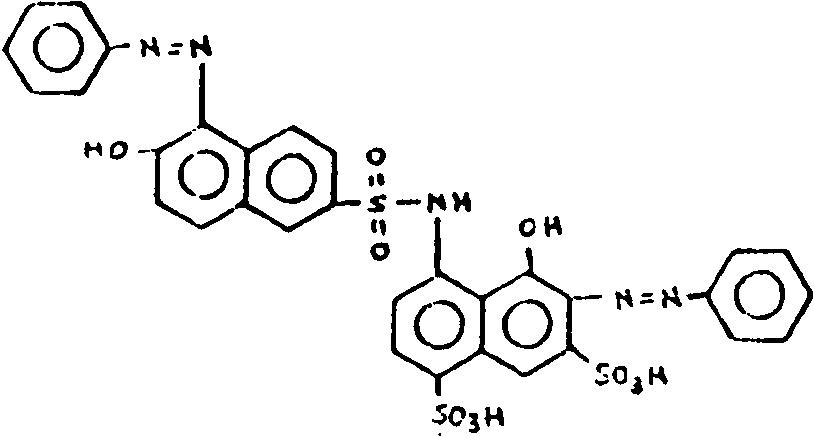
| 821 | Plural benzene rings bonded directly to the same chalcogen or -C(=X)- group, wherein X is chalcogen, and are between the azo groups | ||
This subclass is indented under subclass 816. Compounds wherein between the azo groups are at least two
benzene rings which are bonded directly to the same chalcogen (i.e., oxygen,
sulfur,selenium or tellurium) or -- group, wherein X is chalcogen.
| |||
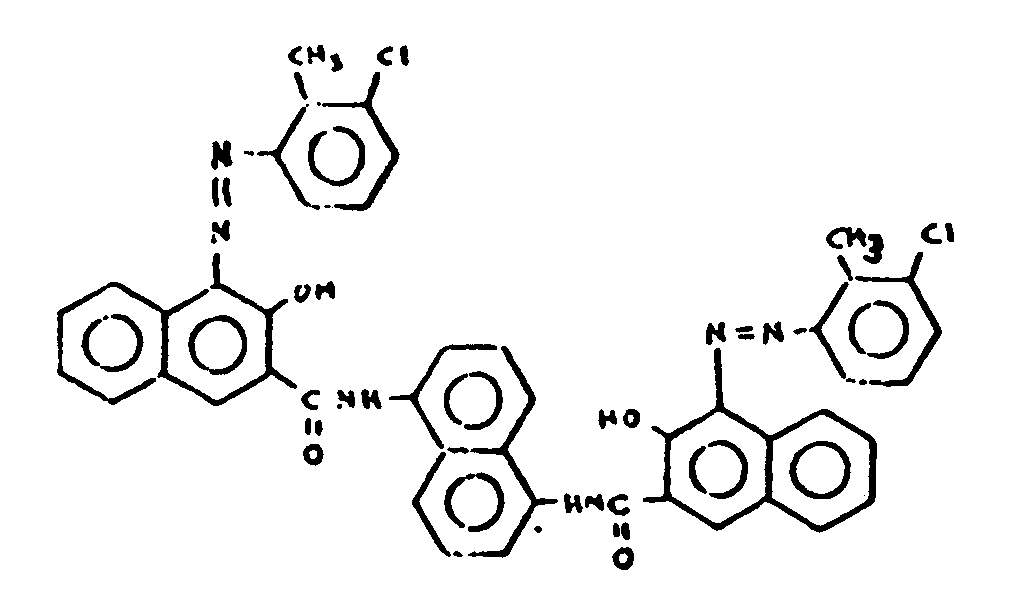
| 822 | Plural benzene rings bonded directly to each other and are between the azo groups | ||
This subclass is indented under subclass 816. Compounds wherein between the azo groups are at least two
benzene rings which are bonded directly to each other.
| |||
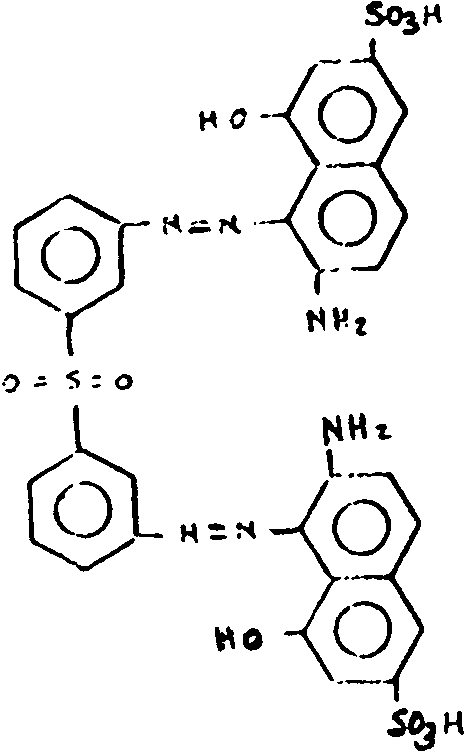
| 823 | Containing -C(=X)-, wherein X is chalcogen (e.g., carbonyl, etc.) | ||
This subclass is indented under subclass 822. Compounds which contain a -- group, wherein X is chalcogen
(i.e, oxygen, sulfur, selenium or tellurium).
| |||
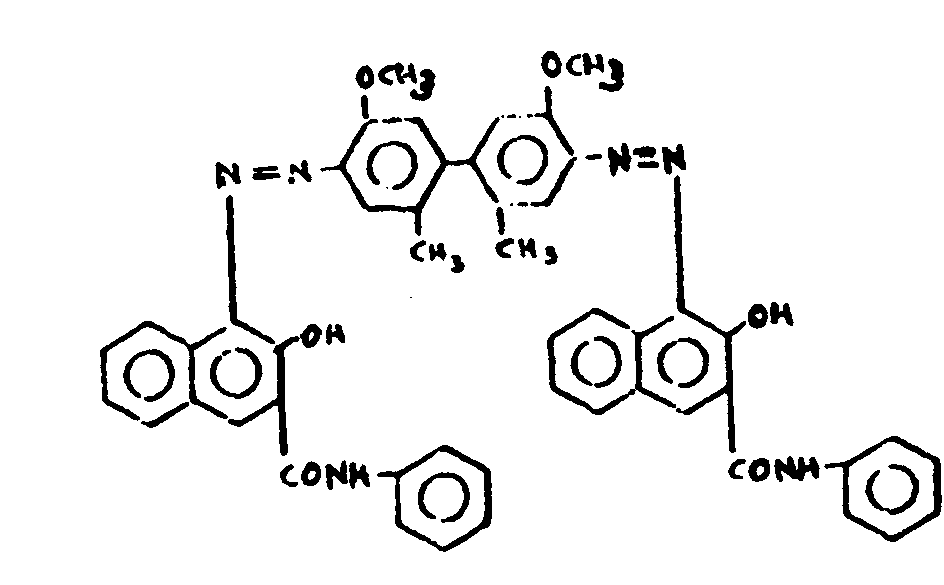
| 824 | Nitrogen, other than as nitro, nitroso or azo, attached indirectly to azo by nonionic bonding | ||
This subclass is indented under subclass 822. Compounds wherein nitrogen, other than as a nitro, nitroso
or azo group, is attached indirectly to azo by nonionic bonding.
| |||
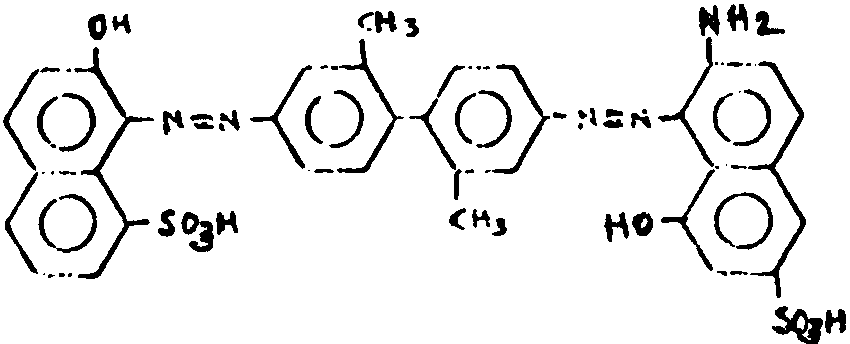
| 825 | Plural nitrogens, other than as nitro, nitroso or azo, attached indirectly to azo by nonionic bonding | ||
This subclass is indented under subclass 824. Compounds wherein at least two nitrogens, other than as
nitro, nitroso or azo groups, are attached indirectly to azo by
nonionic bonding.
| |||
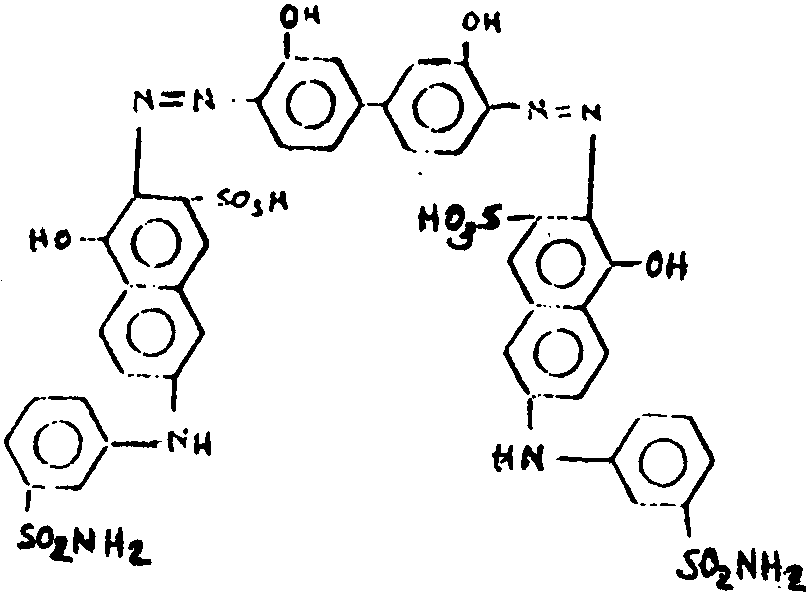
| 826 | Plural sulfonic acid groups bonded directly to the same bicyclo ring system (-(O=)S(=O)-OH, wherein H of the -OH may be replaced by the ammonium ion or a Group IA or IIA light metal) | ||
This subclass is indented under subclass 825. Compounds in which at least two --OH groups are bonded directly
to the same bicyclo ring system, wherein H of the -OH may be replaced by
the ammonium ion or a Group IA or IIA lighty metal.
| |||
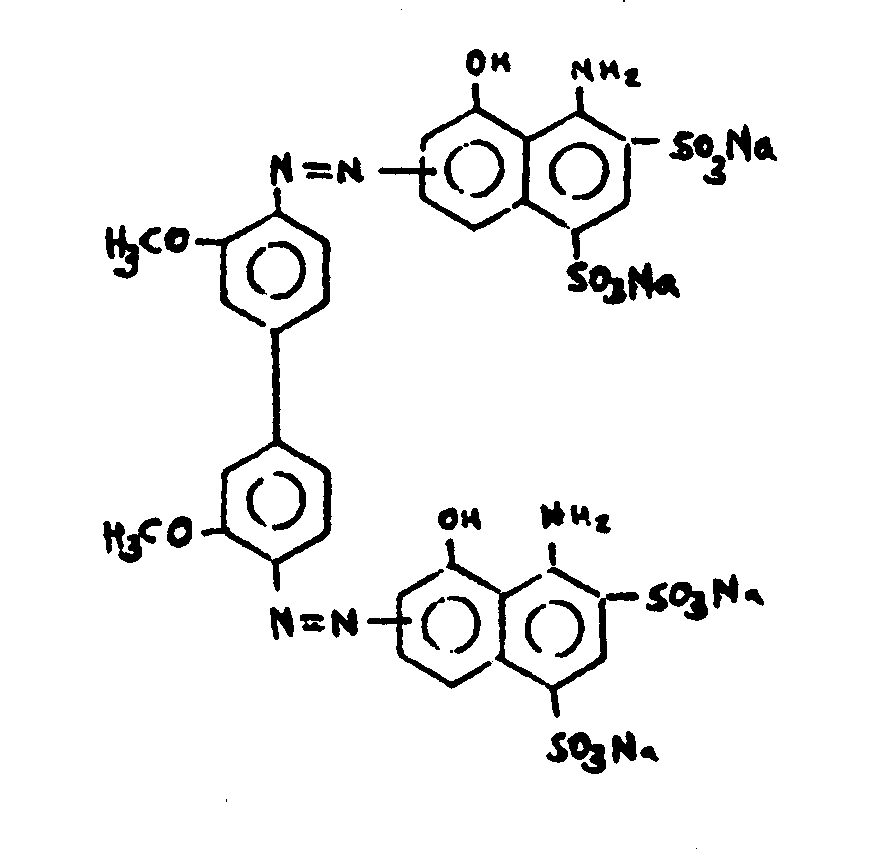
| 827 | Hydroxy bonded directly to a bicyclo ring system which is between the azo groups (H of hydroxy may be replaced by a substituted or unsubstituted ammonium ion or a Group IA or IIA light metal) | ||
This subclass is indented under subclass 816. Compounds wherein between the azo groups is a bicyclo ring
system having -OH bonded directly thereto, wherein H of the -OH
may be replaced by a substituted or unsubstituted ammonium ion or
a Group IA or IIA light metal.
| |||
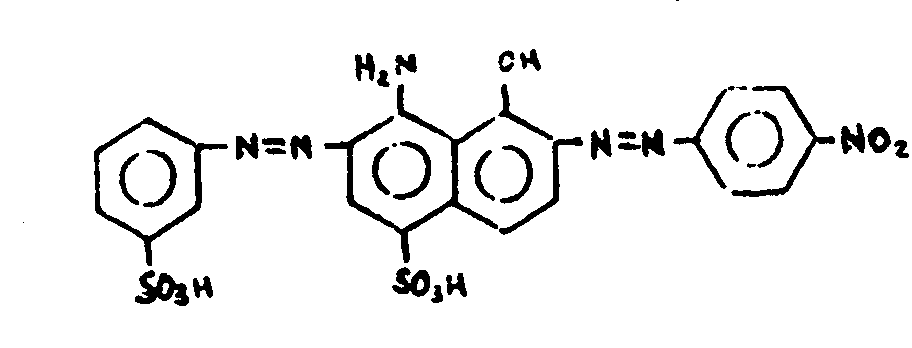
| 828 | Plural bicyclo ring systems, each having hydroxy bonded directly thereto | ||
This subclass is indented under subclass 827. Compounds which contain at least two bicyclo ring systems,
each of which has an -OH group bonded directly thereto.
| |||
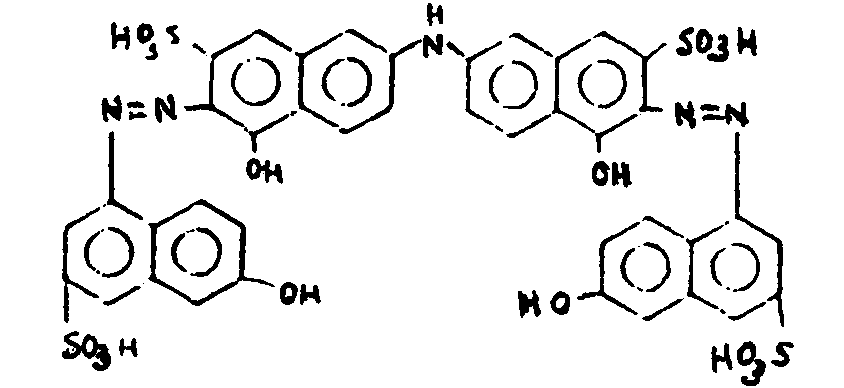
| 829 | Containing -C(=X)-, wherein X is chalcogen (e.g., carbonyl, etc.) | ||
This subclass is indented under subclass 816. Compounds which contain a -- group, wherein X is chalcogen
(i.e., oxygen, sulfur, selenium or tellurium).
| |||
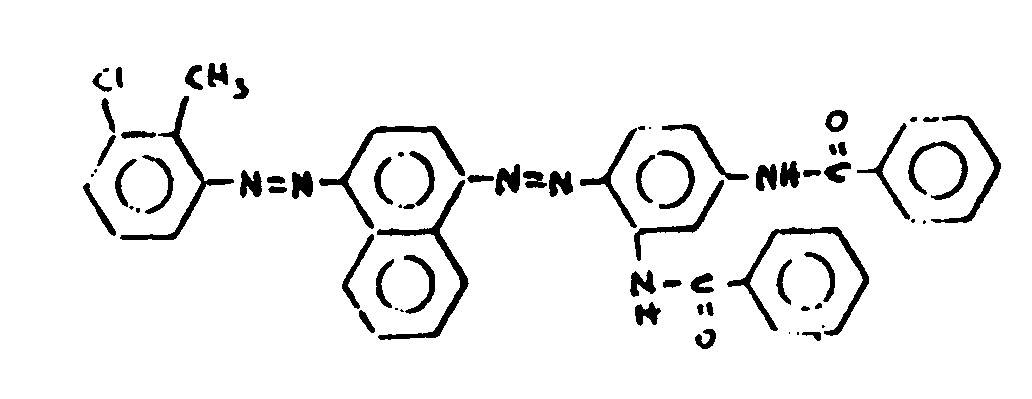
| 830 | Hydroxy and the -C(=X)- are bonded directly to the same bicyclo ring system (H of hydroxy may be replaced by a substituted or unsubstituted ammonium ion or a Group IA or IIA light metal) | ||
This subclass is indented under subclass 829. Compounds wherein -OH and the -- group are bonded directly
to the same bicyclo ring system; wherein H of the -OH may be replaced
by a substituted or unsubstituted ammonium ion or a Group IA or
IIA light metal.
| |||
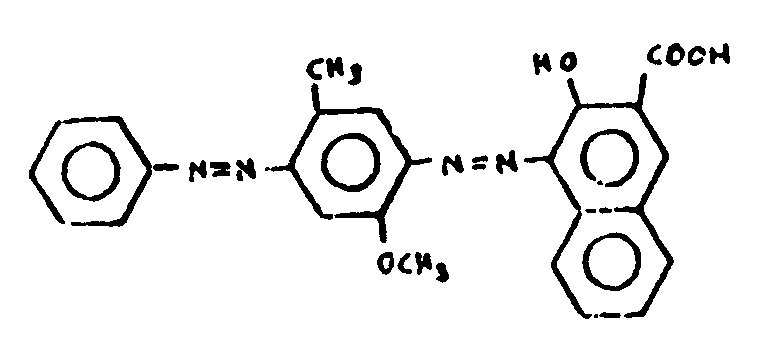
| 831 | Plural benzene rings bonded directly to each azo group | ||
This subclass is indented under subclass 816. Compounds in which plural benzene rings are bonded directly
to each azo group.
| |||
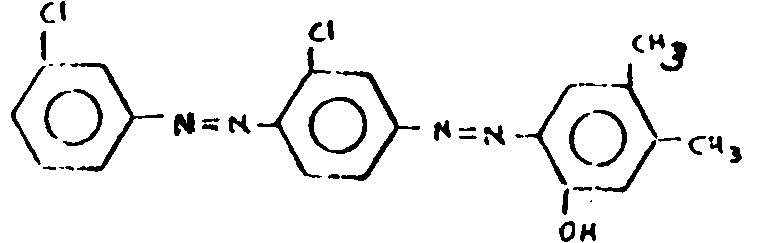
| 832 | At least one of the benzene rings is part of a bicyclo ring system | ||
This subclass is indented under subclass 831. Compounds wherein at least one of the benzene rings is part
of a bicyclo ring system.
| |||
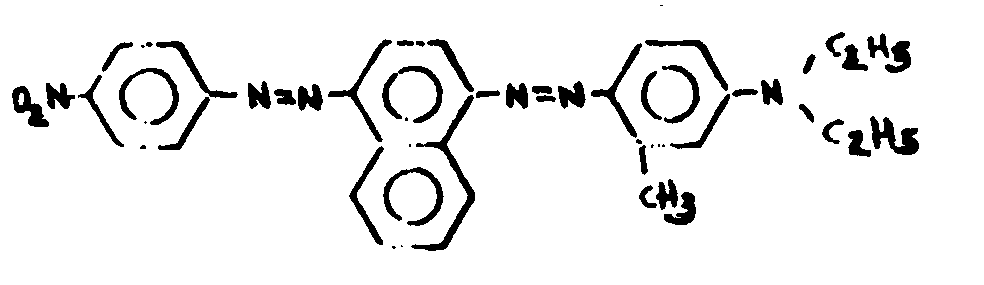
| 833 | Each of the benzene rings is part of a bicyclo ring system | ||
This subclass is indented under subclass 832. Compounds wherein each of the benzene rings is part of a
bicyclo ring system.
| |||
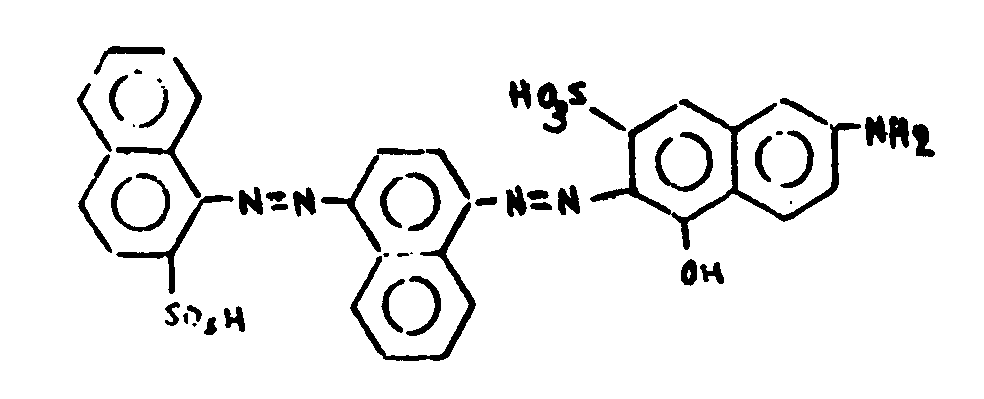
| 834 | Hydroxy bonded directly to the bicyclo ring system (H of hydroxy may be replaced by the ammonium ion or a Group IA or IIA light metal) | ||
This subclass is indented under subclass 832. Compounds in which -OH is bonded directly to the bicyclo
ring system; wherein H of the -OH may be replaced by the ammonium
ion or a Group IA or IIA light metal.
| |||
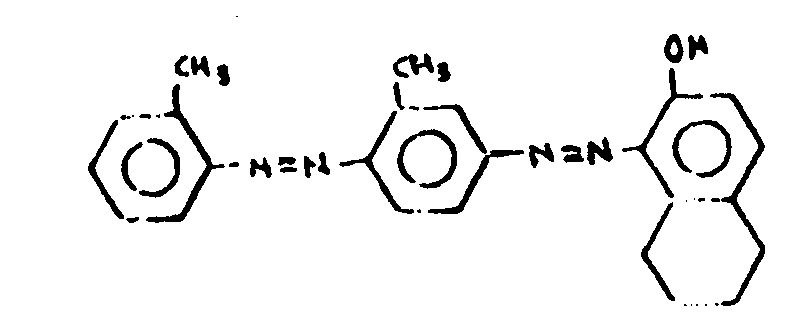
| 835 | Plural bicyclo ring systems, each having hydroxy bonded directly thereto | ||
This subclass is indented under subclass 834. Compounds which contain at least two bicyclo ring systems,
each of which has an -OH group bonded directly thereto.
| |||
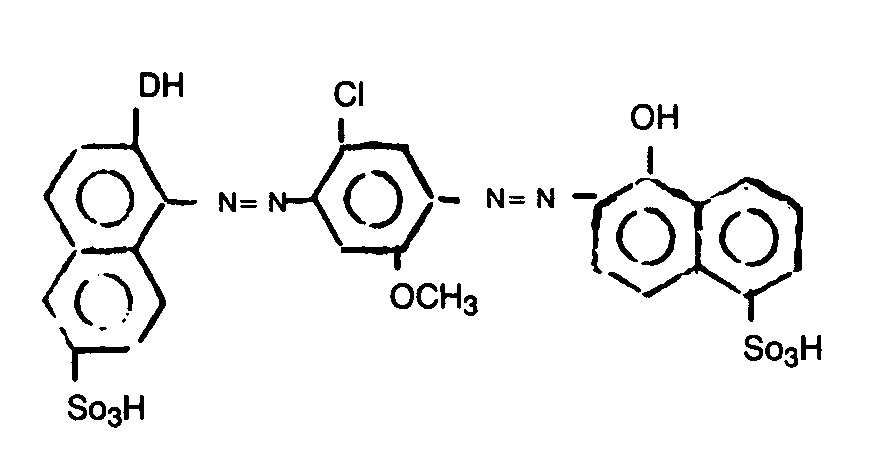
| 836 | Additional hydroxy or nitrogen, other than as nitro, nitroso or azo, bonded directly to the bicyclo ring system | ||
This subclass is indented under subclass 834. Compounds wherein an additional -OH group or nitrogen is
bonded directly to the bicyclo ring system, wherein the nitrogen
is other than as a nitro, nitroso or azo group.
| |||
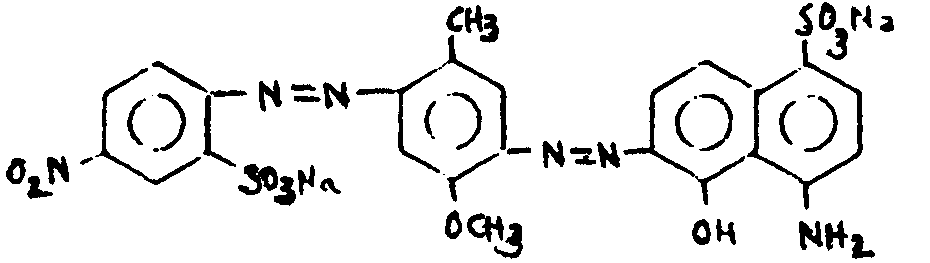
| 837 | Sulfonic acid group bonded directly to the bicyclo ring system (-(O=)S(=O) OH, wherein H of the -OH may be replaced by the ammonium ion or a Group IA or IIA light metal) | ||
This subclass is indented under subclass 834. Compounds wherein a --OH group is bonded directly to the
bicyclo ring system, wherein H of the -OH may be replaced by the
ammonium ion or a Group IA or IIA light metal.
| |||
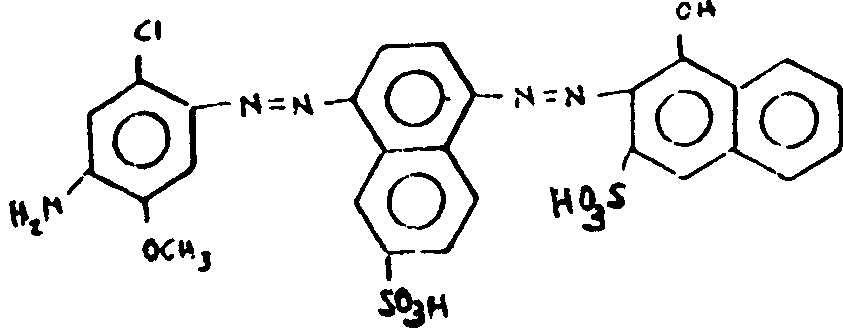
| 838 | Exactly one azo group containing or azo attached indirectly to an additional azo group by ionic bonding | ||
This subclass is indented under subclass 573. Compounds which contain exactly one azo group or more than
one azo group if their attachment to each other is by ionic bonding.
| |||
| 839 | Plural benzene rings bonded directly to the azo group | ||
This subclass is indented under subclass 838. Compounds wherein plural benzene rings are bonded directly
to the azo group.
| |||
| 840 | Each of the benzene rings is part of a bicyclo ring system | ||
This subclass is indented under subclass 839. Compounds wherein each of the benzene rings is part of a
bicyclo ring system.
| |||
| 841 | Containing -C(=X)-, wherein X is chalcogen (e.g., carbonyl, etc.) | ||
This subclass is indented under subclass 840. Compounds which contain a -- group, wherein X is chalcogen
(i.e., oxygen, sulfur, selenium or tellurium).
| |||
| 842 | Hydroxy bonded directly at the 2-position of the bicyclo ring system (H of hydroxy may be replaced by the ammonium ion or a Group IA or IIA light metal) | ||
This subclass is indented under subclass 840. Compounds wherein -OH is bonded directly at the 2-position
of the bicyclo ring system; wherein H of the -OH may be replaced
by the ammonium ion or a Group IA or IIA light metal.
| |||
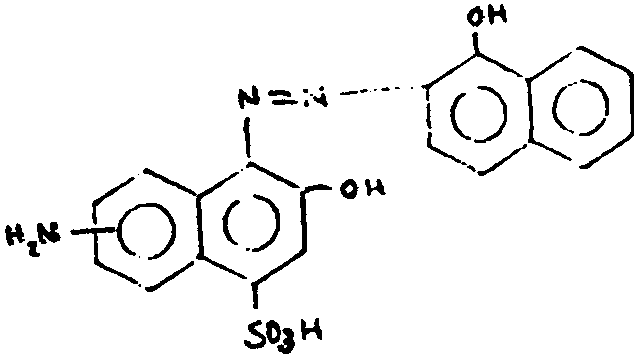
| 843 | Each of the benzene rings is monocyclic | ||
This subclass is indented under subclass 839. Compounds in which each of the benzene rings is monocyclic,
i.e., neither bridged nor fused.
| |||
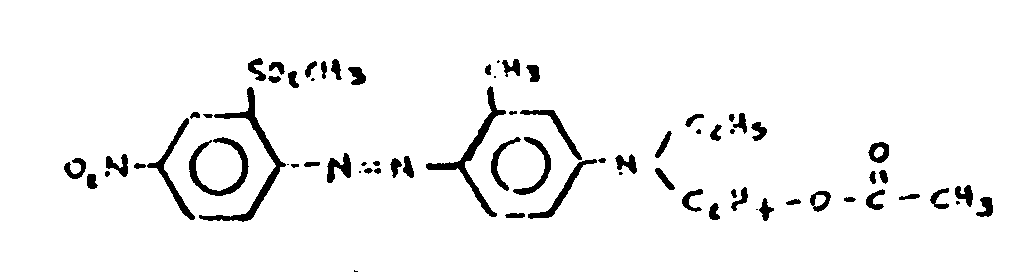
| 844 | Sulfonyl containing | ||
This subclass is indented under subclass 843. Compounds which contain a -- group.
| |||
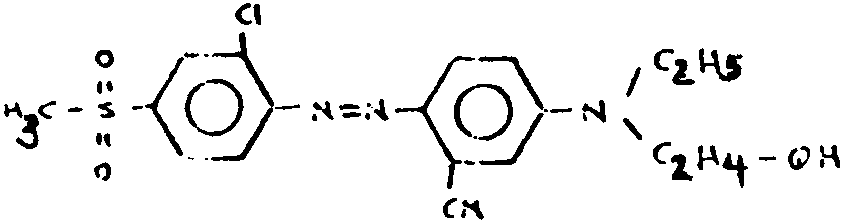
| 845 | Oxygen bonded directly to the sulfonyl group (e.g., sulfonic acid, etc.) | ||
This subclass is indented under subclass 844. Compounds which contain a --O- group.
| |||
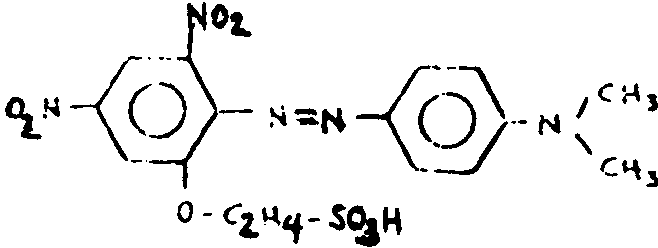
| 846 | Plural oxygens bonded directly to the sulfonyl group (e.g., sulfuric acid, etc.) | ||
This subclass is indented under subclass 845. Compounds which contain a -O--O- group.
| |||
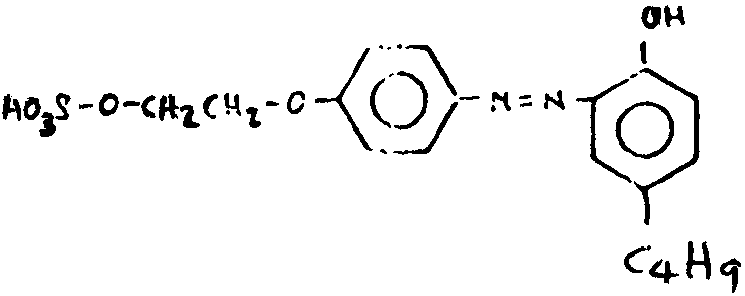
| 847 | The sulfonyl is part of a sulfonamide group (-(O=)S(=O)HNH, wherein substitution may be made for hydrogen only) | ||
This subclass is indented under subclass 844. Compounds wherein the sulfonyl is part of a --N group.
| |||
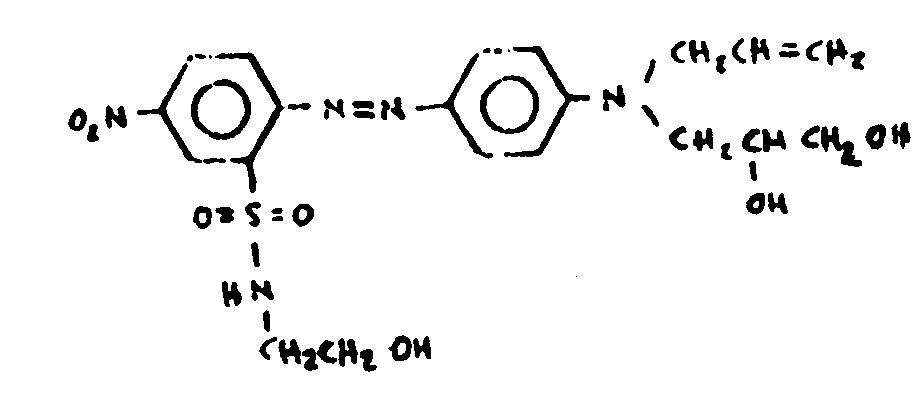
| 848 | Containing -C(=X)-, wherein X is chalcogen | ||
This subclass is indented under subclass 844. Compounds which contain a -- group, wherein X is chalcogen
(i.e., oxygen, sulfur, selenium or tellurium).
| |||

| 849 | The -C(=X)- is bonded directly to nitrogen, which nitrogen is bonded directly to a ring | ||
This subclass is indented under subclass 848. Compounds wherein the X -- group and a ring are both bonded
directly to the same nitrogen.
| |||
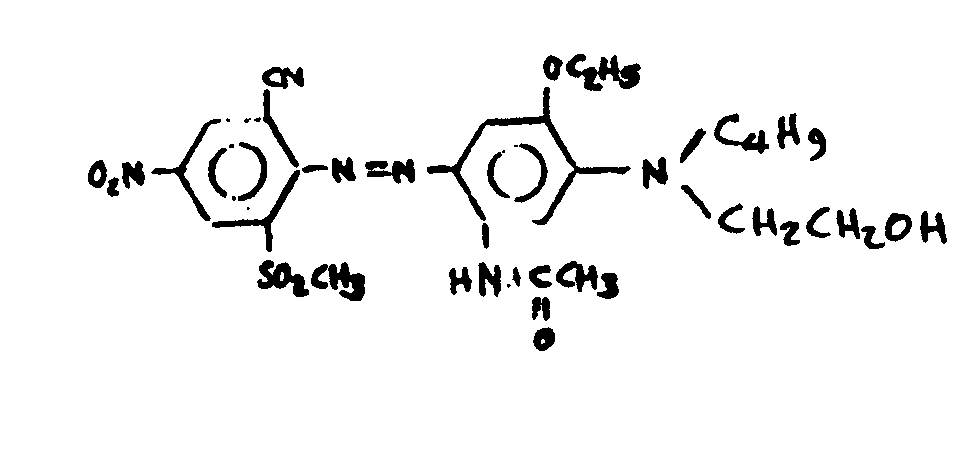
| 850 | Containing -C(=X)-, wherein X is chalcogen | ||
This subclass is indented under subclass 843. Compounds which contain a -- group, wherein X is chalcogen
(i.e., oxygen, sulfur, selenium ortellurium).
| |||
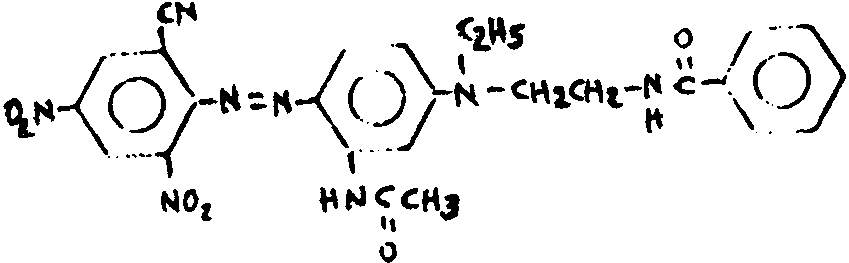
| 851 | The -C(=X)- is bonded directly to one of the benezene rings | ||
This subclass is indented under subclass 843. Compounds in which the -- group is bonded directly to one
of the benzene rings.
| |||

| 852 | The -C(=X)- is in a -C(=X)X- group, wherein the X's may be the same or diverse chalcogens | ||
This subclass is indented under subclass 850. Compounds in which the -- is in a --X- group, wherein the
X"s may be the same or diverse chalcogens (i.e., oxygen,
sulfur, selenium or tellurium).
| |||
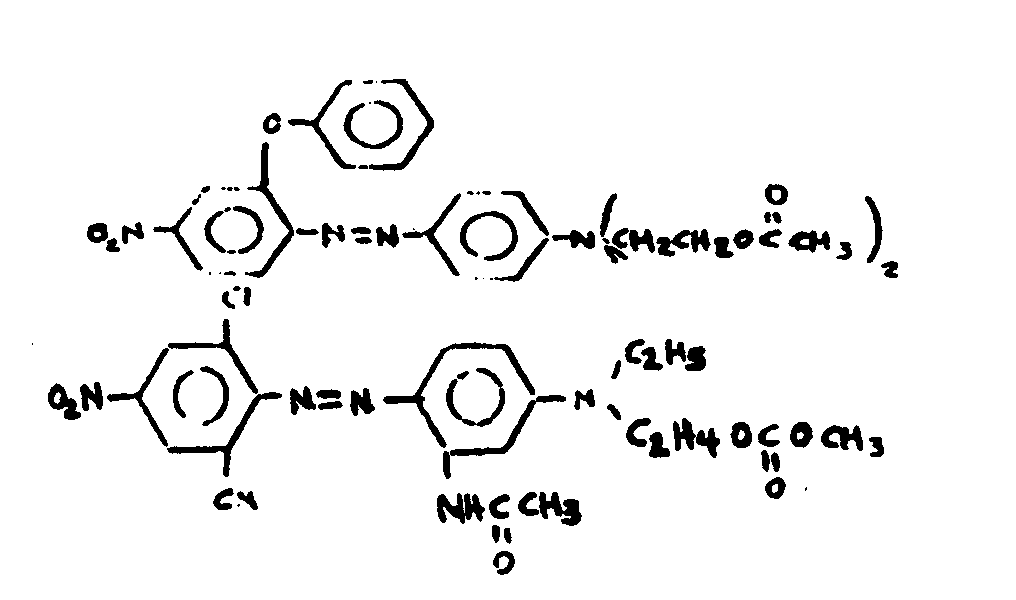
| 853 | The -C(=X)X- is in a -C00H group (H of OH may be replaced by the ammonium ion or a Group IA or IIA light metal) | ||
This subclass is indented under subclass 852. Compounds wherein the --X- is in a --OH group, wherein H
of the -OH may be replaced by the ammonium ion or a Group IA or
IIA light metal.
| |||
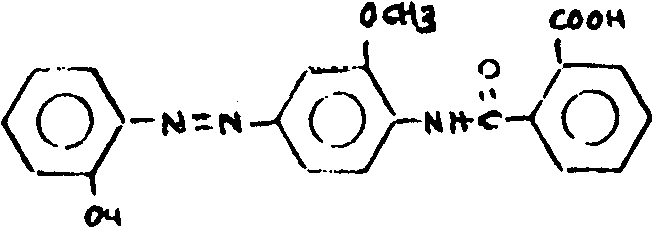
| 854 | Additional -C(=X)- bonded directly to nitrogen, which nitrogen is bonded directly to a ring | ||
This subclass is indented under subclass 852. Compounds which contain an additional -C- group, which group
and a ring are bonded directly to the same nitrogen.
| |||
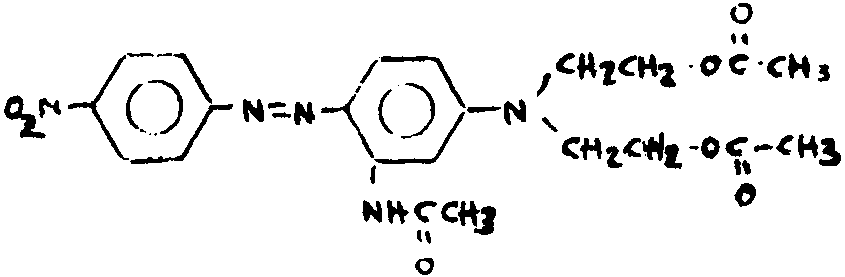
| 855 | Chalcogen, having no direct bond to a ring, attached directly by a single bond to acyclic carbon | ||
This subclass is indented under subclass 850. Compounds wherein chalcogen (i.e., oxygen, sulfur, selenium
or tellurium), which has no direct bond to any ring, is attached
by a single bond to acyclic carbon.
| |||
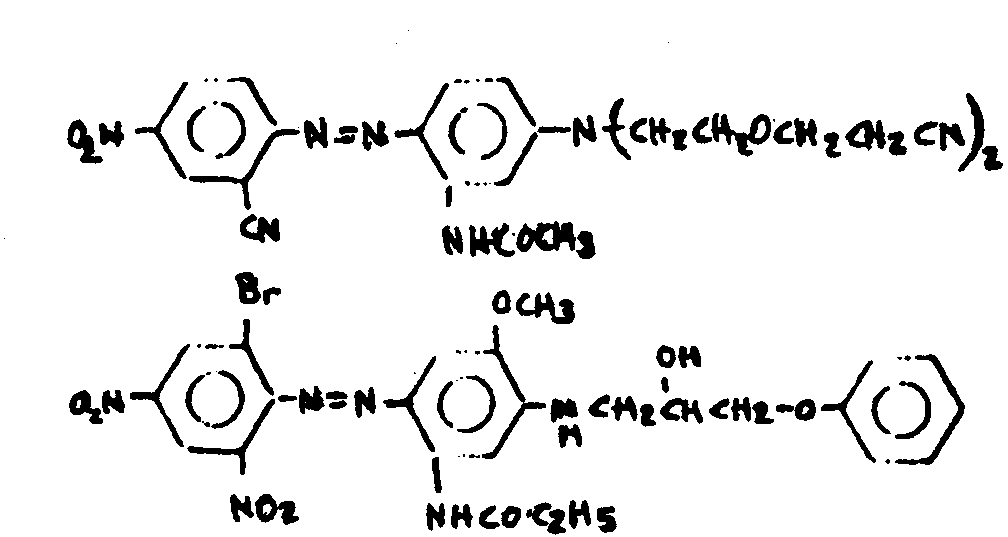
| 856 | Nitrogen, other than as nitro or nitroso, attached indirectly to the azo group by nonionic bonding | ||
This subclass is indented under subclass 843. Compounds wherein nitrogen, other than as nitro or nitroso,
is attached indirectly to the azo group by nonionic bonding.
| |||
| 857 | Hydroxy bonded directly to acyclic carbon or carbon chain (H of hydroxy may be replaced by the ammonium ion or Group IA or IIA light metal) | ||
This subclass is indented under subclass 856. Compounds wherein -OH is bonded directly to an acyclic carbon
or carbon chain, wherein H of the -OH may be replaced by the ammonium ion
or a Group IA or IIA light metal.
| |||
| 858 | Plural chalcogens bonded directly to the acyclic carbon or carbon chain | ||
This subclass is indented under subclass 857. Compounds wherein an additional chalcogen, (i.e., oxygen,
sulfur, selenium or tellurium) is bonded directly to the acyclic
carbon or carbon chain.
| |||
| 859 | Chalcogen bonded directly to a ring | ||
This subclass is indented under subclass 856. Compounds wherein chalcogen (i.e., oxygen, sulfur, selenium
or tellurium) is bonded directly to a ring.
| |||
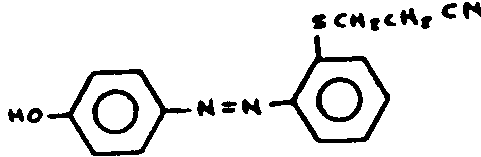
| 860 | Acyclic -C(=X)- containing, wherein X is chalcogen (e.g., carbonyl, etc.) | ||
This subclass is indented under subclass 839. Compounds which contain an acyclic -- group, wherein X is
chalcogen (i.e., oxygen, sulfur, selenium or tellurium).
| |||
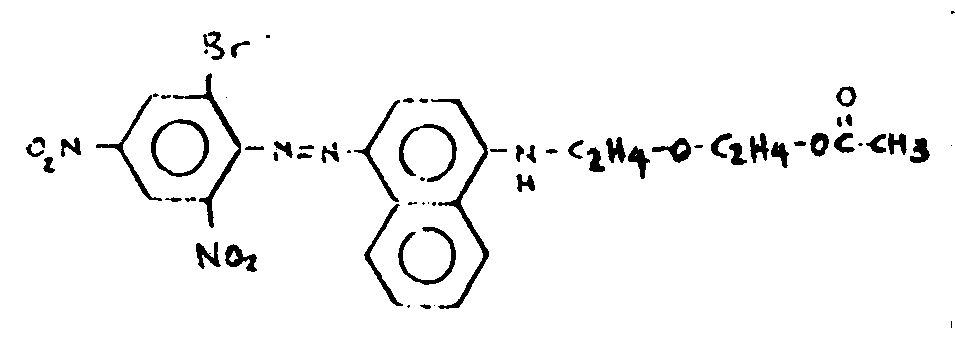
| 861 | Hydroxy bonded directly to a bicyclo ring system (H of hydroxy may be replaced by a substituted or unsubstituted ammonium ion or a Group IA or IIA light metal) | ||
This subclass is indented under subclass 860. Compounds in which an -OH group is bonded directly to a
bicyclo ring system, wherein H of the -OH may be replaced by a substituted
or unsubstituted ammonium ion or a Group IA or IIA light metal.
| |||
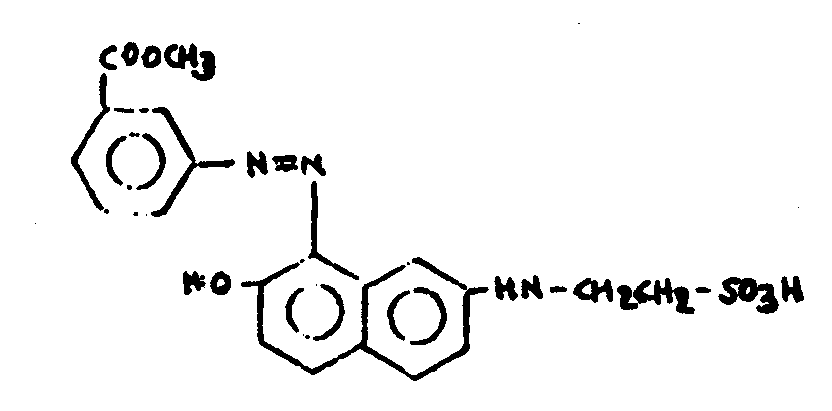
| 862 | Nitrogen bonded directly to the -C(=X)- group (e.g., carboxamide, etc.) | ||
This subclass is indented under subclass 861. Compounds in which nitrogen is bonded directly to the --
group, e.g., carboxamide, etc.
| |||
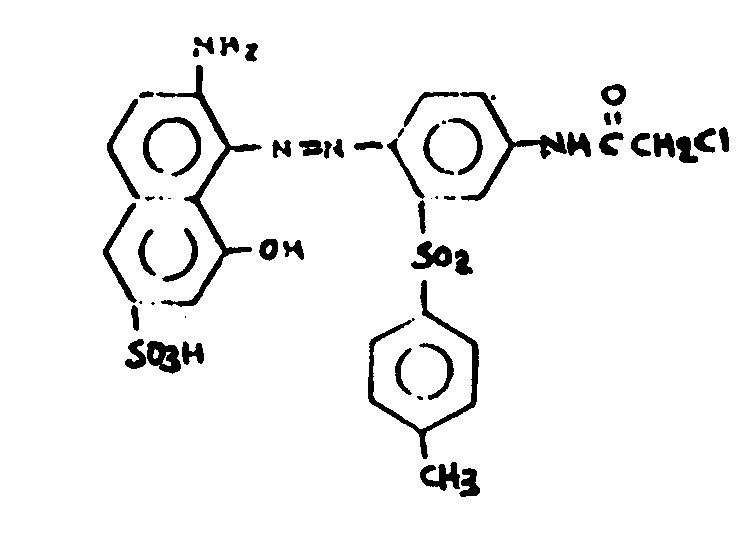
| 863 | The -C(=X)- is bonded directly to the bicyclo ring system |
| This subclass is indented under subclass 862. Compounds in which the | |
-- group is bonded directly to the bicyclo ring system.
| |||
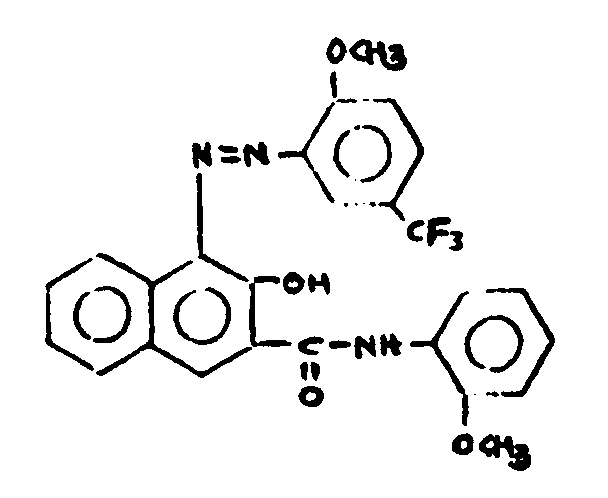
| 864 | Sulfonyl containing | ||
This subclass is indented under subclass 863. Compounds which contain a -- group.
| |||
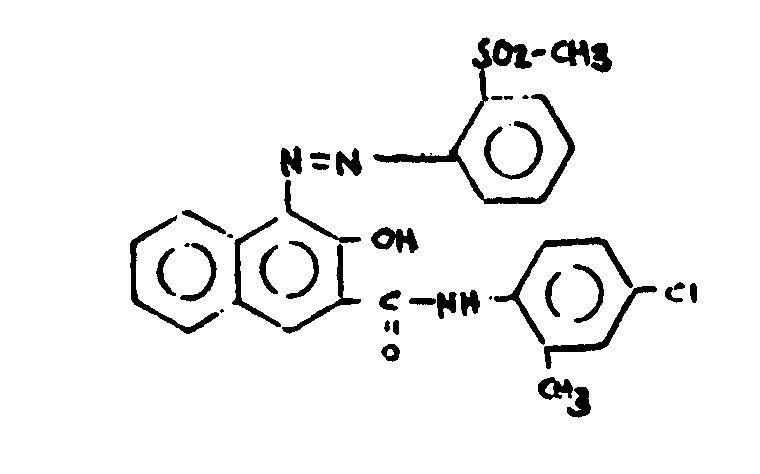
| 865 | Additional acyclic -C(=X)- group | ||
This subclass is indented under subclass 863. Compounds which contain an additional acyclic -- group,
wherein X is chalcogen (i.e., oxygen, sulfur, selenium or tellurium).
| |||
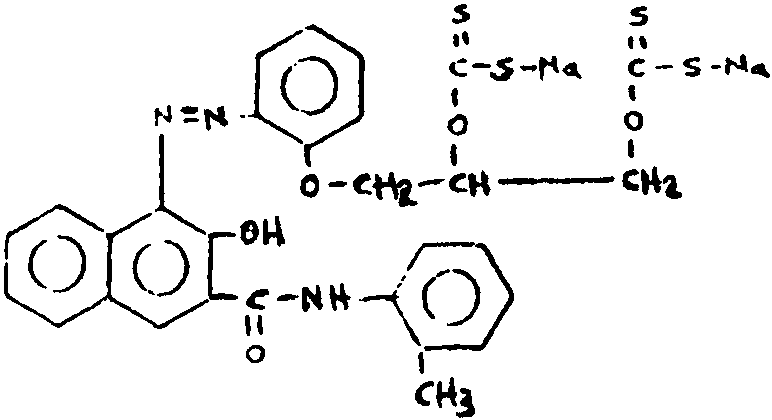
| 866 | Additional nitrogen bonded directly to the additional -C(=X)- group | ||
This subclass is indented under subclass 865. Compounds having at least two groups which contain nitrogen
bonded directly to --; e.g., N--.
| |||
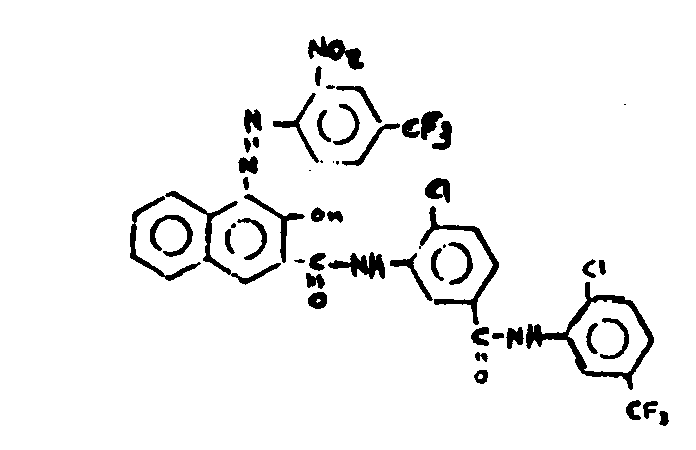
| 867 | At least three -C(=X)HNH groups, wherein substitution may be made for hydrogen only | ||
This subclass is indented under subclass 866. Compounds which contain at least three N-- groups, wherein
the X is chalcogen (i.e., oxygen, sulfur, selenium or tellurium).
| |||
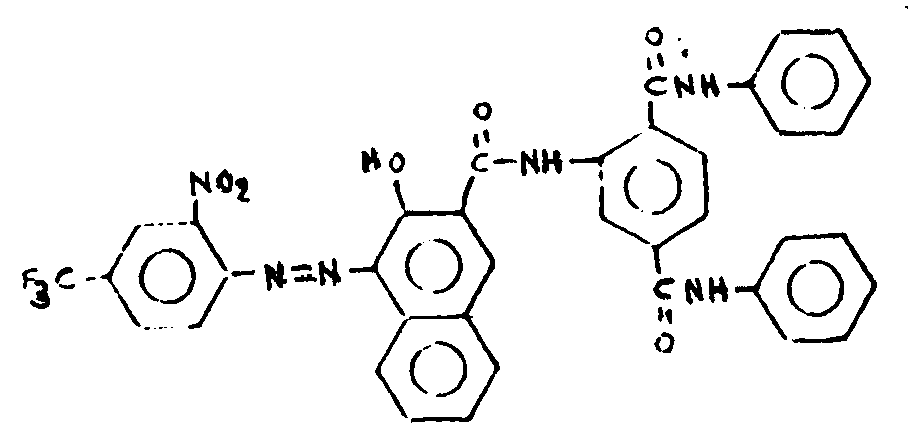
| 868 | Additional amino nitrogen | ||
This subclass is indented under subclass 863. Compounds which contain an additional amino nitrogen.
| |||
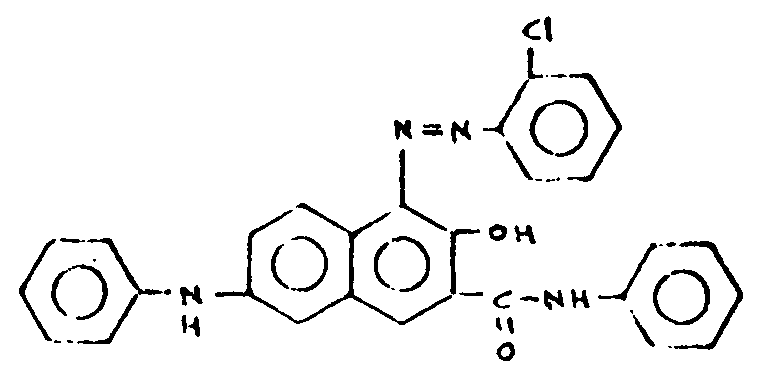
| 869 | Plural oxygens bonded directly to the same monocyclic benzene ring | ||
This subclass is indented under subclass 863. Compounds in which at least two oxygens are bonded directly
to the same monocyclic benzene ring.
| |||
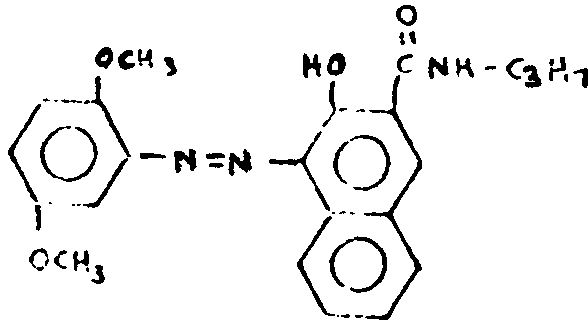
| 870 | Halogen, acyclic carbon, the azo group and an additional halogen or acyclic carbon, all bonded directly to the same benzene ring | ||
This subclass is indented under subclass 863. Compounds wherein bonded directly to the same benzene ring
are the azo group, a halogen, an acyclic carbon and either an additional halogen
or an additional acyclic carbon.
| |||
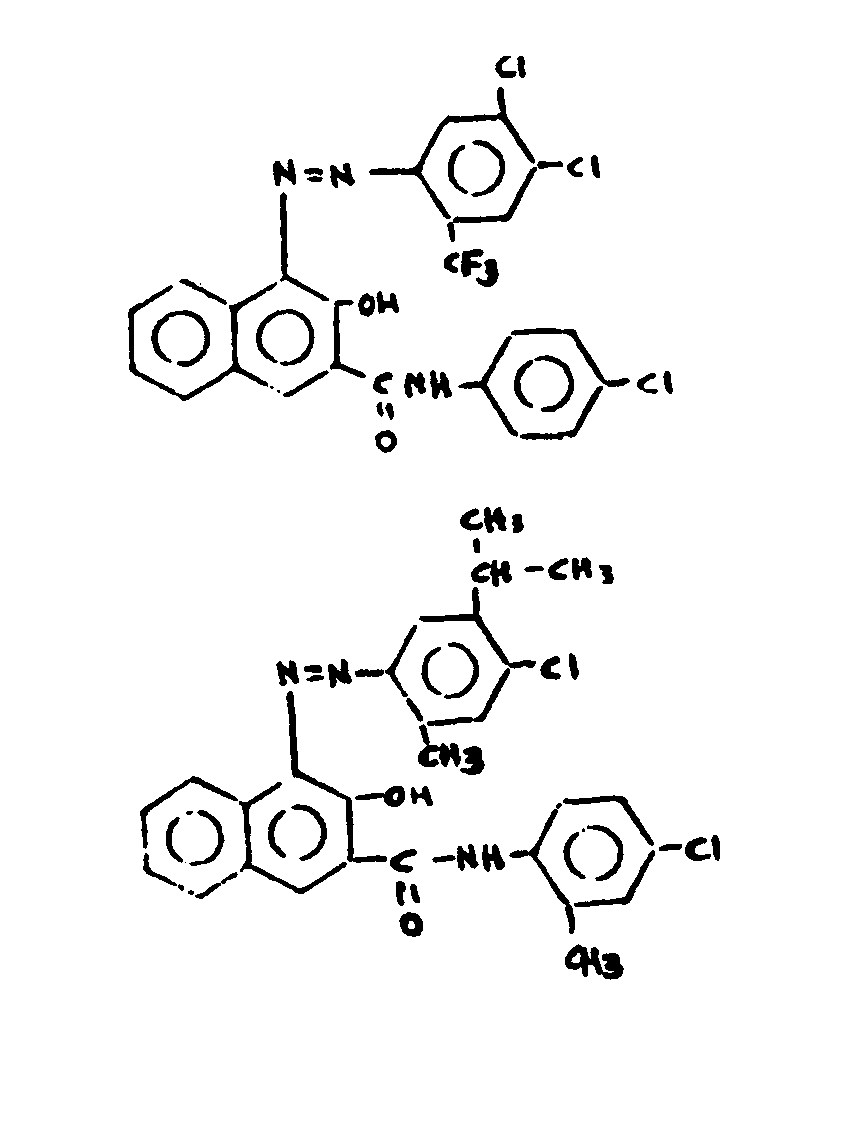
| 871 | Acyclic carbon, carboxamide and chalcogen or an additional acyclic carbon, all bonded directly to the same benzene ring | ||
This subclass is indented under subclass 863. Compounds wherein bonded directly to the same benzene ring
are an acyclic carbon, a carboxamide group and either chalcogen
(i.e., oxygen, sulfur, selenium or tellurium) or an additional acyclic
carbon.
| |||
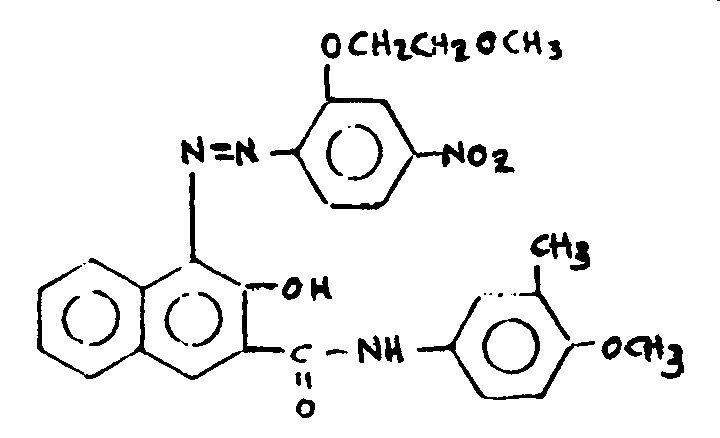
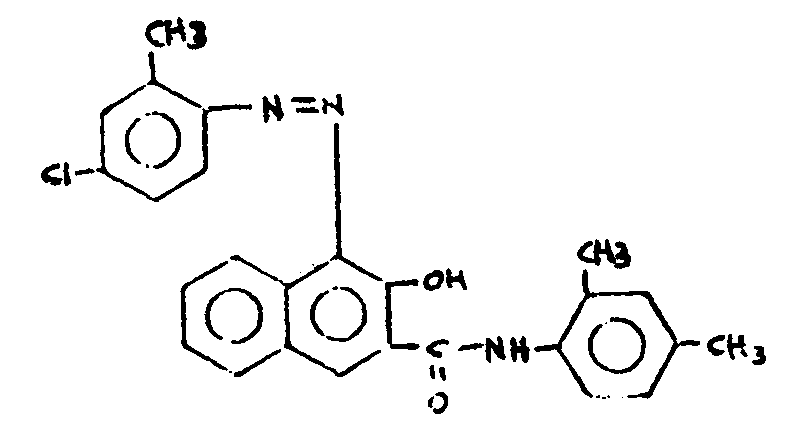
| 872 | The nitrogen is additionally bonded directly to the bicyclo ring system | ||
This subclass is indented under subclass 862. Compounds in which the nitrogen is bonded additionally directly
to the bicyclo ring system.
| |||
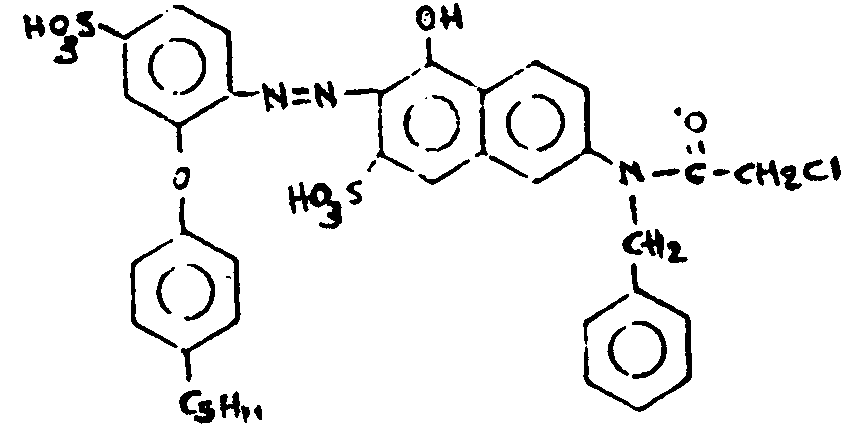
| 873 | Additional acyclic -C(=X)- group | ||
This subclass is indented under subclass 872. Compounds which contain an additional -- group.
| |||
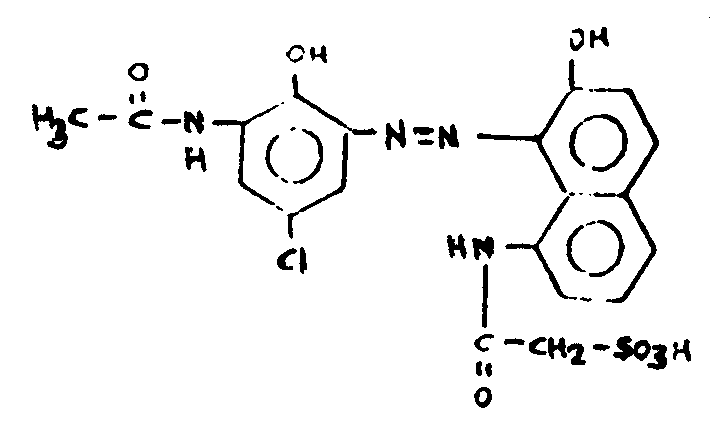
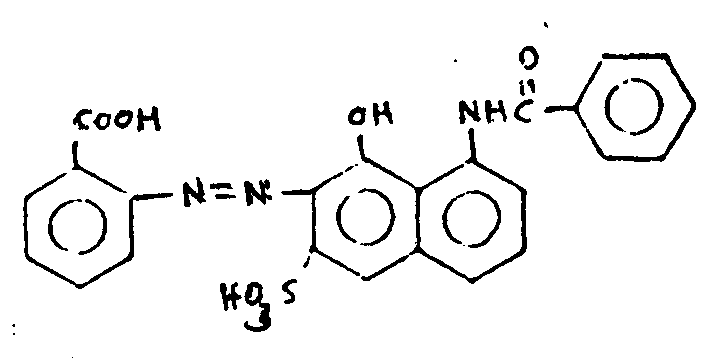
| 874 | The -C(=X)- is bonded directly to the bicyclo ring system | ||
This subclass is indented under subclass 861. Compounds in which the 878 -- group is bonded directly to
the bicyclo ring system.
| |||
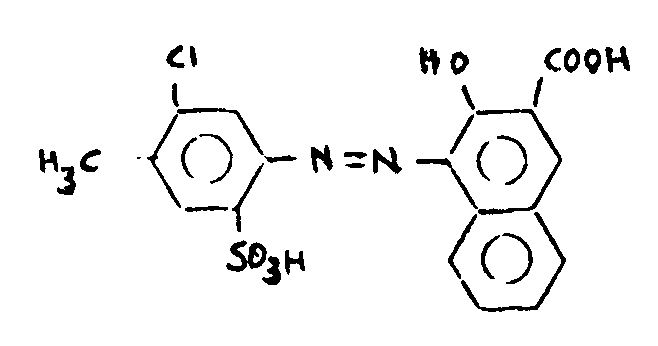
| 875 | Nitrogen, other than as nitro or nitroso, attached indirectly to the azo group by nonionic bonding | ||
This subclass is indented under subclass 839. Compounds wherein nitrogen, other than as nitro or nitroso,
is attached indirectly to the azo group by nonionic bonding.
| |||
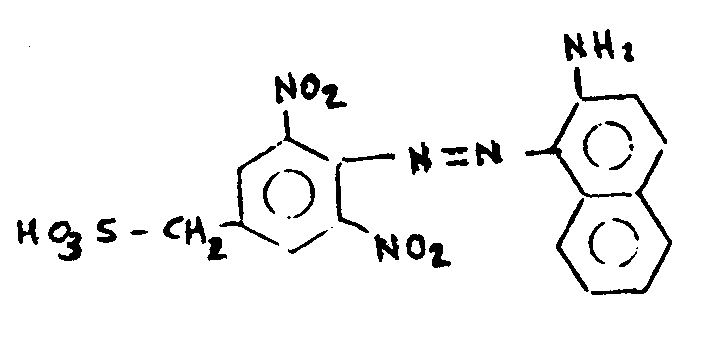
| 876 | Oxygen bonded directly to carbon | ||
This subclass is indented under subclass 875. Compounds in which oxygen is bonded directly to carbon.
| |||
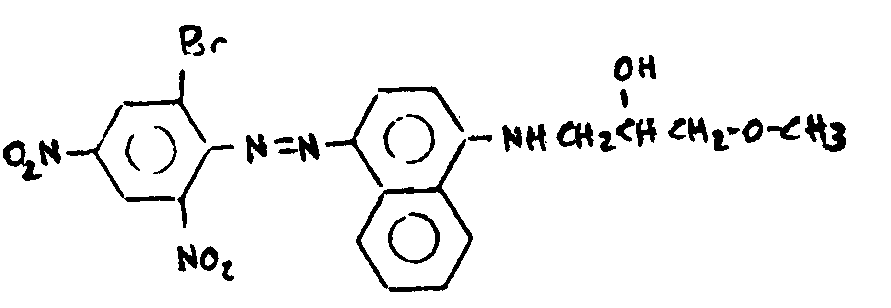
| 877 | The nitrogen and the oxygen are bonded directly to the same bicyclo ring system | ||
This subclass is indented under subclass 876. Compounds in which the nitrogen and the oxygen are both
bonded directly to the same bicyclo ring system.
| |||
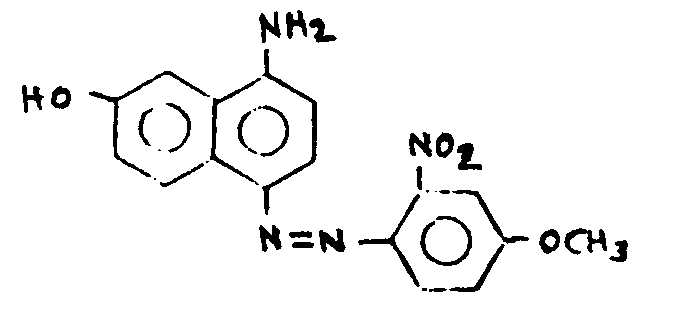
| 878 | Sulfonyl bonded directly to the bicyclo ring system | ||
This subclass is indented under subclass 877. Compounds wherein a -- group is bonded directly to the bicyclo
ring system.
| |||
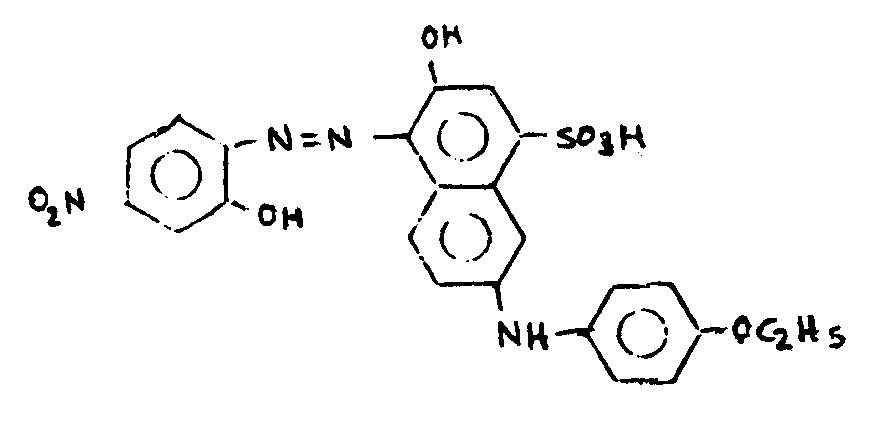
| 879 | Plural sulfonyl groups or plural nitrogens bonded directly to the bicyclo ring system | ||
This subclass is indented under subclass 878. Compounds in which at least two nitrogens or at least two
-- groups are bonded directly to the bicyclo ring system.
| |||
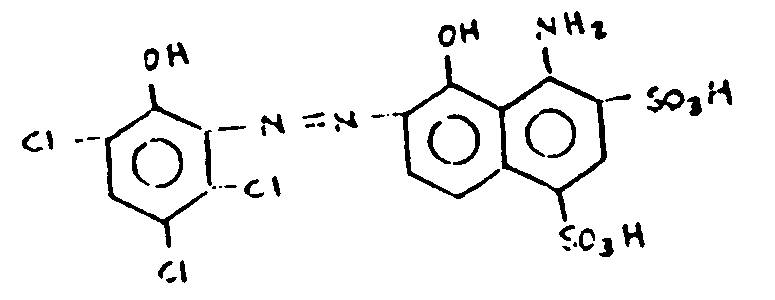
| 880 | Additional sulfonyl which is attached indirectly to the bicyclo ring system by nonionic bonding | ||
This subclass is indented under subclass 878. Compounds which contain an additional -- group, which group
is attached indirectly to the bicyclo ring system by nonionic bonding.
| |||
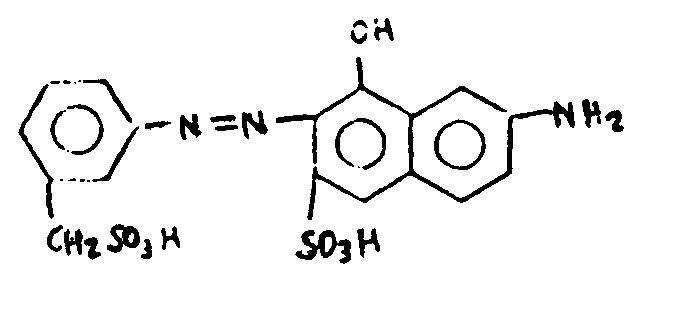
| 881 | Sulfonyl and the nitrogen bonded directly to the same bicyclo ring system | ||
This subclass is indented under subclass 875. Compounds wherein the nitrogen and a -- group are both bonded
directly to the same bicyclo ring system.
| |||
| 882 | Oxygen double bonded directly to sulfur | ||
This subclass is indented under subclass 839. Compounds in which oxygen is double bonded directly to sulfur,
e.g., --, etc..
| |||
| 883 | Sulfonyl bonded directly to a bicyclo ring system | ||
This subclass is indented under subclass 882. Compounds in which a -- group is bonded directly to a bicyclo
ring system.
| |||
| 884 | Plural sulfonyl groups bonded directly to the same bicyclo ring system | ||
This subclass is indented under subclass 883. Compounds wherein at least two -- groups are bonded directly
to the same bicyclo ring system.
| |||
| 885 | Benzene ring bonded directly to the azo group | ||
This subclass is indented under subclass 838. Compounds in which a benzene ring is bonded directly to
the azo group.
| |||
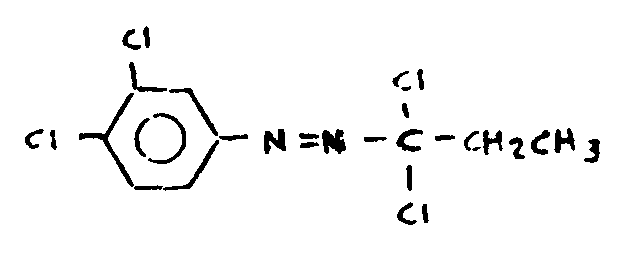
| 886 | Containing -C(=X)-, wherein X is chalcogen (e.g., carbonyl, etc.) | ||
This subclass is indented under subclass 838. Compounds which contain a -- group, wherein X is chalcogen
(i.e., oxygen, sulfur, selenium or tellurium).
| |||
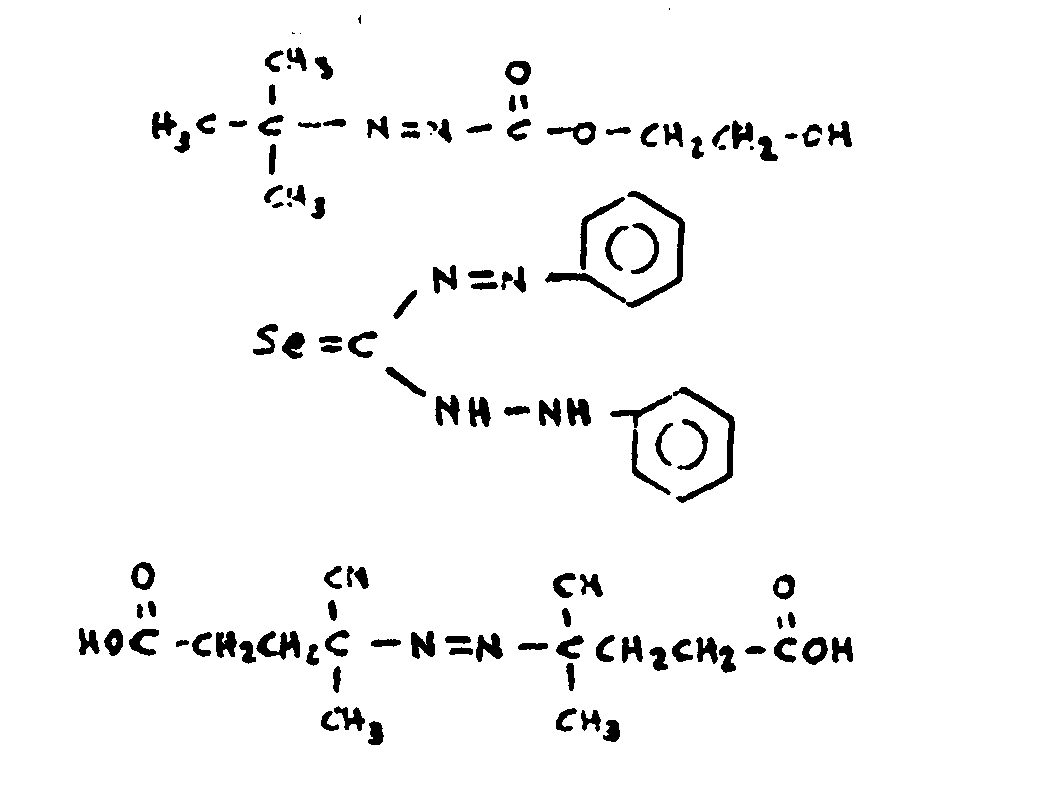
| 887 | Purification or recovery |
| This subclass is indented under subclass 573. Processes wherein the azo compound is separated from impurities or from the reaction mixture. | |