An official website of the United States government
The .gov means it’s official.
Federal government websites often end in .gov or .mil. Before
sharing sensitive information, make sure you’re on a federal
government site.
The site is secure.
The https:// ensures that you are connecting to
the official website and that any information you provide is
encrypted and transmitted securely.
Comments on proposed rules relating to discretionary denials of parallel and serial petitions and petitions implicating prior art or arguments previously presented to the USPTO are due June 18
The USPTO publishes guidance informing practitioners and the public of the important issues that patent and trademark professionals, innovators, and entrepreneurs must navigate while using AI in matters before the USPTO.
The IP Champions educate local communities on the importance of IP protections such as patents, trademarks, copyrights, and trade secrets to innovation.
Bringing emerging and early-stage innovations to the marketplace spurs entrepreneurship and other economic activity, helps create jobs, and contributes to economic prosperity.
The Offices concluded that existing statutory enforcement mechanisms are currently sufficient to address infringement concerns related to NFT applications.
The First-Time Filer Expedited Examination Pilot Program permits patent applications from eligible first-time filers to be advanced out-of-turn for examination and reviewed earlier.
PTRCs are part of a national network of public, state, and academic libraries designated by the USPTO to offer trademark and patent assistance to the public.
Remarks as delivered Derrick Brent Deputy Under Secretary of Commerce for Intellectual Property and Deputy Director of the USPTO AUTM's 2024 Annual Meeting Tuesday, February 20, 2024 Thank you, Dr. Almesha Campbell, and the leadership of AUTM — Steve Susalka and IanMcLure — for having me. And let…
The NMTI medal is awarded to individuals, teams (up to four individuals), and companies or divisions of companies for their outstanding contributions to the nation.
Given the incredible reach of AI across technologies and organizations, diversifying the AI innovation ecosystem could produce substantial economic gains.
The study found that the patent pro bono programs are successfully expanding access to the patent system to financially under-resourced independent inventors and small businesses.
The memorandum of understanding will allow the two agencies to continue to partner, so that NOAA’s research and technology can better serve the public and inspire future climate-ready solutions.
Beginning at 12:01 a.m. ET on January 17, those filing new, non-provisional utility patent applications with specification, claims, and abstract in non-DOCX filing formats will incur a surcharge.
The USPTO announced the appointment of Sharon Israel as Chief Policy Officer and Director for International Affairs and Jack Fleming as Chief Communications Officer.
Stakeholders are invited to provide comments on all issues raised in the text. The deadline for comments has been extended to 5 p.m. ET on January 31, 2024.
The USPTO has announced a new pre-application review program called the “Pre-Prosecution Pilot” as part of its continuing commitment to expand access to the innovation ecosystem and support under-resourced inventors.
The USPTO announced that it will open a new regional office in Atlanta, Georgia metropolitan area and a new community outreach office in Strafford County, New Hampshire.
The Semiconductor Technology Pilot Program will advance semiconductor technology innovation by expediting examination of qualifying utility patent applications
The new worksharing initiative gives eligible patent applicants the option of using an expedited process for obtaining a patent grant in Mexico based on a U.S. patent grant.
As part of our modernization efforts to provide customers with more efficient and effective IT tools, today we are officially retiring the decades-old EFS-Web and Private PAIR.
A summary of responses received to a June 2023 Request for Comments seeking public input on the establishment of a Southeast Regional Office and Northern New England Community Outreach Office is now available.
The USPTO is reforming the Electronic Trademark Assignment System (ETAS) and Electronic Patent Assignment System (EPAS) into one cohesive and modernized system: Assignment Center.
President Biden awarded the National Medal of Science and the National Medal of Technology and Innovation to a number of Americans who have made exemplary achievements in science, technology, and innovation.
The USPTO released a report revealing that small companies and universities led the way in developing inventions to diagnose COVID-19 as evidenced by patent applications filed through April 2023.
Remarks as prepared Derrick Brent Deputy Under Secretary of Commerce for Intellectual Property and Deputy Director of the USPTO 2023 National HBCU Week Conference Panel on "HBCUs: Harnessing Federal Funding and Programs that Support Entrepreneurship and Business Creation” Monday, September 25,…
The Virtual Assistant provides answers to common customer questions and makes it easier to find the status of your patent application. The tool will guide you to the most up-to-date information in Patent Center.
The USPTO is launching an updated tool to search for general information on www.uspto.gov. The improved search experience introduces new features, functionality, and customization for visitors using the search bar.
EFS-Web, Private PAIR to retire November 15 as updated Patent Center combines functionalities of older system with new enhancements that provide an improved user experience.
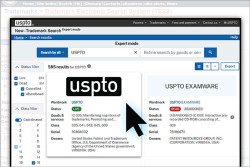
The USPTO is implementing upgrades to several of our search tools to make it easier for our customers to find what they’re looking for in a faster, more reliable way.
The USPTO announced the renaming of its Visiting Scholars Program after Dr. Marian Rogers Croak, a pioneer in VoIP technologies, inventor of the text-to-donate system, and a National Inventors Hall of Fame inductee.
The U.S. Patent and Trademark Office is now providing official “Welcome Letters” to applicants to help them quickly and easily navigate the patent and trademark application process and connect them with relevant resources.
Remarks As Delivered Oral Testimony of the Honorable Kathi Vidal Under Secretary of Commerce for Intellectual Property and Director of the U.S. Patent and Trademark Office Before a Hearing of the Senate Judiciary Subcommittee on Intellectual Property “Oversight of the United States Patent and...
The United States Patent and Trademark Office’s (USPTO) Office of the Chief Economist released the 2022 updates to its Trademark Case Files Dataset and Trademark Assignment Dataset.
The U.S. Patent and Trademark Office (USPTO) today published its 2022-2026 Strategic Plan, completing a planning process that welcomed more than 150 comments on the draft version from the public and USPTO employees.
The USPTO is seeking public input regarding the establishment of an additional regional office in the southeast region and four new community outreach offices as authorized by the UAIA
Transitioning to the DOCX format for patent application filings is an important part of our efforts to use all available technology to strengthen patents and reduce pendency times
The USPTO expands the program's eligibility requirements to encompass a more robust group of innovations and extends to June 7, 2027 or 4,000 grantable petitions
The USPTO announces a request for comments seeking input on the Motion to Amend Pilot Program and the rules of practice to allocate the burden of persuasion on motions to amend in trial proceedings before the PTAB.
Remarks as delivered Kathi Vidal, Under Secretary of Commerce for Intellectual Property and Director of the USPTO American Intellectual Property Law Association Spring Meeting Opening Plenary Address May 10, 2023 Thank you for the kind introduction. On behalf of my 13,000 colleagues at the USPTO…
Remarks as prepared Derrick Brent, Deputy Under Secretary of Commerce for Intellectual Property and Deputy Director of the USPTO to the Los Angeles Intellectual Property Lawyers Association March 29, 2023 Congratulations again to Ken Ohriner and Paul Menes for receiving pro bono awards…
The USPTO, the Federal Laboratory Consortium (FLC), and academic technology transfer non-profit AUTM are collaborating to host the Green Energy Innovation Expo on May 17 at USPTO headquarters.
STATEMENT OF KATHI VIDAL UNDER SECRETARY OF COMMERCE FOR INTELLECTUAL PROPERTY AND DIRECTOR OF THE UNITED STATES PATENT AND TRADEMARK OFFICE BEFORE THE SUBCOMMITTEE ON COURTS, INTELLECTUAL PROPERTY, AND THE INTERNET COMMITTEE ON THE JUDICIARY UNITED STATES HOUSE OF REPRESENTATIVES “Oversight of…
USPTO's Office of the Chief Economist's latest IP Economic Note examines the impact of the COVID-19 pandemic on employment with a focus on industries that most intensively use various forms of intellectual property (IP).
Remarks as delivered Kathi Vidal, Under Secretary of Commerce for Intellectual Property and Director of the USPTO Women in IP: Diversity and Inclusion: Mentoring, Affinity Groups and the Collection of Demographic Data March 7, 2023 I have to take a picture of you all because this just warms my…
Remarks as prepared for delivery Kathi Vidal, Under Secretary of Commerce for Intellectual Property and Director of the USPTO Patents for Humanity: COVID-19 awards ceremony February 16, 2023 Thank you, Soma, for your kind introduction. Welcome to everyone who is joining us in-person, and all of…
Remarks as prepared for delivery Derrick Brent, Deputy Under Secretary of Commerce for Intellectual Property and Deputy Director of the USPTO PTAB Boardside Chat December 15, 2022 I have enjoyed a career that has spanned every branch of the federal government, private practice, corporate practice…
The USPTO announces new Patent and Trademark Public Advisory Committees members who will participate in regular meetings to discuss the USPTO’s patent and trademark operations
Today, the heads of the intellectual property (IP) offices of the Group of Seven (G7) countries met virtually to discuss international cooperation on IP
To further accelerate innovation in the health and medical fields, the USPTO has published a Federal Register Notice announcing a new program: The Cancer Moonshot Expedited Examination Pilot Program
USPTO's Office of the Chief Economist released an IP Economic Note and working paper examining the causal impacts from the first randomized control trial (RCT) undertaken by the USPTO.
Remarks as delivered Kathi Vidal, Under Secretary of Commerce for Intellectual Property and Director of the USPTO Women's Entrepreneurship Initiative November 30, 2022 Thank you, Qyana. I just met Qyana a couple of weeks ago when the Deputy Director and I were speaking at Howard University, and I…
The report pinpoints women inventor-patentees across U.S. counties, and examines growth over the 1990-2019 period to better understand women’s participation in IP
Remarks as prepared for delivery Kathi Vidal, Under Secretary of Commerce for Intellectual Property and Director of the USPTO International Copyright Institute (ICI) September 27, 2022 Thank you, Shira, for that kind introduction. A big thank you to the World Intellectual Property Organization (…
Kathi Vidal, Under Secretary of Commerce for Intellectual Property and Director of the USPTO, has been appointed as a Federal Co-Chair of the National Advisory Council on Innovation & Entrepreneurship (NACIE).
Remarks as delivered Kathi Vidal, Under Secretary of Commerce for Intellectual Property and Director of the USPTO Global Forum on Intellectual Property Marina Bay Sands Expo and Convention Centre, Singapore September 6, 2022 Thank you, Isabelle Tan, Director of the Registry of Trademarks at the…
Remarks as delivered Kathi Vidal, Under Secretary of Commerce for Intellectual Property and Director of the USPTO Trademark Public Advisory Committee Quarterly Meeting July 29, 2022 Thank you, Susan. Thank you for your leadership. David, thank you for your leadership. And thank you to all the…
Gina M. Raimondo, U.S. Secretary of Commerce, and Kathi Vidal, Director of the USPTO, announce Derrick Brent as the new Deputy Under Secretary of Commerce for Intellectual Property and Deputy Director of the USPTO.
The USPTO today released a Request for Comments seeking public input on Director review, Precedential Opinion Panel review, and internal circulation and review of PTAB decisions.
The USPTO today became a technology partner to the global green-technology platform of the World Intellectual Property Organization (WIPO), WIPO GREEN.
The USPTO and the World Intellectual Property Organization (WIPO) today agreed to undertake joint efforts to facilitate the resolution of disputes related to standard essential patents.
Remarks as Delivered Kathi Vidal Under Secretary of Commerce for Intellectual Property and Director of the USPTO AI/ET Partnership Series #1: Kickoff – USPTO AI/ET activities and patent policy Jun 29, 2022 Thank you, Jerry. And thanks to Charles Kim and the USPTO’s AI and emerging technologies…
Remarks as Prepared Kathi Vidal Under Secretary of Commerce for Intellectual Property and Director of the USPTO 2022 SelectUSA Investment Summit Jun 28, 2022 Thank you to everyone attending this session. The SelectUSA Summit is extremely exciting, and important. I am glad the U.S. Patent and...
The already operational Patent Center provides a faster, more streamlined search experience for applicants accessing publicly available patents and application file information
In response to a request from lawmakers, the USPTO today released a report to Congress detailing the results of the call for public comments regarding U.S. jurisprudence on patent subject matter eligibility.
The Director of the USPTO today issued a memorandum on the “Interim Procedure for Discretionary Denials in AIA Post-Grant Proceedings with Parallel District Court Litigation” (“guidance memo”) that clarifies PTAB practice.
Remarks as Delivered Kathi Vidal Under Secretary of Commerce for Intellectual Property and Director of the USPTO 2022 Bench & Bar Conference Fireside Chat Jun 16, 2022 Azra Hadzimehmedovic: I have the distinct pleasure of welcoming Director Vidal with us today in person. It has been two…
Remarks Prepared for Kathi Vidal Under Secretary of Commerce for Intellectual Property and Director of the USPTO PTAB Pro Bono Boardside Chat June 9, 2022 Thank you for your warm introduction Lead Judge Ahmed. Thank you also to patent attorney Grant Corboy, Lead Judge Stacey White, and Deputy…
USPTO notified Rospatent of the USPTO’s intent to terminate their agreement concerning Rospatent functioning as an International Searching Authority (ISA) and International Preliminary Examining Authority (IPEA)
Remarks Prepared for Kathi Vidal Under Secretary of Commerce for Intellectual Property and Director of the USPTO ARPA-E Energy Innovation Summit May 24, 2022 It is my absolute pleasure to be here in Colorado at the annual ARPA-E meeting to describe how important the U.S. system of patent…
The United States Patent and Trademark Office (USPTO) fully reopened all locations to employees and resumed some in-person events and appointments for the public.
The USPTO is seeking nominations to fill up to three upcoming vacancies for the Patent Public Advisory Committee (PPAC) and up to three upcoming vacancies Trademark Public Advisory Committee (TPAC).
Our Trademark and IT teams are accelerating our transition to electronic registration certificates. Starting May 24, two weeks earlier than announced, we will begin issuing electronic registration certificates.
Remarks Prepared for Kathi Vidal Under Secretary of Commerce for Intellectual Property and Director of the USPTO Patent Public Advisory Committee May 10, 2022 Thank you, Steve, for the kind introduction. I’m very pleased to be attending my first PPAC meeting as the new Director of the USPTO. I…
Remarks Prepared for Kathi Vidal Under Secretary of Commerce for Intellectual Property and Director of the USPTO International Trademark Association Annual Convention May 3, 2022 Washington Convention Center, Washington, D.C. Thank you, Jenny, for the wonderful introduction. Thank you also for…
As part of its efforts to move to full electronic processing of trademark applications and registrations, the USPTO will begin issuing electronic trademark registration certificates on June 7, 2022.
Remarks delivered at the USPTO Director of the U.S. Patent and Trademark Office Kathi Vidal April 21, 2022 Virtual As Delivered Thank you so much, Lakiya. I am looking forward to working with you. I also want to thank Karen Young, who is the director of our design technology center and for her…
Remarks delivered at the 29th Annual Fordham IP Conference Director of the U.S. Patent and Trademark Office Kathi Vidal April 21, 2022 Virtual Thank you so much, Hugh. As you know, it took a while to get through the confirmation process, and we have a big list of things we want to do. We’ve been…
America’s Innovation Agency – the United States Patent and Trademark Office (USPTO) – today welcomed Kathi Vidal as the new Under Secretary of Commerce for Intellectual Property and agency Director.
Remarks delivered at the USPTO headquarters Director of the U.S. Patent and Trademark Office Kathi Vidal April 13, 2022 In-person Thank you, [Federal Circuit] Judge [Pauline] Newman. Thank you, [Federal Circuit Chief] Judge Kimberly Moore. I’m thrilled to be here today to serve our country and to…
The United States Patent and Trademark Office (USPTO) today announced a collaboration with the PTAB Bar Association establishing a new Patent Trial and Appeal Board (PTAB) Pro Bono Program.
Third edition in series on IP-intensive industries offers greater insight into demographics of IP workforce, reinforces that “IP protection is good for American businesses and their employees”
A new report published by the USPTO, “Patenting Activity among 5G Technology Developers,” concludes that there is global competition in 5G innovation, with no one company dominating the field.
The USPTO seeks nominations for the 2022 National Medal of Technology and Innovation. The NMTI is the nation’s highest honor for technological achievement and is presented to recipients by the President of the United States.
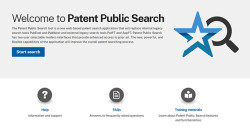
The enhanced platform will allow users to search remotely and simplify the search process by consolidating the capabilities of four legacy search programs.
The USPTO launched a Pro Bono Clearinghouse Recognition Program for the Trademark Trial and Appeal Board (TTAB) to facilitate free legal assistance to individuals and businesses involved in proceedings before the TTAB.
The United States Patent and Trademark Office (USPTO) and Japan Patent Office (JPO) intend to further improve their Patent Prosecution Highway (PPH) programs.
Drew Hirshfeld, Performing the functions and duties of the Under Secretary of Commerce for Intellectual Property and Director of the USPTO November 18, 2021 Virtual As delivered I’d like to first thank you [PPAC Chair] Julie [Mar-Spinola] for your seven years of service and your tireless…
As part of the "Go For Real" anti-counterfeiting campaign, the NCPC and the USPTO today released a series of ads informing younger buyers and their parents about the serious dangers of buying fake goods.
In Oct. 2021, United States Secretary of Commerce Gina Raimondo announced her new role as Chair of the re-branded Council for Inclusive Innovation (CI2).
The United States Patent and Trademark Office (USPTO) has extended the deadline for submitting comments on the state of patent eligibility jurisprudence, and its effect on investment and innovation in the United States, to October 15, 2021. The comments will assist the USPTO in preparing a report…
Today the United States Patent and Trademark Office (USPTO) announced that starting Monday, David L. Berdan will be performing the functions and duties of the Deputy Under Secretary of Commerce for Intellectual Property and Deputy Director of the USPTO , following the news that Coke Stewart will…
Today the United States Patent and Trademark Office (USPTO) announced that Coke Stewart, performing the functions and duties of the Deputy Under Secretary of Commerce for Intellectual Property and Deputy Director of the USPTO, will be departing the USPTO to join the faculty at the Regent…
Wednesday, August 18 (1-2 p.m. ET) Drew Hirshfeld, performing the functions and duties of the Under Secretary of Commerce for Intellectual Property and Director of the USPTO USPTO’s 2021 Bronze Medal Award virtual ceremony Opening remarks Wednesday, August 18 (3:45-4:30 p.m. ET) Drew Hirshfeld…
Wednesday, August 18 (1-2 p.m. ET) Coke Stewart, performing the functions and duties of the Deputy Under Secretary of Commerce for Intellectual Property and Deputy Director of the USPTO USPTO’s 2021 Bronze Medal Award virtual ceremony Opening remarks Wednesday, August 18 (3:45-4:30 p.m. ET) Coke…
Thursday, August 5 (1-2 p.m. ET) Drew Hirshfeld, performing the functions and duties of the Under Secretary of Commerce for Intellectual Property and Director of the USPTO Coke Stewart, performing the functions and duties of the Deputy Under Secretary of Commerce for Intellectual Property and…
Tuesday, July 27 (1-2 p.m. ET) Drew Hirshfeld, performing the functions and duties of the Under Secretary of Commerce for Intellectual Property and Director of the USPTO Coke Stewart, performing the functions and duties of the Deputy Under Secretary of Commerce for Intellectual Property and…
Tuesday, July 27 (1-2 p.m. ET) Drew Hirshfeld, performing the functions and duties of the Under Secretary of Commerce for Intellectual Property and Director of the USPTO Coke Stewart, performing the functions and duties of the Deputy Under Secretary of Commerce for Intellectual Property and…
Thursday, July 15 (noon-1:30 p.m. ET) Drew Hirshfeld, performing the functions and duties of the Under Secretary of Commerce for Intellectual Property and Director of the USPTO IPW Webinar: A conversation with the Commissioner of the USPTO Fireside chat, USPTO initiatives and happenings For more…
The USPTO seeks comments from the public regarding the impact of patent eligibility jurisprudence in the United States since the Supreme Court’s 2016 decisions in Mayo and Alice and subsequent Federal Circuit decisions applying the Supreme Court’s legal framework
The United States Patent and Trademark Office’s (USPTO) Office of the Chief Economist released 2020 updates for two research datasets, the Patent Assignment Dataset and the Patent Examination Research Dataset (PatEx). The Patent Assignment Dataset now contains detailed information on 8.97 million…
The United States Patent and Trademark Office’s (USPTO) Office of the Chief Economist released the Artificial Intelligence Patent Dataset (AIPD)—identifying which of the 13.2 million United States patents and pre-grant publications include artificial intelligence (AI)—to help enable researchers…
Tuesday, June 29 (1-3:30 p.m. ET) Frederick Steckler, Chief Administrative Officer (OCAO) Peter Fowler, Senior Counsel for Enforcement (OPIA) Proud Innovation – Learn from LGBTQ+ innovators Various roles, celebrating the contributions of LGBTQ+ innovators For more information and to register,…
Monday-Wednesday, June 21–23 (7-9 a.m. ET, each day) Drew Hirshfeld, performing the functions and duties of the Under Secretary of Commerce for Intellectual Property and Director of the USPTO Coke Stewart, performing the functions and duties of the Deputy Under Secretary of Commerce for…
Monday, June 14 (1-1:05 p.m. ET) David Gooder, Commissioner for Trademarks Final roundtable on the notice of proposed rulemaking on the Trademark Modernization Act (TMA) Opening remarks, TMA updates For more information or to join the event, visit the TMA roundtable event page. Thursday, June 17…
Friday, June 11 (3-4 p.m. ET) David Gooder, Commissioner for Trademarks Trademarks and the Games: A fireside chat about intellectual property and the Olympics Fireside chat, the role of trademarks in the Olympic Games For more information and to register, visit the Trademarks and the Games event…
The United States Patent and Trademark Office (USPTO) is extending the submission deadline for expanding its Law School Clinic Certification Program by admitting additional schools into the program. Founded in 2008, the program currently includes 60 law school clinics and offers patent and…
Tuesday, May 25 (10:15-11 a.m. ET) Drew Hirshfeld, performing the functions and duties of the Under Secretary of Commerce for Intellectual Property and Director of the USPTO Association for Accessible Medicines (AAM): Legal Town Hall Fireside chat, current USPTO programs and trends For more...
WASHINGTON – The United States Patent and Trademark Office (USPTO) today announced the recipients of the 2020 Patent Pro Bono Achievement Certificate, which recognizes individuals and law firms that assist financially under-resourced inventors and small businesses seeking patents. Established…
The United States Patent and Trademark Office (USPTO) seeks nominations to fill upcoming vacancies on the Patent Public Advisory Committee and the Trademark Public Advisory Committee. Please submit nominations electronically on or before July 9, 2021. Submission details are available in the…
We are saddened to hear of the recent passing of John Doll, a 35-year veteran of the USPTO who rose through our ranks from being a patent examiner in 1974 to Commissioner for Patents, and Acting Director of the USPTO. John was a dynamic individual who promoted a close dialog between inventors and…
The 2020 update to the United States Patent and Trademark Office (USPTO) Trademark Assignment Dataset is now available to the public for free download. The USPTO records assignments of trademark applications and registrations, and other supporting documentation, to maintain a complete history of…
The Office of the Chief Economist (OCE) of the United States Patent and Trademark Office (USPTO) has released the 2020 update to its Trademark Case Files Dataset. This dataset contains detailed information on 10.8 million trademark applications filed with, or registrations issued by, the USPTO…
In response to the COVID-19 pandemic, and in view of the critical need to develop and help speed to market medical products and services to combat COVID-19, the United States Patent and Trademark Office (USPTO) initiated the COVID-19 Prioritized Trademark Examination Program in June of 2020. To…
The United States Patent and Trademark Office (USPTO) recently updated the China Intellectual Property Rights (IPR) toolkit to reflect the recent changes made to China’s intellectual property (IP)-related laws and government structure. Originally published in October 2019, the toolkit provides…
Tuesday, May 18 (noon to 1 p.m. ET) Scott Boalick, Chief Judge of the Patent Trial and Appeal Board (PTAB) PTAB First Anniversary Celebration of the Legal Experience and Advancement Program (LEAP) Opening remarks For more information and to register, visit the LEAP first anniversary event page…
The United States Patent and Trademark Office (USPTO) today officially issued U.S. patent number 11 million, recognizing an important milestone in American innovation and ingenuity.
Tuesday, May 11 (10-11 a.m. ET) Drew Hirshfeld, performing the functions and duties of the Under Secretary of Commerce for Intellectual Property and Director of the USPTO Washington State Bar Association-IP Section 26th Annual IP Institute Fireside chat, current USPTO programs and priorities For…
The United States Patent and Trademark Office (USPTO) is seeking soon-to-be graduates and professionals with backgrounds in graphic design/art, as well as engineers with backgrounds in biomedical, computer, electrical, and mechanical engineering to apply for hundreds of entry-level patent…
WASHINGTON – The United States Patent and Trademark Office (USPTO) is seeking nominations for the 2021 National Medal of Technology and Innovation (NMTI). The NMTI is the nation’s highest honor for technological achievement and is presented to recipients by the President of the United States at a…
On April 14, the United States Patent and Trademark Office (USPTO) announced that the Patent Trial and Appeal Board (PTAB) will soon accept petitions for expedited resolution of ex parte appeals for COVID-related inventions. There is no cost for appeals related to COVID-19 in this pilot program,…
WASHINGTON – The United States Patent and Trademark Office (USPTO) today announced that it will be launching a special category of its Patents for Humanity Program for inventions that address the COVID-19 pandemic. This new award category will provide business incentives for patent applicants...
Remarks delivered at the U.S. Chamber of Commerce Director of the U.S. Patent and Trademark Office Andrei Iancu January 19, 2021 Virtual As Prepared for Delivery Thank you, Frank, for that incredibly generous introduction. Thank you also to the U.S. Chamber of Commerce, the Global Innovation…
The United States Patent and Trademark Office (USPTO) hosted its first National Council for Expanding American Innovation (NCEAI) Innovation Chat on Tuesday, January 12, 2021. The virtual event featured a discussion on the importance of a more diverse innovation ecosystem between Andrei Iancu,…
In an unprecedented year, both the Patents and Trademarks organizations worked tirelessly to ensure that the United States Patent and Trademark Office (USPTO) continued to improve its services for the innovation community. Improved Patent Examinations Patents continued its focus on improving the…
After the intensive IT stabilization and modernization efforts of the past two years, the United States Patent and Trademark Office (USPTO) was well prepared when the agency’s physical offices closed in March due to the pandemic. The USPTO transitioned seamlessly to mandatory telework, despite…
In response to the COVID-19 pandemic, the United States Patent and Trademark Office (USPTO) earlier this year launched the COVID-19 Prioritized Patent Examination Pilot Program and the COVID-19 Prioritized Trademark Examination Program . These programs enable the USPTO to grant requests for...
Remarks delivered at the U.S. Chamber of Commerce Global Innovation Policy Center's 14th Annual USPTO IP Attaché Roundtable Director of the U.S. Patent and Trademark Office Andrei Iancu December 15, 2020 Virtual As prepared for delivery Thank you, Ray (Kerins), for the wonderful introduction.…
Monday, December 14 (9-10 a.m. ET) USPTO Director Andrei Iancu IP Attaché Consultations Opening remarks Tuesday, December 15 (8:30-9 a.m. ET) USPTO Director Andrei Iancu 14 th Annual Global Intellectual Property Center/IP Attaché Roundtable Opening remarks Wednesday, December 16 (9-9:30 a.m. ET…
Remarks delivered at the Design Law 2020 Symposium Director of the U.S. Patent and Trademark Office Andrei Iancu December 10, 2020 Virtual As prepared for delivery Thank you, Tracy Durkin and Rob Katz, for organizing today’s symposium, and for your dedication to improving our system of design...
WASHINGTON – The United States Patent and Trademark Office (USPTO) today announced that four of its intellectual property (IP) attachés have been elevated to the diplomatic rank of “Counselor” at the U.S. embassies and missions where they serve. “The USPTO prides itself on working with foreign…
Remarks delivered at the Intellectual Property Owners (IPO) Education Foundation event "How IP Accelerates Innovation" Director of the U.S. Patent and Trademark Office Andrei Iancu December 8, 2020 Pre-recorded video As prepared for delivery Thank you, Dave, for organizing this session, and thank…
Remarks delivered at the AI and Patent Data Workshop Hosted by Carnegie Mellon University Deputy Director of the U.S. Patent and Trademark Office Laura Peter December 9, 2020 Virtual As prepared for delivery Hello everyone, and thank you, Dean Alderucci for that kind introduction, and thank you…
WASHINGTON – The United States Patent and Trademark Office (USPTO) today announced the appointment of Mary Critharis as its new Chief Policy Officer and Director for International Affairs. Ms. Critharis had been serving as the Acting Chief Policy Officer and Director for International Affairs…
WASHINGTON – The United States Patent and Trademark Office (USPTO) and the Mexican Institute of Industrial Property (IMPI) today announced the launch of the Parallel Patent Grant (PPG) initiative. Under this new worksharing arrangement, IMPI will expedite the grant of a Mexican patent for…
Tuesday, December 8 (7-9 a.m. ET) USPTO Director Andrei Iancu Trilateral (USPTO, Japan Patent Office, European Patent Office) Meeting Role of the Trilateral Offices Tuesday, December 8 (1:45-2:45 p.m. ET) USPTO Director Andrei Iancu Washington State University faculty and students Expanding…
The United States Patent and Trademark Office (USPTO) welcomes two new members of the Patent Public Advisory Committee (PPAC), Judge Susan Braden and Daniel Brown, and three new members of the Trademark Public Advisory Committe e (TPAC), David Cho, Tracy Deutmeyer, and Jomarie Fredericks...
WASHINGTON — The United States Patent and Trademark Office (USPTO) congratulates Lisa Jorgenson of the United States on her appointment as World Intellectual Property Organization (WIPO) Deputy Director General (DDG) for the Patents and Technology Sector. She will succeed John Sandage in the role…
Remarks delivered at the India Memorandum of Understanding (MOU) signing ceremony Director of the U.S. Patent and Trademark Office Andrei Iancu December 2, 2020 Virtual As prepared for delivery Your Excellency, Secretary Mohapatra, it is an honor to be with you today. Thank you for your wonderful…
At a virtual ceremony on December 2, Andrei Iancu, Under Secretary of Commerce for Intellectual Property and Director of the United States Patent and Trademark Office (USPTO), and Secretary Dr. Guruprasad Mohapatra of India’s Ministry of Commerce and Industry, Department for Promotion of Industry…
As a result of a storage site consolidation, effective January 1, 2021, the fulfillment time for requests for paper patent file wrappers located in Suitland, Maryland, will increase slightly from 37 days to up to 47 days. Requests for file wrappers located at the National Archives Records...
The United States Patent and Trademark Office (USPTO) encourages customers to submit requests for copies of certified and uncertified patents and trademarks using the Certified Copy Center (CCC) storefront on the USPTO website. Beginning January 1, 2021, the USPTO will direct all email and fax…
Tuesday, December 1 (3-4:20 p.m. ET) USPTO Director Andrei Iancu Rutgers University faculty and students Expanding American innovation Wednesday, December 2 (6-7 p.m. ET) USPTO Director Andrei Iancu University of Illinois at Chicago faculty and students Expanding American innovation Thursday...
Remarks delivered at the 44th Session of the Administrative Council of ARIPO Director of the U.S. Patent and Trademark Office Andrei Iancu November 16, 2020 Virtual As prepared for delivery Hello everyone, and thank you for inviting me to be part of the 44th Session of the Administrative Council…
Monday, November 16 (7-9 a.m. ET) USPTO Director Andrei Iancu Trilateral (USPTO, Japan Patent Office, European Patent Office) Meeting Impact of COVID and a new vision and framework for Trilateral Cooperation Monday, November 16 (11 a.m. to 12 p.m. ET) USPTO Director Andrei Iancu Southern…
Monday, November 9 (11:30 a.m. to 12:30 p.m. ET) USPTO Director Andrei Iancu, USPTO Deputy Director Laura Peter Texas Regional USPTO (TXRO) 5-Year Anniversary Opening remarks, interview award recipient Monday, November 9 (1-2 p.m. ET) USPTO Director Andrei Iancu University of Connecticut faculty…
Remarks delivered at the Trademark Public Advisory Committee quarterly meeting Deputy Director of the U.S. Patent and Trademark Office Laura Peter October 30, 2020 Virtual As prepared for delivery Thank you, Director Iancu, for those remarks, and thank you especially for your inspired leadership…
Remarks delivered at the White House Initiative on Asian Americans and Pacific Islanders event “The Future of Business” Deputy Director of the U.S. Patent and Trademark Office Laura Peter October 27, 2020 Virtual As prepared for delivery Good afternoon everyone, and thank you Jan-Ie (Low), for…
Remarks delivered at the TPAC quarterly meeting Director of the U.S. Patent and Trademark Office Andrei Iancu October 30, 2020 Virtual As prepared for delivery Good afternoon everyone, and welcome to the third all-virtual Trademark Public Advisory Committee (TPAC) public session. Thank you for…
Monday, November 2 (11 a.m. to 12 p.m. ET) USPTO Director Andrei Iancu Nebraska University (NUtech Ventures) University faculty and students Expanding American innovation Monday, November 2 (4:30-5:30 p.m. ET) USPTO Director Andrei Iancu Emory and Georgia Tech University faculty and students...
Remarks delivered at the ID5 Annual Meeting Director of the U.S. Patent and Trademark Office Andrei Iancu October 15, 2020 (Recorded) October 29, 2020 (Broadcast) As prepared for delivery Hello, fellow representatives from the EUIPO, JPO, KIPO, CNIPA and WIPO. I wish I could have welcomed you in…
The United States Patent and Trademark Office (USPTO) welcomes Tricia McDermott Thompkins as a new interim member of the Trademark Public Advisory Committee (TPAC). The interim appointment will be effective on October 30, 2020 and run through December 1, 2022. Ms. Thompkins serves as Executive…
Global IP Challenges Forum Director of the U.S. Patent and Trademark Office Andrei Iancu October 26, 2020 Virtual As prepared for delivery Thank you, Your Excellency, Dr. Abdulaziz Al-Suwailem, for your kind introduction. And thank you for your vision to organize and host this historic IP20…
Monday, October 26, (6-6:30 a.m. ET) USPTO Director Andrei Iancu 2020 TM5 (Trademark 5) Annual Meeting – TM5 consists of the United States Patent and Trademark Office (USPTO), the China National Intellectual Property Administration (CNIPA), the European Union Intellectual Property Office (EUIPO…
Monday, October 19, (2 p.m. ET) USPTO Director Andrei Iancu Rogers State University faculty and students - Expanding American Innovation Monday, October 19, (5-6 p.m. ET) USPTO Director Andrei Iancu University of Pennsylvania School of Law faculty and students - Expanding American Innovation…
Today, the United States Patent and Trademark Office (USPTO) announced that Mary Critharis has been appointed the USPTO’s Acting Chief Policy Officer and Director for International Affairs. Ms. Critharis first joined the USPTO as a patent examiner in 1992 before progressing to Assistant Solicitor…
All events to be held in a virtual format. Tuesday, October 13 , (8-10 a.m. ET) Andrei Iancu, Under Secretary of Commerce for Intellectual Property and Director of the USPTO, will attend the AIPPI World Congress, at which he will participate in a two-hour moderated, interactive conversation…
WASHINGTON — The United States Patent and Trademark Office (USPTO) today released a report titled “Public Views on Artificial Intelligence and Intellectual Property Policy.” It takes a comprehensive look at a wide variety of stakeholder views on the impact of artificial intelligence (AI) across…
“The Reliable IP Side of Dynamic Competition” Deputy Director of the U.S. Patent and Trademark Office Laura Peter September 30, 2020 Washington, D.C. As prepared for delivery Good afternoon, everyone, and thank you, Rebekah (Gantner) for the gracious introduction. I am especially happy to be here…
Director Iancu unveils Marian Croak’s addition to the USPTO inventor card series while delivering keynote at U.S. Chamber of Commerce event promoting equal opportunity in the innovation ecosystem.
U.S. Chamber of Commerce Equality of Opportunity in the Innovation Economy Conference Director of the U.S. Patent and Trademark Office Andrei Iancu October 1, 2020 Pre-recorded video As prepared for delivery Thank you, David, for that kind introduction and for inviting me to speak at this timely…
PTAB Bar Association Annual Meeting Director of the U.S. Patent and Trademark Office Andrei Iancu September 24, 2020 Virtual As prepared for delivery Thank you, Naveen, for the kind introduction. Thank you to the PTAB Bar Association for bringing us together over the digital networks, made…
Promoting Innovation in the Life Sciences and Supporting Pro-Competitive Collaborations: The Role of Intellectual Property Director of the U.S. Patent and Trademark Office Andrei Iancu September 23, 2020 Virtual As prepared for delivery Thank you, Nyeemah, for the very kind introduction, and for…
The Intellectual Property Owners Association's (IPO) 2020 Virtual Annual Meeting Director of the U.S. Patent and Trademark Office Andrei Iancu September 15, 2020 Pre-recorded video As delivered Hello, and thank you, IPO, for bringing us together. I wish we could be meeting in person as in years…
The 61st Series of Meetings of the Assemblies of the Member States of WIPO Director of the U.S. Patent and Trademark Office Andrei Iancu September 15, 2020 Pre-recorded video As delivered Thank you, Chair. The United States is pleased to see you chairing the General Assembly. We are confident…
Today the United States Patent and Trademark Office (USPTO) shared the news that Shira Perlmutter, the USPTO’s Chief Policy Officer and Director for International Affairs, has been selected by the Librarian of Congress to serve as the 14th Register of Copyrights.
Inaugural Meeting of the National Council for Expanding American Innovation Director of the U.S. Patent and Trademark Office Andrei Iancu September 14, 2020 Virtual As prepared for delivery Thank you, Laura, for the kind introduction and for your leadership at the USPTO. Thank you in particular…
WASHINGTON — The United States Patent and Trademark Office (USPTO) will host the inaugural meeting for the National Council for Expanding American Innovation (NCEAI) on Monday, September 14, 2020. The goal of the NCEAI is to work with the USPTO in developing a comprehensive national innovation…
Keynote IP Leaders Panel: Accelerating Innovation, Recovery, and Growth in the COVID-19 Era Director of the U.S. Patent and Trademark Office Andrei Iancu August 26, 2020 Virtual As prepared for delivery Thank you, Dawn! It’s great to be back with all of you for IP Week. It is an honor to be on…
Remarks delivered at Fighting Counterfeits in a Pandemic: The Impact and Solutions for Manufacturers Director of the U.S. Patent and Trademark Office Andrei Iancu July 23, 2020 Virtual As prepared for delivery Good morning, and thank you for inviting me to talk with you on the important topic of…
Remarks delivered at EurekaFest 2020 Director of the U.S. Patent and Trademark Office Andrei Iancu June 17, 2020 Virtual As prepared for delivery Thank you, Stephanie. Congratulations, inventors! I am so impressed by what I’ve seen today from both the Student Prize winners and the InvenTeams. I’d…
The USPTO has extended from July 1, 2020, to September 30, 2020, the time for small and micro entities to pay certain patent-related fees that would otherwise have been due on or after March 27, 2020.
WASHINGTON — The United States Patent and Trademark Office (USPTO) is seeking nominations to fill upcoming vacancies for the Patent Public Advisory Committee (PPAC) and Trademark Public Advisory Committee (TPAC). Nominations must be postmarked or electronically transmitted on or before July 31,…
USPTO to accept petitions to advance the initial examination of applications for marks used to identify qualifying COVID-19 medical products and services.
USPTO extends the time period for petitioning for certain rights of priority or benefit in a patent application and waives the associated petition fee.
USPTO launches COVID-19 Response Resource Center as central hub for USPTO initiatives, programs, and other important IP-related information regarding the ongoing outbreak.
Remarks delivered at the Conrad Virtual Innovation Summit Deputy Director of the U.S. Patent and Trademark Office Laura Peter May 27, 2020 Pre-recorded video As delivered Hello everyone! And thank you, Nancy, and the entire Conrad Foundation, for hosting this inspirational summit. I’m Deputy...
Under the CARES Act authority and its existing authority in Trademark and TTAB matters, the USPTO will direct relief to those who need it on a case-by-case basis, as described in the official notice.
As stakeholders continue to navigate the effects of the pandemic in various ways, and as more and more of them are resuming operations, the USPTO will again extend certain deadlines.
Remarks delivered at the Patent Public Advisory Committee Quarterly Meeting Director of the U.S. Patent and Trademark Office Andrei Iancu May 7, 2020 Virtual As prepared for delivery Thank you, Julie, and good morning, everyone. This is our first all-virtual PPAC public meeting, and—despite this…
Remarks delivered at the Trademark Public Advisory Committee Quarterly Meeting Director of the U.S. Patent and Trademark Office Andrei Iancu April 17, 2020 Virtual As prepared for delivery Thank you, Elisabeth, and good afternoon, everyone. I believe this is our first all-virtual TPAC public…
The USPTO has published a petition decision explaining that, under current law, only natural persons may be named as an inventor in a patent application.
The United States Patent and Trademark Office (USPTO) today announced further extensions to the time allowed to file certain patent and trademark-related documents and to pay certain required fees. These actions are an exercise of temporary authority provided to the USPTO by the Coronavirus Aid,…
Report finds that USPTO’s Section 101 guidance brings greater predictability and certainty to the technology areas most affected by the Supreme Court’s Alice decision
In 2019, more than 74 volunteer patent practitioners reported 50 or more hours of patent pro bono service to a regional patent pro bono program, and more than 27 law firms reported 100 or more hours.
The USPTO has released FAQs and answers for filers regarding the extension of certain patent and trademark-related timing deadlines under the Coronavirus Aid, Relief, and Economic Security Act.
The United States Patent and Trademark Office (USPTO) today announced that it will use provisions of the Coronavirus Aid, Relief, and Economic Security Act (CARES Act), to extend the time to file certain patent and trademark-related documents and to pay certain required fees.
The Department of Commerce and the U.S. Patent and Trademark Office congratulate Daren Tang, Singapore’s Chief Executive of Intellectual Property, on his election to the post of Director General for the World Intellectual Property Organization (WIPO).
Remarks delivered at the Annual Kickoff to Women’s History Month: Valiant Women of Yesterday and Today Deputy Director of the U.S. Patent and Trademark Office Laura Peter March 3, 2020 Alexandria, Virginia As prepared for delivery Good morning everyone, and thank you, Bismarck for your kind...
Two job fairs hosted by the agency in February 2020 will give engineers a chance to learn more about the duties and requirements for becoming a patent examiner. Job fairs will take place in Alexandria, Virginia, and Atlanta.
WASHINGTON – The United States Patent and Trademark Office (USPTO) announced today that U.S. Secretary of Commerce Wilbur Ross has appointed David Gooder to be the new Commissioner for Trademarks. As Commissioner, Gooder will be responsible for oversight of all aspects of the USPTO’s Trademarks…
Remarks delivered at Trust, But Verify: Informational Challenges Surrounding AI-Enabled Clinical Decision Software Deputy Director of the U.S. Patent and Trademark Office Laura Peter January 23, 2020 Washington, D.C. As prepared for delivery Good afternoon! And thank you, Arti, for your warm…
The United States Patent and Trademark Office (USPTO) and the Mexican Institute of Industrial Property (IMPI) agreed to launch a new worksharing arrangement that will accelerate the process of obtaining a patent in Mexico for businesses and individuals already in possession of a corresponding U.S…
The U.S. Department of Commerce’s United States Patent and Trademark Office (USPTO) today announced new Patent and Trademark Advisory Committee Members for the Patent Public Advisory Committee (PPAC) and the Trademark Public Advisory Committee (TPAC).
This reliable, free, and publicly accessible dataset now contains detailed patent litigation data on more than 81,000 unique district court cases filed between 1963 and 2016.
WASHINGTON – The United States Patent and Trademark Office (USPTO) today announced the appointment of Jay Hoffman as the agency’s chief financial officer (CFO). Hoffman’s first full day in his new role will be Monday, January 6, 2020. As CFO, Hoffman will oversee an annual budget exceeding $3...
This policy statement makes clear that standards-essential patents (SEPs) should be treated no differently than any other patent, such that all remedies are available depending on the facts of a case.
The USPTO and Brazil’s National Institute for Industrial Property implemented a new Patent Prosecution Highway agreement allowing for applications for more industries and higher annual caps.
In November 2019, the United States Patent and Trademark Office published a second edition of the America Invents Act (AIA) Trial Practice Guide (Practice Guide) to incorporate the Practice Guide updates released in August 2018 and July 2019 into the original August 2012 Practice Guide. The…
Earlier this year, Commissioner for Trademarks Mary Boney Denison reported to the House Subcommittee on Courts, Intellectual Property, and the Internet Committee on the Judiciary that “the USPTO is aggressively taking steps to combat the various threats to our trademark system.” In a recent blog…
We recommend that attorneys proactively monitor our database for trademark filings that use their names, signatures, and contact information without their knowledge or consent.
Remarks delivered by Director Andrei Iancu at the 24th Annual North American/Central Europe Airport Issues Conference in Bucharest, Romania on October 29, 2019.
Commissioner for Patents Andrew Hirshfeld testifies about patent quality before the Senate Subcommittee on Intellectual Property Committee on the Judiciary.
Remarks delivered at the “IP in PA: Keystone for Success” event Director of the U.S. Patent and Trademark Office Andrei Iancu October 21, 2019 Easton, Pennsylvania As prepared for delivery Good morning everyone, and thank you Caren (Yeamans) for that kind introduction. Thank you to the entire…
Remarks delivered at the United Inventors Association Leadership Day Deputy Under Secretary of Commerce for Intellectual Property and Deputy Director of the USPTO Laura Peter September 12, 2019 Alexandria, Virginia As prepared for delivery Good morning and thank you Warren (Tuttle) for that kind…
Remarks delivered at the Standard-Essential Patents Strategy Conference Under Secretary of Commerce for Intellectual Property and Director of the USPTO Andrei Iancu September 10, 2019 Solvay Business School – Université Libre de Bruxelles (ULB) Brussels, Belgium As prepared for delivery Good…
Remarks delivered at the Bridging Innovation and Opportunity event Director of the U.S. Patent and Trademark Office, Andrei Iancu August 26, 2019 Pittsburgh, Pennsylvania As prepared for delivery Good afternoon everyone, and thank you Mark Anthony Thomas for that gracious introduction. Thank you…
Remarks delivered at the U.S. Citizenship and Immigration Services Naturalization Ceremony Director of the U.S. Patent and Trademark Office Andrei Iancu July 30, 2019 Alexandria, Virginia As prepared for delivery Good morning, and thank you, Sarah (Taylor) for that introduction. On behalf of the…
USPTO Director Iancu addressed the growth of artificial intelligence in patenting and the cooperation among international patent offices to utilize and explore AI in patent examination tools and methods.
Remarks delivered at the International Conference on AI-Emerging Technologies and IP Director of the U.S. Patent and Trademark Office, Andrei Iancu July 16, 2019 Tel Aviv, Israel As prepared for delivery Thank you for the kind introduction. It is an honor for me to be here today, and especially…
The Current State of Innovation within the U.S. Legal System – Views on Evolving Protection for Intellectual Property Rights in the United States from the USPTO and the Courts Remarks delivered at the New York Intellectual Property Law Association (NYIPLA) Director of the U.S. Patent and…
Statement delivered before the United States House Subcommittee on Courts, Intellectual Property, and the Internet Committee on the Judiciary “Counterfeits and Cluttering: Emerging Threats to the Integrity of the Trademark System and the Impact on American Consumers and Businesses.” Commissioner…
Remarks delivered at the 2019 International Intellectual Property Conference Director of the U.S. Patent and Trademark Office Andrei Iancu June 10, 2019 J.W. Marriott Seoul, South Korea As prepared for delivery Thank you very much for that gracious introduction. It’s an honor to be here, and it…
Remarks delivered at “The Road Back: Restoring American Patents” Director of the U.S. Patent and Trademark Office Andrei Iancu May 22, 2019 Washington, D.C. As prepared for delivery Good evening, everyone, and thank you, Rob (Stien) for that very gracious introduction. This is a momentous year…
Remarks by Director Iancu at International Trademark Association (INTA) 141 st Annual Meeting “Conversations with USPTO Leadership” Session “CM41” Director of the U.S. Patent and Trademark Office Andrei Iancu May 20, 2019 Boston, Massachusetts As prepared for delivery Thank you, Ayala, for the…
Statement delivered before the United States House Subcommittee on Courts, Intellectual Property, and the Internet Committee on the Judiciary Director of the U.S. Patent and Trademark Office Andrei Iancu May 9, 2019 Washington, D.C. As prepared for delivery 1. Introduction Chairman Johnson,…
Remarks delivered at first public hearing on the SUCCESS Act Deputy Director of the U.S. Patent and Trademark Office Laura Peter May 8, 2019 Alexandria, VA As prepared for delivery Good Morning everyone! Thank you Andy Toole for that kind introduction. It’s a pleasure to be here today to discuss…
Remarks delivered at the 2019 National Inventors Hall of Fame Induction Ceremony Director of the U.S. Patent and Trademark Office Andrei Iancu May 2, 2019 Washington, DC As prepared for delivery “That's one small step for man, one giant leap for mankind.” On July 20 this year, in just a couple…
Remarks delivered at 2019 Conrad Challenge Innovation Summit Deputy Director of the U.S. Patent and Trademark Office Laura Peter April 25, 2019 Kennedy Space Center, FL As prepared for delivery Good afternoon everyone, and thank you, Nancy Conrad, for your kind introduction. It’s a pleasure to be…
The USPTO certificate recognizes patent practitioners and law firms who volunteer to assist financially under-resourced inventors and small businesses.
Remarks delivered at Silicon Valley IP Forum 2019 Deputy Director of the U.S. Patent and Trademark Office Laura Peter April 10, 2019 Palo Alto, California As prepared for delivery Good afternoon everyone, and thank you, John Cabeca for your kind introduction. It’s a pleasure to be here with all…
Remarks delivered at the Anti-Counterfeiting Video Contest Award Ceremony Director of the U.S. Patent and Trademark Office Andrei Iancu April 9, 2019 Alexandria, Virginia As prepared for delivery Good morning everyone! Thank you, Mary and Shira and the entire team that has worked to put this…
Remarks delivered at the FCBA Santa Clara: Recent Developments Affecting Litigation in, and Appeals from the PTAB, ITC, and District Courts Deputy Director of the U.S. Patent and Trademark Office Laura Peter April 8, 2019 Santa Clara, California As prepared for delivery Good afternoon everyone,…
Statement delivered before the United States Senate Subcommittee on Intellectual Property Committee on the Judiciary Director of the U.S. Patent and Trademark Office Andrei Iancu March 13, 2019 Washington, D.C. As prepared for delivery 1. Introduction Chairman Tillis, Ranking Member Coons, and…
Remarks delivered at Women’s History Month: Celebrating Women in Innovation event Director of the U.S. Patent and Trademark Office Andrei Iancu March 5, 2019 Alexandria, Virginia As prepared for delivery It is so good to see everyone here today, joining us to celebrate women in innovation. This…
Remarks delivered at the U.S. Chamber of Commerce: Driving American Innovation Policy Conference Director of the U.S. Patent and Trademark Office Andrei Iancu February 25, 2019 Atlanta, Georgia As prepared for delivery Good morning everyone. Thank you, President (Mark) Becker for that gracious…
Landmark treaty facilitates limited copyright for accessible copies of published works to persons who are blind, visually impaired, and print disabled.
WASHINGTON – The United States Patent and Trademark Office (USPTO) today published its 2018-2022 Strategic Plan. The strategic plan sets out the USPTO’s mission-focused strategic goals: to optimize patent quality and timeliness; to optimize trademark quality and timeliness; and, to provide…
WASHINGTON – Secretary of Commerce Wilbur Ross today announced the appointment of Laura A. Peter as deputy under secretary of commerce for intellectual property and deputy director of the United States Patent and Trademark Office (USPTO), effective November 13, 2018. Ms. Peter most recently held…
Remarks delivered by USPTO Director Andrei Iancu at the Center for Strategic and International Studies (CSIS) Conference in Mexico City on October 23, 2018.
WASHINGTON – The United States Patent and Trademark Office (USPTO) today announced it is seeking comments on the draft 2018-2022 Strategic Plan. The draft plan sets out the USPTO's mission-focused strategic goals: to optimize patent quality and timeliness; to optimize trademark quality and...
WASHINGTON - The United States Patent and Trademark Office (USPTO) today announced the launch of an anti-counterfeiting video contest during the National Trademark Exposition . The “Consumers Combat Counterfeits" contest invites entrants to submit creative videos to help raise awareness about the…
Remarks by Commissioner for Trademarks Mary Boney Denison at the 2018 National Trademark Exposition, held at the Smithsonian National Museum of American History in Washington, D.C., on July 27, 2018.
Remarks by Director Andrei Iancu at the 2018 National Trademark Exposition, held at the Smithsonian National Museum of American History in Washington, D.C., on July 27, 2018.
WASHINGTON - The United States Patent and Trademark Office (USPTO) today announced that 20 new law schools have joined the USPTO’s Law School Clinic Certification Program , and five currently participating law schools have added a second clinic program, during the 2016-2018 expansion. Eight law…
NEW ORLEANS - The United States Patent and Trademark Office (USPTO) hosted the annual meeting of the heads of the world’s five largest intellectual property offices, commonly referred to as the IP5. In addition to the USPTO, the members of the IP5 include the European Patent Office (EPO), the…
Remarks by USPTO Director Andrei Iancu at U.S. Citizenship and Immigration Services (USCIS) Naturalization Ceremony in Alexandria, Virginia, on June 1, 2018.
WASHINGTON - The United States Patent and Trademark Office (USPTO) today announced the grand opening of the newest Patent and Trademark Resource Center (PTRC) at the Durango Public Library in Durango, Colorado on Tuesday May 22, 2018. A free public program, “Researching Patent and Trademark...
WASHINGTON - The U.S. Department of Commerce’s United States Patent and Trademark Office (USPTO) today announced the recipients of the 2017 Patent Pro Bono Achievement Certificate in recognition of individuals who help make the Patent Pro Bono Program available to financially under-resourced...
WASHINGTON - The United States Patent and Trademark Office (USPTO) is seeking nominations to fill upcoming vacancies for the Patent Public Advisory Committee (PPAC) and the Trademark Public Advisory Committee (TPAC). Nominations must be postmarked or electronically transmitted on or before July 6…
WASHINGTON - The United States Patent and Trademark Office (USPTO) today announced that NBA All-Star Kareem Abdul-Jabbar will deliver the keynote address at the opening ceremony for the 2018 National Trademark Expo at the Smithsonian’s National Museum of American History in Washington, D.C. on…
WASHINGTON - Today, the United States Patent and Trademark Office announced its proposed rulemaking to change the prior policy of using the Broadest Reasonable Interpretation standard for construing unexpired and proposed amended patent claims in Patent Trial and Appeal Board (PTAB) proceedings…
WASHINGTON - The U.S. Department of Commerce’s United States Patent and Trademark Office (USPTO) today announced the exhibitors chosen for the 2018 National Trademark Expo at the National Museum of American History in Washington, D.C. in collaboration with the Smithsonian Institution on Friday,…
AUSTIN, Texas - The United States Patent and Trademark Office (USPTO) today unveiled the new design of the patent grant cover during a special ceremony at the South by Southwest (SXSW) Interactive Festival in Austin, Texas. The redesigned cover will debut on patent number 10 million which is...
WASHINGTON - The United States Patent and Trademark Office (USPTO) today announced that Andrei Iancu began his first official day as Under Secretary of Commerce for Intellectual Property and Director of the USPTO. Mr. Iancu, who was nominated by President Trump last August, was unanimously…
WASHINGTON - The U.S. Department of Commerce’s United States Patent and Trademark Office (USPTO) today announced that it will host the 2018 National Trademark Exposition at the National Museum of American History in Washington, D.C. in collaboration with the Smithsonian Institution on Friday,…
WASHINGTON - The Department of Commerce's United States Patent and Trademark Office (USPTO) is seeking nominations for the 2018 National Medal of Technology and Innovation . The medal is the country's highest award for technological achievement and is presented by the President of the United…
Washington – The U.S. Department of Commerce’s United States Patent and Trademark Office (USPTO) today issued a final rule, “ Setting and Adjusting Patent Fees during Fiscal Year 2017” to set or adjust certain patent fees, as authorized by the Leahy-Smith America Invents Act (AIA). The revised…
Washington – The Department of Commerce's United States Patent and Trademark Office (USPTO) Joseph Matal, Performing the Functions and Duties of the Under Secretary of Commerce for Intellectual Property and Director of the United States Patent and Trademark Office, participated in the signing of…
Washington -The Department of Commerce's United States Patent and Trademark Office (USPTO) is initiating a two-year Diversion Pilot Program for patent and trademark practitioners. Implemented by the Office of Enrollment and Discipline (OED), the program aligns USPTO with the practices of more…
Opportunity in the innovation community is for everyone. Only when every inventor and entrepreneur has an equal chance to bring their new ideas and products to the global marketplace does our nation truly thrive.
The new Inventorship Guidance for AI-Assisted Inventions provides instructions to determine whether the human contribution to an innovation is significant enough to qualify for a patent when AI also contributed.
Protecting and enforcing intellectual property (IP) rights in China has been an essential part of our agency efforts to strengthen the global IP system.
As part of our modernization efforts to provide more extensible technology and functionality, the Patent Center system will fully replace EFS-Web and Private PAIR.
Working to strengthen the IP ecosystem through new laws, policies, practices and collaborations also impresses upon our youth, women across the globe, and our military the importance of protecting IP.
When it comes to AI, there is enormous potential for our country and for solving world problems—but there are significant risks as well. To shape the future of AI, we must act quickly, but also thoughtfully.
Although TESS has served us well, its long tenure is ending in November. We now have an opportunity to provide a more stable, modern search experience that can grow and adapt to the needs of the trademark community.
We recently issued an examination guide to clarify steps examining attorneys must take to evaluate the validity of a trademark applicant’s “domicile address” as included in their application. Learn about why it's important.
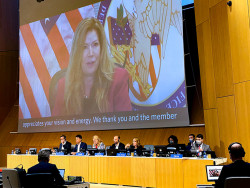
Director Vidal hosted the leaders of the largest IP offices in the world and then led the USPTO delegation to the 64th Assemblies of the Member States of WIPO. Both gatherings focused on how to support sustainable innovation.
Secretary of Commerce Gina Raimondo joined Under Secretary of Commerce for Intellectual Property and Director of the USPTO Kathi Vidal for a workshop and resource fair for military personnel, spouses, and veterans.
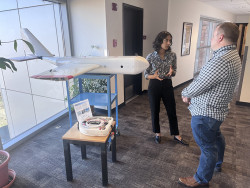
Parikha Mehta has spent the last four months focused on the intersection of intellectual property and climate and environmental technologies while on an employee exchange at NOAA from the U.S Patent and Trademark Office.
We're excited to announce the publication of our 2022-2026 Strategic Plan, shaped by comments from our employees, public advisory committees, IP industry groups, and the public.
Many of America’s outstanding innovators and leaders are veterans. Skills gained from service, including teamwork, integrity, and being organized, disciplined, adaptable, and focused, prepare them well for entrepreneurship.
We've been on a nationwide tour to share information about our Patent Pro Bono Program and other free services for entrepreneurs, so that we can help bring new entrepreneurs and inventors into the innovation ecosystem.
On April 14, law students gathered from around the country in the exciting final round of the National Patent Application Drafting Competition (NPADC) at USPTO headquarters in Alexandria, Virginia.
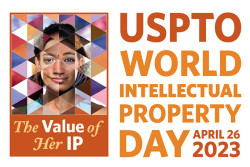
Every year on April 26, we join intellectual property (IP) organizations from across the globe to celebrate World Intellectual Property (IP) Day. This year’s theme is “Women and IP: Accelerating innovation and creativity.”
Artificial intelligence is one of the most powerful technologies of our generation, presenting big opportunities and risks. At the USPTO, we're working on the responsible introduction of AI into our workflow and government.
The USPTO is launching the first-ever Trademarks for Humanity awards competition. The inaugural competition seeks to recognize those who are trying to solve environmental challenges and the importance of their trademarks.
Debbie Stephens, Deputy Chief Information Officer for the USPTO, has served at the agency for more than 30 years in multiple leadership roles. She has worked to improve electronic processing of patent applications.
It’s a privilege to announce the five winners of our Patents for Humanity: COVID-19 category competition. We recognize them for responding rapidly to the challenges of the COVID-19 pandemic with game-changing technologies.
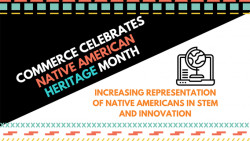
Read about efforts to increase Native American representation in STEM. DOC agencies, including the USPTO, also offer resources to support all innovators, including those in underrepresented communities like Native Americans.
The future of our country hinges on our youth. To help them succeed, we provide high school, college, and law students with unique opportunities to leverage their innate skills while building new ones for continued growth.
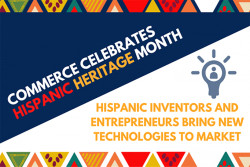
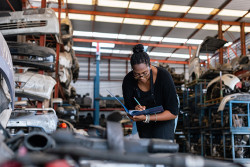
This month, the U.S. Department of Commerce is celebrating Hispanic Heritage Month and Hispanic communities. Here are three stories of Hispanic entrepreneurs and innovators that help fulfill the promise of America for all.
Join the (USPTO's free, online 2022 Hispanic Innovation and Entrepreneurship Program on Wednesday, October 12 from 1-4 p.m. ET, where successful Hispanic innovators will discuss their creative and business journeys.
Technical standards have brought many benefits to society, from the phones in our pockets to the computer networks that support our communications with colleagues and family.
As America’s Innovation Agency, the USPTO is working to change the narrative around purchasing counterfeit products and informing consumers about the dangers and consequences of purchasing counterfeit goods.
The Biden Administration is strengthening international engagement and economic growth by working in partnership with other countries to enhance resilience, sustainability, inclusiveness, fairness, and competitiveness.
We are working to improve our processes, technology, and training. Each and every one of us is committed to providing the best service possible for all innovators and entrepreneurs, from pro se to experienced.
As part of our ongoing effort to modernize and streamline our systems, we unveiled an all new Patent Public Search (PPUBS) tool. PPUBS is a free online search tool for all U.S. published patent applications and patent grants.
The important contributions developed by the U.S. pharmaceutical industry, such as nearly eradicating diseases like smallpox, polio, measles, and meningitis, have been made possible because of our strong patent protection.
To unlock the potential of every American and promote economic prosperity, we must not only protect innovation, we must tap into communities traditionally underrepresented in the innovation ecosystem.
Stakeholders generally agree that the law on patent eligibility needs to be clear, predictable, and consistently applied. This will allow innovators to attract investment and collaborations to bring more innovation to impact.
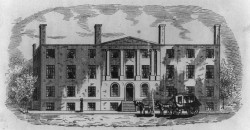
In December 1836, a catastrophic fire at the United States Patent Office destroyed records of American innovation kept since the earliest days of the Republic. We call patents from this era (1790-1836) “X-patents.”
On August 1, we will replace the Public Patent Application Information Retrieval (PAIR) tool with Patent Center, a new, unified system with a user-friendly interface for electronically filing and managing patent applications.
President Biden is helping Americans protect and preserve their health and live with the dignity of knowing that they can care for themselves and their loved ones.
Starting August 6, 2022, the USPTO is taking the important and necessary step of requiring all trademark filers to verify their identities as a condition for filing electronic trademark forms.
This month, the U.S. Department of Commerce is celebrating the LGBTQ+ community and paying tribute to the many LGBTQ+ entrepreneurs and innovators who help fulfill the promise of America for all.
The National Inventors Hall of Fame Museum is now open to the public! Located at USPTO headquarters in Alexandria, Virginia, there's something for everyone inside the walls of this tribute to American innovation.
The USPTO is pleased to announce that we are now accepting applications from qualified inventors for free legal assistance in ex parte appeal proceedings through the PTAB Pro Bono Program.
To build on our efforts to engage with stakeholders on artificial intelligence (AI) and emerging technologies (ET), we are forming a partnership with the AI and ET communities, bringing them together to share their insights.
Through programs like the Climate Change Mitigation Pilot Program, we're working to incentivize and expedite clean energy technologies that will help reduce greenhouse gas emissions and mitigate the effects of climate change.
The U.S. Department of Commerce celebrated Americans from Asian American and Native Hawaiian/Pacific Islander (AANHPI) communities. Here are three stories of inspiring AANHPI entrepreneurs and innovators.
USPTO hosts InventionCon, Asian American and Native Hawaiian/Pacific Islander (AANHPI) Innovation and Entrepreneurship Program, and Proud Innovation events for aspiring or established innovators.
To address concerns that the new DOCX format might result in conversion discrepancies, through December 31, 2022, applicants may upload a backup PDF version of their application with their DOCX version for no extra cost.
The USPTO released a summary of comments received on whether the USPTO’s interpretation of the “article of manufacture” requirement for design patents should be reevaluated.
In honor of Women’s History Month, read inspiring stories of notable women innovators who have made lasting contributions to our nation’s history, economy, and way of life.
Official Statement from Under Secretary of Commerce for Intellectual Property and Director of the United States Patent and Trademark Office, Michelle K. Lee on the Supreme Court of the United States’ decision in Cuozzo Speed Technologies, LLC v. Lee
Statement of Michelle K. Lee, Deputy Under Secretary of Commerce for Intellectual Property and USPTO Deputy Director, before the Senate Judiciary Committee December 10, 2014.
Deputy Under Secretary of Commerce for IP and USPTO Deputy Director Michelle K. Lee Roundtable on Harmonization of Substantive Patent Law USPTO Headquarters, Alexandria, Virginia November 19, 2014 Remarks as prepared for delivery Good morning, everyone, and thank you for joining us at the United…
Deputy Director of the USPTO Michelle K. Lee October 23, 2014 2014 AIPLA Opening Plenary " Our Shared Stewardship of a Gold-Standard IP System" Remarks as Prepared for Delivery Thank you, Wayne, and good morning everyone. Before I begin, I just wanted to say, it's been a busy week, and that I am…
Deputy Under Secretary of Commerce for Intellectual Property and USPTO Deputy Director Michelle K. Lee Joint Commission on Commerce and Trade Intellectual Property Rights Alexandria, Virginia September 10, 2014 Remarks as Prepared for Delivery Assistant Minister of Commerce Tong Daochi and…
Deputy Under Secretary of Commerce for IP and USPTO Deputy Director Michelle K. Lee "Spark of Invention" Event Sponsored by Innovation Insights Geneva, Switzerland September 23, 2014 Remarks as Prepared for Delivery Thank you, Thaddeus [Burns], for having me here at this fantastic event, and for…
Chief of Staff for the United States Patent and Trademark Office Stanford Law School Remarks September 10, 2014 Remarks as Prepared for Delivery Thank you for that warm introduction. It's fantastic to be back home in the Bay Area and to see so many friends, former colleagues, and a few former...
Chief of Staff for the United States Patent and Trademark Office Boston Patent Law Association Remarks September 16, 2014 Remarks as Prepared for Delivery Thank you, Josh [Dalton, Boston Patent Law Association] for that warm introduction, and thanks to the Boston Patent Law Association for…
Deputy Under Secretary of Commerce for IP and USPTO Deputy Director Michelle K. Lee Patent Public Advisory Committee Opening Remarks Watch Video August 14, 2014 Remarks as Prepared for Delivery Thank you, Louis [Foreman, Patent Public Advisory Committee Chairman], and good morning everyone! It's…
Deputy Under Secretary of Commerce for IP and USPTO Deputy Director Michelle K. Lee Opening Ceremony for the Rocky Mountain Satellite Office Denver, Colorado June 30, 2014 Remarks as Prepared for Delivery Good morning, and thank you everyone. This is a great day for the United States Patent and…
Deputy Under Secretary of Commerce for IP and USPTO Deputy Director Michelle K. Lee Speaking Truth to Patents: The Case for a Better Patent System Stanford Law School June 26, 2014 Remarks as Prepared for Delivery Thank you, Professor Malone, for that kind introduction. And I want to also thank…
Deputy Under Secretary of Commerce for IP and USPTO Deputy Director Michelle K. Lee BIO International Convention San Diego, California June 25, 2014 Remarks as Prepared for Delivery Thank you for the kind introduction, Hans, and for inviting me to speak here today. As a native Californian I'm...
Deputy Under Secretary of Commerce for IP and USPTO Deputy Director Michelle K. Lee Memorial Day Ceremony Alexandria National Cemetery May 21, 2014 Remarks as Prepared for Delivery Thank you, Joe, for the kind introduction. I appreciate the great work you and the USPTO Military Association (UMA)…
Deputy Under Secretary of Commerce for IP and USPTO Deputy Director Michelle K. Lee Fordham University School of Law 22nd Annual Intellectual Property Law & Policy Conference New York, NY, April 24, 2014 Remarks as Prepared for Delivery Thank you, Professor Hansen, and good afternoon,…
Deputy Under Secretary of Commerce for Intellectual Property and USPTO Deputy Director Michelle K. Lee ABA-IPL - 29th IP Law Conference Luncheon Keynote Address Arlington, VA, April 4, 2014 Remarks as Prepared for Delivery Thank you. And to everyone here today, good afternoon. It's a true…
Deputy Under Secretary of Commerce for Intellectual Property and USPTO Deputy Director Michelle K. Lee Langdon Education Campus, Washington, D.C. March 26, 2014 Remarks as Prepared for Delivery Thank you so much for that introduction, Peggy, and good morning, everyone. We have a great program…
Deputy Under Secretary of Commerce for Intellectual Property and USPTO Deputy Director Michelle K. Lee IPO Education Foundation's 24th PTO Day Conference Washington, D.C., March 25, 2014 Remarks as Prepared for Delivery Thank you for the kind introduction, Herb. It's wonderful to be here today…
Deputy Under Secretary of Commerce for IP and USPTO Deputy Director Michelle Lee White House Event on Executive Actions Related to Strengthening Patent System February 20, 2014 Remarks as Prepared for Delivery Thank you. I'm pleased to be here at the White House today with Secretary Pritzker...
Deputy Under Secretary of Commerce for IP and USPTO Deputy Director Michelle Lee AIPLA Mid-Winter Institute January 30, 2014 Remarks as Prepared for Delivery Thank you, Wayne, for that kind introduction. Before I go any further, I'd like to congratulate Wayne. As just two days ago the Department…